
A border around a fruit tree is the single most effective way to stop weed competition, prevent trunk damage from string trimmers, and keep irrigation water where it belongs — at the root zone. Without a physical barrier, grass encroaches, mulch washes away, and you end up wrestling with a weed whip inches from tender bark. The right border transforms this chore into a set-and-forget solution that pays off every growing season.
I’m Rikta — the co-founder and writer behind Lawn Gear Lab. My approach to this guide involved cross-referencing hundreds of owner reports, measuring the critical specs that prevent failure (thickness, material density, and installation method), and comparing how each design holds up against the specific pressures of active fruit tree care.
After comparing seven top-rated options, the clear winner for durability, water management, and ease of installation is the border around a fruit tree that combines a metal surround with a dedicated watering ring — the Vego Garden Raised Garden Bed Tree Surround & Watering Ring Kit.
How To Choose The Best Border Around A Fruit Tree
Selecting the wrong border wastes money and, worse, can trap moisture against the trunk, causing rot. Focus on these four factors to get it right the first time.
Material Durability & Impact Resistance
Fruit trees require frequent maintenance — mowing, trimming, and branch cleanup. A border that cracks, warps, or tears after one trimmer hit is useless. Recycled rubber mats at least 0.5 inches thick offer the best resistance to string trimmers and mower tires. Galvanized steel, when properly staked, deflects impacts entirely but can bend under extreme force. Thin plastic rings (under 1/8 inch) are the most common failure point; they crack in freezing temperatures and degrade under UV exposure within two seasons.
Diameter & Dripline Coverage
A border that is too small restricts root expansion and fails to prevent surface-level root competition from grass. Measure the tree’s dripline — the outermost edge of the canopy where rain drips off — and choose a border that extends at least to that line. For young fruit trees (1-3 years old), a 24-inch diameter is a baseline minimum. Mature trees often need 36 inches or more. Porous designs that allow water to seep through the entire surface area outperform solid-wall rings that only water at the trunk base.
Water Management Design
Fruit trees need consistent, deep root watering. The best borders integrate with a watering system or at least don’t block natural rainfall. Look for designs with built-in ports for drip irrigation tubing or donut-shaped watering bladders that fit inside the border. Solid-wall metal rings work well if you water manually inside the ring, but in heavy rain, they can flood the root zone if drainage is inadequate. Porous rubber mats excel at slow, even seepage that prevents runoff and encourages deep root growth.
Installation & Adjustment Effort
Not all borders install the same way. Lay-flat rubber mats require no digging or stakes — simply position them around the trunk and weight them down with mulch. Staked steel edging needs trenching or hammering, which is more permanent but better for defining a clean border. Avoid designs that require multiple pieces to assemble around the tree; one-piece or quick-connect systems reduce the chance of gaps where weeds push through. If you plan to expand the border as the tree grows, modular or cuttable designs offer more flexibility.
Quick Comparison
On smaller screens, swipe sideways to see the full table.
| Model | Category | Best For | Key Spec | Amazon |
|---|---|---|---|---|
| Vego Garden Tree Surround | Metal + Water Ring | Deep watering + trunk protection | 16-gallon watering bladder | Amazon |
| Land Guard Corrugated Edging | Galvanized Steel | Large perimeter tree beds | 12 inches tall x 50 feet | Amazon |
| BAVNNRO Galvanized Steel Edging | Galvanized Steel | Curved borders & stable borders | 6 inches tall x 33 feet | Amazon |
| Rocky Mountain 30-Inch Ring | Heavy Rubber | Mower-safe large tree coverage | 30-inch diameter x 0.5 inch thick | Amazon |
| Peryiter 6-Pack Rubber Ring | Heavy Rubber | Multiple small trees or shrubs | 12-inch diameter x 0.59 inch thick | Amazon |
| Fasmov 3-Pack Rubber Mat | Heavy Rubber | Mid-size trees / budget mulch ring | 24-inch diameter x 0.5 inch thick | Amazon |
| Rooted Promise Grow Ring | Plastic Solid Ring | Targeted root watering / slug barrier | 7-inch diameter one-piece | Amazon |
In‑Depth Reviews
1. Vego Garden Raised Garden Bed 8” Tall Tree Surround with Watering Ring
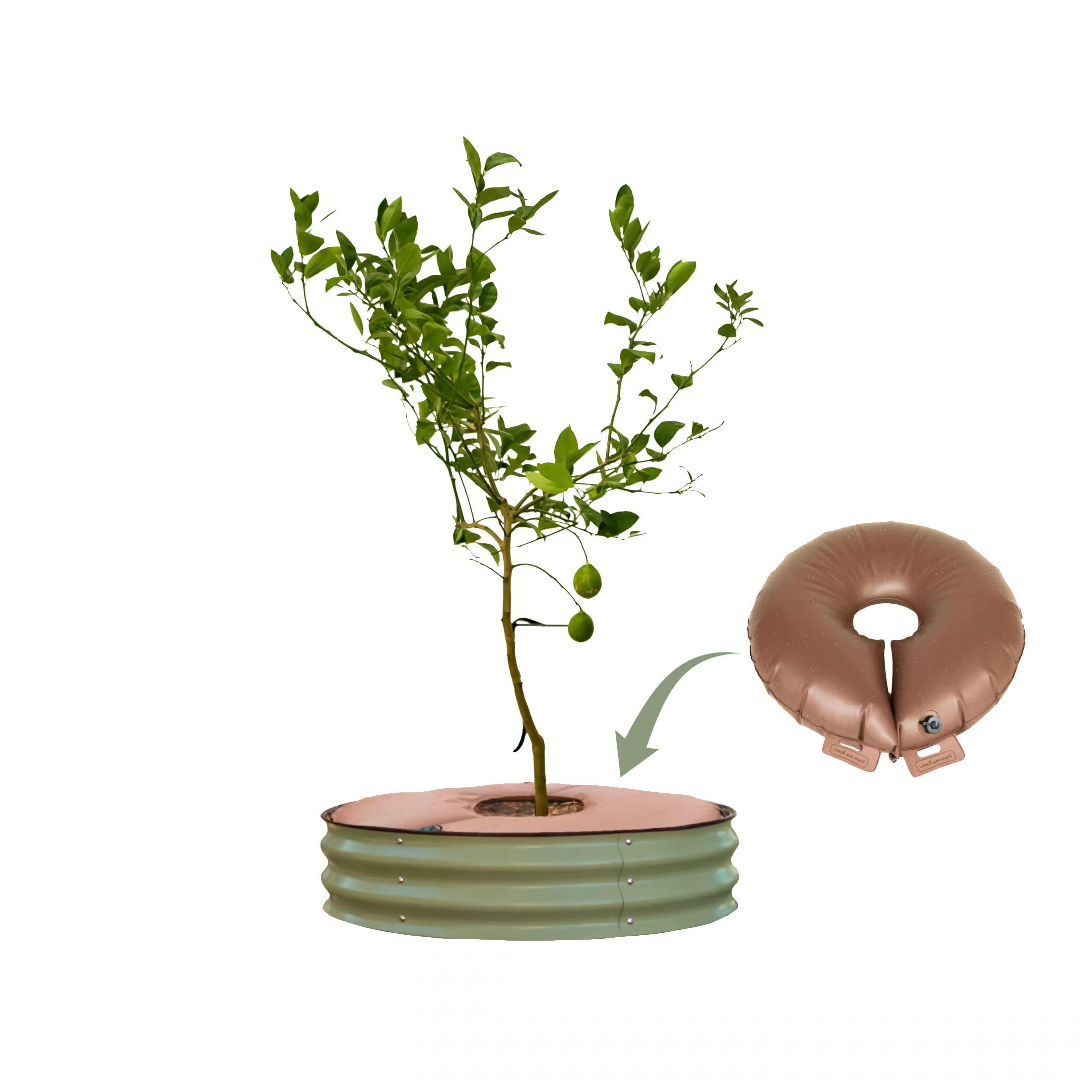
The Vego Garden Tree Surround addresses the two biggest problems a fruit tree border must solve: keeping irrigation water concentrated at the roots and protecting the trunk from mower damage. The 8-inch tall metal surround is powder-coated olive green and forms a rigid barrier that won’t warp or shift, unlike lightweight plastic rings. The real standout is the integrated 16-gallon donut-shaped watering bladder — it fits neatly inside the surround and releases water slowly over roughly 36 hours, which forces deep soil penetration without runoff. This is particularly valuable for young fruit trees that need consistent moisture through their first two growing seasons.
Assembly takes under 30 minutes with a standard socket wrench, and all hardware is included. The surround’s plastic coating on the metal edges actually needs to be removed before installation — a step owners sometimes miss, but one that prevents moisture entrapment. The top rim includes a flexible vinyl cord that acts both as a finished edge and a safety trim. At a 21-inch outer diameter, it fits small to medium fruit trees well; for larger specimens, you’ll want to size up or consider a modular system. Owners consistently report that the bladder’s slow-drain design eliminates the standing water problems that plague basin-style watering.
This kit is the only option in this guide that combines a rigid physical border with a dedicated slow-release irrigation component. For anyone serious about fruit tree health — especially in regions with hot summers or drying winds — the Vego system removes the guesswork from watering while giving you a clean, professional-looking tree ring that can handle a trimmer bump without complaint. It’s a premium assembly, but the results are measurable: deeper roots, less evaporation loss, and no trunk scarring.
What works
- Integrated 16-gallon watering ring delivers slow, deep root hydration
- Powder-coated metal resists corrosion and trimmer impacts
- Easy tool-free assembly with included hardware
What doesn’t
- 21-inch diameter may be too small for established trees
- Plastic coating on edges must be removed before installation
2. Land Guard Corrugated Garden Edging Border 12″×50′

The Land Guard Corrugated Edging is the right choice when you need to enclose a larger area around a mature fruit tree or create a custom-shaped tree bed. It comes as a 50-foot roll of galvanized steel, 12 inches tall, with a red rust finish that weathers attractively. The corrugated 3D ripple design serves two critical functions: it adds structural rigidity to prevent bowing under soil pressure, and it allows the material to bend smoothly around curves without kinking. For a fruit tree border, this means you can create a wide circle that captures the full dripline — critical for mature trees with extensive root systems.
Installation requires digging a shallow trench or hammering the edging into soft soil after wetting the ground. The 12-inch height is substantial enough to block grass rhizomes from creeping under the border, which is a common failure point with shorter edging. A rubber mallet and a level are the only tools needed; the edge holds its line well once seated. The galvanized coating plus the rust finish mean this product won’t peel or fade the way painted steel edging does after two seasons. Owners note it’s sturdy enough to deflect a lawn mower tire without collapsing.
This is not a quick lay-flat solution — it requires physical effort to install, and you’ll need to plan the layout carefully. But for a permanent, high-visibility border around a prized fruit tree, the Land Guard delivers a clean line that stops grass invasion cold. The 50-foot length provides plenty of material for multiple tree rings or a single large bed. If you prefer a more natural look rather than industrial metal, you can pair it with a rubber mulch ring inside for a two-layer barrier.
What works
- 12-inch height blocks aggressive grass rhizomes from creeping under
- Corrugated design bends smoothly without kinking
- Rust-resistant galvanized steel finish won’t peel or fade
What doesn’t
- Installation requires trenching or significant soil prep
- Industrial metal look may not suit all landscape styles
3. BAVNNRO 33FT Galvanized Steel Landscape Edging 10 Pack
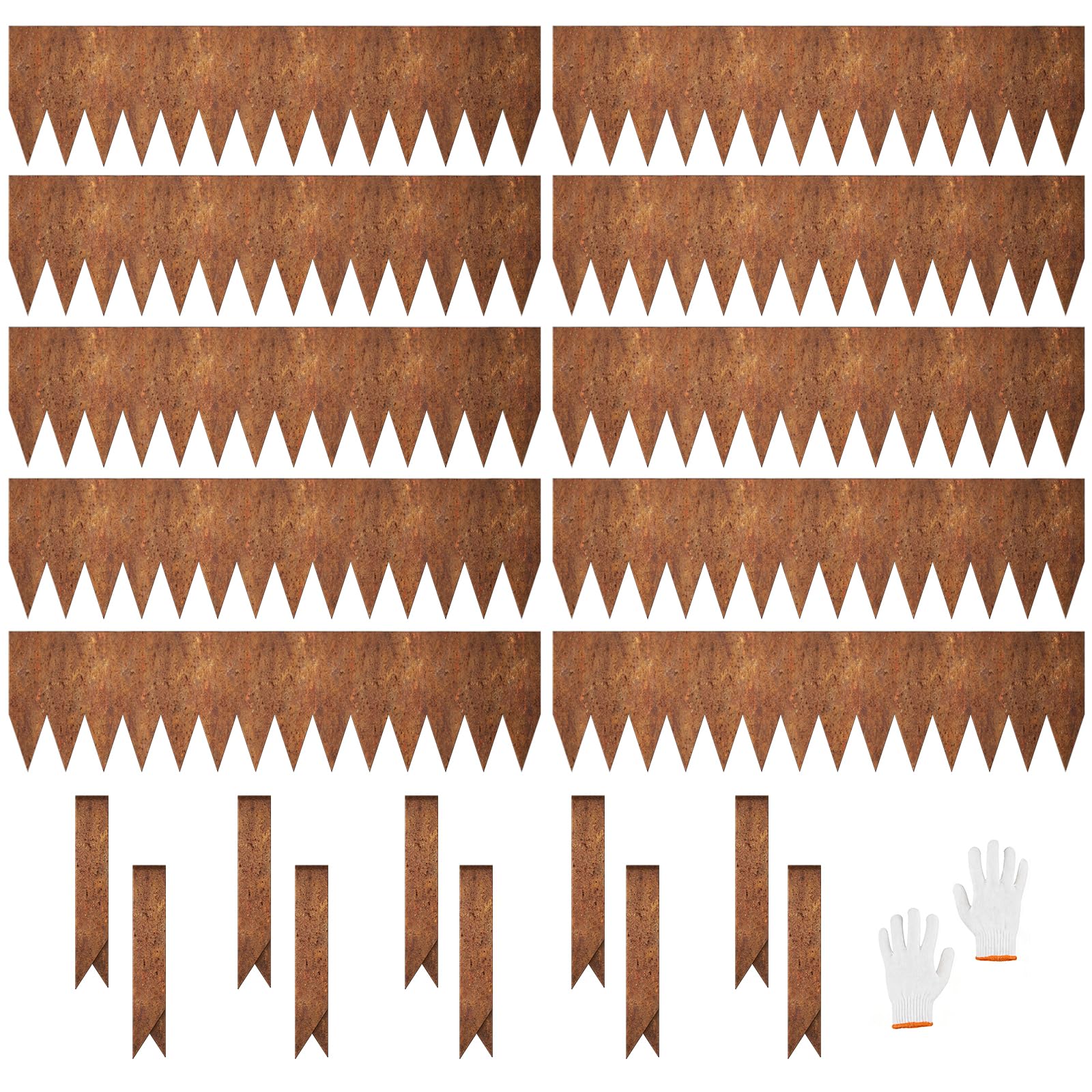
The BAVNNRO Steel Edging stands out for its pre-rusted vintage finish, which is created through a controlled natural oxidation process rather than paint. This matters for fruit tree borders because the oxide film actually becomes more dense over time, making the steel more resistant to wind and rain erosion than standard painted edging. Each of the 10 pieces measures 40 inches long by 6 inches high, giving a total run of 33 feet — enough to create a border circle with a diameter of roughly 10.5 feet, which works for medium to large fruit trees. The included steel splicing stakes (8.7 inches long) connect each panel and anchor it into the ground, which prevents displacement during heavy rain or wind.
The 6-inch height is lower than the Land Guard option, so it’s better suited as a visible top border rather than a deep root barrier. For younger trees, this height works well to define the bed and keep surface mulch contained. The steel has enough flexibility to form curves and right angles without kinking, which makes it easier to follow the natural shape of a tree bed. Installation requires only a hammer to drive the stakes, and a pair of protective gloves is included — a thoughtful addition that’s missing from most competitors. Owners praise this as a durable upgrade from plastic edging that warps in heat or cracks in freeze-thaw cycles.
This is the best option if you want a clean, ornamental look that still provides real structural protection. The vintage rust finish blends into garden settings better than bright galvanized steel, and the 6-inch height is low enough to mow over without adjusting your deck. Just be aware that the height limitation means it won’t stop deeply rooted grass species from creeping under — you’ll want to pair it with a landscape fabric base inside the bed for complete weed suppression.
What works
- Pre-rusted finish develops a durable oxide film that resists further weathering
- Steel splicing stakes provide secure anchoring against wind and rain
- Flexible enough for both curved and straight border layouts
What doesn’t
- 6-inch height is too low to block deep grass rhizomes
- Not a lay-flat solution — requires staking into the ground
4. Rocky Mountain 30-Inch Tree Mulch Ring Weed Preventer (Pack of 4)

The Rocky Mountain 30-Inch Tree Mulch Ring is the largest lay-flat rubber ring in this comparison, and its 30-inch diameter makes it the best fit for established fruit trees with a wider dripline. Each ring is crafted from recycled heavy-duty rubber, roughly half an inch thick, with a textured natural color that mimics the look of loose bark mulch. The porous surface allows water to seep through evenly across the entire ring area — unlike solid plastic rings that concentrate water only at the trunk opening. This even distribution encourages lateral root growth, which is crucial for fruit tree stability and nutrient uptake.
The weight of the ring eliminates the need for landscape staples; it stays put under lawn mower tires and string trimmers without lifting or shifting. Owners report running over these rings with zero-turn mowers without any damage to the mower or the ring. The material does not degrade in UV light, freeze-thaw, or direct soil contact, so you can expect a lifespan of several years. The included four-pack covers multiple trees or one large specimen with room to spare. Some users note that the texture looks more like a rubber mat than real mulch up close, but the functional benefits far outweigh this cosmetic trade-off.
For fruit tree owners who mow tight circles around their trees, this is the safest option — no metal edges to hit, no stakes to trip on, and no risk of trunk girdling from a trimmer line. The porous design also means you can fertilize directly through the ring, and the nutrients will percolate down to the roots rather than washing away. The only preparation needed is to ensure the center hole fits snugly against the trunk; you can cut a larger opening with heavy-duty scissors if necessary.
What works
- 30-inch diameter covers the full dripline of most small to medium fruit trees
- Porous surface delivers even water and nutrient seepage
- Heavy enough to stay in place without staples or stakes
What doesn’t
- Textured surface looks like rubber up close, not natural mulch
- Can be difficult to cut to size without heavy-duty scissors or a serrated knife
5. Peryiter 6 Pcs Rubber Mulch Tree Ring (12 Inches)
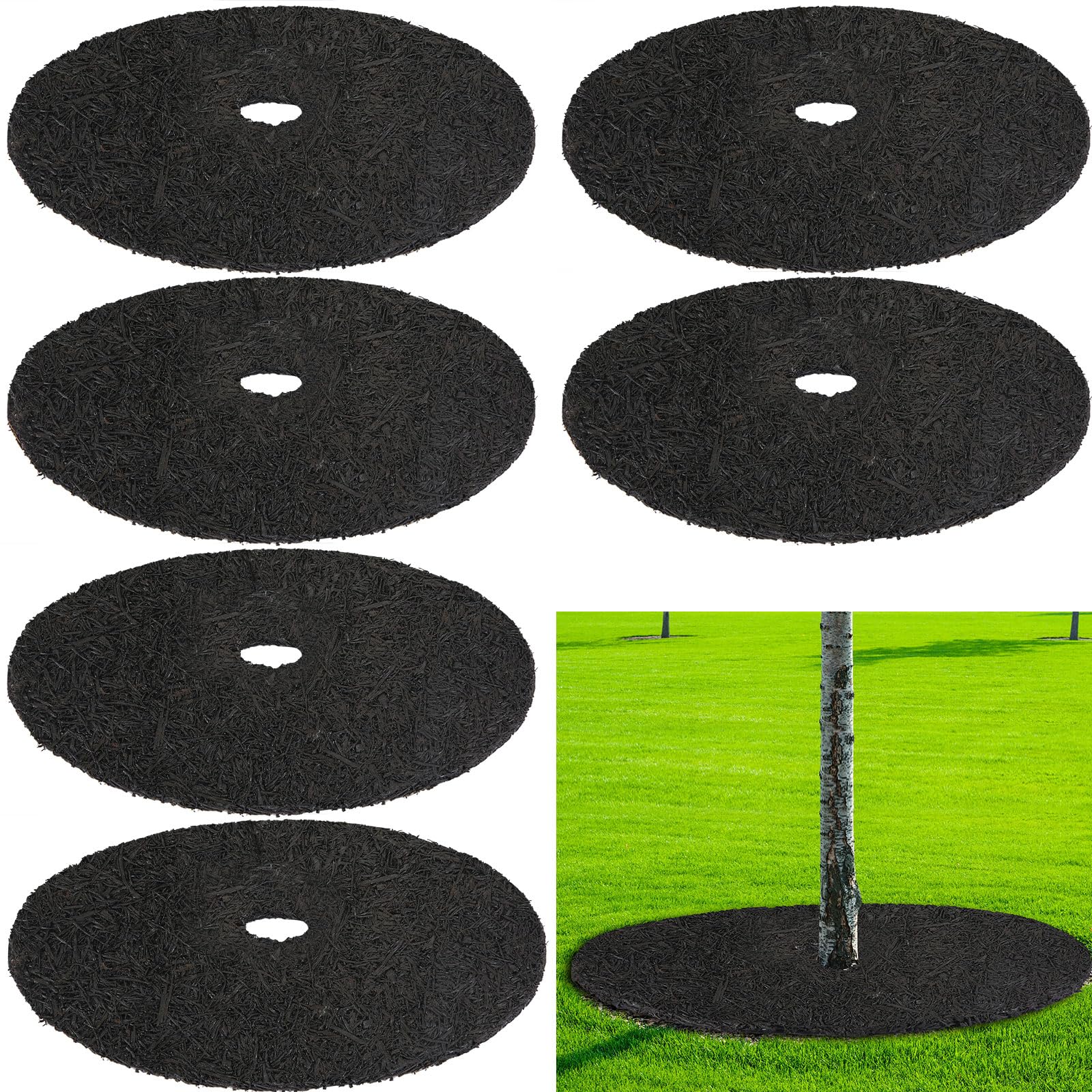
The Peryiter 6-Pack Rubber Mulch Tree Ring delivers the best per-unit value for owners managing multiple young fruit trees or shrubs. Each ring has a 12-inch outer diameter with a 3-inch center hole and a material thickness of 0.59 inches — slightly thicker than the Rocky Mountain and Fasmov rings. This extra thickness translates to better resistance against string trimmer wear and less deformation under mower tires. The rings are cut from recycled rubber with a textured surface on one side; you can place either side up depending on whether you prefer the textured or smoother finish facing outward.
Installation is as simple as sliding the ring over the trunk and letting the weight hold it in place. The center hole has a pre-cut seam that can be expanded if the trunk girth increases, which is a practical feature for young trees that will grow over time. The rubber is porous enough to allow water and air exchange, preventing the soil beneath from becoming waterlogged. Owners report that these rings survive a full year of weather exposure, mower passes, and weed-wacker hits without cracking or crumbling — the same failure modes that kill cheap plastic rings in weeks.
The 12-inch diameter is small enough that it won’t cover the full dripline of a maturing tree, but for saplings and newly planted fruit trees, it provides exactly the right protected zone. The six-pack gives you enough material to circle a small orchard or to protect multiple shrubs in a bed. The only real limitation is the size: once the tree canopy expands beyond 18 inches, you’ll need to either move the ring to a smaller tree or upgrade to a larger diameter. For the price per ring, that’s an acceptable trade-off.
What works
- Six rings per pack offer exceptional value for multi-tree setups
- 0.59-inch thickness provides superior trimmer and mower resistance
- Expandable center hole accommodates trunk growth over time
What doesn’t
- 12-inch diameter is too small for trees beyond the sapling stage
- Cannot be cut easily — requires very heavy-duty cutting tool for resizing
6. Fasmov 3 Pack Rubber Mulch Ring Tree Protector Mat (24 Inch)

The Fasmov 3-Pack Rubber Mulch Ring hits a practical sweet spot for the mid-range fruit tree owner. Each ring measures 24 inches in diameter with a 4-inch center hole, giving you enough coverage to protect the root zone of a young tree while leaving room for the trunk to expand. The material is recycled heavy-duty rubber about half an inch thick — the same thickness as the Rocky Mountain rings but in a smaller diameter. The rubber is dual-sided, with a lighter brown tone on one side and black on the other, giving you two aesthetic options from a single purchase.
Installation is truly tool-free: just slide the ring under the tree, open the pre-cut seam to fit around the trunk, and walk away. The weight of the rubber holds it firm; you don’t need landscape staples even on sloped ground. The porous construction allows moisture and oxygen to reach the root zone, which prevents the anaerobic conditions that can develop under solid plastic sheeting. Owners note that grass does occasionally grow through the mat after extended periods, but this is less of an issue when the ring is paired with a layer of wood mulch on top. A serrated knife or heavy-duty scissors will cut through the rubber if you need to resize the center hole.
While the 24-inch diameter won’t cover a full mature fruit tree’s dripline, it’s a capable size for the first few years of growth. The three-pack covers multiple trees at a cost that undercuts most rubber ring competitors. The biggest limitation is that some units arrive with minor cosmetic flaws — a slice or tear in the edge — that don’t affect function but are worth checking on arrival. For the price, this is a solid workhorse option that prioritizes durability and ease of use over premium aesthetics.
What works
- Tool-free installation with no stakes or staples required
- Dual-sided color options (brown/black) for aesthetic flexibility
- Porous rubber allows moisture and air exchange to roots
What doesn’t
- Grass can grow through the mat over time without a mulch overlay
- Some units may arrive with minor cosmetic edge imperfections
7. 7 inch Solid Planting Grow Rings | 6 Pack Earth Brown
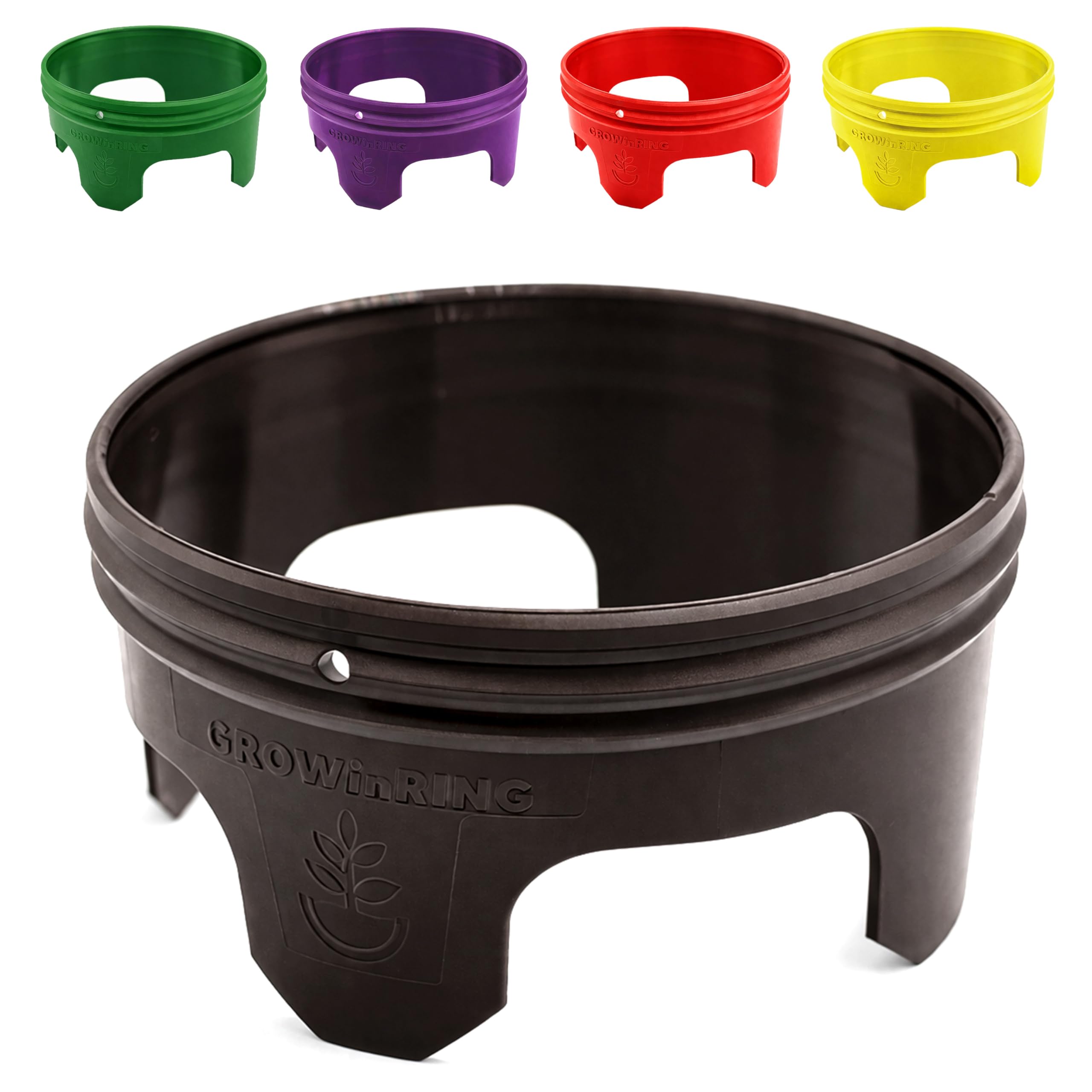
The Rooted Promise 7-Inch Solid Planting Grow Ring is a completely different approach to a tree border — it’s designed as a deep watering funnel rather than a weed barrier mat. Made from a rigid one-piece plastic, the ring creates a contained basin around the trunk that directs water straight to the root zone without any runoff. This is especially useful for fruit trees planted in hard, compacted soil where water tends to sheet across the surface instead of soaking in. The 7-inch diameter is small, so it’s best suited for young saplings or dwarf fruit tree varieties rather than full-size specimens.
The ring includes a built-in side port that accepts standard 1/4-inch drip irrigation tubing, making it easy to integrate into an automated watering system. The raised exterior ridges have a secondary benefit: they create a physical barrier that helps deter slugs and cutworms from reaching the trunk. This is a surprisingly effective pest management feature that most larger borders don’t address. The earth brown color blends into the soil well, and the one-piece construction means there are no seams to leak or shift over time. The set of six rings covers multiple trees or a small orchard at a reasonable entry-level investment.
The trade-off is clear: this ring is too small to serve as a primary weed barrier, and it won’t protect against string trimmers or mowers. Its purpose is water management and pest deterrence, not physical protection. For that reason, it works best as a supplementary layer inside a larger rubber or steel border. Pair it with a Rocky Mountain or Fasmov ring for a two-stage system: the outer ring blocks weeds and mowers, while the inner grow ring ensures deep targeted watering. On its own, it’s a specialized tool for a specific problem, not a complete border solution.
What works
- Built-in 1/4-inch drip irrigation port enables targeted root watering
- Raised ridges create a physical barrier against slugs and cutworms
- One-piece solid design won’t leak or shift like multi-piece rings
What doesn’t
- 7-inch diameter is too small for established fruit trees or weed suppression
- Does not protect against string trimmers or lawn mower contact
Hardware & Specs Guide
Rubber Thickness & Density
For lay-flat rubber tree rings, thickness is the primary indicator of durability. Rings with a thickness of 0.5 inches or more survive repeated string trimmer strikes without tearing. Thinner rings (under 0.25 inches) crack in the first season, especially in regions with freeze-thaw cycles. The Peryiter ring at 0.59 inches and the Rocky Mountain and Fasmov rings at 0.5 inches all pass this threshold. Density matters equally — recycled rubber that is too porous will crumble under UV exposure. High-density SBR (styrene-butadiene rubber) is the industry standard for long outdoor service life.
Surface Porosity & Drainage Rate
Porous rubber mats allow water to seep through across the entire surface area, which prevents pooling and distributes moisture evenly. Solid-wall plastic rings and metal borders concentrate water only at the trunk opening, which can lead to over-saturation around the base and dry soil at the dripline. The optimal drainage rate for a fruit tree border is a slow soak — water should percolate through the ring within 1-2 hours of application. Rubber mats naturally achieve this, while metal or solid plastic borders require manual watering inside the ring to achieve the same effect.
Metal Gauge & Corrosion Resistance
Galvanized steel and powder-coated steel borders offer the longest lifespan if installed correctly. The Land Guard uses a 0.6mm gauge corrugated steel that resists bending under soil pressure, while the BAVNNRO uses a heavier alloy steel with a pre-rusted oxide coating. The key spec to check is whether the coating is a finish (paint or powder coat) or a true galvanization layer. Painted metal will chip and rust within two years; galvanized and pre-rusted finishes develop protective patinas that prevent further corrosion. For fruit trees in irrigated beds, metal borders should have a minimum of G60 galvanization rating or an equivalent oxide layer.
Center Hole Expansion Design
Fruit tree trunks expand in girth as they mature, so a border with a fixed center hole can eventually girdle the tree or require replacement. The best designs feature a pre-cut seam that allows the center opening to be enlarged with a utility knife or heavy-duty scissors. The Peryiter ring includes this feature explicitly, and the Rocky Mountain and Fasmov rings can be cut to size, though this requires more effort. Metal borders avoid this issue entirely because they are installed at a distance from the trunk, typically 6-12 inches away. Never install a border that fits tightly around the trunk — always leave a 2-3 inch gap for air circulation and expansion.
FAQ
How far from the trunk should I place a fruit tree border?
Is rubber or metal better for preventing grass invasion around fruit trees?
Can I use landscape fabric under a rubber tree ring for extra weed protection?
How long do rubber mulch rings typically last outdoors?
Final Thoughts: The Verdict
For most gardeners, the border around a fruit tree winner is the Vego Garden Tree Surround & Watering Ring because it combines a rigid metal barrier with a 16-gallon slow-release watering bladder — solving both physical weed/trimmer protection and deep root hydration in one system. If you want a simple, mower-safe, lay-flat solution for multiple trees, grab the Rocky Mountain 30-Inch Rubber Ring. And for creating a custom-shaped, permanent border around a large specimen, nothing beats the Land Guard Corrugated Steel Edging.