
Managing a greenhouse means wrestling with temperature swings, uneven watering, and flimsy plastic that tears in the first breeze. The difference between a thriving harvest and a wilted disaster often comes down to small hardware choices most gardeners overlook until it’s too late.
I’m Rikta — the co-founder and writer behind Lawn Gear Lab. I’ve spent hundreds of hours comparing technical specs, studying horticultural efficiency data, and analyzing aggregated owner feedback to separate the accessories that genuinely perform from those that just look good on a shelf.
This guide breaks down seven essential categories of gear to help you find the right greenhouse accessories for your specific setup and climate.
How To Choose The Best Greenhouse Accessories
Greenhouse accessories are not one-size-fits-all. The right choice depends on your greenhouse size, local climate, and the specific plants you grow. Before buying, assess your biggest pain point: is it heat management, tedious hand-watering, lack of usable bench space, or securing poly film against wind?
Irrigation Flow & Coverage
Look at tubing inner diameter — 5/16″ main lines deliver higher volume than 1/4″ lines and maintain pressure over longer distances. Adjustable emitters let you tailor water volume per plant, critical when mixing succulents with moisture-loving vegetables. Quick-connect fittings reduce installation time and virtually eliminate leaks if your hands aren’t strong enough for barbed connectors.
Ventilation Automation
Automatic vent openers use a wax cylinder or hydraulic rod that expands with heat. The key spec is the opening temperature threshold (most activate around 75-77°F) and the maximum lift weight. Dual-spring designs provide stronger thrust for heavier aluminum-framed vents and resist wind slamming better than single-spring units.
Structural Add-Ons
Shelving must match your greenhouse frame material — aluminum shelves resist corrosion but cost more than coated steel. For film attachment, look for PVC-coated wiggle wire paired with aluminum lock channels; bare steel wire can rust and damage poly sheeting. The channel thickness (0.05″ is standard) determines long-term rigidity under wind load.
Quick Comparison
On smaller screens, swipe sideways to see the full table.
| Model | Category | Best For | Key Spec | Amazon |
|---|---|---|---|---|
| Bonviee 230FT | Irrigation Kit | Quick-install drip systems | Quick-connect fittings | Amazon |
| Dual Spring Vent Opener (2-Pack) | Ventilation | Automatic temp regulation | 18-inch max opening | Amazon |
| VEVOR Channel Lock Kit | Film Fastening | Securing poly film & shade cloth | Aluminum alloy, 6.56 ft | Amazon |
| Unoutur 520FT Irrigation | Irrigation Kit | Large-scale, multi-zone watering | 440 ft of 1/4″ tubing | Amazon |
| Amylove Single Spring Opener (2-Pack) | Ventilation | Budget-friendly auto venting | Dual-spring, aluminum alloy | Amazon |
| Palram Heavy Duty Shelf | Shelving | Sturdy bench space | 90 lbs capacity | Amazon |
| Cokacot 98.4Ft Misting System | Irrigation Kit | Misting & cooling | Brass misting nozzles | Amazon |
In‑Depth Reviews
1. Bonviee Drip Irrigation System 230FT

The Bonviee kit is the single best value entry point for greenhouse watering because it solves the biggest frustration — installation. The push-to-connect fittings eliminate the finger pain of barbed connectors, and the 197 feet of 1/4″ tubing paired with 33 feet of 5/16″ main line gives you room to customize layouts for raised beds, pots, and ground rows alike.
Three types of adjustable stake sprayers (vortex, stream, and multi-stream) let you switch between gentle drip and full coverage spray, accommodating succulents through tomatoes without swapping hardware. The system is timer-compatible for full automation, and most users report installation in under two hours.
The only shortcoming is that complex layouts with many branches may require additional stakes, as the included 20 stakes run out fast for detailed designs. But for the coverage and ease of assembly, this kit drastically outperforms its price tier.
What works
- Truly tool-free push-to-connect assembly
- Three adjustable nozzle types for different plant needs
- Plenty of tubing for medium to large greenhouses
What doesn’t
- Extra stakes required for highly branched layouts
- Vortex heads lose spray radius at lower water pressure
2. Dual Spring Automatic Roof Vent Opener (2-Pack)
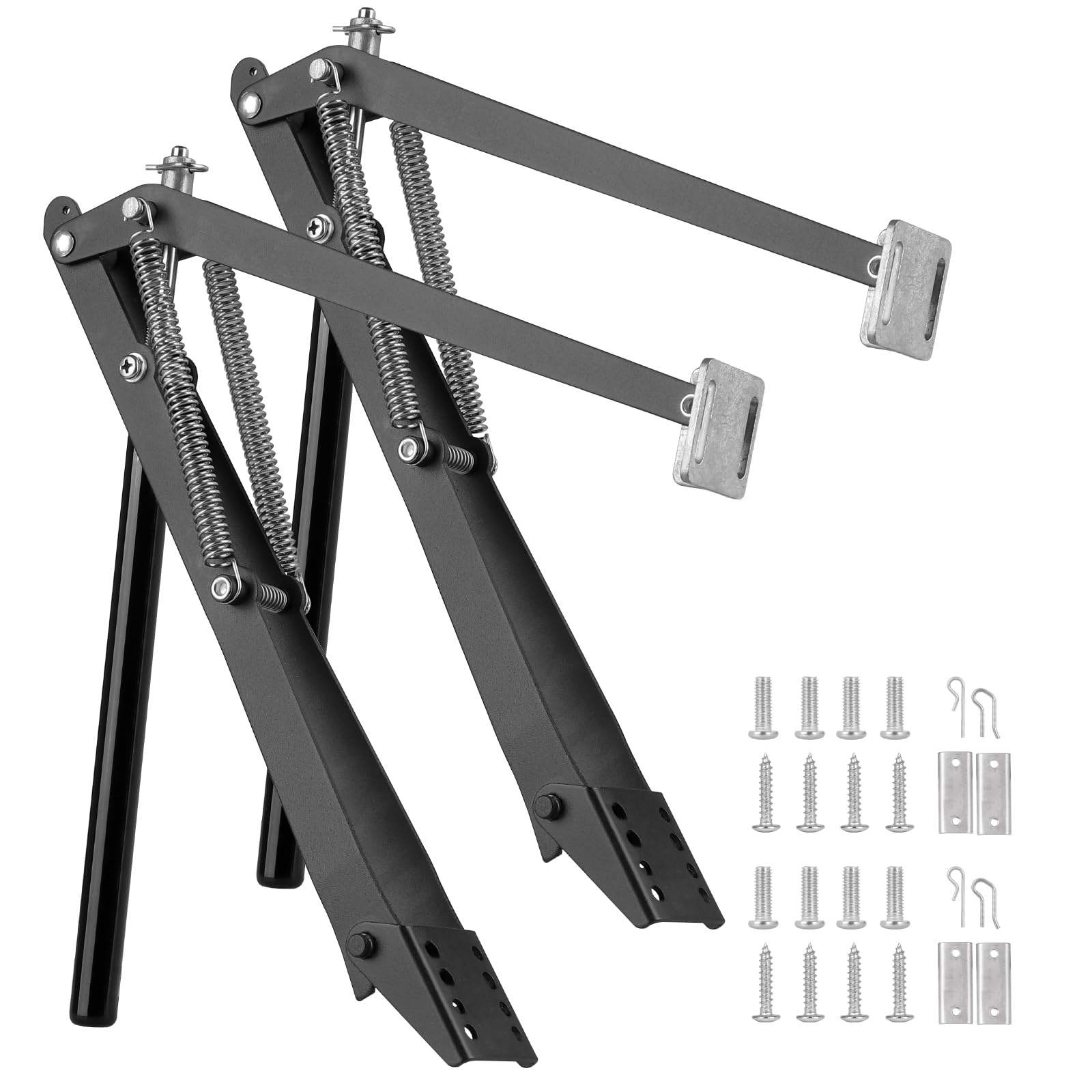
This dual-spring vent opener uses a wax hydraulic cylinder that expands when internal greenhouse temperatures exceed 77°F, pushing the vent open up to 18 inches. When temperatures fall below 59°F, the cylinder contracts and the vent closes. No batteries, no solar panels — just thermal physics, which means it works even in overcast conditions.
The galvanized steel construction and dual-spring design provide substantially more thrust than single-spring equivalents, making it suitable for heavier aluminum or polycarbonate vents in windy mountainous areas. The spring system also locks the vent against slamming, a common failure point with cheaper openers.
Installation requires basic tools and drilling, but the included brackets and rust-proof screws accommodate panel, metal, or wood frames. A few users note partial opening at 63°F, but overall the temperature response is reliable and consistent across repeated daily cycles.
What works
- 18-inch max opening for strong ventilation
- Fully automatic, zero electricity required
- Heavy-duty springs prevent wind slam damage
What doesn’t
- Installation instructions are sparse
- May not fully close during brief cool rain if frame fits poorly
3. VEVOR Greenhouse Spring Wire and Lock Channel 10-Pack
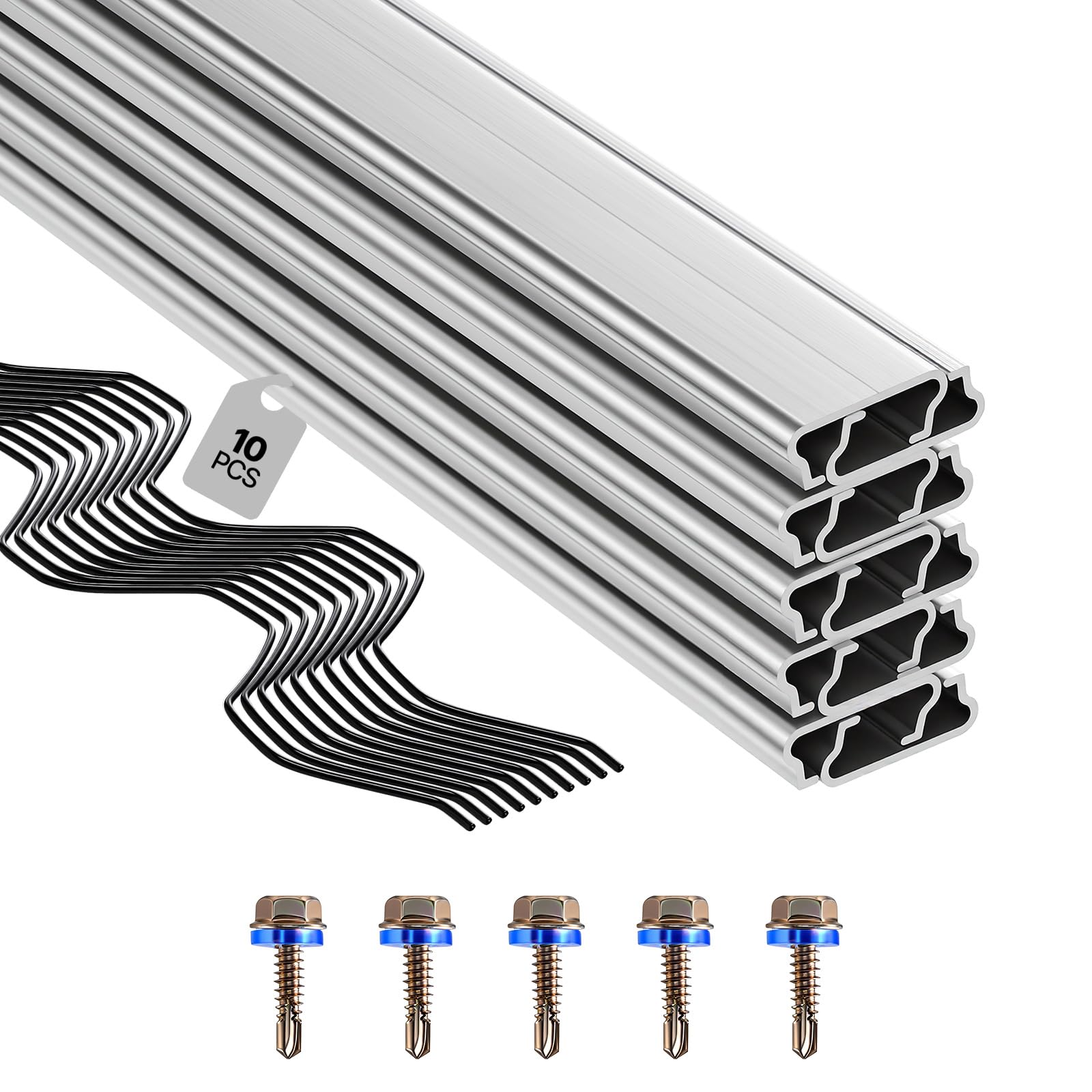
Securing poly film to a greenhouse frame is one of the most frustrating tasks for DIY builders. This VEVOR kit eliminates that pain with 10 aluminum alloy channels and 10 PVC-coated wiggle wires, each 6.56 feet long. The channels are 0.05 inches thick — stiff enough to hold their shape around curved frames without deforming.
The PE coating on the wire prevents the metal from abrading or tearing poly sheeting, a problem with bare steel wires that can cause leaks within a season. Installation is straightforward: screw the channel to the frame, lay the film over it, and press the wire into the channel with hand strength. Included screws save a separate hardware trip.
Users report surviving close tornado passes with minimal film detachment, and the aluminum alloy resists corrosion far better than standard galvanized channels. The only drawback is that the PVC coating on the wire can flake slightly with repeated removal and reinstallation, but for permanent or seasonal setups this is a non-issue.
What works
- Aluminum channels resist rust and bend cleanly around frames
- PE-coated wire won’t damage poly film
- Includes all screws for immediate installation
What doesn’t
- PVC coating can flake with frequent reuse
- Hand strength needed to press wire into channel
4. Unoutur 520FT Drip Irrigation System Kit
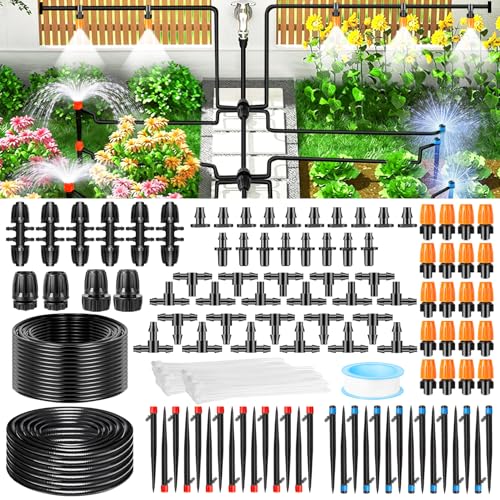
For large greenhouses or multi-zone layouts, the Unoutur 520FT kit provides 80 feet of 1/2″ main tubing plus 440 feet of 1/4″ distribution tubing — enough to run a robust system with separate lines for different crop blocks. The kit includes 40 misting nozzles, 30 drip emitters in two styles (vortex and stream), and a staggering 314 total pieces.
The barbed fittings require a bit more hand strength than quick-connect systems, but they deliver a more secure mechanical lock over long pressure runs. Thread seal tape is included for the hose-end connections, which is a small detail many kits omit. Users report the system maintains consistent pressure even after rerouting lines through raised beds and hanging baskets.
The sheer number of pieces means you can build two separate small systems or one long run. However, the included 24 nylon zip ties are basic — upgrading to reusable wire ties is recommended for permanent setups. The barbed topology also makes last-minute layout adjustments more involved compared to a push-connect system.
What works
- Massive 520-foot coverage for large greenhouses
- Two emitter types for varied watering needs
- Thread seal tape included for leak-proof hose connections
What doesn’t
- Barbed fittings harder to install than quick-connect
- Zip ties are basic quality
5. Amylove Single Spring Vent Opener (2-Pack)
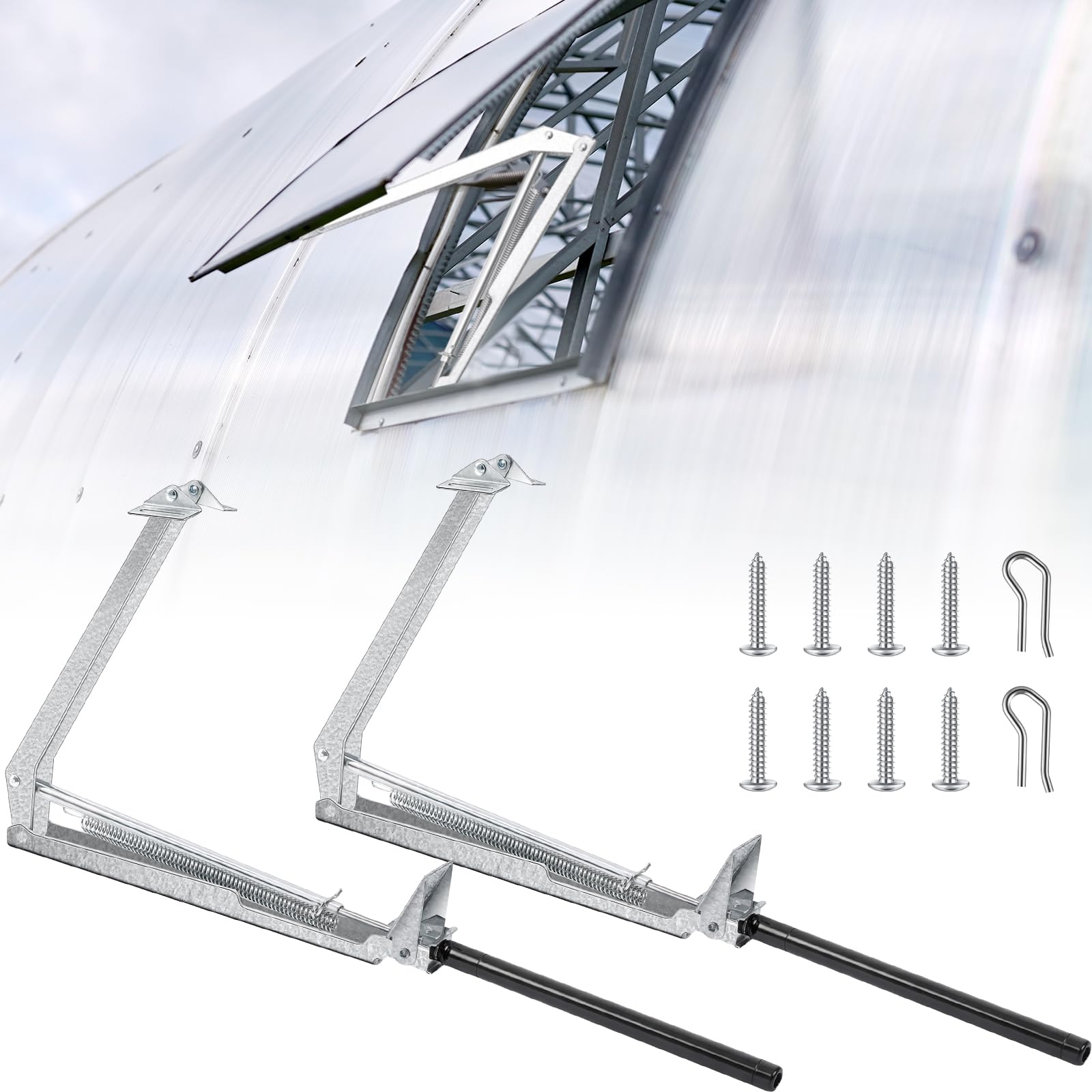
The Amylove 2-pack uses a dual-spring design in an aluminum alloy body to sense temperature changes and automatically open greenhouse vents above 77°F, closing when temperatures drop to 15-18°C (59-64°F). It’s a solid entry-level automation solution that works without any electrical connection — purely solar thermal.
The aluminum construction resists rust, but the included instructions are notably poor, forcing most users to search online videos for proper cotter-pin installation. Once set up correctly, the openers reliably cycle daily and can handle moderate wind conditions thanks to the double-spring thrust.
One trade-off with this price tier is that the pistons may not generate enough force to close heavier roof vents if it rains while they’re open — the wax cylinder doesn’t contract instantly when wetted. For lightweight polycarbonate or glass vents in mild climates, this is rarely an issue, but users with heavy aluminum-framed vents should consider the premium dual-spring model.
What works
- Two openers included for multiple vents
- Corrosion-resistant aluminum body
- No electricity or batteries needed
What doesn’t
- Poor instruction manuals cause installation frustration
- May not close heavy vents during sudden rain
6. Palram Heavy Duty Shelf

Not all greenhouse shelving is equal — the plastic-coated wire shelves that come with many budget kits sag under seed trays full of wet soil. The Palram heavy duty shelf solves this with aluminum construction rated for 90 pounds, and it does not deform or bend at maximum load. It’s purpose-built for Palram greenhouses but fits most aluminum-frame hobby greenhouses with similar rail spacing.
Installation is simple for anyone who has already assembled their greenhouse frame, and the shelf can be repositioned anywhere along the horizontal rails. You can mount multiple units side by side to create continuous bench space, though corner mounting is not supported due to bracket geometry.
The main consideration is that these shelves are a notable investment compared to generic wire shelves. However, the premium buys rust-free performance in the high-humidity greenhouse environment — coated steel shelves often corrode within two seasons, while aluminum lasts indefinitely. Users report them holding heavy flats of seedlings without any bowing.
What works
- Full 90-pound capacity with zero sagging
- Corrosion-resistant aluminum for wet greenhouse use
- Easy to reposition along existing frame rails
What doesn’t
- Does not mount in corners
- Higher cost than plastic or coated-steel alternatives
7. Cokacot 98.4Ft Drip Irrigation Misting System
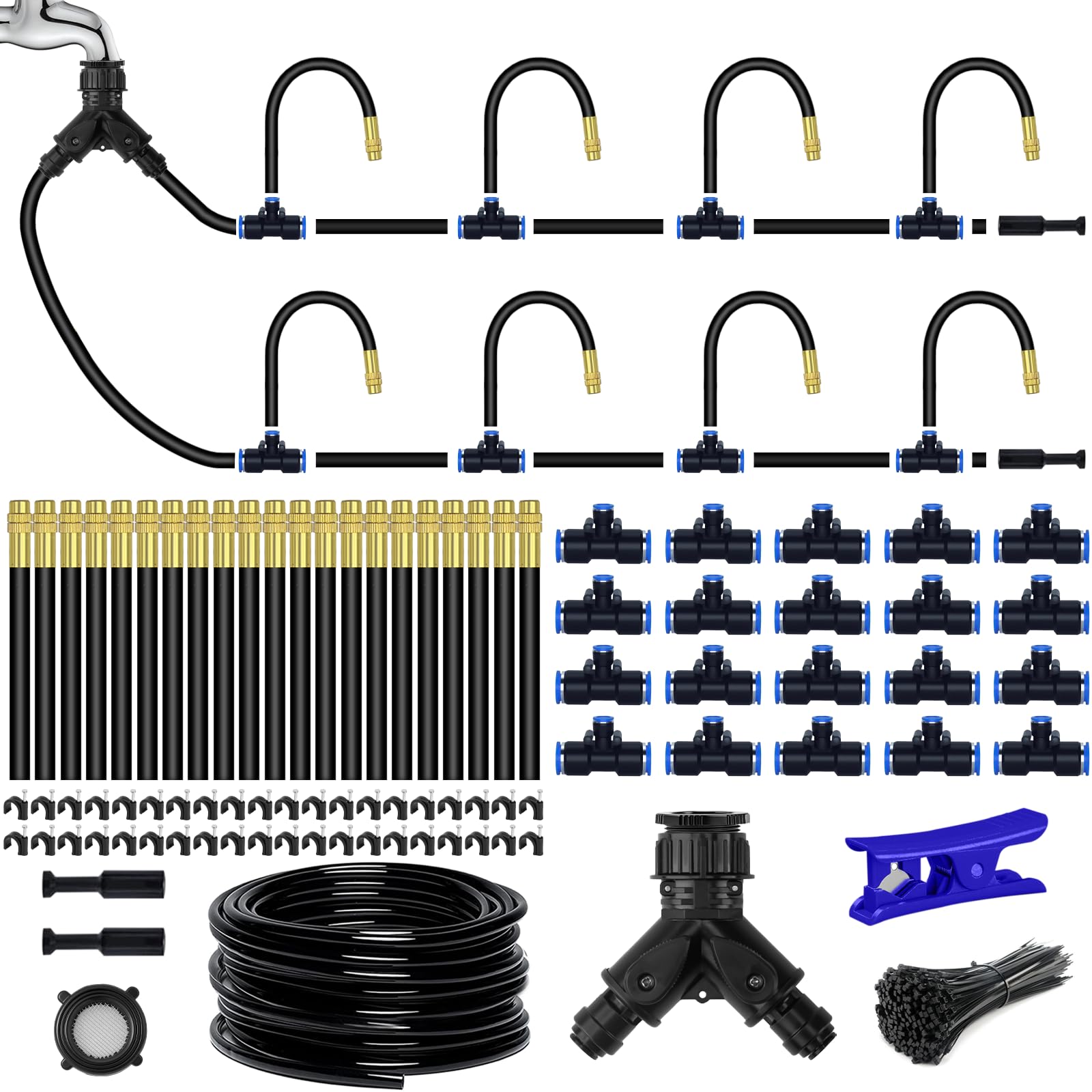
The Cokacot kit is a focused solution for greenhouse misting — ideal for cooling, humidity control, and watering seedlings with gentle overhead moisture. The 98.4 feet of 5/16″ tubing includes 20 brass misting nozzles that can be rotated 360 degrees and locked into any direction, giving precise control over spray coverage.
Three adjustable pressure modes (small, medium, large) allow you to dial in the droplet size from a fine fog to a heavier mist, saving over 70% water compared to open-hose watering. The brass nozzles are a significant upgrade over all-plastic options that wear out or clog season after season. The kit operates without any power source — it runs purely on water pressure from your garden hose.
The trade-off is that this is a misting system, not a root-zone drip system. If your primary need is direct soil watering for deep-rooted plants in raised beds, a drip emitter kit would be more efficient. The included zip ties are also on the thin side. But for cooling and overhead misting in propagation benches or heat-sensitive crops, this is a well-engineered budget entry.
What works
- Brass misting nozzles resist clogging and corrosion
- Fully adjustable spray direction and water pressure
- No electricity required to operate
What doesn’t
- Misting not ideal for deep root-zone watering
- Zip ties provided are flimsy
Hardware & Specs Guide
Tubing Diameter & Flow
5/16″ (8mm) main line delivers roughly 40% more volume than 1/4″ line over the same length, critical for runs over 50 feet. For drip systems, 1/4″ distribution tubing is adequate for individual plant runs under 20 feet. Quick-connect fittings (push-to-lock) reduce installation time by half compared to barbed fittings, but barbed connections provide a more permanent mechanical seal under sustained pressure.
Wax Cylinder vs Hydraulic Rod
Automatic vent openers use a wax-filled cylinder that expands when heated — temperature thresholds typically range from 72°F to 82°F for opening and 50°F to 60°F for closing. Hydraulic rod variants use oil instead of wax and respond fractionally faster but cost more. Dual-spring designs provide 15-20 lbs of lift force compared to 8-10 lbs for single-spring units, making them necessary for heavy polycarbonate or glass vents.
FAQ
What diameter drip tubing should I use for a 20×30 foot greenhouse?
Will a wax cylinder vent opener work in a greenhouse that gets direct afternoon sun?
How do I prevent drip irrigation emitters from clogging in a greenhouse with hard water?
Final Thoughts: The Verdict
For most gardeners, the greenhouse accessories winner is the Bonviee 230FT Drip Irrigation Kit because it removes the most common barrier — difficult installation — while providing the adjustable spray patterns needed for diverse plant types. If you want precise automatic temperature control without electricity, grab the Dual Spring Vent Opener 2-Pack. And for securing poly film against wind over many seasons, nothing beats the VEVOR Channel Lock Kit.