
Walking a property with wet oak leaves matted against the grass is where a handheld electric blower meets its match. The difference between clearing an acre in two hours versus four often comes down to engine displacement, air volume, and a harness that doesn’t dig into your shoulders after twenty minutes. Gas backpack blowers remain the standard for anyone facing deep leaf beds, gravel driveways, or seasonal snow removal because they deliver sustained high CFM without worrying about battery runtime or extension cord reach.
I’m Rikta — the co-founder and writer behind Lawn Gear Lab. I’ve spent hundreds of hours comparing engine specs, analyzing airflow metrics, and studying owner feedback on gas blowers across residential and commercial use cases to separate genuine performance claims from marketing noise.
This guide breaks down nine gas-powered blowers by real-world airflow, ergonomic design, and starting reliability so you can confidently choose the best rated gas leaf blowers for your property size and workload.
How To Choose The Best Rated Gas Leaf Blowers
Selecting the right gas blower is not just about picking the highest number on the spec sheet. Real usability depends on matching engine output to your property’s demands, understanding how weight distribution affects fatigue, and knowing which starting features actually reduce frustration. Below are the key decision points that separate a good purchase from a regretful one.
Engine Displacement and Airflow Balance
The engine size measured in cubic centimeters (cc) determines how much air the fan can move under sustained load. A 63cc engine pushing 665 CFM with 205 MPH handles wet leaves and light snow effectively, while a 79.9cc engine generating 1110 CFM with 220 MPH is designed for commercial landscapes and heavy debris. Higher CFM moves larger volumes of air — critical for pushing piles across open lawns — while higher MPH concentrates force into a narrow stream better suited for dislodging stuck debris from cracks and flower beds. Matching these numbers to your typical debris type prevents buying excessive power you won’t use or insufficient force that leaves you working twice as hard.
Backpack Harness and Vibration Management
A blower that hangs from your back for one to three hours needs a harness that distributes weight evenly across shoulders and hips. Look for padded straps with load-reducing designs and a ventilated back panel to minimize sweat buildup. LowVib technology or integrated shock absorption systems reduce hand and arm fatigue caused by prolonged engine vibration. Models with a tube-mounted throttle and cruise control allow you to lock a consistent speed so you don’t have to keep a finger on the trigger — a small detail that significantly reduces hand cramping during long sessions.
Starting Reliability and Fuel System Design
Nothing wastes time like a blower that refuses to start. Air purge bulbs, primer systems, and spring-assist starters all address this pain point differently. Purge bulbs remove air from the carburetor and fuel line so the engine fires on the first few pulls rather than requiring twenty frustrated attempts. Some commercial models include a decompression valve that reduces pull resistance. Fuel tank capacity also matters — a 1.7-liter tank may run 40 to 60 minutes under heavy use, while a 3-liter tank can stretch past 90 minutes, reducing interruptions for refueling on larger properties.
Commercial vs Residential Construction
A blower labeled “commercial-grade” typically uses thicker plastic housing, a more robust air filter system with two-stage filtration, and heavier-duty fasteners that withstand daily professional use. Residential models prioritize lighter weight and lower cost, but may use thinner tube extensions and less durable straps. For homeowners clearing an acre once a week, a mid-range residential backpack blower with a solid warranty is often the smarter value. For anyone running a landscaping service or managing multiple acres with dense tree coverage, the upfront investment in a commercial-grade engine and harness pays for itself in reliability and reduced downtime.
Quick Comparison
On smaller screens, swipe sideways to see the full table.
| Model | Category | Best For | Key Spec | Amazon |
|---|---|---|---|---|
| Echo PB-9010T | Premium | Maximum airflow on large properties | 1110 CFM / 220 MPH | Amazon |
| Husqvarna 570BTS | Premium | Professional clearing performance | 972 CFM / 236 MPH / 37 N | Amazon |
| Echo PB-770T | Commercial | Balanced power and weight | 756 CFM / 234 MPH | Amazon |
| Husqvarna 560BTS | Commercial | Professional debris cleanup | 631 CFM / 232 MPH / 30 N | Amazon |
| PRORUN PBB2884 | Value/Performance | High CFM at mid-range cost | 1020 CFM / 240 MPH | Amazon |
| VEVOR 79cc | Mid-Range | Extended runtime on larger yards | 930 CFM / 184 MPH | Amazon |
| Echo PB-2620 | Handheld | Lightweight powerful handheld use | 456 CFM / 172 MPH | Amazon |
| Echo PB-580T | Mid-Range | Reliable mid-weight backpack blower | 510 CFM / 215 MPH | Amazon |
| HTK 63CC | Value | Budget-friendly backpack blower | 665 CFM / 205 MPH | Amazon |
In‑Depth Reviews
1. Echo PB-9010T Gas 2-Stroke Backpack Blower

The Echo PB-9010T sits at the top of the gas backpack blower hierarchy with a 79.9cc engine that moves 1110 CFM at 220 MPH. This is the kind of airflow that pushes wet leaves, small sticks, and gravel across an entire lawn without requiring multiple passes. Owners consistently report that half-throttle is enough for normal cleanup, and full throttle creates a stream that can clear a neighbor’s driveway if you’re not careful. The tube-mounted throttle with cruise control gives you precise speed management without keeping a finger on the trigger, which makes a real difference during extended sessions.
At roughly 28 pounds, the PB-9010T is heavier than the 770T and 580T models, but the harness distributes the weight well enough that users on five-acre properties report completing full jobs without back pain. The starting system is smooth — owners note that the engine fires on the second or third pull when the purge bulb is primed correctly. The exhaust note is deeper than most competitors, which signals the engine’s displacement but also means this is not a quiet blower. Ear protection is essential.
Fuel consumption runs on the higher side, which is expected given the air volume. The 1110 CFM rating surpasses the top models from Husqvarna and Stihl, making this the go-to choice for anyone who wants absolute maximum clearing speed. The 5-year consumer warranty adds confidence, especially for residential users who invest at this tier. If you have mature trees covering more than two acres, or if you clear properties commercially, the PB-9010T is the benchmark.
What works
- Highest CFM in its class at 1110 — clears massive areas fast
- Smooth starting with purge bulb and predictable idle
- Tube-mounted throttle with cruise control reduces hand fatigue
What doesn’t
- Heavy compared to mid-range Echo models
- Fuel consumption is high — expect frequent refills on large jobs
- Loud exhaust requires consistent hearing protection
2. Husqvarna 570BTS Backpack Leaf Blower
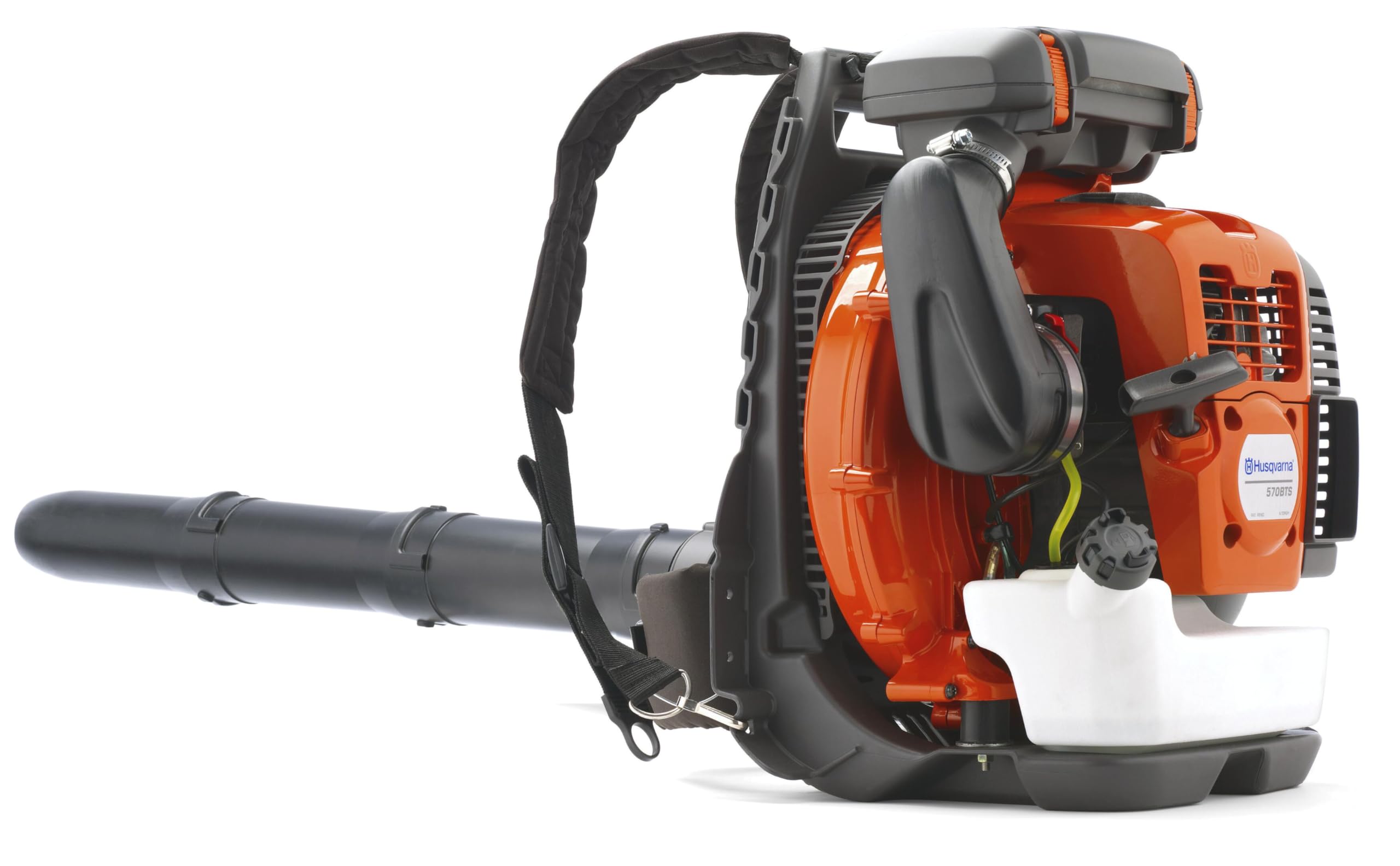
The Husqvarna 570BTS delivers 972 CFM at 236 MPH with a 66cc X-Torq engine that produces 37 Newtons of blow force — the highest thrust measurement in this lineup. This translates to moving wet leaves uphill without losing momentum, which owners on sloped properties confirm after years of use. The spring-assist starter reduces pull resistance noticeably, making cold starts less of a shoulder workout. The LowVib system and load-reducing harness with wide shoulder straps keep the 24.5-pound weight manageable for multi-hour sessions.
One of the 570BTS’s strongest features is the air purge system that removes air from the carburetor and fuel line, leading to reliable starting on the second or third pull even after the blower has sat for weeks. Owners with two-plus acre properties report that a single tank lasts through an entire cleanup session, and the commercial-grade air filter keeps fine dust out of the engine during dry conditions. The offset soft-grip handle rotates for better control, and the tube-mounted controls keep your hand in a natural position.
The 570BTS is noticeably louder than some competitors — measured around 110 dB at full throttle — so ear protection is mandatory. The stop button does not automatically reset, which can be confusing if you forget to set it before the next start. But for professional landscapers or homeowners with heavily wooded lots who demand the highest blow force available, this Husqvarna model delivers consistent, brutal efficiency. The 5-year warranty for residential use and 2-year for commercial use reflects the build confidence.
What works
- 37 N blow force outperforms most backpack blowers
- Spring-assist starter reduces pull effort significantly
- Commercial-grade air filter extends engine life
What doesn’t
- Extremely loud — hearing protection is non-negotiable
- Stop button does not auto-reset, causing confusion
- Weight distribution is good but 24.5 lbs still heavy for smaller frames
3. Echo PB-770T Commercial Backpack Blower

The Echo PB-770T splits the difference between the mid-range 580T and the top-tier 9010T, offering 756 CFM at 234 MPH from a 63.3cc engine. This is the sweet spot for homeowners with one to three acres who need serious power without the weight penalty of the 9010T. Owners consistently mention that the blower is lighter than expected, and the cool air vent on the back pad is a welcome feature during summer cleanup sessions. The 5-year consumer warranty matches Echo’s commercial-grade reliability promise.
Starting behavior improves as the engine breaks in — several owners note initial pull resistance that eases after the first few tanks of fuel. The purge bulb primes the carburetor quickly, and most users report reliable starts on the second or third pull when following the cold-start procedure. The 770T handles wet leaves, mulch, and light gravel without bogging down, and the throttle response is crisp across the entire range. The tube-mounted controls keep the interface simple and intuitive.
Experienced owners with twenty-plus years in lawn care rank the 770T as one of the best backpack blowers they have used, citing the smooth power delivery and comfortable harness as reasons they reach for it over competitors. Some users wish they had bought the 9010T for maximum power, but for the majority of residential properties, the 770T delivers more than enough force without the extra weight and fuel consumption. If you want Echo reliability in a versatile, daily-driver package, the 770T is the right call.
What works
- Excellent balance of power and weight for residential use
- Cool air exhaust vent on back pad improves comfort
- Smooth throttle response with reliable 2-3 pull starting
What doesn’t
- Initial pull can be stiff before break-in
- Some users eventually want more CFM for very large properties
- Base price is high for the mid-range bracket
4. Husqvarna 560BTS Professional Backpack Blower
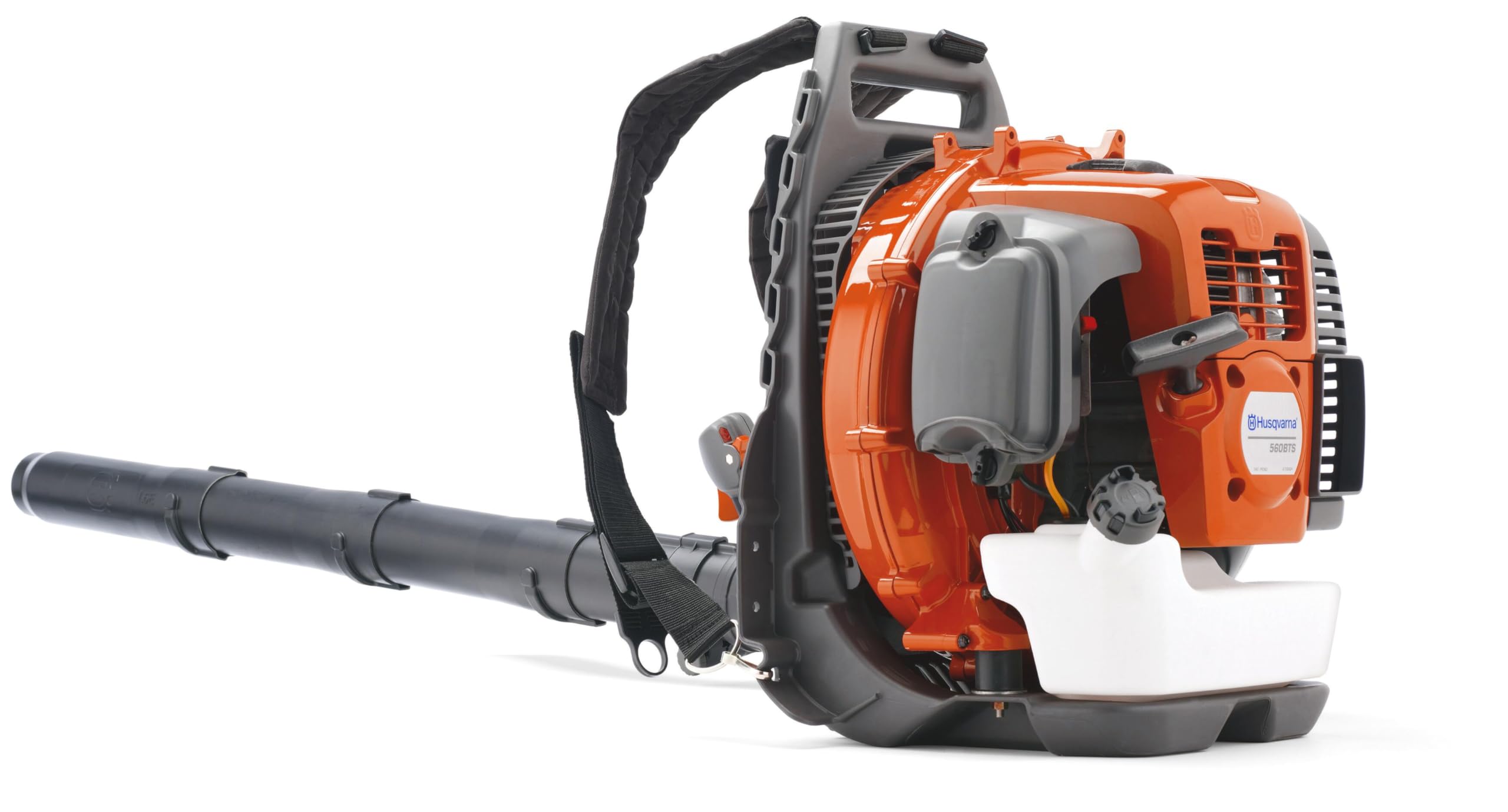
The Husqvarna 560BTS uses a 65.6cc X-Torq engine that produces 631 CFM at 232 MPH with 30 Newtons of blow force. While the CFM is lower than the 570BTS, the 560BTS prioritizes fuel efficiency and reduced emissions without sacrificing real-world clearing ability. Owners report that the blower starts on the second or third pull reliably, burns through fuel slowly enough to last through a full acre on a single tank, and reduces total cleanup time by roughly two-thirds compared to handheld blowers.
The two-stage load-reducing harness features a ventilated back pad and wide shoulder straps that distribute the 23-pound weight evenly. The tube-mounted throttle with cruise control lets you lock in a consistent speed, which is useful for clearing long driveways or extended gutter work. The commercial-grade air filter uses two-stage intake to keep fine debris out of the carburetor, extending service intervals. Owners appreciate that the blower handles wet leaves, sticks, and even powdery snow without losing momentum.
Some owners note that the tube fit is tight and the blower lacks a chest strap or waist strap, which would improve stability on uneven terrain. The engine is noticeably loud, and the 560BTS does not include a low-vibration system as advanced as the 570BTS. But for professionals and homeowners who need a durable, fuel-efficient backpack blower with enough power to clear a large property quickly, the 560BTS delivers proven reliability. The 5-year residential warranty adds peace of mind.
What works
- Fuel-efficient X-Torq engine reduces refueling stops
- Reliable starting with choke and primer system
- Commercial-grade air filter extends engine service life
What doesn’t
- No chest or waist strap for stability
- Tube fit is tight during assembly and adjustment
- Lower CFM than 570BTS and 9010T for max-airflow jobs
5. PRORUN PBB2884 Backpack Leaf Blower

The PRORUN PBB2884 delivers 1020 CFM at 240 MPH from a 75.6cc 2-cycle engine, making it one of the highest airflow-to-cost ratios available. Owners with five-acre properties and over 160 trees report that this blower moves three-foot-high piles of leaves without bogging down, matching the performance of Stihl models at a significantly lower price point. The blower starts reliably with a short pull after priming the purge bulb 15 times and using quality 50:1 mixed fuel.
The backpack design includes padded shoulder straps and a frame that distributes the 32.8-pound weight reasonably well, though the unit is heavier than comparable Echo and Husqvarna models. The starter switch feels thin to some users, but after six months of ownership, the blower has maintained consistent performance without issues. The throttle control is responsive, and the cruise lock allows you to maintain a steady speed without finger strain. The three-year residential warranty is competitive for this price tier.
Where the PBB2884 compromises is in fit and finish — the straps can be awkward to put on without a high resting spot, and the plastic components feel less dense than commercial-grade competitors. The engine is loud but produces an authoritative sound that matches its output. For anyone who needs professional-grade CFM without spending at the premium tier, the PRORUN delivers exceptional value. The hurricane-force wind is not an exaggeration — users confirm it pushes wet debris like nothing else at this price.
What works
- 1020 CFM at a mid-range price point is unmatched
- Reliable starting with proper priming procedure
- Clears large leaf piles effortlessly including wet debris
What doesn’t
- Heavy at 32.8 lbs — challenging for smaller users
- Straps are awkward to put on without a high surface
- Plastic components feel less durable than premium brands
6. VEVOR 79cc Backpack Gas Leaf Blower
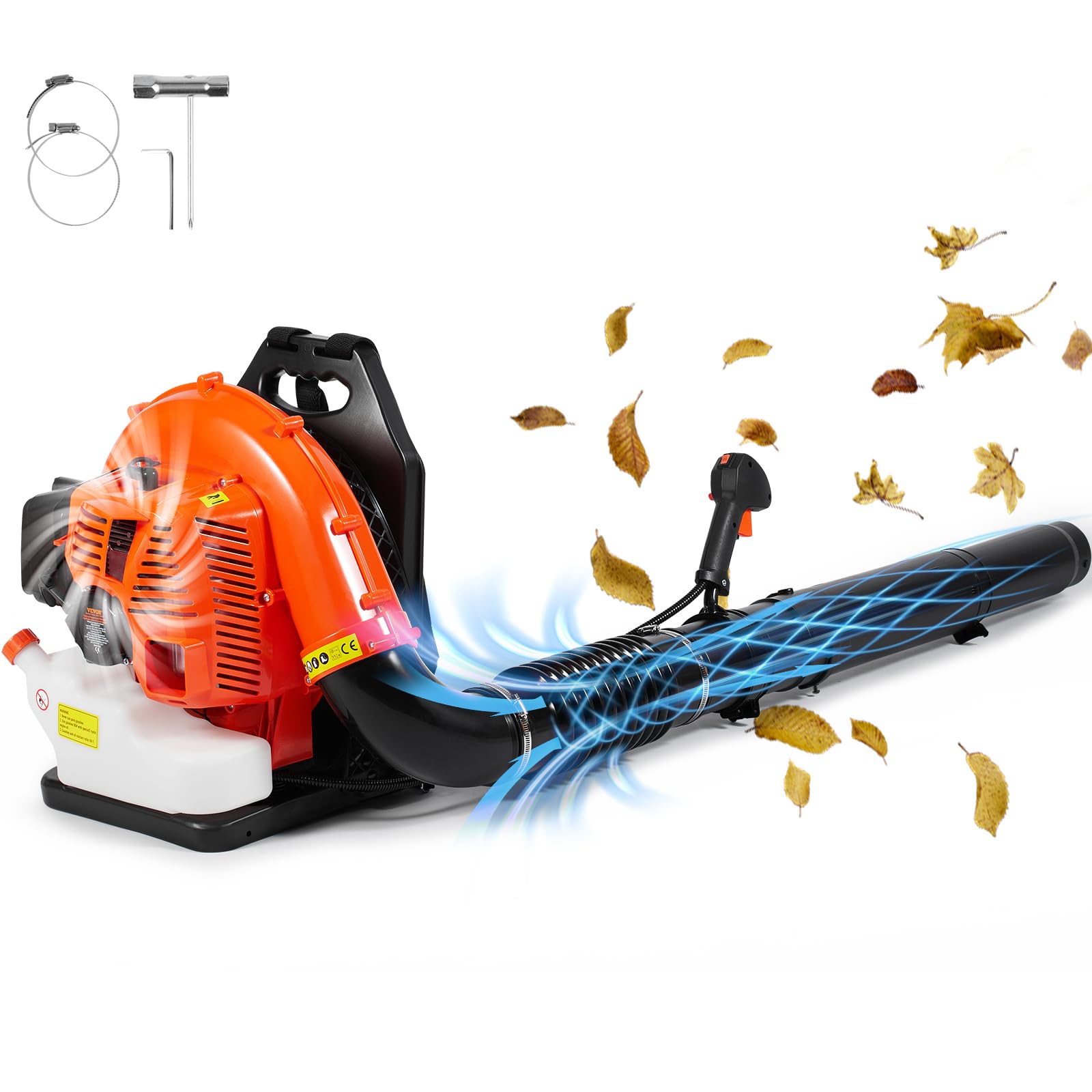
The VEVOR 79cc backpack blower runs a 2-stroke engine that produces 930 CFM at 184 MPH, with a 3-liter fuel tank that allows up to 95 minutes of continuous operation. This makes it the best choice for properties where refueling interruptions are the main productivity killer. Owners confirm they can clear a front and back yard plus a neighbor’s lot on a single tank. The 79cc engine sips fuel efficiently compared to higher-revving competitors, and the engine runs smoothly after a few pulls once the purge bulb is primed.
The shock-absorption system and padded shoulder straps with a thick back cushion help manage the 29.76-pound weight. The cruise control locks in power settings so you don’t have to hold the trigger continuously. The included accessory kit — noise-reducing earmuffs, mixing bottle, socket wrench, and hex wrench — provides everything needed for assembly and maintenance. The adjustable hose angles let you redirect airflow without bending down.
Some owners report an idle issue that requires carburetor adjustment out of the box, and the primer bulb is awkwardly placed near the engine shroud. The tubing extensions feel less robust than Echo or Husqvarna parts. The airspeed at 184 MPH is lower than many competitors, but the high CFM compensates by moving a wide column of air. For homeowners who prioritize runtime and cost efficiency over top-end peak speed, the VEVOR delivers steady performance that outperforms its price tag.
What works
- 3L fuel tank delivers 95 minutes of continuous runtime
- 930 CFM moves large volumes of air effectively
- Comprehensive accessory kit included with earmuffs and tools
What doesn’t
- Idle may need adjustment out of the box
- Primer bulb placement is awkward
- Tubing extensions feel less durable than premium brands
7. Echo PB-2620 Handheld Leaf Blower
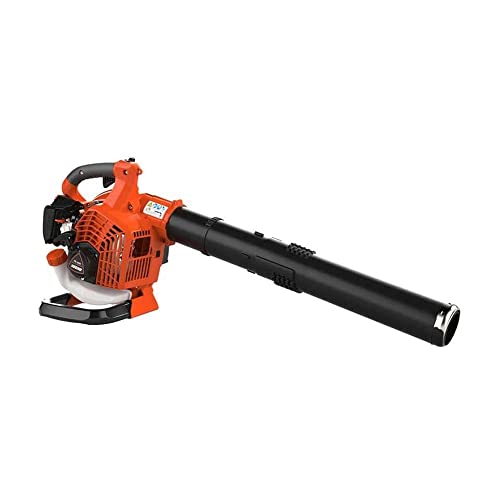
The Echo PB-2620 is a handheld gas blower with a 25.4cc engine producing 456 CFM at 172 MPH, making it Echo’s top-tier handheld option. Owners consistently describe it as surprisingly powerful for its size — it starts on the third pull, idles smooth after a short break-in period, and delivers enough force to clear driveways, sidewalks, and small yards without needing a backpack harness. The throttle lock keeps the engine running at a consistent speed without holding the trigger, which reduces finger fatigue.
The build quality is commercial-grade: the plastic housing feels dense, the air filter is accessible for cleaning, and the carburetor holds its adjustment even after extended storage. The blower is somewhat heavy for a handheld at around 10 pounds, but the ergonomic handle and trigger placement make it manageable for 30- to 45-minute sessions. The noise level at 69 dB is lower than most backpack blowers, which makes it more neighborhood-friendly.
Long-term owners note that the PB-2620 uses less fuel than the Stihl BR600 and is easier to carry for extended periods. The main drawbacks are the price — which has increased roughly from earlier releases — and the lack of included extras like a spark plug tool, 2-stroke oil, or an extra air filter. The manual lacks a parts list, making maintenance harder for DIY users. If you want the most powerful handheld gas blower without graduating to a backpack, the PB-2620 is the benchmark.
What works
- Most powerful handheld blower in Echo’s lineup
- Reliable starting with smooth idle after break-in
- Lower noise than backpack blowers — better for neighborhoods
What doesn’t
- Heavy for a handheld blower at roughly 10 lbs
- No spare parts or oil included in the box
- Manual lacks technical data and parts diagram
8. Echo PB-580T Backpack Blower

The Echo PB-580T uses a 58.2cc engine that produces 510 CFM at 215 MPH with a noise rating of 70 dB. This is a mid-range backpack blower that focuses on reliability and fuel efficiency rather than pushing extreme airflow numbers. Owners with typical suburban properties report that the PB-580T cuts cleaning time in half compared to handheld blowers, and the comfortable harness allows hours of use without back strain. The dry weight of 22.6 pounds is manageable for most users.
The blower starts reliably with the purge bulb and choke system, and the throttle response is linear across the range. The tube-mounted controls are intuitive, and the cruise lock allows you to set a consistent speed for long straightaways. The 5-year Echo warranty is a strong selling point, and the commercial-grade air filter keeps the engine breathing clean even in dusty conditions. Owners consistently rate the build quality as excellent for the price tier.
The PB-580T lacks the raw power of the 770T or 9010T, and users with large properties or heavy wet leaf conditions may find themselves wanting more CFM. The assembly manual is poorly organized, though the actual setup is straightforward. The harness lacks some padding compared to Husqvarna’s premium models, but it is comfortable enough for most users. For homeowners who want Echo dependability in a lightweight, easy-to-use backpack blower without overspending, the PB-580T remains a strong choice.
What works
- Lightweight at 22.6 lbs — easy to wear for extended periods
- Reliable starting with purge bulb and choke system
- Strong 5-year Echo warranty backs the purchase
What doesn’t
- 510 CFM is low for large properties or wet debris
- Harness padding is adequate but not premium
- Assembly manual could be clearer
9. HTK 63CC Backpack Blower
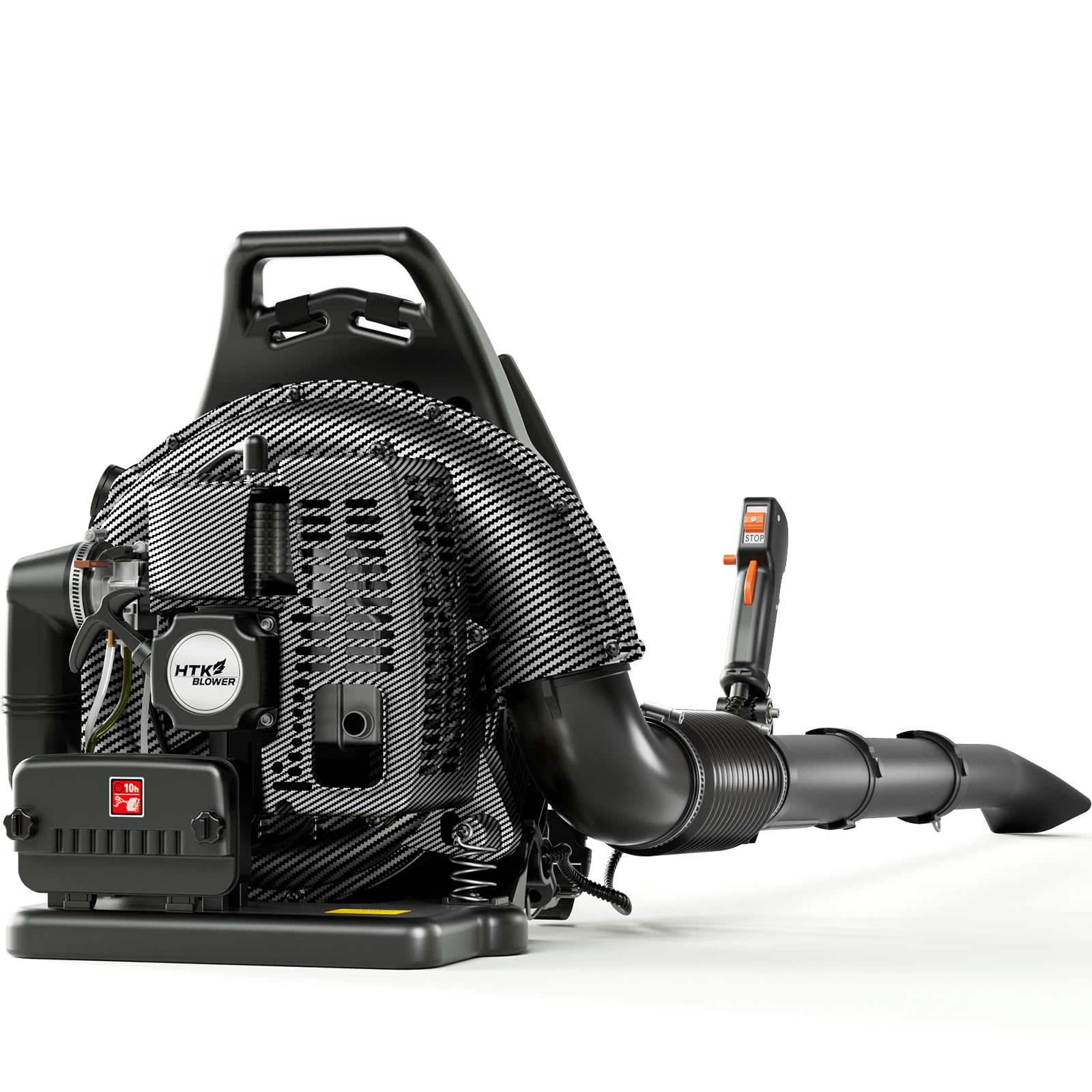
The HTK 63CC backpack blower offers a commercial-grade 63cc 2-stroke engine that pushes 665 CFM at 205 MPH, making it a strong entry point for homeowners who want backpack-level power without investing in premium brands. The air purge system reduces the frustration of pull-start battles — most owners report the engine fires on the second or third pull after priming. The cruise control locks in the throttle position, which helps avoid trigger fatigue during long cleanup sessions.
The padded backpack harness includes low-vibration technology that owners find comfortable for clearing full yards. The 1.7-liter fuel tank provides enough runtime for typical residential properties. The 71 dB noise level is on par with the class but still requires hearing protection. The blower handles wet leaves, debris, and light snow without bogging down, which is impressive for the price point. The carbon fiber pattern plastic housing looks more premium than the price suggests.
Where the HTK shows its budget origins is in the details: the plastic tubes and straps feel less robust than Echo or Husqvarna components, and some owners note that the straps feel flimsy under heavy use. The initial break-in period requires a 25:1 fuel mix before switching to 40:1, which is an extra step that some users miss. The engine is loud and unmuffled compared to premium models, and the velcro strap design could be improved. For homeowners on a budget who need backpack power without the premium price, the HTK delivers surprising value.
What works
- 665 CFM at a budget-friendly price point
- Air purge system provides reliable starting
- Comfortable padded harness with low vibration
- Cruise control reduces trigger fatigue
What doesn’t
- Plastic tubes and straps feel less durable
- Requires 25:1 break-in mix before standard 40:1 ratio
- Loud unmuffled engine — hearing protection essential
Hardware & Specs Guide
CFM vs MPH
Cubic feet per minute (CFM) measures the volume of air the blower moves, while miles per hour (MPH) measures the velocity of that air. For pushing large piles of leaves across a lawn, higher CFM is more effective. For dislodging debris from tight spaces like flower beds or gutter troughs, higher MPH is preferable. Most backpack blowers balance these two numbers — look for at least 650 CFM for acre-plus properties and 200+ MPH for wet or stuck material.
Engine Displacement (cc)
The cubic centimeter displacement of a 2-cycle engine directly correlates to its potential power output. Handheld blowers typically range from 25cc to 30cc, while backpack models span from 58cc to 80cc. Higher cc engines generally produce more torque and sustain higher CFM under load, but they also add weight and increase fuel consumption. For most residential users, 60cc to 70cc provides the best balance of power and portability.
Backpack Harness Design
An effective harness distributes the blower’s weight across your shoulders and hips rather than concentrating it on one area. Look for padded shoulder straps with sternum or waist straps for large models. Ventilated back pads reduce heat buildup during summer use. Low-vibration technology reduces hand and arm fatigue — a feature worth prioritizing if you run the blower for more than an hour at a time.
Fuel System and Starting Aids
Air purge bulbs, primer systems, and decompression valves all reduce the physical effort required to start a cold 2-cycle engine. A purge bulb removes air bubbles from the fuel line so the carburetor receives fuel immediately. Some premium models include spring-assist starters that reduce pull resistance. Cruise control locks the throttle at a consistent speed, which improves efficiency and reduces hand strain during extended use.
FAQ
What fuel mix do most gas leaf blowers require?
How do I choose between a handheld and a backpack gas blower?
How loud are gas leaf blowers and do I need hearing protection?
Final Thoughts: The Verdict
For most homeowners and professionals seeking the best rated gas leaf blowers, the clear winner is the Echo PB-9010T because it delivers 1110 CFM of airflow that clears even the most stubborn wet debris faster than any competitor in this lineup. If you want the highest blow force for uphill terrain and large wooded lots, grab the Husqvarna 570BTS with its 37 Newtons of thrust. And for budget-conscious users who refuse to compromise on CFM, the PRORUN PBB2884 offers 1020 CFM at a fraction of the premium tier cost — a rare value proposition in the gas blower market.