
Anthuriums are notoriously picky feeders—their striking spathes and glossy leaves demand a precise nutrient mix that generic all-purpose fertilizers rarely deliver. The wrong formula can scorch sensitive roots, produce leggy growth, or completely halt blooming, leaving you with a lush green plant that never puts out another flower.
I’m Rikta — the co-founder and writer behind Lawn Gear Lab. I’ve spent dozens of hours cross-referencing NPK ratios, studying manufacturer-backed research on aroid nutrition, and analyzing verified owner feedback to identify exactly which formulas deliver the calcium, magnesium, and trace elements that anthuriums actually require.
Whether you grow in soil, LECA, or semi-hydroponics, selecting the right best anthurium plant food comes down to understanding three variables: the nitrogen-to-potassium balance, the presence of chelated micronutrients, and whether you need a concentrated or ready-to-use format for your specific growing medium.
How To Choose The Best Anthurium Plant Food
Anthuriums are epiphytic aroids with specialized nutrient uptake. Unlike heavy feeders like tomatoes, they require a steady, low-dose nutrient stream with a distinct NPK profile. Selecting the wrong formula can lock out calcium or push excessive nitrogen, directly suppressing the flower spathes you bought the plant for.
NPK Ratio: The Nitrogen Trap
High-nitrogen fertilizers (anything above 5 in the first digit) will produce massive, dark green leaves but rarely any blooms. Anthuriums need a balanced to potassium-heavy ratio—look for numbers like 3-1-2 or 10-0-10. Potassium supports spathe color and stem strength, while phosphorus should stay moderate to avoid root burn in the sensitive, fleshy root system.
Calcium and Magnesium: The Hidden Essentials
Anthuriums are calcium accumulators—deficiencies show as new leaves that emerge deformed or with necrotic tips. Magnesium keeps older leaves from yellowing between veins. Many aroid-specific fertilizers now include both as part of the formula, eliminating the need for separate CalMag supplements. If your water is already soft, look for a product that explicitly states it contains these secondary nutrients.
Application Form: Liquid vs. Foliar vs. Spikes
Liquid concentrates give you full control over dosage in soil, LECA, or semi-hydroponic setups. Foliar sprays work well for anthuriums in bark-heavy mixes where root absorption is slow, but you need to avoid pooling in the crown to prevent rot. Pre-measured spikes are the least effective for anthuriums because they release nutrients unevenly and can burn the shallow, wandering roots.
Quick Comparison
On smaller screens, swipe sideways to see the full table.
| Model | Category | Best For | Key Spec | Amazon |
|---|---|---|---|---|
| Pretty in Green Leaf LUX | Concentrate | Aroid semi-hydro | 2.5-1.7-2.3 + Ca/Mg | Amazon |
| Aquatic Arts Indoor Plant Food | Concentrate | General soil feeding | 3-1-2 Miracle ratio | Amazon |
| BIOPLENAFEED All-Purpose | Spikes/ Liquid | Mess-free slow feed | Pre-measured spikes | Amazon |
| Gardenera Premium Palm 3-1-2 | Concentrate | Organic foliar boost | 3-1-2 all-stages | Amazon |
| Perfect Plants Alocasia Mist | Foliar Spray | Weekly Foliar feed | 10-0-10 + Boron | Amazon |
| Perfect Plants Philodendron Mist | Foliar Spray | Quick leaf absorption | 10-0-10 fine mist | Amazon |
| General Hydroponics FloraSeries 3-Pack | 3-Part Concentrate | Full grow-cycle system | 32 oz each part | Amazon |
In‑Depth Reviews
1. Pretty in Green Leaf LUX Liquid Fertilizer

Leaf LUX was formulated specifically for aroids, and the NPK of 2.5-1.7-2.3 sits exactly where anthuriums respond best—moderate nitrogen that won’t suppress blooms, plus elevated potassium to deepen spathe color. The inclusion of chelated calcium and magnesium eliminates the guesswork of separate CalMag supplements, which is critical for preventing the leaf tip necrosis anthuriums frequently exhibit under standard fertilizers. The 8-ounce bottle makes 40 gallons of nutrient water, making this one of the most economical concentrated options for serious collectors.
The formula is pH-adjusted to fall in the 5.8–6.2 range that anthuriums prefer, and it works across soil, LECA, aroid mix, semi-hydro, and full hydroponics without additional pH down. Long-term users report sustained growth in twelve-year-old specimens and faster leaf emergence in young cuttings. The absence of synthetic dyes means no artificial green tint that masks nutrient problems.
One minor drawback is the bottle design—the cap is a standard twist-off rather than a measured dropper, so you’ll need a syringe or teaspoon for accurate dosing. The concentrated solution has a faint organic odor that persists briefly after mixing, but dissipated quickly in our watering routine. Overall, this is the most targeted anthurium food available at this price point.
What works
- Formulated specifically for aroids with ideal NPK ratio
- Includes calcium and magnesium no CalMag needed
- pH balanced for optimal anthurium uptake
- Works in every growing medium including hydroponics
What doesn’t
- Bottle lacks integrated measuring system
- Faint organic smell when freshly mixed
2. Aquatic Arts Indoor Plant Food 3-1-2

Aquatic Arts delivers a classic 3-1-2 NPK Miracle ratio in a 500ml bottle that costs roughly the same as a single latte. The mixing instruction—one teaspoon per two cups of water—produces a very gentle feed that reduces the risk of root burn in sensitive anthuriums, making it a safe entry point for beginners who are still dialing in their watering schedule. The formula is advertised to last up to one year in storage, so you won’t waste product if you only have a few plants.
Customer feedback spans over a year of consistent use, with multiple reviewers noting their anthuriums produced more blooms and darker foliage compared to previous fertilizers. The liquid format allows precise control over dosage, which matters more for anthuriums than for hardier houseplants. It also doubles as a general-purpose food for philodendrons, pothos, and peace lilies, so a single bottle can cover an entire collection.
The main limitation is the lack of calcium and magnesium—if your tap water is already soft or you’re growing in pure bark, you may need to supplement separately. The bottle also lacks a graduated dropper, requiring a separate measuring tool. Still, for the price, this is the most accessible anthurium food on the market.
What works
- Very gentle 1:473 dilution prevents root burn
- Long shelf life up to one year
- Encourages blooms and foliage growth
- Budget-friendly entry price
What doesn’t
- No added calcium or magnesium
- No built-in measuring system
3. BIOPLENAFEED All-Purpose Plant Food Spikes
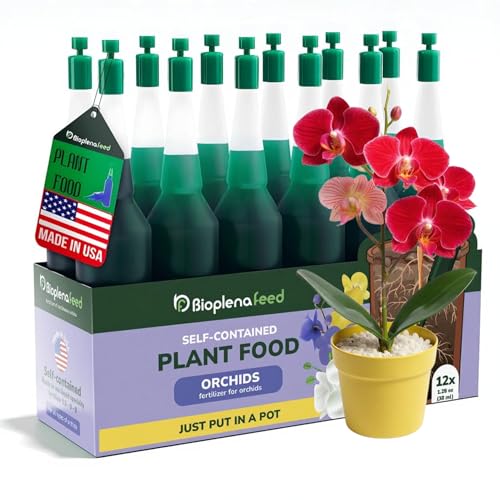
BIOPLENAFEED takes a different approach with its snap-top spike system—you cut the tip and invert it into the potting mix, eliminating any measuring, mixing, or mess. For anthurium growers who rotate large collections and want a set-and-forget option, this convenience is significant. The liquid inside seeps gradually into the root zone over days, providing continuous low-dose nutrition that matches anthuriums’ preference for steady, gentle feeding rather than large periodic doses.
Multiple verified reviews show success reviving “near dead” clearance plants within four days, which speaks to the formula’s ability to rapidly correct deficiencies. The spikes are most effective in consistently moist soil mixes; in bark-heavy or very chunky aroid mixes, the liquid may drain past the root zone before absorption. The 12-count pack covers a single pot for roughly three months, making it a mid-tier value proposition.
The biggest downside is dosage inflexibility—you can’t scale the dose up for large specimens or cut it for small 4-inch pots. And like the Aquatic Arts formula, it lacks a dedicated calcium-magnesium component. Users with very hard water should test their input before relying solely on these spikes for anthuriums that show leaf tip burn.
What works
- Zero measuring or mixing required
- Continuous slow-release feed reduces burn risk
- Fast results on stressed plants
- Mess-free application for large collections
What doesn’t
- Inflexible dosage for varying pot sizes
- Not ideal for bark-heavy or semi-hydro mixes
- No calcium or magnesium included
4. Gardenera Premium Liquid Palm 3-1-2

Though marketed for indoor palm trees, Gardenera’s 3-1-2 organic concentrate shares the same NPK profile that anthuriums thrive on. The key difference is the organic base—derived from natural plant meals rather than synthetic salts—which feeds the soil microbiome and buffers against pH swings. This is particularly beneficial for anthuriums potted in chunky organic mixes where microbial activity drives nutrient breakdown.
The mixing ratio of one teaspoon per gallon creates a dilute feed suitable for every-other-watering schedules. Reviews from citrus growers show revived trees that were “sickly with yellow leaves” that turned dark green within weeks, which mirrors how anthuriums respond to balanced potassium levels. The organic formulation does carry a noticeable compost-like smell during mixing, though it fades within minutes of application.
Because this is formulated for palms, it lacks the slightly higher potassium bias that some anthurium collectors prefer for maximum bloom output. The NPK is exactly balanced rather than potassium-heavy, so expect strong leaf growth with moderate bloom production. For growers who prioritize foliage density over constant flowers, this is an excellent organic choice.
What works
- Organic ingredients support soil biology
- Balanced 3-1-2 promotes steady growth
- Gentle dilution safe for regular use
- Works well in chunky aroid mixes
What doesn’t
- Labeled for palms, not aroid-specific
- Mild odor when mixing concentrate
- Potassium not elevated for maximum blooms
5. Perfect Plants Alocasia Food Mist 10-0-10
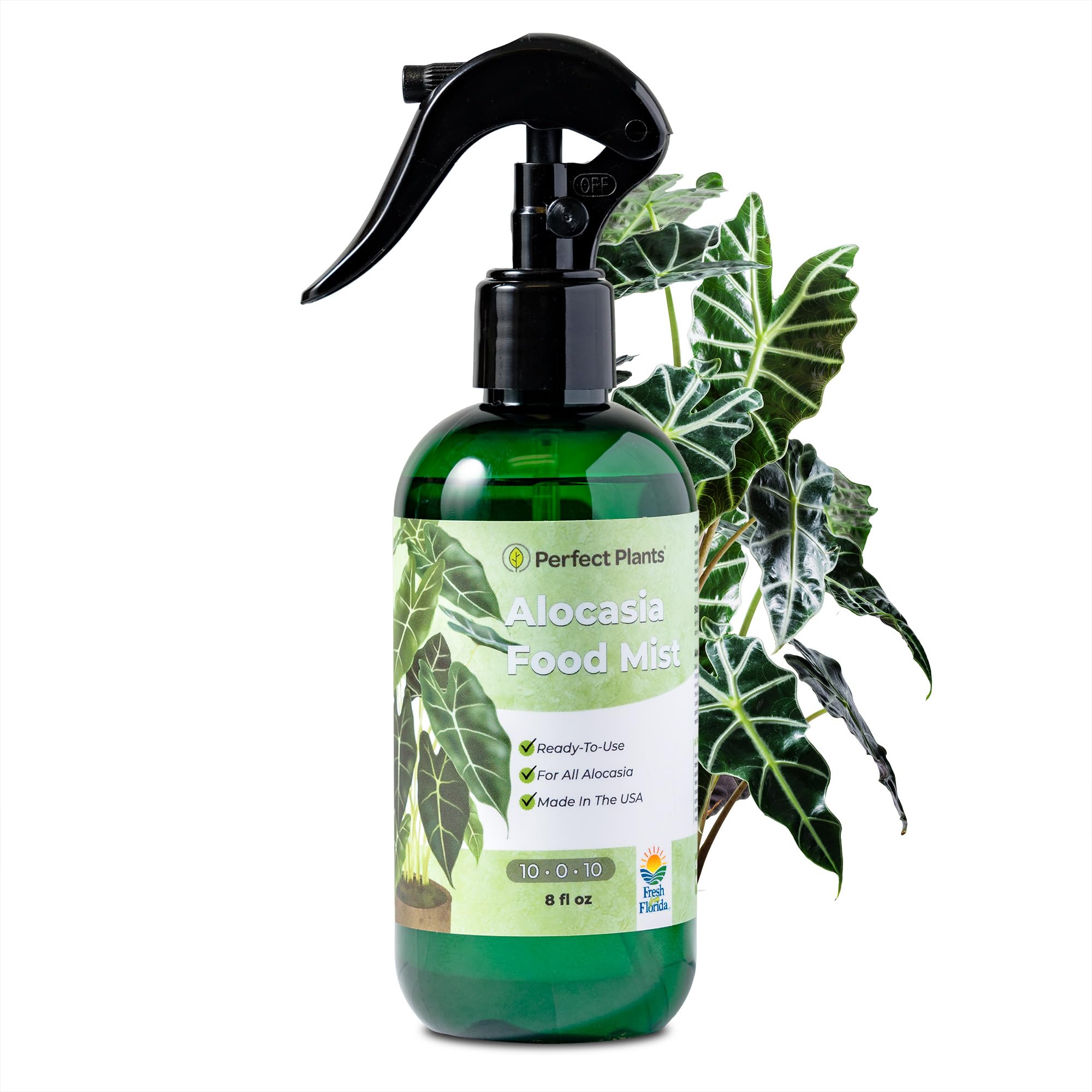
The 10-0-10 NPK of this foliar mist is highly distinctive—zero phosphorus means it won’t accumulate in the root zone, which is a genuine advantage for anthuriums in bark mixes where phosphorus can bind with calcium and cause deficiencies. The elevated nitrogen (10) combined with potassium (10) delivers rapid leaf greening and stem thickening, while the 0.5% boron helps prevent the brittle leaf tips that anthuriums sometimes develop under high-pressure grow lights.
The sprayer itself is well-designed with a lock-on safety switch and a fine mist nozzle that produces even coverage without large droplets that could pool in the crown and cause rot. Multiple reviewers report “throwing out new leaves like crazy” after two months of weekly application, which is a typical anthurium growth response to consistent foliar potassium. The 8-ounce bottle lasts multiple growing seasons if used weekly on a few medium-sized specimens.
The lack of calcium and magnesium in the formula is the main gap—anthuriums grown in pure bark will still need a soil drench that contains these secondary nutrients. The formula is also sold under multiple species labels (philodendron, monstera) with identical ingredients, which some users find gimmicky. For foliar feeding alone, this performs well, but it shouldn’t replace a complete liquid feed for soil-grown plants.
What works
- Zero phosphorus prevents calcium lockout
- Premium sprayer with safe lock design
- Fast leaf absorption from fine mist
- Easy weekly application saves time
What doesn’t
- No calcium or magnesium included
- Same formula sold under multiple labels
- Not a complete feed for soil-grown plants
6. Perfect Plants Philodendron Foliar Mist 10-0-10

This mist shares the same 10-0-10 base formula as the Alocasia variant—understandably, because the underlying nutritional needs are identical for most aroids. The fine mist application is ideal for anthuriums that struggle with root absorption due to overwatered or compacted soil, as the leaves can uptake nitrogen and potassium directly. The safety lock on the sprayer prevents accidental discharge, and the pre-mixed formula eliminates any measuring risk.
One verified reviewer noted their “philodendron perked up almost immediately” after application, which matches the rapid cosmetic effect of direct foliar feeding. The glossy leaves that result from the potassium boost are exactly what anthurium owners want for their spathe display. The bottle is small (8 fl oz) but the mist uses very little product per application, making it last much longer than a liquid drench of the same volume.
The same reservations apply here as to its sister product—calcium and magnesium are absent, and the formula is identical across multiple species labels. Users have also reported spotting residue on leaves when oversaturating, so it works best with a light even coat rather than a heavy soak. For anthurium growers who want a quick foliar tonic between regular feedings, this is a solid pick.
What works
- Immediate leaf greening from foliar uptake
- Safe sprayer lock prevents leaks
- Very economical per application
- Gentle enough for weekly use
What doesn’t
- Leaves white residue if oversaturated
- Identical formula sold as different species labels
- No calcium or magnesium supplementation
7. General Hydroponics FloraSeries 3-Pack 32 oz

The General Hydroponics FloraSeries is the gold standard for controlled nutrient delivery, and it works exceptionally well for anthuriums grown in semi-hydroponics or LECA. The three-bottle system—FloraGro (structural growth), FloraMicro (chelated micronutrients), and FloraBloom (flowering)—lets you dial in the exact NPK ratio for each growth stage. For anthuriums, a standard ratio of 2-1-2 or 3-2-1 works best, and the FloraSeries allows precise tailoring down to the milliliter.
The FloraMicro component delivers calcium and chelated micronutrients that are often lacking in simpler one-bottle formulas, directly addressing anthuriums’ tendency toward leaf tip burn. Long-term users report switching from other brands after seeing “immediate response in two days” with hand-sized leaves and continuous blooming. The 32-ounce size per bottle provides 96 ounces total, making it the largest volume option here, with a per-gallon cost that drops significantly compared to pre-mixed sprays.
The complexity is the barrier—new growers need to follow a feeding chart and invest in a pH testing kit, as the FloraSeries does not buffer pH. The upfront cost is higher than any single-bottle formula, and you’ll need to mix each time, which adds five minutes to your care routine. For serious anthurium collectors with large collections in semi-hydro or hydroponic systems, this system delivers premium results that no all-in-one can match.
What works
- Precise stage-specific NPK ratio control
- Calcium and micronutrients in FloraMicro
- Lowest per-gallon cost at this volume
- Exceptional results in semi-hydro systems
What doesn’t
- Requires pH testing and mixing chart
- Higher upfront investment than all-in-ones
- Not beginner-friendly for first-time growers
Hardware & Specs Guide
Understanding NPK Values for Anthuriums
The three-number ratio on the bottle represents nitrogen (N), phosphorus (P), and potassium (K). For anthuriums, nitrogen above 5 in the first digit triggers runaway leaf growth and suppresses flower production—a common beginner mistake. Look for ratios where the first number is 3 or lower, and the third number (potassium) is equal to or slightly higher than the first. Potassium directly supports spathe color intensity and stem rigidity, both critical for the ornamental value of anthuriums.
Calcium and Magnesium: The Aroid Essentials
Anthuriums require higher calcium than most foliage plants because they use it to build new cell walls in their fast-growing blooms. A deficiency shows as new leaves that emerge curled or with papery brown tips. Some anthurium-specific fertilizers include calcium and magnesium in the formula; if yours doesn’t, you can either supplement with a separate CalMag product or select a water source with moderate hardness (50–100 ppm calcium).
FAQ
How often should I feed my anthurium?
Can I use orchid fertilizer on my anthurium?
Why are my anthurium leaves turning yellow despite feeding?
Final Thoughts: The Verdict
For most gardeners, the best anthurium plant food winner is the Pretty in Green Leaf LUX because it delivers the ideal aroid NPK ratio with calcium and magnesium already included, and it works without modification in every growing medium from soil to hydroponics. If you want a beginner-friendly option that requires no mixing, grab the BIOPLENAFEED spikes. And for advanced growers managing a large semi-hydro collection, nothing beats the precision of the General Hydroponics FloraSeries 3-Pack.