
A grafting knife is a precision cutting tool designed for one critical task: creating clean, smooth cuts on plant tissue to unite a scion with a rootstock. Unlike a general-purpose pocket knife, a dedicated grafting knife features a specific blade geometry—often a straight edge for whip-and-tongue cuts or a curved hawkbill for bark lifting and bud grafting—that determines whether your union heals cleanly or dies from crushed cambium layers. The wrong blade bevel or steel hardness introduces microscopic tearing that invites infection, turning a season of potential into a wasted year of waiting.
I’m Rikta — the co-founder and writer behind Lawn Gear Lab. I’ve spent countless hours poring over metallurgical data sheets, comparing blade hardness ratings, examining handle ergonomics across dozens of models, and cross-referencing owner feedback from serious orchardists to weekend propagators to identify the tools that deliver the precision grafting demands.
This guide breaks down the essential specs and real-world performance of the seven most compelling options on the market to help you find the best grafting knife for your technique, from delicate bud grafts to heavy cleft work.
How To Choose The Best Grafting Knife
Selecting a grafting knife is not like picking a general-purpose blade. The tool’s geometry, steel composition, and edge bevel directly influence whether your cambium layers align and heal or whether the cut site rots. Focus on three primary factors to match the knife to your grafting technique and working conditions.
Blade Steel & Hardness
High-carbon steel (typically 0.4%–1.0% carbon) holds a razor edge longer than stainless variants, making it the preferred choice for serious grafters who need to make dozens of precise cuts without stopping to resharpen. Stainless steel offers corrosion resistance and lower maintenance, ideal for humid environments or intermittent use. Look for a hardness rating around 58–60 HRC—softer blades dull quickly, while overly hard blades become brittle and prone to chipping during bark lifting.
Bevel Grind: Single vs. Double
A single-bevel grind (chisel edge) creates a flat, planar cut that allows the knife to slice through bark without wedging the cambium apart, which is critical for whip-and-tongue and cleft grafts where two flat surfaces must mate perfectly. A double-bevel grind (traditional V-edge) is stronger but creates a more acute angle that can crush delicate plant tissue, making it better suited for heavier-duty splitting or rootstock preparation. Most dedicated grafting knives feature a single bevel on one side for precision work.
Handle Shape & Bark Lifter
The handle should provide a secure, non-slip grip for wet or sticky conditions; wood offers a classic feel and good control but requires drying, while synthetic materials like nylon or ABS provide texture and weather resistance. A built-in bark lifter—a small spatula or pointed projection at the handle end or blade base—is essential for separating bark from wood during budding, making it a defining feature of a true grafting knife versus a pruning knife.
Quick Comparison
On smaller screens, swipe sideways to see the full table.
| Model | Category | Best For | Key Spec | Amazon |
|---|---|---|---|---|
| Felco Grafting And Pruning Knife | Premium | Precision grafting & nursery work | High-carbon steel, single bevel, curved blade | Amazon |
| Victorinox Budding Knife 3.9020 | Premium | Budding & bark lifting | Bark lifter, straight blade, stainless steel | Amazon |
| Victorinox Floral Knife 3.9050 | Premium | Delicate cutting & stem work | 4″ straight blade, high-carbon stainless | Amazon |
| Opinel No. 8 Pruning Folding Knife | Mid-Range | Pruning & light grafting | Curved hawkbill blade, beechwood handle | Amazon |
| Opinel No. 10 Pruning Folding Knife | Mid-Range | Grape picking & heavier pruning | Larger curved blade, stainless steel | Amazon |
| Bahco 7-Inch Grafting Knife P11 | Mid-Range | Cleft grafting & bark lifting | Brass spatula, folding plastic handle | Amazon |
| PUELDU Professional Grafting Tool Kit | Budget-Friendly | Entry-level kit with accessories | SK5 steel blades, 3-in-1 pruner, knife | Amazon |
In‑Depth Reviews
1. FELCO Grafting And Pruning Knife
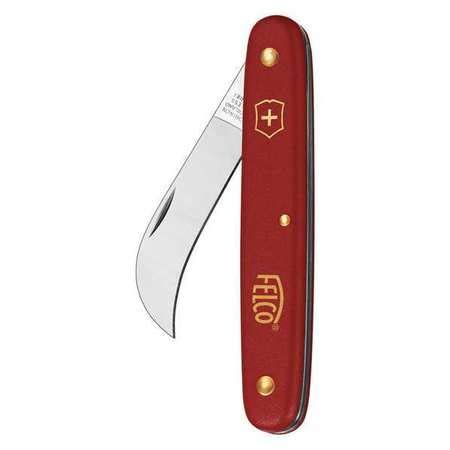
Felco is a Swiss benchmark in horticultural cutting tools, and this grafting knife justifies the reputation with a high-carbon steel blade that arrives shaving-sharp out of the box. The curved blade profile is ground with a single bevel, giving you the flat cutting face necessary for clean whip-and-tongue cuts without wedging the cambium apart. At just over 34 dollars, it delivers professional-grade precision that nursery owners and serious orchardists will recognize immediately.
The red plastic handle is lightweight—noticeably lighter than wood-handled alternatives—and the foldable design with a sheath makes pocket carry practical. Owners report the blade edge holds well through extended sessions of rootstock preparation, though the curved shape demands attention: more than one user has mentioned that the hawkbill geometry can slice a finger if you’re not fully focused during repetitive cuts. The sheath is a simple nylon sleeve rather than a locking system, which is functional but not overbuilt.
For anyone moving beyond entry-level grafting kits, this Felco is the tool that teaches you what a properly sharpened single-bevel edge feels like. It’s the knife that makes you realize why your previous attempts struggled—the cut surface is visibly smoother, and bark lifts with less tearing.
What works
- Razor-sharp high-carbon steel edge holds well through long grafting sessions
- Single-bevel grind produces clean, flat cuts essential for cambium alignment
- Lightweight and comfortable in the hand, reduces fatigue during repeated use
What doesn’t
- Curved blade shape increases risk of accidental cuts if not used with care
- Sheath is basic and does not include a locking mechanism for secure carry
2. Victorinox 3.9020 V39020 Budding Knife

The Victorinox budding knife is purpose-built for one specific technique: T-budding and chip budding, where a dedicated bark lifter is non-negotiable. This straight-blade model features a stainless steel blade with a pointed bark lifter integrated at the base, allowing you to lift bark flaps without switching tools or risking damage from a standard knife tip. The blade is straight rather than curved, which makes it ideal for the smooth, straight cuts needed for bud shield removal.
The nylon handle provides a textured, secure grip that stays planted even when your hands are damp from working in the field. At 51 mm closed, it’s compact enough to live in an apron pocket or tool belt without bulk. Real-world reports from grafters are telling: one user documented a 93% success rate across 56 trees using this knife, crediting the sharp factory edge and the bark lifter’s clean separation of bark from wood. The stainless steel resists sap corrosion and rust, requiring only occasional stropping to maintain its working edge.
This is not a general-purpose knife. If your primary grafting work is budding—especially for fruit trees like apples and peaches—this tool outperforms any curved pruning knife. The straight blade and bark lifter combination is a specialist’s setup, but for its intended use case, it is arguably the most effective option available at this price tier.
What works
- Integrated bark lifter eliminates the need for a secondary tool during budding
- Stainless steel blade resists corrosion and requires minimal maintenance
- Nylon handle provides excellent grip even in wet or sticky conditions
What doesn’t
- Straight blade limits usefulness for curved cuts or cleft grafting work
- Blade is relatively short, less suited for preparing larger diameter rootstock
3. Victorinox Floral Knife, straight 4″ blade

Designed as a floral knife for cutting flower stems, the Victorinox 3.9050 proves surprisingly effective for grafting work thanks to its sheepsfoot blade geometry. The straight 4-inch blade with a blunt tip prevents accidental stabbing while providing a long, continuous cutting edge that excels at making smooth, straight cuts for whip-and-tongue grafts. The high-carbon stainless steel formulation from Victorinox maintains edge retention well above typical floral knives, with several users reporting months of regular use without needing sharpening.
The handle is ergonomically textured nylon that feels secure even when wet, and the knife’s lightweight profile—well under two ounces—makes it easy to manipulate during delicate cuts. Owners have repurposed this tool from flower arranging into plant propagation work, praising how easily it slices through stems without crushing tissue. The straight edge is less suited for curved cuts like bark lifting or bud shield shaping, but for scion preparation and rootstock trimming, it delivers consistent, clean results.
Where this knife shines is versatility: it handles grafting, harvesting, and general garden cutting equally well. If you want a single blade that can split duties between the greenhouse and the flower bed without compromising on either task, this Victorinox fills that role better than any dedicated grafting knife on this list.
What works
- Sheepsfoot blade design provides a safe, precise cutting edge for straight grafts
- High-carbon stainless steel holds an edge longer than standard stainless alloys
- Extremely lightweight and ergonomic, reduces hand strain during extended use
What doesn’t
- Blunt tip makes bark lifting and bud grafting more difficult than a pointed knife
- Not a dedicated grafting tool; lacks a bark lifter or specialized bevel
4. Opinel No. 8 Pruning Folding Knife

Opinel’s No. 8 pruning knife brings the French brand’s iconic Yatagan blade shape into the grafting conversation. The curved hawkbill—beveled on both sides—creates a double-bevel edge that works effectively for pruning and light grafting, particularly for bark lifting and making curved cuts on vine plants. The 12C27 modified stainless steel contains at least 0.40% carbon, providing an excellent balance of edge retention and corrosion resistance that requires no special maintenance beyond regular cleaning.
The beechwood handle is warm in the hand and provides a classic, secure grip, but it absorbs moisture and can swell if left wet, requiring drying after use. The locking ring mechanism—a signature Opinel feature—secures the blade in both open and closed positions, adding safety that folding knives without locks lack. Owners use this knife for everything from mushroom harvesting to rough wood carving, noting that the double-bevel grind makes it less ideal for the single-plane cuts that grafting demands but highly versatile for general garden work.
For the grafter who also prunes, harvests, and does light carpentry, the No. 8 is a strong do-it-all companion. Its edge is sharp enough for scion preparation on softwood and its curved tip excels at stripping bark for budding, but the double bevel introduces a wedge effect on harder rootstock that single-bevel knives avoid.
What works
- Locking ring mechanism provides secure blade retention in open or closed position
- Curved hawkbill blade is effective for bark lifting and vine grafting tasks
- Stainless steel blade resists corrosion and is easy to clean after use
What doesn’t
- Double-bevel grind can crush cambium tissue on precision grafting cuts
- Wood handle requires drying after use to prevent swelling or cracking
5. Opinel No. 10 Pruning Folding Knife

Stepping up from the No. 8, the Opinel No. 10 offers a larger Yatagan-curved blade designed for more substantial pruning and harvesting tasks. The blade geometry is identical in concept—double-beveled 12C27 stainless steel with a hawkbill profile—but the increased size provides more cutting leverage for thicker branches and larger rootstock. Several users specifically mention using this knife for apple grafting, praising its out-of-box sharpness and ability to make clean cuts on woody tissue.
The larger blade makes the No. 10 less suited for the fine, controlled strokes of whip-and-tongue grafting on small diameter scions, but it excels at bark grafting and cleft work where a longer cutting edge is advantageous. The beechwood handle, while comfortable, creates the same moisture sensitivity as the No. 8, and the blade curvature means the knife does not lock closed—a design feature that Opinel acknowledges as intentional but can be surprising for new users expecting a positive lock. The knife is also heavier than the No. 8, which some users find fatiguing during extended sessions.
This is the Opinel for the grafter who works primarily with larger diameter material—vineyards, established orchard trees, and heavy pruning. If your grafting work involves more bark manipulation than precise scion shaping, the No. 10’s extra blade length gives you the reach and leverage that the smaller model cannot match.
What works
- Larger blade provides better leverage for cutting thicker rootstock and bark
- Razor-sharp factory edge reduces need for immediate sharpening before first use
- Classic Opinel quality with easy-to-maintain stainless steel construction
What doesn’t
- Larger size and weight reduce precision for delicate whip-and-tongue grafts
- Does not lock closed due to blade curvature, potentially less safe in pocket carry
6. Bahco 7-Inch Grafting Knife P11

The Bahco P11 is a classic grafting knife design that has been in production for decades, recognized by professional orchardists for its practical feature set. The blade is made from metal—likely a carbon steel variant, though Bahco does not publish detailed metallurgy specs—and includes a brass spatula at the base that serves as a bark lifter for budding operations. The folding design with a plastic handle keeps the overall length at 7 inches, making it compact enough for pocket carry while providing a solid grip surface.
The critical detail that separates this knife from others is the blade grind: users consistently note that the blade is thick and double-beveled, which makes it excellent for cleft grafting and splitting rootstock but problematic for whip-and-tongue technique where a single-bevel, thin edge is required. The brass spatula is functional for lifting bark, though some grafters find it less precise than the pointed bark lifters on dedicated budding knives. The plastic handle is weather-resistant and does not swell like wood, though it lacks the tactile warmth and grip that wood offers.
This is a no-frills tool built for a specific subset of grafting work: cleft grafts on larger rootstock and bark grafting in the field. It is not the knife for beginners learning precision bud grafting, but for the orchardist who needs a rugged, pocketable tool for heavy-duty field work, the Bahco P11 has earned its reputation over generations.
What works
- Brass bark lifter is a durable, functional addition for budding operations
- Folding design with plastic handle is weather-resistant and compact for carry
- Thick blade is ideal for cleft grafting and splitting larger rootstock pieces
What doesn’t
- Thick double-bevel blade is too heavy for precise whip-and-tongue grafting
- Metallurgy is not specified, making long-term edge retention hard to assess
7. PUELDU Professional Grafting Tool Kit

The PUELDU kit is a complete entry-level solution for new grafters, combining a dedicated grafting knife with a 2-in-1 pruner that uses Japanese SK5 high-carbon steel blades rated at 58-60 HRC. The kit includes a curved and straight grafting knife with 420J2 stainless steel blades and walnut handles, plus 32 feet of self-adhesive tape, 30 plant labels, 6 reusable clips, and a pocket sheath. For someone who has never grafted before and is building a toolkit from scratch, this delivers everything needed for fruit trees and vine plants in a single purchase.
The pruning tool’s dual-edged Ω/U/V blades are designed to produce clean cuts up to 1/2 inch diameter without crushing stems, and the included illustrated guide covers budding and whip-and-tongue techniques. However, real-world feedback reveals a split experience: while the blades are sharp and the clips/tags are useful, some users found the supplied wax tape difficult to apply without assistance, leading to failed grafts. The straight grafting knife in the kit is functional but lacks the premium edge retention of single-blade tools from Felco or Victorinox.
This is a budget-friendly gateway into grafting, not a professional-grade setup. The value lies in the breadth of included accessories rather than the quality of any single tool. If you are experimenting with grafting for the first time and want to minimize upfront investment, this kit gives you the practice tools to learn—but expect to upgrade the knife within a year as your skills advance and you develop preferences for blade geometry.
What works
- Complete kit includes knife, pruner, tape, labels, clips, and sheath for one purchase
- SK5 steel blades in the pruner provide clean cuts on branches up to 1/2 inch
- Included illustrated guide helps beginners learn grafting techniques
What doesn’t
- Straight grafting knife lacks the premium steel and grind of dedicated single tools
- Supplied tape is difficult to apply solo, causing some grafts to fail
Hardware & Specs Guide
Blade Steel Composition
The steel type determines how often you need to sharpen and how well the blade resists rust in wet greenhouse or field conditions. High-carbon steels (0.4%–1.0% carbon) take a sharper edge and hold it longer but require oiling to prevent corrosion. Stainless steels sacrifice some edge retention for corrosion resistance, making them lower-maintenance for intermittent use. A hardness rating of 58–60 HRC is ideal for grafting—softer blades dull quickly, harder blades chip during bark lifting.
Bevel Grind Angle
The bevel grind is the single most important spec for grafting performance. Single-bevel (chisel) grinds create a flat, planar cutting face that slices through bark without wedging the cambium apart, essential for whip-and-tongue and cleft grafts. Double-bevel grinds produce a stronger edge suitable for heavier splitting but introduce a wedge effect that crushes delicate plant tissue. Each grind suits a different grafting style, so match the grind to your primary technique rather than buying the sharpest-looking blade.
Bark Lifter Integration
A bark lifter—a small spatula or pointed projection at the base of the blade or handle end—is what separates a true grafting knife from a pruning knife. This tool is used to separate bark from wood during T-budding without damaging the cambium. Knives with integrated bark lifters (like the Victorinox 3.9020 or Bahco P11) eliminate the need to carry a separate tool, streamlining field work. Knives without this feature require you to use the blade tip or a secondary tool, increasing the risk of bark tearing.
Handle Material & Ergonomics
Handle material affects grip security, comfort during extended use, and weather resistance. Wood handles (beechwood, walnut) offer a warm, traditional feel and excellent grip when dry but swell and require drying if left wet. Synthetic handles (nylon, ABS, plastic) resist moisture, provide textured grip even when wet, and do not swell, though they can become slippery when covered in sap. The handle shape should fill your palm without forcing an awkward wrist angle—a straight handle suits push cuts, while a curved handle aids draw cuts.
FAQ
What is the difference between a grafting knife and a pruning knife?
Should I choose a straight blade or a curved blade for grafting?
What blade hardness (HRC) is ideal for a grafting knife?
How do I maintain a grafting knife to keep it sharp?
Final Thoughts: The Verdict
For most gardeners, the grafting knife winner is the Felco Grafting And Pruning Knife because it combines a razor-sharp high-carbon steel single-bevel blade with the lightweight ergonomics needed for sustained precision grafting work. If you want a dedicated bark lifter for T-budding, grab the Victorinox 3.9020 Budding Knife. And for a versatile all-around blade that handles both grafting and general garden tasks, nothing beats the Victorinox Floral Knife 3.9050.