
A field fence that spans 330 feet is a serious commitment of time, labor, and land. The wrong gauge means sagging between posts, rust in two seasons, or animals pushing through the bottom gaps. Whether you are protecting livestock, securing a garden, or defining a property line, the decision comes down to the steel wire thickness, the galvanization method, and the mesh pattern that matches the creatures you are containing or excluding.
I’m Rikta — the co-founder and writer behind Lawn Gear Lab. I’ve analyzed the tensile strength claims, coating specifications, and hundreds of verified owner reports to identify which 330-foot rolls hold up under real pasture, yard, and perimeter conditions.
After comparing gauge ratings, woven versus welded construction, and hot-dip galvanizing methods across seven different rolls, I’ve assembled the data-driven guide to the best 330 ft field fence for every property and animal containment need.
How To Choose The Best 330 Ft Field Fence
Selecting a 330-foot long roll of field fencing involves matching the wire gauge, construction style, mesh spacing, and coating durability to your specific animal and terrain conditions. The wrong combination leads to either overspending on unnecessary thickness or replacing rusted rolls within a few years.
Wire Gauge & Reinforcement
Lower gauge numbers indicate thicker steel. A 14-gauge fence body with 12-gauge reinforced top and bottom borders is the industry standard for mixed livestock. The thicker border wires take the tension load between posts, while the body wire balances flexibility and strength. For small, lightweight animals like poultry or rabbits, 16-gauge is adequate, but 14-gauge is the recommended minimum for goats, sheep, and dogs that lean or push.
Woven vs. Welded Construction
Woven wire construction twists the vertical and horizontal wires together, allowing the entire fence panel to flex under pressure without snapping individual weld points. This makes it the preferred choice for uneven terrain, long runs, and animals that test the fence routinely. Welded wire is rigid at each junction, which makes it excellent for small animal enclosures where you need precise opening sizes, but it can break at the welds if livestock push against it repeatedly.
Galvanization Method
Hot-dip galvanizing after welding immerses the entire assembly in molten zinc, coating the weld points and wire surfaces evenly. This provides the longest service life in wet or coastal environments. Galvanized-before-welding leaves the weld joints exposed, creating weak points where rust can start. If your fence will face rain, snow, or high humidity, prioritize hot-dip galvanized options to avoid premature corrosion.
Quick Comparison
On smaller screens, swipe sideways to see the full table.
| Model | Category | Best For | Key Spec | Amazon |
|---|---|---|---|---|
| Cattle Panel 14Gauge Woven Wire | Woven / Livestock | Goats, pigs, and mixed-species pastures | 8in to 3.5in graduated mesh | Amazon |
| Tenax Pet Fence | Polypropylene / Pet | Dog containment without rust risks | 1.77in x 1.97in mesh openings | Amazon |
| YESON Farm Fence 5ft x 164ft | Woven / Garden | Vegetable gardens and small livestock | 14-gauge hot-dip galvanized steel | Amazon |
| Rilth Heavy Duty Livestock Fence | Woven / Horses | Horse paddocks and large livestock | 12-gauge wire with 2x4in mesh | Amazon |
| Fencer Welded Wire | Welded / Small Animal | Rabbit cages and chicken runs | 0.5in x 1in tight mesh | Amazon |
| Extreme Dog Fence 16 Gauge Wire | Buried Cable | Underground invisible fence systems | 30-mil polyethylene jacket | Amazon |
| Tatuo Hardware Cloth | Welded / Predator Proof | Raised beds and small poultry enclosures | 0.5in mesh, 21-gauge wire | Amazon |
In‑Depth Reviews
1. Cattle Panel 14Gauge Woven Wire Fence 4FT x 328 FT
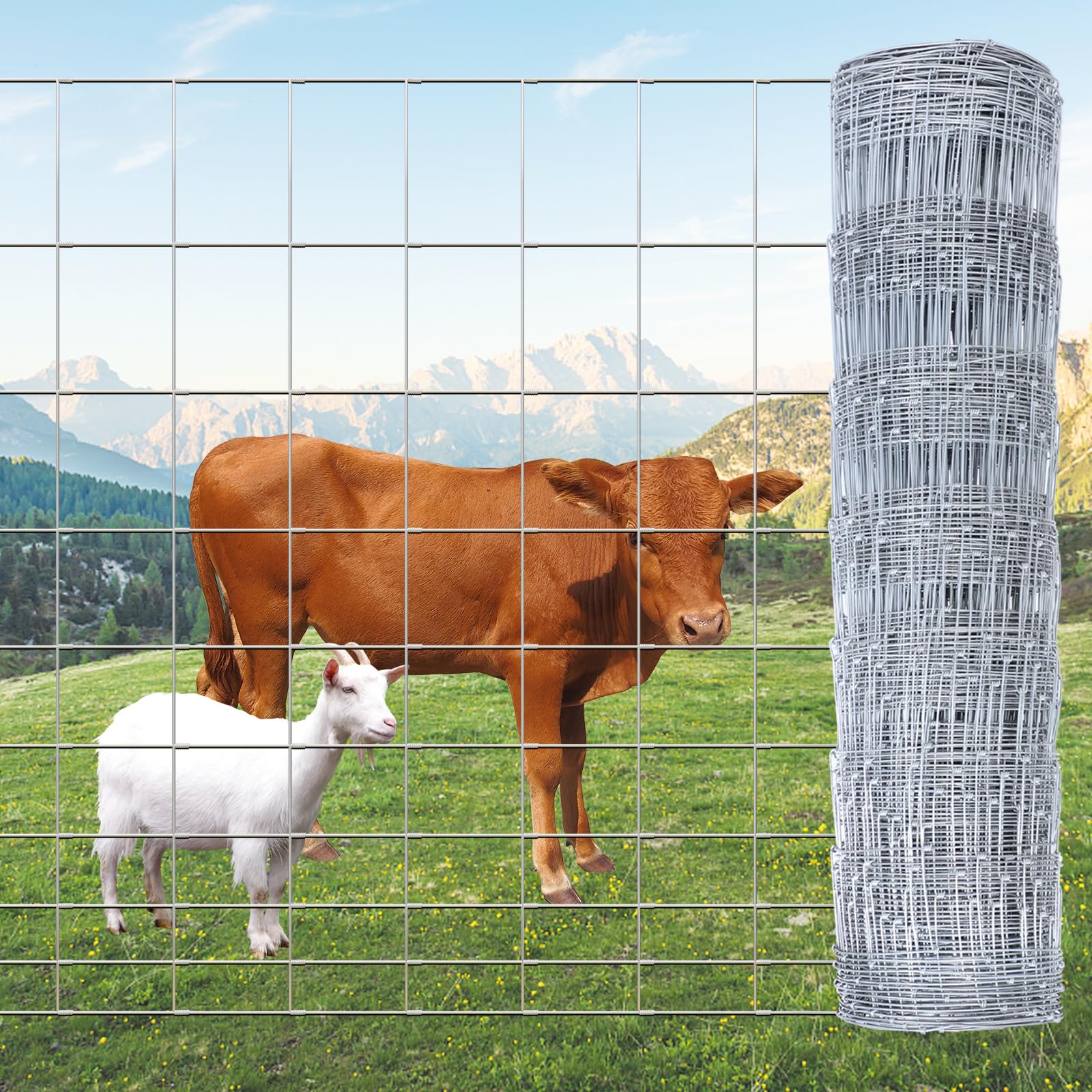
This woven wire roll uses 14-gauge steel throughout the mesh body with 12-gauge reinforced top and bottom borders, creating a balance of flexibility and structural integrity that handles uneven terrain without sagging. The graduated mesh design starts at 3.5-inch openings at the bottom to block piglets and poultry, then widens to 8-inch openings above to reduce overall weight and maintain visibility across the pasture.
Hot-dip galvanizing after weaving coats every wire and connection point, which directly addresses the rust issue that plagues cheaper fences in humid or coastal environments. Owners report using it for goat containment, garden perimeters, and mixed-species pastures, noting that the woven grid distributes stress evenly so individual animals cannot break through by pushing at a single weld point.
The 328-foot length covers large projects without needing to splice multiple shorter panels, and the reinforced edges make stretching and tensioning easier during installation. While the 14-gauge body is not as rigid as a 12-gauge field fence, it offers the best weight-to-strength ratio for most livestock and perimeter applications at this scale.
What works
- Graduated mesh stops small animals at the bottom while keeping the upper sections light.
- 12-gauge reinforced borders resist sagging during tensioning and daily animal pressure.
- Hot-dip galvanization provides long-term corrosion resistance in wet climates.
What doesn’t
- Best installed with two people due to the weight of the 328-foot roll.
- Packaging can arrive with minor bending if not handled carefully during shipping.
2. Tenax Pet Fence Select Pet Fence, Black, 4′ x 330′

This is not a steel fence — it is a high-strength polypropylene mesh that offers zero rust risk and a black color that virtually disappears when viewed from a distance. The 1.77-inch by 1.97-inch mesh openings are large enough to maintain a clear view but small enough to stop most medium-sized dogs from slipping through. The round tensile structure is the same material Tenax uses for their deer fencing, providing rigidity without the weight of galvanized wire.
Owners consistently report that the 26-pound roll is manageable for one person to handle, making it an excellent option for temporary or seasonal fencing around yards, gardens, or grazing areas. The material is flexible enough to conform to uneven ground yet holds its shape without sagging when attached to T-posts or wooden posts. Users with small to medium dogs note that it serves as a visual barrier that stops jumping and pushing, though determined large dogs or wildlife may rip through it.
Because the mesh is non-conductive, it works well as a companion fence beneath an electric rope or tape for added deterrence. The main trade-off is durability against chewing — rabbits, groundhogs, and determined canines can create holes that require patching with smaller-gauge welded wire.
What works
- Completely rust-proof, ideal for wet climates or areas with salt spray.
- Lightweight roll can be installed by one person without heavy equipment.
- Black finish blends into natural landscapes and maintains property aesthetics.
What doesn’t
- Not chew-resistant; rabbits and large dogs can damage the mesh.
- Does not provide the same physical barrier as heavy-gauge woven wire for strong livestock.
3. YESON Farm Fence 5ft x 164ft Heavy Zinc Coating
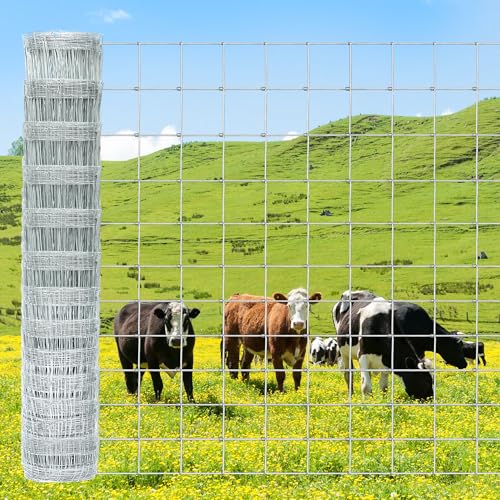
This 5-foot-tall roll uses the same hot-dip galvanized 14-gauge steel construction found in premium livestock panels, but at a 164-foot length that is more practical for smaller properties or garden perimeters. The graduated mesh pattern starts with tight openings at the bottom to block rabbits and groundhogs, while the wider top sections deter deer without adding unnecessary weight. The twisted weaving technology interlocks vertical and horizontal wires so they do not loosen under tension.
Owner feedback highlights the 5-foot height as a clear advantage for vegetable gardens, as it stops deer from stepping over while the small bottom gaps eliminate the need for an additional barrier against burrowing pests. Installation requires two people because the roll is heavy, but once attached to posts, the fence holds its shape without sagging. The hot-dip galvanizing has shown no rust after multiple months of rain exposure in verified reports.
The main drawback is the roll length — at 164 feet, it covers roughly half the distance of a standard 330-foot roll, so larger properties will need to purchase multiple rolls or choose a longer option. However, for the price point, the combination of height, gauge, and coating quality makes it a strong value for garden-focused buyers.
What works
- 5-foot height stops deer while tight bottom gaps block rabbits and groundhogs.
- Hot-dip galvanizing holds up well in rain without surface rust after months.
- Twisted weave prevents wires from loosening over time.
What doesn’t
- 164-foot length requires multiple rolls for larger enclosures or perimeters.
- Heavy roll needs two people for safe unrolling and installation.
4. Rilth Heavy Duty Livestock Fence 2×4 Inch Mesh 4x100ft
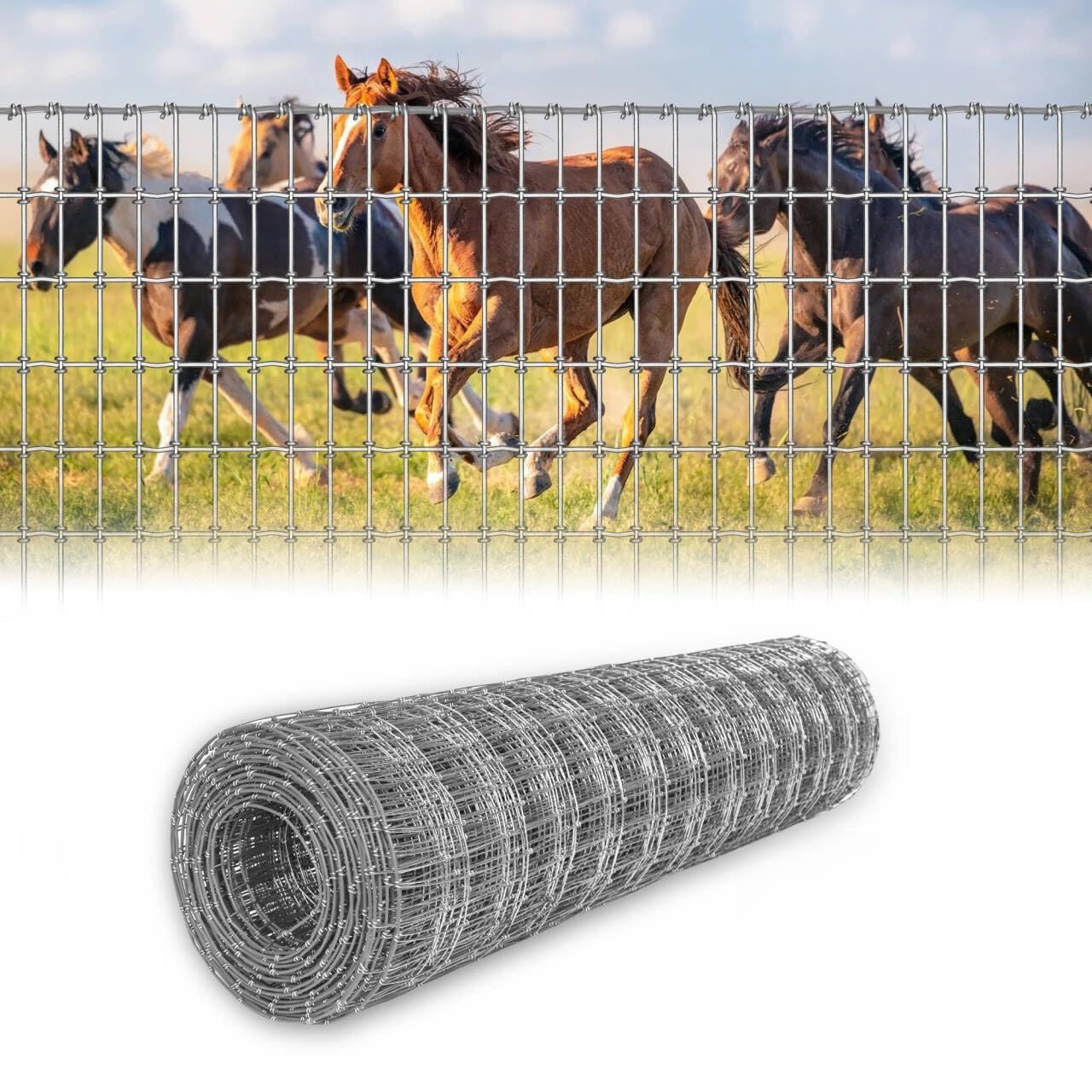
This fence jumps to 12-gauge wire, making it the thickest option in this roundup and the best choice for horses, cattle, and other large livestock that lean, kick, or push against fencing. The 2-inch by 4-inch mesh opening is specifically designed to prevent hooves from getting caught, a critical safety feature for equine enclosures that standard field fence cannot guarantee. The 4-foot height is adequate for most grazing animals, though determined jumpers may still clear it.
Owners using it for goats and cattle report that the wire holds up well against rambunctious attempts to breach, and the woven construction distributes impact forces without breaking individual strands. The 100-foot roll is shorter than the 330-foot standard, but the thicker gauge makes each foot more durable, and the lighter 100-foot length is easier to transport and install solo. The galvanized coating provides weather resistance, though several buyers note the material may be aluminum-based rather than pure galvanized steel, which affects overall rigidity.
For buyers who prioritize animal safety over total coverage length, the 12-gauge thickness and hoof-safe mesh openings justify the higher per-foot cost. The trade-off is the shorter 100-foot roll length, which requires more splices for large perimeter projects.
What works
- 12-gauge wire provides maximum resistance against large livestock impact.
- 2×4-inch mesh prevents hoof entrapment, making it safer for horses.
- Woven construction handles stress without weld-point failure.
What doesn’t
- 100-foot roll length is shorter than standard 330-foot options, requiring more joins.
- Some units may use aluminum alloy, which is less rigid than galvanized steel.
5. Fencer Welded Wire Fence 16 Gauge Galvanized, 0.5-Inch x 1-Inch Mesh

This welded wire roll uses 16-gauge galvanized wire with a half-inch by one-inch mesh opening, creating a barrier tight enough to exclude mice, rats, snakes, and even large spiders from chicken coops, rabbit hutches, and garden beds. The galvanizing is applied before welding, so the steel wire itself is coated, but the weld points themselves lack the same level of zinc protection, making them the most likely site for future rust in outdoor installations.
Owners consistently praise this fence for rabbit cage construction and ground-level garden barriers, citing the rigidity of the welded grid as a plus for projects where the fence must hold its shape without flexing. The 16-gauge wire is easier to cut and shape with standard wire cutters compared to heavier gauges, making it a practical choice for DIY enclosures where you need to build boxes, doors, or curved runs.
Because the mesh is welded rather than woven, the junctions are rigid and can break if livestock press against them repeatedly. This fence is not suitable for containing goats, sheep, or large dogs that test boundaries, but for small animal containment and garden protection, the tight mesh spacing delivers exactly what the category demands.
What works
- Half-inch by one-inch mesh is tight enough to block rodents, snakes, and weasels.
- Easy to cut and shape for custom enclosures, doors, and compost bins.
- Rigid welded grid holds its shape without sagging in framed structures.
What doesn’t
- Welded at junctions can break under repeated pressure from livestock.
- Galvanized-before-welding leaves weld points more vulnerable to rust over time.
6. Extreme Dog Fence 16 Gauge Wire 1500 Ft
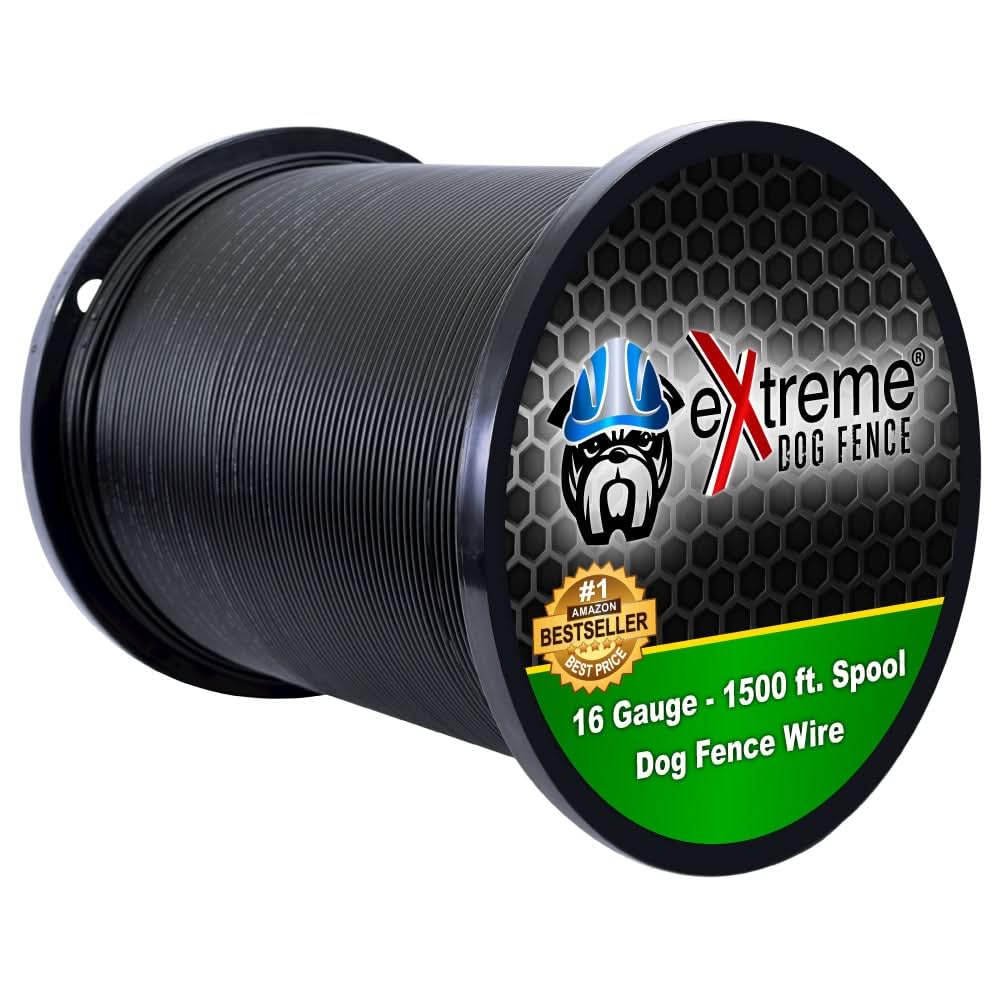
While not a field fence in the traditional sense, this 16-gauge wire is the essential companion for any underground invisible dog fence system that covers a 330-foot perimeter or larger. The 30-mil polyethylene jacket provides a heavy-duty barrier against UV radiation and ground moisture, preventing the signal degradation that occurs with thinner jacketed wires after a season of weather exposure. The 1500-foot continuous spool is long enough to handle most residential boundary layouts with a generous surplus for loops and splice stations.
Owners upgrading from the thinner wire included in standard PetSafe kits report a noticeable improvement in signal reliability after installation. The thicker jacket also resists nicks from rocks and roots during burial, reducing the need for future fault-finding repairs. Compatibility is universal across all wired electric dog fence systems, including PetSafe, SportDOG, and Invisible Fence brands.
The primary limitation is that this product only serves as the signal loop — it does not include the transmitter, receiver collars, or boundary flags. It is a component purchase that assumes you already own or are buying a complete invisible fence system separately.
What works
- Thicker 16-gauge wire and 30-mil jacket provide more durable signal transmission.
- 1500-foot spool covers large properties without splicing multiple shorter spools.
- Universal compatibility with all wired invisible fence systems.
What doesn’t
- Not a standalone fence — requires a transmitter, collars, and boundary flags to function.
- Installation requires trenching or burial, which is labor-intensive without rental equipment.
7. Tatuo Hardware Cloth 1/2 Inch 72in x 100ft
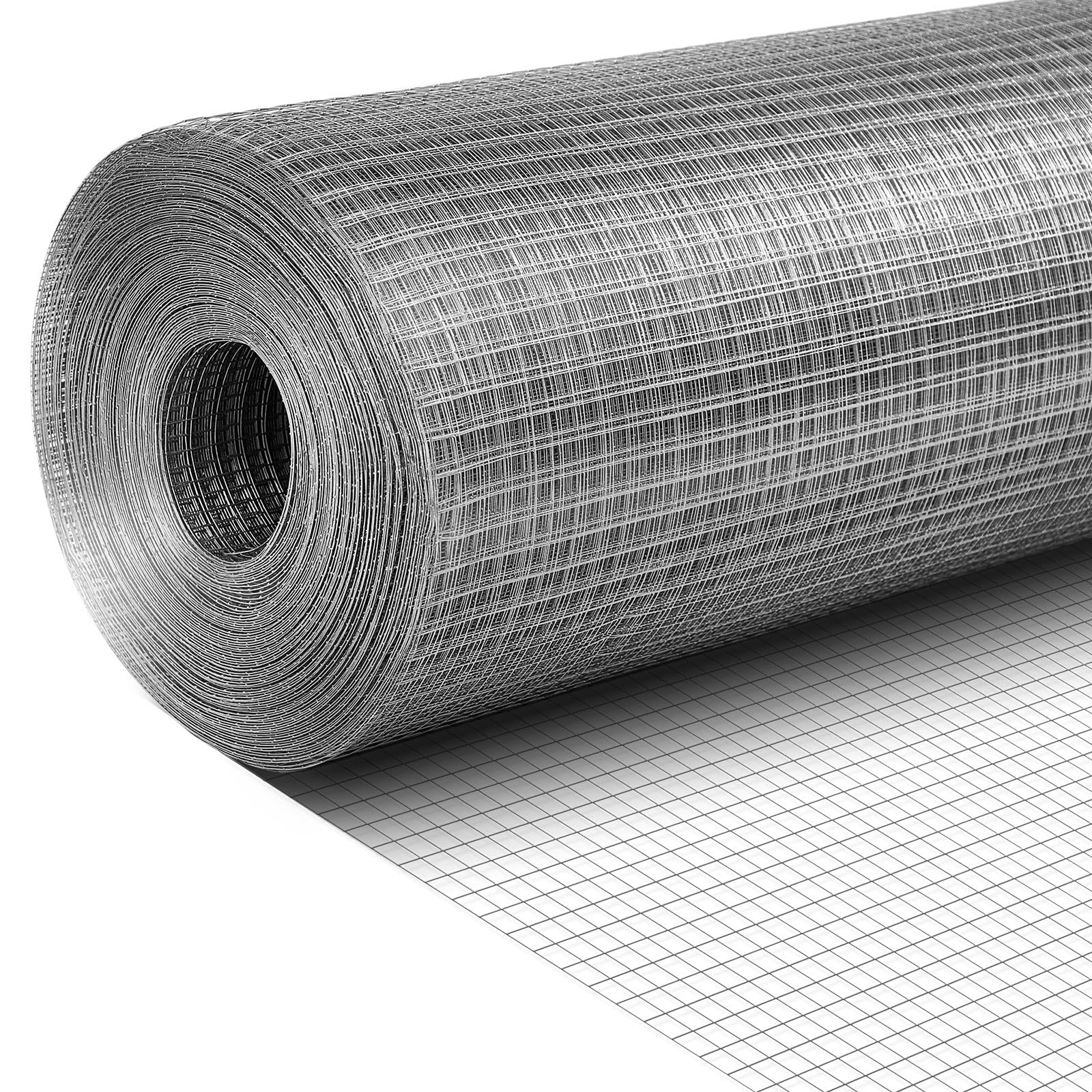
This hardware cloth uses 21-gauge wire with a half-inch square mesh, making it the finest grid in this roundup and the most effective barrier against chipmunks, voles, snakes, and other small digging creatures. The key advantage is the hot-dip galvanizing applied after welding, which coats the weld points and ensures the entire joint is zinc-protected rather than left bare. This matters for ground-level installations where the cloth contacts moist soil directly.
Gardeners report using it to line raised bed bottoms, create chipmunk-proof strawberry cage lids, and wrap tree trunks to prevent rodent girdling. The 72-inch width covers tall enclosures and large raised beds without needing to vertically seam multiple strips. The 21-gauge wire is thin enough to cut with standard tin snips but sturdy enough to hold its shape when bent around corners or stapled to wooden frames.
The trade-off for the fine mesh density is that the wire is thinner than hardware cloth made from 19-gauge or 16-gauge stock, so it is not ideal for high-impact animal containment. It serves as a precision barrier against burrowing pests, not a structural livestock fence.
What works
- Half-inch mesh blocks chipmunks, voles, snakes, and other small pests effectively.
- Hot-dip galvanizing after welding protects the vulnerable joint points from rust.
- 72-inch width allows tall enclosures without vertical seams.
What doesn’t
- 21-gauge wire is thinner than traditional hardware cloth gauges, reducing overall rigidity.
- Some users note surface rust appearing quickly despite the galvanized coating.
Hardware & Specs Guide
Gauge & Border Reinforcement
Wire gauge determines how much force a fence can absorb before bending. The 14-gauge body wires in the best rolls are complemented by 12-gauge top and bottom border wires that handle the tension load from stretching. A fence with uniform 12-gauge or 11-gauge wire throughout is stronger but significantly heavier and harder to handle. For mixed livestock including goats, sheep, and medium dogs, 14-gauge with reinforced borders offers the best balance of durability and manageable weight on a 330-foot roll.
Mesh Pattern & Graduated Openings
Graduated mesh starts with small openings near the ground — typically 2 to 4 inches — and widens to 6 to 8 inches toward the top. This design blocks piglets, poultry, and rabbits at the bottom while keeping the upper section lighter and more visible. Fixed-mesh fences use a uniform opening size throughout, which is simpler to manufacture but either wastes material at the top or leaves gaps at the bottom that small animals can exploit. Graduated mesh is the preferred pattern for 330-foot field fence rolls intended for mixed-species containment.
Woven vs. Welded Junction Strength
Woven wire twists the horizontal and vertical strands together, creating a flexible joint that moves under pressure without breaking. This makes it the standard for livestock fencing because animals leaning, rubbing, or pushing against the fence will not snap individual connections. Welded wire uses heat-fused joints that are rigid and precise, ideal for small-animal enclosures where mesh size consistency is critical. However, repeated impact stress can break welds over time. For a 330-foot perimeter fence, woven construction is almost always the better long-term choice.
Galvanization Depth & Longevity
Hot-dip galvanizing immerses the entire fence in molten zinc, coating the wire surface and every joint with a thick, uniform layer. Fences that are galvanized before welding leave the weld points uncoated, creating a path for rust to begin at the junction where the steel is most stressed. In wet, coastal, or high-humidity environments, hot-dip galvanized fences typically last 15 to 20 years versus the 5 to 8 years of pre-galvanized alternatives. Always check whether the coating is applied before or after the welding or weaving process, especially for rolls that will contact ground moisture.
FAQ
Can a 14-gauge field fence contain goats and sheep securely?
How do I install a 330-foot fence roll on uneven terrain?
What mesh opening size stops rabbits but does not trap deer?
Final Thoughts: The Verdict
For most gardeners and livestock owners, the 330 ft field fence winner is the Cattle Panel 14Gauge Woven Wire Fence because the graduated mesh handles mixed-species containment, the 14-gauge body with 12-gauge borders resists sagging, and the hot-dip galvanizing provides long-term rust protection. If you need a nearly invisible, rust-proof barrier for dogs on a suburban property, grab the Tenax Pet Fence. And for fine-mesh predator-proofing of raised beds and chicken runs, nothing beats the Tatuo Hardware Cloth.