
Watermelon vines demand a precise nutritional program to transform from sprawling green leaves into sugar-packed, 20-pound fruits. A mismatch of nitrogen, phosphorus, and potassium at the wrong growth stage leads to lush foliage with hollow, bland, or poorly set melons. The window for corrective feeding is narrow; once the fruit sets, there is little margin for error.
I’m Rikta — the co-founder and writer behind Lawn Gear Lab. I spend my time drilling into university extension studies, comparing NPK ratios side by side, and analyzing hundreds of verified owner reports to identify which melon-specific formulations consistently deliver measurable results in the field and in the garden.
After reviewing the market for formulations designed around the cucurbit’s unique growth curve, this guide breaks down the top contenders for the best plant food for watermelon, from bloom-boosting concentrates to gentle organic blends that build soil biology while fattening the fruit.
How To Choose The Best Plant Food For Watermelon
Watermelon is a heavy feeder, but its needs shift dramatically from seedling to fruit swelling. Choosing the wrong ratio at the wrong time wastes money and reduces yield. Here are the three specs you should anchor your decision around.
Match the NPK Ratio to the Growth Stage
During early vine establishment, a balanced or slightly nitrogen-leaning feed (like 5-1-1 or 2-3-1) fuels leaf expansion without delaying flower initiation. Once the vines begin to run and female flowers appear, switch to a bloom-oriented formula with higher phosphorus and potassium — a 5-1-5 or 10-30-20 ratio supports root strength, flower retention, and fruit sizing. Using high nitrogen after fruit set encourages foliage at the expense of sugar accumulation and flavor development.
Decide Between Organic and Synthetic Carriers
Fish-based emulsions (hydrolyzed fish or fish hydrolysate) supply nitrogen in a slow-release, microbially mediated form that feeds soil organisms and improves long-term tilth. Synthetic water-soluble powders deliver nutrients instantly, which can rescue a deficiency fast but carries a higher risk of salt burn if over-applied. Melons grown in sandy or container soil benefit from the buffering capacity of organic liquids, while in-ground gardens with rich compost can handle synthetic boosters during the critical fruiting window.
Check for Chelated Micronutrients and Calcium
Blossom-end rot, caused by calcium deficiency during fruit expansion, is a common watermelon headache. A plant food that includes chelated calcium, magnesium, and trace elements like boron and zinc gives melons the structural support they need to size up evenly. Without these, even a perfect NPK ratio leaves fruit vulnerable to internal breakdown and poor wall thickness.
Quick Comparison
On smaller screens, swipe sideways to see the full table.
| Model | Category | Best For | Key Spec | Amazon |
|---|---|---|---|---|
| Southern Ag Start Root & Bloom | Water Soluble Powder | Transplant shock & root development | 10-30-20 ratio high in phosphorus | Amazon |
| Professional Melon Fertilizer 5-1-5 | Liquid Concentrate | Balanced melon-specific feeding | 5-1-5 NPK with micronutrients | Amazon |
| Neptune’s Harvest Fish & Seaweed | Organic Liquid | Soil health & gentle all-purpose feed | 2-3-1 NPK, OMRI listed | Amazon |
| Growth Technology GT Fruit Focus | Liquid Concentrate | All-stage fruit support including calcium | 8.45 oz, 12 essential minerals | Amazon |
| FoxFarm Bush Doctor Wholly Mackerel | Organic Fish Liquid | Fast nitrogen uptake for vigorous vines | 3-1-0 NPK, immediate delivery | Amazon |
| TPS Nutrients Watermelon Fertilizer | Melon-Specific Liquid | Targeted melon fruit development | 32 oz bottle, kelp & minerals | Amazon |
| Alaska Fish Fertilizer 5-1-1 | Organic Fish Emulsion | Vegetative growth & soil enrichment | 115 oz, OMRI listed, 5-1-1 NPK | Amazon |
In‑Depth Reviews
1. Southern Ag Start Root & Bloom Water Soluble Fertilizer 10-30-20

This water-soluble powder delivers the highest phosphorus concentration in the lineup — a 10-30-20 ratio built specifically to trigger heavy root branching and prolific flower production at transplant time. Two tablespoons per gallon of water create a transplant solution that gets melon seedlings off to a fast, anchored start. The inclusion of chelated minor elements helps prevent micronutrient lock-up in alkaline soils.
Customer reports confirm impressive foliage recovery and early fruit set on cucurbits, tomatoes, and even succulents like Boojum trees. However, the powder leaves white insoluble salts behind, and one user noted that undissolved granules caused leaf burn during foliar application. The resealable strip on the bag fails quickly, so plan to transfer the powder to an airtight container.
For watermelon growers specifically, this is a tactical tool — use it during transplanting and early bloom, then switch to a lower-nitrogen formula once fruit begins swelling.
What works
- High phosphorus drives strong root and flower development in melons
- Quick-dissolving powder mixes easily for soil drench or starter solution
- Chelated minor elements reduce deficiency risk in sandy soils
What doesn’t
- Bag resealable strip fails, requiring a separate storage container
- Undissolved salts can burn foliage if used as foliar feed
- 1-pound quantity is small for large or multiple garden plots
2. Professional Melon Fertilizer Liquid 5-1-5 Concentrate
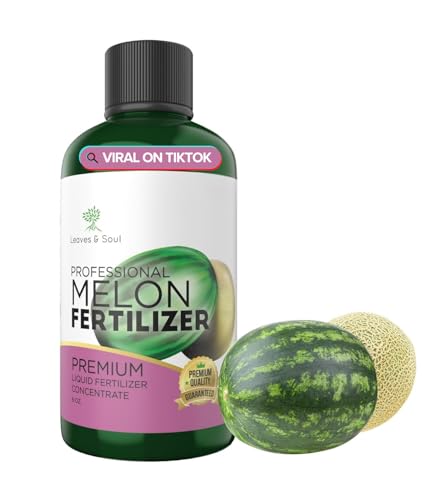
This 8-ounce liquid concentrate from Leaves and Soul is one of the few products formulated explicitly for melons, with a balanced 5-1-5 ratio designed to sustain both vine vigor and fruit development without overloading nitrogen. The low nitrogen relative to potassium is deliberate — it encourages fruit firmness and sugar accumulation rather than excessive leaf mass. Gardeners using it on squash and cantaloupe reported notably higher yields and better shelf life.
The liquid mixes at a 1:1 ratio with water, making it simple to apply as a weekly drench during the growing season. Users noted that a single bottle lasted through a full season on a medium-sized garden patch, giving it strong cost-per-feeding value despite the small container. The concentrate is made in the USA and comes with access to the Leaves and Soul app for growing tips.
Some reviewers, particularly first-time watermelon growers, were unsure how to compare results against other fertilizers, and the 8-ounce size looks deceptively small when it arrives. For experienced growers looking for a purpose-built melon feed that simplifies the stage-switching guesswork, this concentrate earns a top slot.
What works
- Formulated specifically for melon NPK requirements through fruit set
- Easy 1:1 mix ratio with no measuring fuss
- Small bottle covers a full garden season for most home plots
What doesn’t
- 8-ounce size may appear too small for inexperienced buyers
- No calcium supplement included for blossom-end rot prevention
- Effectiveness on watermelon less documented than on squash or cantaloupe
3. Neptune’s Harvest Fish & Seaweed Liquid Fertilizer 2-3-1
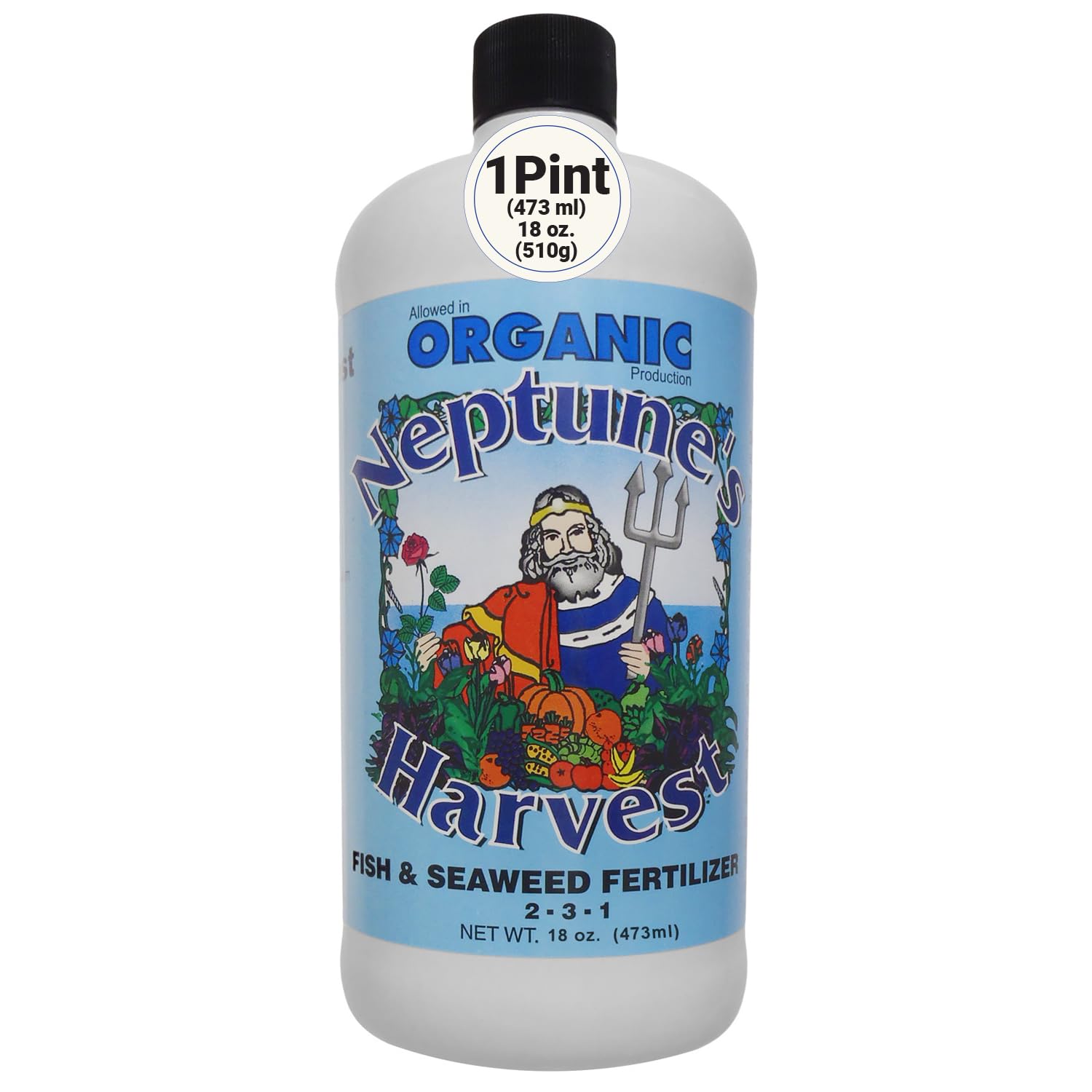
Neptune’s Harvest blends 75% hydrolyzed fish and 25% seaweed into an OMRI-listed liquid that serves as a gentle all-purpose feed for watermelon at any growth stage. The 2-3-1 NPK is mild enough for seedlings yet effective enough to sustain vine expansion through mid-season. One ounce per gallon applied weekly as a soil drench or foliar spray delivers both slow-release nitrogen from fish protein and the growth hormones naturally present in seaweed.
Long-term users report measurable improvements in soil structure — the organic matter feeds beneficial bacteria, improves moisture retention, and reduces compaction over repeated applications. The fish odor, while noticeable during mixing, dissipates within a day after soil incorporation. Reviewers note that over-concentrating the mix (even slightly above the 1-ounce-per-gallon guideline) can burn tender watermelon leaves.
This is not a heavy phosphorus booster, so you will still need a bloom-focused supplement during the fruit-swelling phase if your soil is naturally low in P and K. For watermelon growers committed to organic practices, this pint is a foundation product that builds long-term soil health alongside seasonal feeding.
What works
- Organic fish-seaweed blend improves soil biology over time
- Mild NPK ratio safe for seedlings and foliar applications
- Versatile use on all garden plants, not just melons
What doesn’t
- Strong fish odor during mixing and application
- Low phosphorus and potassium require a bloom supplement for fruiting
- Over-dilution guidelines easy to mis-measure, risking leaf burn
4. Growth Technology GT Fruit Focus Liquid Plant Food

GT Fruit Focus packs all 12 essential minerals — including calcium — into a single-part liquid designed for fruiting plants from strawberries to watermelon. The inclusion of chelated calcium is a standout feature for melon growers fighting blossom-end rot, a common issue when fruit expands faster than the plant can transport calcium. The formula supports consistent fruit sizing without the leaf burn risk of high-salt synthetic powders.
Hydroponic and container watermelon growers will appreciate that the mix is fully soluble with no sediment, staying stable in drip systems and reservoir tanks. A tiny dose per gallon makes the 8.45-ounce bottle last many weeks, even with weekly feeding. Users growing Alocasia and Monstera indoors report explosive leaf growth, which confirms the formula’s bioavailability across species.
The premium pricing per ounce is the main barrier, and the original bottle packaging has been known to leak during shipping if not handled carefully. For the watermelon grower who wants a complete, calcium-rich mineral package that works in soil, pots, and hydroponics, this is the most versatile high-end option available.
What works
- Includes chelated calcium critical for preventing blossom-end rot
- Fully soluble formula ideal for hydroponic and drip irrigation systems
- Highly concentrated — one bottle lasts a full season with weekly feeding
What doesn’t
- Premium price per ounce compared to basic N-P-K powders
- Bottle packaging prone to leaking during shipping
- Not specifically labeled for melons, requiring self-dosing confidence
5. FoxFarm Bush Doctor Wholly Mackerel Fish Fertilizer 3-1-0

FoxFarm’s Wholly Mackerel is a single-ingredient fish hydrolysate with a 3-1-0 NPK, providing immediately available nitrogen for watermelon vines that are lagging in vegetative growth. One tablespoon per gallon applied every other week delivers a visible green-up within 48 hours — users report thicker stems and faster leaf expansion on pepper and melon plants within a single feeding cycle.
The lack of phosphorus and potassium means this is a targeted tool: use it during the first 4–6 weeks of vine establishment, then discontinue once flowering begins to avoid redirecting energy to leaves. The product is OMRI-compatible in spirit (though not formally listed) and comes from FoxFarm’s greenhouse-tested line, which has a longstanding reputation among serious vegetable gardeners.
The biggest drawback is the odor — the fish smell is intense and lingers longer than deodorized emulsions. One bottle arrived with a punctured lid that leaked during shipping. For watermelon growers who need a rapid nitrogen fix to push vines across the ground before fruit set, this pint delivers unmatched speed, but plan your application timing and ventilation carefully.
What works
- Nearly immediate nitrogen uptake visible within 48 hours
- Simple 1 tablespoon per gallon mixing ratio
- Trusted FoxFarm greenhouse-tested production standards
What doesn’t
- Strong fish odor that lingers longer than deodorized products
- No phosphorus or potassium, so useless as a sole fruiting-season feed
- Packaging quality issues with lid punctures during shipping
6. TPS Nutrients Watermelon Fertilizer Liquid 32 oz
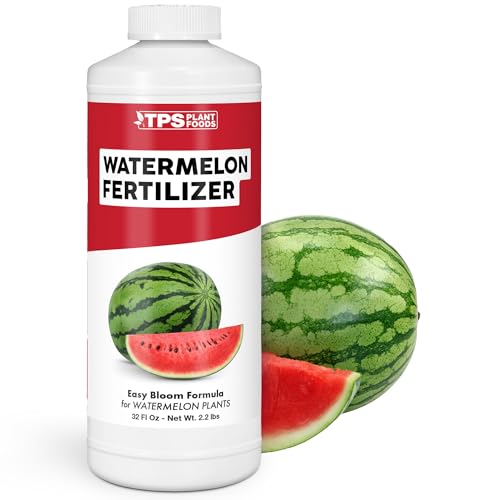
TPS Nutrients engineered a 32-ounce liquid that is explicitly marketed for watermelon, focusing on balanced nutrition for strong vine development and fruit swelling. The formula includes kelp extract for natural growth regulators and a mineral package that features calcium and magnesium — two elements watermelon demand heavily during the sizing phase. Users report the gentle NPK profile works well on other fruiting vegetables like tomatoes, peppers, and cucumbers without causing nitrogen overload.
The larger bottle volume provides a full season’s worth of feedings for a medium garden without needing to reorder mid-summer. Reviews mention excellent results in restoring plant color and vigor after transplant shock, and the concentrated nature means you are paying for nutrients rather than water weight. The product is made in the USA with straightforward instructions for soil drench application.
The specific NPK numbers are not published prominently in the marketing copy, a frustration for analytical buyers who want to compare ratios at a glance. A few first-time users were unsure of the application frequency for watermelon specifically. For a dedicated melon formulation that delivers all-season coverage, this quart bottle is a practical option.
What works
- Large 32-ounce bottle covers an entire growing season
- Contains kelp extract and calcium for fruit quality
- Restores vigor after transplant shock in melon vines
What doesn’t
- Exact NPK ratio not prominently displayed on label
- Application frequency guidelines vague for new watermelon growers
- Less third-party user data compared to more established brands
7. Alaska Fish Fertilizer OMRI Listed 5-1-1
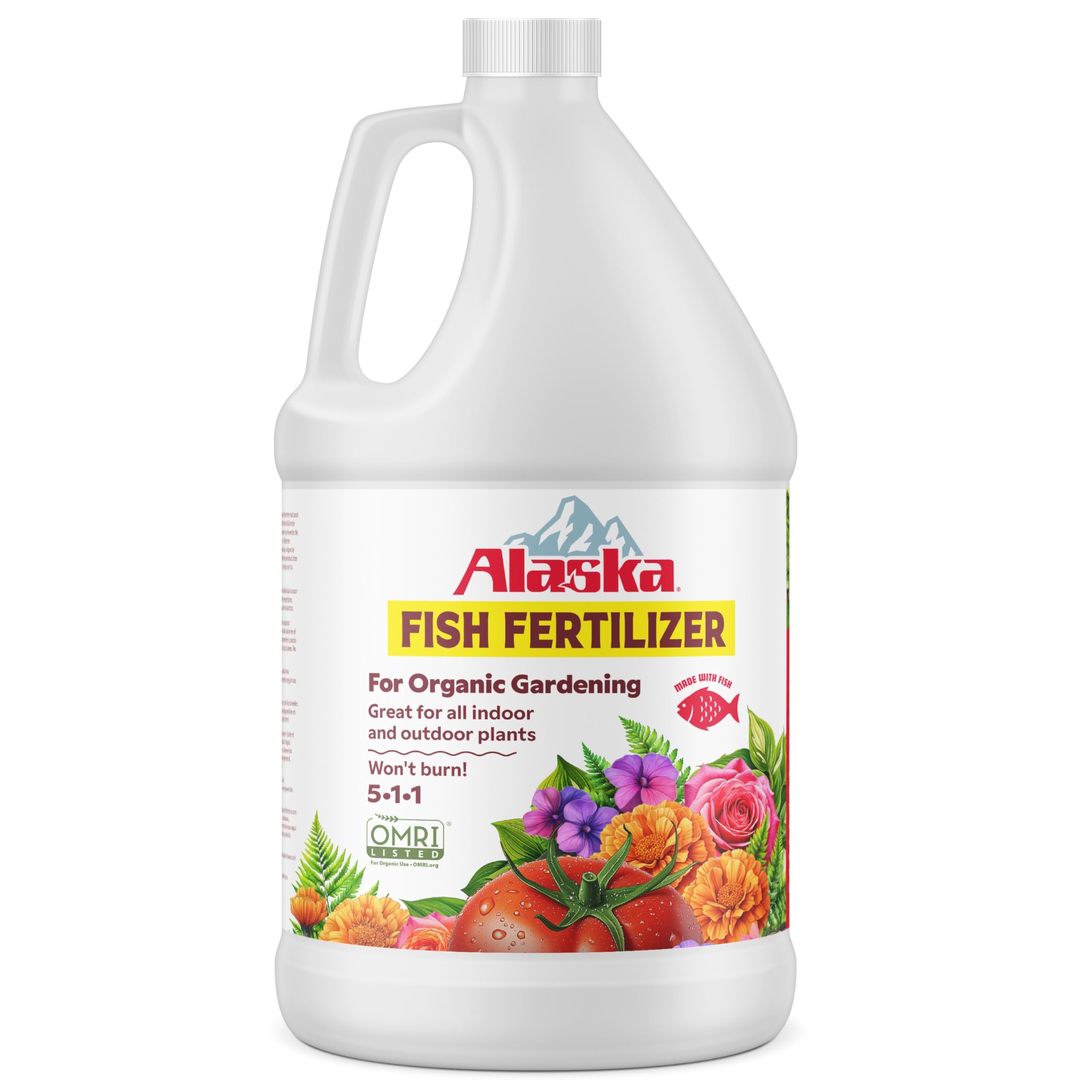
The Alaska brand has been a garden staple for decades, and this OMRI-listed fish emulsion at a 5-1-1 ratio provides a large volume (115 fluid ounces) at a rate that makes it the most economical entry into organic nitrogen feeding for watermelon. The formula is cold-processed to preserve micronutrients, and users report strong stem growth, vibrant leaf color, and improved resistance to transplant shock across tomatoes, cucumbers, and melons. Apply every three weeks during the growing season for consistent vegetative support.
The deodorized formula is a genuine improvement over raw fish emulsions — the smell still exists during mixing but dissipates much faster after watering in, making it tolerable for backyard gardeners who are sensitive to odors. The large jug also serves as a base component for DIY fertilizer blends; many experienced growers combine this with a phosphorus-potassium supplement during the bloom and fruit stages.
The high nitrogen content means you should stop applications once watermelon fruit set begins, or you risk pushing leaf growth at the expense of sugar development. The jug is heavy (8.8 pounds) and the measuring cap can be messy. For budget-conscious organic growers looking for a bulk nitrogen source to carry vines through establishment, this gallon-plus jug is the best volume play.
What works
- Excellent cost-per-ounce value for organic nitrogen feeding
- Deodorized formula with fast-dissipating fish smell
- Cold-processed to preserve micronutrients and enzyme activity
What doesn’t
- High 5-1-1 nitrogen content unsuitable for fruiting stage alone
- Heavy jug can be messy to handle and measure
- Needs a phosphorus-potassium booster for full melon development
Hardware & Specs Guide
NPK Ratio
The three numbers represent nitrogen (N), phosphorus (P), and potassium (K). For watermelon, a higher first number (nitrogen) fuels leaf growth during vine establishment, while a higher middle (phosphorus) and last (potassium) number support root development, flower set, and fruit sugar accumulation. A 10-30-20 is a bloom starter, a 5-1-5 is a balanced grower, and a 2-3-1 or 5-1-1 is a vegetative foundation feed.
Item Form
Liquid concentrates mix faster and are easier to apply as soil drenches or foliar sprays, reducing the risk of uneven distribution. Water-soluble powders offer precise ratio control but require complete dissolution to avoid burn. Granular forms (not represented here) release slower but can be harder to manage for container-grown melons where root zones are confined.
FAQ
Can I use a tomato fertilizer on watermelon instead of a melon-specific formula?
When should I stop feeding nitrogen to watermelon plants?
Why does my watermelon have big vines but no fruit?
Final Thoughts: The Verdict
For most gardeners, the best plant food for watermelon winner is the Professional Melon Fertilizer Liquid 5-1-5 because its balanced ratio eliminates the guesswork of stage switching and its purpose-built melon formula delivers consistent results across the growing cycle. If you want a high-phosphorus start for transplants and early blooms, grab the Southern Ag Start Root & Bloom 10-30-20. And for organic growers who prioritize long-term soil health and microbial activity, nothing beats the Neptune’s Harvest Fish & Seaweed 2-3-1 as a foundational feed.