
Clay soil presents a unique challenge for gardeners: it holds nutrients tightly but drains poorly, often suffocating roots and locking away the fertilizer you apply. Getting plant food to actually work in this dense, alkaline environment requires more than just a generic NPK blend — it demands products designed to break up compaction, buffer pH, and deliver nutrients through a stubborn soil matrix.
I’m Rikta — the co-founder and writer behind Lawn Gear Lab. I spend my time cross-referencing product labels against university soil-extension data, studying how different nutrient carriers behave in high-clay environments, and filtering through thousands of owner reports to determine which formulas actually penetrate rather than just sitting on the surface.
After analyzing dozens of products across multiple seasons of applied research, this guide identifies the best-performing options for the best fertilizer for clay soil and explains exactly which formulations can unlock your soil’s growing potential.
How To Choose The Best Fertilizer For Clay Soil
Selecting a fertilizer for clay soil means looking past the front-label NPK numbers and focusing on how the product interacts with dense, slow-draining ground. Clay particles have a negative charge that binds certain nutrients tightly, so you need formulas that either bypass that binding or physically restructure the soil to allow root access.
Look for Soil Conditioners in the Formula
The most effective products for clay ground include gypsum, humic acid, or composted organic matter as primary ingredients. Gypsum provides calcium that displaces sodium and loosens compaction without altering pH. Humic acid helps chelate locked-up nutrients, making them available to roots. Pure NPK fertilizers without these conditioners often fail to penetrate the clay layer.
Check for Slow-Release Mechanisms
Fast-release synthetic fertilizers can burn roots in clay soil because water sits longer, concentrating salts. Slow-release organic options — like feather meal, bone meal, or greensand — release nutrients gradually, matching the slower water movement in clay and reducing the risk of salt buildup.
Prioritize Products That Address Drainage
A fertilizer that improves soil structure by encouraging aggregation and pore space is worth more than one with higher nitrogen numbers. Look for ingredients like gypsum, greensand, or well-composted manure that physically separate clay platelets, allowing water and air to move. Products that only add nutrients but ignore structure are only solving half the problem.
Quick Comparison
On smaller screens, swipe sideways to see the full table.
| Model | Category | Best For | Key Spec | Amazon |
|---|---|---|---|---|
| BuildASoil Craft Blend | Organic Granules | Living soil & rapid growth | NPK 3-5-2 + rock dust | Amazon |
| Coast of Maine Bumper Crop | Compost Blend | Breaking up clay structure | 1 cubic foot bag | Amazon |
| The Andersons NutraSoft Gypsum | Pelletized Gypsum | Loosening hardpan clay | 40 lb / 6,600 sq ft | Amazon |
| Lancaster Greensand | Mineral Sand | Potassium & iron for clay | 20 lb / slow-release | Amazon |
| Stateside Humic20 | Liquid Humic Acid | Nutrient unlocking | 20% concentration | Amazon |
| FoxFarm Happy Frog | All-Purpose Granules | Container & raised beds | 4 lb / OMRI listed | Amazon |
| R&M Organics Compost | Manure Compost | Moisture retention | 10 lb / low odor | Amazon |
In‑Depth Reviews
1. BuildASoil Craft Blend 3-5-2

The Craft Blend from BuildASoil is a hand-crafted organic granular fertilizer that contains 15 premium ingredients, including rock dust and calcium, which are essential for breaking the tight nutrient bonds in clay soil. With an NPK of 3-5-2, this formula emphasizes phosphorus and trace minerals over nitrogen — exactly what clay soil needs when it already holds organic N but lacks available P and micronutrients. The inclusion of rock dust introduces silica and mineral diversity that standard blends omit.
Owner reports consistently note visible greening and growth within 24 hours of application, something unusual for organic fertilizers that typically take weeks. The 3-pound bag goes further than you’d expect because the concentration is high — multiple reviewers mentioned using it as a top-dress with microbe tea and seeing explosive growth in outdoor vegetable beds. The granular form makes it easy to apply evenly without dust or smell.
The biggest advantage for clay soil users is the complete mineral profile: it doesn’t just feed the plant directly but also feeds the soil biology that naturally aggregates clay particles. This dual-action approach — nutrient delivery plus microbial stimulation — makes it the most versatile and effective single-bag solution for compacted ground. The price per pound is higher than bagged synthetics, but the results justify the investment.
What works
- Complete 15-ingredient mineral profile including rock dust
- Rapid visible greening within 24 hours per user reports
- Odorless and easy to top-dress without attracting pests
What doesn’t
- Small bag size for the price; large areas need multiple units
- Not widely available in local garden centers
2. Coast of Maine Bumper Crop Soil Builder
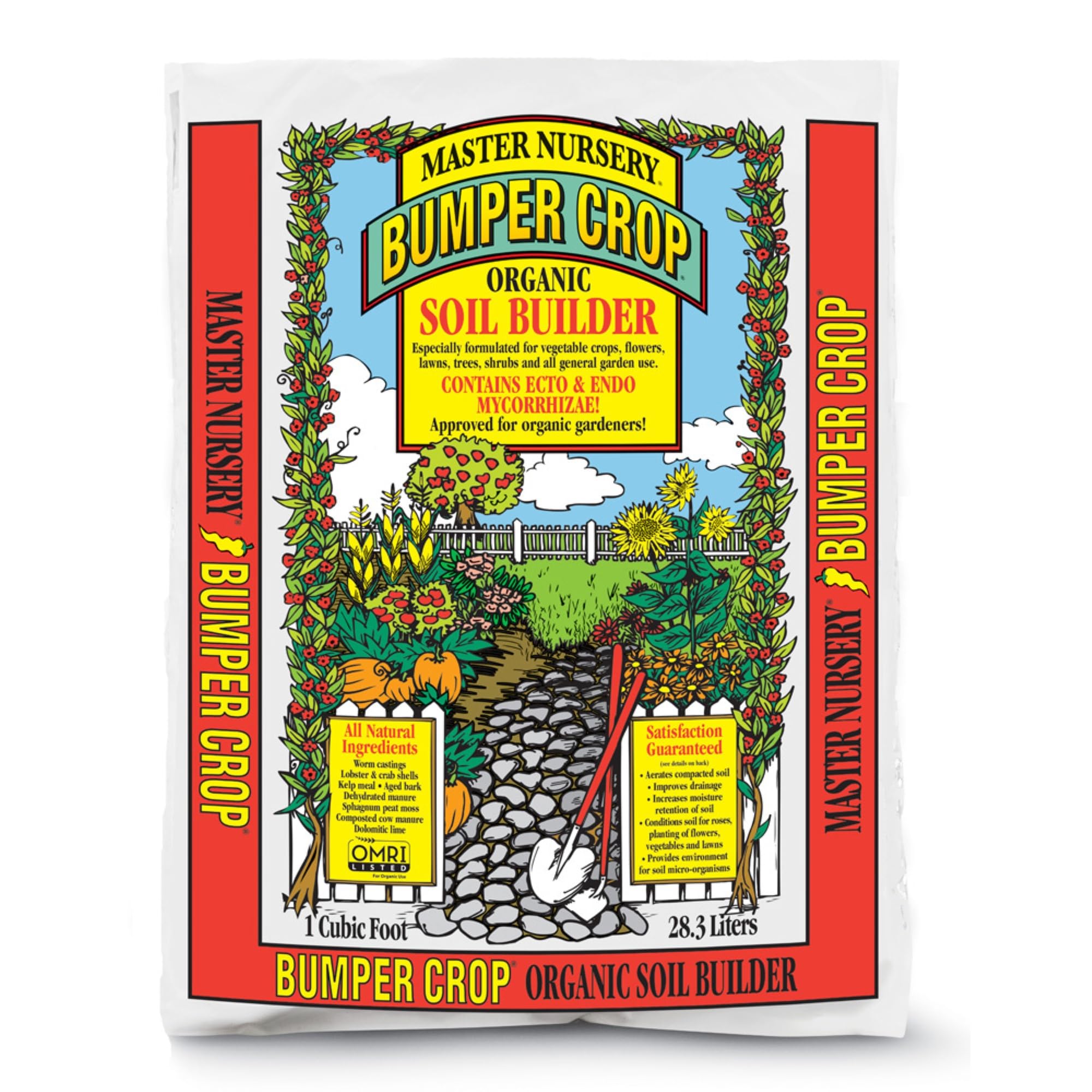
Coast of Maine has built a strong reputation for using marine-based organic ingredients, and Bumper Crop is their standout soil builder for clay-heavy ground. The primary ingredient is lobster compost, which delivers a steady supply of calcium and chitin — substances that encourage microbial activity that physically breaks apart clay platelets. The 1-cubic-foot bag is dense enough to amend a 4-by-8-foot raised bed thoroughly.
Gardeners who have used it for multiple seasons report that their clay soil becomes noticeably less sticky and easier to work after just one application mixed into the top 6 inches. The organic matter content improves moisture retention without creating waterlogged conditions, because the fibrous compost structure creates drainage channels. Reviewers consistently mention that vegetable plants — particularly tomatoes and peppers — produce more fruit when grown in soil amended with this product.
The one cubic foot size is generous for the price point, making it one of the most cost-effective ways to add significant organic bulk to clay ground. It works best when tilled or dug in rather than surface-applied, but even as a top dressing it gradually works down through earthworm activity. The earthy, ocean-derived smell is mild and fades quickly after incorporation.
What works
- Lobster compost provides calcium for clay platelet separation
- Large volume per bag — excellent value for soil amendment
- Improves drainage and aeration in heavy clay
What doesn’t
- Must be mixed into soil, not just top-dressed for best results
- Heavier bag weight makes transport less convenient
3. The Andersons NutraSoft Pelletized Gypsum
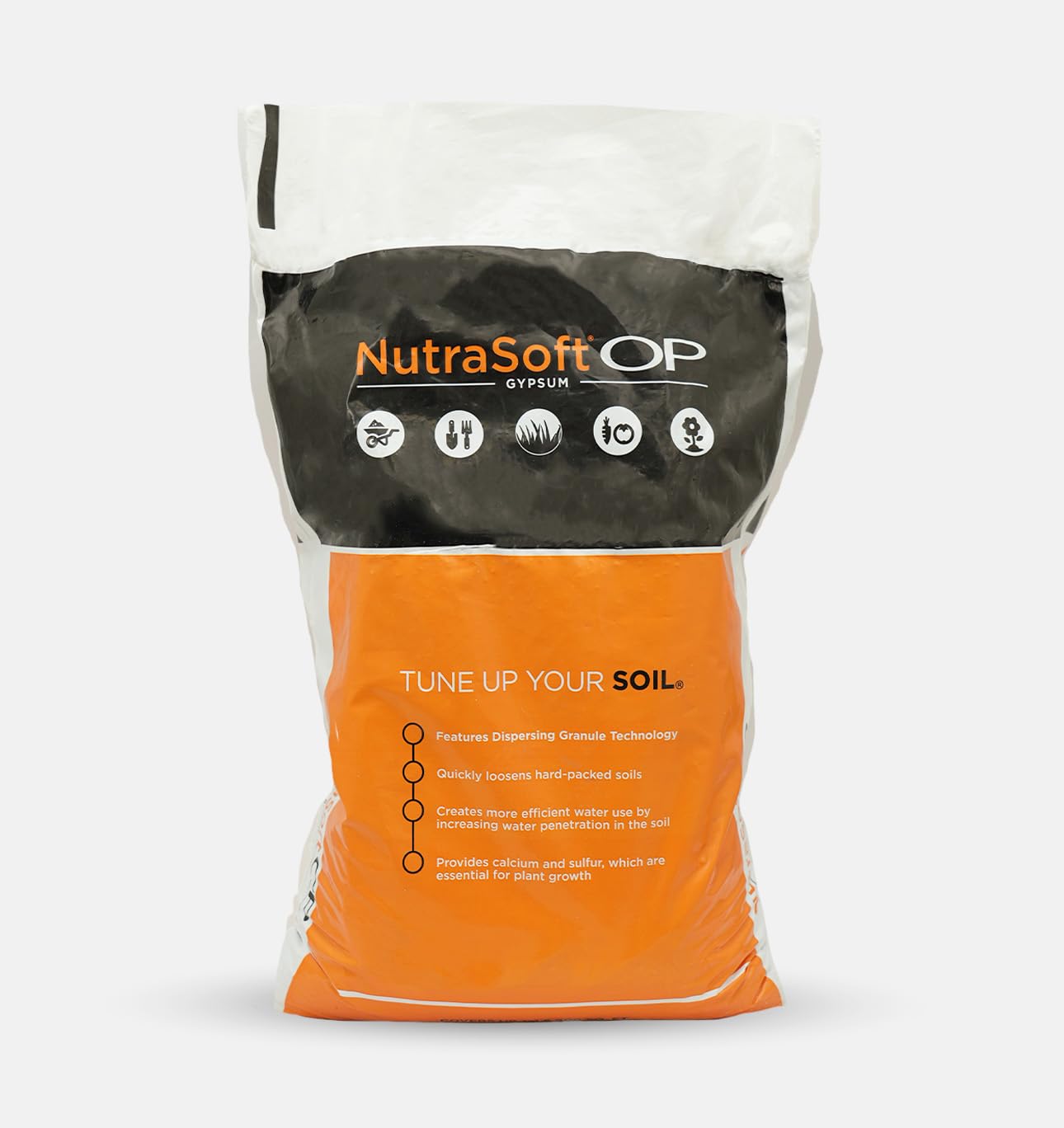
The Andersons NutraSoft is not a traditional fertilizer in the NPK sense, but it is arguably the most important product for clay soil users who need to fix the physical structure of their ground before nutrients can work. This 40-pound bag of pelletized gypsum uses patented DG Technology that allows the granules to disperse rapidly after watering, sending calcium and sulfur into the clay profile to displace sodium and encourage flocculation — the process where clay particles clump together and create pore space.
Covering up to 6,600 square feet per bag, this product is designed for large lawns and garden areas suffering from compacted clay. Users with back-fill clay lawns report that after application, water penetration improves noticeably within weeks and that other fertilizers they apply afterward actually reach the root zone instead of running off. The gypsum is pH neutral, so it won’t alter your soil acidity — a critical benefit for gardeners who already have alkaline clay.
The primary limitation is that gypsum provides no macronutrients on its own; it is a soil conditioner rather than a fertilizer. You will still need to add nitrogen, phosphorus, and potassium separately. But without gypsum first breaking up the clay, those nutrients won’t penetrate. This is the foundational step that makes all subsequent fertilizing actually effective on tight clay soils.
What works
- Patented DG dispersant for rapid soil penetration
- Enormous coverage area — 6,600 sq ft per bag
- pH neutral, safe for all soil types
What doesn’t
- Provides zero NPK — must be paired with a fertilizer
- Pellet breakdown is slow on dry, unwatered ground
4. Lancaster Greensand
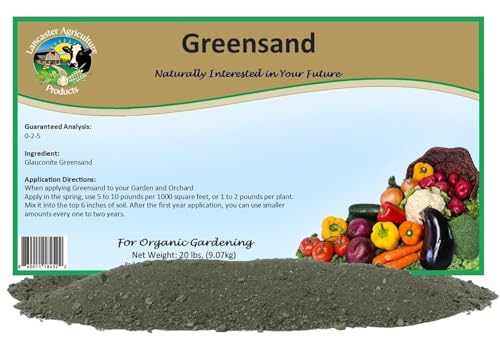
Lancaster Greensand is a 100% natural glauconite mineral sand that delivers slow-release potassium and iron while physically improving clay soil structure. Unlike synthetic potassium sources that leach quickly, the potassium in greensand is released over months by microbial activity and root exudates — a rate that matches the slow water movement in clay perfectly. The 20-pound bag covers a substantial area and can be used both as a top dressing and blended into potting mixes.
Texas gardeners with notoriously tight clay report that greensand helps their live oaks and crape myrtles establish deeper root systems because the sand-sized particles create micro-pores in the clay matrix. The iron content is especially valuable for clay soils that tend to lock up iron at high pH, causing chlorosis in acid-loving plants. Users mixing it with bone meal and blood meal praise the balanced, long-term feeding profile.
The slow-release nature means you won’t see overnight results — greensand takes a full season to show its full effect. It is best applied in fall or early spring so microbial processing has time to work before peak growing season. It pairs exceptionally well with a quick-release nitrogen source for immediate green-up and the greensand for sustained potassium and structural improvement.
What works
- Slow-release potassium lasts entire growing season
- Iron content corrects chlorosis in alkaline clay
- Physically improves soil porosity over time
What doesn’t
- Very slow to show visible results — requires patience
- Dusty application; best done on calm, damp days
5. Stateside Humic20 Liquid Humic Acid
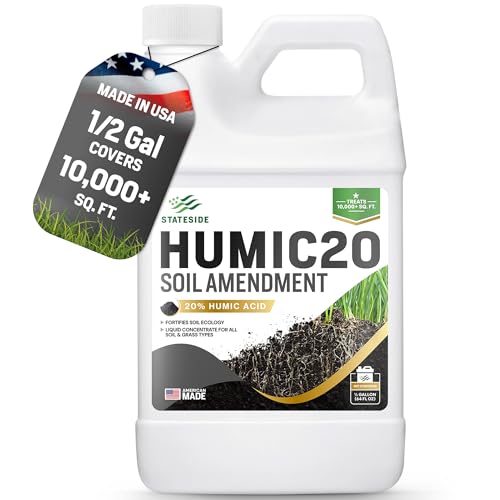
Humic acid is one of the most effective tools for unlocking nutrients trapped in clay soil, and Stateside Humic20 delivers a potent 20% concentration at a price point that undercuts most competitors. The 64-ounce bottle covers 10,000 square feet, making it a highly economical choice for large lawns. Users describe it as a black, ink-like liquid with no odor that mixes easily with water and applies through a standard hose-end sprayer.
Clay soil has a high cation exchange capacity that binds positively charged nutrients like calcium, magnesium, and potassium. Humic acid chelates these bound ions, making them available to plant roots. Gardeners using this product on heavy clay lawns report deeper greening, fewer thin spots, and improved water penetration after just a couple of applications. Several reviewers noted it worked best when applied two weeks after a nitrogen fertilizer application, suggesting a synergistic effect.
The liquid form penetrates clay much faster than granular conditioners, reaching the root zone within hours rather than weeks. This makes it ideal for quick correction of nutrient lock-up during the growing season. The main consideration is that humic acid is a conditioner, not a complete fertilizer — it releases existing soil nutrients but doesn’t add significant NPK itself. Use it alongside a regular fertility program for best results.
What works
- High 20% concentration — effective at low application rates
- Odorless liquid penetrates clay quickly
- Excellent value at 10,000 sq ft per bottle
What doesn’t
- Not a standalone fertilizer — requires NPK supplementation
- Hose-end sprayer requires high pressure for proper dilution
6. FoxFarm Happy Frog All Purpose Fertilizer

FoxFarm Happy Frog is a well-established all-purpose organic granular fertilizer that includes beneficial soil microbes and mycorrhizal fungi. While not specifically marketed for clay soil, the microbial component is crucial for clay health because fungi produce glomalin — a glycoprotein that helps bind clay particles into stable aggregates, improving aeration. The 4-pound bag is compact but concentrated, and users report that half a bag lasts an entire season in a medium-sized raised bed.
Gardeners using Happy Frog on clay-heavy beds note that it revives yellowing plants within a week, suggesting the microbe blend helps unlock phosphorus and micronutrients that clay tends to sequester. The slow-release nitrogen from organic sources prevents the salt burn that can occur with synthetic fertilizers in slow-draining clay. One reviewer revived severely stressed tomato and zucchini plants in just seven days after top-dressing with this product.
The main drawback is the strong manure-like odor, which some users find unpleasant for indoor use. The granules also need consistent moisture to activate the microbes — dry clay won’t trigger the biological release. For outdoor clay beds and containers, however, this is one of the most reliable, OMRI-listed options that combines nutrition with biological soil conditioning. The price per pound is excellent for an organic product with live microbial content.
What works
- Contains live soil microbes and mycorrhizal fungi
- Gentle slow-release formula won’t burn roots in clay
- OMRI listed — suitable for organic gardening
What doesn’t
- Strong odor — not ideal for indoor or enclosed spaces
- Requires consistent watering to activate microbial release
7. R&M Organics Premium Organic Compost
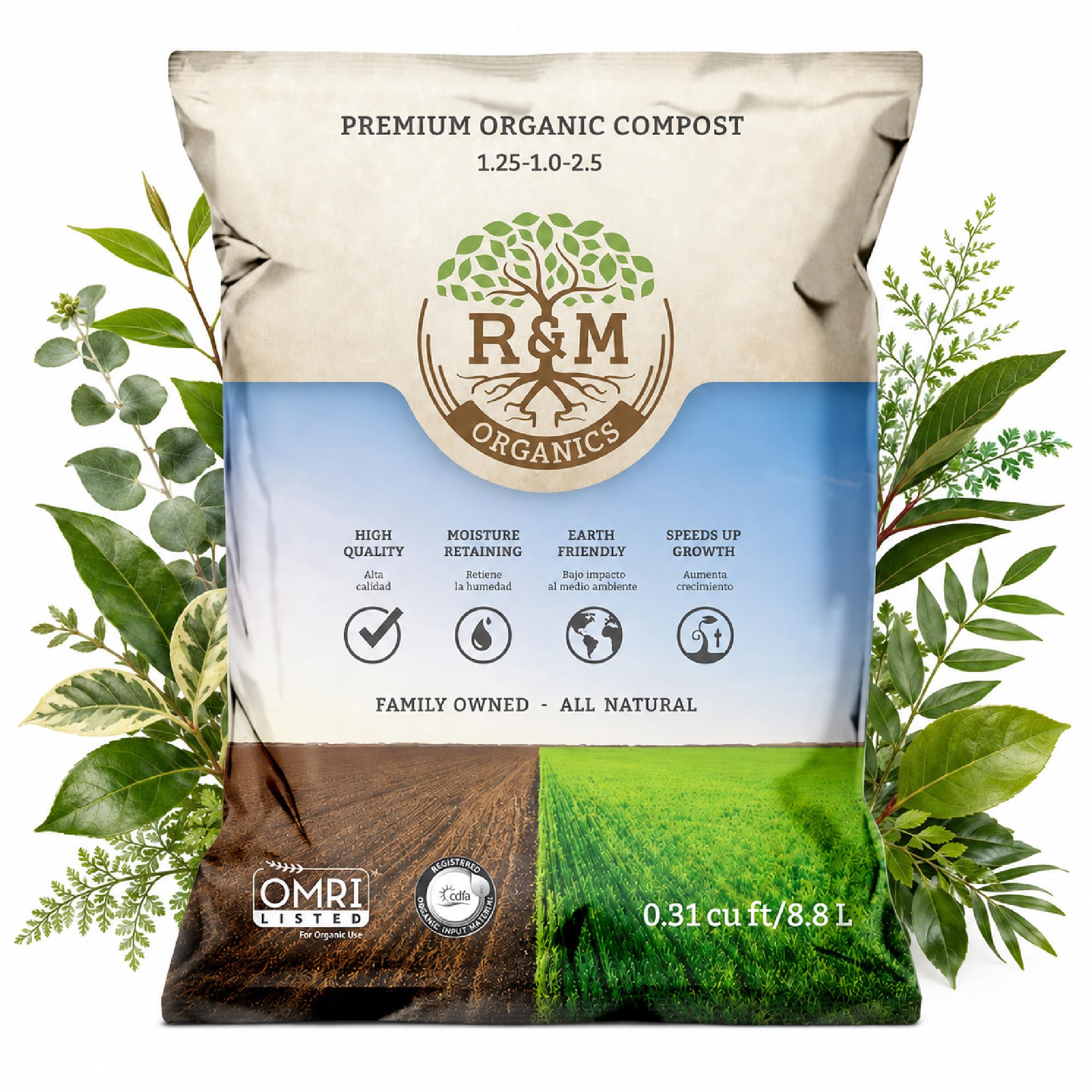
R&M Organics Premium Compost is a manure-based soil amendment that does double duty as a mild fertilizer and a physical clay breaker. Made from fully composted dairy cow manure with continuous aeration, it has a fine, topsoil-like texture with no clumps and minimal odor — unusual for manure products. The 10-pound bag is easy to handle and store, and the compost improves clay soil structure by adding organic matter that separates dense clay particles.
Gardeners with ailing plants in clay ground have reported remarkable recoveries after mixing this compost into the root zone. A user with azaleas damaged by roof-cleaning chemicals saw full recovery after applying this compost, which suggests the organic matter helps buffer chemical imbalances in clay. Another reviewer revived a yellowing tomato plant within a week by mixing the compost into a 27-gallon planter filled with clay-based potting mix.
The biggest advantage of this product for clay soil is its ability to improve moisture retention without waterlogging. The fully composted fibers hold water like a sponge but also create drainage channels, preventing the pudding effect common in clay. The main limitation is nutrient content — as a compost, it provides low NPK values and works best as a soil conditioner rather than a primary fertilizer. Use it to build organic matter, then supplement with a higher-NPK product for heavy feeders.
What works
- Fine, clump-free texture mixes easily into clay
- Low odor compared to typical manure products
- Improves both drainage and moisture retention
What doesn’t
- Low NPK — not sufficient as a standalone fertilizer
- Small bag size covers limited area for the price
Hardware & Specs Guide
NPK Ratio
For clay soil, an NPK ratio with lower nitrogen and balanced phosphorus and potassium (like 3-5-2 or 5-10-5) is generally more effective than high-nitrogen lawn formulas. Clay naturally holds organic nitrogen better than sandy soil, so the primary need is often phosphorus for root development and potassium for overall plant health. Products with high first numbers (like 20-0-0) can overfeed nitrogen and cause leggy growth while neglecting the structural nutrients clay plants actually need.
Gypsum Content
Gypsum (calcium sulfate) is the single most effective mineral for breaking up clay without altering pH. Look for pelletized gypsum with rapid-dispersal technology that breaks down quickly after irrigation. The calcium displaces sodium bonded to clay particles, causing them to flocculate into larger, crumbly aggregates. This creates pore space for air and water movement. A 40-pound bag covering 6,000-7,000 square feet is the standard benchmark for lawn-scale clay remediation.
Concentration
For liquid products like humic acid, concentration is measured as a percentage of active ingredient. A 20% humic acid concentration is considered high and effective — lower concentrations like 5-10% require much higher application rates to achieve the same chelating effect. For granular products, concentration is measured by weight per bag. A 4-pound bag of concentrated organic fertilizer can cover the same area as a 10-pound bag of weaker compost-based product.
Organic Matter
The percentage of organic matter in a soil amendment directly determines how effectively it can improve clay structure. Compost-based products with 50%+ organic matter content physically separate clay platelets and provide food for soil microorganisms that produce natural glues (glomalin) for soil aggregation. Mineral-based products like greensand (0% organic matter) improve structure through physical texture but don’t feed soil biology. A combination of both types yields the best long-term clay soil improvement.
FAQ
Should I use a high-nitrogen fertilizer on clay soil?
How does gypsum help clay soil specifically?
Can I use liquid fertilizer on clay soil?
Final Thoughts: The Verdict
For most gardeners working with heavy ground, the fertilizer for clay soil winner is the BuildASoil Craft Blend because it combines a complete mineral profile with organic ingredients that feed both the plants and the soil microbes needed to break up clay structure. If you need to physically break up hardpan clay before nutrients can penetrate, grab the The Andersons NutraSoft Gypsum as your foundational amendment. And for a budget-friendly, low-odor option that adds organic bulk and improves water management, nothing beats the R&M Organics Premium Compost for building long-term soil health.