
Choosing a growing system that fits on a countertop is simple. Choosing one that can handle multiple tomato plants, a head of lettuce, and a steady supply of basil all at once is a different challenge entirely. A true large indoor garden system moves beyond simple sprouting into serious, sustained food production, and the difference between a toy and a tool comes down to reservoir capacity, light power, and plant site density.
I’m Rikta — the co-founder and writer behind Lawn Gear Lab. For this guide, I have spent many hours cross-referencing reservoir volumes, pump flow rates, light spectrum data, and real owner experiences across the to range to isolate the systems that actually deliver on their yield promises.
Whether you are outfitting a kitchen for year-round greens or setting up a classroom for an agricultural project, this analysis of the best large indoor garden system will help you match your space and ambition to the right hardware.
How To Choose The Best Large Indoor Garden System
Expanding from a six-pod herb starter to a multi-tier food producer requires attention to three core specs: water volume, light intensity, and plant capacity. Ignore these and you risk stunted growth or daily refill schedules that defeat the purpose of automation.
Reservoir Volume and Refill Frequency
Large systems with 20 to 66 pods often pair with tanks between 4 and 32 liters. A 4-liter tank supporting 16 plants will need topping off every 3–5 days; a 30-liter tank on a 66-pod system can stretch to two weeks. Systems without a water-level alarm or window force you to open the lid and check manually. The sweet spot for a productive low-maintenance setup is a minimum 8-liter capacity with a sight-glass or alert.
Light Output and Spectrum Range
Count the total LED wattage, not just the advertised bulb count. A system that lists 24 watts total will keep leafy greens alive but will not ripen peppers or strawberries. For towers growing fruiting crops, look for at least 50 total watts of full-spectrum diodes covering 3000K–660nm red and 5000K blue. Adjustable-height lights are essential because a fixed arm that sits too high wastes energy on seedlings and too low scorches mature foliage.
Pod Count vs. True Plant Density
A 30-pod vertical tower with 9-inch spacing per tier supports more actual yield than a 60-pod shelf unit where pods are jammed an inch apart. Leaves need airflow and light penetration. Systems that stagger pods around a central column (vertical towers) typically use space more efficiently than flat tray arrays of equal pod count. Consider the mature size of your intended crops before multiplying pod numbers.
Pump Type and Circulation Strategy
All hydroponic systems recirculate water, but the method matters. Submersible pumps that run on 30-minute on/off cycles oxygenate the root zone well while keeping energy use low. Aeroponic-style misters (found in some vertical towers) consume more power but deliver faster nutrient uptake. Check whether the pump is user-serviceable — a clogged pump on a sealed column system can stop water delivery to the top tier entirely, and some designs require disassembly of the entire tower to clean the impeller.
Quick Comparison
On smaller screens, swipe sideways to see the full table.
| Model | Category | Best For | Key Spec | Amazon |
|---|---|---|---|---|
| Ahopegarden 66 Pod | Premium Tri-Layer | High-Volume Herb & Veg Production | 30L Total Reservoir | Amazon |
| Growell 60-Pod Tower | Vertical Tower | Space-Saving 60 Plant Yield | 32L Tank, Dual 30W LEDs | Amazon |
| Gardyn Studio 2 (16 Pod) | AI Smart Tower | App-Managed, Low-Maintenance Growing | AI Camera + Sunrise/Sunset LEDs | Amazon |
| Gardyn Studio 1 (16 Pod) | Smart Tower | Compact AI-Guided Growing | 4.5 Gal Tank, Built-in Camera | Amazon |
| VIVOSUN Grow Tent Kit | Enclosed Tent | Full-Season Controlled Environment | 32″x32″x63″, 150W LED | Amazon |
| VGrow All-in-One Box | Smart Cabinet | Sealed Cabinet for Temperate Crops | Samsung LM301H EVO 100W | Amazon |
| Lettuce Grow Farmstand (24 Pod) | Floor-Standing Tower | High-Volume Outdoor-to-Indoor Yield | 58″ Height, 24 Plants | Amazon |
| KUCKGO Vertical 30 Pod | Aeroponic Tower | Budget-Friendly Vertical Propagation | 63GPH Pump, 6-Layer Tower | Amazon |
| inbloom 12 Pod | Entry-Level Hydroponic | Starter System for Kitchen Herbs | 4.2L Tank, Adjustable LED Arm | Amazon |
In‑Depth Reviews
1. Ahopegarden 66 Pod Hydroponics Growing System
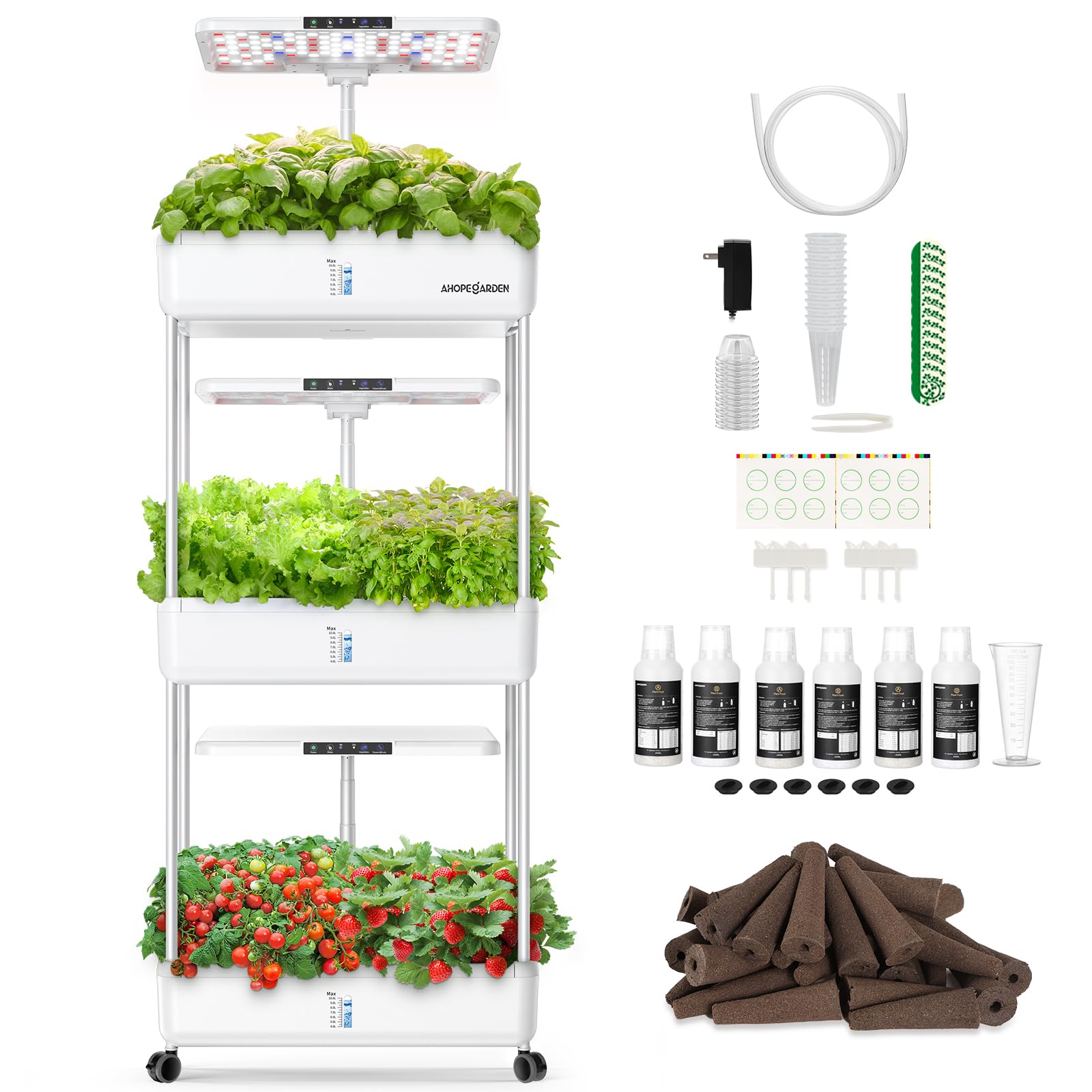
The Ahopegarden system dominates the large-capacity category with three independent 10-liter tanks, each with its own water pump. This triple-zone design allows you to grow herbs in one compartment, lettuce in another, and tomatoes in the third while adjusting nutrient levels separately — a feature absent from single-reservoir towers. The total 30-liter capacity means refills can stretch to two weeks even with 66 pods populated.
The 53-watt LED bar offers a 16-hour setting for greens and a 22-hour setting for fruiting crops, which owners report increases tomato sugar content and leafy growth rates by approximately 50 percent compared to standard 16-hour cycles. The collapsible frame and lockable wheels make positioning and cleaning straightforward, though at 22 pounds empty the unit is not portable once filled.
Setup takes about 15 minutes with no tools required. Growers note that the individual tray design prevents cross-contamination if one pod develops fungus, and the reverse-flow pump feature simplifies cleaning by flushing residue out of the tubing. The only limitation is the lack of WiFi or app control, but the onboard timer and pump settings are intuitive enough to manage manually.
What works
- Three independent pump zones for different crop types
- 53W adjustable LED arm covers a wide footprint
- Reverse pump function speeds up deep cleaning
What doesn’t
- No smartphone app or remote monitoring
- Large footprint requires dedicated counter or floor space
2. Growell 60-Pod Hydroponics Growing System
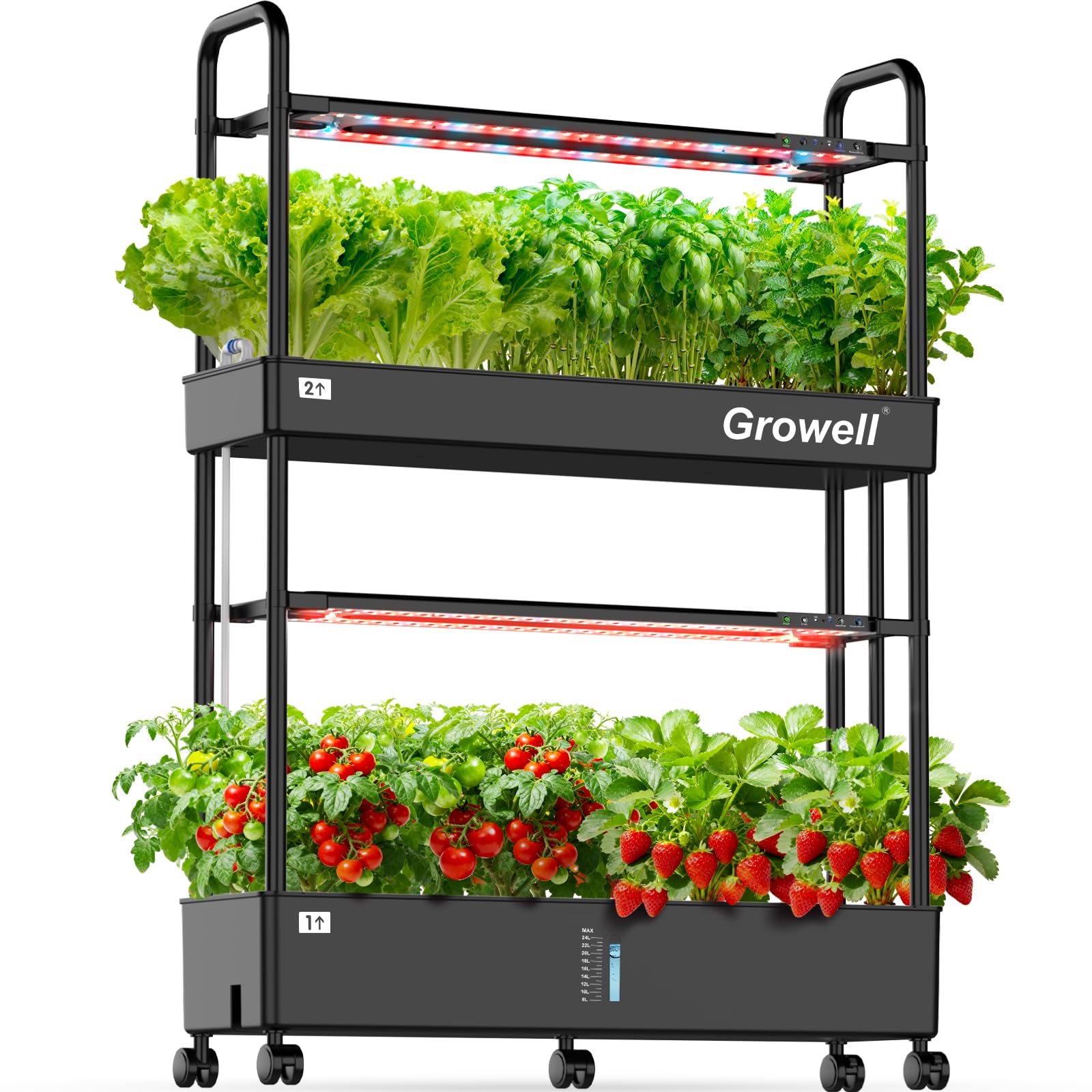
The Growell 60-pod tower packs the largest single-reservoir capacity in this roundup at 32 liters, which keeps the system running for up to three weeks between top-offs when fully planted. The dual 30-watt full-spectrum LED panels are individually adjustable by tier, so you can set the lower panel to 22-hour fruit mode for peppers while running the upper panel on 16-hour mode for lettuce. This split-spectrum control is uncommon at this price point.
The vertical column design saves floor space at just 10 inches square, but the 60-pod count is realistic only if you stagger crop types — 60 heads of lettuce would crowd the lower tiers once mature. The included 371-piece kit covers sponges, baskets, labels, and nutrient bottles, so no additional purchases are needed beyond seeds. The quiet submersible pump runs continuously with gentle gurgling that most owners describe as white noise.
Lockable wheels add stability for households with pets or children. A water-level viewing window eliminates guesswork. The main trade-off is that the pump is housed inside the column, requiring disassembly of the entire tower to service or replace it. Owners recommend flushing the system monthly to prevent calcium buildup in the impeller.
What works
- Massive 32L reservoir for extended intervals between refills
- Two independently timed LED panels for tier-specific growth
- Complete starter kit with over 370 included accessories
What doesn’t
- Pump access requires full tower disassembly
- Floor footprint is compact but height exceeds three feet
3. Gardyn Studio 2 Hydroponics Growing System

The Gardyn Studio 2 is the most refined smart tower available, packing 16 plant sites into a brushed aluminum column that occupies only 1.4 square feet of floor space. The headline upgrade over the Studio 1 is the sealed column design with watertight silicone gaskets that prevent the mineral crystallization and biofilm buildup that commonly clog traditional tower columns. Owners report that cleaning this system requires a fraction of the time demanded by open-column designs.
The built-in ultra-wide camera feeds time-lapse imagery and health data to Gardner’s Kelby AI assistant, which sends push notifications for water pH adjustments, nutrient top-offs, and harvest timing. The sunrise and sunset LED simulation slowly ramps light intensity at dawn and dusk, reducing leaf shock compared to abrupt on/off cycles. The 4-gallon reservoir is adequate for two weeks of growth with 16 plants, though fruiting crops in full flower may require a mid-week refill.
App dependency is the real limiting factor — without the mobile app the system still runs its pump and lights, but you lose sensor alerts and the AI coaching that justifies the premium price. Some users note that larger plants like full-sized tomatoes can shade lower pods, requiring strategic placement of tall crops on the top row.
What works
- Sealed columns virtually eliminate cleaning and scaling
- AI coaching with real-time sensor and camera feedback
- Sunrise/sunset dimming reduces plant stress
What doesn’t
- App is required for full smart functionality
- Single reservoir cannot zone-nutrient different crop types
4. Gardyn Studio 1 Hydroponics Growing System
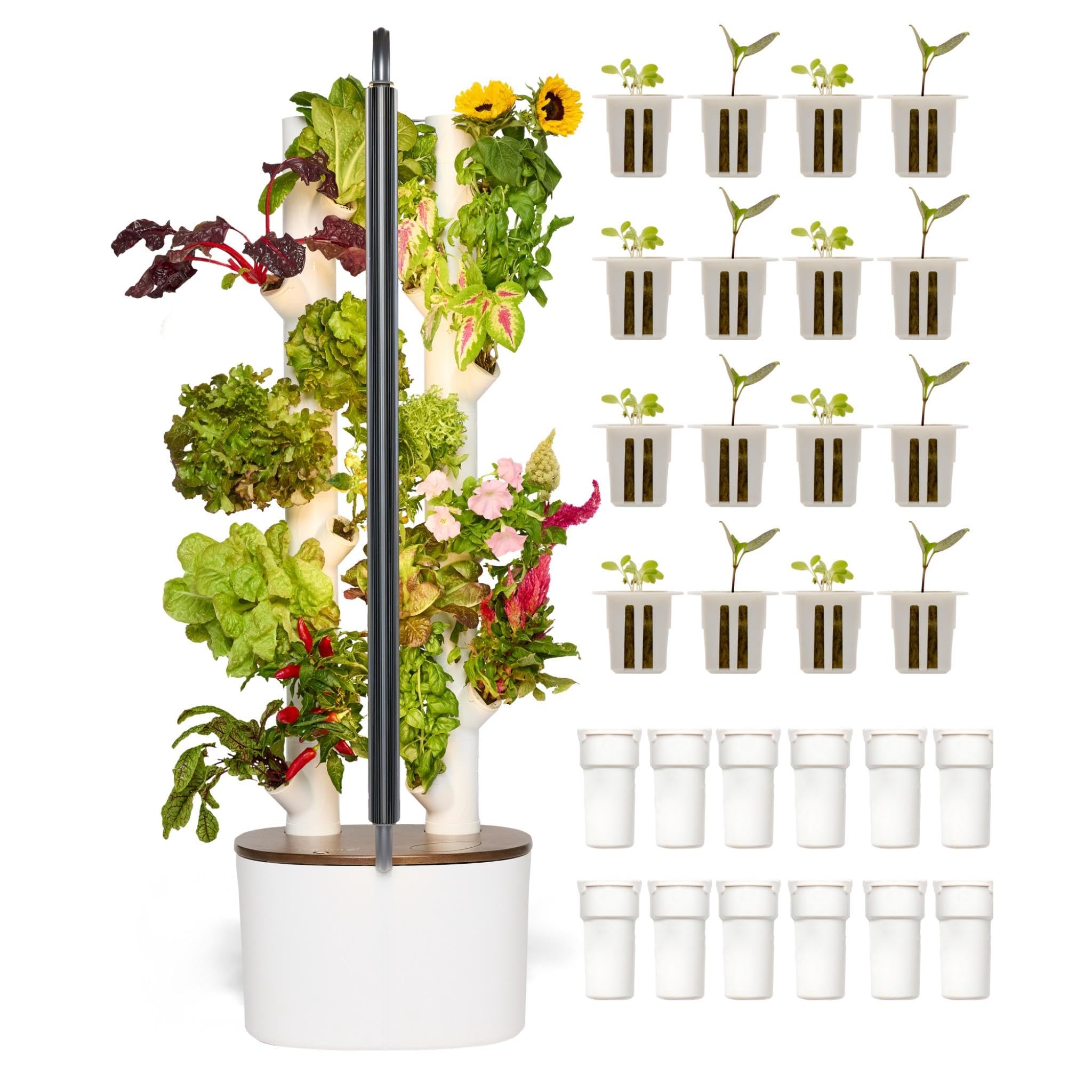
The Studio 1 is essentially the Studio 2’s predecessor, sharing the same 16-pod capacity and 1.4-square-foot footprint but using an open column design instead of sealed columns. This means more regular scrubbing to prevent mineral deposits, but it also allows full access to every root site for inspection. The brushed aluminum body with a solid Rubberwood top lid gives the unit a furniture-grade appearance that blends into a kitchen island or dining table.
The AI assistance and camera feed are identical to the Studio 2 — Kelby offers real-time tracking, water level monitoring, and personalized reminders. The 4-gallon tank is easy to fill from the top without disassembling the tower, and the pump runs quietly enough that owners frequently forget it is on. The full-spectrum LEDs are fixed at the top of the tower, so height adjustment is achieved by rotating the tower’s tiers rather than moving the light bar.
One notable shortfall is that the inclusion of a free bottle of nutrients requires scanning a QR code for fulfillment rather than arriving in the box. Early adopters reported the sensor placement is less accurate than the Studio 2’s revised layout, occasionally sending false low-water alerts when the sensor floats too high. Given the modest price difference, most buyers should consider the Studio 2 unless the wooden lid aesthetic is a must-have.
What works
- Beautiful furniture-grade design with solid wood top
- AI coaching with time-lapse and health monitoring
- Compact footprint fits tight countertop spaces
What doesn’t
- Open column design requires regular cleaning for scale
- Nutrient bottle requires separate QR code redemption
5. VIVOSUN Smart Grow Tent Kit 2.7 × 2.7ft
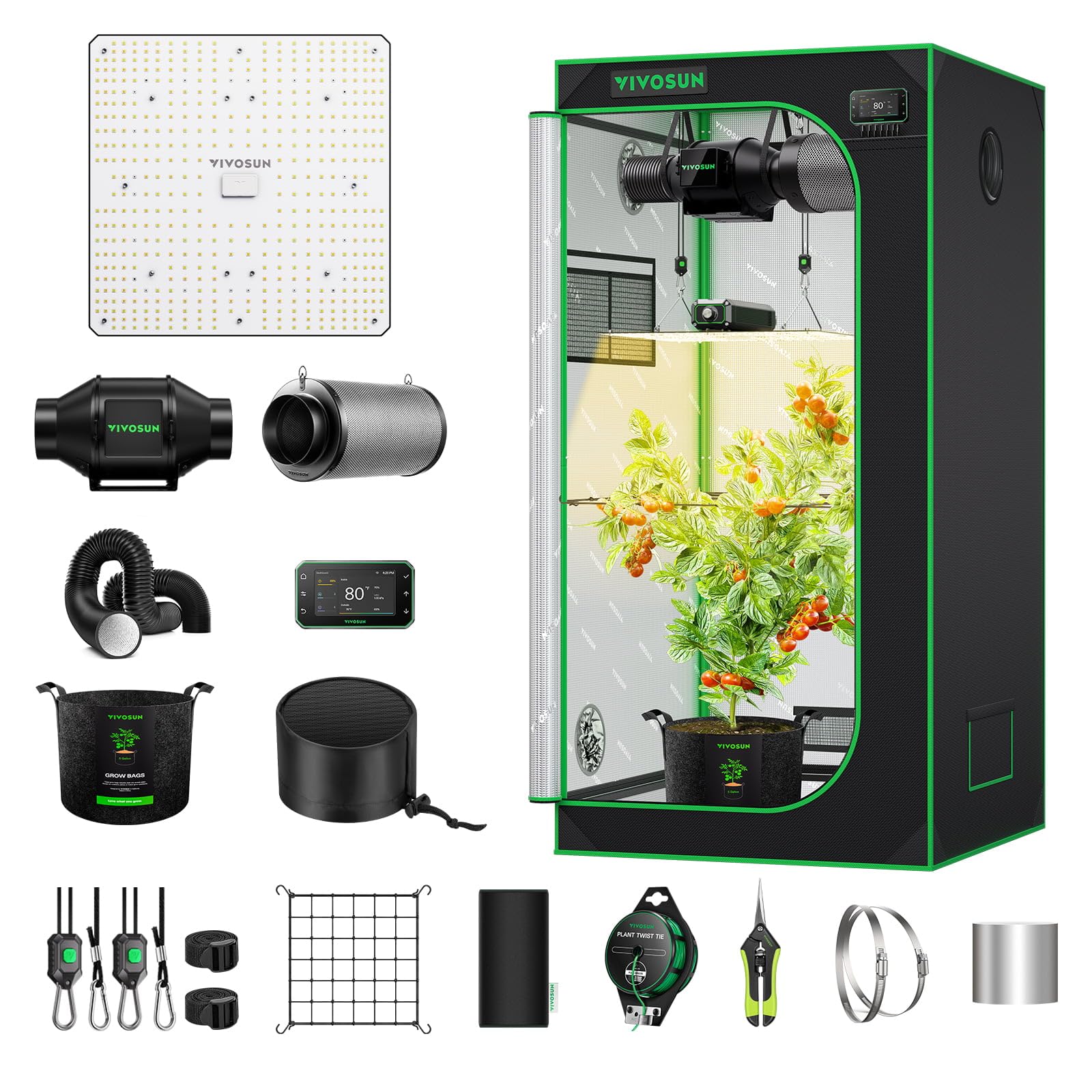
The VIVOSUN Grow Tent Kit is not a hydroponic tower — it is a complete enclosed growing environment that includes a 32x32x63-inch tent, a 150-watt full-spectrum LED light with 3000K, 5000K, 660nm, and 730nm diodes, a 4-inch EC inline fan, carbon filter, and the GrowHub E42A+ controller. What it lacks in pod convenience it makes up for in climate control precision. The tent’s Mylar-lined walls maximize light reflection, and the carbon filter eliminates odor, making it suitable for sensitive indoor settings.
The GrowHub E42A+ links the light, fan, and temperature/humidity sensors into one app interface where you can create day/night schedules and adjust fan speed based on VPD (vapor pressure deficit). The inline fan moves up to 195 CFM and is PWM-controlled for near-silent operation at lower speeds. Owners using fabric pots and soil or coco coir report vigorous root development because the tent environment eliminates drafts and stabilizes temperature swings.
Assembly takes about 45 minutes for the tent frame, ducting, and light hanging. Some owners report minor light leaks along the zipper seam, which can be addressed with tape if absolute darkness is required for photoperiod-sensitive plants. This system requires you to supply pots, growing medium, and a watering method, so it is best suited for those who want full control rather than a plug-and-pod setup.
What works
- Complete environmental control via app-connected fan and light
- 150W LED with multiple spectrum channels for all growth stages
- Compact tent footprint fits closets or corners
What doesn’t
- Requires separate pots, medium, and watering system
- Minor light leaks at zipper may need sealing
6. VGrow All-in-One Smart Grow Box

The VGrow box occupies just 18×18 inches of floor space yet offers a fully sealed grow cabinet with a 100-watt Samsung LM301H EVO LED — the same diode technology used in high-end commercial fixtures. The light spectrum shifts automatically through three stages: full-spectrum for leaf growth, red-dominant for flowering, and blue-heavy for stem strength. The faux-leather exterior and tempered glass viewing window make the unit look more like a piece of modern furniture than a grow tent.
The self-watering base reservoir holds enough water for up to seven days, with an optional drip irrigation or deep water culture upgrade kit available separately. The built-in circulation fan pulls fresh air through a bottom intake and exhausts through a rear carbon filter, keeping humidity manageable inside the sealed cabinet. The Grow Pilot app guides beginners through each stage with HD video tutorials covering seed starting, transplanting, nutrient mixing, and harvest timing.
Owner feedback highlights a split opinion on the “all-in-one” claim. While the box ships with everything needed for a first run, temperature and humidity management is marginal in rooms above 78°F without additional ventilation. Several users added a supplementary inline fan and custom duct adapter to stabilize conditions. The customer support experience has been inconsistent, with some warranty claims requiring glue-it-yourself resolutions.
What works
- Samsung LM301H EVO diodes deliver high efficiency and even canopy coverage
- Furniture-grade design blends into living spaces
- Self-watering base with optional DWC/drip upgrade path
What doesn’t
- Sealed cabinet may overheat without additional exhaust upgrades
- Customer support response times and warranty process are inconsistent
7. Lettuce Grow Farmstand (24 Plant)
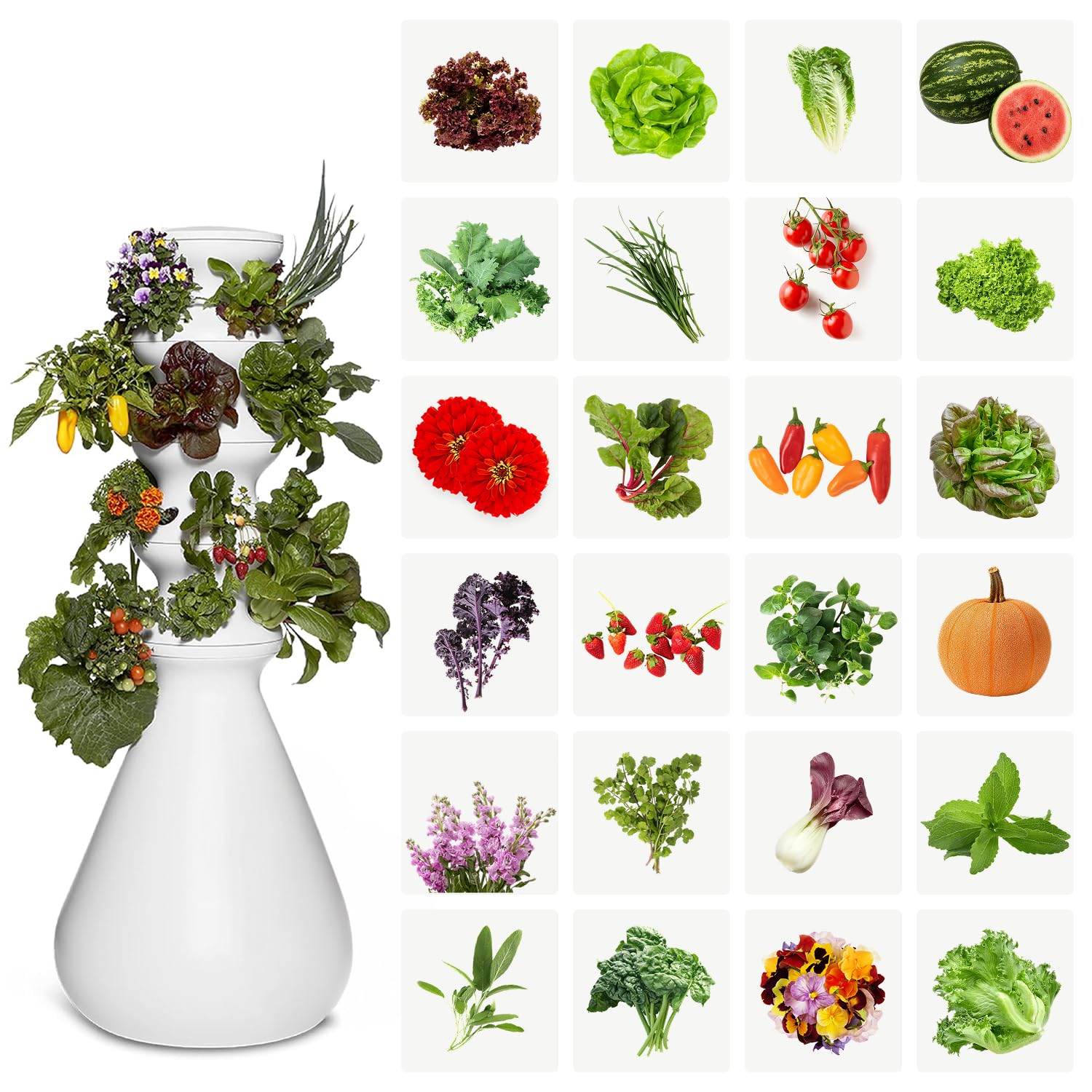
The Lettuce Grow Farmstand is a 24-plant vertical hydro system designed for indoor use with optional LED rings (sold separately) or placement in a sunny outdoor spot. The 58-inch tower sits on a sturdy tripod base, and the water pump distributes nutrient solution to the top, cascading through each of the three tiers by gravity. The included pH test kit, pH Down solution, and nutrient bottles cover the first few months of operation, and the plant food included is formulated for 130+ plants.
The self-watering feature is straightforward — the timer runs the pump at regular intervals, and excess water drains back to the base reservoir. Owners report that a weekly 15-minute maintenance routine is sufficient for healthy growth. The BPA-free food-grade plastic construction is certified for outdoor UV exposure, meaning the Farmstand can transition from a sunny patio in summer to a grow-light setup indoors during winter without material degradation.
A critical note for Amazon buyers: purchase through Amazon does not allow the unit to be registered in the Lettuce Grow app, so you lose access to planting guides, reminders, and community support that direct purchasers receive. Some users also report that the pump can clog if mineral deposits build up, requiring a disassembly and cleaning every few weeks. The 24-plant capacity is best matched to lettuce, kale, and herbs rather than heavy fruiting plants that would require the separate Glow Ring light kit.
What works
- Gravity-fed water distribution requires minimal pump power
- BPA-free food-grade plastic rated for outdoor use
- Weekly 15-minute maintenance schedule is realistic
What doesn’t
- Amazon purchase blocks access to the companion app features
- Pump requires periodic disassembly for mineral deposit cleaning
8. KUCKGO Vertical Hydroponic Tower 30 Pod
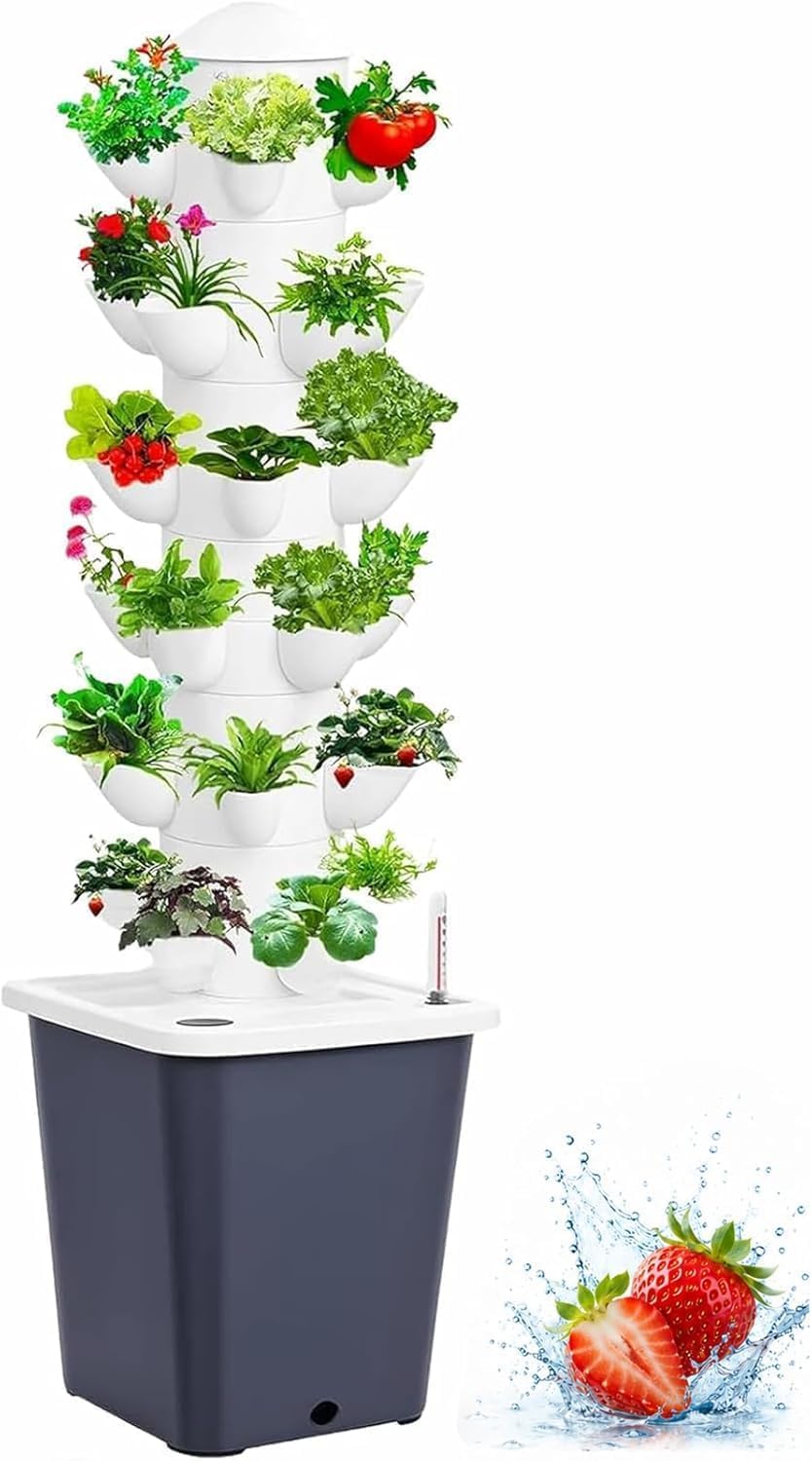
The KUCKGO 30-pod tower is the most affordable vertical option in this roundup, yet it includes a 63-gallon-per-hour pump and a six-layer stacking design that fits corners with its square footprint. The aeroponic-style mister delivers nutrient mist directly to roots instead of submerging them, which can accelerate growth for cuttings and seedlings. The water recycling diverter valve reduces waste by approximately 40 percent compared to open-loop systems.
The modular BPA-free plastic construction allows expansion components to be purchased separately if you outgrow the 30-pod capacity. Assembly takes less than 15 minutes with the included pre-assembled pump system. The tower stands 34.6 inches tall, making it the shortest vertical model in this guide, which is an advantage for placement on a counter or under a cabinet but limits the height of crops that can mature inside — large tomato or pepper varieties will top out before full ripeness.
The pump is audible but not distracting, described by owners as a soft hum. Some users report that the cork top inserts are not sealed to the glass columns, allowing evaporation between fillings. The unit is best suited for leafy greens, lettuces, and strawberry propagation where the moderate height and gentle misting action align with the crop’s needs.
What works
- Aeroponic misting pumps oxygen directly to root systems
- Modular expandable design adapts to future capacity needs
- Compact height fits under most kitchen base cabinets
What doesn’t
- Cork tops may allow moisture evaporation between refills
- Limited height restricts tall fruiting crops
9. inbloom 12 Pod Hydroponics Growing System
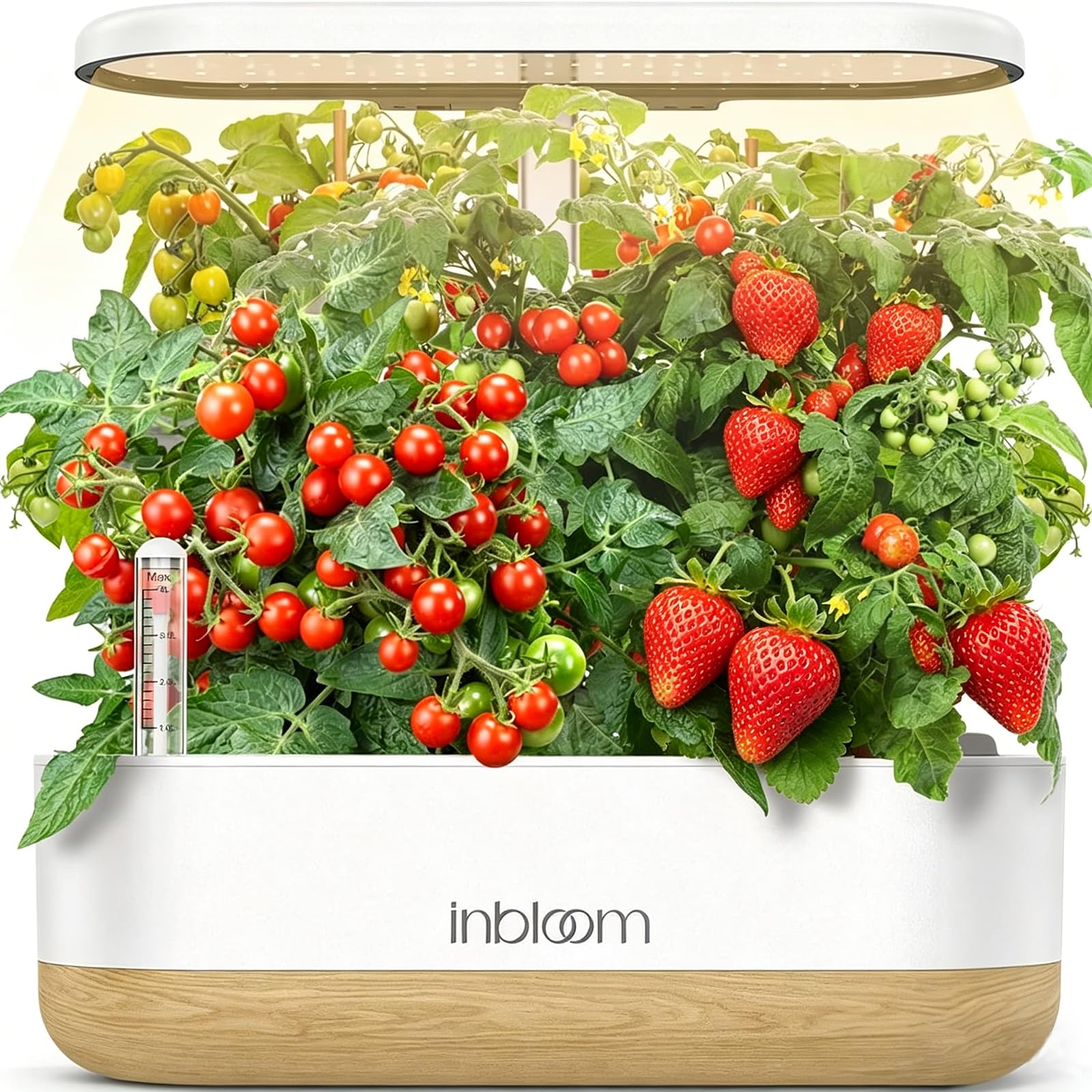
The inbloom 12-pod system is the most compact unit in this guide, but its 4.2-liter tank and 76-bulb 24-watt LED array make it a legitimate candidate for households that want a small-but-productive herb garden without the footprint of a tower. The LED arm lifts from 7 to 21 inches, accommodating basil and mint through their full growth cycle. The 16-hour on / 8-hour off cycle is hard-wired, so you cannot adjust photoperiods without unplugging the unit.
The pump runs on 30-minute intervals with a silent operation that most owners do not notice. The low-water alarm sounds a continuous beep when the tank drops below 700 ml, which is a useful failsafe but can be irritating if you are away for a weekend. The included A and B plant nutrients, 12 baskets, domes, and sponges mean zero additional purchases for the first two months of operation.
Growth rates for basil and lettuce are noticeably fast — owners report five times faster development compared to soil-grown counterparts in the same room. The system is best for small kitchens with limited counter space. It lacks the capacity for fruiting crops or high-volume leafy harvests, so expect a steady supply of garnishes rather than salad-bowl quantities.
What works
- Wide 7-21 inch light adjustment range for plant height
- Silent pump does not disrupt home or office environments
- Complete starter kit with nutrients, sponges, and baskets
What doesn’t
- Fixed 16-hour cycle cannot be customized per crop type
- Water alarm is loud and continuous without a mute button
Hardware & Specs Guide
Reservoir Volume and Plant Count
The relationship between tank size and pod count directly determines how often you need to intervene. A 4-liter tank on a 12-pod system can support basil and lettuce for about 5-7 days. A 30-liter tank on a 60-pod tower can push past two weeks between refills, even with plants in full vegetative growth. When comparing systems, divide the reservoir capacity by the pod count to estimate the water volume per plant. Anything under 0.5 liters per plant means frequent top-offs are unavoidable during peak growth.
Light Wattage and Spectrum
LED wattage is the single biggest determinant of what you can grow. Greens like lettuce and kale thrive on 15–30 total watts. Fruiting crops such as tomatoes, peppers, and strawberries need 50+ watts of combined red (660nm) and blue (450nm) diodes to set and ripen flowers. Adjustable-height arms allow you to keep the light source 4–6 inches above the canopy. Fixed bars that sit too high waste energy and reduce PPFD at the leaf surface, while bars that are too low cause leaf tip burn on taller plants.
FAQ
Can a large indoor garden system grow fruiting vegetables like peppers and tomatoes?
How often do I need to clean the pump and tubing in a large tower system?
Final Thoughts: The Verdict
For most gardeners, the large indoor garden system winner is the Ahopegarden 66 Pod because its triple-tank design allows simultaneous cultivation of different crop types with independent water management and a powerful 53-watt adjustable LED. If you want AI-driven automation with minimal cleaning, grab the Gardyn Studio 2. And for high-volume leafy green production on a tight floor footprint, nothing beats the Growell 60-Pod Tower.