
Begonias demand well-draining soil and consistent moisture levels at the root zone, making pot selection a decisive factor between vibrant foliage and stem collapse. The wrong container traps water and suffocates delicate fibrous roots, while the right one supports years of compact growth.
I’m Rikta — the co-founder and writer behind Lawn Gear Lab. My approach to this guide involved cross-referencing drainage specifications, material porosity data, and real-world owner feedback on how each pot manages the specific moisture needs of begonia root systems.
After analyzing seven contenders across ceramic, stoneware, and self-watering categories, I’ve narrowed the field to the options that deliver genuine value. This is your complete, category-focused breakdown for finding the best pot for begonias.
How To Choose The Best Pot For Begonias
Begonias sit in a narrow soil-moisture sweet spot: they need consistent dampness without soggy feet. The pot you choose directly controls whether the roots suffocate or breathe. Here are the three make-or-break factors.
Drainage Hole Count and Size
A single ¼-inch hole is inadequate for a begonia growing in a 6-inch pot. Look for multiple drainage openings or a large central hole (at least ½-inch) paired with a coarse bottom layer. Porous materials like unglazed ceramic and stoneware also wick moisture through the walls, providing a secondary escape path for excess water that solid plastic cannot offer.
Material Breathability and Weight
Ceramic and stoneware pots regulate soil temperature better than thin plastic, which can heat up rapidly on a sunny windowsill. However, begonias in heavy glazed ceramic need careful watering frequency adjustment because the glaze seals the sidewalls. Unglazed terracotta dries out too fast for most begonia varieties unless you are willing to water daily. The sweet spot is a glazed ceramic or high-fired stoneware with a single drainage hole and a saucer for overflow control.
Pot Depth and Geometry
Tuberous begonias require wider, shallower containers to accommodate their spreading root system and surface-level rhizomes. Tall, narrow pots encourage deep root growth that is unnatural for most begonia types and can lead to water pooling at the bottom. A diameter-to-height ratio of roughly 1:1 or slightly wider than tall gives begonia roots the horizontal spread they prefer.
Quick Comparison
On smaller screens, swipe sideways to see the full table.
| Model | Category | Best For | Key Spec | Amazon |
|---|---|---|---|---|
| D’vine Dev Stoneware Planter | Stoneware | Premium aeration | 5.3″ inner diameter | Amazon |
| SQOWL Glazed Ceramic | Glazed Ceramic | Large single display | 7.8″ diameter, 5.9″H | Amazon |
| LE TAUCI Footed Ceramic | Ceramic | Multi-plant starter set | 5.1″ + 6.4″ diameters | Amazon |
| Xiaan Jiaju Cottage Clay | Crackle Ceramic | Farmhouse aesthetic | 6.29″ diameter, 5.12″H | Amazon |
| Xiaan Jiaju Tuscan Ceramic | Ceramic | Compact desk planter | 6.11″ diameter | Amazon |
| FaithLand Self-Watering | Self-Watering | Hands-off watering | 9″, 10″, 12″ set | Amazon |
| UOUZ 8-Inch Plastic | Plastic | Budget multi-pack | 8″ diameter, 7L capacity | Amazon |
In‑Depth Reviews
1. D’vine Dev 6 Inch Embossed Leaves Stoneware Planter
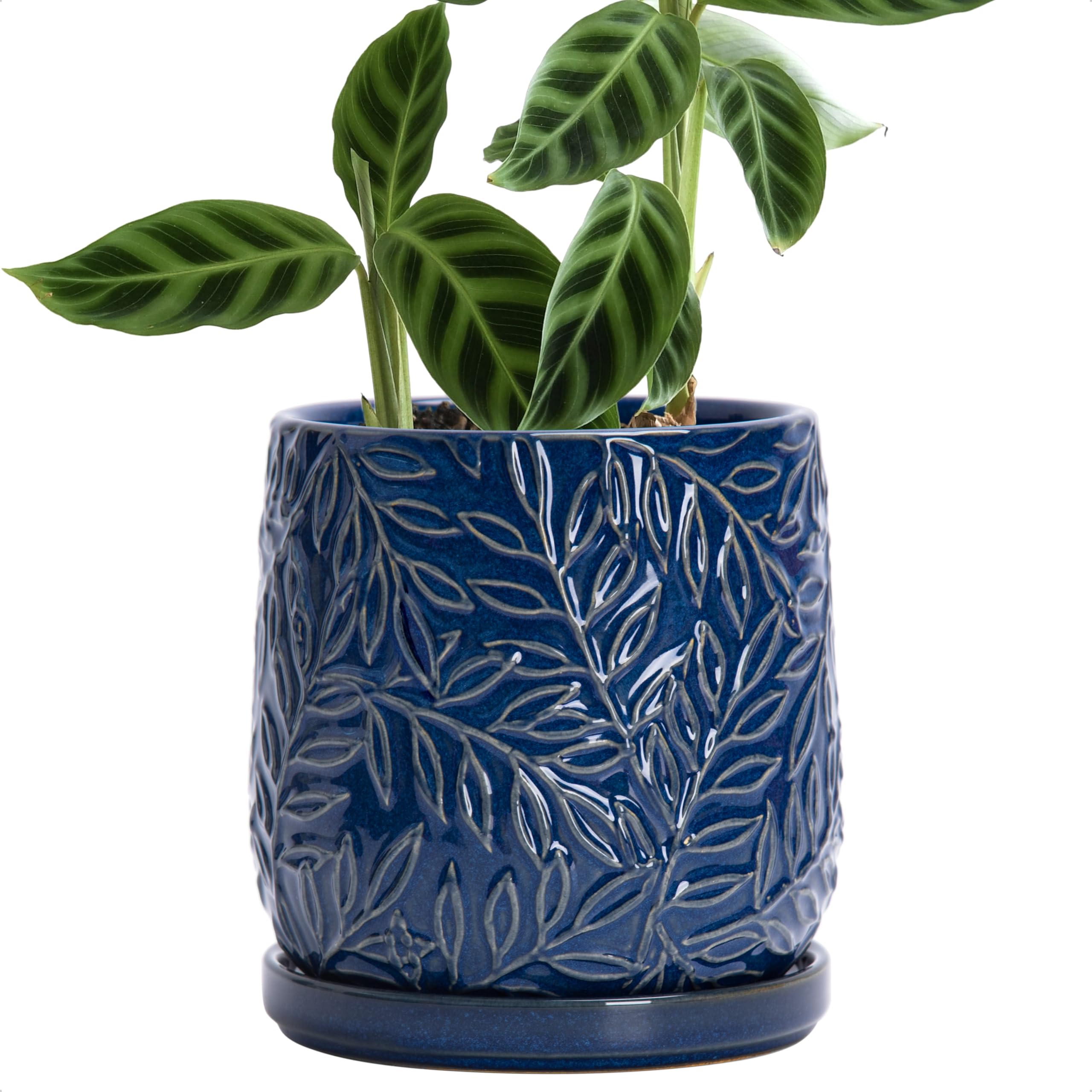
The D’vine Dev planter hits the ideal specs for a mid-size begonia. Its 5.3-inch inner diameter provides enough horizontal space for a compact Rex or fibrous begonia, while the 6.6-inch height gives roots room to settle without encouraging deep taproot growth that begonias do not need. The midnight blue matte stoneware finish has a 3D embossed leaf pattern that adds grip and visual texture without trapping moisture against the pot walls.
Beyond aesthetics, this pot includes a stainless steel drainage mesh and a padded scuff-prevention pad inside the saucer — details that directly address begonia care. The mesh prevents soil from washing out during watering, and the pad protects windowsills from scratches. Owners consistently praise the ceramic weight and the fact that the raised leaf design does not collect dust or grime. The saucer is wide enough to catch runoff without looking bulky underneath the pot.
For tuberous begonia growers, the shallow-but-wide proportions are a perfect match. The pre-drilled drainage hole is ¾-inch, which is generous enough to prevent clogs from perlite in the soil mix. One caveat is that the interior is glazed, so the sidewall does not wick moisture like unglazed stoneware would. You must monitor watering frequency accordingly, especially in humid environments.
What works
- Generous ¾-inch drainage hole resists clogging
- Included mesh, pad, and saucer reduce mess
- Heavy stoneware build prevents tipping
What doesn’t
- Glazed interior holds moisture longer
- Single size limits multi-plant setups
2. SQOWL Ceramic Planter 8 Inch
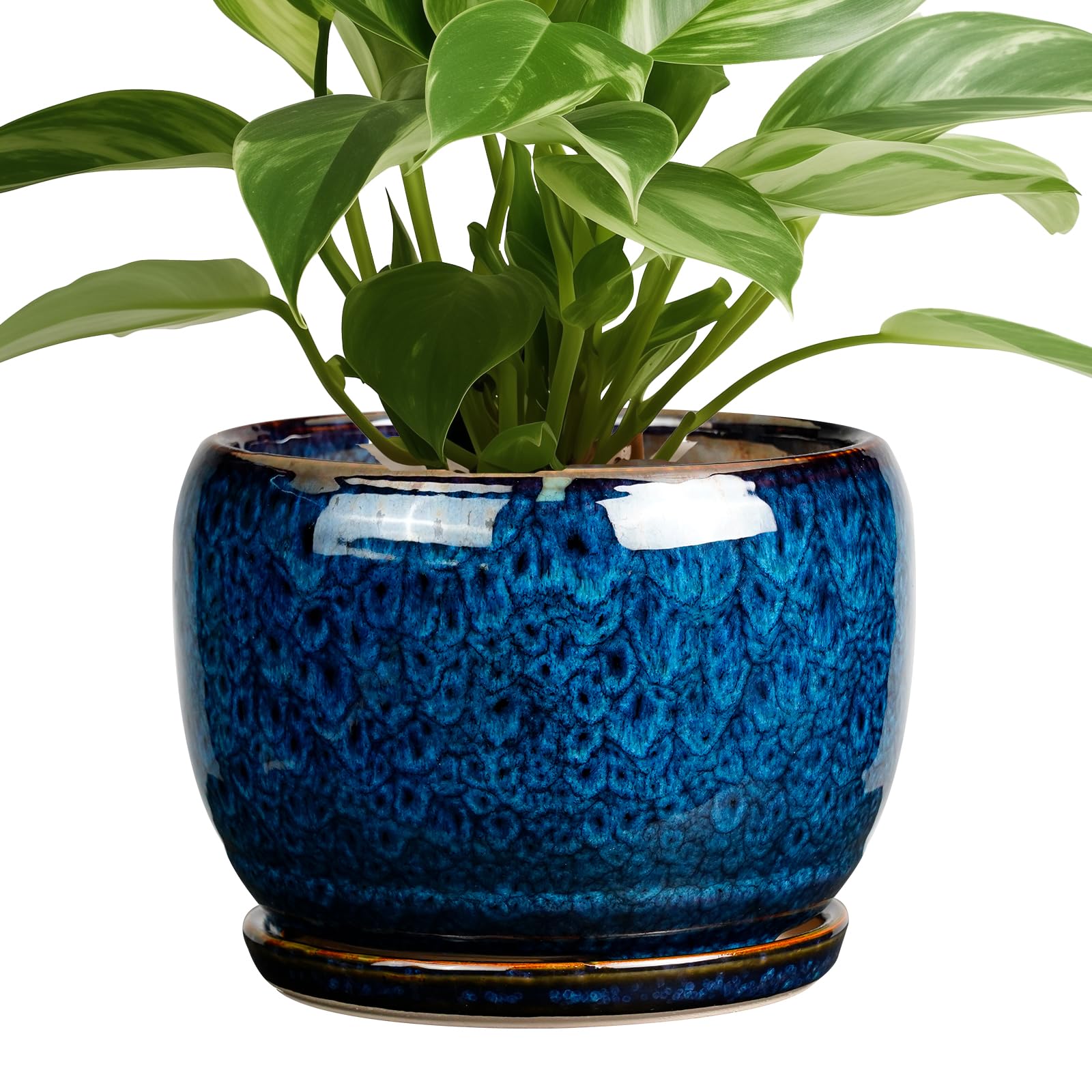
The SQOWL 8-inch planter is a prime candidate for larger begonia varieties like cane-type ‘Angel Wing’ begonias that need a stable base and consistent soil moisture. The 7.8-inch diameter and 5.9-inch height create a squat, wide footprint that mirrors the root spread of mature begonias. The peacock blue glaze is applied evenly and fired at high temperature, producing a durable shell that resists chipping and UV fading even on a bright patio.
A single drainage hole with a mesh pad sits at the bottom, and the matching ceramic saucer is deep enough to hold runoff without overflowing during heavy watering. Multiple reviews note that the mesh pad can shift during soil filling — a simple bead of silicone around the rim solves this. The glazed interior does not wick moisture, but the ceramic body itself remains cool to the touch, which helps buffer root temperature during summer heat.
For growers keeping a single statement begonia, this pot offers the most substantial visual presence in the list. The blue glaze pairs well with silver-leaved Rex begonias and dark-foliage varieties. The only trade-off is the limited saucer size — the drip tray diameter is only 6 inches, so any runoff beyond a shallow pool may escape onto your surface if you water too aggressively.
What works
- High-fired glaze resists weather damage
- Wide, stable base suits top-heavy begonias
- Mesh pad prevents soil washout
What doesn’t
- Saucer is slightly undersized for the pot diameter
- Mesh pad can shift during repotting
3. LE TAUCI Footed Ceramic Plant Pots (2-Pack)

LE TAUCI delivers a two-pack with diameters of 5.1 and 6.4 inches, covering the most common pot sizes for begonia propagation and single-plant display. The footed base elevates the pot bottom above the saucer, creating an air gap that prevents the drainage hole from sitting in standing water — a critical advantage for begonia roots that rot quickly in stagnant moisture. The reactive glaze finish produces subtle color variation that looks custom without being distracting.
Each pot includes silicone plugs and drainage hole nets, giving you control over water flow. For a Rex begonia, you can remove the plug entirely for maximum drainage; for a desktop setting where you want to avoid any drips on furniture, the plug seals the hole completely. The smooth ceramic surface wipes clean easily, and the footed design discourages pests like fungus gnats from nesting in the saucer gap.
The 5.1-inch pot works well for young begonia starts or compact semperflorens varieties, while the 6.4-inch pot accommodates a mature rhizomatous begonia. One reviewer noted that the included plug for the larger pot did not fit snugly — a minor inconsistency given the otherwise solid construction. Still, for a two-pot set at this tier, the drainage flexibility and elevated design make it the most practical option for begonia collectors managing multiple specimens.
What works
- Footed base prevents water wicking
- Includes both plugs and mesh nets
- Sizes cover propagation to mature plants
What doesn’t
- Occasional plug fit inconsistency
- Glaze finish can show water spots
4. Xiaan Jiaju Cottage Rustic Clay Ceramic Planter

Xiaan Jiaju’s cottage pot uses a crackle glaze finish over a distressed clay body, giving each unit a weathered, time-worn appearance that complements the natural look of begonia foliage. At 6.29 inches in diameter and 5.12 inches in height, the dimensions sit squarely in the mid-range category — large enough for a bushy tuberous begonia but compact enough for a kitchen windowsill. The sage yellow color shifts in different lighting, picking up green undertones next to dark foliage.
The drainage hole is present and functional, but the crackle glaze creates micro-fissures in the surface that can trap soil particles over time. This is purely cosmetic and does not affect performance, but it means the pot will not stay spotless after repeated watering. Multiple owners bought additional units after their first purchase, citing the sturdy ceramic weight and the way the finish makes the plant the focal point rather than the container.
For growers who value aesthetic integration over sterile uniformity, this pot adds character without sacrificing drainage. The 0.96-kilogram weight is manageable for moving between indoor and outdoor displays. The main drawback is the single drainage hole — if you mix a heavy clay soil instead of a perlite-rich begonia blend, the hole can become blocked. Use a coarse bottom layer to keep the path clear.
What works
- Distinctive crackle finish adds character
- Well-balanced proportions for begonias
- Light enough for easy repositioning
What doesn’t
- Single drainage hole requires careful soil mix
- Crackle glaze can trap soil residue
5. Xiaan Jiaju Tuscan Ceramic Plant Pot
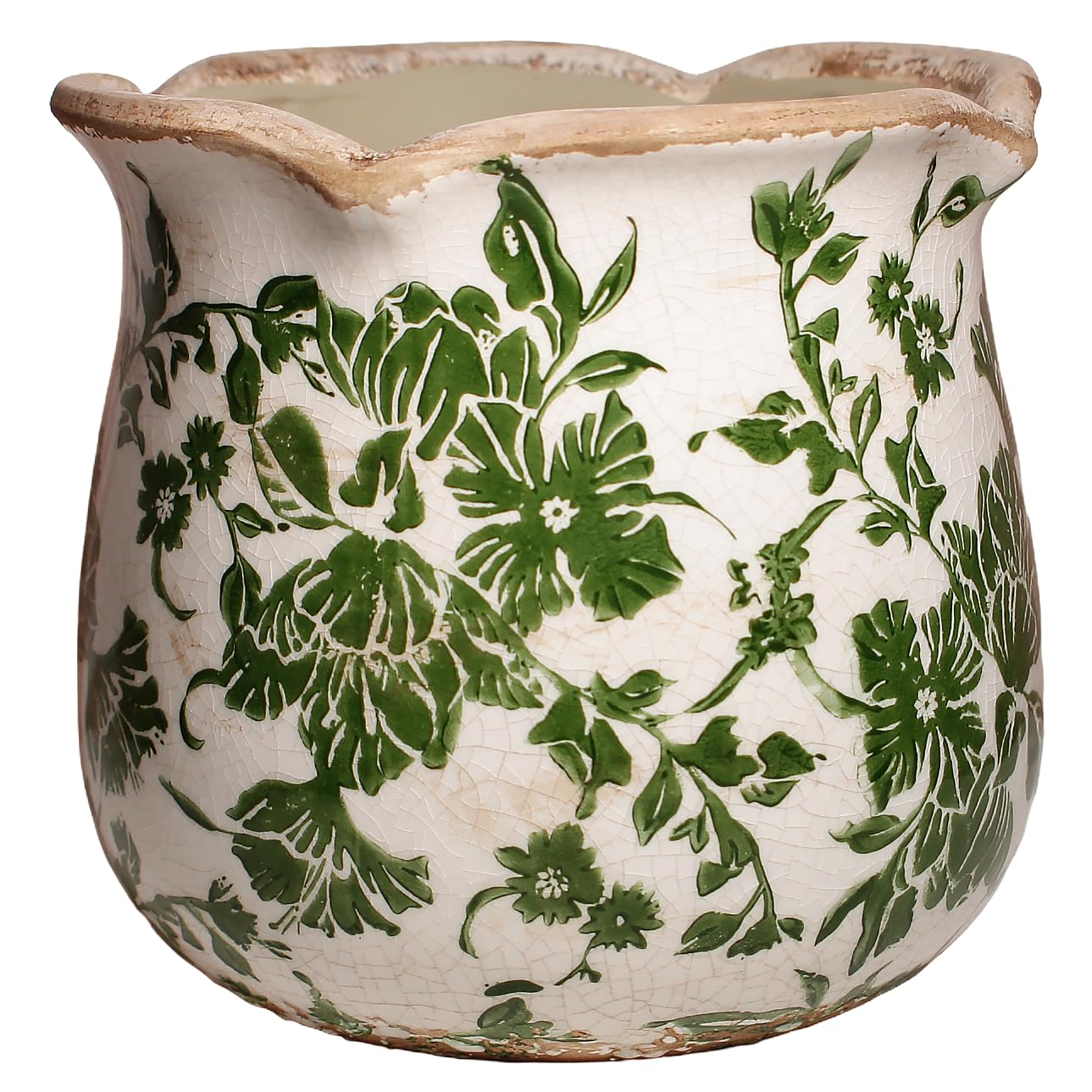
The Tuscan series from Xiaan Jiaju offers a 6.11-inch diameter pot with a green distressed finish and a geometric pattern carved into the ceramic body. This is the smallest dedicated pot on the list, making it ideal for a single compact begonia like a ‘Bedding’ or ‘Dragon Wing’ variety that stays under 12 inches in height. The 5.72-inch height keeps the soil volume low, reducing the risk of overwatering compared to deeper pots.
The crackle glaze and distressed details produce a shabby chic look that feels more antique than modern. Owners report that the size runs larger than expected — the interior volume can accommodate a good root ball without crowding. The single drainage hole is adequate for this size, especially since the pot will likely house a smaller specimen with lower water needs. The ceramic weight at 1.1 kilograms feels substantial but not cumbersome for a shelf or table.
Where this pot falls short is the absolute single drainage point. For a begonia that needs precise moisture control, a single hole with no saucer included means you must supply your own tray or place the pot directly on a waterproof surface. The geometric pattern is attractive but collects dust in the crevices. Still, for a compact display pot at this tier, the build quality and visual appeal are hard to beat for a single begonia accent piece.
What works
- Compact size fits tight shelf spaces
- Distressed green finish hides water marks
- Sturdy ceramic with good weight feel
What doesn’t
- No included saucer or tray
- Geometric pattern traps dust
6. FaithLand 3-Pack Self-Watering Planter Pots
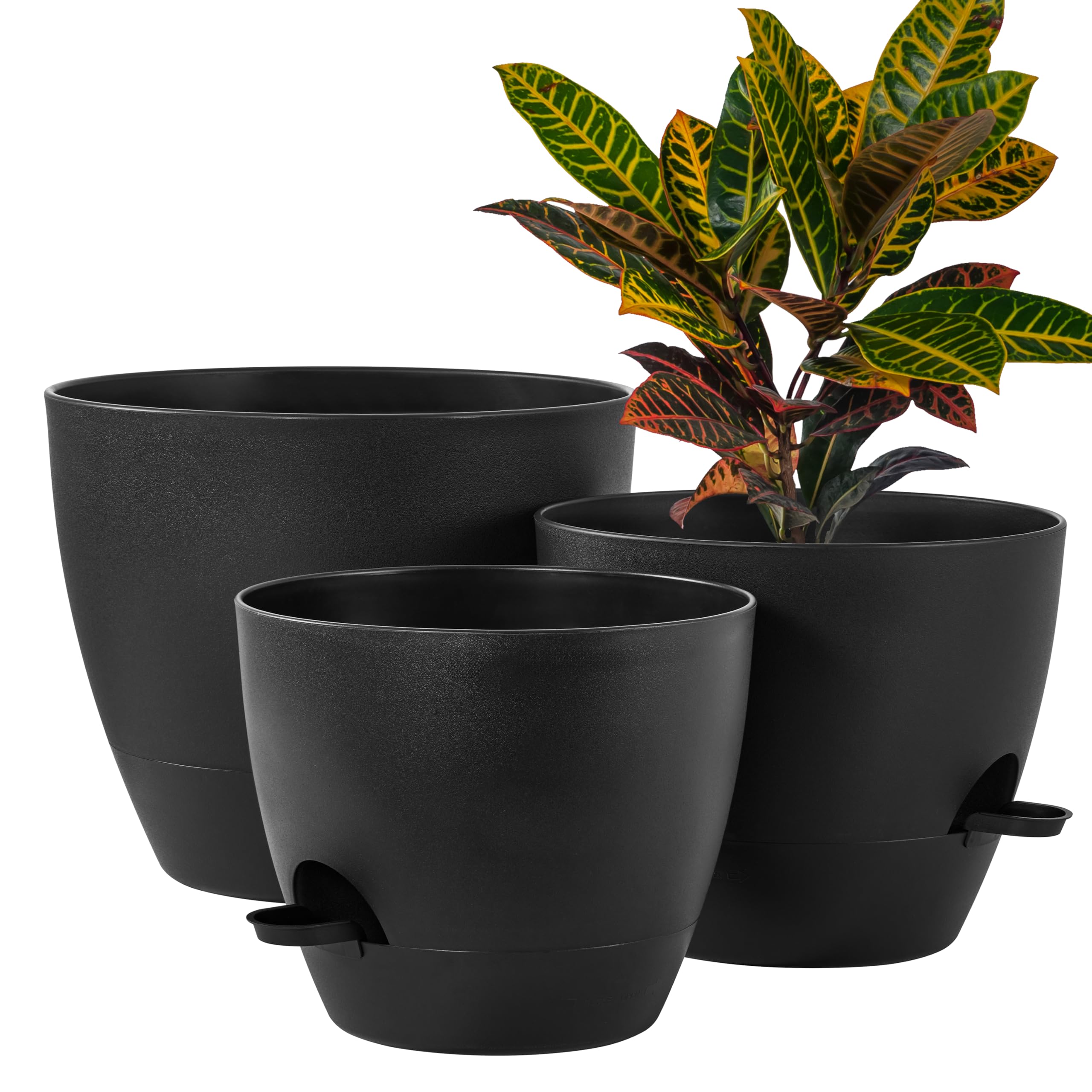
FaithLand’s self-watering system uses a bottom reservoir with a cotton wicking rope to draw moisture upward into the soil on demand. For begonia growers who travel or tend to forget watering schedules, this mechanism maintains consistent soil moisture without the risk of surface overwatering. The three-pot set includes 9-inch, 10-inch, and 12-inch sizes, giving you options for both young and mature begonias.
The polypropylene construction is lightweight and resists cracking, but the material does not breathe like ceramic. Begonias in self-watering pots need extra attention to soil aeration — mixing in ample perlite or pumice prevents the root zone from staying too wet. The clip-on watering lip allows you to pour water directly into the reservoir without disturbing the soil surface, which mimics the steady moisture begonias prefer during active growth.
Owner feedback highlights the ease of assembly and the matte black finish that blends into any decor. The 12-inch pot is deep at 10 inches, which can encourage downward root growth in begonias that prefer lateral spread. For tuberous begonia varieties, I would recommend using the 9-inch pot instead to keep the root zone contained. The self-watering rope system works best when the reservoir is topped off weekly — letting it run dry defeats the purpose entirely.
What works
- Reservoir system reduces watering frequency
- Lightweight and easy to move
- Varied sizes accommodate different growth stages
What doesn’t
- Plastic traps heat in direct sun
- Deep pots encourage unnatural root growth for begonias
7. UOUZ 8 Inch Plant Pots (4-Pack)
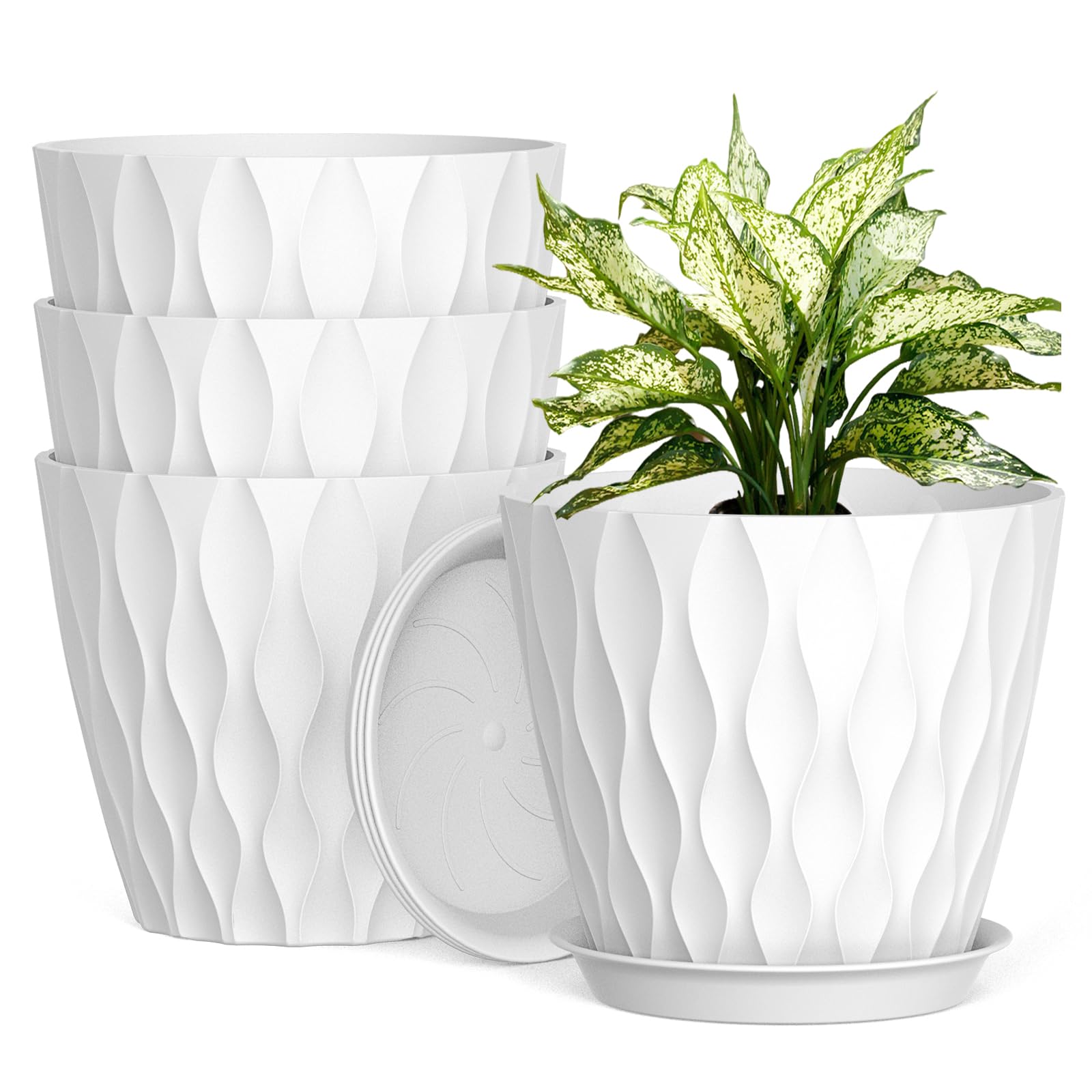
UOUZ’s four-pack of 8-inch plastic planters delivers the most quantity per tier in this guide. The waffle texture adds rigidity to the thin plastic walls, preventing the sides from bowing outward under soil weight. Each pot includes a separate saucer and multiple small drainage holes — a better setup for begonia moisture management than the single-hole design found on some ceramic options.
The plastic construction is UV-resistant and frost-proof, making these pots usable as outdoor seasonal containers for begonias on a patio or balcony. At 7 liters of soil capacity, each pot holds enough volume for a substantial fibrous begonia or a grouping of small bedding begonias. The 8-inch diameter and 11-inch height create a deeper pot than the 1:1 ratio recommended for begonias, but the multiple drainage holes compensate by allowing excess water to escape quickly.
Several owner reviews note that the white color shows soil stains over time, especially around the rim. The separate saucers are not attached, which means the pot can slide off if bumped. For a budget-conscious grower starting a begonia collection or repotting multiple cuttings, this set provides the necessary components — drainage holes, saucers, and consistent sizing — at the lowest per-pot cost. Just be prepared to add extra perlite to your mix to offset the deeper soil column.
What works
- Multiple drainage holes per pot
- UV- and frost-resistant plastic
- Four pots with saucers for bulk planting
What doesn’t
- White plastic stains easily
- Deeper than ideal begonia pot ratio
Hardware & Specs Guide
Drainage Hole Standards
Begonias need fast drainage. A pot with a single hole smaller than ½ inch risks clogging with perlite and soil fines. Multiple ¼-inch holes or one ¾-inch opening paired with a stainless steel mesh pad is ideal. The D’vine Dev and SQOWL pots meet this threshold. Always inspect the hole before purchase — some glazed ceramics have a partially blocked opening from the glazing process.
Material Porosity and Weight
Glazed ceramic prevents sidewall wicking, which concentrates moisture in the soil. Stoneware with a matte finish sits between unglazed terracotta and full gloss — it offers some breathability without drying out as fast. A pot weight of 1.5 to 2.5 pounds for a 6-inch diameter provides stability for top-heavy begonias. Plastic options under 0.5 pounds are easier to move but can tip if the begonia grows tall.
FAQ
Should I use unglazed terracotta for tuberous begonias?
How many drainage holes does a begonia pot actually need?
Can self-watering pots drown begonia roots?
Final Thoughts: The Verdict
For most gardeners, the pot for begonias winner is the D’vine Dev Stoneware Planter because its 5.3-inch inner diameter, ¾-inch drainage hole, and included mesh pad directly address begonia root sensitivity while delivering premium stoneware aesthetics. If you prefer a two-pot setup for propagation and display, grab the LE TAUCI Footed Ceramic Pots for the elevated base that keeps drainage holes elevated above standing water. And for growers who travel frequently or want to automate watering, nothing beats the FaithLand Self-Watering 3-Pack with its bottom reservoir system that maintains consistent soil moisture without daily attention.