
Getting the NPK ratio wrong is the fastest way to turn a tropical showpiece into a leafy green bush with zero flowers. Hibiscus plants are heavy feeders that demand specific macronutrient levels to produce those dinner-plate-sized blooms, and most general-purpose fertilizers simply don’t cut it. You need a formula that prioritizes potassium and delivers trace micronutrients like magnesium and sulfur to prevent yellowing leaves and bud drop.
I’m Rikta — the co-founder and writer behind Lawn Gear Lab. I spend countless hours cross-referencing manufacturer spec sheets, studying horticultural data on NPK absorption rates, and analyzing aggregated owner feedback so you get a feeding strategy that actually works for your hibiscus.
Selecting the wrong plant food can leave you frustrated with sparse flowers and lackluster foliage. This guide cuts through the marketing noise to compare the top-rated formulas on the market, helping you find the best hibiscus fertilizer for your specific growing conditions and budget.
How To Choose The Best Hibiscus Fertilizer
Hibiscus plants are not casual feeders. Choosing a fertilizer blindly can result in excessive foliage at the expense of flowers or, worse, nutrient burnout that stunts growth. The right choice depends on matching the NPK ratio and delivery method to your plant’s growth stage, soil type, and whether it lives in a pot or the ground.
Decoding the NPK Ratio for Blooms
The three numbers on any fertilizer bag represent nitrogen (N), phosphorus (P), and potassium (K). For hibiscus, high nitrogen produces dark green leaves but few blooms. A high middle number is often pushed for flowering plants, but hibiscus actually responds best to a high last number — potassium. Look for a ratio where K is noticeably higher than P, such as 17-7-10 or 16-5-25. The potassium drives flower size, color intensity, and root strength.
Liquid vs. Granular: Which Delivery Works for Hibiscus?
Liquid fertilizers offer immediate nutrient availability, making them ideal for potted hibiscus that get watered frequently and can lose nutrients to drainage. Granular slow-release formulas work well for in-ground hibiscus, providing a steady nutrient supply over weeks. Powdered water-soluble concentrates — like Jack’s Classic — offer a middle path: you mix them fresh each watering, giving you precise control over dosage without the cost-per-ounce premium of pre-mixed liquids.
Micronutrients: The Non-NPK Essentials
Hibiscus plants are prone to magnesium, iron, and sulfur deficiencies, especially in containers where the limited soil volume depletes quickly. Yellowing leaves between the veins (chlorosis) is the classic sign of an iron or magnesium shortage. A quality hibiscus fertilizer includes chelated iron, magnesium sulfate, or a full micro-nutrient suite. Without these, even a perfect NPK ratio won’t stop leaf yellowing or bud drop.
Quick Comparison
On smaller screens, swipe sideways to see the full table.
| Model | Category | Best For | Key Spec | Amazon |
|---|---|---|---|---|
| Jack’s Classic 16-5-25 | Powder | High-potassium bloom boost | 16:5:25 NPK | Amazon |
| Fertilome 17-7-10 | Granular | Steady in-ground feeding | 17:7:10 NPK | Amazon |
| TPS Hibiscus 32 oz | Liquid | Quick-acting potted plant food | 32 fl oz per bottle | Amazon |
| Miracle-Gro Azalea Food | Powder | Acid-loving plants mix | 5 lb bag | Amazon |
| HiThrive 16 oz Liquid | Liquid | Budget-friendly entry option | 16 fl oz (makes 16 gal) | Amazon |
| Miracle-Gro LiquaFeed Bloom Booster | Liquid | Convenient hose-end feeding | 4-pack of 16 oz refills | Amazon |
| TPS Hibiscus 1 Gallon | Liquid | Bulk supply for large collections | 128 fl oz per bottle | Amazon |
In‑Depth Reviews
1. Jack’s Classic 16-5-25 Tropical Food
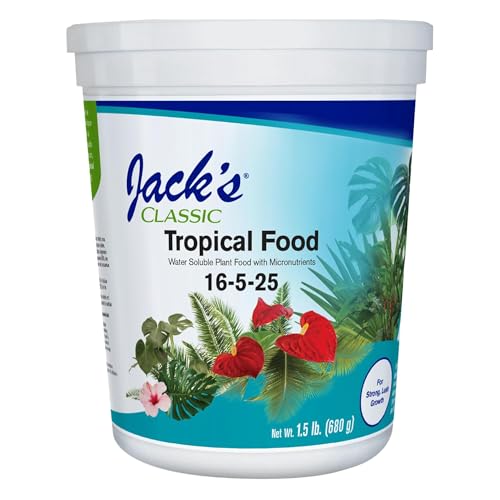
The 16-5-25 NPK ratio is practically engineered for hibiscus bloom production — extremely high potassium with low phosphorus to prevent salt buildup and root damage. This water-soluble powder includes magnesium, sulfur, and a full micronutrient package that directly addresses the chlorosis issues common in potted tropical plants. Each 1.5-pound box makes approximately 15 to 20 gallons of liquid feed, offering excellent value per application compared to pre-mixed liquids.
Customers report seeing daily bloom production after two months of weekly feeding. The diversified nitrogen sources (ammoniacal, nitrate, and urea) provide both immediate greening and sustained feeding between applications. The included measuring spoon removes guesswork, and the powder dissolves completely with no sediment in the watering can.
The packaging uses a plastic tub with a press-fit lid, and some users note the lid can pop off during shipping, causing minor powder spillage. Taping the lid before transport is a simple workaround. This formula is labeled for palms and tropicals, but hibiscus growers consistently rate it as their go-to bloom booster.
What works
- Potassium-dominant 16-5-25 ratio drives massive blooms
- Full micronutrient suite prevents yellow leaves
- Powder format makes 15+ gallons per box for low cost-per-feed
What doesn’t
- Plastic tub lid is fragile and can leak during shipping
- Not formulated specifically for acid lovers, so pH adjustments may be needed for some soil types
2. Fertilome (11045) Hibiscus and Tropical Plant Food 17-7-10
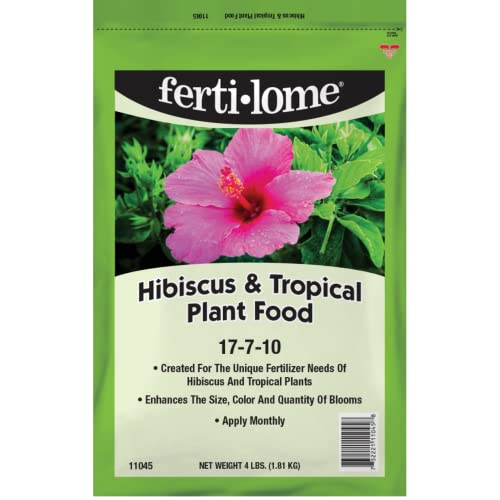
Fertilome delivers a well-balanced 17-7-10 granular formula specifically designed for hibiscus and other tropical flowering plants. The higher nitrogen content supports rapid leaf development, while the potassium level is sufficient to fuel consistent flower production. This granular release works well for in-ground hibiscus hedges or large container plants that do not get leached by daily watering.
Application is straightforward: sprinkle the granules around the base and water in. The label recommends feeding every two weeks until blooms appear, then shifting to a monthly schedule. Many users report seeing new flower buds within a week of the first application. The 4-pound bag (actual net weight is noted at 3.25 pounds by some customers) provides several months of feeding for a small hibiscus collection.
The package weight discrepancy is the main point of contention — the marketing says 4 pounds but the bag labels at 3.25 pounds, which affects cost-per-pound calculations. For growers who prefer granular slow-release over mixing liquids, this remains a reliable option with a proven track record among tropical plant enthusiasts.
What works
- Granular formula provides steady, slow-release feeding for in-ground plants
- Quick visible results — buds appear within a week per user reports
- Designed specifically for hibiscus and tropical species
What doesn’t
- Listed at 4 lbs but actual net weight is closer to 3.25 lbs
- Not ideal for heavy-feeding potted hibiscus that require frequent liquid feeding
3. Miracle-Gro Water Soluble Azalea, Camellia, Rhododendron Plant Food

This water-soluble powder from Miracle-Gro is formulated for acid-loving plants, including azaleas, camellias, rhododendrons, and notably hibiscus. The mix ratio differs between indoor (1:144) and outdoor (1:18) applications, giving you flexibility depending on whether your hibiscus is overwintering inside or in full outdoor growth. The 5-pound bag is one of the largest volumes in this comparison, stretching across many feeding sessions.
The resealable bag closure uses a Velcro-style strip, which users report is ineffective once any fertilizer powder gets on the sealing surfaces. A simple clothespin or bag clip solves this. The formula itself produces rapid greening of foliage and supports steady flowering in acid-loving plants. Many users apply it every 7 to 14 days with excellent results on their hibiscus shrubs.
For hibiscus specifically, this works best if your soil or container mix already tends toward acidic conditions. If your water or soil is alkaline, you may need to supplement with additional acidifiers. The formula is famously gentle on foliage and won’t burn when used at the recommended rates.
What works
- Huge 5-pound bag provides dozens of feeding sessions
- Gentle formula safe for regular use on acid-loving plants
- Dual mixing ratios for indoor and outdoor applications
What doesn’t
- Velcro resealable closure fails quickly when powder contacts the seal
- Not potassium-dominant — best for foliage health, not maximizing bloom count
4. TPS Nutrients Hibiscus Fertilizer 32 oz
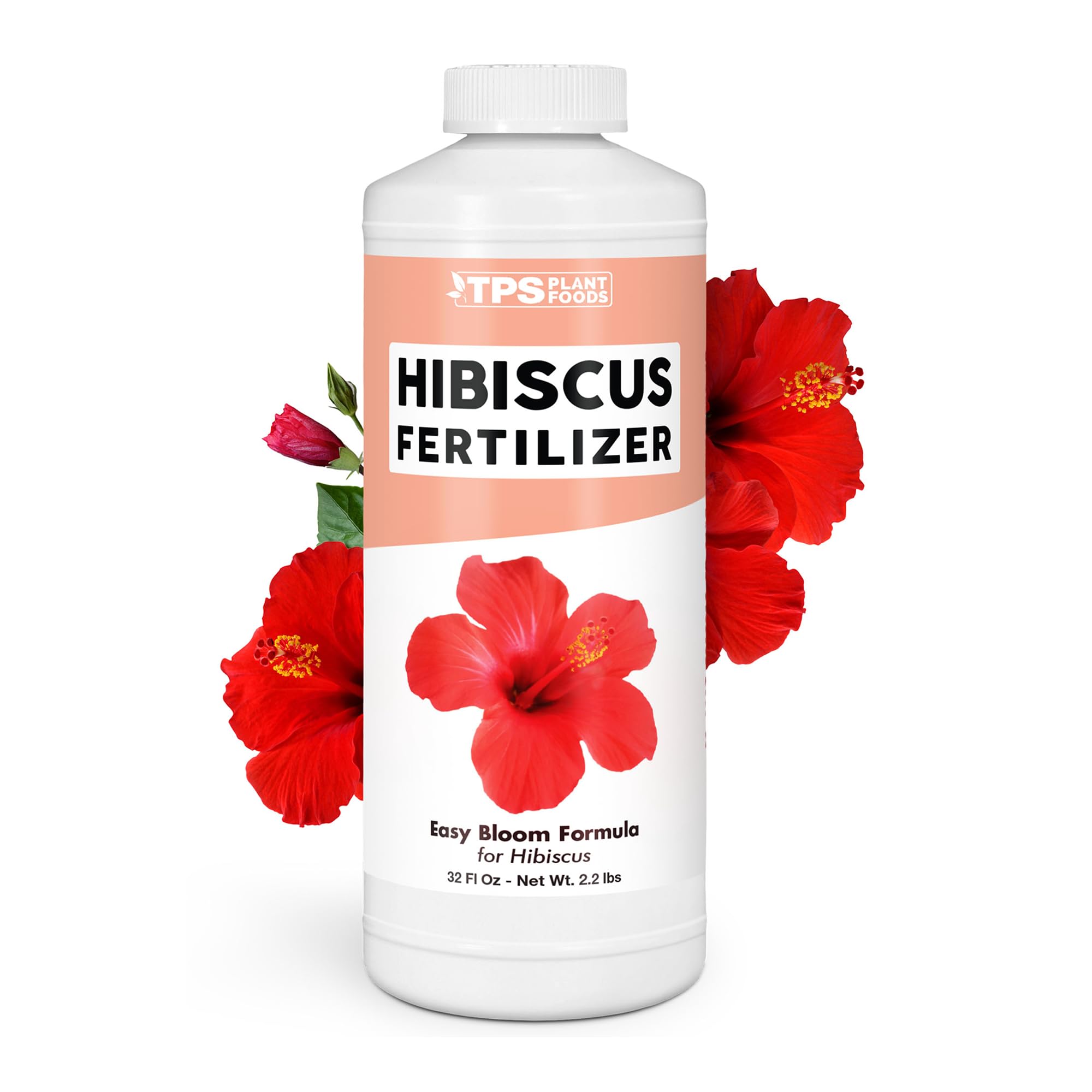
TPS Nutrients offers a dedicated liquid hibiscus formula that comes ready to use with no mixing required. The 32-ounce bottle is sized for the average gardener with a small to medium hibiscus collection. Users report dramatic results — yellow leaves and no flowers transformed into continuous blooming within one week of the first application. The product is made in the USA and targets tropical hibiscus specifically.
The liquid format delivers nutrients instantly, making it the best choice for potted hibiscus that get frequent watering and lose nutrients through drainage. Application is as simple as pouring the recommended dose into your watering can. The formula promotes large, colorful blooms and works for both outdoor garden beds and indoor container plants.
The cost per ounce is higher than powder concentrates, and some users note the bottle feels small for the price. Still, the immediate results and ease of use make it a strong contender for anyone who hates mixing powders.
What works
- No mixing required — pour and water
- Rapid recovery of yellow-leafed, non-blooming plants
- Formulated specifically for tropical hibiscus by a US manufacturer
What doesn’t
- Higher cost per application compared to powder concentrates
- Small bottle size requires frequent repurchase for larger collections
5. HiThrive 16 oz Hibiscus Fertilizer
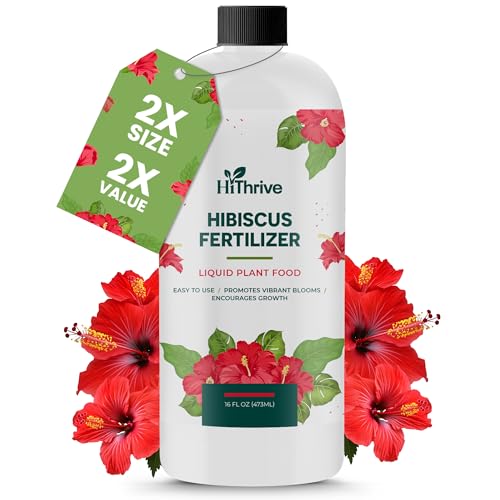
The HiThrive 16-ounce liquid concentrate makes 16 gallons of finished feed, giving it a very low cost per gallon compared to ready-to-use liquids. The formula includes a balanced blend of macronutrients with specific attention to nitrogen for leaf growth and potassium for flower production. It covers all hibiscus varieties, including Rose of Sharon, tropical hibiscus, and Confederate rose.
Users consistently report larger blooms, greener foliage, and more flowers than in previous seasons. The application schedule is simple: feed every 1 to 2 weeks during spring and summer, then reduce to once every 4 weeks in fall and winter. The liquid format means nutrients are immediately available to the roots, which matters for container plants.
The 16-ounce bottle is small, but because it is a concentrate, one bottle goes further than pre-mixed liquids. For growers with a large hibiscus hedge using a hose-end sprayer, the small volume may still require frequent trips to buy more. The absence of a detailed NPK ratio on the front label makes it harder to compare against data-driven fertilizer choices.
What works
- Concentrate makes 16 gallons — excellent value per feed
- Easy mix-and-water application suitable for all hibiscus types
- Noticeable bloom and foliage improvement within weeks
What doesn’t
- NPK ratio not prominently listed, making spec comparison difficult
- Small bottle requires repurchase sooner for large hedges
6. Miracle-Gro LiquaFeed Bloom Booster Flower Food

The Miracle-Gro LiquaFeed Bloom Booster is designed exclusively for use with the Miracle-Gro LiquaFeed bottle-and-hose feeder system. This 4-pack of 16-ounce refills provides a total of 64 ounces of concentrated liquid feed. The bloom booster formula is optimized to support flowering plants, and many hibiscus growers use it as their primary feed during the blooming season.
The hose-end delivery system makes feeding large garden beds or multiple shrubs incredibly fast — no mixing buckets or carrying watering cans. Users report dramatically increased blooming within a short time, with some noting safe use around bees and other pollinators. The formula can be used as often as every 7 days for continuous bloom support.
You must own the LiquaFeed feeder system to use these refills. If you prefer traditional watering cans or don’t already have the device, the initial investment adds friction. The refills also lack the high-potassium profile that dedicated hibiscus fertilizers offer, so bloom production may be lower than with a specialized formula.
What works
- Hose-end feeding makes fertilizing large beds effortless
- 4-pack provides extended supply of bloom-boosting feed
- Safe for regular use without burning foliage
What doesn’t
- Requires proprietary LiquaFeed feeder (sold separately)
- General bloom formula lacks the high K that hibiscus specifically demands
7. TPS Nutrients Hibiscus Fertilizer 1 Gallon
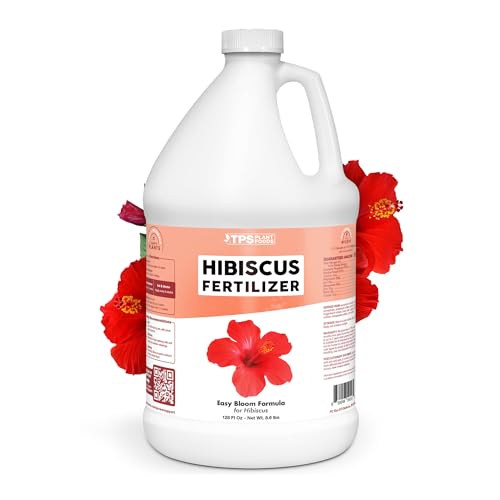
The 1-gallon jug from TPS Nutrients is the bulk version of their popular liquid hibiscus formula. For anyone managing a substantial hibiscus collection — ten or more plants — this single container eliminates the frustration of running out mid-season. The ready-to-use liquid requires no mixing and provides the same rapid recovery and bloom-boosting performance as the 32-ounce version.
Customers with both tropical and hardy hibiscus report weekly feeding results in continuous large, colorful blooms throughout the growing season. The formula is particularly effective at reversing leaf yellowing and stimulating new bud formation in plants that have stalled. The 1:64 mixing ratio means you get consistent, predictable feeding strength with every use.
The upfront volume is large, but the cost per ounce is significantly lower than buying multiple smaller bottles. For the casual gardener with just one or two potted hibiscus, the 1-gallon size may be excessive — the formula has a shelf life once opened, and you may not use it all before the next season. It is best reserved for serious collectors or those with large in-ground hibiscus hedges.
What works
- Bulk 1-gallon size offers the lowest cost per ounce in the TPS line
- Same proven formula that reverses yellow leaves and drives blooming
- Ideal for large hibiscus collections with frequent feeding needs
What doesn’t
- Excessive volume for casual or single-plant gardeners
- Liquid concentrate has a finite shelf life after opening
Hardware & Specs Guide
NPK Ratio — The Bloom Trigger
The middle number (phosphorus) is often over-hyped for flowering plants, but hibiscus requires a high last number (potassium). Ratios like 16-5-25 or 17-7-10 reflect this. Potassium directly influences flower size, quantity, and color saturation. Low-K formulas produce leafy plants with few blooms.
Liquid vs. Powder — Delivery Speed vs. Cost
Liquid concentrates (like TPS Nutrients) deliver nutrients immediately — ideal for stressed plants showing yellow leaves. Powder concentrates (like Jack’s Classic) cost less per gallon but require mixing with water. Granular slow-release (like Fertilome) works best for in-ground plants that don’t get leached by daily container watering.
FAQ
What NPK ratio is best for hibiscus blooms?
Can I use Miracle-Gro on my hibiscus?
How often should I feed my potted hibiscus?
Why are my hibiscus leaves turning yellow despite feeding?
Is liquid or granular fertilizer better for hibiscus?
Final Thoughts: The Verdict
For most gardeners, the best hibiscus fertilizer winner is the Jack’s Classic 16-5-25 Tropical Food because its potassium-dominant ratio, full micronutrient suite, and low cost per gallon make it unmatched for driving massive blooms without chlorosis. If you want a no-mix liquid that fixes stressed plants fast, grab the TPS Nutrients 32 oz. And for in-ground hibiscus hedges that need steady low-maintenance feeding, nothing beats the Fertilome 17-7-10 granular.