
Mango trees are heavy feeders, but they are picky about how they get their nutrients. Apply the wrong ratio of nitrogen, phosphorus, and potassium, and you end up with lush foliage but little to no fruit. The solution lies in slow-release formulations that feed the feeder roots steadily without burning the tree or leaching into the soil. Finding the right product means understanding NPK ratios, micronutrient content like zinc and iron, and the release mechanism that matches your tree’s growth cycle.
I’m Rikta — the co-founder and writer behind Lawn Gear Lab. I’ve spent hundreds of hours analyzing NPK ratios, release durations, and application methods for fruit-tree fertilizers, cross-referencing technical specs with thousands of verified owner experiences to find what actually works for mango growers.
Whether you are nurturing a young sapling or a mature grove, selecting the right fertilizer for mango trees requires balancing nitrogen for canopy growth with potassium for fruit set and quality.
How To Choose The Best Fertilizer For Mango Trees
Mango trees have distinct nutritional demands depending on their age and the season. Using the wrong formulation can suppress flowering or cause excessive vegetative growth. Focus on these three factors to narrow down your choice.
NPK Ratio and Potassium Emphasis
Mango trees require a balanced feed, but potassium (K) is critical for fruit development and sugar content. An ideal ratio for mature, fruit-bearing trees is one where K is equal to or higher than nitrogen. Look for formulations around 8-4-8 or 15-7-15 that support both leaf growth and fruit production without tipping the scales toward foliage alone.
Release Mechanism: Spikes vs. Granules
Slow-release spikes deliver nutrients directly to the feeder roots at the dripline, minimizing nitrogen loss to evaporation or runoff. They are pre-measured, reducing the risk of over-fertilization. Granular slow-release formulas work well when you want to adjust dosage per tree size, but they require careful spreading and watering to activate. For mango trees, spikes offer a set-and-forget convenience that aligns well with their seasonal feeding schedule.
Micronutrient Profile: Zinc and Iron
Mango trees are particularly susceptible to zinc and iron deficiencies, which show up as yellowing leaves (interveinal chlorosis) and stunted new growth. A quality fertilizer should include these micronutrients in its formula. Products that list chelated iron or zinc sulfate in their ingredients are far more effective at correcting and preventing these common deficiencies than basic NPK-only blends.
Quick Comparison
On smaller screens, swipe sideways to see the full table.
| Model | Category | Best For | Key Spec | Amazon |
|---|---|---|---|---|
| SimplyGro Citrus & Fruit Tree Spikes | Slow-Release Spike | Balanced 8-4-8 ratio for fruit trees | 12 spikes, 8-4-8 NPK, 3-month feed | Amazon |
| Proven Winners Premium Continuous Release | Granular Slow-Release | Versatile feeding up to 6 months | 15-7-15 NPK, 2.5 lbs, 6-month feed | Amazon |
| Power Spike Fruit Tree Spikes | Nutrient Spike | Essential nutrients for common deficiencies | 10 spikes, 3.2 lbs, root-zone feeding | Amazon |
| Jobe’s 01002 Fruit & Citrus Spikes | Slow-Release Spike | Simple, mess-free feeding for citrus | 5 spikes, 16 oz, pre-measured | Amazon |
| Wellspring Gardens Mulberry Fuel | Granular Slow-Release | Acid-loving fruit trees and berries | 20-6-9 NPK, 2 lbs, 90-day release | Amazon |
In‑Depth Reviews
1. SimplyGro Citrus & Fruit Tree Spikes (12-Pack)
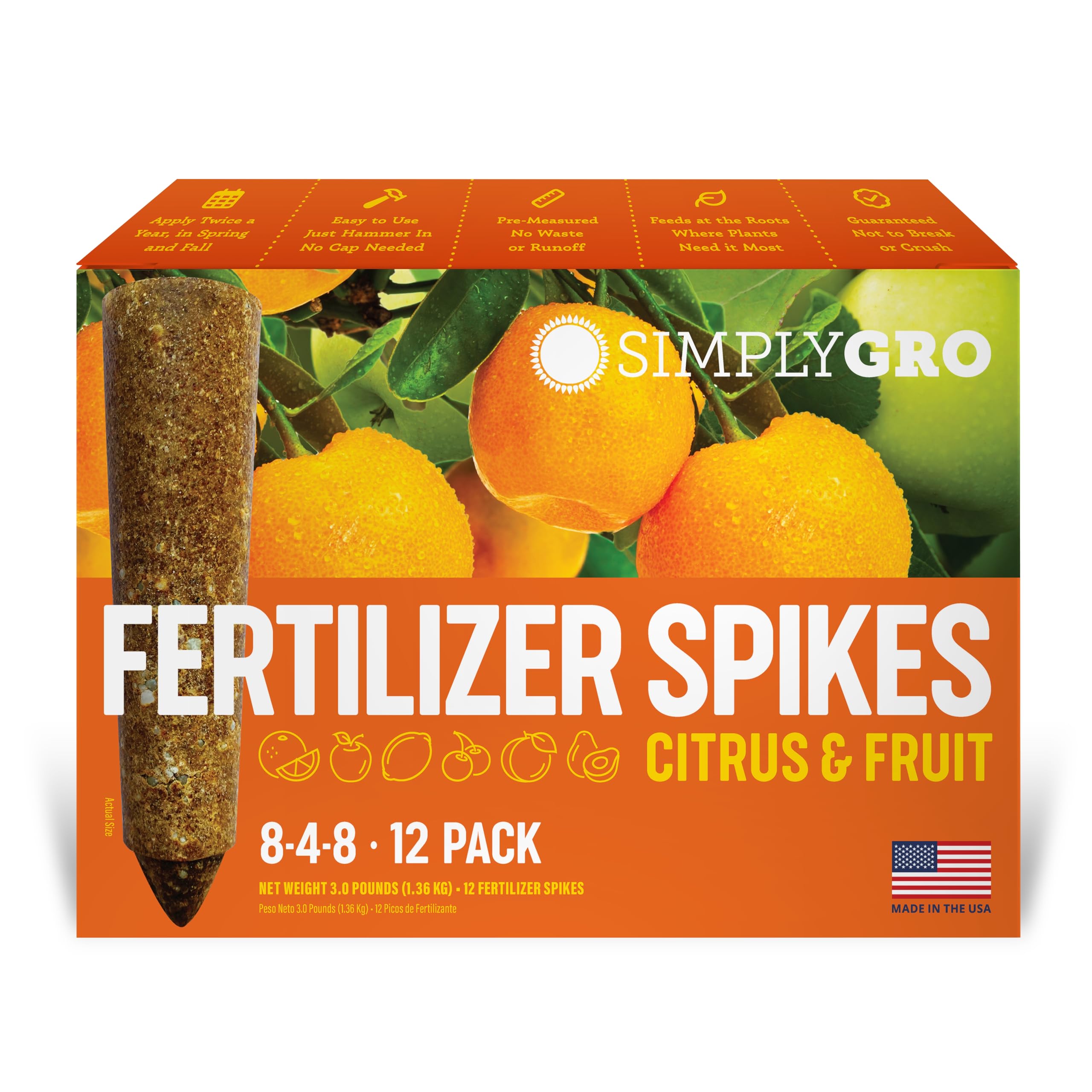
The SimplyGro TruSpikes deliver an 8-4-8 NPK ratio that matches the unique requirements of mango trees perfectly. With potassium equal to nitrogen, this formula encourages fruit development rather than excessive foliage. Each 5-inch spike is packed with nutrition for up to three months, requiring only two applications per year — once in spring and once in fall. The spikes are designed to be hammered directly into the soil without breaking, eliminating the need for plastic caps or special tools.
Users reported that these spikes produced fast, healthy growth on avocado and peach trees, with one owner noting that two of three peach trees were loaded with fruit after application. The pre-measured dosage reduces the risk of over-feeding, and the below-ground delivery prevents nutrient loss to runoff. For mango growers, this means consistent feeding right at the feeder roots where it matters most.
The only drawback is that the spikes are formulated for trees and shrubs, meaning smaller mango saplings may require cutting a spike in half to avoid over-concentration. Additionally, dry or compacted soil can make hammering in the spikes more difficult, though the patented TruSpike construction holds up well under force.
What works
- Balanced 8-4-8 NPK supports fruit production over foliage.
- Pre-measured spikes prevent over-fertilization and runoff.
- Durable design breaks less than standard spikes.
What doesn’t
- May need to be halved for very young mango saplings.
- Hard, dry soil can make insertion difficult.
2. Proven Winners Premium Continuous Release Fertilizer
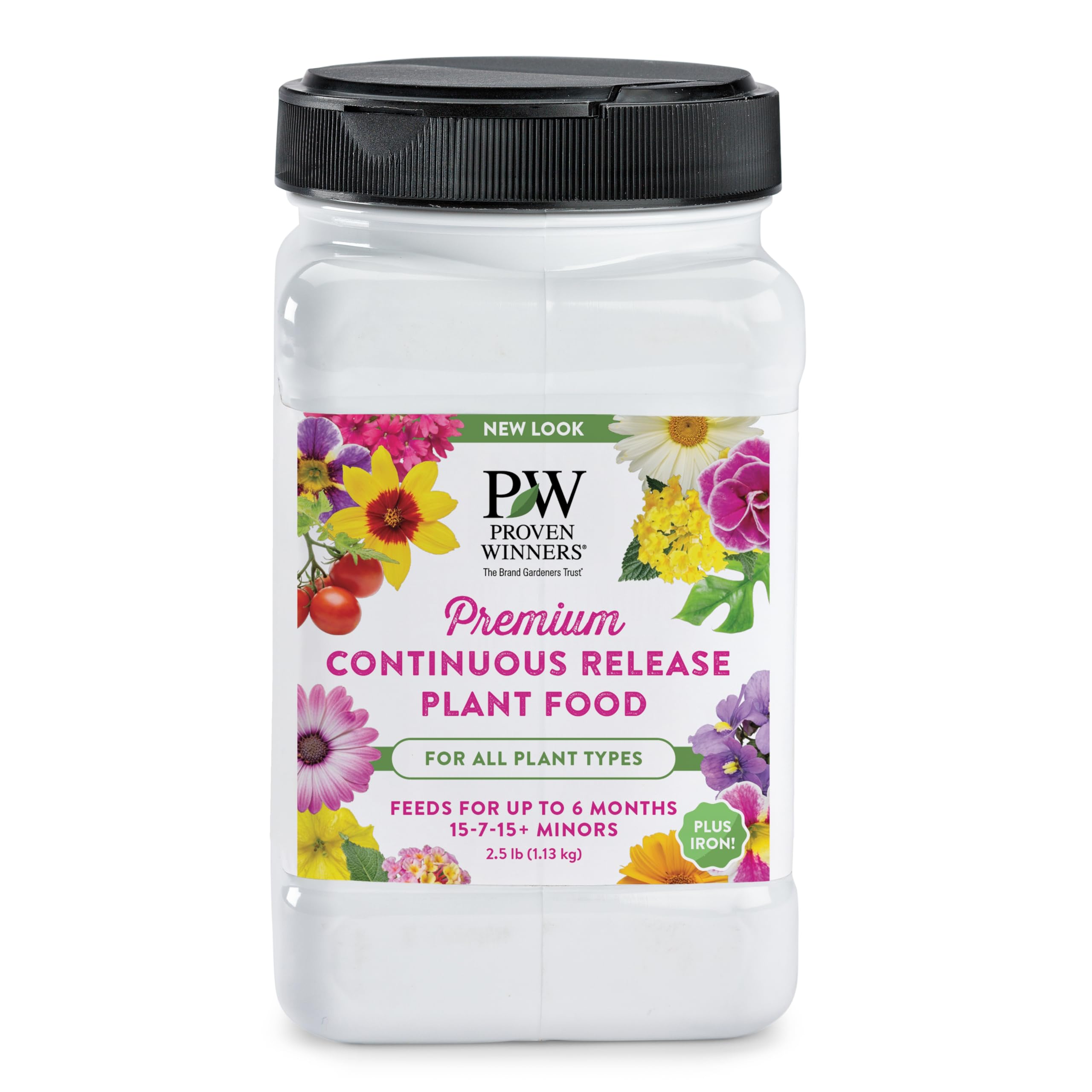
The Proven Winners fertilizer uses a temperature-sensitive coating that releases nutrients precisely when plants need them most, matching the mango tree’s active growth phases. Its 15-7-15 ratio provides a higher nitrogen content suitable for young mango trees establishing canopy, while the potassium level remains balanced to support eventual fruiting. The 2.5-pound container features a shaker top for even distribution around the dripline, covering a medium-sized tree easily.
Gardeners consistently praise this formula for keeping shrubs and trees fed through hot summers when plants are stressed. One loyal user reported reaching for this fertilizer every year because it maintains feeding even when temperatures climb too high for liquid feeds. The inclusion of iron and micro-elements helps prevent the interveinal chlorosis common in mangoes grown in alkaline soils.
The main limitation is that this granular formulation requires careful measurement for mango trees — applying too much can lead to salt buildup in the root zone. Also, the 15-7-15 ratio is slightly higher in nitrogen than ideal for mature mango trees focused on fruit production, so it is best reserved for young trees or as a spring boost for older specimens.
What works
- Temperature-sensitive coating aligns release with tree growth cycles.
- Convenient shaker top for even application.
- Includes iron and micro-elements to prevent chlorosis.
What doesn’t
- Higher nitrogen ratio better for young trees than fruiting trees.
- Granular form requires careful measurement to avoid salt buildup.
3. Power Spike Fruit Tree Nutrient Spikes (10-Pack)
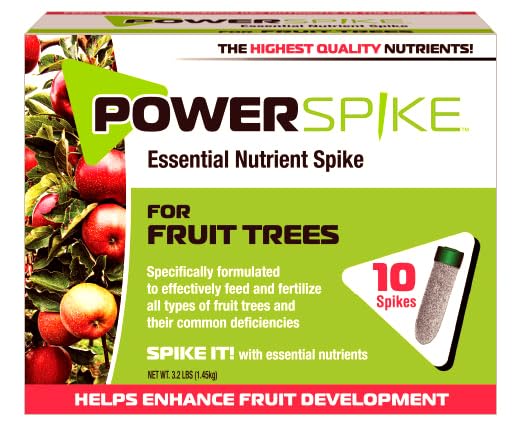
The Power Spike system focuses on correcting common deficiencies in fruit trees by delivering a concentrated nutrient blend directly to the root zone. Each spike contains key elements often lacking in typical garden soils, making it a solid option for mango trees that show signs of nutrient stress like yellowing leaves or poor fruit set. The 10-spike pack provides ample coverage for a medium-sized mango tree when spaced around the dripline.
Owner feedback highlights the ease of use — users reported that the spikes made a “huge difference” in tree health after the first application. The included pounding cap protects the spike during insertion. Because the spikes feed at the root zone, there is minimal risk of nitrogen volatilization or runoff, making this a more environmentally friendly choice for mango growers near waterways.
Some users noted that the spikes did not seem as effective for their trees, possibly due to existing soil conditions that required a different NPK balance. For mango trees in highly alkaline or compacted soils, the spikes may need supplemental watering to dissolve properly. The formulation is general-purpose for fruit trees and does not specify a precise NPK ratio on the label, which makes it harder to match to a mango tree’s exact growth stage.
What works
- Delivers nutrients directly to root zone for efficient uptake.
- Includes pounding cap for easier installation.
- 10-spike pack covers a medium mango tree well.
What doesn’t
- NPK ratio not clearly specified for precise feeding.
- Effectiveness may vary depending on existing soil conditions.
4. Jobe’s 01002 Fruit & Citrus Fertilizer Spikes (5-Count)

Jobe’s spikes are a classic entry-level option for mango trees, offering a slow-release feed that goes directly to the roots without any mixing or measuring. The formula is designed for all fruit and citrus trees, including mango, and delivers a steady supply of nutrients over several months. Each spike is pre-measured, so a single application around the dripline provides the correct dosage without risk of burning the tree.
Owners consistently report visible improvements in tree vigor after a few months — one user noted that an orange tree “perked right up” with better leaves and fruit after years of neglect. The spikes eliminate the mess of granular fertilizers and the hassle of liquid feeding schedules. For mango growers who want a straightforward solution, this is the easiest way to ensure consistent nutrition.
The 5-count pack is relatively small, covering only a young to medium mango tree. Larger trees will require multiple packs, which increases the overall cost. Some users with evergreens found the formula effective for general health, but mango trees specifically may benefit from a formulation with higher potassium for fruit development, such as the SimplyGro spikes.
What works
- Extremely easy to use — no mixing or measuring.
- Slow-release formula feeds roots for months.
- Effective for trees that have not been fed in years.
What doesn’t
- 5-count pack covers only young to medium trees.
- Higher potassium ratio is ideal for better fruiting.
5. Wellspring Gardens Mulberry Fuel (2 lbs)

Wellspring Gardens’ Mulberry Fuel is a specialized slow-release granular fertilizer with a 20-6-9 NPK ratio that leans heavily on nitrogen and potassium. The high nitrogen content makes it ideal for young mango trees in their vegetative growth phase, where building a strong canopy is the priority. The formula also enhances soil acidity, which is beneficial for mango trees growing in neutral or alkaline soils where iron availability is limited.
Users have reported dramatic results on various fruit trees — one owner noted that a sad, newly planted mulberry “greened right up” and started new growth within weeks. The resealable bag makes storage and multiple applications easy, and a single 2-pound bag covers several trees. The 90-day release cycle means quarterly applications keep trees fed through the growing season.
The 20-6-9 ratio is too high in nitrogen for mature mango trees that are expected to flower and set fruit. Using this on a fruiting tree could result in excessive leaf growth at the expense of blossoms. Additionally, the formula is marketed for berries and acid-loving plants, so growers with alkaline soils should monitor pH levels to ensure the acidifying effect does not drop too low.
What works
- High nitrogen content accelerates canopy growth for young trees.
- Acidifying formula helps prevent iron chlorosis in alkaline soil.
- Resealable bag for convenient storage and multi-tree use.
What doesn’t
- Too nitrogen-heavy for mature, fruit-bearing mango trees.
- Acidifying effect requires soil pH monitoring.
Hardware & Specs Guide
NPK Ratio: The Core Metric
The NPK ratio on the label tells you the percentage of nitrogen, phosphorus, and potassium by weight. For mango trees, a balanced ratio like 8-4-8 or 15-7-15 supports both vegetative growth and fruit development. Nitrogen drives leaf and stem growth, but too much suppresses flowering. Potassium is critical for fruit size, sugar content, and disease resistance. Phosphorus supports root and flower development but is needed in smaller amounts for mangoes.
Release Duration and Application Timing
Slow-release fertilizers come with a duration specification — common intervals are 3 months (90 days) or 6 months. Mango trees benefit from two feeding sessions per year: once in early spring as new growth emerges, and once in late summer or early fall to support fruit development and prepare the tree for dormancy. Spikes with a 3-month duration require two applications per year, while 6-month formulas simplify to a single annual application.
FAQ
What NPK ratio is best for mature mango trees?
Can I use citrus spikes on my mango tree?
Final Thoughts: The Verdict
For most gardeners, the fertilizer for mango trees winner is the SimplyGro Citrus & Fruit Tree Spikes because its 8-4-8 NPK ratio matches a mango tree’s nutritional needs exactly, delivering a steady three-month feed with minimal effort. If you want a granular form with temperature-sensitive release, grab the Proven Winners Premium Continuous Release Fertilizer. And for a budget-friendly entry, the Power Spike Fruit Tree Nutrient Spikes provide solid root-zone nutrition for the price.