
Feeding vegetable seedlings is a delicate balancing act. The wrong concentration or nutrient ratio can scorch tender roots or produce spindly, weak stems that struggle to support a harvest. A formula designed for mature plants often delivers a shock that sets young transplants back weeks, so choosing a mix with a gentle, balanced profile is critical for building strong, stocky growth from the first true leaf.
I’m Rikta — the co-founder and writer behind Lawn Gear Lab. I’ve spent countless hours comparing specification sheets, analyzing NPK ratios and micronutrient profiles, and cross-referencing hundreds of verified owner reports to find the formulas that consistently support rapid root development and healthy green tissue without burning young plants.
Whether you are starting seeds indoors or transplanting into raised beds, the right nutrition makes the difference between a crop that struggles and one that thrives. This guide breaks down the top options to help you choose the best fertilizer for vegetable seedlings for your specific growing method and budget.
How To Choose The Best Fertilizer For Vegetable Seedlings
Seedlings need a different nutrient balance than flowering or fruiting plants. Too much nitrogen forces rapid, soft leaf growth that pests love. Too little phosphorus stunts root development. Understanding the N-P-K ratio and the form of the fertilizer is the first step to picking the right bag or bottle for your young garden.
Understand the N-P-K Ratio for Early Growth
The three numbers on a fertilizer bag represent Nitrogen (N), Phosphorus (P), and Potassium (K). For seedlings, a formula with slightly higher phosphorus — the middle number — encourages branching root systems. Look for ratios like 5-10-10 or 4-6-2. Avoid high-nitrogen mixes intended for lawns, as they can produce tall, weak stems.
Granular vs. Liquid: Which Works Best for Young Plants
Granular fertilizers release nutrients slowly as the soil warms and microbes break them down. This reduces the risk of burn but requires thorough watering-in. Liquid fertilizers deliver nutrients immediately, making them ideal for rapid correction of deficiencies or for feeding seedlings in sterile potting mixes that lack microbial activity. Choose based on how often you can water and whether you want a single application or a weekly routine.
Organic Ingredients and Micronutrient Additives
Organic options like fish bone meal, kelp meal, and humates improve long-term soil structure and feed beneficial microbes. Micronutrients such as calcium and mycorrhizal fungi address specific issues: calcium prevents blossom end rot in tomatoes, while mycorrhizae help roots access water and nutrients more efficiently. If you are growing in containers or raised beds, an organic mix with added calcium and humic acids often gives the most resilient transplants.
Quick Comparison
On smaller screens, swipe sideways to see the full table.
| Model | Category | Best For | Key Spec | Amazon |
|---|---|---|---|---|
| Cz Garden 5-10-10 | Granular | Fruiting vegetables | 4 lbs / 2% iron | Amazon |
| Down To Earth 4-6-2 | Granular | Organic transplants | 5 lbs / OMRI listed | Amazon |
| FoxFarm Happy Frog 5-7-3 | Granular | Heavy feeders | 4 lbs / calcium + mycorrhizae | Amazon |
| Clonex Clone Solution | Liquid | Cuttings & new starts | 1 quart / professional grade | Amazon |
| Espoma Garden-Tone 3-4-4 | Granular | Monthly feeding | 4 lb bag (pack of 2)/ Bio-tone | Amazon |
| VermisTerra Vitality | Liquid | Rooting & recovery | 16 oz / fulvic acid + probiotics | Amazon |
| VIVOSUN Nutrients A&B | Liquid | Hydroponics & coco | 2 quarts / two-part formula | Amazon |
In‑Depth Reviews
1. Cz Garden Supply 5-10-10 Tomato & Vegetable Fertilizer

The Cz Garden 5-10-10 earns the top spot for its high-phosphorus ratio that targets fruit set without pushing excessive leafy growth. Each 4-pound bag contains 2% iron, which prevents the interveinal chlorosis common in seedlings grown in alkaline soil or potting mixes. The resealable pouch keeps granules dry between applications, and the US-made ingredients provide consistent quality.
User reports highlight its effectiveness on peppers, squash, and tomatoes, with several noting that a single tablespoon per plant every two weeks delivers steady results without burning. The formula is gentle enough for young transplants when watered in at the dripline, and reviewers consistently mention vigorous root development and larger fruit yields compared to their previous fertilizers.
Some users with very sandy soil may need to supplement with calcium to prevent blossom end rot in tomatoes. The granules contain colored beads, which some gardeners find unexpected but do not affect performance. For a mid-range granular option that balances phosphorus and iron for heavy-feeding vegetable seedlings, this is the most reliable pick.
What works
- High phosphorus ratio supports strong fruiting
- Added iron prevents yellowing on new growth
- Resealable bag keeps product fresh
What doesn’t
- May need calcium supplement for tomatoes
- Colored beads can be surprising
2. Down To Earth All Natural 4-6-2 Tomato & Vegetable Mix

The Down To Earth 4-6-2 formula is built from seven organic ingredients, including fish bone meal, blood meal, kelp meal, and greensand. This blend provides a steady supply of phosphorus for root development while feeding soil microbes that create a healthier rhizosphere for young transplants. The 5-pound box offers substantial coverage for a medium-sized garden at a competitive per-pound cost.
Verified buyers report that it revives pale, flimsy tomato plants within two weeks of application, and many appreciate that the gentle non-burning formula is safe for container plants and raised beds. The OMRI listing makes it a top choice for organic growers, and the inclusion of rock phosphate and langbeinite provides long-term potassium and magnesium availability.
The primary drawback is the strong organic smell that persists for a few days after application, especially in enclosed spaces like a greenhouse. Some users also note that the granular form requires thorough watering to activate. For an organic staple that builds soil health while feeding seedlings, this mix delivers dependable results.
What works
- OMRI certified for organic production
- Non-burning formula safe for young roots
- Broad ingredient profile feeds microbes
What doesn’t
- Strong smell for days after application
- Needs thorough watering to activate
3. FoxFarm Happy Frog 5-7-3 Tomato & Vegetable Fertilizer

The FoxFarm Happy Frog 5-7-3 is specifically formulated for vigorous feeders like tomatoes, peppers, and berries. The 5-7-3 analysis delivers the highest middle number on this list, promoting dense root systems and early flowers. The inclusion of calcium directly targets blossom end rot prevention, while mycorrhizal fungi enhance water and nutrient uptake in the root zone.
Gardeners consistently report that this product produces noticeably larger, more productive plants, with many noting visible improvement within days of application. The granular formula is easy to apply around the drip line and does not produce a strong fish-like odor typical of many organic fertilizers. Several reviews highlight its compatibility with FoxFarm Ocean Forest soil for a complete feeding system.
The main complaint is cost — at roughly for a 4-pound bag, it is on the premium end of the scale. Some users also note that the mycorrhizae require consistent soil moisture to remain effective. For gardeners growing heavy-feeding crops who want a one-bag solution that covers early nutrition, calcium, and root biology, this is the strongest performer.
What works
- Calcium prevents blossom end rot
- Mycorrhizae boost root efficiency
- Minimal smell compared to fish-based organics
What doesn’t
- Premium price per pound
- Mycorrhizae need consistent moisture
4. Clonex Clone Solution Professional-Grade Nutrient

The Clonex Clone Solution is a professional-grade liquid formulation engineered specifically for the earliest stages of plant life — cuttings and seedlings. Its nutrient profile prioritizes root development over vegetative growth, making it ideal for starting seeds in sterile media or for hydroponic propagation. The 1-quart bottle dilutes significantly, providing many feedings for a small seedling tray.
Buyers report that cuttings root in 5 to 8 days when used with a humidity dome, and seedlings show faster root branching compared to general-purpose fertilizers. The solution can be used as a medium soak or a root feed, giving growers control over how nutrients are delivered. Many users combine it with Clonex Rooting Gel for a complete system.
The bottle cap seal is not always secure, leading to occasional leakage during shipping, and the liquid formulation requires careful measuring for each watering. As a specialized product, it is less suitable for gardeners who want a single all-purpose feed for the entire season. For dedicated seedling starts and propagation, this is the most precise tool available.
What works
- Fast root development on cuttings
- Versatile as soak or feed
- Highly concentrated formula
What doesn’t
- Occasional shipping leakage
- Requires precise dilution
5. Espoma Organic Garden-Tone 3-4-4 (Pack of 2)

The Espoma Garden-Tone 3-4-4 arrives as a two-pack, giving you 8 pounds of granular organic fertilizer for the price of a single bag from many competitors. The analysis is slightly lower in nitrogen, which reduces the risk of burning delicate seedlings while still providing adequate phosphorus for root growth. The exclusive Bio-tone formula contains beneficial microbes that help break down organic matter in the soil.
Long-time users consistently describe Espoma as their go-to brand, emphasizing that even accidental over-application does not damage plants. The formula is suitable for both cool-season greens and warm-season crops, making it a versatile option for the entire garden. Reviewers note that plant growth responds noticeably within the first month of monthly application.
The organic ingredients create a noticeable smell, particularly in warm weather, and the 3-4-4 ratio is lower in phosphorus than some competitors, which may not satisfy extremely heavy feeders like large tomato plants in their flowering stage. For cost-conscious organic growers who need a gentle, reliable feed for mixed vegetable beds, this two-pack offers excellent per-pound value.
What works
- Very forgiving — won’t burn plants
- Two-pack provides 8 lbs total
- Bio-tone microbes improve soil health
What doesn’t
- Organic smell can be strong
- Lower phosphorus for heavy feeders
6. VermisTerra Vitality 16 oz Liquid Plant Food
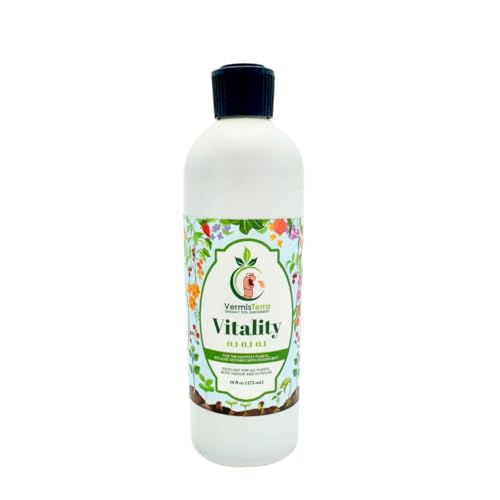
The VermisTerra Vitality is a liquid concentrate derived from biologically processed worm castings, providing bioavailable fulvic acid, enzymes, and plant probiotics. Rather than delivering a standard N-P-K punch, it creates a nutrient-efficient environment by helping existing soil minerals stay available to roots. The 1:128 dilution ratio means the 16-ounce bottle goes a long way in a seedling propagation setup.
Users frequently mention that it revived struggling plants, promoted fresh root growth on cuttings, and reduced transplant shock. Many describe an “explosion of growth” after the first application on established plants. Growers appreciate that it does not cause pH swings or salt buildup, making it a safe weekly supplement alongside a balanced fertilizer.
The main limitation is that it works best as a complement rather than a standalone feed — it does not provide the full macronutrient profile most seedlings need for sustained growth. Settling requires vigorous shaking before each use, and overuse can lead to droopy leaves in some sensitive plants. For boosting root resilience and nutrient efficiency in young transplants, this is an excellent secondary product.
What works
- Reduces transplant shock effectively
- Safe — no pH or salt issues
- High concentration stretches the bottle
What doesn’t
- Not a complete standalone fertilizer
- Settles quickly, needs vigorous shaking
7. VIVOSUN Liquid Nutrients Base A & B Bundle

The VIVOSUN Base A & B bundle is a complete two-part liquid nutrient system designed for hydroponic, coco coir, and soil systems. It provides balanced macro and micronutrients (including calcium and magnesium) for every growth stage, from vegetative through flowering. Each bottle is a quart, giving you 2 quarts total of concentrated feed that dilutes to many gallons of nutrient solution.
Growers report lush, green growth and strong stems when using the bundle with every watering, and the water-soluble formula stabilizes pH in the reservoir. The two-part system prevents nutrient lockout by keeping calcium and phosphate separate until dilution. Users appreciate the simple 1:1 ratio that eliminates complex mixing calculations.
The main downside is that Base A and Base B must always be diluted separately before mixing — adding them directly together creates a precipitate. The bundle is also overkill for gardeners with only a few soil pots, as it is engineered for larger systems requiring frequent feeding. For hydroponic growers or anyone using coco coir who needs a complete, stage-appropriate nutrient solution, this bundle delivers professional results at a reasonable cost.
What works
- Complete macro and micronutrient coverage
- Stabilizes pH in hydroponic systems
- Simple 1:1 mixing ratio
What doesn’t
- Must dilute A & B separately
- Best suited for hydroponic or coco setups
Hardware & Specs Guide
Understanding N-P-K Ratios
The three numbers on any fertilizer label — Nitrogen, Phosphorus, Potassium — dictate how the plant grows. For vegetable seedlings, a formula with a middle number (phosphorus) equal to or higher than the first (nitrogen) encourages root branching over leggy top growth. Ratios like 5-10-10 or 4-6-2 are ideal. Avoid high-nitrogen numbers above 10 for the first month of a seedling’s life.
Form Matters: Granules vs. Liquids
Granular fertilizers provide slow-release nutrition that lasts weeks per application, making them convenient for in-ground beds and raised gardens. Liquid fertilizers offer immediate uptake, which is critical for correcting early deficiencies or for feeding seedlings growing in inert media like coco coir or rockwool. The choice depends on your watering schedule and whether you want a “set it and forget it” approach or precise weekly control.
FAQ
Can I use a general all-purpose fertilizer on my vegetable seedlings?
How often should I fertilize my vegetable seedlings?
What is the best way to apply granular fertilizer without burning seedlings?
Final Thoughts: The Verdict
For most gardeners, the fertilizer for vegetable seedlings winner is the Cz Garden Supply 5-10-10 because its high-phosphorus ratio and added iron give seedlings exactly what they need for robust root systems and healthy green leaves without pushing weak growth. If you want an organic, soil-building option, grab the Down To Earth 4-6-2. And for hydroponic or coco coir growers who need precise control, nothing beats the VIVOSUN Nutrients A&B Bundle.