
Digging a water lily into regular garden soil guarantees a brown plume of floating dust the moment the pot hits the pond. The wrong substrate clouds the water, fuels algae, and suffocates the roots of tuberous plants that need dense anchorage. Aquatic soil for water lilies must be heavy enough to stay in the pot, nutrient-dense enough to feed a hungry grower, and inert enough to leave the water column crystal clear.
I’m Rikta — the co-founder and writer behind Lawn Gear Lab. I’ve spent weeks cross-referencing bag weights, particle textures, pH ratings, and owner complaints across dozens of aquatic planting mixes so you can pick the one that keeps your lilies blooming without wrecking your water quality.
Whether you are repotting a mature hardy lily or starting a new lotus tuber from scratch, every option below was selected to solve the two biggest frustrations in this category: muddy water and floating root balls. This is the definitive guide to finding the best aquatic soil for water lilies for your specific pond setup.
How To Choose The Best Aquatic Soil For Water Lilies
Water lily roots grow horizontally through a heavy medium that resists floatation. The wrong particle size turns your planting pocket into a dust storm. Focus on these four factors to avoid murky water and stunted growth.
Particle Density and Weight
Lightweight potting mixes drift upward the moment they submerge. Aquatic soil for water lilies relies on high-density clay or ceramic granules that sink fast and stay put. A bag weighing at least 10 pounds per 4 quarts signals the density needed to hold a mature tuber in place without a top layer of gravel.
Nutrient Profile and pH
Water lilies are heavy feeders that deplete a pot’s nutrition within a season. Look for a clay-based soil enriched with iron and trace minerals rather than rapid-release fertilizers that leach into the pond. A pH-neutral formula keeps the water chemistry stable for fish and prevents root burn in sensitive new tubers.
Mud and Clouding Behavior
Fine silt and compost-based soils turn the pond into chocolate milk within hours. Premium aquatic planting media uses baked clay pebbles or aggregated granules that resist breaking down. The bag should explicitly state it will not cloud the water when gently submerged — and real owner reviews should back that claim.
Volume vs. Pot Size
A standard 6-inch lily pot needs roughly 4 quarts of media. Deeper pots for lotus require double that volume. Check the bag’s cubic-inch or liter rating rather than the weight alone. A 4-quart bag covers one small pot; a 10-pound bag covers two larger planters with enough left for top dressing.
Quick Comparison
On smaller screens, swipe sideways to see the full table.
| Model | Category | Best For | Key Spec | Amazon |
|---|---|---|---|---|
| Aquascape Pond Plant Potting Media | Clay-based | Heavy root anchorage | 215 cu in, 10 lbs | Amazon |
| Chalily Aquatic Gold Soil | Clay-sand mix | Professional greenhouse use | 4 quarts | Amazon |
| Brightwell Aquatics FlorinBase | Laterite powder | Iron supplementation | 1000g / fine powder | Amazon |
| MICROBE-LIFT MLCAPM10 | Ceramic pebble | Lightweight low-dust media | 10 lbs, pH neutral | Amazon |
| The Pond Guy Planting Media | Colonized pebble | Beneficial microbe support | 4 quarts, 6 lbs | Amazon |
| Aquatic Plant Soil (Zetiling) | Aquarium blend | Small planted tubs | 10 liters, 2.19 lbs | Amazon |
| WBHWW Aquatic Soil 5.5LBS | Fine-grit clay | Budget starter pots | 4400 cc / 5.5 lbs | Amazon |
In‑Depth Reviews
1. Aquascape Pond Plant Potting Media

Aquascape’s 10-pound bag delivers 215 cubic inches of clay-heavy media that sinks like a stone the moment it hits the water. The peat-free and compost-free formulation directly addresses the two biggest causes of floating debris and algae-feeding nutrient spikes. Owners consistently report that it holds water lilies securely in place without needing an extra cap of gravel, which saves time during repotting.
The texture is coarse enough to allow root penetration while remaining dense enough to prevent the tuber from lifting during heavy rain or fish activity. Multiple reviewers mention using it for both hardy and tropical lilies as well as lotus seeds, and the media doesn’t break down into mud over a full growing season. The bag covers one large pot or two standard lily planters comfortably.
Some users note that a small amount of initial clouding can occur if the water is poured aggressively, but the clouding settles within hours rather than days. A few owners also mention that the price per bag feels steep for a single plant — though the performance justifies it for anyone tired of murky water from cheaper alternatives.
What works
- Heavy clay consistency locks lily tubers in place immediately
- Peat- and compost-free design keeps pond water clear
- Works for lotus seeds, marginal plants, and shallow-water varieties
What doesn’t
- One bag barely covers two standard pots for the price
- Fine dust can cloud water if poured too quickly without care
2. Chalily Aquatic Gold Soil

Chalily’s Gold Soil is a clay-sand blend that has been tested on thousands of plants at the company’s own production greenhouse. The sand component adds heft without creating the sticky mud that some pure-clay products leave behind. Owners of mature lily pads report vivid blooms and leaf growth that looks almost artificial in its perfection — a direct result of the nutrient-dense base that feeds the plant from day one.
The formula stays inside the pot without a gravel cap when handled correctly, though a handful of reviewers note cloudiness in the first 48 hours if the bag is used without following the seller’s instructions. The sandy texture makes it easy to work into tight spaces around a tuber, and the weight ensures that fish and current won’t dislodge the plant. Reviewers have used it successfully for lotus pots, marginal planters, and shallow-water containers.
The main friction point is the value perception. At the entry-level price point for 4 quarts, some owners feel the cost per pot is higher than mixing their own loam and clay. Those who buy it consistently, however, point out that a single repotting season with no clouding or algae surge more than pays for the premium over dollar-store topsoil.
What works
- Clay-sand texture resists floating and keeps water clear
- Proven on thousands of greenhouse-grown lilies and lotus plants
- Nutrient-rich base produces vivid blooms without extra fertilizer
What doesn’t
- Some clouding reported during the first 48 hours after planting
- Price per quart feels high compared to bulk DIY blends
3. Brightwell Aquatics FlorinBase Laterite Powder
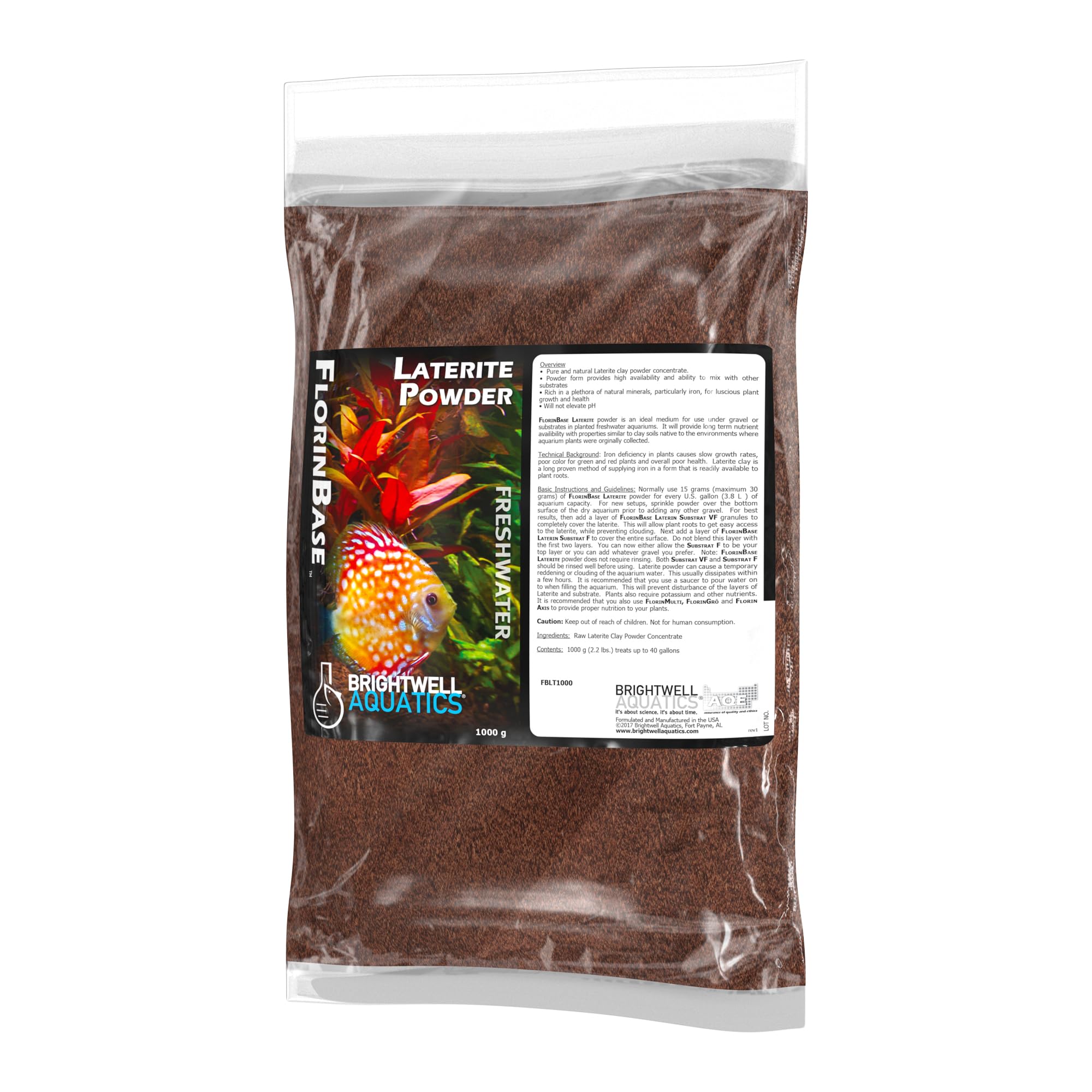
Brightwell’s FlorinBase is not a complete soil — it is a high-iron laterite clay powder designed to be layered beneath a gravel cap or mixed into an existing substrate. For water lily owners who already use a neutral base like sand or ceramic pebbles, this powder adds the iron and trace minerals that trigger deep green leaves and robust flower stalks. The 1000-gram bag is economical for multiple pots when used as a supplement rather than a standalone medium.
The particle size is extremely fine, which means it can puff into the water column if poured dry. The manufacturer explicitly recommends layering it under a coarser substrate to prevent clouding. Reviews from planted aquarium hobbyists are overwhelmingly positive, praising its ability to boost root color and plant vigor without shifting pH. For outdoor pond lilies, the same principle applies: mix it into the lower third of the pot before adding a heavier cap.
Because this is a powder additive rather than a finished planting medium, beginners sometimes expect it to work as a standalone soil and end up frustrated by the mess. It also lacks the bulk density needed to weigh down a large lily tuber by itself. For experienced pond keepers looking to supercharge their bloom output, however, this powder is an effective and pH-stable tool.
What works
- High iron content deepens leaf color and supports heavy blooming
- pH-neutral formula won’t disturb pond chemistry or fish
- Small bag covers multiple pots when used as a base layer
What doesn’t
- Fine powder clouds water if not capped with gravel or sand
- Not a standalone soil — requires a coarser top layer for anchorage
4. MICROBE-LIFT MLCAPM10 Concentrated Aquatic Planting Media

MICROBE-LIFT uses a baked ceramic pebble that solves the two most annoying problems of aquatic soil: floating particles and nutrient leaching. The 10-pound bag provides a dense, low-dust medium that settles instantly and won’t break down into silt over time. Pond keepers who are tired of stirring up a brown cloud every time they reposition a pot will appreciate the immediate clarity this media delivers.
The pebbles are pH-neutral and designed to retain oxygen while absorbing excess alkalinity — a useful trait for ponds with hard water. Because the media does not leach nutrients into the water column, it discourages the algae blooms that often follow a soil-based planting. Several reviewers mention using it as a direct replacement for loam in lily pots without any loss of flowering performance, and the lightweight nature of the bag (despite the 10-pound weight) makes it easier to carry than wet clay bags.
Some owners wish the pebbles were slightly smaller to fit more snugly around a lily tuber, and a few note that the bag volume is less than expected for the price. The ceramic texture also means it lacks the nutrient density of clay-based soils — you may need to supplement with fertilizer tabs during the peak growing season.
What works
- Zero-dust ceramic pebbles keep water crystal clear from day one
- Neutral pH and oxygen retention benefit fish and plant roots
- Won’t break down or float even after a full season underwater
What doesn’t
- Lacks the natural nutrient load of clay-based aquatic soils
- Pebble size can leave gaps around small tubers without a cap
5. The Pond Guy Planting Media
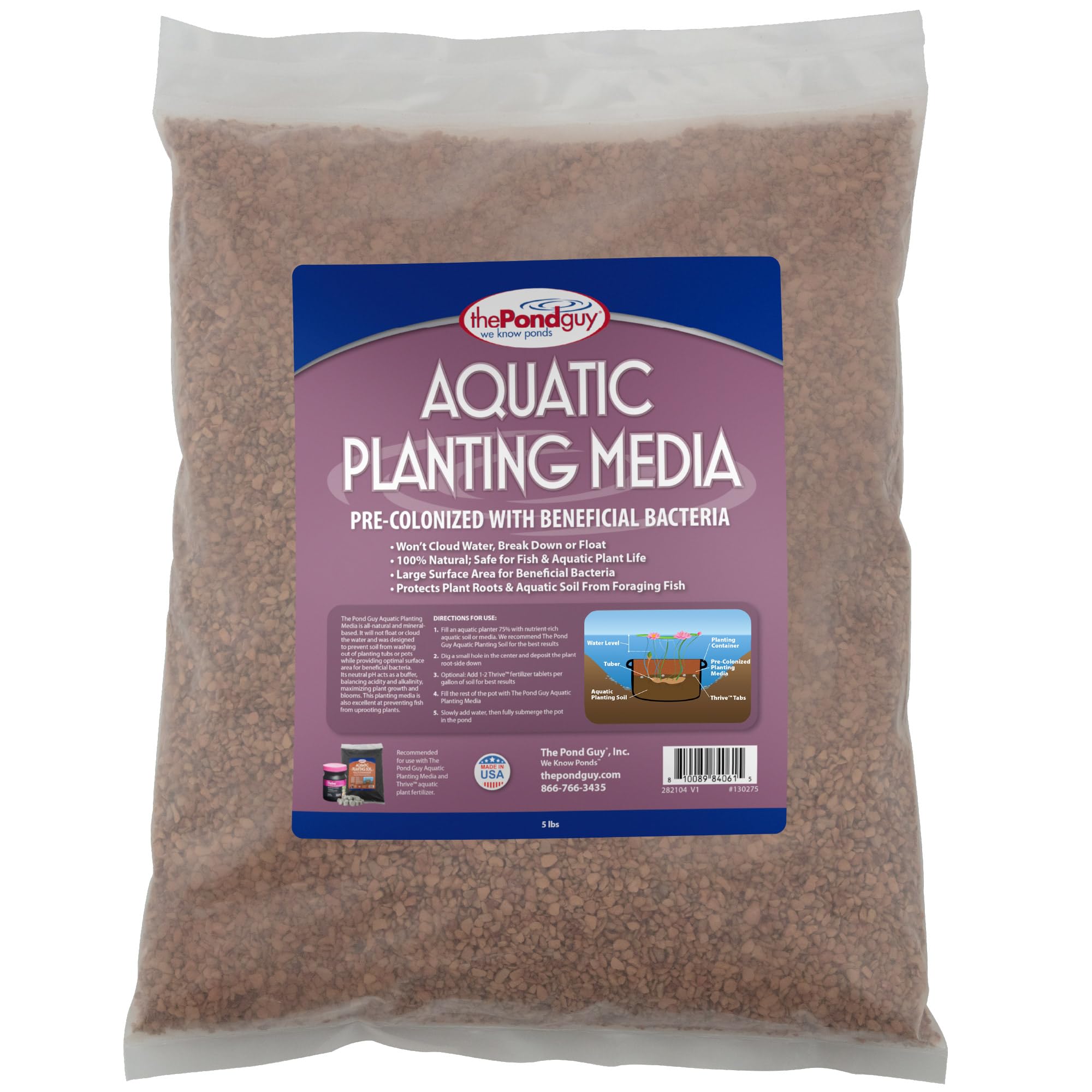
The Pond Guy media is pre-colonized with beneficial microbes that consume dead organic matter and excess nutrients — essentially turning the planting pot into a mini bio-filter. The dense pebbles are free of compost, peat, and synthetic fertilizers, which means they won’t feed algae while still providing a stable anchor for lily roots. Reviewers who repotted multiple pond plants with this media reported clearer water than they had experienced with previous soils.
The granules are heavy enough to stay in place, but a small number of owners found that some media did escape from the pot during the first few days, settling at the bottom of the pond. This appears to be more of a pot-placement issue than a product flaw, as tilting the pot during lowering can dislodge loose pebbles. The 4-quart bag is ideally sized for one large lily pot or two smaller marginal planters.
On the downside, a handful of reviewers experienced murky water for the first 24-48 hours despite the product’s clarity claims. This seems linked to fine dust from transport rather than the media itself. Additionally, the bag’s volume-to-price ratio places it in the premium tier, which may discourage budget-conscious buyers who need media for several pots.
What works
- Beneficial microbes help break down debris and balance the pond
- Dense pebbles stay anchored without a gravel cap in most setups
- Compost-free formula prevents algae-feeding nutrient spikes
What doesn’t
- Some pebbles can escape the pot if not lowered carefully
- Initial dust may cause temporary clouding in the first two days
6. Aquatic Plant Soil (Zetiling) 1000g

Zetiling’s 10-liter bag offers the lowest cost-per-volume ratio in this lineup, making it an attractive choice for hobbyists managing multiple small planted tubs. The black granulated aquasoil is designed primarily for planted aquariums, but it works for water lilies when used in a contained pot with a gravel cap. The soil reduces water hardness and creates a slightly acidic environment that many aquatic plants prefer.
The granules are soft and can turn muddy if handled aggressively. The manufacturer warns against washing the soil or pouring water directly onto it — a detail that some first-time buyers miss, leading to cloudy water. Reviewers who followed the instructions reported good root development and clean water, while those who skipped the warning ended up dealing with a dusty mess. The bag covers roughly 9.3 inches of surface area, which translates to one small lily pot.
Because this is a pure aquasoil rather than a pond-specific media, it lacks the weight to hold a large lily tuber in place without a thick cap of pebbles or gravel. It also contains fine particles that can escape through drainage holes if the pot is not lined properly. For a small indoor water feature or a patio fountain with a dwarf lily, it works — for a full outdoor pond, the Aquascape or Chalily options are more reliable.
What works
- Large 10-liter volume at a very competitive per-bag cost
- Granules reduce water hardness and favor aquatic root growth
- Works well for small lily tubs and indoor water gardens
What doesn’t
- Soft granules turn muddy if water is poured too aggressively
- Lightweight structure requires a gravel cap to hold tubers down
7. WBHWW Aquatic Soil 5.5LBS
WBHWW’s aquatic soil is a fine-grit clay medium packaged in a 5.5-pound bag with a volume of 4400 cubic centimeters. The clay is enriched with a balanced nutrient blend designed to support vibrant growth in water lilies and marginal plants. The fine texture allows roots to spread easily through the pot while maintaining the moisture levels that tuberous plants require without becoming waterlogged.
The biggest caveat is the particle size. Multiple reviewers note that the soil is so fine that it can seep out of the pot’s drainage holes and settle at the bottom of the pond. Using a liner or a thick gravel cap is essential with this product to avoid a muddy mess. Some owners have repurposed it for terrestrial pots with good results, which suggests the formula itself is nutrient-rich even if the particle behavior underwater is frustrating.
On the positive side, the instructions recommend changing the water two to three times a day during the sprouting phase — a detail that indicates the manufacturer is aware of the clouding issue. For the budget-conscious pond keeper who is willing to double-line their pots and perform the initial water changes, this soil offers a nutrient punch at a low entry cost. For anyone seeking a grab-and-go solution, the coarser Aquascape or Chalily blends are far less fuss.
What works
- Fine clay texture allows deep root penetration for fast establishment
- Nutrient-enriched formula supports strong leaf and flower growth
- Very competitive price for the volume provided
What doesn’t
- Extremely fine particles escape pots easily without a liner or cap
- Multiple water changes required in the first days to clear clouding
Hardware & Specs Guide
Bag Volume and Weight
Aquatic soil for water lilies is sold by both weight and volume, and the numbers don’t always align. A 10-pound bag of dense clay may only fill 215 cubic inches, while a 5.5-pound bag of fine silt can claim 4400 cubic centimeters. Weight correlates with density — heavier bags contain more clay and less air, which means better root anchorage. Volume tells you how many pots you can fill. For a standard 6-inch lily pot, look for at least 4 quarts or roughly 200 cubic inches of media. Larger lotus tubs need 8 quarts or more. Always check the cubic-inch or liter rating rather than assuming weight equals coverage.
Particle Size and Texture
Particle size is the single biggest predictor of water clarity after planting. Coarse granules between 2 mm and 8 mm — typical of baked ceramic pebbles or aggregated clay — resist breaking down and stay inside the pot even when fish bump against it. Very fine particles under 1 mm behave like silt: they drift through drainage holes, puff into the water column, and take hours to settle. The best lily soils strike a balance: enough fine material to hold nutrients against the roots, but enough coarse structure to prevent mass escape from the container. If the bag feels dusty when you open it, plan to use a pot liner or a thick gravel cap.
FAQ
Can I use regular garden soil for water lilies in my pond?
How often should I replace the soil in my water lily pot?
Why does my aquatic soil cloud the water even though the bag says it won’t?
Should I cap aquatic soil with gravel or sand?
Final Thoughts: The Verdict
For most gardeners, the aquatic soil for water lilies winner is the Aquascape Pond Plant Potting Media because its 10-pound clay formulation anchors heavy tubers on contact and refuses to cloud the water. If you want the professional-grade nutrient density that greenhouse operators rely on, grab the Chalily Aquatic Gold Soil. And for a simple, low-dust ceramic pebble that keeps the pond immaculate while feeding beneficial microbes, nothing beats the MICROBE-LIFT MLCAPM10.