
Ant mounds can ruin the look of a manicured lawn, create unsightly dirt patches, and make mowing a bumpy chore. The problem is that many off-the-shelf solutions only kill the worker ants you see, leaving the hidden colony to rebuild within days. Stopping the cycle requires a product that acts as a bait or a barrier, targeting the nest itself rather than just the surface activity.
I’m Rikta — the co-founder and writer behind Lawn Gear Lab. I spend countless hours comparing active ingredient concentrations, granular spread rates, and residual longevity, then cross-referencing that data with feedback from thousands of real lawn owners to separate what actually works from what just sounds good on the label.
This guide breaks down the strengths and trade-offs of seven leading granular formulas to help you pinpoint the right ant killer for lawn based on your yard size, ant species, and tolerance for repeat applications.
How To Choose The Best Ant Killer For Lawn
Granular ant killers for lawns fall into two functional categories: contact-kill insecticides that create a chemical barrier, and bait granules that workers carry back to the nest. Each serves a different purpose depending on whether you are treating a single mound, a perimeter, or the entire turf. Understanding the active ingredient, the residual window, and the coverage rate will tell you quickly if a product matches your specific ant pressure.
Active Ingredient: The Core Mechanism
Bifenthrin (found in Talstar and many Ortho formulas) is a non-repellent contact barrier that lasts up to four months in the soil, making it ideal for perimeter prevention. Indoxacarb (the active in Advion) is a bait that stops the ant’s nervous system after ingestion, delivering a delayed kill that lets the worker share the poisoned food with the colony before dying. Carbaryl (the active in Sevin) is a fast-acting contact killer that works immediately but degrades faster in sunlight and rain. Your choice hinges on whether you want immediate knockdown or a multi-week colony wipeout.
Residual Duration and Application Frequency
A product with a 3-month residual (like BioAdvanced or Ortho BugClear) suits homeowners who want to apply once per season and forget about ants until the next summer. A short-residual bait like Advion requires re-application every time you see new mound activity, but it also poses less risk of lingering toxicity in a vegetable garden or high-pet-traffic zone. Check the label’s “days of control” figure — anything under 30 days means you will be walking the yard with a shaker bottle multiple times per season.
Coverage Rate: Bag Size vs. Lawn Square Footage
Standard 20-pound bags typically treat 20,000 to 25,000 square feet at the broadcast rate for barrier protection. Bait products like Terro or Advion come in smaller 1- to 3-pound containers because you only apply a teaspoon around each mound or a light band along the foundation. Buying a 20-pound contact-kill bag for a half-acre yard is cost-efficient; using the same bag on a tiny postage-stamp lawn is wasteful and risks over-application that may harm soil microbes or earthworms.
Quick Comparison
On smaller screens, swipe sideways to see the full table.
| Model | Category | Best For | Key Spec | Amazon |
|---|---|---|---|---|
| Talstar PL Granules | Premium Barrier | Longest residual control | 4-month soil residual | Amazon |
| Advion Insect Granular Bait | Bait | Colony elimination | 0.22% indoxacarb bait | Amazon |
| Ortho BugClear Lawn Insect Killer | Contact + Barrier | Versatile perimeter defense | Treats 20,000 sq. ft. | Amazon |
| Sevin Lawn Insect Granules | Contact Killer | Fast knockdown on mounds | Kills 30+ listed pests | Amazon |
| BioAdvanced Complete Insect Killer | Season-Long Contact | Large lawn coverage | 3-month residual | Amazon |
| Ortho Lawn Insect Killer Granules | Broad Spectrum Contact | Wide pest control | 100+ insect control | Amazon |
| Terro T901-2 Ant Killer Plus | Budget Bait | Quick spot treatment | 24-hour kill | Amazon |
In‑Depth Reviews
1. Talstar PL Granules Insecticide
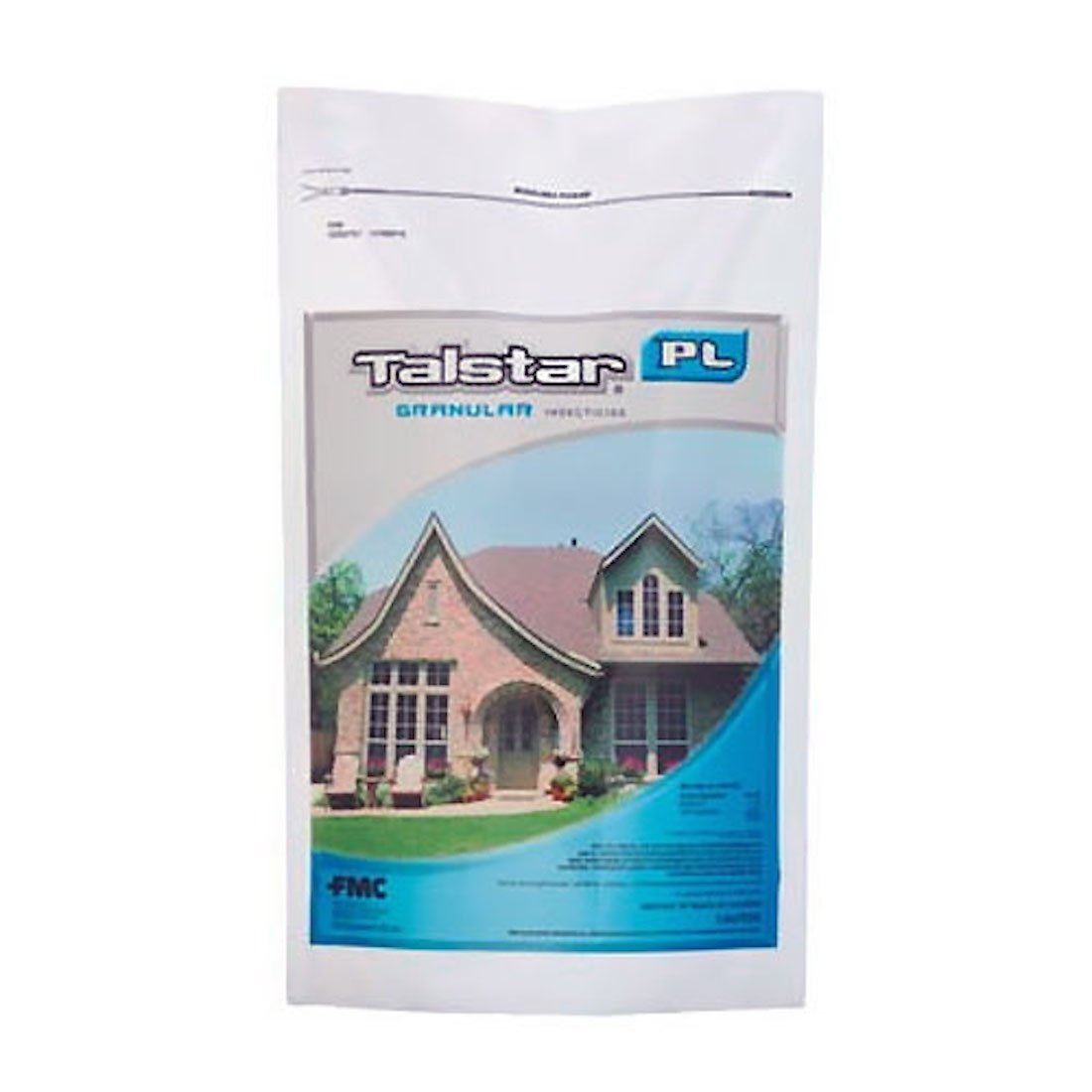
Talstar PL uses a sand-core granule loaded with bifenthrin, the same professional-grade active that commercial lawn care operators rely on for perimeter programs. The granular carrier penetrates mulch and thatch without needing immediate watering, so you can apply it before a rain event or on dry grass and still get full activation. Its 2- to 4-month residual window is the longest of any granular ant killer on the market, which means one spring application often lasts until the first frost.
Real-world feedback from users who battled cutter ants and fire ants consistently reports mound disappearance within 24 to 48 hours of application, with no re-infestation for the rest of the growing season. The fine sand texture also spreads evenly through a rotary spreader, avoiding the clumping issues that plague some cheaper clay-based granules.
The primary trade-off is the upfront cost — this is the most expensive product per pound on this list. It also requires a separate spreader if you only own a drop spreader, because the sand particles can clog small drop holes. For homeowners who simply want to apply once and stop thinking about ants, the longer residual makes the higher price per bag more economical over the full season.
What works
- Exceptional residual control lasting up to 4 months
- Penetrates thick mulch without water activation
- Professional-grade bifenthrin formula
What doesn’t
- Higher price per bag than other options
- Sand core may jam drop spreaders
2. Advion Insect Granular Bait

Advion from Syngenta uses 0.22% indoxacarb, a non-repellant bait that ants cannot detect as a poison. The MetaActive effect ensures the active only activates once ingested inside the target pest’s gut, drastically reducing the risk to non-target organisms like earthworms. Workers carry the granules back to the nest and feed them to the queen and brood, delivering a delayed colony wipeout that typically takes 3 to 7 days.
Users in Southern Louisiana reported that fire ants actively carried the granules into the mound within hours, and every hill in the yard was dead within a week. Professional pest control technicians also recommend it for indoor-outdoor perimeter treatments against carpenter ants and pavement ants. The 1-pound shaker bottle is small, but the bait approach means you only need a light sprinkle around each mound or foundation crack — the ants do the distribution work for you.
The biggest weakness is its short residual duration. Because it is a bait, it degrades faster in direct sun and rain, typically needing re-application every few weeks if the ant pressure is high. It also has no contact-kill action, so ants that do not feed on it will survive. For persistent infestations, you will need to combine it with a barrier product.
What works
- Delayed kill wipes out the entire colony
- Non-repellent — ants swarm the bait eagerly
- Low risk to non-target organisms
What doesn’t
- Short residual requires frequent re-application
- No contact-kill action on non-feeding ants
3. Ortho BugClear Lawn Insect Killer
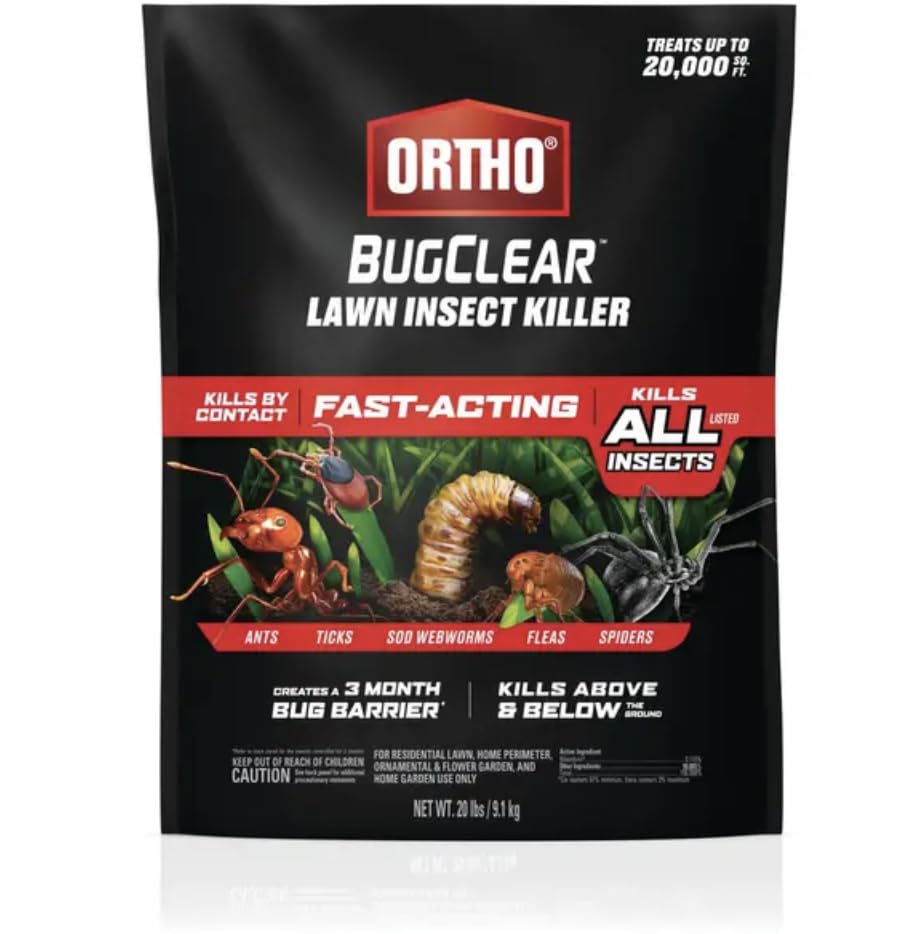
Ortho BugClear delivers a bifenthrin-based contact and residual barrier that kills ants, ticks, armyworms, sod webworms, and fleas both above and below the grass line. The 20-pound bag covers up to 20,000 square feet, making it a strong choice for medium to large properties that need season-long protection from a single application. Users report that the spreader-friendly granules dissolve quickly after watering in, creating a uniform chemical layer across the turf.
Owners dealing with crane fly larvae and mole food sources have noted significant pest reduction within 48 hours of application, with the barrier staying active for roughly 90 days in warm climates. The product also earned positive feedback from Florida homeowners for cutting down mosquito and gnat populations that were ruining backyard time.
The main drawback is that the broad-spectrum formula does not discriminate — it kills beneficial insects such as ground beetles and predatory wasps along with the target pests. Some users also found that it struggled against stink bugs, which seemed to walk right through the treated barrier. For ant-specific problems, you may be overpaying for the wider pest coverage you do not need.
What works
- Season-long residual with one application
- Kills broad range of lawn pests including ticks and fleas
- Easy to apply with standard broadcast spreader
What doesn’t
- Non-selective — kills beneficial insects too
- Ineffective on stink bugs
4. Sevin Lawn Insect Granules, 20 Pounds

Sevin’s granular carbaryl formula is a fast-acting contact insecticide that kills ants, ticks, fleas, and more than two dozen other lawn pests on contact. The 20-pound bag is a budget-friendly option for large-scale broadcast treatments, and its USDA compliance means it meets organic oversight standards for use on vegetable gardens. Users who spread it around the base of infested trees saw immediate ant die-off and tree recovery.
The granular texture spreads easily through any standard spreader, and watering-in is recommended for best activation. Homeowners in fire-ant-heavy regions report that direct mound treatment yields visible results within 24 hours, with the mound collapsing as the worker ants are eliminated.
Carbaryl degrades faster than bifenthrin in UV light and rain, so the residual window is shorter — typically 2 to 4 weeks depending on weather. This means you will need multiple applications per season to maintain suppression. Some users also report that it does not kill the queen if the bait never reaches her, so mounds can reappear after a few weeks.
What works
- Immediate contact kill on treated mounds
- Very affordable per-pound cost
- USDA-compliant for vegetable garden use
What doesn’t
- Short residual requires frequent re-application
- May not reach the queen for full colony kill
5. Ortho Lawn Insect Killer Granules, 20 lbs.
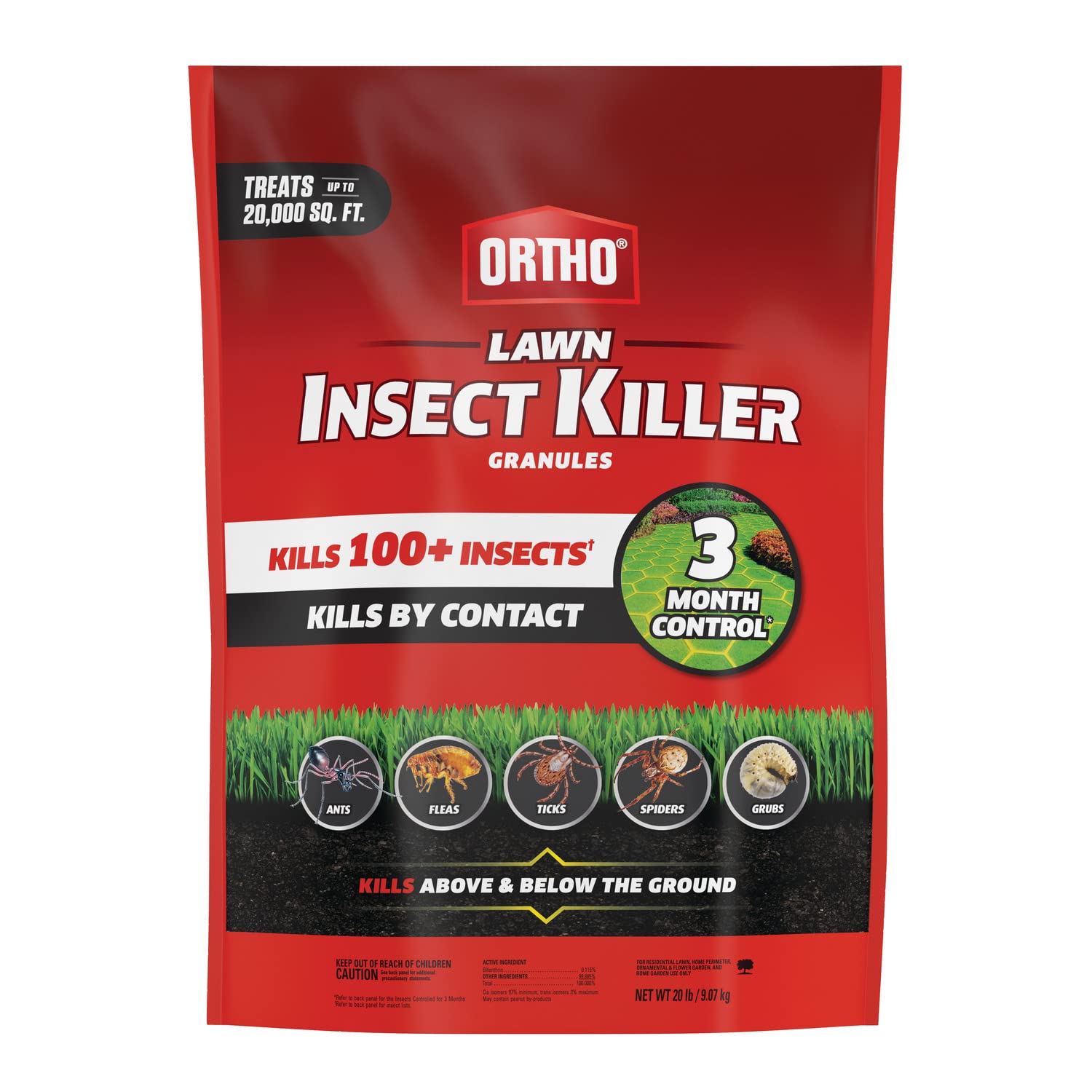
This Ortho formulation targets over 100 types of listed insects, including ants, spiders, fleas, ticks, and pillbugs, working both above and below ground. The 20-pound bag treats up to 20,000 square feet and builds a barrier that provides 3 months of residual protection after watering-in. Users who applied it to fire ant mounds reported visible die-off by the next morning with no re-emergence for the rest of the season.
The product is designed to be used with a Scotts spreader, and the granules water in easily to create a uniform barrier. Many homeowners in the South and Southeast rely on it as their primary season-long ant and tick preventative, applying it in early spring and again in midsummer for overlapping coverage.
Some users found the granules difficult to activate properly with a hose-end sprayer if they tried to follow the liquid option instructions — the granules require direct watering after broadcast to break down. There is also occasional inconsistency in kill rates between different pest species; while ants and ticks die quickly, some reports mention that scorpions and stink bugs seem unaffected.
What works
- Season-long control against 100+ pest types
- Fast knockdown on fire ant mounds
- Works with standard broadcast spreaders
What doesn’t
- Requires thorough watering for activation
- Ineffective against scorpions and stink bugs
6. BioAdvanced Complete Brand Insect Killer for Lawns
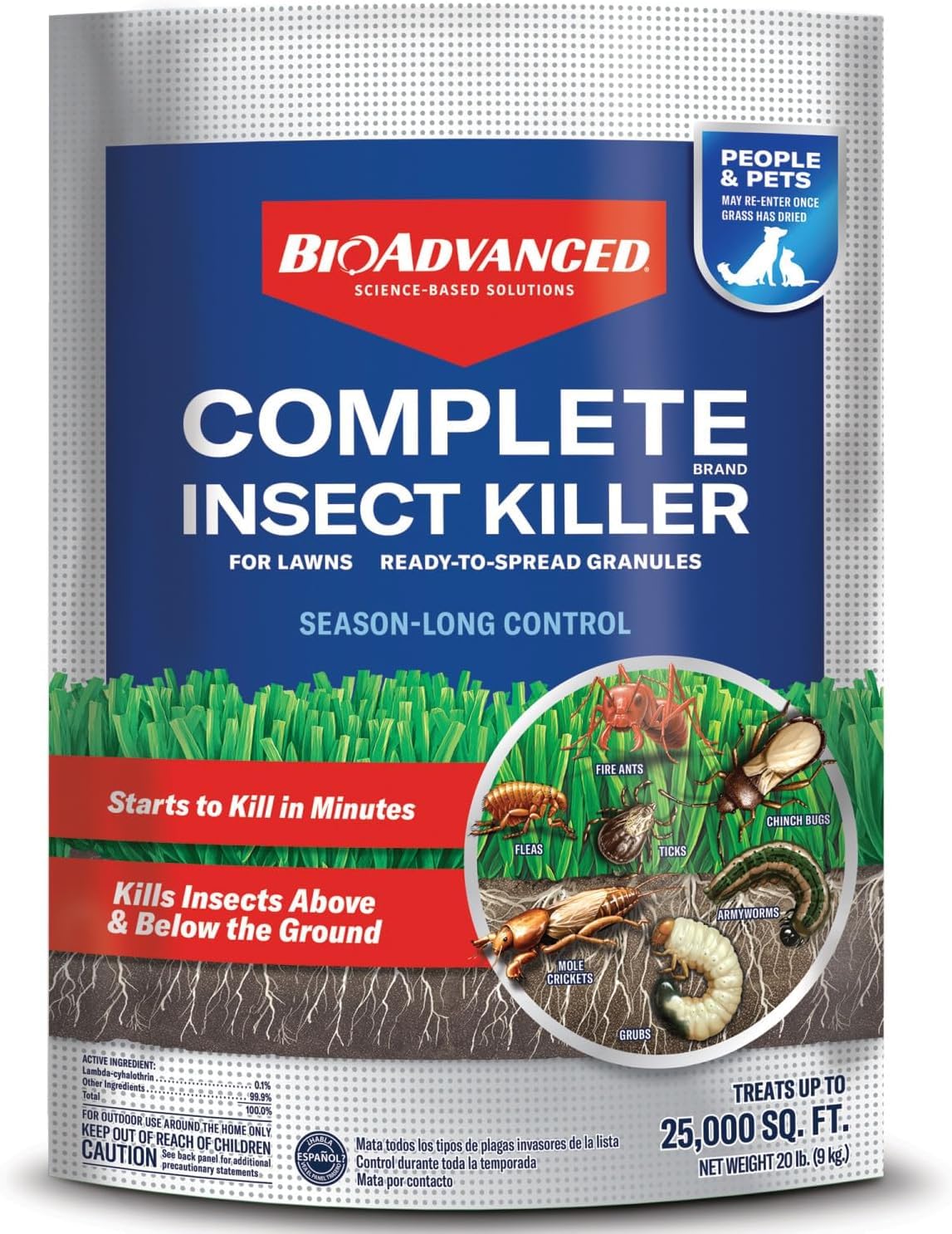
BioAdvanced Complete delivers a dual-action formula that kills insects both above and below the ground, targeting ants, fleas, ticks, chinch bugs, mole crickets, and grubs. The 20-pound bag offers the largest coverage area on this list — up to 25,000 square feet — making it the most cost-efficient option for owners of half-acre or larger lawns. The Bayer Advanced lineage means the chemistry is backed by decades of agricultural-grade research.
Users in warm, humid climates like South Florida report approximately 3 months of effective ant and tick suppression from a single application, even through heavy summer rains. The product is also safe for St. Augustine grass, which is notoriously sensitive to certain insecticides. Homeowners who were battling moles found that eliminating the grub and insect food source with this product eventually drove the moles away.
The main drawback is that it does not control fleas well according to some user reports, and it has no effect on stink bugs at all. It also requires precise spreader calibration to avoid over-application, which can lead to patchy grass burn if you dump too much in one spot.
What works
- Largest coverage — treats up to 25,000 sq. ft.
- Season-long residual in hot, wet climates
- Safe for sensitive St. Augustine grass
What doesn’t
- Weak flea control reported
- Needs careful spreader calibration to avoid burn
7. Terro T901-2 Ant Killer Plus Insect Control

Terro’s T901-2 comes as a 2-pack of 3-pound resealable shaker bags, each containing fast-acting granules that kill ants, fire ants, cockroaches, and fleas within 24 hours of contact. The simple shaker design requires no spreader — you just squeeze the bag and sprinkle it onto mounds or along foundation lines. For homeowners dealing with a small lawn or isolated ant hills, this is the most straightforward, no-fuss option on the list.
Reviews from Maryland and Delaware users highlight that annual perimeter treatment around the house foundation keeps ants from crossing the threshold for an entire season. The versatility is also a plus: the same granules work as a spot treatment on mounds, a band treatment around the foundation, or a broadcast treatment on lawns.
The biggest limitation is that the granular bait is contact-only — it does not have the delayed colony-kill mechanism of indoxacarb baits. Some users noticed that the product worked well one year and poorly the next, possibly due to batch age or the development of bait shyness among local ant populations.
What works
- Fast 24-hour knockdown
- No spreader needed — convenient shaker bag
- Works as spot, band, or broadcast treatment
What doesn’t
- Contact-only — does not eliminate the colony long term
- Inconsistent results between seasons reported
Hardware & Specs Guide
Active Ingredient Chemistry
The active ingredient determines whether a granule kills on contact (carbaryl, bifenthrin) or works as a delayed bait (indoxacarb). Bifenthrin and indoxacarb are non-repellent, meaning ants will walk over or eat them without avoidance. Carbaryl is fast-acting but ants can detect and avoid it if it is too concentrated. Matching the chemistry to your ant species — fire ants respond well to both bifenthrin barriers and indoxacarb baits, while carpenter ants prefer bait granules — is critical for success.
Residual Duration and Degradation
Residual life in soil depends on the molecule structure and the carrier medium. Sand-core granules (Talstar PL) resist UV breakdown and stay active for 120 days in dry conditions. Clay- or cellulose-based granules (most budget products) degrade within 2-4 weeks, especially after heavy rain. Products that list “season-long control” typically rely on bifenthrin at a high load rate, while products that say “kills in 24 hours” usually use carbaryl or a bait system with no residual claim.
Application Equipment and Coverage Rate
20-pound bags are designed for rotary broadcast spreaders and treat roughly 20,000 square feet at standard barrier rates. Smaller shaker bags (1-3 pounds) are meant for spot treatment around individual mounds or perimeter bands. The label’s “treats up to X sq. ft.” number assumes optimal spreader calibration and even coverage — doubling the rate for heavy infestations will not increase residual length but may burn the grass.
Pet and Environmental Safety
All granular products require the treated area to dry fully before pets and children re-enter. Bait products (Advion) have the lowest non-target toxicity because the active only activates inside the insect’s gut. Contact killers (Sevin, BioAdvanced) carry higher acute toxicity to earthworms and beneficial insects. Talstar PL and Ortho BugClear are labeled for use on lawns but recommend keeping pets off until the granules are watered in and the area is dry — typically 2-4 hours.
FAQ
How long does it take for granular ant killer to work on a lawn?
Can I use granular ant killer on St. Augustine or Bermuda grass?
Is it safe to use ant killer granules around vegetable gardens?
Why do ants come back a few weeks after I applied granules?
Final Thoughts: The Verdict
For most gardeners, the ant killer for lawn winner is the Talstar PL Granules because its 4-month residual means you apply once and stop worrying about ants for the entire growing season. If you want a product that targets the colony from the inside out, grab the Advion Insect Granular Bait — the indoxacarb bait system is brutal on fire ants and carpenter ants. And for the largest budget-friendly coverage on a half-acre or bigger lawn, nothing beats the BioAdvanced Complete Insect Killer with its 25,000-square-foot coverage and 3-month residual.