
Walk-behind mowers remain the backbone of serious lawn care for homeowners who want control over cut quality without the bulk of a ride-on machine. Whether you face tough slopes, tricky fence lines, or a dense turf that bogs down lesser gear, a properly rated walk-behind mower delivers the torque and deck precision that smaller machines simply cannot match.
I’m Rikta — the co-founder and writer behind Lawn Gear Lab. I’ve spent countless hours comparing engine displacements, deck fabrication methods, transmission types, and real-world owner experiences to separate the models that truly perform from those that just look good on paper.
This guide breaks down the top contenders across gas and battery platforms to help you confidently select among the very best, most rated walk behind mowers available today.
How To Choose The Best Rated Walk Behind Mowers
Selecting the right walk-behind mower requires looking past brand marketing and focusing on the mechanical details that directly impact your yard’s specific needs — terrain steepness, grass density, lot size, and your tolerance for maintenance.
Engine Power vs. Deck Width
A 170cc engine paired with a 22-inch steel deck handles typical suburban lots well, but if you regularly cut tall, thick grass or mow a half-acre or more, a 201cc engine with a wider cutting path reduces mowing time and prevents bogging. Insufficient power on a wide deck leads to uneven cuts and frequent stalling in damp conditions.
Transmission Types and Self-Propelled Drive
Rear-wheel drive (RWD) provides superior traction on slopes and uneven terrain compared to front-wheel drive (FWD), which can lose grip on inclines. Continuously variable transmissions (CVT) offer variable speed control that lets you match the mower’s pace to your walking speed — especially useful on varied terrain. Simpler single-speed drives are lighter and easier to maintain but lack that adaptability.
Deck Construction and Blade Design
Stamped steel decks are affordable and common, but 16-gauge or heavier seamless steel decks resist vibration and corrosion better over years of use. For mulching performance, look for a deck with a volute spiral design or a twin-blade MicroCut system that produces finer clippings for faster decomposition. The blade hardness rating (e.g., 45–50 HRC) matters for longevity when cutting through thick or slightly overgrown grass.
Battery Platform vs. Gas Convenience
Cordless mowers eliminate fuel handling, oil changes, and pull-start hassles — but only if the battery system delivers enough runtime for your lot size. A 48V or 56V platform with a 6.0Ah or larger battery typically handles a quarter acre on one charge. Gas models still win on continuous runtime and raw torque for tall, wet grass, though electric start options have closed that gap on several premium gas models.
Quick Comparison
On smaller screens, swipe sideways to see the full table.
| Model | Category | Best For | Key Spec | Amazon |
|---|---|---|---|---|
| YARDMAX YG4761 | Premium Gas | Large sloped lawns | 24 in., 201cc, 7-pos height | Amazon |
| Honda HRX-BE | Premium Battery | Premium cut quality | 21 in., 12Ah, twin-blade | Amazon |
| Milwaukee M18 Fuel | Battery Performance | Medium yards, power users | 21 in., dual battery, steel deck | Amazon |
| SENIX LSSG-H4 | Mid-Range Gas | Small to medium lots | 22 in., 170cc, 6-pos height | Amazon |
| SENIX G-H-FIVE | Mid-Range Gas | Larger yards, thick grass | 22 in., 201cc, 4.7HP | Amazon |
| Earthquake 40314 | Specialty String | Overgrown weeds/brush | 22 in., 160cc, string head | Amazon |
| YARDMAX YL2250 | Specialty String | Edging & fence lines | 22 in., 170cc, offset head | Amazon |
| Greenworks CK24L5242 | Battery Combo | Multi-tool cordless system | 21 in., 48V, 3-tool kit | Amazon |
| EGO POWER+ LM2114SP | Battery Premium | Quiet, powerful cordless | 21 in., 56V, 6.0Ah | Amazon |
| YARDMAX YG2860 | Mid-Range Gas | Flat terrains, good value | 22 in., 201cc, FWD CVT | Amazon |
| PowerSmart DB8622S | Budget Gas | Entry-level, small yards | 22 in., 170cc, RWD | Amazon |
In‑Depth Reviews
1. YARDMAX YG4761 24 in. 201cc Electric Start RWD
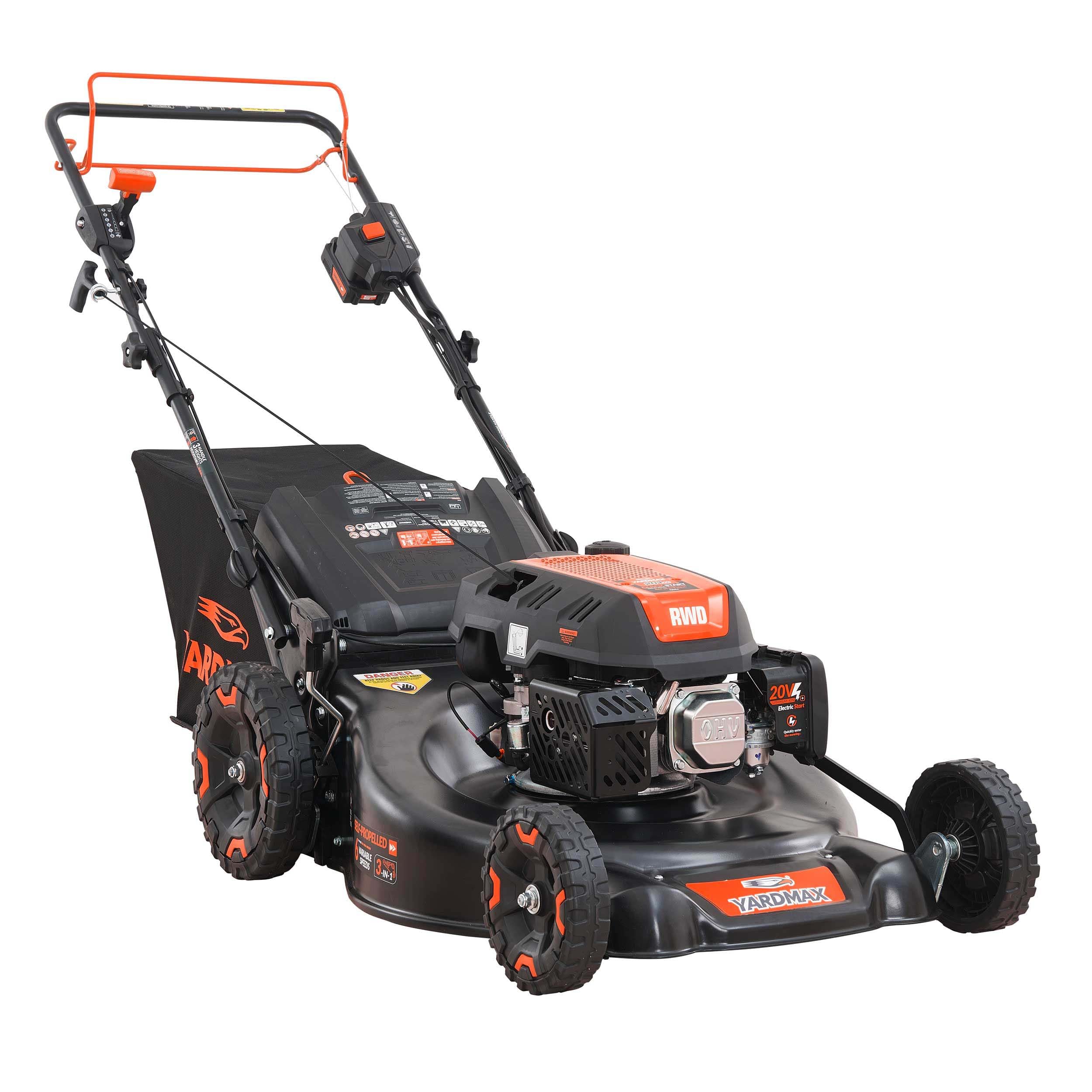
The YARDMAX YG4761 sits at the top of the walk-behind class thanks to its 24-inch cutting width paired with a 201cc engine and a true CVT rear-wheel drive system. The 16-gauge seamless steel deck resists vibration while the MAXFlow volute spiral design improves mulching airflow — a combination that saves time on larger properties without sacrificing cut quality.
Electric start simplifies operation on cold mornings, and the 7-position single-lever height adjustment (1.57 to 3.74 inches) offers enough range to handle cool-season grasses in spring and warm-season turf in summer. Double ball-bearing wheels roll smoothly across uneven ground, and the deck cleanout port makes post-cut maintenance quick.
At over 100 pounds, this mower is heavy — the self-propel system handles the effort, but turning and maneuvering in tight spots requires some muscle. A few owners report the CVT speed control feels limited to two effective speeds, and the push-button start reliability varies across units. For large, sloped lawns where a 24-inch pass saves significant time, the YG4761 is the top performer in this lineup.
What works
- Widest 24-inch deck in this test group
- Seamless steel deck reduces vibration
- Electric start with 7-position height options
- CVT RWD delivers strong slope traction
What doesn’t
- Heavy at over 100 lbs
- CVT speed range may feel limited
- Some units have electric start reliability issues
2. Honda HRX-BE 21-Inch Battery Mower
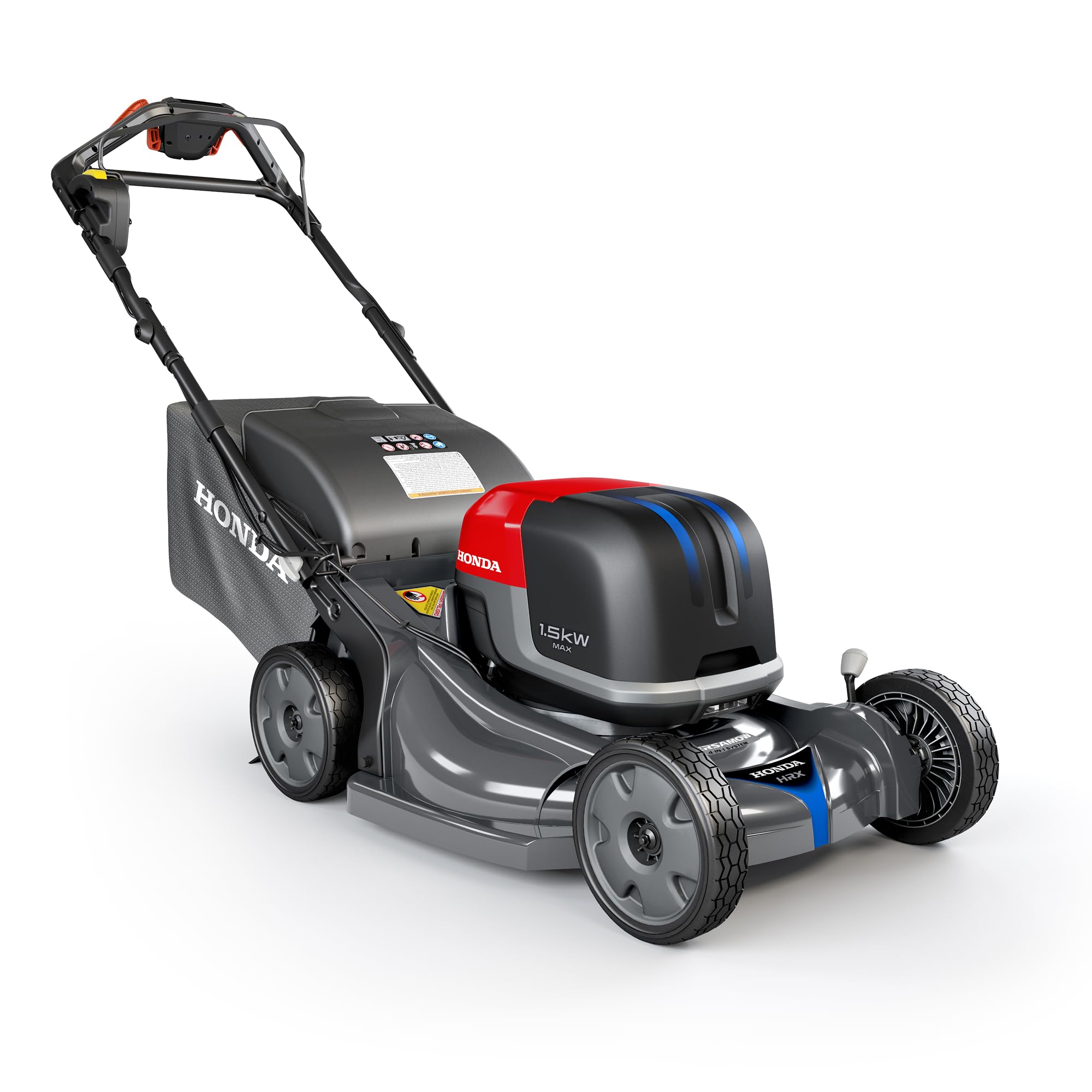
Honda’s HRX-BE brings the company’s renowned engine philosophy to battery power, using a 12Ah lithium-ion pack that maintains RPM under load. The twin-blade MicroCut system produces four cutting surfaces for exceptionally fine clippings, and the 4-in-1 Versamow system lets you switch between mulching, bagging, discharge, and leaf shredding without extra attachments.
The e-Select Drive transmission offers variable speed control from 0 to 4 mph with a button, and the dual-lever height adjustment provides seven settings between 0.75 and 4 inches — low enough for Bermuda grass scalping. The 2.2-bushel bag is easy to remove, and the 5-year residential warranty reflects Honda’s confidence in durability.
The standard charger takes about 6 hours for a full recharge, and the premium price positions this well above other battery models. Some owners note the mulching chute occasionally lets clippings slip past the blocker, requiring creative workarounds. For someone who values Honda build quality and wants gas-like cut quality without the emissions, the HRX-BE is a standout choice.
What works
- MicroCut twin-blade for ultra-fine mulching
- 0.75-inch minimum cut height
- Variable speed e-Select Drive
- 5-year residential warranty
What doesn’t
- 6-hour charge time without fast charger
- High entry price
- Mulching chute can allow clippings past
3. Milwaukee M18 Fuel 21-Inch Self-Propelled

The Milwaukee M18 Fuel mower leverages the brand’s heavy-duty tool platform, running on two M18 batteries to deliver high RPM and consistent torque through thick grass. The 21-inch alloy steel deck offers a rigid cutting platform, and the self-propelled drive keeps the mower moving at a steady pace across medium-sized lawns.
Quieter than any gas equivalent, this mower starts instantly with a button press and eliminates all fuel-related maintenance. Adjustments are straightforward, and the dual-battery design means you can swap packs to extend runtime if your property exceeds a half acre. Owners consistently praise the cut quality and maneuverability, noting it handles damp grass better than many cordless competitors.
The mower ships without batteries or charger, so you need an existing M18 system or must purchase those separately — a significant upfront consideration. Some units arrive with minor cosmetic damage from shipping, and the single height adjustment position (reported as 1-position) limits versatility for varied grass types. For Milwaukee tool users, this mower integrates perfectly into an existing battery ecosystem and delivers professional-grade cutting performance.
What works
- High RPM cuts thick grass cleanly
- Quieter than gas equivalents
- Built on proven M18 platform
- Good for medium lots up to 3/4 acre
What doesn’t
- Batteries and charger sold separately
- Single height adjustment position reported
- Shipping damage reports from some buyers
4. SENIX LSSG-H4 22-Inch Self-Propelled Gas Mower
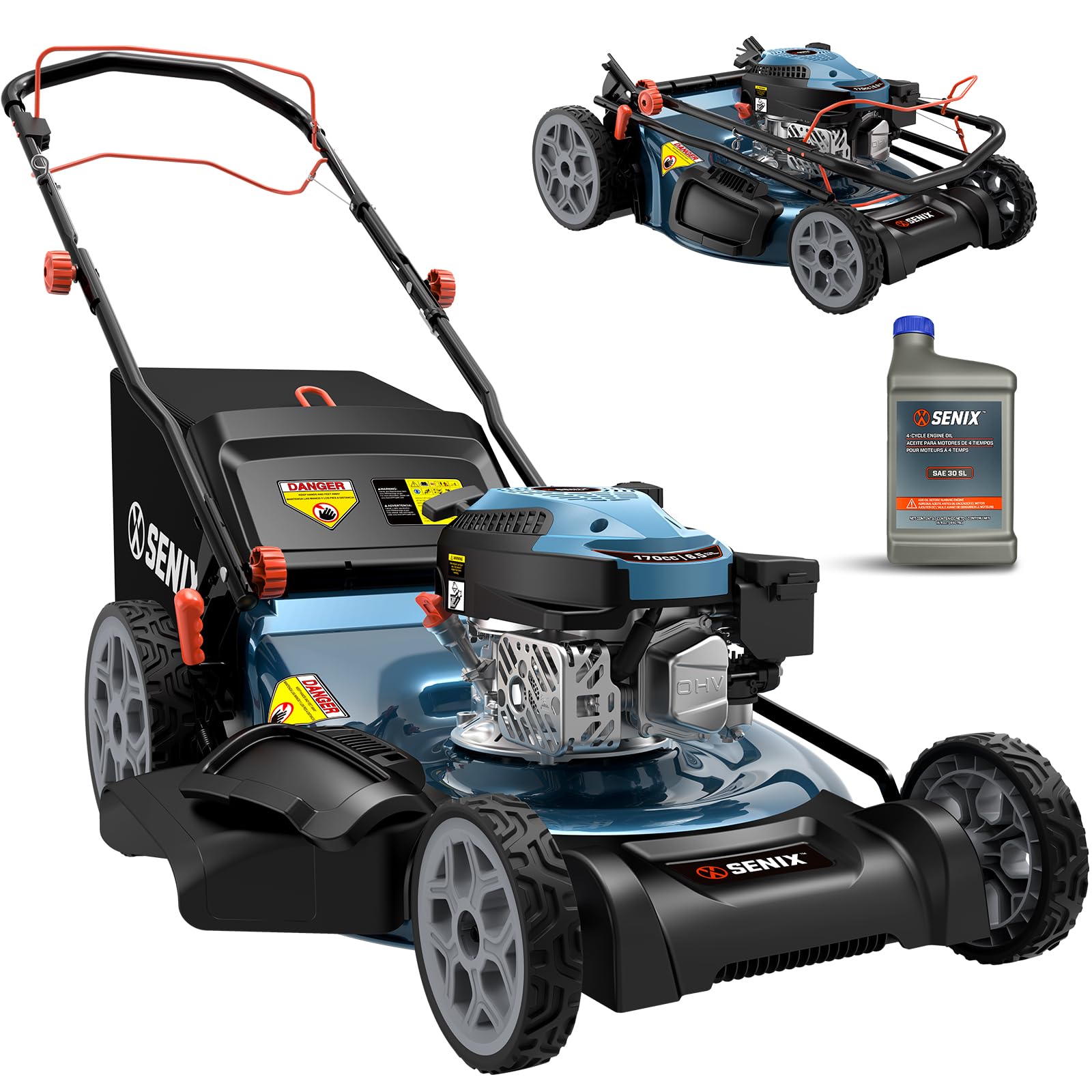
The SENIX LSSG-H4 packs a 170cc OHV four-cycle engine and a 22-inch steel deck into a rear-wheel-drive platform that costs significantly less than comparable Hondas or YARDMAXs. The single-speed self-propel manages mild to moderate slopes well, and the 6-position single-lever height adjustment (1.25 to 4 inches) covers the standard range homeowners need for fescue, bluegrass, or Bermuda lawns.
Assembly takes roughly 10 to 35 minutes depending on experience, and the included oil, mulch plug, and 19-gallon bagger get you cutting quickly. The 11-inch rear wheels roll smoothly over uneven ground, and the foldable handle simplifies storage. Owners who mow wet or tall grass report the mower handles it competently, with only occasional stalling in very thick conditions.
The instruction manual is minimal, and some users find the gas and oil fill locations unlabeled — a potential issue for first-time gas mower owners. The height adjustment mechanism also requires removing the wheels on some units, which contradicts the “single-lever” convenience claim. For the price-sensitive buyer who needs a capable self-propelled RWD mower, the LSSG-H4 offers strong value without major compromises.
What works
- Low price for RWD self-propelled
- 170cc engine starts easily, cuts well
- Includes oil, bagger, and mulch plug
- Foldable handle for compact storage
What doesn’t
- Manual lacks clear labeling for gas/oil
- Height adjustment may need wheel removal
- Not for very large or steep lawns
5. SENIX G-H-FIVE 22-Inch 201cc Self-Propelled
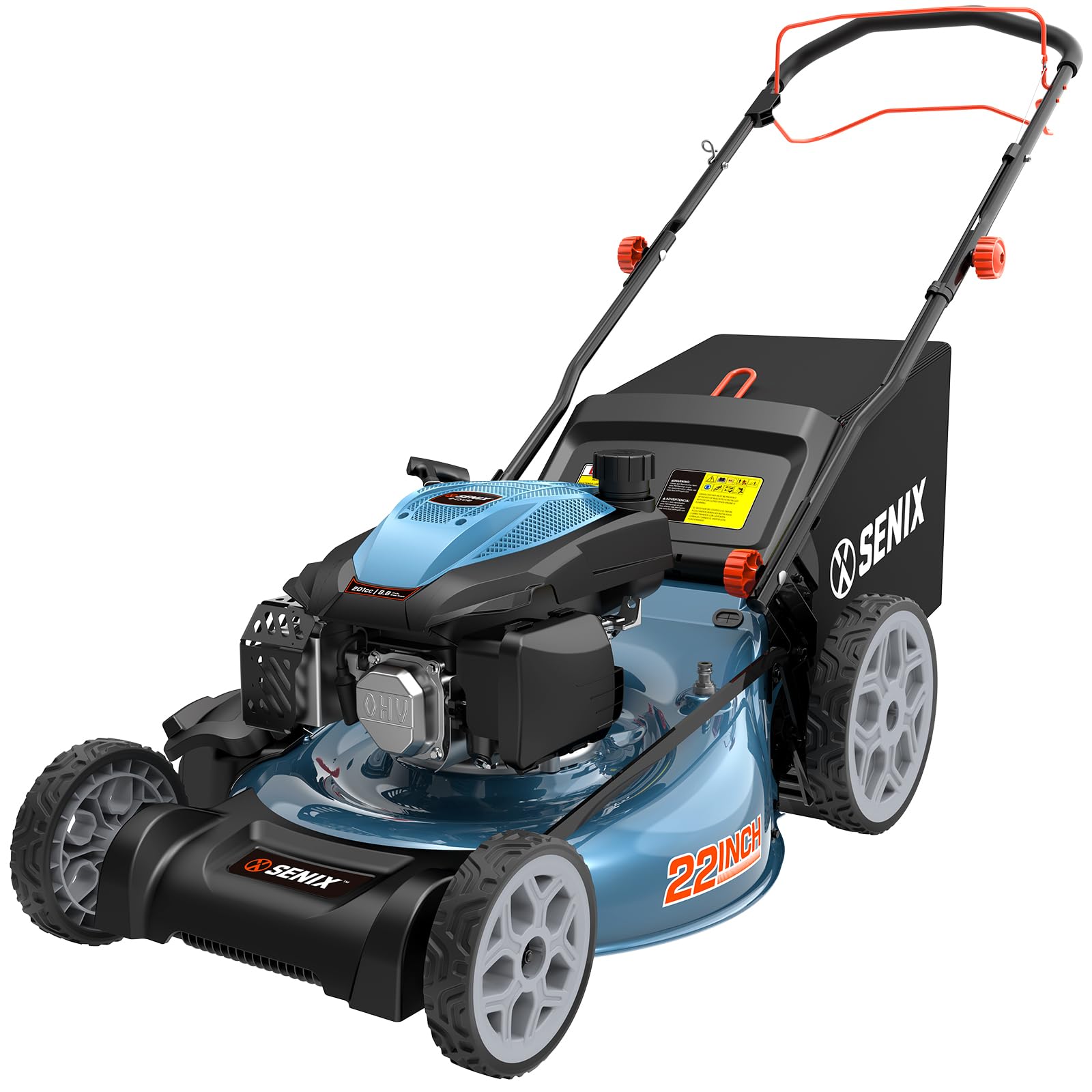
Stepping up to the 201cc engine, the SENIX G-H-FIVE delivers 4.7 HP and 8.8 ft-lb of torque for cutting through heavy, overgrown grass without bogging. The 22-inch heavy-duty steel deck uses a vortex tunnel airflow design that improves grass discharge into the bagger, and the manganese steel alloy blades (45–50 HRC hardness) hold an edge longer than standard blades.
The single-speed RWD self-propel reaches 2.9 mph, and the 6-position central height adjustment (1.25 to 4 inches) is tool-free. Assembly requires no tools for the handle and minimal effort for the blade and bagger. Owners report first-pull starts, quiet operation, and a lightweight feel relative to the engine size — the unit weighs 72 pounds, making it more manageable than the heavier YARDMAX models.
Some units ship without a mulch flap, and the wheels feel inexpensive compared to the rest of the build. The handle flexion can cause the pull cord recoil to rub, which may wear over time. The manual also lacks critical information like oil capacity, frustrating for new owners. For someone who needs 201cc power on a budget, the G-H-FIVE is a compelling option that mostly delivers on its specs.
What works
- 201cc engine with 4.7HP for tough grass
- Manganese steel blades with 45–50 HRC
- Lightweight at 72 lbs
- Tool-free height adjustment
What doesn’t
- Missing mulch flap on some units
- Manual lacks oil/gas capacity details
- Wheels feel cheap for the price point
6. Earthquake 40314 Walk Behind String Mower

The Earthquake 40314 is not a conventional mower — it uses a 160cc Viper four-cycle engine to spin a string cutting head that clears a 22-inch path through weeds, briars, and saplings up to a half-inch thick. The 14-inch airless Never-Flat wheels float over rocks and roots, and the adjustable handlebar reduces operator fatigue during extended clearing sessions.
The engagement bail lets you stop the cutting head without killing the engine — ideal for quick path clearing or avoiding obstacles. The 5-year limited warranty is among the longest in the string trimmer/mower category, and the US-based customer support team handles issues directly. Owners consistently report that this machine replaces handheld trimmers entirely for heavy brush work, eliminating back strain from repetitive swinging.
The string head uses 0.155-inch line and requires manual replacement when it wears out — there is no auto-feed system, so you must stop to reload. The cutting height range (1.5 to 3 inches) is narrower than blade mowers, and the deck lacks a debris shield that fully contains clippings. For properties with significant brush and overgrown areas that a standard blade mower can’t handle, the Earthquake 40314 is purpose-built to do that job efficiently.
What works
- Handles thick weeds and saplings up to 1/2 inch
- 14-inch Never-Flat wheels for rough terrain
- 5-year limited warranty
- Bail engagement stops head without killing engine
What doesn’t
- No auto-feed trimmer line system
- Narrow 1.5 to 3-inch height range
- Not suitable for standard lawn cutting
7. YARDMAX YL2250 22-Inch String Trimmer Mower

The YARDMAX YL2250 combines a 170cc gas engine with a 22-inch string cutting head, but its defining feature is the offset head position that lets you trim flush along fences, barn walls, and landscaping edges without angling the entire machine. The 14-inch ball-bearing wheels roll smoothly over varied terrain, and the 5 tool-free height adjustments range from 1.5 to 3.5 inches.
Owners praise the easy setup — approximately 15 minutes — and the first-pull start after adding oil and fuel. The onboard cord caddy stores extra trimmer line, and swapping string requires no tools. The mower handles 4-foot weeds quickly, making it a strong choice for properties with large areas of overgrowth that a standard blade mower cannot cleanly handle.
The unit works best on relatively flat terrain; hills cause the string head to lift unevenly, leaving uncut patches. The OEM trimmer line tends to fly off when hitting dense brush — upgrading to 0.155-inch square line improves reliability significantly. For homeowners who need to edge along structures or cut through heavy weeds without the physical effort of a handheld trimmer, the YL2250 is a specialized but effective solution.
What works
- Offset head trims flush along fences and walls
- Lightweight at 61.7 lbs
- Tool-free height adjustment
- Cord caddy for spare trimmer line
What doesn’t
- Poor performance on hilly terrain
- OEM string flies off in thick brush
- Not designed for standard grass cutting
8. Greenworks 48V 21-Inch Mower + Trimmer + Blower Kit

The Greenworks CK24L5242 kit bundles a 21-inch self-propelled mower, a 12-inch string trimmer, and a 320 CFM blower with two 5.0Ah batteries and a dual-port charger. The 48V (24V x 2) system drives the brushless mower motor, 7-position height adjustment, and 3-in-1 mulching, bagging, and side discharge functionality. The vertical storage design saves floor space in the garage.
The mower runs quietly compared to gas equivalents, and the brushless motor improves runtime efficiency. Owners report the batteries last about 35 to 40 minutes in the mower with moderate use, enough for roughly a quarter-acre lot. The included trimmer and blower extend the value of the kit, making it a complete lawn care package from a single purchase. The 3-year warranty on all components provides decent peace of mind for the price point.
Battery runtime is the kit’s limiting factor — many users need to buy additional batteries to finish the yard without a recharge break. The mower struggles with grass over an inch tall unless the turbo mode is engaged, and the weed eater auto-feed mechanism is finicky. The charger also emits an audible hum during operation. For a smaller property where a single battery charge suffices, this kit offers exceptional value.
What works
- Complete 3-tool lawn care system
- Quiet brushless mower motor
- 7-position height adjustment
- Vertical storage design saves space
What doesn’t
- Battery runtime may not finish a quarter-acre
- Mower lacks power for tall grass without turbo
- Trimmer auto-feed is inconsistent
9. EGO POWER+ LM2114SP 21-Inch Self-Propelled
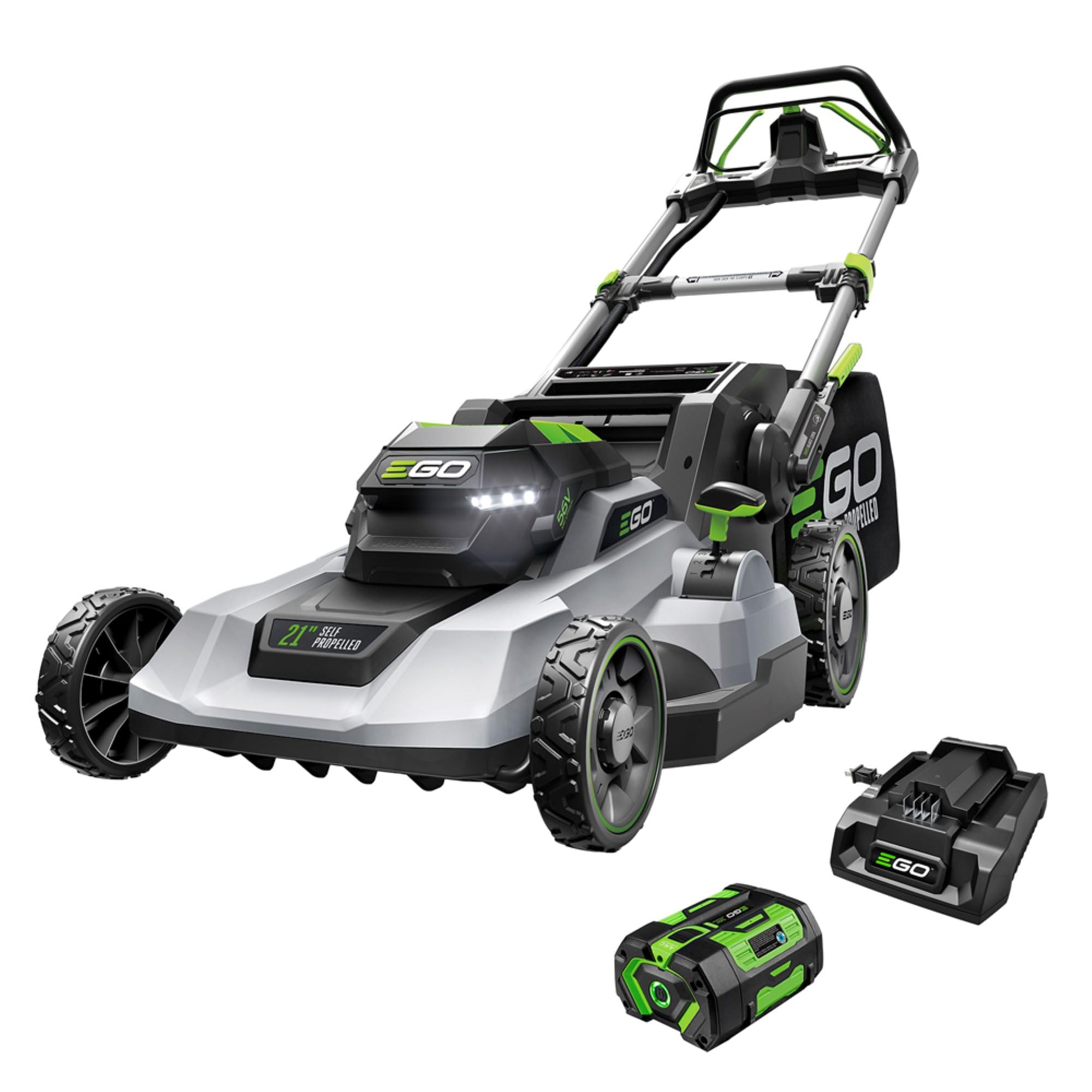
The EGO POWER+ LM2114SP delivers 6.0 ft-lbs of cutting torque from its 56V ARC Lithium battery — enough to outperform many gas-powered walk-behinds in real-world cutting tests. The 21-inch deck offers 7-position height adjustment (1.25 to 4 inches), and the 3-in-1 system handles mulching, bagging, and side discharge. The dual-toggle handleset lets you engage self-propel with either hand, which is convenient on uneven terrain.
Run time reaches up to 50 minutes on a single charge with the included 6.0Ah battery, though heavy self-propelled use reduces that figure. The high-efficiency brushless motor delivers low vibration and long motor life, and the LED headlights extend usability into low-light conditions. Owners consistently mention the quiet operation and instant push-button start as major upgrades from gas mowers, with many reporting the cut quality equals or exceeds their previous gas models.
Battery runtime remains the primary concern — lots around 0.3 acres may require a second battery to finish in one session. The mower clogs in grass over 6 inches tall, and the self-propelled speed setting can feel fast for some walking paces. For homeowners seeking a cordless mower that genuinely matches gas performance and has a mature battery platform with additional OPE tools, the EGO LM2114SP is a top-tier choice.
What works
- 6.0 ft-lbs torque – rivals gas mowers
- 50-minute runtime with included 6.0Ah battery
- Quiet, low-vibration brushless motor
- LED headlights for low-light mowing
What doesn’t
- Battery may not finish 0.3 acres on one charge
- Clogs in very tall grass over 6 inches
- Self-propelled speed can be too fast for some
10. YARDMAX YG2860 22-Inch 201cc CVT FWD
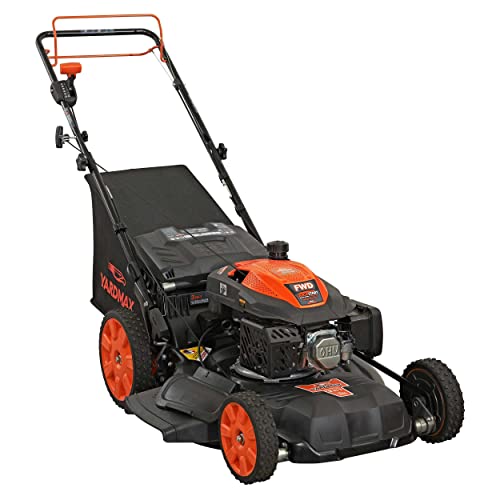
The YARDMAX YG2860 brings a 201cc engine and a CVT transmission to a front-wheel-drive platform at a price that undercuts most RWD competitors. The automatic choke system eliminates priming and choking, and the 6-speed shift lever lets you adjust pace to match your walking speed. The single-lever deck adjustment quickly sets cut height, and the deck cleanout port simplifies maintenance.
Owners report easy second-pull starts, good gas mileage, and a quiet operation compared to other gas mowers in its class. The aggressive spiked tire tread on the rubber wheels provides decent traction on flat and slightly sloped yards, and the 22-inch steel deck handles medium-density grass without bogging. For yards up to 3/4 acre, this mower offers surprising capability for its price tier.
The FWD system loses traction on wet grass and steeper inclines, making this a poor choice for hilly properties. The mower is heavy at nearly 85 pounds, and the bag attachment is awkward to secure. The speed lever has also been reported not to stay in position on some units. For flat terrain and a tight budget, the YG2860 is a value-packed option, but buyers on slopes should look elsewhere.
What works
- 201cc engine with CVT transmission
- Automatic choke for easy starting
- Good gas mileage and quiet operation
- Handles up to 3/4 acre on flat terrain
What doesn’t
- FWD loses traction on wet grass and slopes
- Heavy at 84.9 lbs
- Speed lever may not stay in position
11. PowerSmart DB8622S 22-Inch Self-Propelled Gas Mower
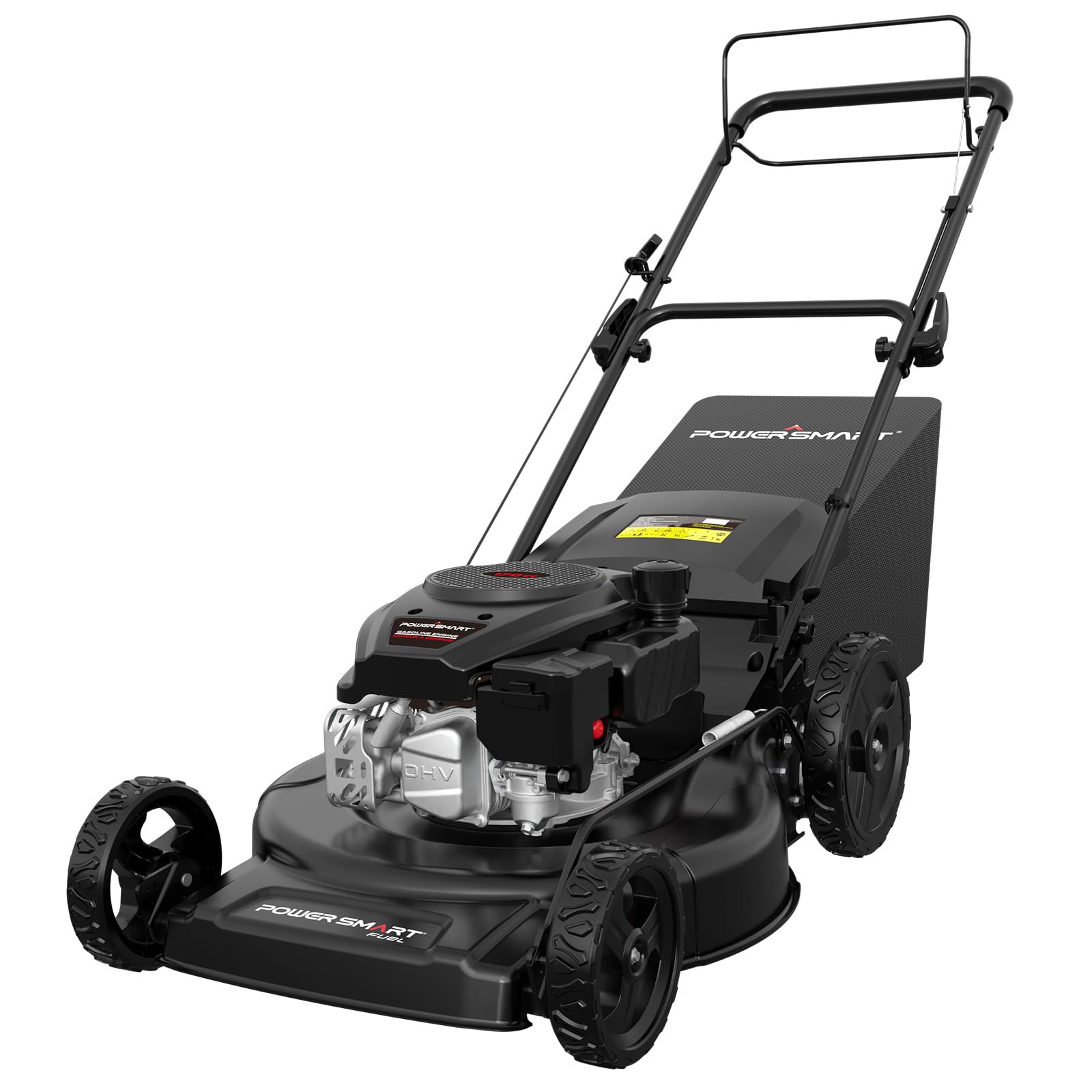
The PowerSmart DB8622S is the most budget-friendly entry in this lineup, but it includes rear-wheel drive — a rarity at this price point. The 170cc four-cycle OHV engine features auto choke and a recoil starter and drives a 22-inch all-steel deck with a 60-liter grass bag. The 6-level rear wheel height adjustment ranges from approximately 1.5 to 3 inches.
Assembly takes around 10 minutes, and owners report the mower starts on the first or second pull. The RWD system provides reasonable traction on mild slopes — better than any FWD mower at a similar price. The lightweight 68-pound construction makes it easy to maneuver and store, and the 3-in-1 mulching, bagging, and side discharge covers standard mowing needs for small to medium suburban lawns.
Durability is the primary concern. Several owners report that the rubber rear skirt and mulching chute become flimsy after a few uses, and replacement parts from the seller are not available. Some hardware (nuts and bolts on the handle) tends to loosen during operation. For a homeowner who needs a functional RWD self-propelled mower for a small, flat lot and accepts that it may not last as long as premium models, the PowerSmart is a functional choice that delivers core performance at a low entry cost.
What works
- RWD at budget-friendly price point
- Lightweight at 68 lbs
- Quick assembly and easy first-pull start
- 60L grass bag capacity for its class
What doesn’t
- Rubber skirt and chute are not durable
- Replacement parts unavailable from seller
- Handle hardware loosens during use
Hardware & Specs Guide
Engine Displacement and Horsepower
Gas walk-behind mowers in this guide use engines from 170cc to 201cc. A 170cc engine typically delivers 3.5 to 4.0 HP, sufficient for lawns up to half an acre with moderate grass density. The jump to 201cc adds roughly 1 HP and significantly more torque — important for damp, thick grass and continuous operation on larger properties. The 201cc units (YARDMAX YG4761, SENIX G-H-FIVE) also include features like electric start or CVT transmissions that reduce operator effort.
Cutting Deck Width and Material
Deck width directly impacts mowing speed. A 21-inch deck works efficiently for yards under a quarter acre, while 22 and 24-inch decks reduce passes needed on larger lots. Seamless steel decks (YARDMAX YG4761) resist vibration and corrosion better than stamped steel, while the Honda uses a reinforced plastic deck that resists rust entirely. Blade technology, such as Honda’s twin-blade MicroCut or the 45–50 HRC manganese steel blades on the SENIX G-H-FIVE, determines cut fineness and edge retention.
Battery Voltage and Amp-Hour Ratings
Battery-powered models use 48V (Greenworks) or 56V (EGO, Milwaukee) platforms. The voltage determines the motor’s torque ceiling, while amp-hour (Ah) rating determines runtime. A 6.0Ah battery at 56V stores roughly 336 watt-hours — enough for 35–50 minutes of light to moderate mowing. The Honda uses a 12Ah battery but at a lower system voltage, delivering similar usable energy. Higher Ah batteries add weight; the Honda’s 12Ah pack contributes to its overall heft.
Self-Propelled Drive Systems
Rear-wheel drive (RWD) is preferred for slopes because weight transfers to the rear wheels under load, improving traction. Front-wheel drive (FWD) works better on flat ground but struggles on inclines — especially on wet grass. Continuously variable transmissions (CVT) allow smooth speed transitions between multiple set points, while single-speed drives offer simplicity and lighter weight. The YARDMAX YG4761 uses a 6-speed CVT on a RWD chassis, representing the most capable combination of speed control and traction in this guide.
FAQ
What engine displacement do I need for a hilly yard?
Can a battery walk-behind mower really replace a gas model?
How important is a CVT transmission on a walk-behind mower?
What deck material lasts longest?
Final Thoughts: The Verdict
For most gardeners, the rated walk behind mowers winner is the YARDMAX YG4761 because its 24-inch deck, 201cc engine, CVT RWD, and electric start combine to offer the best speed, traction, and cut quality for larger properties. If you want zero-emission operation with gas-matching torque, grab the EGO POWER+ LM2114SP. And for the most refined mulching experience from a battery platform, nothing beats the Honda HRX-BE.