
Nothing ruins the elegance of a rose garden faster than a cluster of aphids sucking the life out of new buds and tender stems. The right spray stops the infestation before leaf curl sets in, but with so many formulas — neem oils, systemics, and fungicide combos — it’s easy to pick a product that either burns the petals or fails to kill the pests. This guide compares seven proven contenders based on their active ingredients, residual protection, and ease of use, so your roses stay pristine without wasting time on ineffective washes.
I’m Rikta — the co-founder and writer behind Lawn Gear Lab. I’ve dug through the spec sheets, studied the horticultural data on neem oil concentrations and systemic acephate persistence, and analyzed hundreds of verified owner experiences to rank the most reliable aphid sprays for roses on the market today.
After cross-referencing active ingredient strength, sprayer design, rain-fastness, safety for pollinators, and overall value across multiple seasons of rose care, I’ve narrowed the crowded shelf down to the aphid spray for roses that delivers real results without damaging your prized blooms.
How To Choose The Best Aphid Spray For Roses
Picking the wrong spray can mean wasted money, burned leaves, or weak pest suppression that lets aphids rebuild within days. Focus on three critical factors that determine whether a product actually protects your roses before you commit to a purchase.
Active Ingredient & Mode of Action
Neem oil works by smothering aphids and disrupting their feeding cycle, but the concentration matters. Ready-to-use formulas typically contain around 0.9 percent clarified hydrophobic neem oil — effective for light infestations and as a preventative. Concentrates that hit 70 percent neem oil require dilution but deliver a far more potent punch against established colonies. Systemic options containing acephate move through the plant’s vascular system, protecting new growth for weeks, but they cannot be used on edible crops and should never be applied during bloom to protect pollinators.
Residual Protection & Rain Resistance
Contact sprays that dry on the surface offer protection only until the next rain or irrigation event washes them off. Systemic formulas bond inside the plant tissue, so rain cannot dilute their effect — a critical advantage for gardeners in humid climates or during unpredictable spring showers. If you see Ortho Rose & Flower Disease Control Concentrate on the shelf, its systemic action keeps working for up to four weeks per application, making it ideal for growers who cannot re-spray weekly.
Application Format — Concentrate vs. Ready-to-Use
Ready-to-use trigger sprayers eliminate guesswork and are perfect for small rose beds or container roses. Concentrates require a separate sprayer, measuring, and careful mixing with water and a mild soap as an emulsifier, but they stretch further per dollar and allow you to tailor the dilution strength to the infestation level. For a single bush or a handful of patio roses, a ready-to-use bottle saves time; for a large garden with dozens of hybrid teas, a concentrate is the only economical path.
Quick Comparison
On smaller screens, swipe sideways to see the full table.
| Model | Category | Best For | Key Spec | Amazon |
|---|---|---|---|---|
| Monterey 70% Neem Oil | Concentrate | Heavy aphid pressure | 70% clarified hydrophobic neem oil | Amazon |
| Ortho Rose & Flower Disease Control | Systemic Concentrate | Disease + insect combo | Systemic action, 4-week control | Amazon |
| Monterey Neem Oil RTU | Ready-to-Use | Quick knockdown on aphids | 32 oz, no mixing needed | Amazon |
| Bonide Systemic Insect Control | Systemic Concentrate | Thrips and spider mites | Acephate, makes 16 gallons | Amazon |
| Garden Safe Fungicide3 | Ready-to-Use | Large area coverage | 1 gallon, neem oil extract | Amazon |
| Botanical Tradesman Neem Oil | Concentrate Kit | Value concentrate refills | Makes 320 fl oz spray | Amazon |
| Natria Neem Oil Spray | Ready-to-Use | Light infestations | 24 oz, 0.9% neem oil | Amazon |
In‑Depth Reviews
1. Monterey 70% Neem Oil Fungicide/Insecticide/Miticide
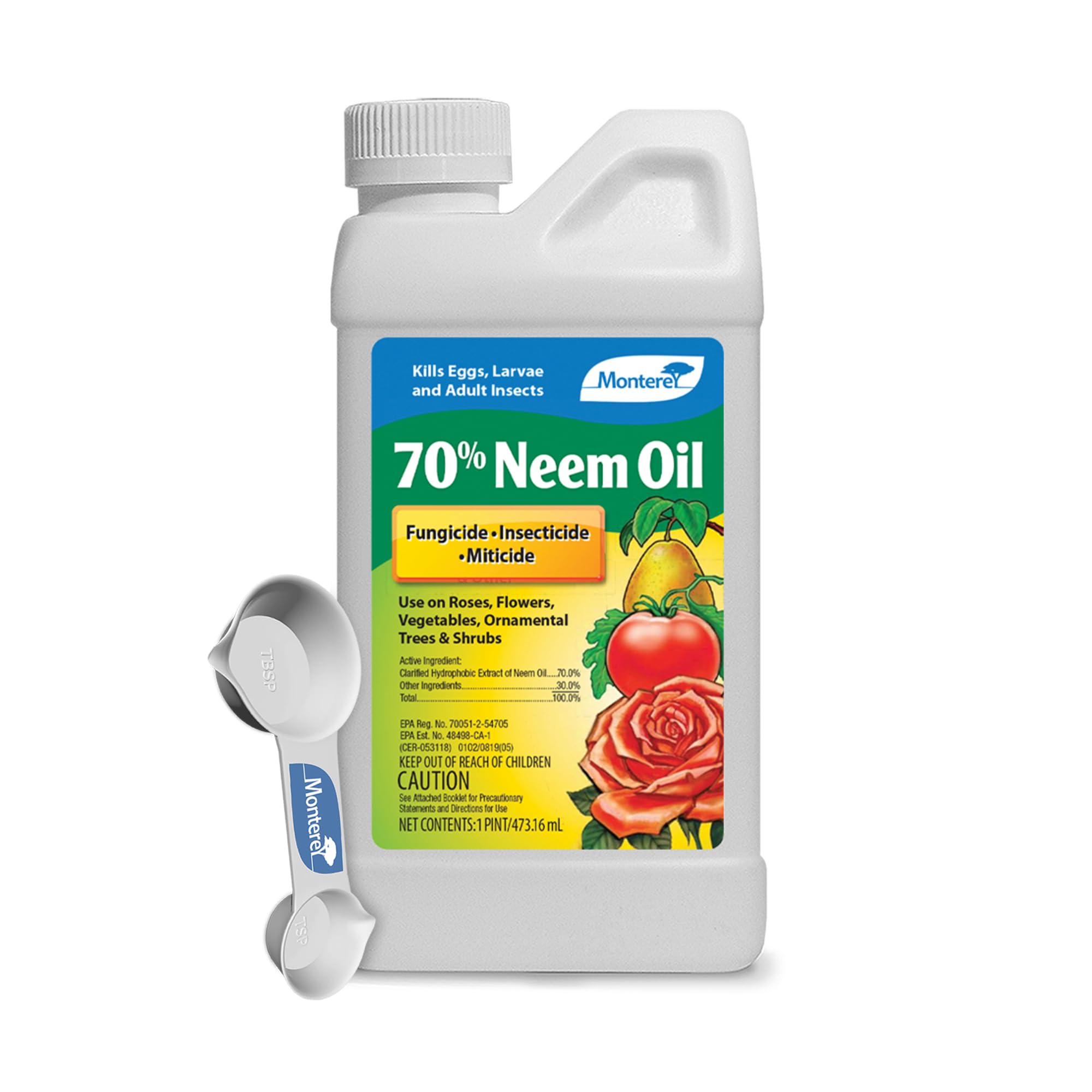
At 70 percent clarified hydrophobic neem oil, this concentrate is the strongest neem-based formula you can buy without a commercial license. A single pint dilutes into a significant volume of finished spray, and the included measuring spoon makes it easy to hit the right ratio for roses — typically 5 milliliters per liter of warm water with a few drops of mild liquid soap as an emulsifier. Gardeners in humid climates report that weekly applications stopped powdery mildew and black spot while simultaneously clearing aphids and spider mites from hybrid tea roses.
The formula is OMRI-listed for organic gardening, meaning it passes USDA National Organic Program standards without synthetic additives. Users mention that overspray on certain sensitive plants like peppers or oregano caused minor leaf burn, so spot-testing on a single rose cane before a full application is wise. The neem odor is strong during application but fades within a day or two once the spray dries on leaf surfaces.
Its triple-action label — fungicide, insecticide, and miticide — means one bottle handles the three most common threats to rose health without needing separate products for each. The only real downside is that the thick oil requires warm water and thorough shaking to mix properly; cold water causes the oil to clump and spray unevenly.
What works
- Highest neem oil concentration available for home use
- OMRI organic certification for edible gardens
- Controls aphids, mildew, and mites in one application
What doesn’t
- Thick oil hard to mix in cold water without clumping
- Can burn sensitive plant foliage if oversprayed
2. Ortho Rose & Flower Disease Control Concentrate

Ortho takes a completely different approach from the neem oil crowd. Instead of smothering pests on contact, this concentrate uses a systemic active ingredient that the plant absorbs through its roots and foliage. Once the spray dries, rain cannot wash it off — the protection lives inside the vascular tissue for up to four weeks. This rain-fastness is a game-changer for rose growers in the Pacific Northwest or the Southeast, where a single storm can obliterate a neem oil application that was applied the day before.
The label targets black spot, rust, and powdery mildew primarily, but the systemic action also suppresses aphid populations because the compound renders the plant tissue unpalatable to sucking insects. Users report seeing results within 24 hours, with yellowed leaves gradually returning to green after repeated applications. The 16-ounce concentrate makes a substantial volume of finished spray — enough to cover a large rose bed several times over a growing season.
One major caveat: this product is not labeled for use on vegetables or fruit plants, and it should never be applied when bees are actively foraging on open blooms. The systemic compound persists inside the plant, so treated roses should not be used for cut flowers that will be handled near food. The packaging also drew complaints about leaking during shipping, so inspecting the bottle upon arrival is recommended.
What works
- Rain cannot wash off the systemic protection
- Controls black spot and aphids simultaneously
- Single application lasts up to four weeks
What doesn’t
- Not safe for edible plants or during bloom
- Shipping packaging often results in leaks
3. Monterey Neem Oil RTU – 32 oz
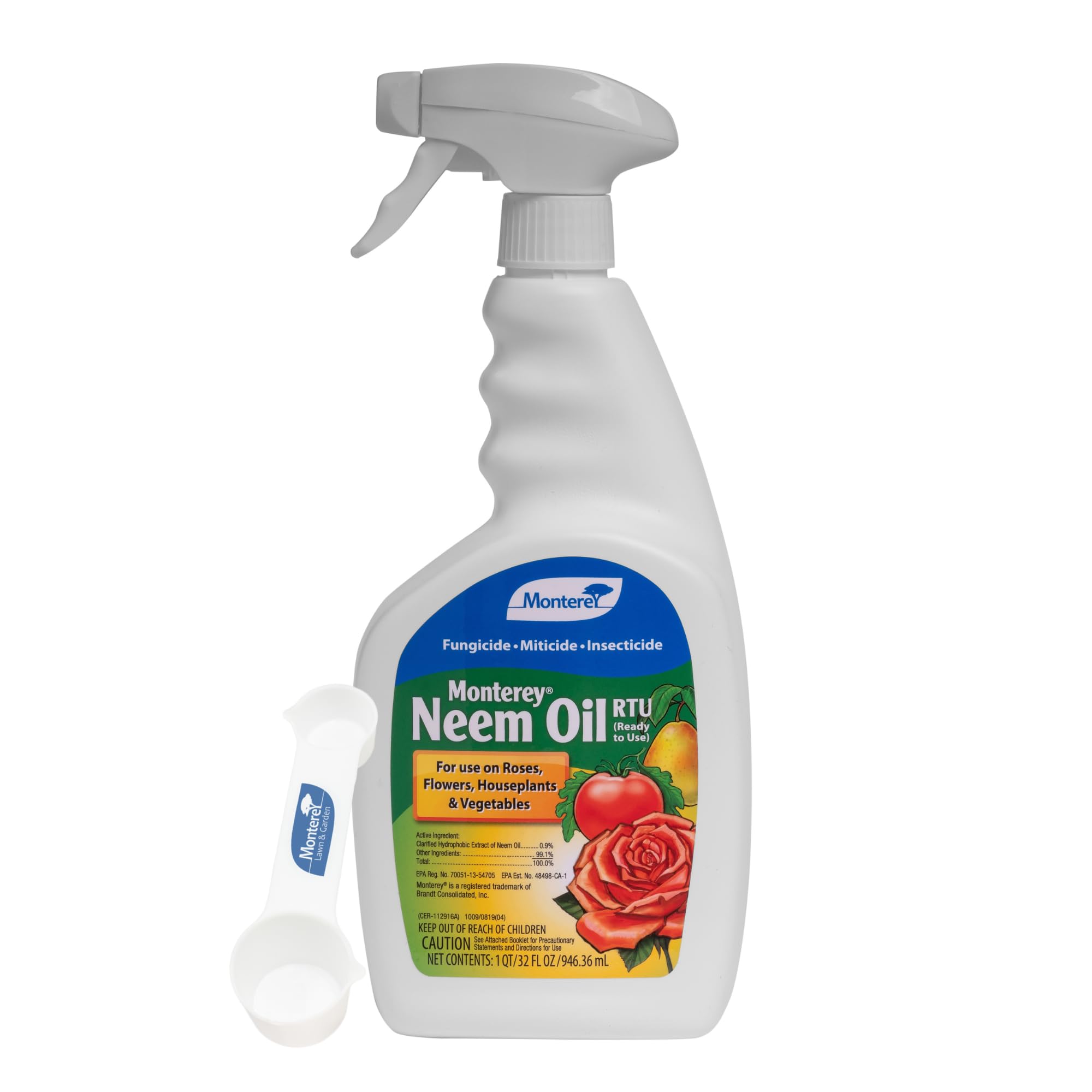
Monterey’s ready-to-use formulation eliminates every barrier to entry for new rose growers. No measuring, no mixing, no separate sprayer — just shake the 32-ounce bottle and pull the trigger. The neem oil concentration is lower than the 70 percent concentrate of product one, but it’s dialed in at a level that kills aphids on contact while minimizing the risk of leaf burn on tender rose foliage. Gardeners who tried it on container roses and small raised beds consistently mention the convenience of grabbing the bottle at the first sign of aphid clusters on new buds.
The triple-action label covers black spot, powdery mildew, rust, spider mites, and aphids in a single spray, making it a versatile arsenal for anyone who does not want to stock multiple bottles. The packaging includes a garden measure spoon as a bonus, which is a nice touch even though the RTU formula technically doesn’t need it. The smell, as with all neem products, is pungent immediately after spraying but dissipates within 24 to 48 hours.
Where this product loses points is the sprayer design. Several users reported that the trigger nozzle delivered an uneven stream and that the 4-inch pickup tube made it impossible to spray the bottom of the bottle without tilting the container awkwardly. For a premium RTU product, the application hardware should feel more refined. That said, the liquid itself is effective, and the broad disease coverage makes it a solid choice for rose enthusiasts who want simplicity above all else.
What works
- Zero mixing required, grab-and-spray convenience
- Broad-spectrum control of aphids, mites, and fungal diseases
- Safe to use on vegetables up to harvest day
What doesn’t
- Sprayer nozzle delivers inconsistent coverage
- Strong neem odor lingers for a day or two
4. Bonide Systemic Insect Control, 16 oz Concentrate

Bonide takes the systemic approach with acephate as the active ingredient, making it one of the most aggressive options for rose growers battling stubborn pests like thrips, scale, and two-spotted spider mites that ignore neem oil. The 16-ounce concentrate mixes into 16 gallons of finished spray, which is an enormous volume for the price. A single bottle can cover a substantial rose garden through an entire season of 7- to 10-day spray intervals.
Users who applied it to arborvitae, canna lilies, and roses note that the effect is nearly immediate — aphid clusters collapse within hours of contact, and the systemic uptake protects new foliage that unfurls after the spray has dried. The product is labeled for use on ornamental plants only, so it cannot touch vegetables or fruit. The smell is the most frequent complaint: owners describe it as “dumpster-like” or reminiscent of actual animal waste, and the odor is detectable even after the spray dries, especially in enclosed garden areas.
The bottle includes a measuring cup for easy dilution, and the liquid mixes readily with water compared to the thicker neem oil concentrates. The main drawback beyond the smell is that acephate is a broad-spectrum insecticide that will kill beneficial insects — including bees — if sprayed on open blooms. Application timing is critical: spray at dusk when pollinators are inactive and avoid any blossom that is currently open.
What works
- Systemic protection reaches new growth as it emerges
- One bottle makes 16 gallons of finished spray
- Works on thrips, scale, and mites that resist neem oil
What doesn’t
- Extremely strong, unpleasant odor during and after spraying
- Kills beneficial insects if applied during bloom
5. Garden Safe Brand Fungicide3, 1 Gallon
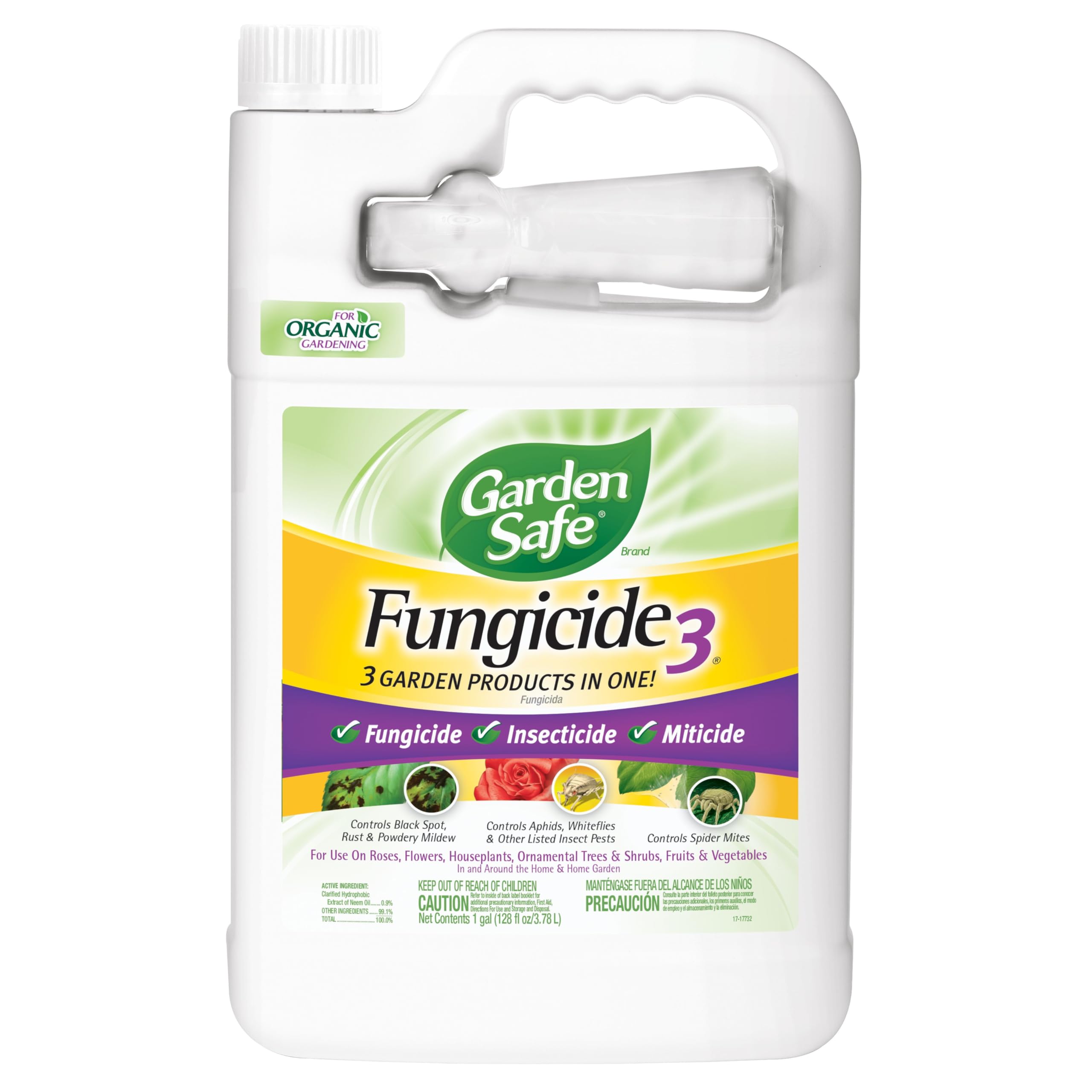
Garden Safe Fungicide3 delivers the largest ready-to-use volume in this roundup — a full gallon of premixed neem oil extract spray that covers expansive rose beds without requiring any dilution or separate sprayer. The active ingredient is clarified hydrophobic extract of neem oil at a typical RTU concentration, and the label covers all three categories: fungicide, insecticide, and miticide. Users report excellent results against black spot on roses, powdery mildew on hibiscus, and aphid infestations on tomatoes and ornamentals alike.
The gallon jug is fitted with a sprayer that attaches directly to the container, eliminating the need to pour the liquid into a separate tool. That sprayer design, however, drew sharp criticism from multiple reviewers. The pickup tube is only about four inches long, which means the sprayer stops working when the liquid level drops below that depth. Owners had to pour the remaining product into another bottle or tip the gallon jug at an awkward angle to finish the last quarter of the supply. For a product that advertises convenience, that limitation is frustrating.
The formula itself is EPA-registered and suitable for organic gardening, and the sheer volume makes it ideal for rose growers with large gardens or multiple planting beds. A few users noted that applying the full recommended dose during peak sun hours caused minor leaf burn on sensitive plants, so spraying in the early morning or late evening is recommended. At this price per ounce, it is one of the most economical RTU options available.
What works
- Full gallon of ready-to-use product covers large gardens
- Triple action against aphids, black spot, and spider mites
- Attached sprayer eliminates need for separate equipment
What doesn’t
- Short pickup tube leaves liquid unusable at bottom
- Can burn foliage if applied during hot midday sun
6. Botanical Tradesman Neem Oil Spray Concentrate Kit

Botanical Tradesman packages a 3.4-ounce bottle of 100 percent cold-pressed neem oil concentrate alongside a 16-ounce trigger sprayer to create a refill system that stretches the concentrate into roughly 338 fluid ounces of finished spray — about 20 refills. The kit is designed for gardeners who want the economy of a concentrate without having to buy a separate sprayer. The cold-pressed extraction retains more of the natural azadirachtin compounds that repel and kill aphids compared to heat-processed neem oils.
The oil is extremely thick straight out of the bottle, and multiple users note that it does not mix easily with room-temperature water. The recommended trick is to place the sealed concentrate bottle in a container of hot water for a few minutes before measuring, then combine with warm water and a few drops of mild liquid soap in the provided sprayer. Once properly emulsified, the spray coats rose foliage evenly and dries to a protective film that smothers aphids on contact.
Gardeners who followed the four-week treatment cycle reported reducing fungus gnat populations from eight per plant down to one or two, and whitefly numbers dropped noticeably on herb gardens. The refillable spray bottle has an adjustable nozzle that switches from a fine mist to a targeted stream, which helps direct the spray to the undersides of rose leaves where aphids hide. The main downside is that the concentrate is so thick that measuring small doses accurately is tricky, and the lack of an included measure spoon means you need your own dropper or syringe.
What works
- 100 percent cold-pressed neem, no added fillers
- Refill system yields 20 spray bottles from one concentrate
- Adjustable nozzle for both mist and stream application
What doesn’t
- Oil is very thick and difficult to mix without warm water
- No measuring spoon included for precise dilution
7. Natria Neem Oil Spray for Gardening – 24 oz
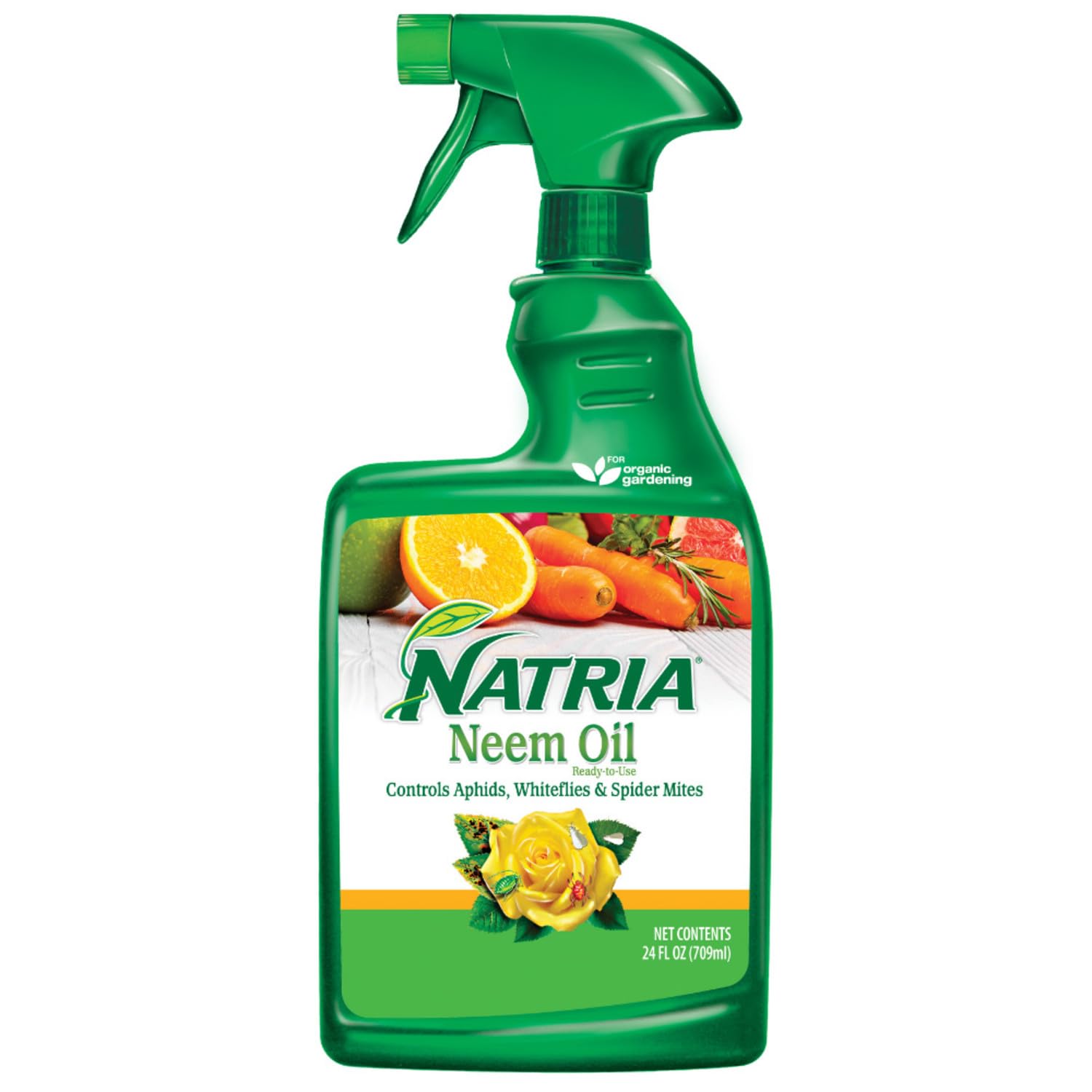
Natria’s entry-level neem oil spray is the most accessible option for rose growers who want a low-commitment introduction to organic pest control. The 24-ounce ready-to-use bottle contains 0.9 percent clarified hydrophobic extract of neem oil — the same active ingredient found in pricier premium brands, just at a standard RTU dilution. The trigger sprayer requires no assembly or mixing, making it a solid choice for gardeners who spot a few aphids on their Knock Out roses and need an immediate solution.
Owner feedback highlights its effectiveness against fruit flies, whiteflies, and light aphid populations on houseplants and outdoor ornamentals. Several reviewers attached photos of their thriving plants after regular applications, noting that the spray did not cause leaf burn even on sensitive new growth. The neem odor, while present, is milder than some concentrates and dissipates within a day. The 24-ounce size is compact enough to store in a shed shelf or garden caddy without taking up much space.
On the downside, the low neem oil concentration means it struggles against heavy aphid infestations. Gardeners dealing with curled leaves and dense clusters of aphids found they needed to reapply every three to four days to keep populations under control, whereas a higher-concentration product would knock them down in one or two applications. The sprayer also has a narrow spray pattern that makes it tedious to cover the undersides of multiple large rose bushes. For small gardens with occasional pest pressure, this is a fine budget-friendly entry point.
What works
- Lowest cost entry point for trying neem oil on roses
- Mild enough to avoid leaf burn on tender new growth
- Trigger sprayer is grab-and-go simple
What doesn’t
- Low neem concentration requires frequent reapplication
- Narrow spray pattern makes full coverage tedious
Hardware & Specs Guide
Neem Oil Concentration
The percentage of clarified hydrophobic extract of neem oil in the final spray determines how aggressively the product kills aphids and suppresses fungal spores. Ready-to-use formulas hover around 0.9 percent — safe for frequent application but less potent against established infestations. Concentrates like Monterey’s 70 percent formulation give you the flexibility to mix a stronger solution for heavy pressure or a milder mix for maintenance. Higher concentrations also require careful emulsification with warm water and a soap surfactant to prevent the oil from separating and burning leaf surfaces.
Systemic vs. Contact Mode
Contact sprays such as neem oil kill aphids only where the droplets land, so thorough coverage of both leaf surfaces and stems is essential. Systemic formulas containing acephate (as in Bonide and Ortho) are absorbed into the plant’s vascular tissue and translocated to new growth, providing residual protection that rain cannot wash off. The trade-off: systemics cannot be used on edible plants and should never be applied during bloom hours when bees are active. Contact sprays are safer for beneficial insects but require more frequent reapplication, especially after rain.
FAQ
Can I use neem oil spray on my roses every day until the aphids are gone?
Will the Monterey 70% neem oil concentrate kill ladybugs and other beneficial insects?
How long should I wait after applying a systemic acephate spray to cut roses for a vase?
Final Thoughts: The Verdict
For most gardeners, the aphid spray for roses winner is the Monterey 70% Neem Oil because it combines the highest available neem concentration with OMRI organic certification, giving you the flexibility to mix custom strengths for both prevention and heavy infestations. If you need rain-proof protection that lasts a full month, grab the Ortho Rose & Flower Disease Control Concentrate. And for a zero-mess, ready-to-use bottle that you can grab at the first sign of aphids, the Monterey Neem Oil RTU gets the job done without measuring cups or mixing.