
Potted plants are prisoners of their container — every drop of water and every nutrient must come from you. The wrong fertilizer leads to salt burn, weak stems, or lush leaves with zero flowers. Getting the NPK ratio right for your specific plant type is the difference between a thriving indoor jungle and a shelf of yellowing regrets.
I’m Rikta — the co-founder and writer behind Lawn Gear Lab. I’ve spent hundreds of hours comparing fertilizer formulations, studying how different NPK ratios and release mechanisms affect potted plant health, and analyzing owner feedback to separate the formulas that actually deliver balanced growth from those that just look good on the label.
The challenge isn’t finding a plant food — it’s choosing the right one for your container’s limited soil volume. This guide breaks down the key specs behind the best fertilizer for potted plants, covering organic versus synthetic release, liquid versus granular application, and what NPK actually means for your pots.
How To Choose The Best Fertilizer For Potted Plants
Container soil lacks the microbial life and buffer capacity of open ground, so every nutrient addition hits the root zone directly. Three factors dominate the choice: the NPK ratio, the release mechanism, and whether organic or synthetic suits your growing style.
NPK Ratio: Matching Numbers to Plant Goals
The three numbers on the label (Nitrogen-Phosphorus-Potassium) tell you what the fertilizer prioritizes. Higher first numbers (like 6-2-4) drive leafy green growth — ideal for pothos, fiddle leaf figs, and snake plants. Higher middle numbers (like 4-4-4) encourage root development and flowering. For fruiting plants like citrus, look for formulas with elevated potassium and added micronutrients like magnesium and calcium. A general-purpose 4-4-4 or 6-2-4 covers most potted houseplants, but specialist formulas exist for citrus, succulents, and bloomers.
Release Mechanism: Liquid vs Granular vs Tablet
Liquid fertilizers act fast — you see results within days, but you must reapply every 1-4 weeks. Granular options like Jobe’s Organics break down slowly, feeding for weeks with a single application, but require soil incorporation and can smell strong indoors. Tablets (like Instant Biologics) dissolve in your watering can, combining the convenience of slow-release with the cleanliness of liquid — ideal for self-watering containers where you cannot top-dress granules.
Organic vs Synthetic: Soil Health vs Precision
Organic formulas (Dr. Earth, Espoma, worm castings) feed the soil microbes first, building long-term soil structure and reducing the risk of salt burn in pots. Synthetic concentrates (HiThrive, TPS Citrus) deliver exact NPK numbers quickly but require careful dilution to avoid overloading the small container volume. For potted plants that you repot annually, organic blends offer a gentler, more forgiving feeding curve.
Quick Comparison
On smaller screens, swipe sideways to see the full table.
| Model | Category | Best For | Key Spec | Amazon |
|---|---|---|---|---|
| HiThrive 6-2-4 | Liquid | All-purpose indoor foliage | 6-2-4 NPK, 16 oz makes 85+ gal | Amazon |
| Jobe’s Organics 4-4-4 | Granular | Container vegetables & herbs | 4-4-4 NPK, 4 lb bag | Amazon |
| TPS Nutrients Citrus | Liquid | Potted citrus & fruiting trees | 8 oz, 2 tbsp per gallon | Amazon |
| Dr. Earth 70857 | Powder | Organic all-purpose feeding | 1 lb, OMRI-certified organic | Amazon |
| Back to the Roots | Granular | No-burn soil amendment | 5 lb bag, pure worm castings | Amazon |
| Instant Biologics | Tablet | Mess-free houseplant feeding | 4 tablets, 4-3-6 NPK | Amazon |
| Espoma INPF8 2-Pack | Liquid | Organic indoor plants | 8 oz each, for small & large pots | Amazon |
In‑Depth Reviews
1. HiThrive 16oz Houseplant Fertilizer 6-2-4

The HiThrive 6-2-4 hits the sweet spot for potted foliage plants. That nitrogen-heavy ratio feeds leafy growth in pothos, monstera, and fiddle leaf figs while the phosphorus and potassium support root strength and stress resistance without tipping into bloom-mode numbers. The 2X concentrated formula means a single 16 oz bottle stretches to over 85 gallons of feed — among the best cost-per-gallon values in liquid form.
Users report visible greening within a week, and the 1 teaspoon per gallon mixing ratio is easy to remember. The liquid absorbs quickly in soilless mixes like coco coir and perlite blends, and it works as a foliar spray for water-propagated cuttings at half strength. Multiple owners noted that spacing applications every other watering prevents nutrient buildup, which is critical in containers where salt cannot leach away.
The bottle is compact and the cap doubles as a measuring cup — no extra equipment needed. Some users with very sensitive ferns or calatheas found the concentration strength required careful dilution to avoid leaf tip burn. For the broadest compatibility across common houseplants and the best concentrated value, this earns the top spot.
What works
- Exceptional 85+ gallon coverage from one bottle
- Fast-acting liquid shows results within a week
- 6-2-4 ratio ideal for most foliage houseplants
What doesn’t
- Requires attention to dilution for sensitive species
- Not formulated for flowering or fruiting plants
2. Jobe’s Organics Granular All Purpose 4-4-4

Jobe’s Organics 4-4-4 is a balanced granular option that shines in container vegetables and herbs where equal macronutrient ratios support both leaf and root development. The 4 lb bag covers multiple seasons of top-dressing, and the organic formula — containing billions of archaea microorganisms — works to break down organic matter in the pot, mimicking the soil food web that containers usually lack.
Multiple owners reported reviving pale, slow-growing seedlings within a week of application. The slow-release nature means you apply twice per season, which is far less labor than weekly liquid feeds. Users growing tomatoes, peppers, and herbs in containers noted plentiful harvests with just one application at planting and one mid-season top-dress. The resealable bag keeps the granules fresh between uses.
The strong organic smell is the main trade-off. Several owners described it as “fragrant poop pellets” and recommend mixing it into the soil rather than leaving it on the surface, especially indoors where the smell lingers. Dogs may find the bag attractive. This is best suited for potting sheds, greenhouses, or outdoor container gardens rather than living room display pots.
What works
- Slow-release means only 2 applications per season
- Organic formula improves soil microbial activity
- Balanced 4-4-4 works for vegetables, herbs, and flowers
What doesn’t
- Strong odor — not ideal for indoor living spaces
- Granules need to be worked into the soil surface
3. TPS Nutrients Citrus Fertilizer 8 oz
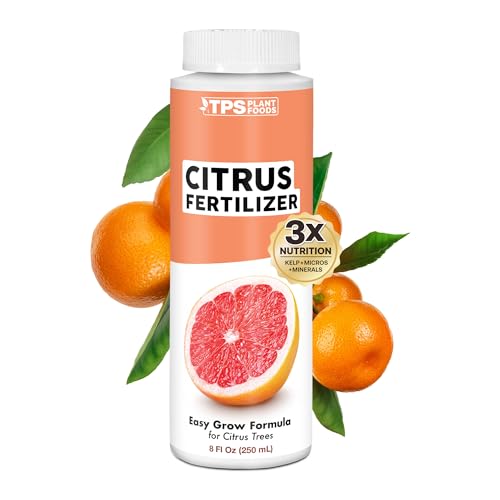
Potted citrus trees have unique nutrient demands — they need elevated potassium for fruit development and supplemental magnesium, calcium, and iron to prevent leaf yellowing in the confined root zone. TPS Nutrients delivers exactly that with a liquid formula designed for oranges, lemons, limes, and other fruiting trees grown in containers. The fast-absorbing liquid is gentle enough for weekly use during the growing season.
Users with potted lime trees reported that yellowing leaves returned to deep green within two weeks, and existing limes grew noticeably larger alongside new leaf pushes. The 2 tablespoon per gallon ratio yields 32 gallons per bottle, which covers multiple trees through a growing season. The formula also works for avocados and nut trees, making it versatile for a mixed-container orchard on a patio or balcony.
The nitrogen content is lower than many all-purpose options, which is appropriate for citrus — too much nitrogen pushes leaves at the expense of fruit. However, one experienced grower noted that if you want aggressive vegetative growth alongside fruiting, you may need to supplement with a high-nitrogen feed every few weeks. The 8 oz bottle is compact but requires more frequent repurchasing for large collections.
What works
- Includes crucial micronutrients (Mg, Ca, Fe) for citrus
- Fast results — yellowing leaves recover in 2 weeks
- Gentle enough for potted trees with weekly use
What doesn’t
- Lower nitrogen may need supplementing for heavy leaf growth
- 8 oz bottle covers fewer plants than concentrated options
4. Dr. Earth 70857 Premium Gold All Purpose 1 lb

Dr. Earth’s Premium Gold is a hand-crafted organic powder that blends fish bone meal, kelp meal, feather meal, and alfalfa meal into a complete soil food. The OMRI certification guarantees no GMOs, chicken manure, or sewage sludge — important for edibles grown in pots where the entire root zone depends on the quality of what you add. The powder form allows precise measuring for small containers.
Users consistently report that one tablespoon revives weak plants quickly without burning roots, even over a decade of repeated use. A controlled test on flower beds showed that plants fed with Dr. Earth grew bigger and bloomed more than untreated plants within weeks. Owners of succulents, roses, philodendrons, and staghorn ferns all noted strong positive responses. The beneficial microbes and mycorrhizae in the blend improve soil structure over time, which is rare in a powder fertilizer.
The 1 lb bag is compact, and because it’s a dry powder, it stores indefinitely without odor or clumping. The main drawback is the slow initial release compared to liquid concentrates — you need to apply it and water it in, then wait several days for biological breakdown to begin feeding. It also costs more per application than bulk granular options, though the quality justifies the premium for serious organic growers.
What works
- OMRI-certified organic with no synthetic fillers
- Safe for all growth stages — never burns roots
- Mycorrhizae and microbes improve container soil health
What doesn’t
- Slower initial results compared to liquid feeds
- Higher per-application cost than bulk granular options
5. Instant Biologics Self-Dissolving Tablets 4-Pack
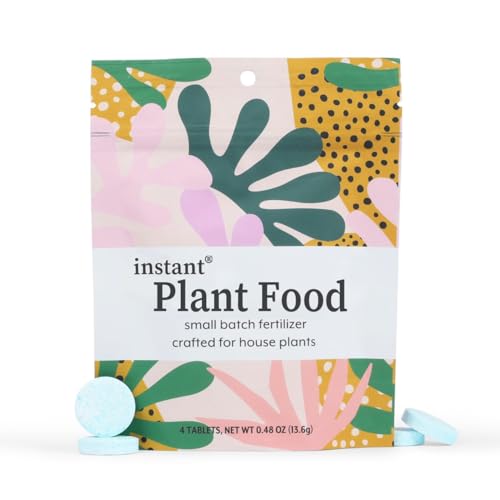
The Instant Biologics tablet eliminates the two biggest friction points in potted plant feeding: measuring and mess. Drop one pre-proportioned tablet into a watering can, let it self-dissolve, and water — that’s it. The 4-3-6 NPK ratio shifts emphasis toward potassium, which supports flowering and stress tolerance in blooming houseplants, making this a smart choice for African violets, peace lilies, and anthuriums.
Users love the clarity of the system — no capfuls, no teaspoons, no panic about over-diluting. One tablet feeds a large houseplant or several small ones for up to 3 months at monthly intervals. The formula uses naturally derived minerals and a live fermentation process, and the company is certified vegan and cruelty-free. Beginner plant parents reported that the simple process kept them consistent with feeding schedules for the first time.
The 4-pack covers a small collection — you will need to buy more if you have more than 4-8 plants. At a higher cost per feeding than bulk liquids, the premium is for convenience rather than raw value. Some experienced growers noted that the tablet dissolves best in warm water and may leave residue in cold water. For anyone who hates measuring and wants a set-and-forget solution, this is the most user-friendly option here.
What works
- Zero measuring or mess — just drop and water
- 4-3-6 ratio supports flowering houseplants
- Each tablet feeds for up to 3 months
What doesn’t
- Higher cost per feeding than liquid concentrates
- Only 4 tablets per pack — limited coverage
6. Back to the Roots Organic Worm Castings 5 lb

Worm castings are the gentlest, most forgiving fertilizer for potted plants — they cannot burn roots even if over-applied. Back to the Roots delivers 5 lb of pure USA vermicompost that works as both a fertilizer and a soil conditioner. The beneficial microbes in the castings protect seedlings from harmful pathogens and improve the water-holding capacity of chunky potting mixes like coco chips and perlite.
Users consistently describe these castings as “rich” and “clean” with no offensive odor, unlike some manure-based organics. The slow-release nature means you mix them into the soil at potting time or top-dress established plants in spring, and they feed for months. Milkweed growers reported they are safe for monarch caterpillars, and indoor plant owners noted healthier leaves and stronger root systems without the chemical bloom-and-bust cycle of synthetic feeds.
The 5 lb bag is heavy — you are paying for water weight in the castings, which can feel expensive compared to concentrated liquids. It also retains moisture, so if your potting mix already holds water, you need to adjust your watering frequency to avoid soggy soil. As a sole fertilizer, worm castings provide broad nutrition but lower N-P-K numbers than concentrated blends, so heavy feeders like tomatoes may need supplemental liquid feeding during fruiting.
What works
- Impossible to burn roots — safe for all plants
- Adds beneficial microbes and improves soil structure
- Odor-free and clean for indoor use
What doesn’t
- Lower nutrient density than concentrated fertilizers
- 5 lb bag is heavy and retains moisture in pots
7. Espoma Organic Indoor Plant Food 2-Pack

Espoma has a decades-long reputation in organic gardening, and their indoor plant food formulation reflects that expertise. The 8 oz bottle is concentrated — you apply ½ cap per quart of water every 2-4 weeks — and the organic nutrient profile is gentle enough for frequent use on sensitive indoor species. The 2-pack gives you 16 oz total, enough to feed a medium-sized plant collection for several months.
Users with 74 years of gardening experience called this the best indoor fertilizer they have ever used, noting immediate results in leaf color and new growth. The formula is specifically designed for fiddle leaf figs, monsteras, snake plants, pothos, and palms — the most common potted houseplants. It also works well for small plants in tiny pots where granular applications would be impractical. The manure-like odor is strong during mixing but dissipates quickly once watered in.
The “less is more” approach applies here — some users reported using a half cap per gallon (four times the recommended dilution) with excellent results, proving the formula is forgiving. The main downside is the smell during application, which can be off-putting in kitchen or living room settings. The bottle is small for the price, but the concentration means each bottle goes further than its volume suggests.
What works
- Proven organic formula from a trusted brand
- Safe around kids and pets when used as directed
- Gentle enough for use every watering on sensitive plants
What doesn’t
- Strong manure-like odor during mixing
- Small bottle volume relative to price
Hardware & Specs Guide
NPK Ratio
The three numbers (N-P-K) represent Nitrogen for leaf growth, Phosphorus for roots and blooms, and Potassium for overall health and stress resistance. For potted plants, a balanced 4-4-4 works universally, while 6-2-4 favors foliage and 4-3-6 supports flowering. Always check the ratio — using a high-nitrogen feed on flowering plants will produce leaves at the expense of blooms.
Liquid vs Granular vs Tablet
Liquids absorb instantly but require frequent reapplication. Granular organics break down slowly through microbial activity, feeding for weeks or months. Tablets offer the middle ground — pre-measured, mess-free, and ideal for self-watering containers. Your choice depends on how much hands-on time you want and whether your potting mix can hold granules without compacting.
Organic Certification
OMRI and USDA Organic labels certify that the fertilizer contains no synthetic chemicals, GMOs, or sewage sludge. This matters for potted edibles where the entire root zone is confined to the container. Organic fertilizers also build soil microbial life, which is especially beneficial in pots where natural soil biology is absent from the start.
Mixing Ratio & Coverage
Concentration determines how many gallons of feed one bottle makes. HiThrive makes 85+ gallons from 16 oz, while TPS Citrus makes 32 gallons from 8 oz. The more concentrated the product, the fewer bottles you need over a season, but the more precisely you must measure. For small collections, lower concentration options are often more convenient.
FAQ
How often should I fertilize potted plants compared to in-ground plants?
What does the NPK number mean for my fiddle leaf fig versus my citrus tree?
Can I over-fertilize a potted plant and how do I recognize the signs?
Final Thoughts: The Verdict
For most indoor gardeners, the best fertilizer for potted plants winner is the HiThrive 6-2-4 because its concentrated liquid formula delivers fast results, covers 85+ gallons from one bottle, and uses the ideal ratio for common foliage houseplants. If you want a granular, low-maintenance option for container vegetables, grab the Jobe’s Organics 4-4-4. And for a completely burn-proof, soil-building approach that works for every plant type, Back to the Roots Worm Castings is the safest long-term choice for your potted collection.