
Yellowing leaves and a sparse harvest are the twin frustrations of every citrus grower. The right nutrient blend reverses leaf chlorosis, boosts fragrant blossoms, and delivers a heavy crop of juicy, aromatic lemons from a single tree.
I’m Rikta — the co-founder and writer behind Lawn Gear Lab. Over many hours, I have studied the NPK ratios, micronutrient profiles, and slow-release mechanisms of the most popular citrus fertilizers, and cross-referenced those specs with hundreds of verified owner experiences to deliver this guide.
Whether you are tending a patio Meyer lemon or a mature orchard tree, this guide will help you select the best lemon tree fertilizer for a vibrant canopy and a season of abundant fruit.
How To Choose The Best Lemon Tree Fertilizer
A thriving lemon tree depends on a precise balance of macronutrients and micronutrients. Choosing the wrong formula can stunt fruit production, cause leaf burn, or lead to nutrient lockout. Below are the critical factors to evaluate when selecting a fertilizer.
NPK Ratio
The three-number ratio on the label—nitrogen (N), phosphorus (P), potassium (K)—is the foundation. Nitrogen supports leafy growth, phosphorus drives root development and flowering, and potassium improves fruit size and winter hardiness. A balanced ratio like 6-4-6 or 5-2-6 works well for most lemon trees, while a higher-nitrogen mix like 12-10-10 can power strong vegetative growth in established trees.
Micronutrient Profile
Lemon trees are heavy feeders of micronutrients. Magnesium is essential for chlorophyll production to keep leaves dark green. Zinc and iron prevent leaf yellowing and interveinal chlorosis. Boron helps with flower and fruit set. A fertilizer missing these elements often results in trees that look sickly even if the NPK numbers look right.
Release Mechanism
Granular slow-release fertilizers break down gradually over weeks, providing a steady nutrient supply with fewer applications. Liquid formulas are fast-absorbing and ideal for correcting immediate deficiencies but require more frequent dosing. Spikes offer set-it-and-forget-it convenience for container trees but deliver fixed amounts that cannot be adjusted mid-season.
Quick Comparison
On smaller screens, swipe sideways to see the full table.
| Model | Category | Best For | Key Spec | Amazon |
|---|---|---|---|---|
| Espoma Organic Citrus-tone | Granular | Organic citrus feeding | 5-2-6 NPK + 5% Calcium | Amazon |
| GARDENWISE Professional | Granular | Potted citrus recovery | 6-4-6 NPK | Amazon |
| TPS Nutrients Citrus | Liquid | Quick-deficiency correction | 32 oz liquid formula | Amazon |
| Jobe’s Organics Spikes | Spikes | Container tree simplicity | 3-5-5 time release | Amazon |
| Nelson NutriStar | Granular | Heavy vegetative growth | 12-10-10 high NPK | Amazon |
| Miracle-Gro Potting Mix | Potting Mix | Repotting container citrus | Fast-draining soil mix | Amazon |
| Farmer’s Secret Booster | Liquid | Sick tree revival | Super-concentrated 1 tsp/gal | Amazon |
In‑Depth Reviews
1. Espoma Organic Citrus-tone 5-2-6

Espoma has been the leader in natural organics since 1929, and the Citrus-tone formula reflects that heritage. The 5-2-6 NPK ratio is specifically calibrated for citrus, providing moderate nitrogen for leaf growth, low phosphorus to avoid root burn, and elevated potassium to support fruit development and winter hardiness. The addition of 5% calcium helps strengthen cell walls and improves fruit firmness, while the exclusive Bio-tone microbes accelerate nutrient breakdown in the soil for faster uptake.
The granular powder requires no mixing—just sprinkle around the drip line and water in. It is OMRI-listed for organic gardening, meaning it meets USDA standards for organic production. Users consistently report greener leaves within two weeks and a noticeable increase in flower set. The 4-pound bag covers multiple trees across several applications, making the per-feeding cost very competitive for an organic product.
The chief downside is odor. The natural ingredients give off a strong, manure-like smell that persists for about a week after application. This makes it unsuitable for indoor or patio use near seating areas unless you are comfortable with the scent. Despite the aroma, the performance is consistently excellent for both in-ground and potted citrus.
What works
- Excellent organic NPK balance with added calcium
- Bio-tone microbes improve soil biology
- Easy granular application, no mixing
What doesn’t
- Strong natural odor for the first week
- Not ideal for indoor or enclosed patio use
2. GARDENWISE Professional 6-4-6 Citrus Fertilizer
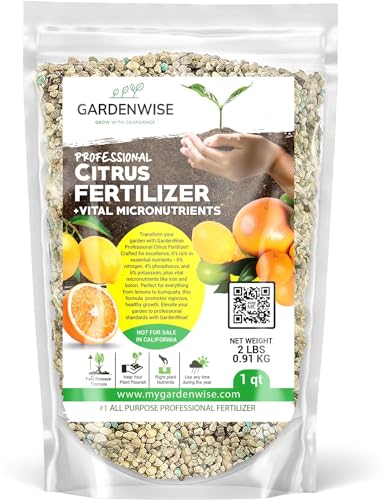
GARDENWISE delivers a 6-4-6 NPK blend that is very close to the ideal citrus feeding profile, but its standout feature is the comprehensive micronutrient package. Magnesium drives chlorophyll production for lush green leaves, zinc strengthens the tree’s natural defenses, copper supports metabolic function, iron prevents yellowing between leaf veins, and boron is critical for flower and fruit development. This full-spectrum approach covers deficiencies that many simple NPK-only formulas miss.
The specially coated granules are designed for slow release, dissolving gradually with each watering to provide steady nutrition for up to two months per application. Owners of potted Meyer lemon trees reported seeing tons of new growth within the first week and a dramatic bloom cycle with a strong lemon blossom scent. The formula works across all citrus varieties and is effective during the critical post-winter recovery period.
Application is straightforward: sprinkle around the base and water in. Because it is a concentrated granular, a 1-pound bag goes a surprisingly long way for container trees. Some users noted that over-application can lead to salt buildup in pots, so following the 6-8 week feeding schedule is important.
What works
- Full micronutrient profile including Mg, Zn, Fe, B
- Slow-release granules feed for up to 2 months
- Rapid visible results on potted citrus
What doesn’t
- Can cause salt buildup if over-applied in containers
- Bag size is small for large in-ground trees
3. TPS Nutrients Citrus Liquid Fertilizer
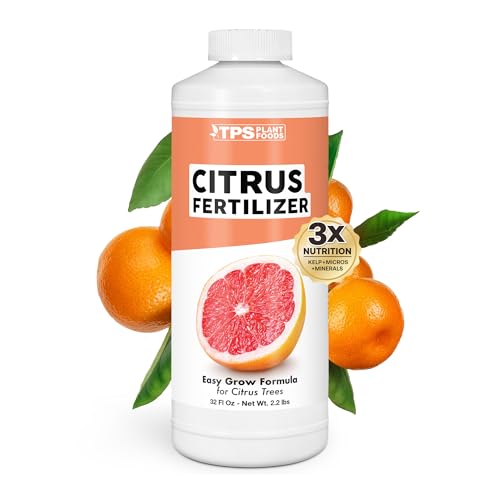
When your lemon tree is showing signs of acute distress—yellowing leaves, stalled fruit growth, or blossom drop—a liquid fertilizer delivers nutrients to the roots within hours rather than weeks. TPS Nutrients’ liquid formula is designed for rapid absorption, requiring only 2 tablespoons per gallon of water for a ready-to-use feed. The 32-ounce bottle makes multiple gallons of solution, covering several trees over the growing season.
The formula includes magnesium, calcium, and iron, which are the three micronutrients most commonly deficient in potted citrus. One owner of a potted lime tree with yellowing leaves and stunted fruit reported leaves returning to normal and limes visibly larger after just two weeks of use. The liquid format also makes it easy to adjust dosage for container trees versus in-ground trees, giving you precise control over feeding intensity.
However, the NPK analysis is relatively low in nitrogen compared to some granular competitors. Some users found it necessary to supplement with a higher-nitrogen source for trees that needed aggressive vegetative growth. The per-bottle cost is higher per application than granular options, making it a premium choice best reserved for targeted deficiency correction rather than routine maintenance feeding.
What works
- Rapid symptom reversal in stressed trees
- Includes Mg, Ca, and Fe for chlorosis
- Adjustable dosing for potted vs. in-ground
What doesn’t
- Low nitrogen content; may need supplement
- Higher cost per feeding than granular
4. Jobe’s Organics Fruit & Citrus Spikes 3-5-5

Jobe’s Organics spikes solve the two biggest pain points of container citrus feeding: measuring and mess. Each spike is pre-measured with a 3-5-5 NPK formula that includes Jobe’s proprietary Biozome—a blend of beneficial archaea and microorganisms that aggressively break down organic material in the root zone. The spikes are driven into the soil around the drip line, and the time-release mechanism delivers nutrients directly to the roots over several weeks.
The OMRI-listed organic certification ensures no synthetic chemicals, making it a clean choice for edible fruit. Owners of potted Meyer lemon trees reported getting an abundance of juicy, sweet lemons every year when using the spikes according to the recommended schedule. The no-mess format also means zero dust, no measuring spoons, and no mixing—just push the spike into moist soil and walk away. Each package contains 6 spikes, and for in-ground trees, you will need multiple spikes per tree.
The fixed dosage is the main limitation. Because each spike delivers a set amount of nutrients, you cannot adjust the feeding rate for a tree that needs a lighter or heavier dose. Placing spikes too close to the trunk can also cause root burn, so careful spacing is required. For a set-and-forget approach with container trees, however, the convenience is hard to beat.
What works
- Zero-mess, pre-measured spikes
- Biozome microorganisms improve soil health
- OMRI organic for edible fruit
What doesn’t
- Fixed dosage cannot be adjusted
- Spacing is critical to avoid root burn
5. Nelson NutriStar Citrus & Avocado 12-10-10
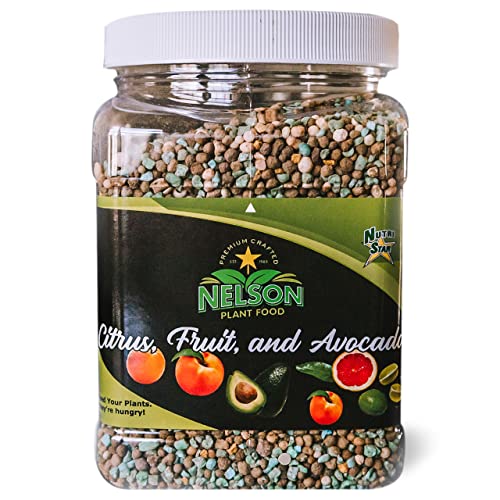
For established in-ground lemon trees that are ready for a strong growth push, Nelson’s NutriStar delivers the highest nitrogen concentration on this list at 12-10-10. The elevated nitrogen drives vigorous leaf and canopy development, while the potassium content—higher than phosphorus—supports fruit size, flavor, and cold tolerance. Calcium is also included to thicken trunks and strengthen limbs, which is critical for heavy-bearing trees.
Nelson has been the preferred choice of professional landscapers for over 30 years, and the NutriStar formula reflects that commercial-grade approach. The granules work with the soil biology to release nutrients in sync with the plant’s needs, providing both an immediate boost after application and sustained feeding over the growing season. Owners of orange trees reported a full flush of new leaves within two months of the first application, even when the tree was moved indoors.
The high nitrogen makes this formula less suitable for container trees, where rapid leaf growth can outpace the root system’s capacity. It is also not organic, so growers who prioritize certified organic inputs will want to look elsewhere. For mature in-ground trees, however, the growth response is rapid and dramatic.
What works
- High nitrogen drives strong canopy growth
- Calcium content strengthens trunks and limbs
- Professional-grade for heavy-feeding trees
What doesn’t
- Not recommended for container trees
- Not OMRI certified for organic use
6. Miracle-Gro Cactus, Palm & Citrus Potting Mix

While not a fertilizer in the traditional sense, this potting mix is the foundational medium for any container-grown lemon tree. Miracle-Gro’s formula is fast-draining, which is critical for citrus because waterlogged roots lead to root rot and yellowing leaves. The mix is enriched with Miracle-Gro plant food, giving newly potted trees an initial nutrient boost during the critical establishment phase. Each 8-quart bag fills two 8-inch pots.
The 3-pack provides ample volume for repotting multiple trees or refreshing the topsoil on larger containers. Many experienced citrus growers recommend a blend of half this cactus mix and half standard potting soil to achieve the ideal balance of drainage and moisture retention for lemons. The pre-mixed nature eliminates the guesswork of sourcing perlite, sand, and peat separately.
The primary drawback is that the mix itself does not provide sustained nutrition beyond the initial charge. You will still need to pair it with a granular or liquid fertilizer within a few weeks of repotting. The price per bag is also higher than generic potting soil, though the specialized drainage performance justifies the cost for potted citrus.
What works
- Fast-draining formula prevents root rot
- Includes initial plant food charge
- Ideal for repotting container citrus
What doesn’t
- Needs supplemental fertilizer after establishment
- Higher cost than generic potting mix
7. Farmer’s Secret Citrus Tree Booster 32oz

Farmer’s Secret brings a farmer-grade concentrated approach to the home garden. The super-concentrated liquid requires only 1 teaspoon per gallon of water, making a 32-ounce bottle stretch far longer than standard liquid fertilizers. The formula is designed for weekly feeding along the drip line, with a reduced dosage for container trees. It is bottled in Kentucky and developed using the same scientific formulation process used in commercial agriculture.
The booster has proven especially effective on sick or stressed trees. One owner in the Phoenix, AZ area reported that a yellowing lemon tree turned lush green and sprouted new fruit within a few weeks of starting treatment. The high nitrogen and iron content addresses the two most common causes of pale, chlorotic leaves in desert climates where the soil pH can lock out nutrients. The formula also works well on avocado trees.
The micronutrient profile is incomplete for long-term health. Independent analysis shows that the formula lacks sufficient magnesium and calcium, both of which are critical for citrus. Over multiple months of exclusive use, some trees may develop deficiency symptoms in those areas. It is best used as a corrective booster or in rotation with a supplement that provides Ca and Mg.
What works
- Extremely concentrated—1 tsp per gallon
- Rapid greening of yellowing leaves
- Farmer-grade formulation
What doesn’t
- Lacks magnesium and calcium for long-term health
- May need supplement for complete nutrition
Hardware & Specs Guide
NPK Ratio — The Mack Daddy of Specs
The NPK label is mandatory on every fertilizer bag. For lemon trees, nitrogen (first number) is used at a rate of 1 to 1.5 times the potassium (third number). So a 6-4-6 or 5-2-6 is balanced for leaf growth and fruit development. A 12-10-10 is heavily skewed toward leaf production and is best for mature in-ground trees needing canopy restoration. Avoid high-phosphorus formulas (middle number above 8) unless a soil test confirms a phosphorus deficiency.
Release Mechanism — Granular vs. Liquid vs. Spike
Granular slow-release fertilizers (like Espoma or GARDENWISE) provide consistent feeding over 6-8 weeks and are the default choice for most growers. Liquid fertilizers (TPS, Farmer’s Secret) offer immediate nutrient access and are ideal for correcting acute deficiencies or supporting trees in active fruit development. Spikes (Jobe’s) trade flexibility for extreme convenience and are best for container trees where mess is a real concern. Match the release rate to your schedule and the tree’s growth stage.
FAQ
Can I use a general-purpose fertilizer on my lemon tree?
How often should I fertilize a potted Meyer lemon tree?
Final Thoughts: The Verdict
For most gardeners, the best lemon tree fertilizer winner is the Espoma Organic Citrus-tone because its 5-2-6 NPK plus calcium and Bio-tone microbes deliver balanced organic feeding that works for both in-ground and potted trees without risk of burn. If you need rapid deficiency correction for yellowing leaves, grab the TPS Nutrients Liquid Citrus. And for a no-mess, set-and-forget solution with container trees, nothing beats the Jobe’s Organics Citrus Spikes.