
Fighting a reciprocating saw blade that binds, deflects, or dulls mid-cut through a thick limb is the fastest way to turn a pruning session into a full-body workout. A dedicated pruning blade with Japanese-style teeth solves that friction with aggressive fleam-ground geometry and deep chip gullets designed to clear wet green wood without clogging.
I’m Rikta — the co-founder and writer behind Lawn Gear Lab. I’ve spent dozens of hours analyzing the tooth geometry, steel composition, and arc-edge profiles in this specific niche, cross-referencing real owner reports against manufacturer specs to separate the blades that truly pull through from those that stall.
This guide ranks the strongest options for tree trimming, branch cutting, and storm cleanup so you can match the right blade to your saw. Whether you need a premium hand saw or a bulk pack of reciprocating blades, here is the japanese tooth pruning saw blade that fits your task.
How To Choose The Best Japanese Tooth Pruning Saw Blade
Japanese-style teeth differ from standard reciprocal saw teeth by using a fleam-ground, offset geometry that cuts on the pull stroke, reducing kickback and creating a cleaner entry. Choosing the right blade means understanding the interplay of three variables: steel quality, tooth configuration, and blade curvature.
Steel Composition and Edge Retention
Premium blades use Chromium-Vanadium (CR-V) or SK5 high-carbon steel to resist wear when cutting gritty, sap-laden green wood. Cheaper alloys soften quickly once the blade contacts dirt or bark, while CR-V maintains a sharp edge across dozens of cuts through live oak, maple, or fruit-tree limbs. A 1.2 mm blade thickness plus heat treatment further prevents bending under the side load of aggressive branch-cutting.
Tooth Geometry: TPI and Triple-Ground Edges
Most Japanese reciprocating pruning blades land at 6 TPI — a coarse pattern that rips through thick branches fast without packing gullets full of wet chips. Triple-ground teeth add three distinct cutting angles per tooth, which reduces vibration, clears debris more efficiently, and extends the usable life of each blade. For hand saws, a finer tooth count (10+ TPI) delivers smoother crosscuts on green wood but requires more strokes per inch of material.
Arc-Edge vs. Straight-Edge Blade Shape
A curved or arc-edge blade keeps more teeth engaged with the wood throughout the stroke, reducing the chance that the saw binds mid-cut. The arc also helps the blade ride along the natural shape of a round limb, making overhead trimming less awkward. Straight-edge blades work best for flush cuts against a trunk or in tight crotches, but they demand more user pressure to maintain cutting speed.
Quick Comparison
On smaller screens, swipe sideways to see the full table.
| Model | Category | Best For | Key Spec | Amazon |
|---|---|---|---|---|
| WORKPRO 5-Pack 15″ | Reciprocating | High-volume storm cleanup | 6 TPI, CR-V Steel, Arc Edge | Amazon |
| WORKPRO 3-Pack 15″ | Reciprocating | Solid mid-range value | 6 TPI, CR-V Steel, Arc Edge | Amazon |
| TOLESA 3-Pack 15″ | Reciprocating | Safer alternative to chainsaw | 6 TPI, CR-V Steel, Arc Edge | Amazon |
| SEDY 5-Pack 12″ | Reciprocating | Short-stroke saws & tight spaces | 6 TPI, Alloy Steel, Arc Edge | Amazon |
| SUIZAN Folding 4.7″ | Hand Saw | Pocket-sized pruning & bushcraft | 0.7mm Blade, 10 TPI, Carbon Steel | Amazon |
| Kanzawa Samurai 330mm | Hand Saw | Professional arborist pruning | 13″ Blade, Tri-Cut Teeth, HSS | Amazon |
| EZ Kut Kamikaze 19.3″ | Hand Saw | Heavy-duty limb removal | SK5 Steel, Curved, 90 Teeth | Amazon |
In‑Depth Reviews
1. WORKPRO 5-Pack 15″ Japanese Teeth Reciprocating Saw Blades
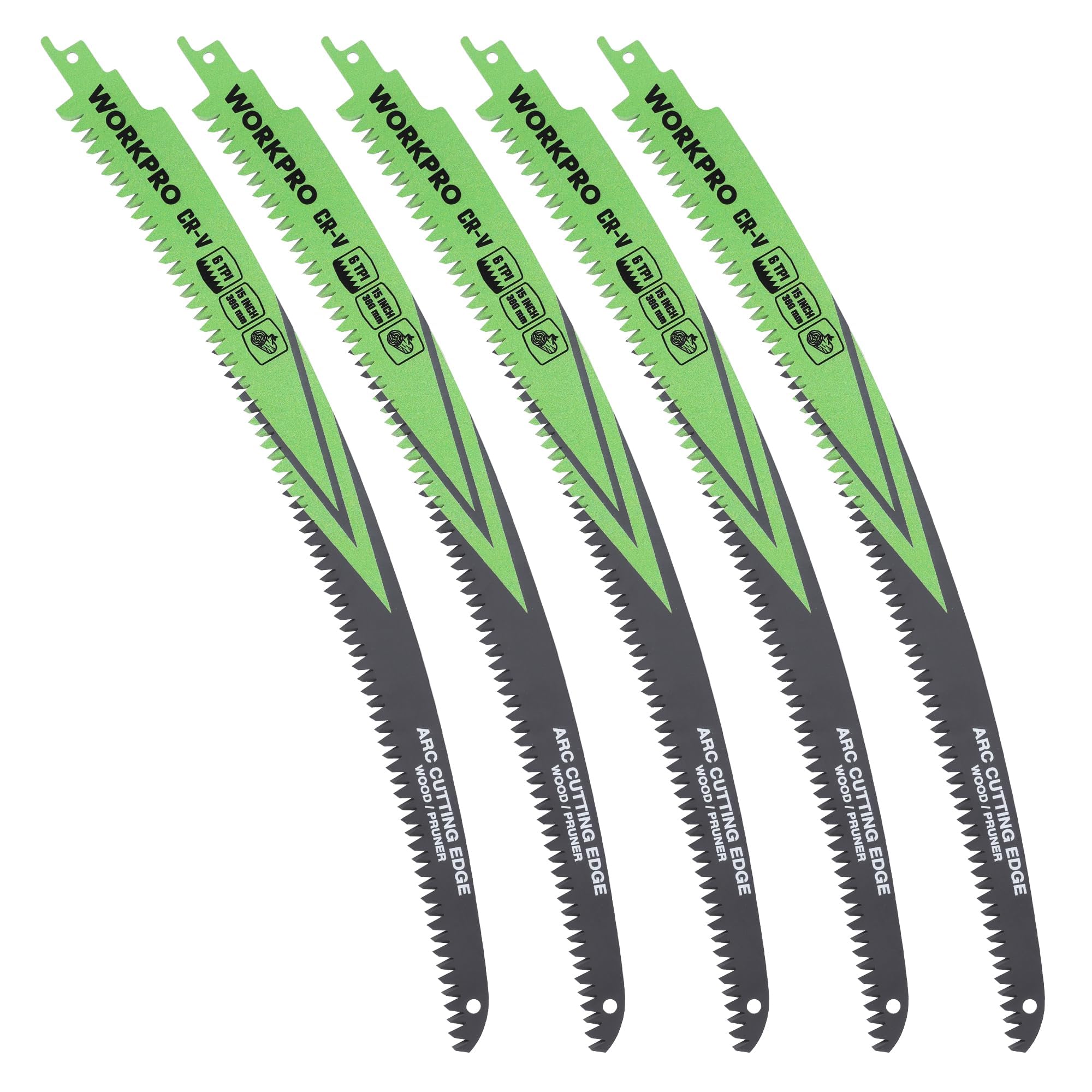
This five-pack from WORKPRO combines a 15-inch arc-edge profile with aggressive 6 TPI Japanese-style teeth that clear wet chips through deep chip gullets. The triple-ground offset tooth design generates three distinct cutting angles per tooth, reducing resistance noticeably when plunging into green oak or wet maple limbs. Real users report that a single blade can cut through 12- to 20-inch trunks without dulling or bending, a testament to the chromium-vanadium build and 1.2 mm thickness.
The arc edge keeps more teeth in contact with the wood throughout each stroke, minimizing the deflection that straight blades suffer when hitting knots or uneven bark. This curved geometry is especially helpful for overhead pruning, where maintaining stroke control with one arm is already fatiguing. The universal 1/2-inch shank fits every major reciprocating saw brand including Dewalt, Milwaukee, Makita, and Bosch without wobble.
At this price per blade, the 5-pack delivers the best cost-per-cut ratio for anyone facing regular storm cleanup or property-wide tree trimming. Owners consistently note that these blades outperform standard demolition blades on live branches and remain sharp through multiple sessions, making this the strongest pick for volume pruning with a reciprocating saw.
What works
- Triple-ground tooth geometry reduces binding and vibration in wet wood
- CR-V steel body resists bending during heavy side loads
What doesn’t
- Blades eventually wear down after extended root-cutting in dirt
- Single-edge package lacks a storage box to protect unused blades
2. WORKPRO 3-Pack 15″ Japanese Teeth Reciprocating Saw Blades
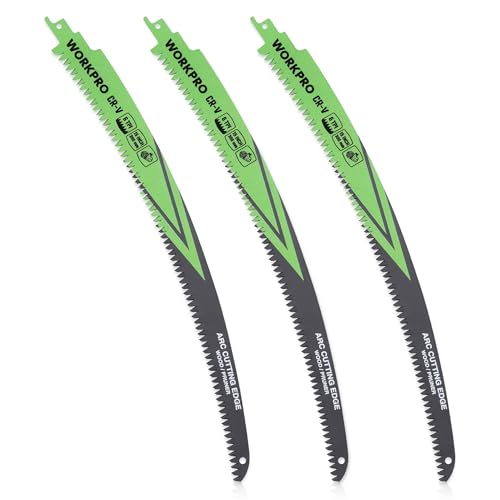
The three-blade configuration of WORKPRO’s 15-inch pruning blade shares the same CR-V steel, arc-edge curvature, and 6 TPI triple-ground tooth pattern as the five-pack above. Buyers who don’t need a bulk supply will find this package delivers identical cutting speed and binding resistance at a lower entry cost. The aggressive fleam-ground teeth slice through 12-inch apricot branches in seconds, according to verified owner reports, and the arc design prevents the blade from wandering mid-cut.
Chromium-vanadium construction gives these blades enough toughness to handle root removal from shrubs where the steel can contact soil and small stones without immediate dulling. The 1.2 mm blade body resists twisting during one-handed overhead work, a common pain point with thinner budget blades. Each blade is etched with the 6 TPI mark for quick identification when swapping between demolition and pruning tasks.
For homeowners who prune a few trees per season or maintain a moderate yard, this three-pack offers the exact same cutting performance as the premium pack without paying for extras you won’t use. Owner feedback highlights that the blades stay sharp through multiple weekend sessions and cut cleaner than the standard blades that ship with most reciprocating saw kits.
What works
- Same CR-V steel and arc-edge tech as the best overall pick
- Universal shank fits all major saw brands without play
What doesn’t
- Only three blades for users who cut thick wood frequently
- No included storage sleeve for the loose blades
3. TOLESA 3-Pack 15″ Japanese Teeth Reciprocating Saw Blades

TOLESA’s 15-inch reciprocating blades match the 6 TPI and 1.2 mm thickness seen on top-tier competitors, but the company positions them as a safer alternative to chainsaws for backyard limb cleanup. The triple-ground offset teeth cut aggressively on the push stroke while the arc edge maintains engagement, reducing the chance the saw kicks back when you start a cut on an angle. Owners report these blades cut through hardwood like a hot knife through butter, particularly on dry and live mixed wood.
The chromium-vanadium steel body holds up well against repeated contact with debris and rough bark. One reviewer noted that the curved profile allows better reach into tight crotches where a gas chainsaw cannot safely fit. The universal shank locks securely into most reciprocating saws, including models from DeWalt, Bosch, Makita, and Milwaukee, without rattling loose during heavy use.
This set is an excellent choice for users who want the speed of a power saw but avoid the weight, fuel, and safety risks of a chain-driven tool. The three-blade count is enough for several pruning sessions, and each blade can handle branches up to 12 inches thick before requiring a swap. If you primarily cut green wood and want a blade that won’t clog, the TOLESA design delivers.
What works
- Arc-edge profile reduces kickback risk during angled starting cuts
- CR-V steel maintains sharpness through gritty bark contact
What doesn’t
- Some users wish the tooth design was even more aggressive for very large limbs
- Packaging is minimal; blades may arrive loose in box
4. SEDY 12″ Japanese Teeth Reciprocating Saw Blades 5-Pack
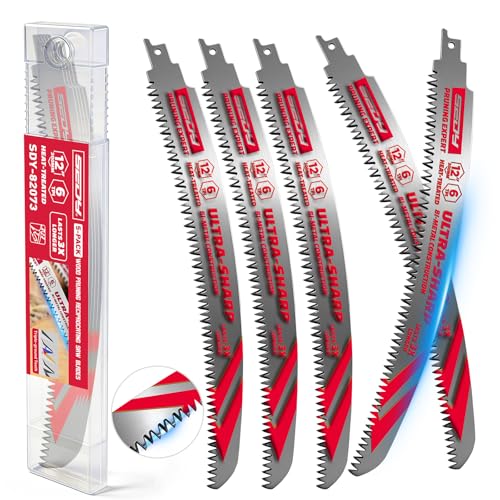
SEDY steps away from the 15-inch standard with a shorter 12-inch blade that suits lighter reciprocating saws and tight-angle cuts around fence posts or dense shrubbery. The 6 TPI Japanese-style teeth are heat-treated for hardness, and the arc-edge design still provides the anti-binding engagement of a longer blade. Verified owners have pushed these blades through 10-inch laurel roots buried in clay and found the teeth held their edge without chipping or rolling.
Five blades in one box, plus a plastic storage case, make this set ideal for users who wear through blades quickly or need to keep spares organized in a tool belt. The shorter length reduces blade whip when cutting overhead, and the alloy steel body shows less vibration in lighter reciprocating saws compared to a long 15-inch blade. The curved geometry helps the blade self-feed on the downstroke, requiring less arm pressure.
For DIYers who own a compact saw or frequently prune smaller branches (under 6 inches), the 12-inch format offers better maneuverability without sacrificing cutting speed. The included storage box protects the teeth when traveling between job sites and prevents accidental cuts when reaching into a toolbox. This is a volume-value pack that works well for landscapers who cut all day.
What works
- Heat-treated edges resist dulling even when contacting dirt and stones
- Storage case keeps blades organized and safe in transit
What doesn’t
- 12-inch reach may be too short for large-diameter trunks over 10 inches
- Alloy steel is slightly less durable than premium CR-V on heavy use
5. SUIZAN Japanese Folding Saw 4.7″
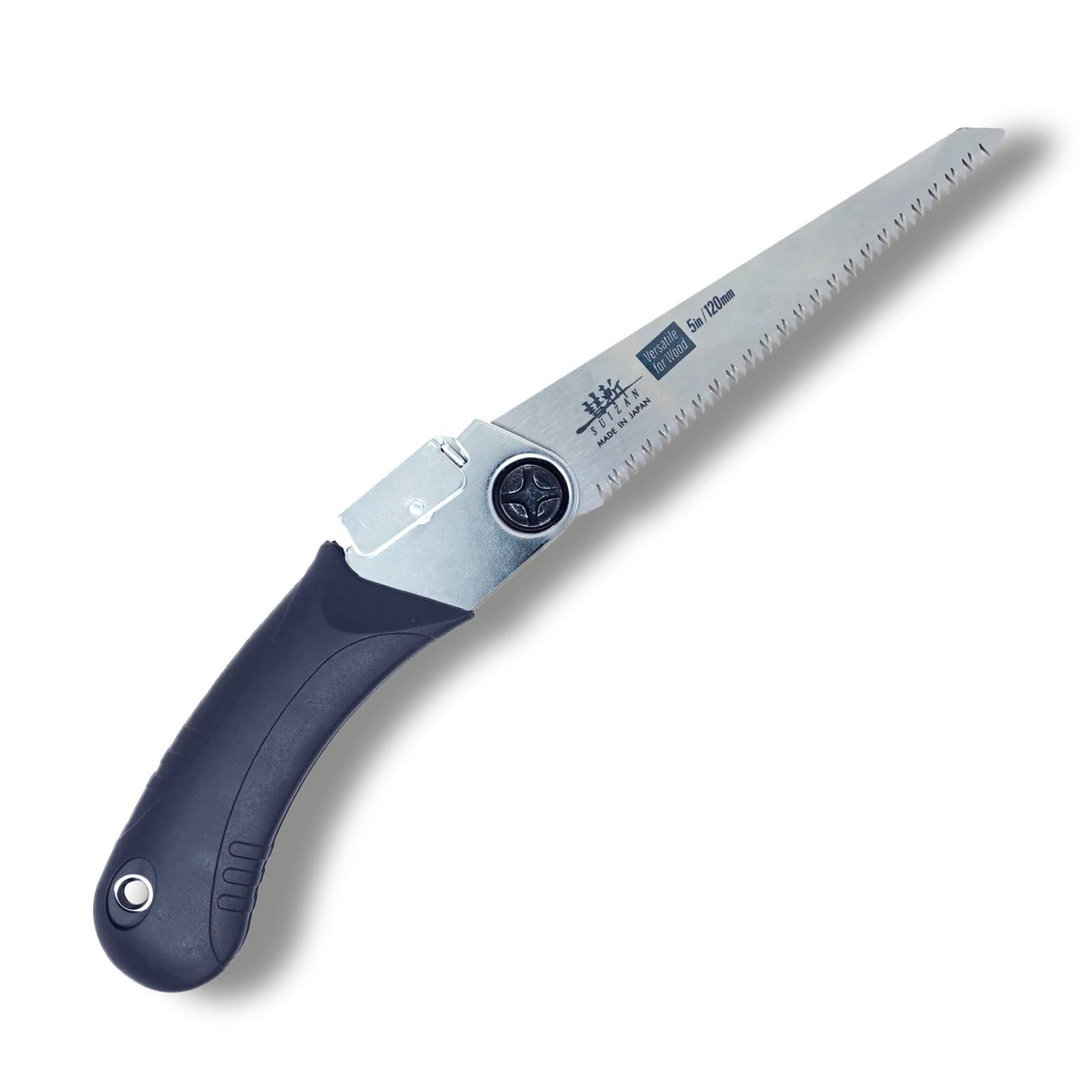
SUIZAN offers a genuine Japanese hand-saw experience with a 4.7-inch blade folded into a compact 6.1-inch package weighing just 4.4 ounces. The carbon steel blade cuts on the pull stroke, producing an extremely fine cross-section that leaves almost no torn fibers on green fruit-tree limbs. Users report slicing through fig branches, figwood, and even small pine trunks in seconds with minimal hand fatigue thanks to the elastomer grip that absorbs vibration.
The blade angle can be adjusted to two positions, which makes this saw unusually versatile for a pocket-sized tool: straight for flush cuts against a trunk, angled for crotch pruning where a straight handle would scrape bark. Japanese carbon steel does require post-use cleaning and a light oil film to prevent corrosion, a trade-off for the razor edge it maintains. The locking mechanism folds the blade safely into the handle, and replacement blades are available separately.
This saw is the right choice for gardeners, woodworkers, and campers who need a reliable backup or primary tool for small-diameter pruning where a power saw is overkill. It excels at precise cuts on live branches up to about 3 inches thick, making it ideal for fruit-tree maintenance. If you value portability and cut quality over raw speed, the SUIZAN delivers an authentic Japanese-cutting feel.
What works
- Pull-stroke design leaves ultra-smooth cuts ideal for tree health
- Folds to pocket size with secure locking handle
What doesn’t
- Carbon steel requires regular oiling to prevent rust
- Short blade limits capacity to branches under 3 inches
6. Kanzawa Samurai Ichigeki 330mm Pruning Saw

The Kanzawa Samurai Ichigeki brings a 330mm (13-inch) Japanese tri-cut tooth blade to professional arborists who demand clean, fast cuts without the noise or exhaust of a chainsaw. High Speed Steel construction keeps the extremely sharp edges intact even when cutting dense orchard wood, and the ergonomic orange handle with rubber grip provides secure purchase even in wet or gloved conditions. A nylon sheath with belt clip and easy-release mechanism is included for safe over-the-shoulder carry.
Owner reports confirm that this saw can drop an 18-foot plum tree with a 10-inch diameter trunk in about 40 cuts over three weekends without requiring a sharpen. The blade cuts on the pull stroke, allowing the user to leverage body weight rather than arm strength, reducing fatigue during lengthy pruning sessions. Some buyers noted that the sheath’s easy-release refers to the belt clip, not the saw itself — the blade fits tightly and may require a slight wiggle to remove initially.
This is the premium hand-saw option for anyone who prunes trees professionally or manages a large property with thick hardwood species. The 13-inch blade length is long enough to cut through single-pass limbs up to 8 inches, and the tri-cut geometry leaves a clean wound that heals faster than a chainsaw cut. If you want a tool that feels like an extension of your arm and holds its edge through a full season, this is it.
What works
- Tri-cut teeth slice through green hardwood with minimal effort
- Lightweight ergonomic handle reduces fatigue during long climbs
What doesn’t
- Sheath release mechanism can be frustratingly tight at first
- Price point is significantly higher than reciprocating blade packs
7. EZ Kut Kamikaze 19.3″ Curved Pruning Saw
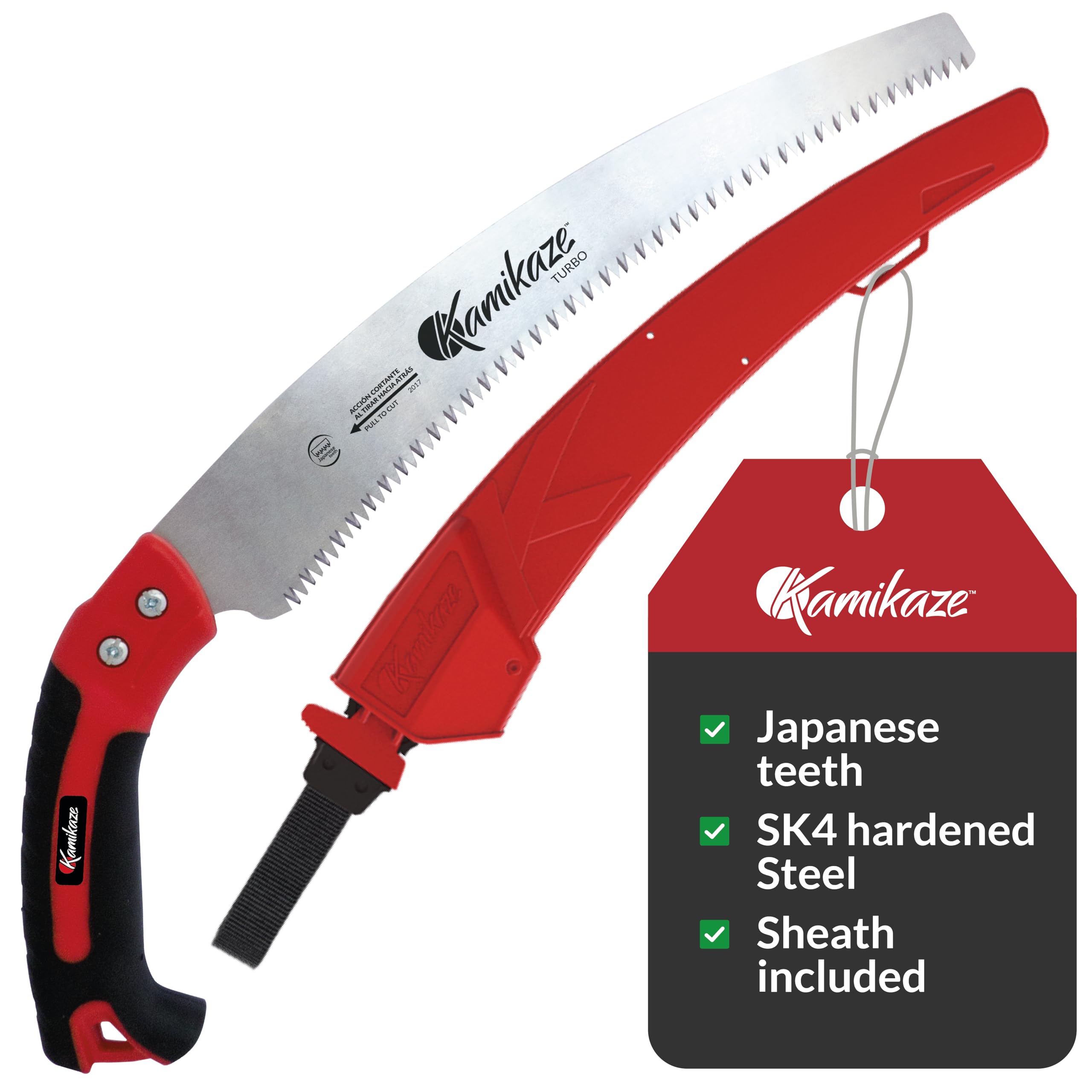
The EZ Kut Kamikaze is the longest blade in this lineup at 19.3 inches, built from Japanese SK5 high-carbon steel and featuring triple-beveled teeth that cut on the pull stroke. This combination makes it the undisputed option for removing large overhead limbs and trunks up to 6 inches in a single cut. The curved blade shape naturally follows the arc of a branch, and the 25-degree cutting angle helps the saw self-feed, reducing the number of strokes required to sever thick wood.
The rubberized ergonomic handle reduces joint strain during extended overhead sessions, and a rugged scabbard with belt loop and locking mechanism protects the blade when climbing. Verified owners who bowhunt use the Kamikaze for 95% of their field cutting needs, noting that it cuts a 6-inch tree in under a minute. The SK5 steel holds its edge against green pine sap and dry oak alike, though sticky sap accumulation may slow the cut and requires occasional cleaning with a solvent.
This saw is the heavy lifter for landowners, arborists, and serious homesteaders who face trees with 10-inch or larger diameters. The curved design excels in dense foliage where a straight blade would bind, and the length provides the leverage needed to cut through thick, heavy branches without a power tool. The Kamikaze is an investment, but its build quality and cutting speed justify the premium for users who demand maximum performance from a hand saw.
What works
- SK5 carbon steel offers exceptional edge retention and wear resistance
- 19.3-inch curved blade makes short work of 6-inch+ limbs
What doesn’t
- Sap buildup on green pine can slow the cut mid-session
- Long blade may feel unwieldy for users with smaller frames
Hardware & Specs Guide
Steel Grades: CR-V vs. SK5 vs. Carbon Steel
Chromium-vanadium (CR-V) is the standard for reciprocating pruning blades because it combines high tensile strength with corrosion resistance — a must for blades that sit in wet scabbards or contact sap. SK5 high-carbon steel, used in premium hand saws like the EZ Kut Kamikaze, holds a keener edge but requires more care to prevent rust. Standard alloy steel found in some budget packs provides adequate performance for occasional use but will dull faster if grit or dirt is encountered regularly.
Blade Length vs. Cutting Capacity
A 15-inch reciprocating blade can cross-cut a 12-inch limb in one pass, whereas a 12-inch blade maxes out around 8-inch diameter. Hand saws with 13- to 19-inch blades provide the leverage to cut larger wood without a power tool, but the trade-off is increased stroke length and fatigue. Choose your blade length based on the average branch diameter you cut most often — shorter blades maneuver better in tight spaces but require more passes on big trunks.
FAQ
What does 6 TPI mean on a Japanese tooth pruning blade?
Can I use a reciprocating saw blade designed for pruning on metal or drywall?
Why do Japanese hand saws cut on the pull stroke instead of the push stroke?
Final Thoughts: The Verdict
For most gardeners, the japanese tooth pruning saw blade winner is the WORKPRO 5-Pack 15 because it delivers five high-quality CR-V steel blades at a per-unit cost that beats most single premium blades while matching their cutting speed on thick limbs. If you want a compact hand saw for precise cuts on fruit trees, grab the SUIZAN Folding Saw. And for heavy-duty limb removal without a power tool, nothing beats the EZ Kut Kamikaze 19.3.