
Bagged mulch is a commodity you haul, spread, and repeat, but the difference between a vibrant, low-maintenance bed and a faded, weed-infested mess often comes down to the specific contents of that bag. The wrong choice introduces unwanted seeds, washes away in the first downpour, or leaches dyes into your soil.
I’m Rikta — the co-founder and writer behind Lawn Gear Lab. I’ve spent dozens of hours comparing the density, coverage claims, moisture retention, and weed-suppression feedback across the most popular bagged mulches on the market to build this guide.
Whether you are refreshing a flower bed, protecting new grass seed, or trying to keep soil cool in a raised bed, this analysis will help you identify the right material for your specific job with the best bagged mulch for your garden’s needs.
How To Choose The Best Bagged Mulch
Bagged mulch is not a single product. The material inside determines how long it lasts, how well it suppresses weeds, and whether it helps or hurts your soil. Focus on the physical properties of the product rather than just the color or the brand name.
Material Type: Wood, Straw, Coir, or Shell
Hardwood and cedar mulches are long-lasting and good for permanent beds, but dyed varieties add nothing to soil health. Straw mulches break down quickly and are excellent for vegetable gardens and new lawns, though you must watch for stray seeds. Coconut coir holds moisture better than any wood product and resists floating away in rain, but it is often the most expensive per square foot. Cocoa shell mulch smells like chocolate and adds a light fertilizer value, but it is toxic to dogs and can develop mold in humidity.
Coverage Per Bag Versus Actual Weight
Most bags advertise a cubic foot volume, but lightweight fluffy mulch covers more area per bag than dense, compacted material. Heavier bags (18 to 25 pounds) usually contain shredded wood that settles into a thicker, more effective layer. Very light bags may look large but flatten to almost nothing after rain.
Weed Seed Contamination
Unprocessed straw and low-grade wood mulches can introduce grass or weed seeds into your beds. Premium straw products advertise 99% weed-free content. For wood mulches, choose products that state “no added chemicals or dyes” and check reviews for complaints about seedlings sprouting after application.
Quick Comparison
On smaller screens, swipe sideways to see the full table.
| Model | Category | Best For | Key Spec | Amazon |
|---|---|---|---|---|
| FibreDust Coconut Coir Mulch | Coir | Moisture retention & long season | Expands to 3.2 cu ft per block | Amazon |
| EZ-Straw Seeding Mulch (2.5 cu ft) | Straw | New lawn seeding & erosion control | Covers 500 sq ft per bale | Amazon |
| Cocoa Bean Shell Mulch | Organic Shell | Scent & light fertilization | Fertilizer value 2.5-1-3 | Amazon |
| HealthiStraw GardenStraw (3 cu ft) | Straw | Large vegetable gardens & raised beds | 3 cu ft bag, 20 lbs each | Amazon |
| Blue Mountain Hay Organic Straw | Organic Straw | Clean organic garden beds | 25 lb compressed bale | Amazon |
| 100% Natural Cedar Mulch (40 qt) | Cedar | Flower beds & planters | 18 lb bag, 40 qt + 8 qt free | Amazon |
| EZ Straw Seeding Mulch (1 cu ft, 2 Pack) | Straw | Small yard touch-ups & patches | 1 cu ft per bale, 2 pack | Amazon |
In‑Depth Reviews
1. FibreDust Coconut Coir Mulch

This coconut coir mulch comes as two compressed blocks that each expand to roughly 3.2 cubic feet after hydrating with about 8 gallons of water. The lightweight bricks ship efficiently, and once expanded, the coir provides a dense, fibrous ground cover that holds moisture far better than shredded wood. The natural brown color does not fade or leach dye, and the texture stays put during moderate rain rather than floating away.
Gardeners in hot climates report that coir keeps soil temperatures regulated and reduces watering frequency. The material is splinter-free and leaves no sticky residue on hands. It is OMRI-listed as organic and contains no synthetic additives, making it a strong choice for vegetable beds. The coverage per block is generous — one block easily fills a wheelbarrow after soaking.
The main trade-off is the up-front cost per bag compared to wood mulches, and the blocks require overnight soaking for full expansion. Some users found the initial price surprising, but the longevity of coir (it takes longer to break down than straw) offsets the cost over a full growing season. This is the most versatile and effective mulch on this list for general garden use.
What works
- Excellent moisture retention in hot, dry climates
- Does not float away or wash out in heavy rain
- Organic, splinter-free, and leaves no stains
What doesn’t
- Needs overnight soaking before spreading
- Higher cost per square foot than wood mulch
2. EZ-Straw Seeding Mulch with Tackifier (2.5 cu ft)

The EZ-Straw 2.5 cubic foot bale is engineered specifically for covering newly seeded lawns. The processed straw includes a natural tackifier that bonds the fibers together, forming a protective mat that resists wind and light washout. At 21 pounds, this bag is dense enough to provide real coverage — the manufacturer claims up to 500 square feet per bale, which aligns with user reports on medium to large lawns.
Users consistently note that it speeds up germination by keeping the soil surface moist and shaded. The straw breaks down over the season and leaves no cleanup required. It is advertised as 99% weed-free, and most reviews confirm minimal stray seedlings. The UV-protected bag allows outdoor storage without degradation.
On the downside, the straw is messy to apply — loose fibers can blow around in breezy conditions before watering. The tackifier helps, but you need to wet the straw immediately after spreading. This product is purpose-built for seeding projects, not for decorative flower beds where appearance matters more than function.
What works
- Built-in tackifier keeps straw in place on slopes
- Speeds up grass seed germination significantly
- Biodegradable — no removal needed after growth
What doesn’t
- Messy application process in windy conditions
- Not attractive as a decorative top-dressing
3. Cocoa Bean Shell Mulch (2 cu ft)

Cocoa shell mulch offers a unique combination of aesthetics and mild fertilization. The shells carry a natural NPK value of roughly 2.5-1-3, meaning they contribute a small amount of nitrogen, phosphorus, and potassium as they decompose. The rich chocolate scent is potent for the first week after application, creating a sensory experience that no other mulch provides.
Gardeners report that this mulch deters squirrels compared to pecan or nut mulches, and it holds moisture well without blowing away after initial watering. The shells are lightweight but interlock when wet, forming a stable crust. Users with dogs must avoid this product entirely — cocoa mulch contains theobromine, which is toxic to canines if ingested.
The biggest drawback is the price. This bag is noticeably more expensive than the cedar or straw options, and some reviewers received bags that were dry or had visible mold from humidity. The chocolate smell fades within two weeks, so the premium cost is hard to justify for large areas. Best reserved for small, visible beds near a doorway or patio where the scent can be appreciated.
What works
- Pleasant chocolate smell for the first two weeks
- Adds light fertilizer value to soil
- Deters squirrels more effectively than nut mulches
What doesn’t
- Toxic to dogs if ingested
- Very expensive per square foot
- Can develop harmless mold in humid conditions
4. HealthiStraw GardenStraw 3 cu ft (Pack of 4)

This four-pack of HealthiStraw delivers 12 total cubic feet of clean, non-GMO wheat straw — enough to cover roughly 400 square feet at a 3-inch depth or up to 600 square feet for lawn seeding. The straw is naturally filtered to reduce dust and seeds, and user feedback over 775 ratings consistently praises its low weed content compared to standard straw bales.
The fibers are cut to a length that interlocks when watered, resisting wind without chemical binders. Gardeners using this in raised vegetable beds report excellent weed suppression and moisture conservation, with some stating it reduced watering by half. The straw breaks down into organic matter by the end of the season, enriching the soil for the next planting.
At 96 pounds total for the four bags, this is a heavy order that discourages casual pickup, but the unit price per bag is lower than smaller specialty straw products. A small number of reviews did note some grass seeds surviving the filtration process, so it is not entirely weed-free. The best use is for dedicated vegetable gardens where occasional stray grass is manageable.
What works
- Massive coverage at a competitive unit price
- Low dust and minimal weed seeds compared to hay
- Reduces watering frequency significantly in summer
What doesn’t
- Heavy order — 96 lbs total shipping weight
- Not 100% free of grass seeds in every batch
5. Blue Mountain Hay Organic Garden Straw (25 lb)
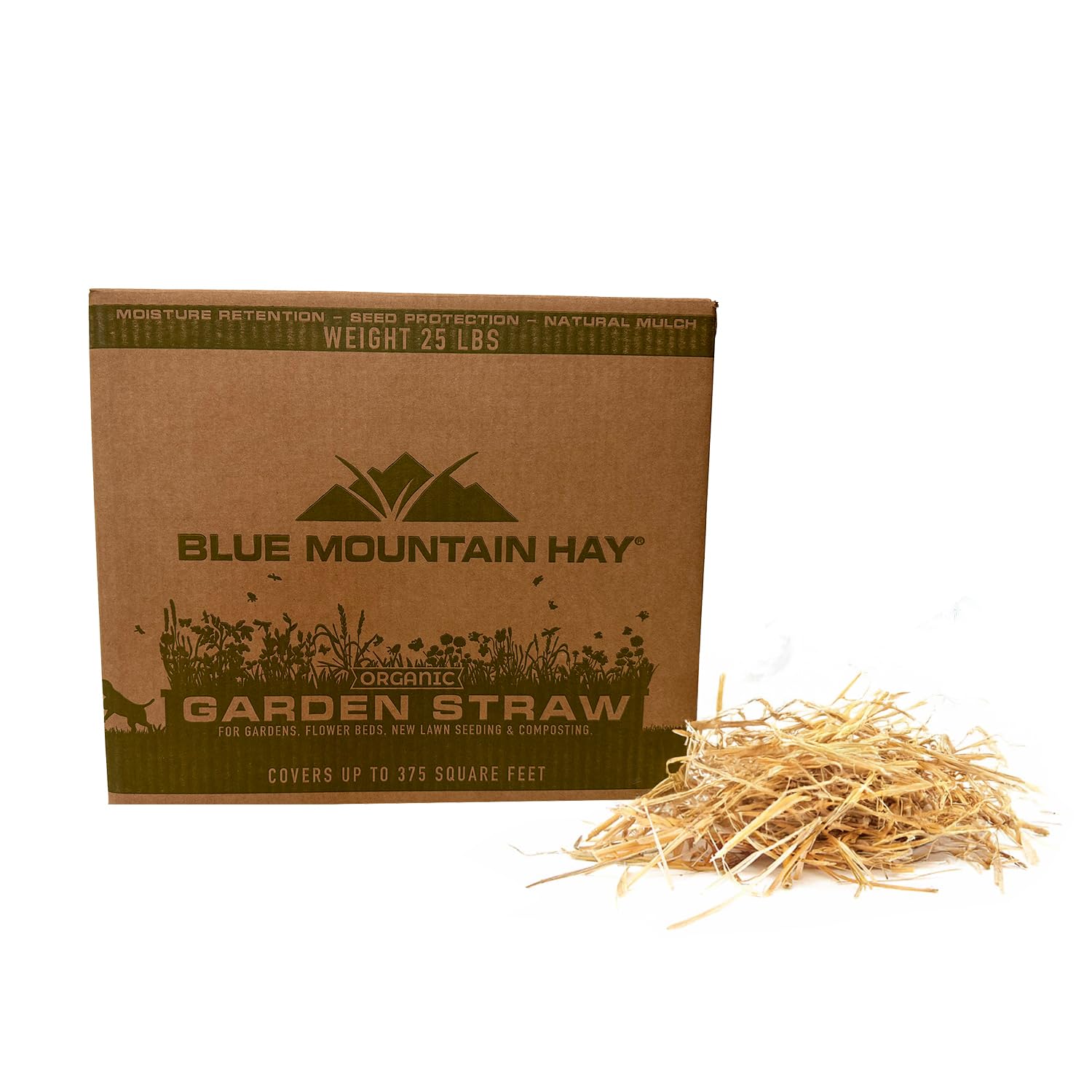
Blue Mountain Hay offers a 25-pound compressed bale of organic garden straw that is minimally processed and naturally dried. The straw is clean, low in dust, and easy to spread by hand around vegetables, flowers, and new seedlings. Several users specifically mention using it for layering over potatoes, onions, and garlic with excellent results.
The compression keeps storage compact, and the bale expands significantly when opened. Gardeners with raised beds appreciate the organic certification and the lack of pesticide residue. The straw holds moisture well and breaks down into compost by the end of the season without needing to be removed.
A critical issue reported by several buyers is seed contamination. At least one detailed review stated the straw introduced aggressive grass shoots that overtook raised vegetable beds. Another user noted that the coverage claim of 300 square feet seems inflated — they measured closer to 100 square feet at a 1-inch depth. This product is a good organic option for small beds, but the seed risk makes it less reliable than the processed straw options.
What works
- Certified organic and free of synthetic chemicals
- Very clean, soft texture with minimal dirt or bugs
- Compressed bale stores easily and expands well
What doesn’t
- Some batches contain grass seeds that sprout in beds
- Expensive for the actual coverage area delivered
6. 100% Natural Cedar Mulch (40 qt + 8 qt Free)

This MIGHTY109 cedar mulch delivers 40 quarts of shredded natural cedar with an additional 8 quarts advertised as free. The product is marketed as 100% natural forest product with no added chemicals or dyes, which is appealing for gardeners concerned about synthetic colorants leaching into soil. Cedar is naturally resistant to decay and insects, making it a long-lasting option for permanent flower beds.
The shredded texture provides decent coverage for planters, landscapes, and garden beds. Several users were satisfied with the appearance and ordered more. The weight of 18 pounds per bag is moderate — easy to carry and spread without being too heavy for a single trip.
Reviews reveal significant quality control issues. Multiple customers received bags filled with large wood chunks, some described as hand-sized, which contrast sharply with the shredded appearance shown in product photos. The cedar scent was also absent in several batches, suggesting old or mixed inventory. The shipping cost can exceed the product cost dramatically — one buyer paid in shipping for two bags. This is a hit-or-miss purchase that works when the batch is fresh but fails when it is not.
What works
- Natural cedar with no artificial dyes or chemicals
- Natural insect and rot resistance for long beds
- Reasonable 18 lb weight per bag for easy handling
What doesn’t
- Inconsistent quality — some bags have large chunks
- Shipping cost can be higher than the product cost
- Lacks the cedar aroma in some batches
7. EZ Straw Seeding Mulch (1 cu ft, 2 Pack)
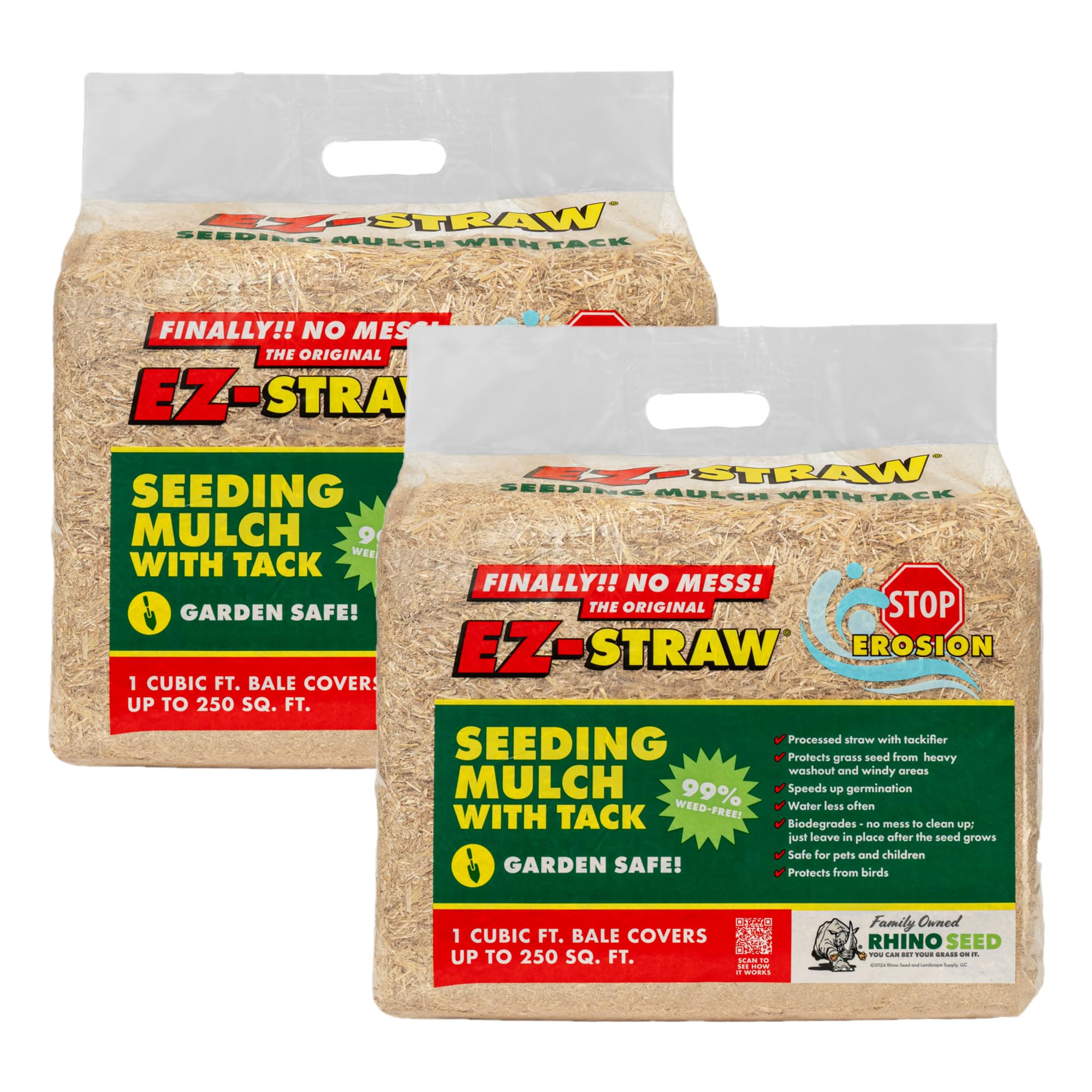
This two-pack of EZ Straw provides a smaller working size (1 cubic foot each) that is better suited for small yards, patch repairs, and garden beds where a full bale would be excessive. Each bale covers approximately 250 square feet for seeding, making the pair ideal for a standard residential front or back lawn. The same tackifier technology used in the larger EZ Straw product holds the straw together after watering.
Users consistently report that these smaller bales are easier to spread and store than standard straw bales. The straw pieces are fine and cut short enough to avoid clumping. Several reviews specifically mention using this for covering vegetable garden soil around tomatoes and peppers, where it held moisture well and kept soil from splashing onto lower leaves.
The main limitation is the coverage density — the light texture can wash away in a sudden cloudburst if not thoroughly watered in. One reviewer noted a heavy rain moved most of the first bale, requiring reapplication. This is a budget-friendly entry point for EZ Straw that works well for small projects, but larger lawns will get better value from the 2.5 cubic foot single bale.
What works
- Convenient smaller bales for targeted use
- Built-in tackifier stays in place with normal rain
- Good value for small yards and garden patches
What doesn’t
- Light texture can wash away in heavy downpour
- Less cost-effective than the larger 2.5 cu ft bale
Hardware & Specs Guide
Cubic Foot vs. Quart Measurements
Bagged mulch uses both cubic feet and quarts, which confuses comparisons. One cubic foot equals approximately 29.9 quarts. A 2-cubic-foot bag of shredded wood mulch typically weighs 18 to 20 pounds. Straw and coir are much lighter per cubic foot because they are fibrous and airy. Always compare by cubic feet, not quarts, when estimating coverage.
Mulch Depth and Coverage Math
A single 2-cubic-foot bag covers roughly 12 square feet at a 2-inch depth, or 8 square feet at a 3-inch depth. For lawn seeding with straw, a much thinner quarter-inch layer is sufficient, so one bale can cover 400 to 600 square feet. Always buy slightly more than your calculation — settling and wind will thin the layer.
FAQ
How deep should I spread bagged mulch for weed suppression?
Is colored or dyed mulch safe for vegetable gardens?
Final Thoughts: The Verdict
For most gardeners, the best bagged mulch winner is the FibreDust Coconut Coir Mulch because it delivers unmatched moisture retention, does not float away, and lasts longer than wood or straw without introducing chemicals. If you want a purpose-built product for new lawn seeding, grab the EZ-Straw Seeding Mulch (2.5 cu ft). And for a decorative bed that smells incredible and provides a light feed, nothing beats the Cocoa Bean Shell Mulch.