
Lithops, or living stones, survive on a razor-thin margin of moisture. A standard bag of potting soil holds too much water for their taproots, turning a healthy plant into mush within days. The right substrate must drain faster than most cactus mixes and contain almost no organic material that retains moisture near the crown.
I’m Rikta — the co-founder and writer behind Lawn Gear Lab. I’ve spent countless hours comparing the particle size, drainage rates, and mineral composition of specialized succulent substrates, cross-referencing them with owner feedback from serious lithops collectors.
For anyone keeping these mimicry plants alive indoors, finding the best soil for lithops means prioritizing a gritty, mineral-heavy blend that allows water to flow through in seconds while providing enough stability for the roots to anchor.
How To Choose The Best Soil For Lithops
Lithops are not regular succulents. Their physiology demands a substrate that mimics the rocky, fast-draining soils of South Africa. Before you buy, understand three critical factors that separate a safe mix from a death sentence.
Particle Size & Grit Content
Lithops roots need large pores for oxygen exchange and quick water passage. A mix dominated by fine particles like peat or coir compacts and holds moisture against the root, causing rot. Look for visible aggregates such as pumice, perlite, calcined clay, or coarse sand. The larger the grit — typically 1/8 to 3/16 inch — the better the drainage.
Mineral vs. Organic Base
Most bagged cactus soils contain peat moss or bark, which are organic and break down over time. For lithops, organic content should be minimal — ideally under 20 percent. A mineral-based mix using pumice, lava rock, or decomposed granite provides the inert, fast-drying environment lithops require during their dormant cycle.
Ready-to-Use vs. Blend-Your-Own
Pre-mixed succulent soils save time but often need amendment with extra pumice or perlite to reach the right grit level. Blending your own from components like pure pumice gives you total control over drainage and particle consistency, which matters more for lithops than for any other succulent genus.
Quick Comparison
On smaller screens, swipe sideways to see the full table.
| Model | Category | Best For | Key Spec | Amazon |
|---|---|---|---|---|
| Soil Sunrise Cactus & Succulent Potting Mix | Gritty Pre-Mix | No-amendment lithops mix | 8 quarts, pine bark + silica sand + pumice | Amazon |
| Perfect Plants Succulent & Cactus Soil Mix | Organic Pre-Mix | Budget semi-gritty mix | 8 quarts, peat moss + pine bark + perlite | Amazon |
| General Pumice Products Garden Pumice 3/16″ | Pure Mineral | DIY lithops blend base | 3-gallon bag, 3/16″ pumice blend | Amazon |
| Spike & Bloom High Drainage Succulent Soil | Acidic Pre-Mix | Preventing root rot | 4 quarts, pH ~6.7, coffee compost + myco | Amazon |
| Harris Premium Succulent and Cactus Potting Soil | Standard Pre-Mix | General succulent use | 4 quarts, peat moss + perlite | Amazon |
| Midwest Hearth Cactus & Succulent Potting Soil | Value Pre-Mix | Entry-level cactus soil | 4 quarts, peat moss + perlite + vermiculite | Amazon |
| General Pumice Products Garden Pumice 1/8″ | Fine Mineral | Seedling or fine-grit DIY mix | 3-gallon bag, 1/8″ pumice blend | Amazon |
In‑Depth Reviews
1. Soil Sunrise Cactus and Succulent Potting Mix
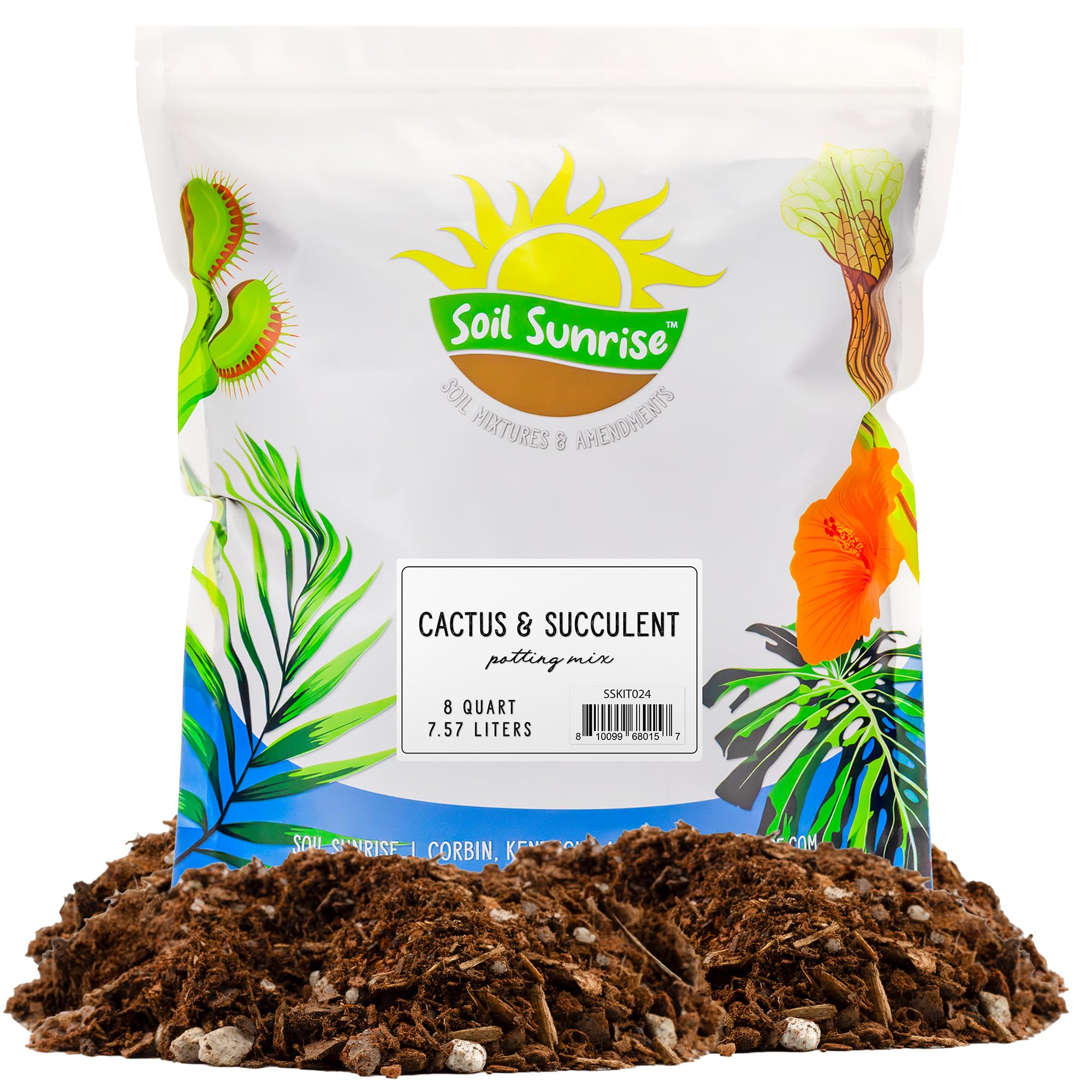
The Soil Sunrise mix is the rare pre-bagged product that genuinely works for lithops straight from the pouch. Its hand-blended formula combines pine bark, silica sand, calcined clay, and pumice — all visible as distinct particles that prevent compaction and create macro-pores for water to escape instantly. Unlike most commercial cactus soils that lean heavily on peat, this blend feels more like a mineral aggregate than dirt.
At 8 quarts, it fills several 4-inch pots without needing extra pumice amendment. Multiple owners report no fungus gnats, no foul odors, and plants that dry out within a week — precisely the window lithops require during their active growth phase. The gritty texture also provides the physical resistance their taproots need to anchor securely.
This is the most expensive pre-mix on the list, but the ingredient density and lack of filler justify the premium. If you want a single-bag solution that requires zero mixing, this is the strongest contender for lithops cultivation out of the box.
What works
- No amendments needed for lithops — gritty right out of the bag
- Hand-mixed with visible pumice and calcined clay for aeration
- Fast drainage that dries within a week, matching lithops water needs
What doesn’t
- Higher price per quart compared to standard cactus soil
- Not ideal for moisture-loving plants if you keep a mixed collection
2. Perfect Plants Succulent & Cactus Soil Mix

The Perfect Plants mix offers 8 quarts of organic peat moss, composted pine bark, and perlite at a mid-range price point that undercuts many smaller bags. For lithops, this mix needs a slight boost — adding about 30 percent pumice or coarse perlite — because the peat content can hold moisture longer than the plant likes. But as a base material that already has decent aeration, it gives you room to customize without starting from scratch.
Customer feedback consistently praises the lack of fungus gnats, which suggests the bag is stored and shipped dry. The resealable zip closure is practical for ongoing use, especially since lithops are repotted infrequently. Owners of rarer lithops species note that after mixing in extra grit, the plants produce healthy roots and maintain their distinctive split shape.
This is a solid option if you are comfortable with a little DIY amendment. The quantity-to-cost ratio is strong, and the organic components — though not ideal for lithops alone — can be balanced out to create a functional semi-mineral blend.
What works
- Large 8-quart bag at a budget-friendly price point
- No gnat problems reported — stored dry and clean
- Organic peat and bark provide a workable base for blending
What doesn’t
- Too much organic content for straight lithops use without amendments
- Bag size may feel small for the price according to some buyers
3. General Pumice Products Garden Pumice 3/16″ Blend

Pure pumice is the gold standard for building a lithops-specific blend, and the General Pumice Products 3/16″ bag delivers consistent particle size with minimal dust. This 3-gallon bag weighs 12 pounds and provides enough material to mix with a small amount of organic soil for months. The 3/16 inch size is ideal for adult lithops, offering enough grit to keep the root zone airy while preventing the medium from washing away during watering.
Unlike perlite, pumice does not float to the surface or break down into powder over time. Owners who use this as a 50/50 base with cactus soil report that their lithops stay firmer and produce thicker roots. The bag does contain some quartz pebbles and may need rinsing to remove fine dust, but the overall quality is consistent across multiple purchases.
For anyone serious about lithops, this is the smartest long-term investment. You control exactly how much mineral content goes into the pot, and the 3-gallon quantity means you are not constantly reordering small bags of pre-mix.
What works
- Perfect 3/16 inch size for adult lithops root support
- Does not float like perlite — stays where you place it
- Large 3-gallon bag offers the best cost per volume for DIY blends
What doesn’t
- Requires sifting or rinsing to remove dust and smaller particles
- Not a standalone soil — must be combined with a base mix
4. Spike & Bloom High Drainage Succulent Soil Potting Mix

Spike & Bloom takes a science-forward approach with a custom clay-and-aggregate blend that sits at a slightly acidic pH of 6.7 — within the range lithops prefer. The inclusion of coffee compost and mycorrhizal fungi is unusual for a lithops mix, but the actual drainage performance is high, and the added biology can help stressed plants recover faster from shipping or repotting shock.
In practice, this mix drains quickly without becoming waterlogged, and the particles are coarse enough to satisfy a lithops root system. Owner reports confirm that jade plants and succulents revived after switching to this bag, with root rot issues clearing up. The 4-quart bag is smaller than some competitors, but the ingredient density means you need less aggregate amendment.
The price is the highest per quart among pre-mixed bags, and several users note the cost is steep for large collections. But for a small lithops arrangement where you want the highest drainage insurance without mixing your own, this is a premium shortcut that performs.
What works
- Custom clay and aggregate blend drains faster than standard cactus soil
- pH of 6.7 aligns with lithops optimal growing conditions
- Mycorrhizal fungi may aid root recovery in stressed plants
What doesn’t
- High per-quart cost — not economical for large collections
- Coffee compost adds organic material that some lithops purists avoid
5. Harris Premium Succulent and Cactus Potting Soil Mix

The Harris mix is a straightforward, reliable cactus and succulent soil that performs well for general succulents but requires modification for lithops. Its base of peat moss and perlite drains faster than standard potting soil, but it still holds enough moisture to risk rot if used straight. Experienced growers recommend blending this 50/50 with pumice or a lava rock aggregate to bring the grit level up to lithops standards.
The bag features a resealable zipper that keeps the mix fresh for successive repottings. Owner reviews highlight that when mixed with pumice, echeveria and cacti show chubby leaves and stronger growth, and propagation success rates improve. The formula is pH-balanced and designed to provide nutrients without overloading the plant.
This is a practical entry point if you already keep other succulents and want a single bag that works for both your echeveria and a blended lithops mix. It is not ready out of the box, but with a 50/50 pumice split it becomes functional without breaking the bank.
What works
- Resealable bag makes storage and repeated use convenient
- pH-balanced formula provides nutrients for general succulents
- Widely available and budget-friendly for a 4-quart bag
What doesn’t
- Too dense for lithops without adding significant pumice or perlite
- Some owners report the peat holds moisture longer than advertised
6. General Pumice Products Garden Pumice 1/8″ Blend

The 1/8 inch pumice blend from General Pumice Products is the finer counterpart to the 3/16 inch version, designed for applications where smaller particle size is preferable — such as lithops seedlings, small pots, or as a top dressing.
Buyers who use this for lithops often mix it with a very small amount of organic soil — roughly 80 percent pumice to 20 percent soil — to create an extremely fast-draining medium that mimics the mineral gravel these plants grow in naturally. The smaller particle size works well for shallow pots where deeper aggregates might shift around. Multiple reviews note that wearing a mask when pouring is advisable due to silica dust in the bag.
If you are germinating lithops seeds or working with young plants, this 1/8 inch consistency gives you the control to build a precise substrate without the need to crush larger pumice yourself. It is a targeted tool for the lithops propagator rather than the casual buyer.
What works
- Ideal 1/8 inch size for lithops seedlings and small pots
- Consistent granule size with minimal variability across bags
- Does not float or break down like perlite over time
What doesn’t
- Requires washing or sifting to remove silica dust before use
- Bag volume was reported by some as slightly less than advertised
7. Midwest Hearth Cactus & Succulent Potting Soil Mix
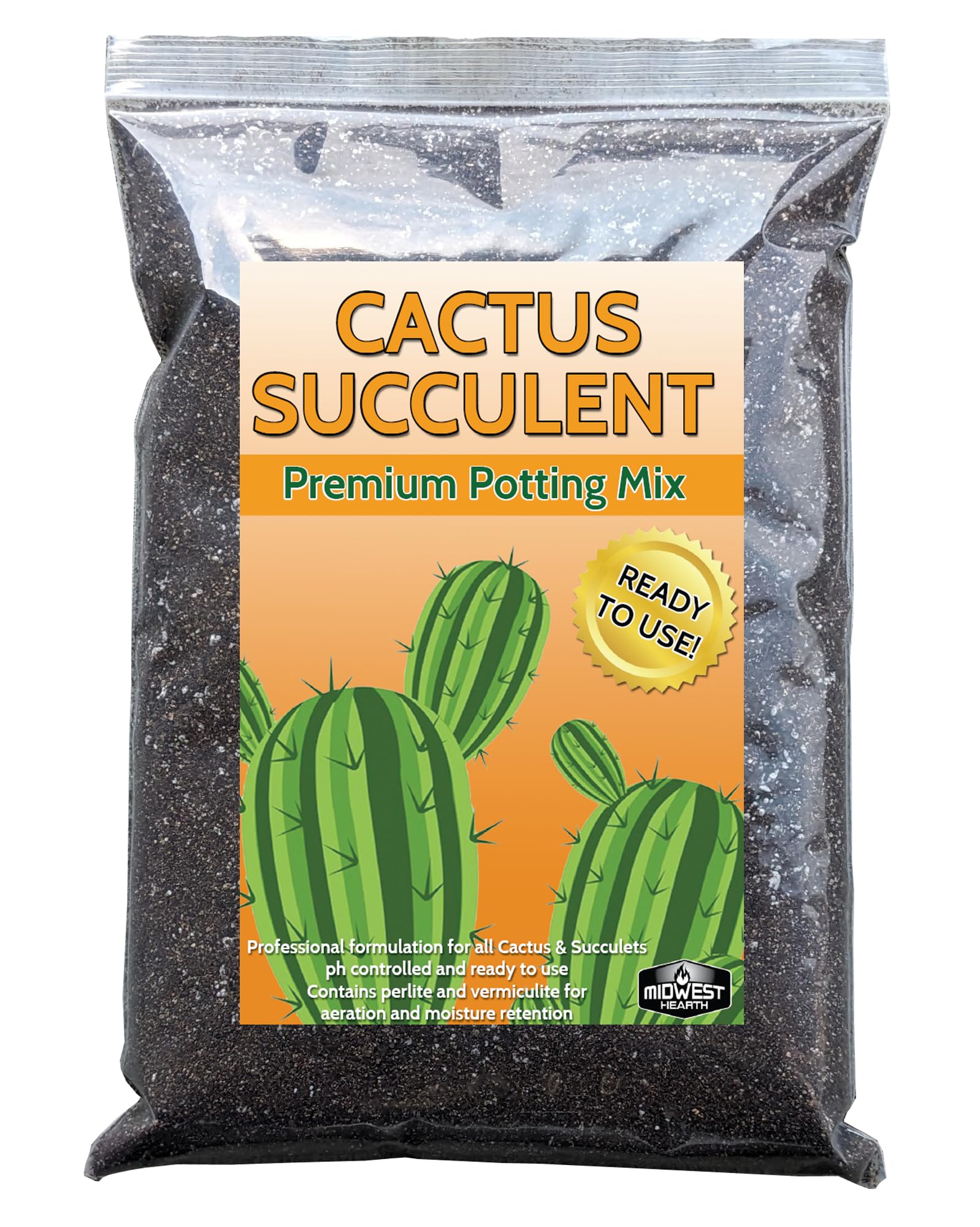
Midwest Hearth offers a simple, affordable cactus and succulent soil that is blended with peat moss, perlite, and vermiculite. For lithops, this mix is the farthest from ideal without major amendment — the vermiculite in particular retains moisture and compacts around roots. Used straight, it would likely cause rot in lithops within weeks. However, as a low-cost base for heavy supplementation with pumice, it can be stretched into a functional blend for a tight budget.
The 4-quart bag is made in the USA and arrives ready to use out of the package for standard succulents. Owners praise its quality for jade, aloe, and Christmas cactus, noting that plants look healthier after repotting. The resealable design keeps the mix dry between uses, and there are no reports of pests or mold in fresh bags.
This is the most accessible entry point if you are new to succulent care and only have a few lithops to accommodate. Plan on mixing at least 70 percent pumice or coarse sand into this soil to achieve the drainage lithops demand, which adds to the total cost but keeps the initial investment low.
What works
- Low purchase price makes it accessible for beginners
- Made in the USA with consistent quality across batches
- Resealable bag keeps unused mix dry for future repotting
What doesn’t
- Vermiculite in the blend retains too much water for lithops alone
- Fine dry particles can blow around when the bag is open near a window
Hardware & Specs Guide
Particle Size and Drainage Rate
Lithops require a substrate where individual particles range from 1/8 to 3/16 inch. This size creates macro-pores that allow water to drain within seconds and air to circulate freely around the taproot. Mixes dominated by fine particles under 1/16 inch — such as peat or vermiculite — compact and suffocate roots. Always check the ingredient list for visible aggregates like pumice, perlite, calcined clay, or coarse sand.
Organic Content Ratio
Most bagged cactus soils contain 40 to 60 percent organic matter by volume. For lithops, organic content should stay below 20 percent. Organic materials like peat moss and bark break down over time, releasing acids and holding moisture against the root. A mineral-heavy blend using pumice, lava rock, or decomposed granite provides the inert, fast-drying environment that lithops evolved to survive.
FAQ
Can I use regular cactus soil for lithops without mixing anything?
What is the ideal pH range for lithops soil?
Should I use perlite or pumice for my lithops mix?
Final Thoughts: The Verdict
For most lithops growers, the best soil for lithops winner is the Soil Sunrise Cactus and Succulent Potting Mix because it provides a hand-blended gritty texture that needs no amendment — drainable, mineral-heavy, and ready straight from the bag. If you want to build your own custom blend with full particle control, grab the General Pumice Products Garden Pumice 3/16″ and mix it with a minimal organic base. And for a budget-friendly entry point that works well after adding pumice, the Perfect Plants Succulent & Cactus Soil Mix offers a strong value-to-volume ratio.