
Blackberry canes are heavy feeders that demand a specific nutrient balance to produce large, sweet fruit instead of excessive, weak leaf growth. Choosing the wrong fertilizer leads to floppy canes, small berries, or even root damage that sets your patch back an entire season.
I’m Rikta — the co-founder and writer behind Lawn Gear Lab. I’ve spent countless hours cross-referencing soil science data, analyzing NPK ratios for fruiting plants, and sifting through real grower feedback to separate marketing hype from genuine yield-boosting formulas.
After comparing application methods, nutrient profiles, and long-term results, one formula consistently outperformed the rest for home growers seeking the best fertilizer for blackberries that reliably boosts both cane vigor and berry size without risking over-fertilization.
How To Choose The Best Fertilizer For Blackberries
Blackberries are not like tomatoes or roses. They require a targeted nutrient profile that encourages fruit development without spurring rank vegetative growth that attracts disease and complicates trellising.
Understand the NPK Ratio for Fruit Production
Look for a fertilizer where the middle number (phosphorus) is equal to or higher than the first number (nitrogen). A balanced ratio like 4-3-4 or 5-5-5 is ideal. Excess nitrogen produces lush leaves but fewer, softer berries that don’t store well.
Choose Between Granular and Liquid Formulas
Granular slow-release options like Berry-tone provide consistent nutrition over weeks with a single application. Liquid fertilizers deliver a faster boost during active growth in spring but require more frequent reapplication. For established patches, granular is usually more efficient.
Check for Acid-Loving Plant Compatibility
Blackberries prefer slightly acidic soil (pH 5.5–6.5). Fertilizers designed for acid-loving plants help maintain this range and prevent nutrient lockout. If your soil tests above pH 6.5, you may need a sulfur-enhanced formula.
Prioritize Organic Ingredients for Edible Crops
Organic fertilizers improve soil structure and microbial activity over time. For edible berries, avoid synthetic quick-release nitrogen that can cause salt buildup and root burn. Look for OMRI-listed products if you want verified organic inputs.
Quick Comparison
On smaller screens, swipe sideways to see the full table.
| Model | Category | Best For | Key Spec | Amazon |
|---|---|---|---|---|
| Berry Tone 4-3-4 | Organic Granules | All-Round Berry Nutrition | 4-3-4 NPK + Bio-tone | Amazon |
| TPS BlackBerry Liquid | Liquid Concentrate | Fast Flowering Boost | 32 oz liquid concentrate | Amazon |
| Bloom City Berry Liquid | Organic Liquid | Containers & Raised Beds | 32 oz, OMRI listed | Amazon |
| Big A Berries Powder | Organic Powder | Quick Visible Results | 13.5 oz resealable pouch | Amazon |
| Miracle-Gro Acidic Powder | Synthetic Powder | Fast Green-Up for Acid-Lovers | 5 lb water-soluble | Amazon |
| Espoma Rose-Tone 4-3-2 | Organic Granules | Flowering Support | 4-3-2 NPK + calcium | Amazon |
| Espoma Holly-Tone 4-3-4 | Organic Granules | Large Patch Value | 36 lb, 5% sulfur | Amazon |
In‑Depth Reviews
1. Espoma Berry Tone 4-3-4
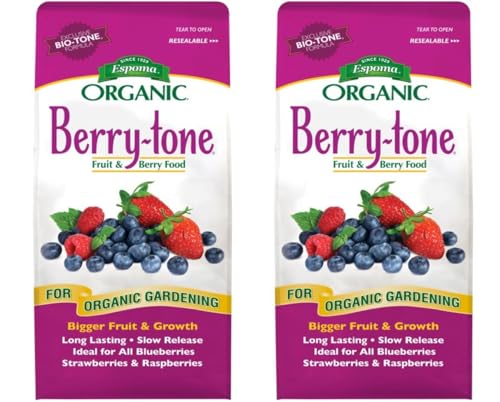
Berry Tone is the rare fertilizer that was formulated specifically for berries, including blackberries. The 4-3-4 NPK ratio matches the moderate nitrogen needs of brambles while providing enough phosphorus to drive flower and fruit production. The Bio-tone blend adds beneficial microbes that break down organic matter in the root zone.
Growers report dramatic yield increases — one reviewer noted that skipping a single season’s application resulted in noticeably fewer flowers. The ready-to-use granules require no mixing, making it simple to apply in early and late spring per the recommended two-feed schedule.
The 4-pound bag is packaged as two separate bags, which some users found excessive for small patches. For patches with more than six mature plants, the quantity is ideal for the entire season. The organic certification means it’s safe for edible crops and won’t cause salt buildup between feedings.
What works
- Specifically formulated for blackberries and other brambles
- Balanced 4-3-4 NPK prevents excessive leaf growth
- Includes Bio-tone for enhanced soil microbiology
What doesn’t
- Two-bag packaging is excessive for very small gardens
- Results take a week or two to become visible
2. TPS Nutrients BlackBerry Liquid
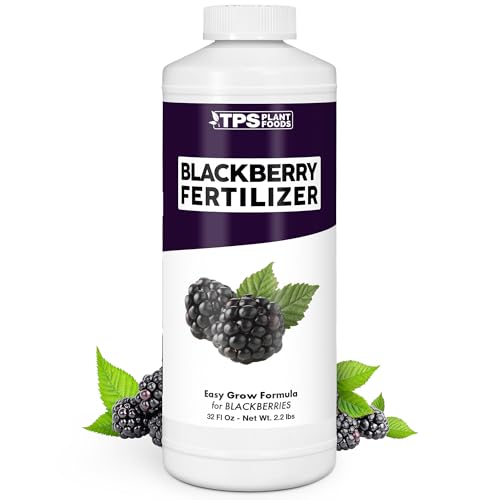
This liquid formula from TPS Nutrients is one of the few products explicitly labeled for blackberry bushes. The liquid form allows for rapid nutrient uptake exactly when the plant needs it most — during early spring green-up and again when fruit is setting. Users reported larger, plumper berries after a month of weekly feeding.
The 32-ounce bottle concentrates down to a significant volume of diluted feed. One reviewer with years of blackberry experience noted that this product produced the largest berries they had ever grown. Another saw older, struggling canes rebound after just a couple of applications.
A small number of units arrived with minor leaks during shipping, likely due to the bottle cap design. The QR code on the label provides direct access to a detailed feeding schedule, which is helpful for beginners. This is not a one-and-done product — you’ll need to apply it every 7–14 days during the growing season.
What works
- Rapidly available nutrients for immediate plant uptake
- Specifically designed for blackberry canes
- Users report noticeably larger berry size
What doesn’t
- Requires frequent reapplication every 7–14 days
- Bottle cap may leak during transport
3. Bloom City Organic Berry Liquid

Bloom City’s liquid formula is OMRI-listed, making it a strong pick for organic gardeners who want a straightforward, mix-with-water solution. It’s formulated for all berry types, with a nutrient balance that supports root development and steady fruiting. Users mixing 3 tablespoons per gallon saw blueberry bushes in pots push out new growth and develop fruit within three weeks.
This formula works well for blackberries growing in raised beds or containers where granular slow-release options are less effective due to regular watering that can leach nutrients. The liquid penetrates the entire root ball quickly. One reviewer noted a “weird smell” — typical of organic fish- or kelp-based fertilizers but not a sign of spoilage.
The 32-ounce bottle covers a moderate-sized patch for several weeks. Bi-weekly maintenance keeps established plants productive all season. For gardeners transitioning from synthetic to organic, this is an easy swap that delivers consistent results without the learning curve of granular organics.
What works
- OMRI-listed organic ingredients for edible crops
- Excellent for container and raised-bed blackberries
- Rapid uptake from liquid formulation
What doesn’t
- Noticeable organic odor during mixing
- Needs bi-weekly reapplication during active growth
4. Big A Berries Fertilizer Powder

Big A Berries comes in a resealable 13.5-ounce pouch, making it easy to store and apply as needed. This dry powder fertilizer dissolves in water or can be worked into the soil. One high-elevation grower reported that after two applications, their raspberries looked so large and uniform that friends accused them of using AI-generated photos.
The organic mineral blend includes vitamins that go beyond basic NPK, supporting overall plant health and resilience. Users with mixed berry patches — blackberries, blueberries, strawberries, and raspberries — all reported positive results across the board. Leaf color deepened within days, and fruit size increased noticeably within one week.
The pouch is small relative to granular competitors, so large patches may require multiple bags per season. Availability can be inconsistent. Despite the premium price, the speed of visible results makes it an attractive option for growers who want to correct a deficiency quickly or push a struggling patch into high production.
What works
- Visible results in as little as one week
- Organic formula with added vitamins for plant health
- Works on all berry varieties in one application
What doesn’t
- Small pouch size for the price
- Frequently out of stock
5. Miracle-Gro Acid-Loving Plant Food

Miracle-Gro’s water-soluble formula for acid-loving plants is an affordable entry point for new blackberry growers. It dissolves completely in water and can be applied with a watering can or hose-end feeder. The product delivers an immediate nitrogen boost that greens up foliage within a week.
While it’s marketed for azaleas and rhododendrons, blackberries respond well to the acidifying effect, especially in alkaline soils. One user with a struggling rhododendron saw it recover in a week, and the same effect applies to brambles needing a quick pH adjustment. The mixing ratio is simple: 1 tablespoon per gallon for outdoor use.
The bag closure is notoriously poor — the resealable strip often fails, requiring you to store the powder in a separate container. Also, this is a synthetic fast-release fertilizer, so over-application can burn roots on young canes. Strictly following the 7–14 day schedule is essential to avoid salt accumulation in the soil.
What works
- Very affordable for the 5-pound bag size
- Dissolves instantly for easy liquid feeding
- Acidifies soil for better nutrient uptake
What doesn’t
- Bag seal fails, making storage messy
- Synthetic formula can burn roots if over-applied
6. Espoma Organic Rose-Tone 4-3-2

Rose-Tone is an Espoma organic fertilizer designed for flowering plants, and its 4-3-2 NPK ratio with 5% calcium is relevant for blackberry growers who want to boost bloom count. The lower nitrogen compared to phosphorus encourages more flowers, which directly translates to more fruit set on primocanes and floricanes.
The added calcium strengthens cell walls in developing berries, reducing the risk of soft fruit and improving firmness for harvest and transport. Growers using Rose-Tone on roses reported greener leaves and more buds, an effect that carries over to blackberry canes. Apply monthly from May through September around the drip line.
This is not a blackberry-specific formula — the 4-3-2 ratio is slightly lower in potassium than ideal for sustained fruit development. For patches nearing harvest, supplementing with a higher-potassium source may improve sugar content. It’s best used early in the season to support flowering, then followed by a more balanced feed.
What works
- High phosphorus content for abundant flowering
- Added calcium improves berry firmness
- Organic and safe for edible gardens
What doesn’t
- Low potassium ratio may need supplementation for fruit fill
- Not formulated specifically for brambles
7. Espoma Organic Holly-Tone 4-3-4

Holly-Tone is the 36-pound giant of the Espoma organic line, designed for acid-loving plants including blueberries and strawberries — two crops that share the same soil pH preferences as blackberries. The 4-3-4 NPK ratio with 5% sulfur provides the balanced nutrition and acidification that blackberry canes thrive on.
The slow-release organic granules break down over months, providing a consistent reservoir of nutrients. This makes it ideal for large patches where frequent liquid feeding is impractical. One application in early spring and another in late spring covers the entire growing season. The 36-pound bag is enough for substantial patches or multiple seasons of smaller ones.
While not specifically labeled for blackberries, the nutrient profile and acidifying effect align well with bramble needs. The large bag size can be physically demanding to carry and store. For growers with fewer than four mature plants, this volume far exceeds what you’ll use in a season.
What works
- Exceptional value per pound for large patches
- Slow-release organics feed for months per application
- Acidifies soil with 5% sulfur content
What doesn’t
- Bag is heavy and awkward to handle
- Overkill for small home gardens
Hardware & Specs Guide
Understanding the NPK Ratio
The three numbers on fertilizer labels represent nitrogen (N), phosphorus (P), and potassium (K). For blackberries, nitrogen fuels leafy cane growth, phosphorus supports root development and flowering, and potassium improves fruit size, sugar content, and disease resistance. A balanced ratio like 4-3-4 provides moderate nitrogen with equal potassium for strong fruit development.
Granular vs Liquid Application
Granular fertilizers like Espoma products are worked into the soil surface and release nutrients gradually as moisture and microbes break them down. Liquids like TPS and Bloom City deliver nutrients immediately to the root zone but require reapplication every 1–2 weeks. Granular is best for pre-season feeding; liquid excels for mid-season corrections or container plants where nutrients leach faster.
FAQ
When should I fertilize my blackberry bushes for best results?
Can I use a general-purpose rose fertilizer on blackberries?
Final Thoughts: The Verdict
For most gardeners, the fertilizer for blackberries winner is the Espoma Berry Tone 4-3-4 because it delivers the precise NPK balance brambles need in an organic, ready-to-use granular format that feeds for weeks. If you want a fast-acting liquid boost for larger berries during fruiting, grab the TPS Nutrients BlackBerry Liquid. And for large patches seeking the best long-term value, nothing beats the Espoma Holly-Tone 36 lb bag with its acidifying sulfur and slow-release organics.