
Nothing is more frustrating than watching your carefully nurtured apple, citrus, or stone fruit trees get ravaged by aphids, scale, or codling moths just weeks before harvest. A targeted spray program is the only reliable way to protect the fruit you’ve been waiting all season to pick, but the wrong product can damage blossoms, harm beneficial pollinators, or leave unwanted residue on your crop.
I’m Rikta — the co-founder and writer behind Lawn Gear Lab. I’ve spent countless hours comparing active ingredients, analyzing modes of action across dozens of insecticide concentrates, and cross-referencing owner feedback on residual efficacy and plant safety to build this guide.
Whether you need a gentle organic oil or a heavy-duty synthetic drench, here is a breakdown of the top formulations to help you choose the best fruit tree spray for insects to protect your orchard and keep your harvest safe and abundant.
How To Choose The Best Fruit Tree Spray For Insects
Selecting an effective insecticide for your orchard requires balancing the pest type, the tree’s growth stage, your tolerance for synthetic chemistry, and the application method you already own. The wrong choice can be ineffective or even damage your crop.
Match the Active Ingredient to Your Pest
Soft-bodied insects like aphids, whiteflies, and spider mites respond well to suffocating oils (neem or horticultural oil) and the microbial byproduct spinosad. Hard-shelled pests like scale and some beetles often require a broader-spectrum organophosphate like malathion. For boring or root-feeding insects, a systemic drench containing imidacloprid provides season-long control that foliar sprays can’t match.
Decide Between Concentrate, Ready-to-Spray, or Soil Drench
Concentrates (32 oz) offer the best value per gallon and let you dial in precise mixing ratios for different crops, but they require a separate tank sprayer. Ready-to-spray (RTS) hose-end bottles are simpler for small yards or spot treating a few trees but cost more per application. Systemic soil drenches eliminate spray drift and are ideal if you have a large number of trees or struggle to reach the canopy, though they take longer to move through the plant.
Check the Pre-Harvest Interval (PHI) and Re-Entry Interval (REI)
The PHI tells you how many days must pass between the last spray and picking fruit. Some synthetic products require 14 to 21 days, while certain organic options allow same-day harvest. The REI specifies how long people and pets should stay away from treated trees after application — a critical safety factor for home orchards near play areas.
Quick Comparison
On smaller screens, swipe sideways to see the full table.
| Model | Category | Best For | Key Spec | Amazon |
|---|---|---|---|---|
| Monterey Systemic Soil Drench | Systemic Drench | Year-long pest protection | Imidacloprid 2.15% | Amazon |
| Ferti-lome Spinosad RTS | Spinosad RTS | Chewing worms & caterpillars | Spinosad 0.5% | Amazon |
| Hi-Yield 55% Malathion | Organophosphate | Stubborn scale & mites | Malathion 55% | Amazon |
| Bonide Captain Jack’s Orchard Spray | Multi-Purpose Conc. | Broad insect & disease control | 32 oz concentrate | Amazon |
| BioAdvanced 3-in-1 RTS | Ready-to-Spray | Hose-end convenience | 32 oz RTS | Amazon |
| Dr. Earth Yard & Garden | Organic RTS | Pet-safe perimeter barrier | 32 oz organic RTS | Amazon |
| Summit Year-Round Oil | Horticultural Oil | Dormant & growing season | 32 oz OMRI oil | Amazon |
In‑Depth Reviews
1. Monterey Fruit Tree & Vegetable Systemic Soil Drench
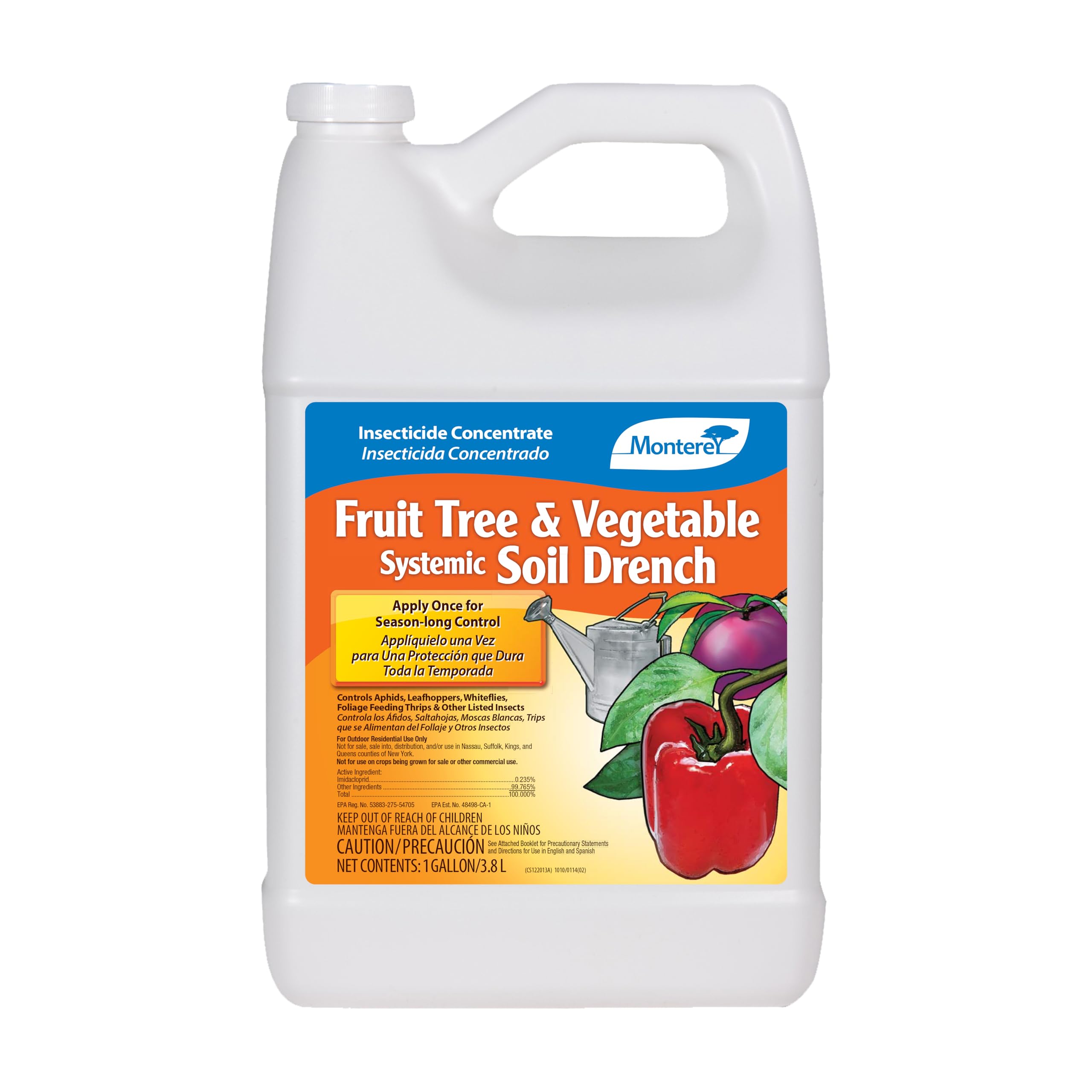
The Monterey systemic drench is the most convenient way to protect multiple trees from sucking insects like aphids, scale, and whiteflies without ever using a sprayer. The 2.15% imidacloprid solution mixes with water and is poured around the root zone, where it is taken up by the tree and distributed to every leaf and fruit over the season. One gallon treats a large number of trees, making this an excellent investment for any serious home orchardist.
Customer reports confirm that heavily infested trees — even an avocado tree that lost 70% of its leaves — made a full recovery with vigorous new growth after a single application. The convenience of soil application means no drift, no mixing at the tank, and no need to reweigh dosage for every spray session. The product is labeled for citrus, pome fruits, stone fruits, berries, grapes, nuts, and many vegetables.
The one major caveat is that imidacloprid is a neonicotinoid, and some users are concerned about its impact on pollinators. Because it is a soil drench applied after bloom, the exposure to bees is much lower than foliar sprays, but it remains a synthetic chemical. A small number of users reported it didn’t work on their specific pest — likely due to resistance in certain aphid populations. For most users, however, the year-long protection is unmatched.
What works
- One application provides season-long systemic control of sucking insects
- No spraying required — simply pour around the root zone
- Revived trees with severe leaf loss and pest damage
What doesn’t
- Neonicotinoid chemistry may be a concern for some organic growers
- Some localized resistance to imidacloprid reported in aphid populations
- Requires several days to fully move through the tree before pests are controlled
2. Bonide Captain Jack’s Citrus, Fruit & Nut Orchard Spray

Captain Jack’s is an all-in-one concentrate that combines insecticide, miticide, and fungicide action in a single 32 oz bottle that makes up to 6.4 gallons of finished spray. It targets beetles, fruit flies, caterpillars, spider mites, thrips, and scale while also preventing powdery mildew, rust, blight, and brown rot. For a small orchard where you need to simplify your spraying schedule, this single product replaces three separate bottles.
Users report fast knockdown of Japanese beetles on apple and cherry trees in about one hour, and effective elimination of tent caterpillars and whiteflies within two applications. The product is gentle enough for edible crops when used per label directions and can be applied up to the day before harvest. The mild sulfur residue on leaves is a sign it is working, but it does wash off easily with rain, requiring re-application after wet weather.
The main drawback is that the concentrate requires diligent mixing and a good tank sprayer for even coverage. Beginners may find the measuring ratios a bit technical at first, especially when switching between insect and disease control rates. The spray has a mild sulfur odor during application, though it fades quickly. For the combination of pest and disease control in one bottle, this is a stellar mid-range value.
What works
- Triple action kills insects, mites, and fungal diseases in one application
- Economical concentrate makes over 6 gallons of finished spray
- Fast knockdown of Japanese beetles — visible results within the hour
What doesn’t
- Requires precise measuring and a tank sprayer — not a grab-and-go product
- Re-application needed after heavy rain due to low residual persistence
- Slight sulfur odor during mixing and application
3. Hi-Yield 55% Malathion Spray
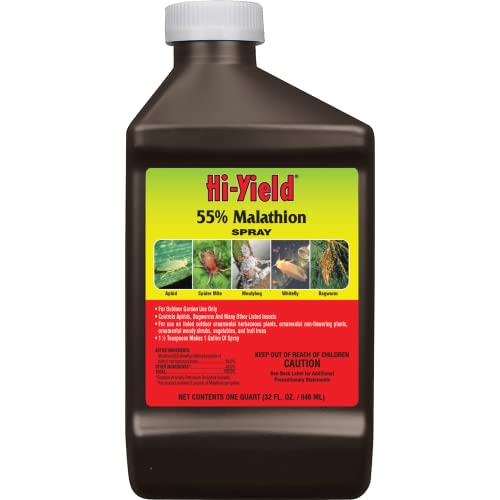
When nothing else works on stubborn infestations of scale, spider mites, or lace bugs, the Hi-Yield 55% Malathion concentrate is the heavy artillery in your shed. The high concentration (55% malathion) delivers a potent dose that home gardeners turn to as a last resort after neem, soap, and spinosad have failed. The product controls a wide spectrum of insects on fruit trees, vegetables, shrubs, and ornamentals.
Owner feedback is emphatic that this product eliminates pests that have resisted everything else — particularly spider mites on dahlias and bushes and mosquitoes around the yard. The key is to apply it in calm weather with no rain forecast for 24 hours. Because malathion is a broad-spectrum organophosphate, it also kills beneficial insects on contact, so timing the application to avoid bloom and bee activity is critical.
The biggest downside is the toxicity profile; users strongly recommend wearing full protective gear including a respirator, especially when spraying trees where drift could occur. This is not a product you want to use weekly or on a preventative schedule. Some states also restrict the sale of high-concentration malathion. For extreme infestations where all other options failed, however, this product delivers predictable, powerful results.
What works
- Extremely effective on stubborn scale, spider mites, and mosquitoes
- High 55% concentration means a little goes a long way per gallon
- Works on pests that have developed resistance to other treatments
What doesn’t
- Requires heavy protective gear — suspected carcinogen with strict handling rules
- Kills beneficial insects and pollinators on contact if mis-timed
- Not available in all regions and may require a pesticide license in some states
4. BioAdvanced 3-in-1 Fruit, Citrus & Nut Tree Spray

The BioAdvanced 3-in-1 is the ultimate convenience product for homeowners who want to protect a few trees without the chore of measuring concentrate. The ready-to-spray bottle connects directly to your garden hose, automatically mixing the product as you water. It delivers three types of protection — insecticide, miticide, and fungicide — in one pass. The formulation kills aphids, caterpillars, mites, and controls black spot, powdery mildew, and rust.
Customer reports praise its ability to eliminate mealybugs on blood orange trees and reduce wasp damage on apple trees. Users also note a visible reduction in rust on apple fruit and healthier foliage within weeks. Because it is applied through a hose, you can treat entire trees quickly — just turn on the water and spray. The product is safe to use up to the day before harvest, which is a major plus for edible crop growers.
Several owners note the spray head design is finicky, requiring careful hose pressure to avoid a weak stream or excessive runoff. Some users found they needed to spray leaf undersides separately to fully coat the pest. The ready-to-spray format is also more expensive per application than buying a concentrate. For small orchards of 2-5 trees where speed and simplicity matter most, this is the best entry-level option.
What works
- No measuring, no mixing — just attach to a garden hose and spray
- Triple action kills insects, mites, and fungal diseases simultaneously
- Safe for use on fruit up to the day before harvest
What doesn’t
- Spray head is sensitive to water pressure and can be inconsistent
- Higher cost per application compared to concentrate equivalents
- Coverage on dense canopies may require additional spot-spraying
5. Fertilome Spinosad Insecticide Ready to Spray
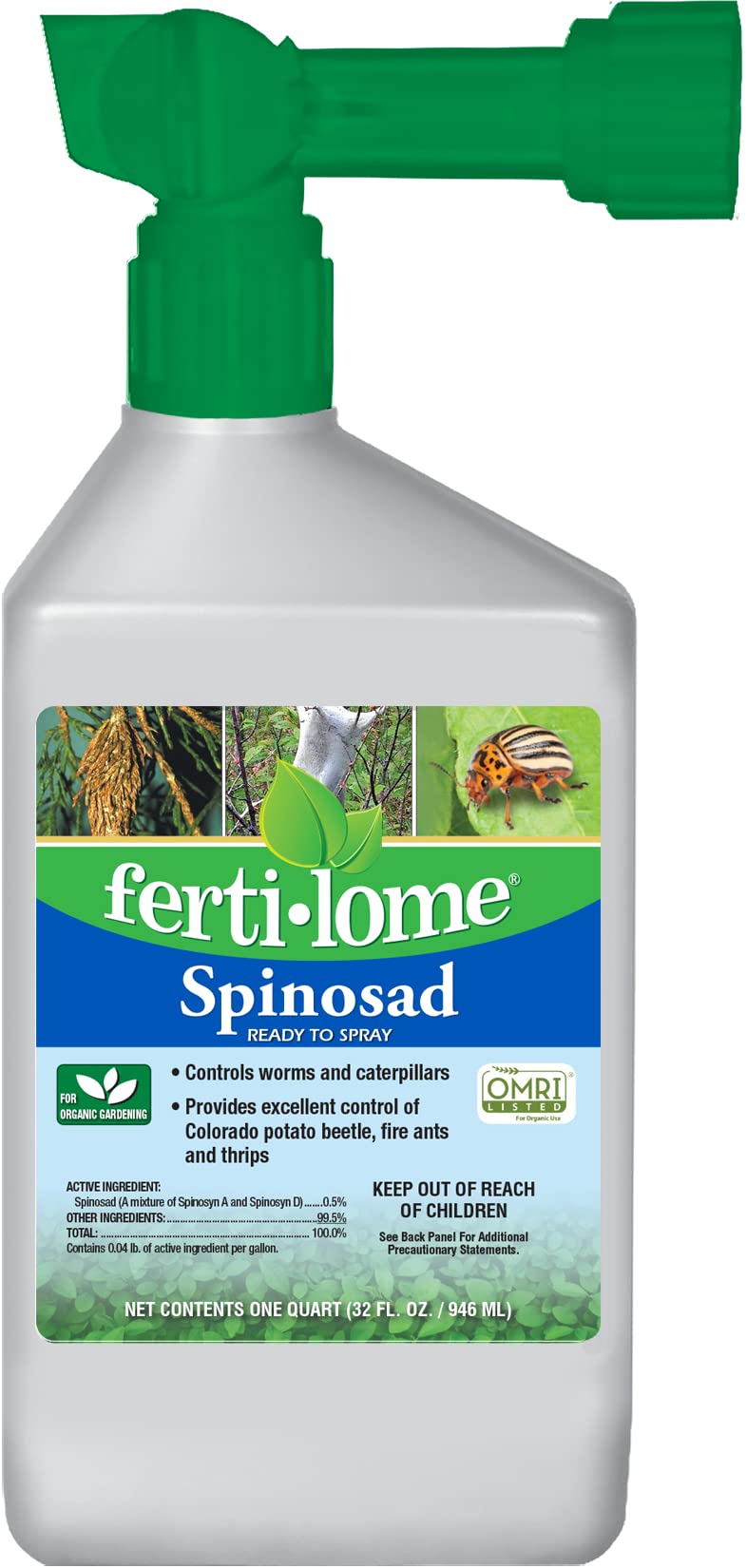
The Fertilome Spinosad RTS is a bee-safe organic insecticide that targets chewing insects like bagworms, tent caterpillars, codling moth larvae, and Colorado potato beetles. Spinosad is a naturally derived compound from soil bacteria that causes excited nervous systems in pests, leading to paralysis and death, while posing very low risk to mammals and birds when used correctly. This product is OMRI-listed, making it one of the few strong organic options for fruit trees.
Growers using this product in their orchards alongside neem oil report significantly reduced pest pressure on apple and pear trees, with clean fruit free of worm damage. It also performs well against webworms, crickets, and grasshoppers around the yard. The ready-to-spray bottle means no measuring is necessary, and the fine mist covers foliage well when applied with a battery-operated or hose-end sprayer.
It also has no systemic action, so coverage must be thorough on both leaf surfaces. A few users found it less effective on heavy aphid populations compared to systemic options. For organic growers fighting caterpillars and beetles, this is the top choice.
What works
- OMRI-listed and safe for organic gardening with low toxicity to mammals
- Highly effective on chewing worms, bagworms, and tent caterpillars
- Ready-to-spray bottle eliminates measuring errors
What doesn’t
- Degrades quickly in sunlight — best applied in the evening or on cloudy days
- No systemic action requires thorough coverage of all leaf surfaces
- Less effective on heavy aphid or sucking insect populations
6. Dr. Earth 8004 Ready to Spray Yard and Garden Insect Killer

The Dr. Earth 8004 is a ready-to-spray organic insecticide designed to be safe around pets, children, and beneficial insects like bees when applied at the right time. The formula uses natural pyrethrins and other botanical oils to kill a broad range of pests including aphids, mites, flies, and mosquitoes. It can be used on vegetables, fruit trees, ornamentals, and even hardscapes like driveways and walkways for perimeter pest control.
Users with dogs and grandchildren appreciate the peace of mind that comes with using a product free of synthetic toxins. The hose-end bottle makes application quick, and the spray breaks down in sunlight, leaving minimal residue. Many owners apply it weekly during peak pest season and report effective reduction of mosquitoes and flying insects around the yard. It is also effective on leaf undersides when direct contact is made.
The product is not as potent as synthetic alternatives for heavy infestations; users note it kills aphids on contact but does not affect ants or other hard-bodied insects well. It requires re-application more frequently, especially after rain or heavy dew. The bottle is made from ocean plastic, which is an environmental plus. For a maintenance spray program where safety is the top priority, this is an excellent pick.
What works
- Safe for use around pets and children with minimal toxicity concerns
- Hose-end design makes yard-wide treatment very fast
- Bottle made from recycled ocean plastic — an eco-conscious choice
What doesn’t
- Less effective on heavy infestations and hard-bodied pests like scale
- Requires frequent re-application after rain or irrigation
- Not systemic — must make direct contact with each pest
7. Summit Year-Round Spray Oil Concentrate

The Summit Year-Round Spray Oil is a pure horticultural oil concentrate that works by smothering soft-bodied insects like aphids, spider mites, scale, and whiteflies through physical suffocation rather than toxic chemistry. It is OMRI-listed for organic gardening and carries no synthetic pesticides. The oil can be used as a dormant spray in late winter to kill overwintering eggs and as a growing-season spray for active pest control.
Customer feedback highlights its effectiveness on a wide variety of plants beyond fruit trees, including roses, hydrangeas, and irises. One user noted that a single treatment eliminated armored scale on lemon trees. The concentrate is highly efficient — just a small amount per gallon of water makes it stretch far, and the product has virtually no scent, which is a relief compared to sulfur-based sprays. It also helps control powdery mildew, adding a secondary benefit.
The major drawback is that the oil can cause leaf burn if applied during hot, sunny weather above 85°F. Users must also avoid spraying when bees are active since the oil can coat their wings. The product does not discriminate between pests and beneficial insects on contact. Some users reported leaking bottles during shipping due to poor packaging — a simple fix from the manufacturer would make this a perfect entry-level solution.
What works
- 100% physical mode of action — no synthetic toxins or resistance concerns
- Excellent value: highly concentrated, a little goes a long way
- Controls both insects and powdery mildew with nearly no odor
What doesn’t
- Will burn leaves if applied in temperatures above 85°F
- Can harm bees on contact if sprayed during bloom
- Bottle packaging can leak during shipment without proper protection
Hardware & Specs Guide
Understanding Pre-Harvest Intervals (PHI)
The PHI is the legally mandated waiting period between your last spray application and the day you harvest fruit. Products like the Monterey systemic drench (imidacloprid) have a PHI of 0–21 days depending on the crop, while organic options like Summit Year-Round Oil and Dr. Earth have a 0-day PHI, meaning you can pick fruit on the same day you spray. Always cross-check the label for your specific tree species — applying a product with a 14-day PHI to apples 5 days before harvest could mean discarding the entire crop.
Concentrate vs Ready-to-Spray: Mixing Ratios
A 32 oz concentrate like Bonide Captain Jack’s can make 6.4 gallons of finished spray, giving you about 10–20 full-tree treatments depending on tree size. The same volume in a ready-to-spray (RTS) bottle is already diluted, so you typically get one treatment per bottle. If you own a 2-gallon tank sprayer, a single 32 oz concentrate bottle gives you three full refills — making concentrates 3-4x more economical. RTS bottles trade that value for zero measuring and hose-end convenience.
FAQ
How often should I spray my fruit trees for insects during the growing season?
Can I use a fruit tree insecticide when the tree is blooming without harming bees?
What is the difference between a horticultural oil and a synthetic chemical spray for fruit trees?
Final Thoughts: The Verdict
For most gardeners, the fruit tree spray for insects winner is the Monterey Fruit Tree & Vegetable Systemic Soil Drench because it delivers season-long control of sucking insects with a single root-zone application and no spraying. If you want a multi-purpose concentrate that kills both pests and fungal diseases at an economical price, grab the Bonide Captain Jack’s Orchard Spray. And for organic growers fighting caterpillars and beetles with a bee-safe option, nothing beats the Fertilome Spinosad Ready to Spray.