
Blueberries demand a soil pH between 4.5 and 5.5 — a range that kills most generic potting mixes instantly. Standard bagged soil, sitting around pH 6.5–7.0, starves blueberry roots of iron and manganese, turning leaves yellow and fruit yield to zero before the first season finishes. Getting the acidity right from the start isn’t optional; it’s the single survival factor that separates a bumper crop from a slow, chlorotic decline.
I’m Rikta — the co-founder and writer behind Lawn Gear Lab. I’ve spent hundreds of hours analyzing soil chemistry specs, comparing bagged formulation data, and cross-referencing verified owner feedback to isolate which products actually deliver sustained low pH without constant amendment.
Whether you are planting a single container blueberry on a patio or a row of highbush in raised beds, finding the right mix determines everything. This guide breaks down the strongest contenders for the potting soil for blueberries based on real pH performance, nutrient longevity, and drainage characteristics that match the plant’s shallow, fibrous root system.
How To Choose The Best Potting Soil For Blueberries
Selecting the right mix for blueberries requires a shift in mindset from general-purpose gardening. Blueberries are ericaceous plants, meaning their roots are biologically wired for acidic, well-oxygenated, and consistently moist (but never soggy) conditions. Three specific criteria separate a suitable mix from one that will cause yellowing, stunted growth, or plant death.
Acidity Level (pH 4.5–5.5)
The primary driver of blueberry health is soil pH. Above 5.5, iron and manganese become chemically unavailable to the roots, triggering chlorosis and reducing flower bud formation. Look for bags that explicitly state a low pH formulation or contain ingredients like sphagnum peat moss, pine bark, or elemental sulfur that naturally drive pH downward. Some blends include a slow-release 18-6-8 fertilizer that adds a nutrient boost without disrupting acidity.
Drainage and Aeration
Blueberry roots are fine, fibrous, and shallow — they will not tolerate waterlogged conditions. A mix that clumps together or holds standing moisture for more than a few hours invites root rot. Perlite, granite sand, and coarse bark fragments improve pore space and ensure excess water drains quickly. The best blends strike a balance: they retain enough moisture between waterings to keep the root zone damp without turning into mud.
Organic Certification and Ingredient Transparency
Because blueberries have a thin skin and are often eaten fresh, the soil they grow in matters for food safety. OMRI-listed or Non-GMO Project Verified products guarantee no synthetic chemicals, GMO-infested chicken manure, or toxic fillers are present. Blends handcrafted from human and feed-grade ingredients, enriched with humic acids and trace elements, provide a foundation that supports both microbial activity and long-term fertility.
Quick Comparison
On smaller screens, swipe sideways to see the full table.
| Model | Category | Best For | Key Spec | Amazon |
|---|---|---|---|---|
| Coast of Maine Acid Loving | Premium Organic | Large containers & raised beds | 20 Qt volume, low pH sphagnum peat | Amazon |
| Perfect Plants Blueberry 8qt | Organic Premium | Multiple potted bushes | 8 Qt, 18-6-8 slow-release fertilizer | Amazon |
| Perfect Plants Blueberry 4qt | Organic Potting Mix | Single container or repotting | 4 Qt, peat moss + composted pine bark | Amazon |
| Earth Science Fast Acting Sulfur | pH Corrector | Amending existing neutral soil | 5 lb granules, lowers pH fast | Amazon |
| Dr. Earth Acid Lovers | Organic Fertilizer | Feeding existing acid-loving shrubs | 4 lb granules, N-P-K 0.3-0.4-3 | Amazon |
| Omitgoter Blueberry Soil Mix | Natural Organic | Entry-level container planting | 4 Qt, peat + coir + perlite | Amazon |
| Jessi Mae Potting Soil | Indoor Mix | Small potted houseplants & seedlings | 4 Qt, slightly acidic + perlite | Amazon |
In‑Depth Reviews
1. Coast of Maine Organic & Natural Planting Soil for Acid Loving Plants

The Coast of Maine blend is a 20-quart premium organic compost mix formulated with low pH sphagnum peat moss, composted manure, and aged bark — all OMRI-listed for organic use. The bag volume alone makes it the most economical option for filling multiple 10- to 14-inch blueberry containers or topping off raised beds. Owners consistently report their blueberries, strawberries, and rhododendrons greening up and setting fruit within weeks of transplanting, a sign that the acidity (target pH 4.5–5.5) and drainage balance are dialed in.
The texture is lightweight but not dusty, with visible perlite and bark fragments that prevent compaction over repeated waterings. Unlike many bagged soils that arrive smelling rancid from anaerobic storage, Coast of Maine uses aerobic composting, which keeps the biological activity high without objectionable odor. For gardeners managing several large containers or a dedicated berry bed, this bag-to-quality ratio is unmatched in this lineup.
One limitation: the bag is heavy at 20 quarts, so maneuverability is a factor. Also, this is a complete planting soil rather than a pure pH amendment — if your starting soil is extremely alkaline (pH above 7.5), you may need to supplement with elemental sulfur to bring levels into range. But as a standalone, ready-to-use mix for typical acidic-soil plants, it delivers consistency that justifies its mid-premium positioning.
What works
- Large 20-quart bag at a competitive per-quart value
- OMRI-listed and sustainably produced since 1996
- Visible perlite and bark create excellent drainage
What doesn’t
- Bag is heavy and awkward to carry for smaller gardeners
- May require supplemental sulfur for very alkaline starting soil
2. Perfect Plants Specialty Blueberry Potting Mix (8qt)
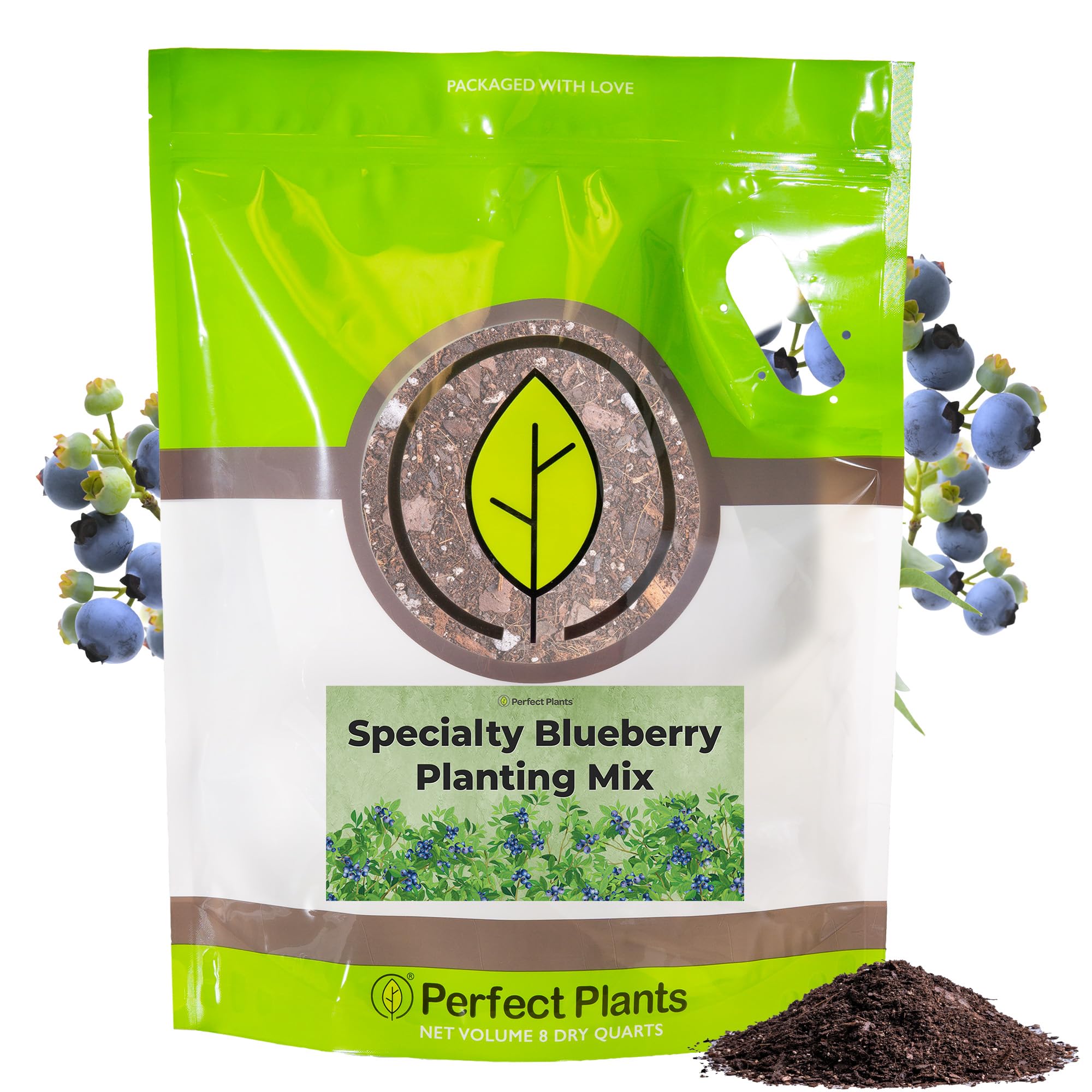
The larger 8-quart bag from Perfect Plants is the same hand-mixed formula — composted pine bark, granite sand, peat moss, and a slow-release 18-6-8 fertilizer designed to feed blueberry roots for up to 12 months — but in a size that fits multiple containers or a single deep raised bed. For anyone repotting two or three established blueberry bushes, having 8 quarts on hand eliminates the half-bag shortage that the 4-quart version can create.
Owner reports consistently highlight how potted blueberry bushes “perked up in a few days” after being reported into this mix, with new leaf growth and visible flower buds appearing rapidly. The granite sand adds a gritty texture that stabilizes the container and prevents the soil from settling into a dense mass over time. The 18-6-8 N-P-K ratio is specifically calibrated for acid-loving fruit shrubs, delivering a steady nitrogen release without the spike that could burn sensitive roots.
As with the 4-quart sibling, a minority of users have reported pH readings closer to alkaline when using an electronic probe. This may reflect regional tap water alkalinity building up in containers over several months. Regular testing and occasional sulfur top-dressing are wise precautions. Still, for gardeners managing multiple bushes, the 8-quart bag offers the best per-volume value among handcrafted organic blends.
What works
- 12-month slow-release fertilizer built into the mix
- Resealable bag keeps unused soil fresh for next season
- Granite sand improves container stability and drainage
What doesn’t
- Some batches have tested higher pH than advertised
- Price per quart is higher than bulk regional blends
3. Perfect Plants Specialty Blueberry Potting Mix (4qt)
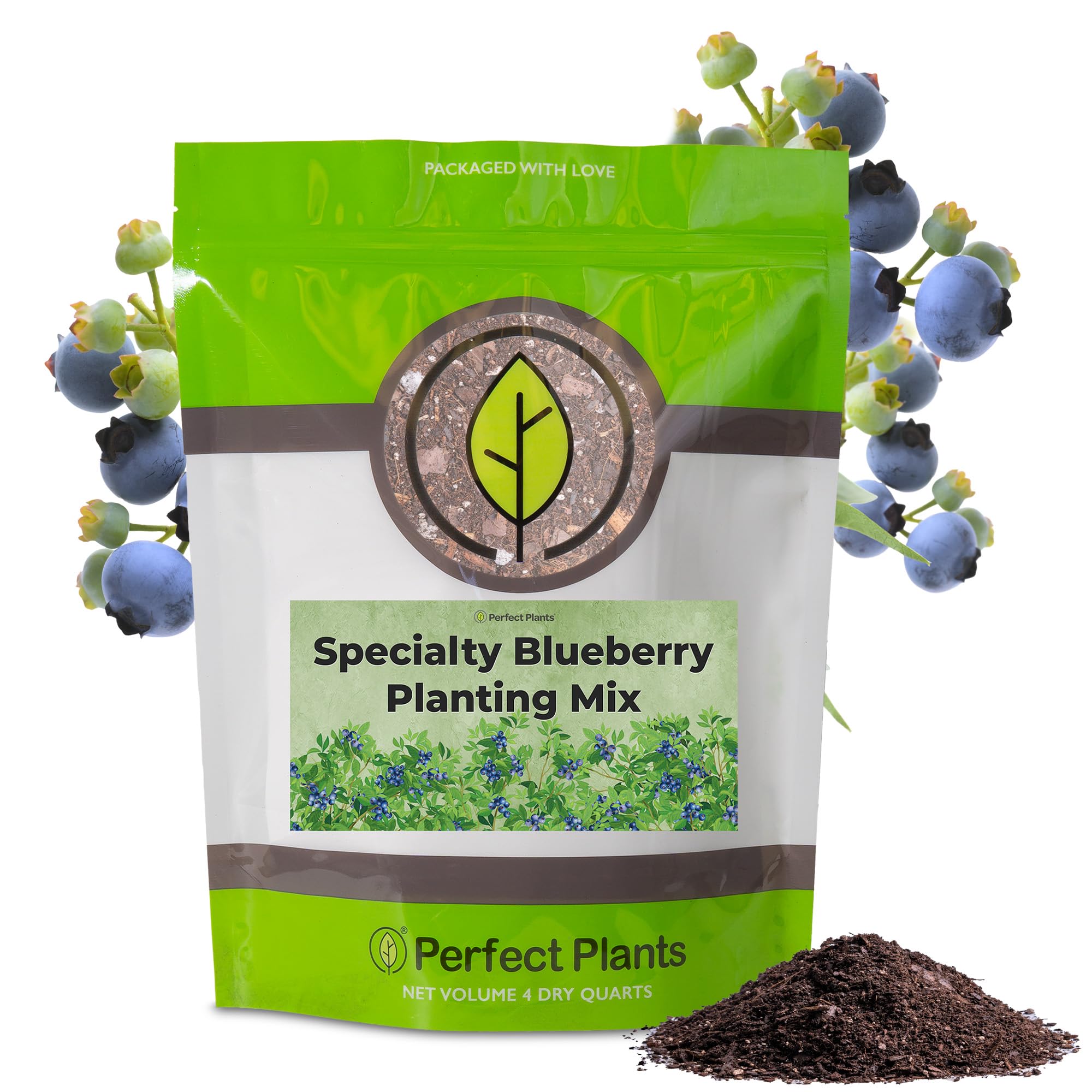
This 4-quart entry from Perfect Plants is the smallest bag in the brand’s blueberry-specific lineup, but it packs the same hand-mixed formula that more than 90% of buyers rate 4 or 5 stars. Composted pine bark and sphagnum peat moss provide the low pH baseline, while granite sand opens up pore space for root oxygenation. The 18-6-8 slow-release fertilizer is already incorporated, meaning you can plant a young blueberry directly into this medium and not worry about feeding for the rest of the growing season.
The bag itself is heavy-duty and resealable — a small detail that matters when you only use a portion for a 6-inch pot. Multiple owners noted that their first-time blueberry plantings “flourished” and “had buds already” within days of repotting. The composted pine bark doesn’t break down as quickly as coir or peat alone, giving the mix structural longevity that supports roots through a second or third season before amendment is necessary.
The primary drawback is that some verified purchasers reported their bag arrived with a pH closer to neutral, causing leaf discoloration in their plants. A pH meter test before planting is recommended. Additionally, 4 quarts is only sufficient for a single 8-inch pot or one shallow planter — anyone with multiple bushes will need to buy several bags or step up to the 8-quart version.
What works
- Ready-to-use with built-in 12-month fertilizer schedule
- Compacted pine bark resists decomposition for longer structure
- Resealable bag protects unused mix from moisture
What doesn’t
- 4 quarts is small; you’ll need multiple bags for more than one bush
- Inconsistent pH batch-to-batch has been reported
4. Dr. Earth Acid Lovers Azalea, Camellia, Rhododendron & Maple Fertilizer

Dr. Earth’s Acid Lovers is technically a granular fertilizer, not a potting mix, but it earns its spot here because it is the only Non-GMO Project Verified dry amendment in the U.S. market — a critical distinction for blueberry growers who want to avoid synthetic additives. The N-P-K ratio of 0.3-0.4-3 is a gentle, low-nitrogen feed designed to maintain acidic soil conditions without overwhelming roots with a high salt index. The formula is handcrafted from human and feed-grade ingredients and enriched with humic acids, proteins, and trace elements that rebuild soil biology.
Owner reports on acid-loving shrubs like gardenias, rhododendrons, and azaleas confirm that a simple broadcast followed by watering can revive a yellowing, non-blooming plant within weeks. One reviewer described a rhododendron that “hadn’t bloomed for two years” covering itself in pink flowers after a single application. For blueberries specifically, the low phosphorus (0.4%) avoids locking out micronutrients, while the potassium boost (3%) supports fruit development and root hardiness.
This product is not a standalone planting medium. You will need to mix it into an existing acidic soil or use it as a top-dress for established container blueberries. The 4-pound bag covers a medium-sized planting area, but repeated applications every 4–6 weeks during the growing season are necessary for sustained results. Still, for the grower committed to organic purity, the Dr. Earth line sets a ceiling that few competitors approach.
What works
- Non-GMO Project Verified and OMRI-listed purity
- Humic acids and trace elements rebuild microbiome
- Very gentle N-P-K ratio safe for young blueberry roots
What doesn’t
- Requires mixing into soil; not a standalone potting mix
- Needs repeat applications every 4–6 weeks during active growth
5. Earth Science Fast Acting Sulfur Granules

When your blueberry soil pH creeps above 5.5, Earth Science’s Fast Acting Sulfur Granules provide a targeted correction. Unlike blended potting soils that only maintain a starting pH, this product is a straight elemental sulfur supplement formulated with Nutri-Bond Technology — a patented coating that bonds the granules to soil particles to reduce runoff and extend the pH-lowering effect. A single 5-pound bag can treat roughly 200 square feet of garden bed or mix into several large containers.
Owner feedback confirms the sulfur works quickly on hydrangeas and blueberries, with visible greening of foliage within two to three weeks of application. The 5-pound granular format meters out easily with a hand trowel, and the product is labeled safe for all grass types as well, so it can double as a lawn acidifier if needed. The Nutri-Bond coating also means the sulfur stays where you put it rather than washing through the pot with the first few waterings, a common complaint with powder-based sulfur products.
The main trade-off: some users report that the “fast-acting” claim is relative. The granules require several wet-dry cycles to fully dissolve and react with soil microbes, so you won’t see a pH swing overnight. For very high starting pH (above 7.5), multiple applications over several months are needed. This is not a planting medium — use it as a corrective tool when your bagged soil or tap water shifts pH out of the blueberry range.
What works
- Nutri-Bond Technology reduces runoff and improves longevity
- Large 5-pound bag covers substantial area or multiple containers
- Safe for people and pets; can be used on lawns too
What doesn’t
- Requires several wet-dry cycles to dissolve fully
- Not a standalone potting mix; only a pH amendment
6. Omitgoter Blueberry Soil Mix (4qt)
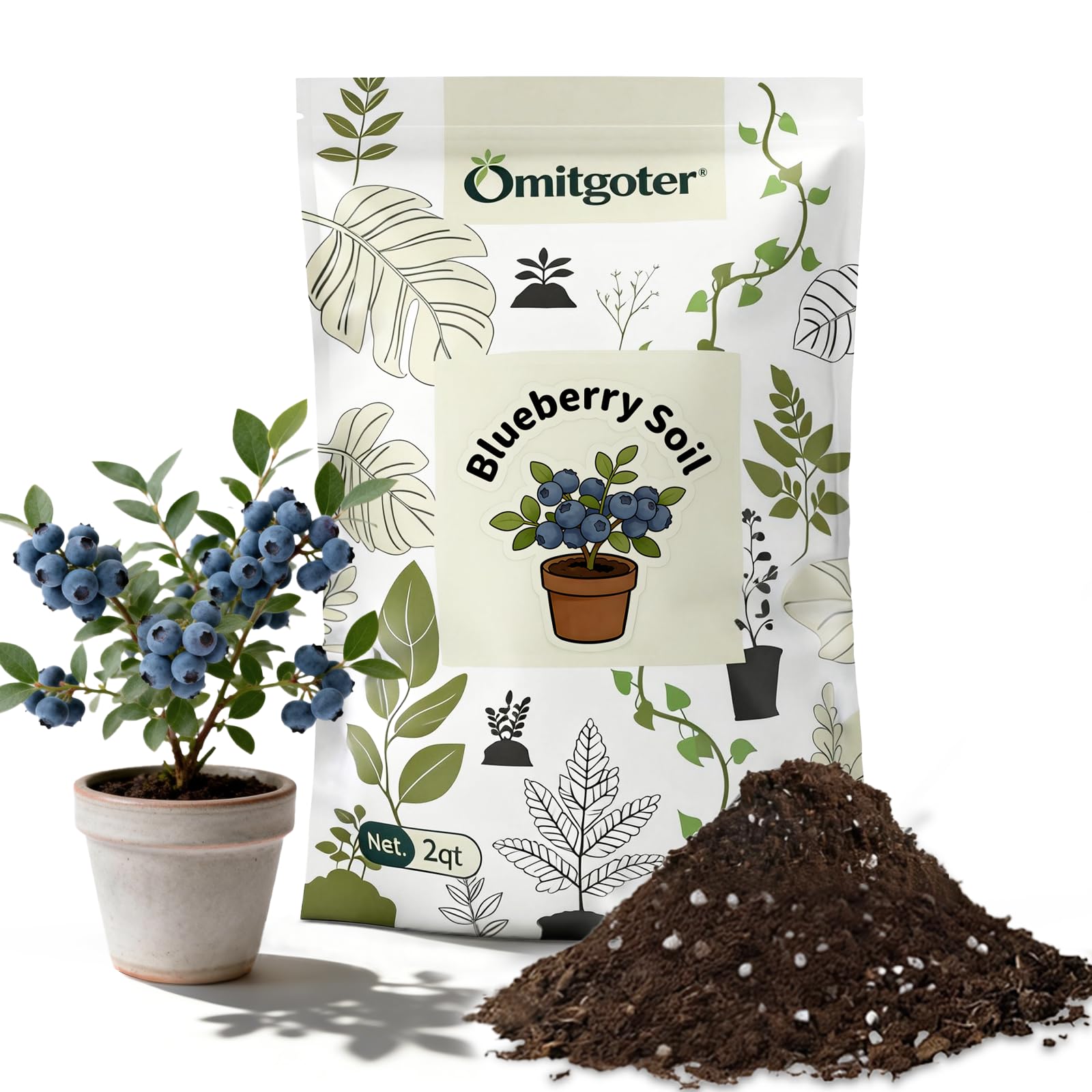
The Omitgoter Blueberry Soil Mix is a 100% natural organic blend of pure peat moss, coconut coir, perlite, bark, and humus — no synthetic additives, no slow-release salts, just a straightforward growing medium designed to provide superior drainage and aeration. For the budget-conscious grower who wants to avoid mystery fillers, this bag offers transparency: you can see the individual constituents. The coconut coir helps retain moisture without compaction, and the perlite ensures excess water exits the root zone rapidly.
User reviews, while not blueberry-specific in many cases, highlight the mix’s effectiveness for bonsai repotting and general container use — a testament to the lightweight, fluffy texture that roots penetrate easily. The humus content provides a mild nutrient base that can sustain a young plant for a few weeks before supplemental feeding is required. For a single starter blueberry bush in a 6-inch pot, this is a clean, no-amendment approach.
The downside is bag size: 4 quarts is the smallest practical quantity for blueberries, and multiple bags may be needed for a single 12-inch container. Additionally, the lack of any built-in fertilizer means you must add an acid-specific feed (like Dr. Earth Acid Lovers) within the first month to prevent nutrient deficiency. The price point is low enough that it works as a bulk base that you amend yourself, but it is not a complete solution out of the bag.
What works
- 100% natural organic ingredients with no synthetic additives
- Visible perlite and bark create excellent aeration
- Low price makes it viable as a base mix for DIY blends
What doesn’t
- Very small bag — likely insufficient for a single 12-inch pot
- No built-in fertilizer; must supplement with acid feed quickly
7. Jessi Mae Potting Soil (4qt)

Jessi Mae’s Slightly Acidic Organic Potting Soil is hand-mixed in small batches using perlite, organic materials, and a pH formulation that leans acid — though it is explicitly marketed for peace lilies, snake plants, and pothos rather than blueberries. The texture is light and fluffy, with visible perlite grains that ensure the mix stays well-draining. For the home grower looking to start a single blueberry seedling in a small pot, this bag provides a sterile, pest-free, chemical-free base that is immediately ready to use.
Buyer feedback notes that the soil has a distinct organic smell for the first few days after opening — a sign of active microbial life that dissipates as the bag aerates. Snake plant owners report vigorous new growth, and peace lily care is simplified thanks to the consistent drainage that prevents the root rot common in overwatered houseplants. The pH, while labeled “slightly acidic,” is likely around 5.8–6.5, which is borderline for blueberries (which need 4.5–5.5), making this a better option for mixing with peat moss than a standalone blueberry medium.
This mix lacks the bark chunks and granite sand that stabilize larger containers, so it compresses faster over repeated waterings. It also contains no slow-release fertilizer — you will need to start feeding with a low-N acid fertilizer within the first two weeks. For the dedicated blueberry grower, Jessi Mae serves best as a seed-starting or propagation medium rather than a long-term home for a fruit-bearing bush.
What works
- Hand-mixed in small batches for consistent quality
- Light, airy texture with visible perlite for drainage
- Food-grade packaging and no chemical additives
What doesn’t
- Slightly acidic pH is borderline for true blueberry needs
- Compresses faster than bark-heavy mixes
- No built-in fertilizer requires immediate supplemental feeding
Hardware & Specs Guide
pH Range
The ideal pH for blueberries is 4.5–5.5. Most bagged mixes that include sphagnum peat moss and pine bark start in this range, but pH can drift upward over time due to alkaline tap water or degrading organic matter. A digital soil pH meter is the most reliable way to check; test at planting time and every 4–6 weeks during the growing season.
N-P-K Ratio
Blueberries prefer a low-nitrogen, low-phosphorus feed. Ratios like 0.3-0.4-3 (Dr. Earth) provide gentle nutrition without salt burn, while 18-6-8 (Perfect Plants) offers a balanced slow-release that supports leaf growth and fruit set over 12 months. Avoid high-phosphorus blends (like 10-10-10), which can lock out iron.
FAQ
Can I use regular potting soil for blueberries if I add sulfur?
How often should I test the pH of my blueberry container soil?
Final Thoughts: The Verdict
For most gardeners, the potting soil for blueberries winner is the Coast of Maine Organic & Natural Planting Soil because it pairs a low pH formulation with a 20-quart volume that fills multiple containers at a fair per-quart cost, all while carrying OMRI organic certification. If you want a smaller bag with built-in 12-month slow-release fertilizer, grab the Perfect Plants Specialty Blueberry Mix (8qt). And for correcting existing neutral soil on a tight budget, nothing beats the Earth Science Fast Acting Sulfur Granules.