
Dropping a tree into a hole filled with native soil alone is a gamble that often ends in stunted growth or a slow decline. The missing variable is a biologically-active compost that kickstarts root establishment, buffers pH extremes, and delivers the slow-release nutrients a young tree needs to anchor itself for decades. Without the right organic matter in that planting hole, you’re essentially asking the tree to survive on whatever the excavation pit offers — and that’s rarely enough.
I’m Rikta — the co-founder and writer behind Lawn Gear Lab. I spend hundreds of hours cross-referencing NPK ratios, mycorrhizal inoculation rates, and OMRI certifications against thousands of verified owner reports to separate genuine biological soil builders from expensive bags of filler.
Whether you’re planting a bare-root sapling or a 15-gallon specimen, selecting the right compost for planting trees determines whether that tree thrives or merely survives its first three seasons.
How To Choose The Best Compost For Planting Trees
A tree’s root flare won’t tell you it’s starving until the damage is done. The right compost supplies a buffer against transplant shock while feeding the soil food web directly around the root ball. Here are the three factors that separate a true tree-planting amendment from a general garden filler.
Mycorrhizal Inoculation: Endo vs. Ecto
Newly planted trees depend on a symbiotic relationship between their roots and mycorrhizal fungi. Endomycorrhizae penetrate root cortical cells and benefit most deciduous trees and ornamentals. Ectomycorrhizae wrap around root tips and are critical for pines, firs, and spruces. A compost that contains both endo and ecto species gives you broad-spectrum coverage regardless of the tree genus you’re planting.
Organic Matter Percentage and Texture
Bagged compost varies wildly in actual organic content — anything below 40 percent is largely inert filler. For tree planting, you want a dark, crumbly texture that retains moisture without becoming waterlogged. Compost that feels heavy, smells sour, or contains visible sticks and plastic chunks indicates incomplete processing that can tie up nitrogen as it decomposes in the planting hole.
Slow-Release Nutrient Profile
Tree roots are sensitive to salt burn from synthetic quick-release fertilizers. A quality tree-planting compost relies on microbial digestion to deliver nitrogen, phosphorus, and potassium gradually over weeks and months. Look for an NPK ratio under 5-5-5 with calcium and sulfur listed — these secondary nutrients support cell wall development and enzyme function in establishing root systems.
Quick Comparison
On smaller screens, swipe sideways to see the full table.
| Model | Category | Best For | Key Spec | Amazon |
|---|---|---|---|---|
| Espoma Bio-Tone Starter Plus | Granular | Immediate root establishment | 4-3-3 with Endo & Ecto Mycorrhizae | Amazon |
| GS Plant Foods Root Ruckus | Liquid Concentrate | Quick absorption + foliar feeding | Humic Acid + Sea Kelp + Mycorrhizae | Amazon |
| Blue Ribbon Organics Compost | Solid Bagged Compost | Pure organic matter for soil amendment | 7.9 Gallons, OMRI Certified | Amazon |
| Espoma Evergreen-Tone | Granular | Pine, fir, spruce & broadleaf evergreens | 4-3-4 with 5% Sulfur | Amazon |
| Alaska Fish Fertilizer | Liquid | Nitrogen-hungry young transplants | 5-1-1 OMRI Listed 115 fl oz | Amazon |
| The Andersons Dirt Booster Plus | Powder/Compost Starter | Amending large holes or lawn-to-garden | Biochar + Humic Acid + Microbes | Amazon |
| Plantonix Worm Bliss | Pure Worm Castings | Gentle microbial boost for sensitive plantings | 8 Qts 100% Pure Castings | Amazon |
In‑Depth Reviews
1. Espoma Organic Bio-Tone Starter Plus 4-3-3
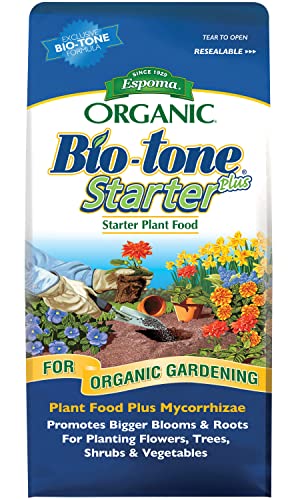
The Espoma Bio-Tone Starter Plus hits every requirement for a tree-planting compost: it contains both endo and ectomycorrhizal fungi, so it covers deciduous maples and oaks as well as pines and firs in a single application. The 4-3-3 NPK analysis is moderate enough to avoid root burn even when mixed directly into the backfill, and the added 5% calcium supports cell wall formation during the first weeks of root growth. Owners consistently report faster establishment and denser root development compared to planting with native soil alone.
This formula is designed specifically for transplanting and planting — it’s not a maintenance fertilizer for established trees. The granules need to be mixed thoroughly with the soil used to refill the planting hole so they sit right in the root zone. Multiple verified reviews mention that the product smells strongly of barnyard manure, which is a normal sign of active organic matter rather than a defect.
For anyone planting a single specimen tree or a whole orchard, the two-pack provides enough material to treat several planting holes without running back to the garden center. The brand has been manufacturing natural organics since 1929, and this starter is registered as an Organic Input Material.
What works
- Contains both endo and ectomycorrhizal species for universal tree compatibility.
- Calcium-rich formula supports structural root development.
- Registered for organic production with clear mixing instructions.
What doesn’t
- Strong manure odor during application can be off-putting.
- Granular form requires thorough soil mixing rather than top-dressing.
2. GS Plant Foods Root Ruckus Compost Fertilizer
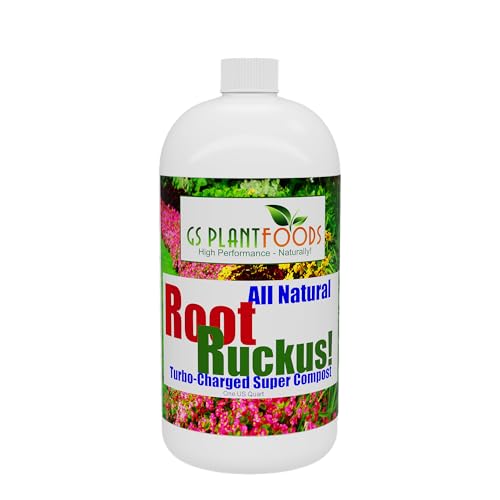
Root Ruckus functions as a liquid compost activator rather than a bulk soil amendment. The formula combines organic humic acid, liquid kelp, and soil-colonizing mycorrhizae into a concentrate that can be diluted and applied as a drench or foliar spray. For tree planting, this is particularly useful when you want to inoculate the root ball of a container-grown tree before backfilling, or when you need to deliver nutrients to trees already in the ground without disturbing the soil structure.
The mixing ratio requires precision — 3 ounces per gallon for foliar application or 4 ounces per gallon for soil drench. Owners report that it revived cold-shocked tomato transplants almost overnight, which suggests the humic acid and kelp combination rapidly reduces transplant stress. Multiple reviews confirm that using it alongside a standard granular fertilizer program improves overall nutrient uptake without adding salt load.
This product works synergistically with other fertilizers rather than replacing them. For bare-root tree planting, it’s an excellent root soak before the tree goes into the hole. The 32-ounce bottle covers a significant number of trees when used at the recommended dilution rates.
What works
- Rapidly delivers humic acid and kelp directly to root zone.
- Works as a transplant shock reducer for newly planted trees.
- Compatible with existing fertilizer programs without risk of burn.
What doesn’t
- Liquid form adds no bulk organic matter to the planting hole.
- Requires precise dilution measurement for safe application.
3. Blue Ribbon Organics OMRI Certified Organic Compost

This is the closest thing to “black gold” in a bag that you can buy for tree planting. The compost is OMRI Certified for organic use, and verified owners describe it as rich, dark, and earthy with absolutely no synthetic fillers, sticks, plastic, or glass contaminants. When mixed into a planting hole, it dramatically improves soil structure and aeration while increasing water retention — two critical factors for young trees planted in compacted suburban lots or heavy clay soils.
The bag weighs approximately 32 to 35 pounds, and the material is safe to use at any concentration in the backfill. Owners note that it rehydrates easily even when slightly dry, unlike some bagged composts that become hydrophobic. It pairs well with worm castings or mycorrhizal inoculants for an extra biological punch, but it performs admirably on its own as a straight soil amendment.
The main trade-off is the higher cost per volume compared to bulk delivery compost from a landscape supplier. However, for a homeowner planting a few high-value specimen trees, the purity and consistency of this material justify the premium. The lack of weed seeds and unwanted debris means you’re not introducing problems along with your organic matter.
What works
- OMRI Certified with no visible contaminants or synthetic additives.
- Excellent water retention and aeration for root penetration.
- Safe to use at any concentration directly in the planting hole.
What doesn’t
- Premium cost per bag versus bulk landscape compost.
- Heavy bag may be cumbersome for smaller planting projects.
4. Espoma Organic Evergreen-Tone 4-3-4

If you’re planting needle leaf evergreens like pine, spruce, fir, or juniper — or broadleaf evergreens such as azaleas, rhododendrons, and camellias — this dedicated formula provides the 4-3-4 analysis with 5% sulfur that these species require to maintain proper soil acidity and chlorophyll production. The granular form requires no mixing, making it straightforward to incorporate into the backfill during planting or to top-dress around established trees twice per year.
Verified owners report visible greening within two weeks of application, even on newly transplanted evergreens that often sulk for a full season before showing growth. The slow-release organic breakdown feeds the tree gradually without the surge-and-crash cycle of synthetic fertilizers. The 18-pound bag provides excellent coverage for multiple large planting holes or for feeding an entire evergreen hedge row.
The exclusive Bio-tone formula includes mycorrhizal fungi to assist root colonization, though the focus is more on acid-loving species support than on broad-spectrum fungal inoculation. The product is approved for organic gardening and manufactured by Espoma’s facility in the United States.
What works
- Formulated specifically for acid-loving evergreens with added sulfur.
- Visible results in leaf color and growth within weeks of application.
- Ready-to-use granular form requires no mixing or dilution.
What doesn’t
- Not suitable for deciduous trees or general-purpose planting.
- Barnyard smell due to chicken manure base.
5. Alaska Fish Fertilizer 5-1-1 OMRI Listed
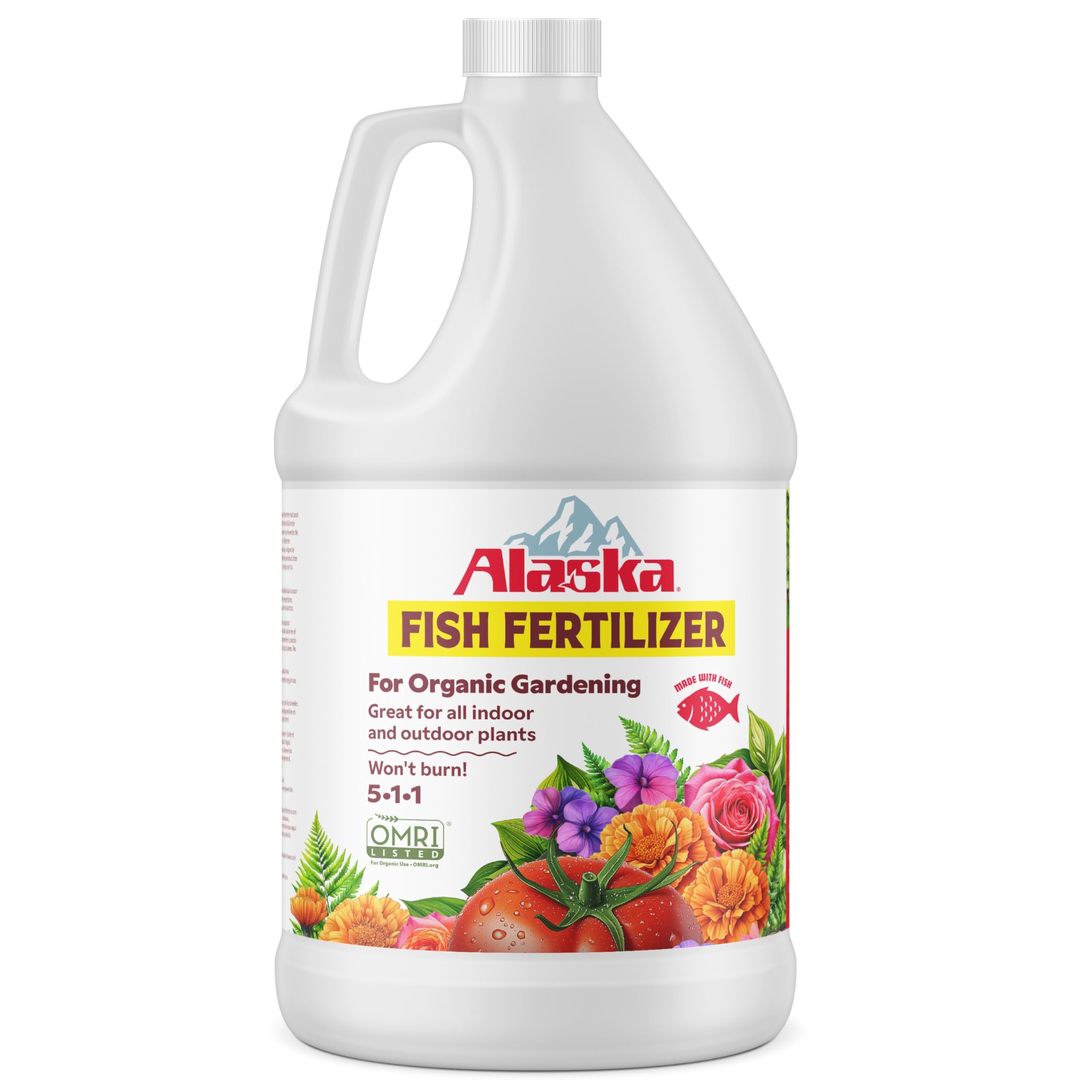
The Alaska Fish Fertilizer is a time-tested liquid option for giving newly planted trees a gentle, nitrogen-rich start. The 5-1-1 ratio delivers primarily nitrogen to drive vigorous leaf and stem growth, while the OMRI listing confirms it meets organic production standards.
The 115-ounce jug covers up to 1,000 square feet when mixed according to the instructions, making it a cost-effective choice for larger planting projects. The fish emulsion is cold-processed to preserve micronutrients, and the deodorized formula dissipates within a day after application. However, the smell is unmistakably fishy during mixing and immediately after watering — users recommend applying it outdoors or in well-ventilated areas and keeping pets away until it soaks in.
Because the phosphorus and potassium levels are relatively low, this product works best as a complement to a more balanced compost or starter fertilizer. For trees already planted in good soil, it provides a quick foliar or soil drench boost during the first growing season without overloading the root zone with salts.
What works
- High nitrogen content drives rapid vegetative growth in young trees.
- OMRI listed and safe for organic gardens when used as directed.
- Large jug volume provides excellent coverage for the cost.
What doesn’t
- Strong fish odor lingers for several hours after application.
- Low P and K require supplementation for balanced root and flower development.
6. The Andersons Dirt Booster Plus All-Natural Compost Starter
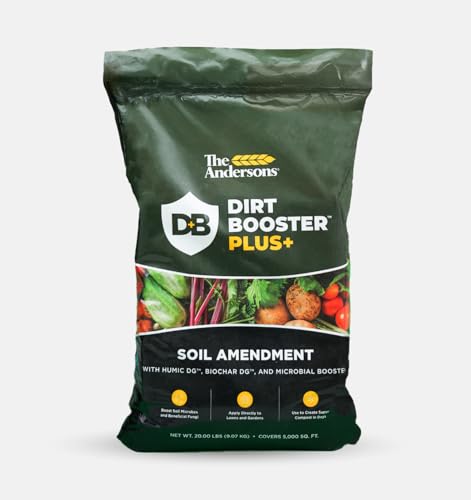
Dirt Booster Plus takes a different approach — it is a compost starter and soil amendment rather than a finished compost. The powder contains microbials, biochar, humic acid, corn distillates, and molasses designed to accelerate the breakdown of existing organic matter in your soil. For tree planting, this is ideal when you’re working with poor native soil that needs a biological jumpstart rather than just a layer of topdressing.
Owners report that it works well for breaking up heavy clay soils and improving soil tilth over a single growing season. The recommended application method is broadcasting with a spreader, which makes it practical for planting multiple trees or converting a lawn area into a tree bed. The formulation aims to produce rich compost in 7 to 12 days when used as a starter, but as a direct hole amendment it builds long-term soil biology rather than delivering immediate nutrients.
The Andersons is a well-known name in professional turf and soil management, and this product can be used alongside any fertilizer program or alone. However, it is not a substitute for finished compost if your tree needs immediate organic matter in the planting hole. Plan to use it in conjunction with a bagged compost or granular starter for best first-season results.
What works
- Biochar and humic acid combination improves long-term soil structure.
- Easy to apply with a broadcast spreader for large areas.
- Stimulates microbial activity in poor or compacted native soils.
What doesn’t
- Not a finished compost — requires existing organic matter to activate.
- Results are gradual; not suited for immediate nutrient correction.
7. Plantonix Worm Bliss Organic Worm Castings

Worm castings are the gentlest, most biologically dense amendment you can add to a tree planting hole. This product from Plantonix is 100% pure worm castings — OMRI-Listed, vegan-fed, and screened to remove debris. The castings introduce a massive population of soil microbes that convert nutrients into plant-available forms while improving the soil’s ability to retain water. For the root system of a newly planted tree, this means less transplant shock and more consistent moisture availability.
The 8-quart bag provides enough volume to mix into several planting holes, though you will need more material for large specimen trees. Verified owners note that the castings are moist and clean without the dirt or sand filler common in cheaper brands. Citrus trees, potted specimens, and in-ground saplings all showed strong new growth after incorporation. The castings are manure-free and carry no offensive odor.
Worm castings have a very low NPK value (typically around 1-0-0), so they are not a complete fertilizer. They function as a soil probiotic rather than a nutrient source. For best results with tree planting, combine Worm Bliss with a balanced starter like the Espoma Bio-Tone to cover both immediate nutrition and long-term biological activity.
What works
- 100% pure castings with no filler, sand, or synthetic additives.
- Excellent microbial diversity for improving soil health and water retention.
- Odorless and safe to use around pets and children.
What doesn’t
- Low nutrient concentration requires pairing with a balanced fertilizer.
- Volume per bag is modest relative to the number of planting holes needed.
Hardware & Specs Guide
Mycorrhizal Fungi Types
Endomycorrhizae penetrate root cortical cells and assist most deciduous trees, while ectomycorrhizae wrap around root tips and are essential for conifers. A compost that lists both endo and ecto species provides universal compatibility regardless of tree genus.
NPK Ratio Interpretation
Tree-planting composts should stay below a 5-5-5 ratio to avoid root burn. Numbers above this threshold often indicate synthetic salt-based fertilizers rather than true organic compost. Secondary numbers like calcium and sulfur content matter for cell wall strength and enzyme function.
Organic Matter Percentage
Finished compost should contain at least 40 to 60 percent organic matter. Lower percentages indicate a high proportion of inert filler such as sand or peat moss. Dark, crumbly texture with an earthy smell signals properly decomposed organic material.
Application Form: Liquid vs. Granular vs. Solid
Liquid concentrates deliver microbes and nutrients directly to the root zone quickly but add no bulk organic matter. Granular starters mix into the backfill for slow release. Solid bagged compost improves soil structure, aeration, and water retention simultaneously.
FAQ
Can I use regular garden compost for planting trees or do I need a special formula?
How deep should I mix compost into the hole when planting a tree?
Will a high-nitrogen fish fertilizer hurt a newly planted tree?
Should I add worm castings directly into the planting hole or top-dress them?
Is compost enough on its own or do I still need a starter fertilizer?
Final Thoughts: The Verdict
For most gardeners, the compost for planting trees winner is the Espoma Bio-Tone Starter Plus because it delivers both endo and ectomycorrhizal fungi with a balanced 4-3-3 NPK analysis in an easy-to-use granular form that prevents root burn and establishes strong root systems. If you need a liquid concentrate that reduces transplant shock rapidly, grab the GS Plant Foods Root Ruckus. And for pure organic matter that improves soil structure and water retention from day one, nothing beats the Blue Ribbon Organics Compost.