
Millipede invasions don’t happen by accident — they signal excessive moisture and decaying organic matter around your foundation, and most homeowners don’t realize that a contact spray alone won’t stop the infestation at its source. The real battle is won in the soil and mulch layers where these arthropods breed and feed, which means your insecticide choice must match the biology of the problem.
I’m Rikta — the co-founder and writer behind Lawn Gear Lab. I’ve analyzed dozens of insecticide formulations, pored over label specs for active ingredient percentages, delivery methods, and residual duration, and cross-referenced hundreds of verified owner reports to isolate what actually ends a millipede siege versus what merely sweeps the problem under the rug for a few days.
Whether you’re dealing with a damp basement crawl space or a mulch bed surrounding your patio, choosing the right insecticide for millipedes comes down to matching the active ingredient with the application site and understanding how long each product stays active in moist conditions.
How To Choose The Best Insecticide For Millipedes
Millipedes are moisture-loving decomposers that live in leaf litter, mulch, and damp soil. Unlike ants or roaches that forage for food, millipedes move in mass when conditions get too wet or dry, so effective control starts with selecting the right formulation and active ingredient for your specific battleground.
Active Ingredient Penetration
Millipedes have a tough, segmented exoskeleton, but they absorb insecticides through their underbelly and leg joints. Pyrethroids like cyfluthrin and deltamethrin deliver fast knockdown, while organophosphates like acephate provide systemic activity that works even after the spray dries. For heavy infestations, look for dual-action formulations that combine a quick-kill pyrethroid with a residual barrier agent.
Granules vs. Liquids vs. Dusts
Broadcast granules (active ingredients like carbaryl or bifenthrin) work best for large lawns where millipedes migrate from the turf toward the foundation. Liquid concentrates allow targeted crack-and-crevice application around doors, windows, and baseboards. Dust formulations excel in wall voids, under siding, and in crawl spaces where moisture doesn’t wash them away — critical for millipede hideouts that stay damp.
Residual Duration in Wet Conditions
Millipede activity spikes after rain or heavy irrigation, so your insecticide must hold up to moisture. Microencapsulated liquids and water-resistant dusts can stay active for 30–90 days in sheltered locations. Granules that require watering-in often last 3 months, making them ideal for a single spring application that carries through the peak invasion season.
Quick Comparison
On smaller screens, swipe sideways to see the full table.
| Model | Category | Best For | Key Spec | Amazon |
|---|---|---|---|---|
| Ortho Lawn Insect Killer Granules | Granule | Broadcast yard protection | 3-month residual | Amazon |
| Atticus Adjourn SC | Liquid Concentrate | Indoor & outdoor spray | Deltamethrin 4.75% | Amazon |
| Sevin Lawn Insect Granules | Granule | Large-area perimeter defense | 20 lbs coverage | Amazon |
| Atticus Tirade 1% Dust | Dust | Wall voids & crawl spaces | Cyfluthrin 1% | Amazon |
| Martin’s Permethrin 13.3% | Liquid Concentrate | Perimeter barrier spray | Permethrin 13.3% | Amazon |
| Acephate 97UP | Granule | Targeted mound & spot treatment | Acephate 97% | Amazon |
| Hi-Yield Garden, Pet & Livestock Dust | Dust | Pet-safe garden dusting | 4 lbs coverage | Amazon |
In‑Depth Reviews
1. Ortho Lawn Insect Killer Granules 20 lb
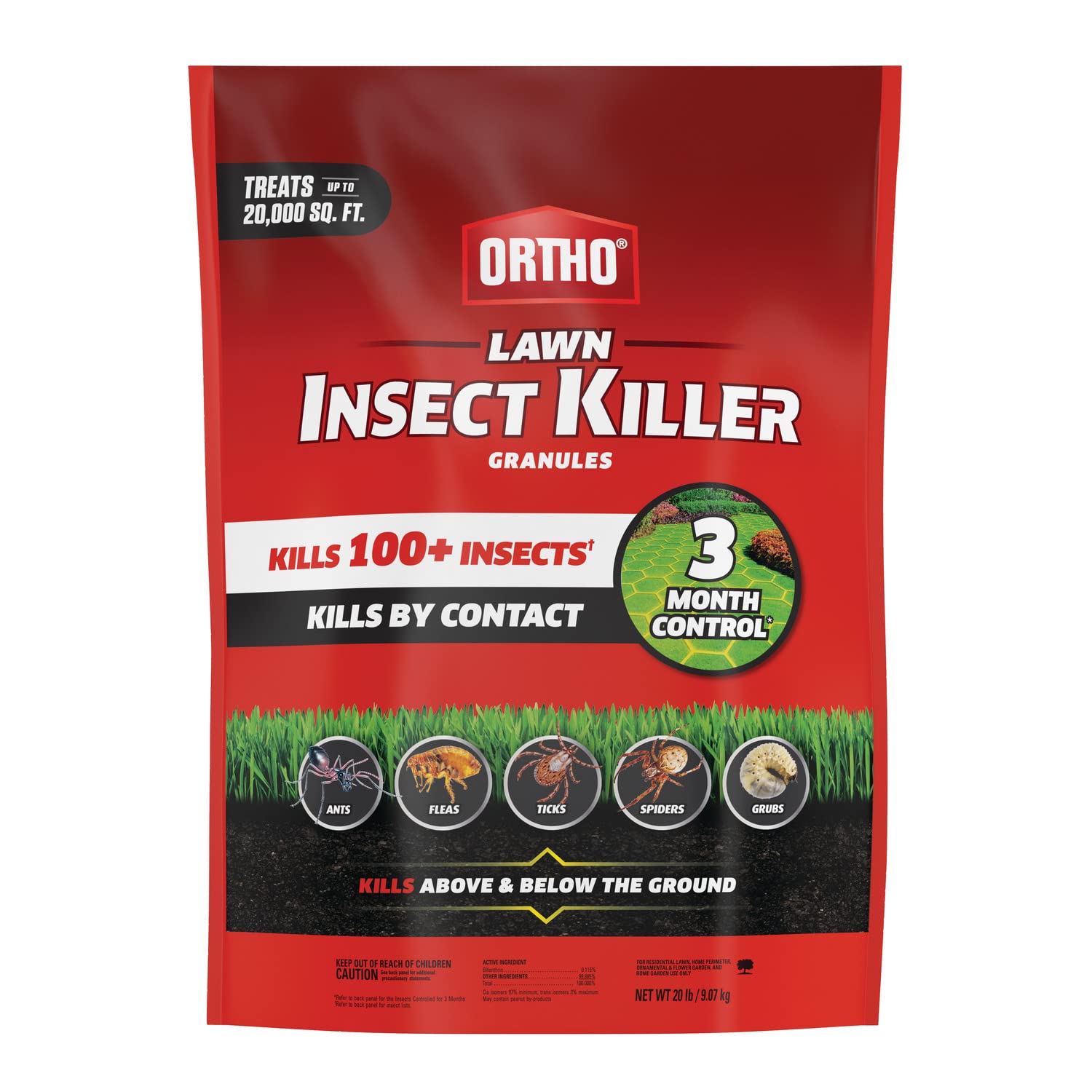
Ortho’s 20-pound granular treatment covers up to 20,000 square feet and kills over 100 listed insects above and below the ground. For millipedes migrating from adjacent turf or garden beds, a single broadcast application provides three months of residual control — a timeline that aligns perfectly with spring and early summer invasion peaks.
The granules must be watered in after application to activate the active ingredient, and the treated area needs to dry before people and pets re-enter. This watering-in step is actually an advantage for millipede control because it drives the insecticide into the soil layer where millipedes travel and breed, rather than leaving it on the grass blade surface where it would degrade from sunlight.
Professional landscapers and homeowners alike report seeing a dramatic reduction in crawling arthropods within 24–48 hours, with continued suppression through the full three-month window. For anyone seeking a set-and-forget solution for a large property, this is the most effective single application available in this category.
What works
- Massive 20,000 sq. ft. coverage per bag
- Three-month residual holds up through rain
- Watering-in targets millipede soil habitat
What doesn’t
- Requires spreader for even distribution
- Not suitable for indoor crack-and-crevice use
2. Atticus Adjourn SC Insecticide Concentrate 16 oz
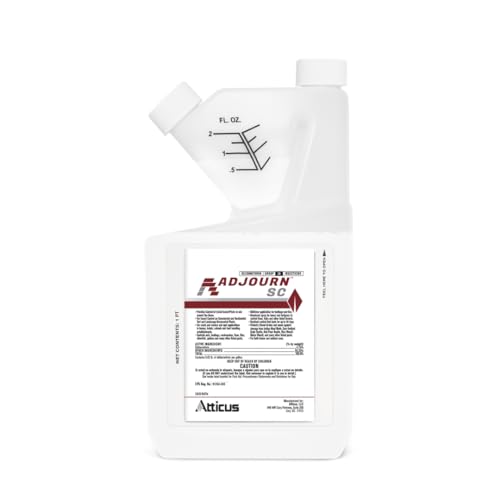
Adjourn SC packs 4.75% deltamethrin — the same professional-grade pyrethroid used by exterminators — in a water-based concentrate that mixes easily and dries clear with no lingering odor. The standout spec for millipede control is the 90-day residual indoors and 30-day residual outdoors, giving you a long window where treated surfaces stay lethal to any arthropod that crosses them.
This is a liquid concentrate, so you apply it with a pump sprayer or hose-end sprayer as a perimeter barrier around the foundation, along baseboards, and in crawl space entry points. Users note that the product kills a broad spectrum of pests on contact, and the clear drying means it won’t stain siding, concrete, or painted wood trim.
One limitation worth noting: the label advises against using this in New York and Vermont due to state-specific deltamethrin restrictions, so check your local regulations before ordering. For everyone else, this offers the best bang for your buck in terms of active ingredient concentration versus cost per mixed gallon.
What works
- Up to 90-day indoor residual kills millipedes long-term
- Odor-free and non-staining on most surfaces
- Concentrate makes gallons of ready-to-use spray
What doesn’t
- Not available for sale in AK, HI, NY, or VT
- Requires a separate sprayer for application
3. Sevin Lawn Insect Granules 20 lb

Sevin’s 20-pound granular insecticide uses carbaryl as its active ingredient — a broad-spectrum carbamate that kills over 30 listed lawn pests including millipedes. The bag is sized for larger properties, and the granules can be applied with a standard broadcast spreader before watering in to activate the chemical barrier in the top layer of soil and thatch.
Carbaryl has long been a trusted active ingredient in horticulture, and its effectiveness against millipedes specifically comes from its ability to penetrate the moist microhabitats where these arthropods hide. The USDA certification on the label reinforces its suitability for use around ornamental gardens and vegetable plots, which is exactly where millipede populations often explode.
One reviewer noted that the granules are “easy to spread” and that they saw clear results after just one application, though a small subset reported that it did not work for their specific infestation. For best results, apply Sevin granules in late spring when millipede eggs are hatching, and reapply after heavy rain if the label directions allow.
What works
- Large 20 lb bag covers extensive lawns and perimeters
- Carbaryl is highly effective in moist soil conditions
- USDA listed for use near vegetables and ornamentals
What doesn’t
- Must reapply after heavy rain events
- Some users report inconsistent results depending on infestation level
4. Atticus Tirade 1% Cyfluthrin Dust 1.25 lb
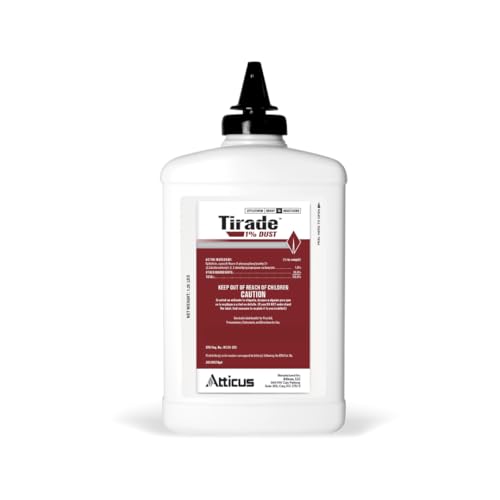
Atticus Tirade 1% Dust delivers cyfluthrin in a finely milled powder that stays active in hard-to-reach spaces where liquid sprays simply cannot reach. For millipedes that hide inside wall voids, under siding, in crawl spaces, or beneath landscape timbers, puffing this dust into those sheltered zones creates a long-lasting barrier that kills every arthropod that passes through it.
The dust is low-odor and non-staining, so it won’t discolor concrete, brick, or wood. Consumers specifically praise it for eliminating wasp nests and yellow jacket colonies, but its value for millipede control lies in its ability to remain effective in damp crawl spaces without breaking down. A single application can last for months in sheltered locations.
Do note that the dust requires a handheld duster or bellows puffer for application — you cannot just sprinkle it by hand and expect even coverage. Additionally, the product is not registered for sale in California, Alaska, Hawaii, Puerto Rico, or Vermont, so cross-check your state’s availability before ordering.
What works
- Stays active in damp, sheltered millipede hideouts
- Non-staining and low-odor formulation
- Excellent for crack-and-crevice perimeter blocking
What doesn’t
- Requires a separate duster tool for proper application
- Not available in several states including CA and AK
5. Martin’s Permethrin 13.3% Concentrate 32 oz
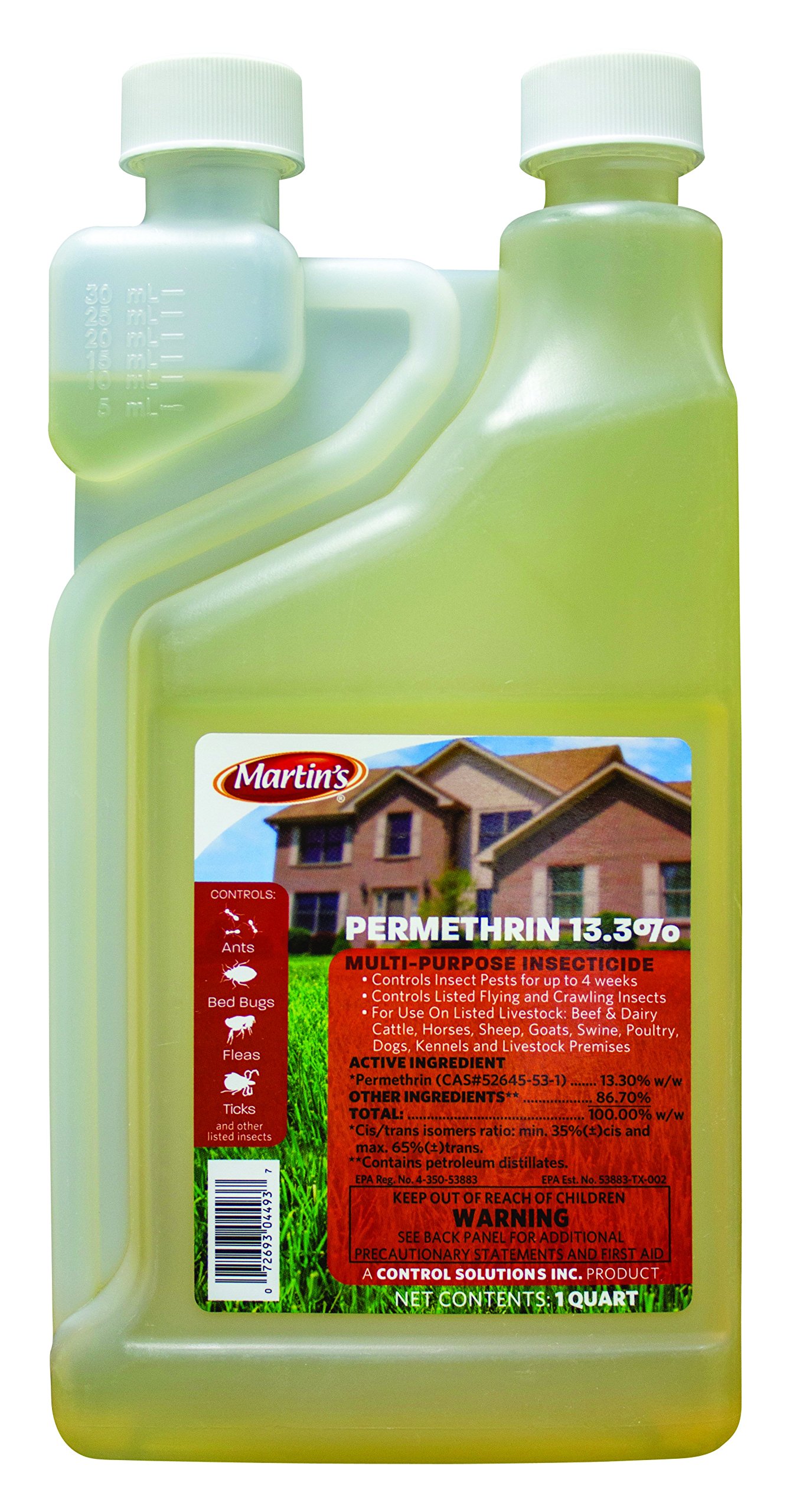
Martin’s Permethrin 13.3% concentrate is one of the most cost-effective options for creating a large-volume barrier spray around your home’s perimeter. At a mixing rate of 4 ounces per gallon, one bottle yields eight gallons of finished spray — enough to treat an entire foundation line plus garden borders where millipedes emerge after rain.
Permethrin is a synthetic pyrethroid that mimics natural chrysanthemum compounds, providing quick knockdown on contact and residual activity for up to four weeks in outdoor conditions. Users specifically mention its success against ticks and mosquitoes, but the same barrier mechanism works on millipedes crawling across treated soil and mulch.
The strong solvent-like odor is the most common complaint, so this one is best used for exterior treatments rather than indoor baseboard spraying. Also, it has a shorter residual than deltamethrin-based alternatives, meaning you may need to reapply every 3–4 weeks during peak millipede season.
What works
- Extremely cost-effective per mixed gallon
- Fast contact kill on crawling arthropods
- Versatile for perimeter, clothing, and livestock treatment
What doesn’t
- Strong chemical odor limits indoor use
- Shorter 4-week residual compared to alternatives
6. Acephate 97UP Systemic Insecticide 1 lb

Acephate 97UP is a high-concentration granular formulation containing 97% acephate — an organophosphate with systemic properties that allow it to be absorbed into plant tissue. While this product is marketed primarily for fire ant control, acephate is highly effective against soil-dwelling arthropods including millipedes when applied to mulch beds, garden soil, and turf.
The granules are small and dissolve quickly when watered in, releasing a potent active ingredient that penetrates the top inch of soil. The strong odor is a known drawback, but it’s also a sign that the product is actively off-gassing into the root zone. Users consistently report overnight results against target insects, which suggests the chemical acts fast on contact.
This is a spot-treatment product rather than a broadcast solution — a 1-pound bag covers a smaller area, so it’s best suited for localized millipede hotspots like a single garden bed or the soil line around your foundation. Keep it stored in a sealed container in a shed to contain the odor.
What works
- Extremely high 97% active ingredient concentration
- Fast knockdown observed within 24 hours
- Systemic action absorbs into plant tissue
What doesn’t
- Very strong odor requires outdoor storage
- Limited coverage per pound — best for spot treatment
7. Hi-Yield Garden, Pet & Livestock Dust 4 lbs

Hi-Yield Garden, Pet and Livestock Dust is a carbaryl-based dust that offers dual-action control over 60 different insect types while being safe for use on dogs, horses, cattle, swine, and poultry. For millipede control, this dust works best when applied as a dry perimeter barrier on soil, under decks, and around garden beds where pets and livestock roam.
The dust has a mild fruit scent and no strong chemical odor, which makes it more pleasant to apply than many alternatives. Homeowners report using it for everything from yellow jacket nests to turkey hunt gear, but the real value for millipede management is the 4-pound container — a single bag goes a long way when dusting the soil line along a foundation or the edges of raised garden beds.
Note that this product is explicitly not safe for cats, so if you have felines that roam the treatment area, choose a different formulation. Additionally, dust formulations wash away with rain and need reapplication after storms, so plan your application around a dry weather window for maximum residual.
What works
- Safe for dogs, horses, and livestock in treated areas
- Mild scent and no harsh chemical odor
- Large 4 lb bag for broad perimeter dusting
What doesn’t
- Cannot be used around cats
- Washes away with rain, requiring reapplication
Hardware & Specs Guide
Active Ingredient Selection
Millipedes respond best to pyrethroids (deltamethrin, cyfluthrin, permethrin) and carbamates (carbaryl) because these compounds affect the nervous system upon contact or ingestion. Organophosphates like acephate work systemically but degrade faster in high-moisture environments. Rotating between a pyrethroid liquid spray and a carbaryl dust prevents resistance from building up in local populations.
Formulation Matching the Site
Granules are optimal for large turf areas where millipedes migrate from. Liquids excel on hard surfaces (concrete, siding, foundation walls) where you need a visible wet barrier. Dusts are irreplaceable in wall voids, crawl spaces, under porches, and inside equipment sheds — places where liquids cannot reach or would pool. Choose your formulation based on where millipedes are actually entering, not just where you see them.
FAQ
Why do millipedes keep coming back after I spray?
Can I use fire ant killer granules for millipedes?
How long should I wait before letting pets back on the lawn after treatment?
Final Thoughts: The Verdict
For most gardeners, the insecticide for millipedes winner is the Ortho Lawn Insect Killer Granules because its 3-month residual and 20,000 sq. ft. coverage make it the most effective single application for stopping mass migrations from turf to foundation. If you need precision in wall voids or crawl spaces, grab the Atticus Tirade 1% Dust for its moisture-resistant staying power. And for a budget-friendly perimeter spray that stretches your dollar, nothing beats the Martin’s Permethrin 13.3% Concentrate.