
The single most common reason indoor plants fail isn’t light or water—it’s the wrong foundation. Standard garden dirt compacts in a pot, suffocates roots, and holds moisture until rot sets in, while a mix tailored to your plant’s origin (arid, tropical, or temperate) creates an environment where roots breathe and nutrients flow. Choosing the correct blend is the difference between a plant that merely survives and one that thrives.
I’m Rikta — the co-founder and writer behind Lawn Gear Lab. I’ve spent hundreds of hours cross-referencing soil science with real-world owner feedback, analyzing bag labels for drainage rates, pH balance, organic certifications, and ingredient sourcing so you don’t have to guess which mix actually delivers on its promises.
This guide breaks down the seven most effective formulations on the market to help you match the perfect foundation to your specific plants, whether you need chunky aroid drainage or moisture-retentive vegetable beds. Read on to find the best type of soil for your exact growing conditions.
How To Choose The Right Type Of Soil
The foundation you choose dictates root health, water retention, and nutrient availability. A mix that works for a snake plant will drown a Monstera, and a heavy garden loam will strangle citrus roots in a container. Here are the three factors that separate a smart purchase from a wasted bag.
Texture & Aeration: The Chunky Factor
Roots need oxygen. Dense, fine-textured soil collapses after a few waterings, trapping moisture around the root ball. Look for visible particles—bark fines, pumice, perlite, or lava rock—that create air pockets. Aroid and orchid mixes require the largest particle sizes, while succulent mixes need sharp sand or grit. A mix you can hold in your hand should feel loose, not like damp clay.
pH and Nutrient Profile
Most houseplants prefer a slightly acidic range (5.5–6.5), but citrus and blueberries demand even lower pH, while vegetables in containers do best near neutral. A bag labeled “pH balanced” is a starting point, but specialty crops like tomatoes respond dramatically to added calcium and magnesium. Organic compost and worm castings provide slow-release nutrition that synthetic fertilizers can’t match for long-term soil biology.
Organic Certifications and Sourcing
OMRI-listed products guarantee no synthetic pesticides or fertilizers, which is critical for edible gardens. Peat-free blends reduce environmental impact because peat harvesting depletes carbon sinks. Coco coir is a renewable alternative, but its quality depends on how many times it is washed—unwashed coir carries high salt content that burns roots. Choosing a brand that discloses its sourcing (like New Zealand Tree Fern or Maine compost) gives you predictable, repeatable results.
Quick Comparison
On smaller screens, swipe sideways to see the full table.
| Model | Category | Best For | Key Spec | Amazon |
|---|---|---|---|---|
| Grow Queen Craft Aroid Mix | Specialty | Tropical Aroids & Monstera | pH down to 6.0 (Tree Fern) | Amazon |
| Back to the Roots Worm Castings | Amendment | Slow-Release Nutrients | 5 lbs pure vermicompost | Amazon |
| Coast of Maine Veg & Tomato | Container Veg | Heirloom Tomatoes | 20 Qt, OMRI-listed | Amazon |
| Avalution Coco Coir Bricks | Base Medium | Seed Starting & Mixing | Expands to 36 QT, low EC | Amazon |
| Soil Sunrise Citrus Mix | Specialty | Indoor Citrus Trees | 12 Qt, balanced pH | Amazon |
| Coast of Maine Bar Harbor | All-Purpose | Hanging Baskets & Veggies | 16 Qt, kelp & crab meal | Amazon |
| Miracle-Gro Potting Mix | General | Feed-up-to-6-Month Convenience | 3-Pack, 8 Qt each | Amazon |
In‑Depth Reviews
1. Grow Queen Craft Aroid Potting Mix (2 Qt)
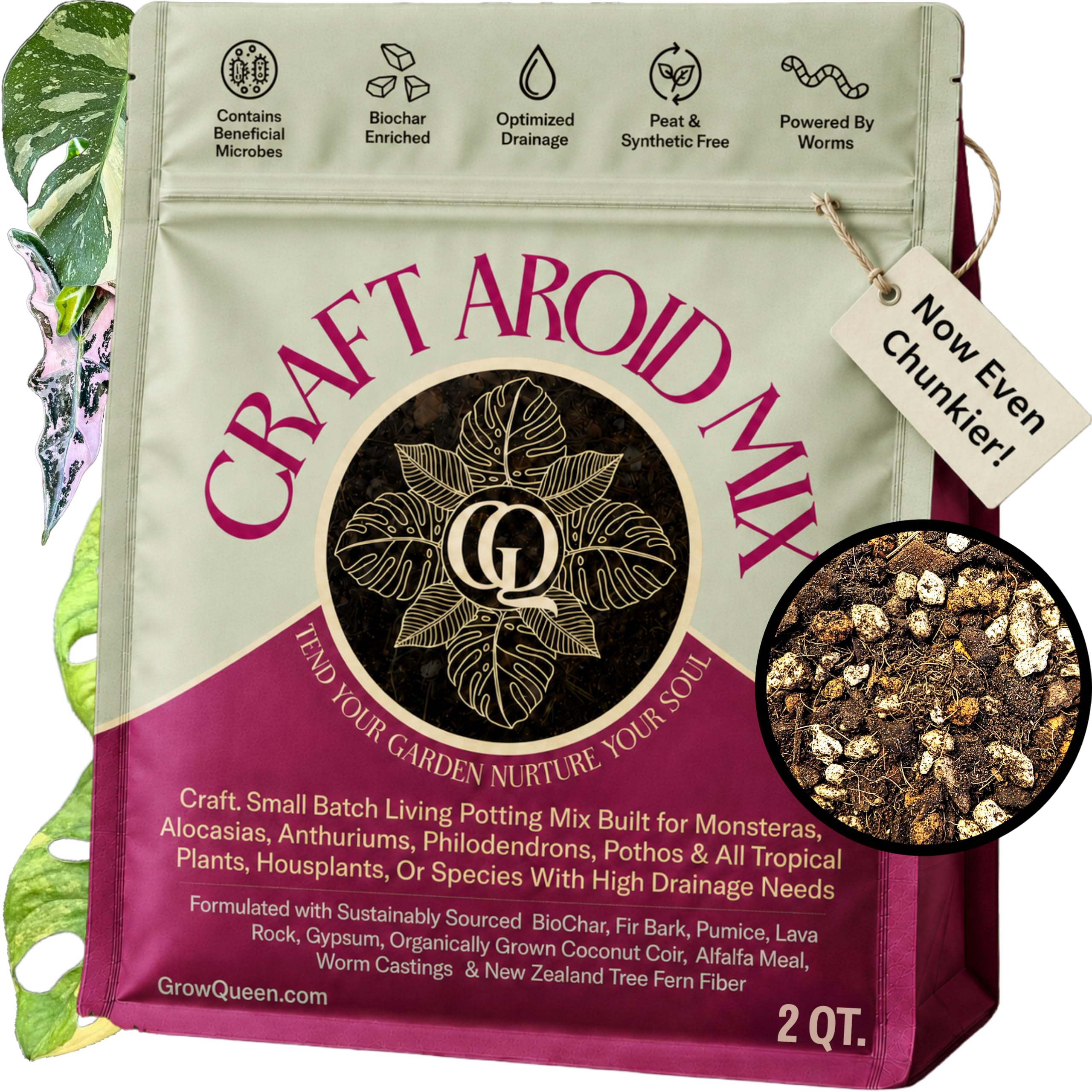
This is the gold standard for finicky aroids. The blend uses large Douglas fir bark fines, lava rock, and pumice to create a structure so open that overwatering is almost impossible—yet it retains enough moisture between waterings to keep Monstera and Alocasia roots from drying out. New Zealand Tree Fern Fiber is a standout inclusion: it acts as a natural pH buffer, pulling the mix down to 6.0 to mimic the native soil of tropical plants.
Grow Queen deliberately avoids peat and perlite. Peat harvesting is carbon-intensive, and perlite production involves heating volcanic glass to high temperatures. Instead, they use sustainable coco coir and natural volcanic rock, which cuts environmental impact without sacrificing drainage. The coco coir is washed more times than most competitors, resulting in ultra-low salt content that won’t burn delicate root tips.
Owner feedback consistently praises the “consistency across orders”—no surprise bags of dust or mold. Multiple buyers report faster root development and new growth within two weeks of repotting. The 2-quart size is ideal for a few houseplants but runs small for large planters; you may need two bags for a mature Monstera. Still, for anyone growing aroids, this is the most reliable specialty mix currently available.
What works
- Unmatched drainage prevents root rot in aroids and tropicals.
- Sustainable peat-free and perlite-free formulation.
- pH-buffered down to 6.0 with Tree Fern Fiber.
What doesn’t
- Small 2-quart volume requires multiple bags for larger pots.
- Premium price per quart compared to general potting mixes.
2. Back to the Roots Organic Worm Castings (5 lb)

Worm castings are the single most effective natural soil amendment, and Back to the Roots delivers a clean, odorless product with no filler. The granular texture blends seamlessly into chunky aroid mixes, coco coir, or standard potting soil without compacting the root zone. Because the castings release nutrients slowly via microbial activity, there is zero risk of fertilizer burn—even for sensitive seedlings and orchids.
Each bag contains beneficial microbes that suppress soil-borne pathogens, which makes this an excellent top-dress for vegetables like tomatoes and peppers. Multiple reviewers noted that milkweed grown with these castings attracted monarchs safely, confirming the purity of the vermicompost. The resealable bag maintains moisture levels without caking, a small but appreciated detail.
The 5-pound bag covers a surprising amount of soil. A single application mixed into the top inch of a 10-gallon container provides enough nutrition for three to four months. The only real caveat is moisture retention—castings hold water, so heavy-handed use in dense soil can lead to sogginess. Still, as a soil booster, this is the most cost-effective way to improve any mix without switching blends.
What works
- Pure, odorless worm castings with no synthetic additives.
- Slow-release feeding without risk of root burn.
- Versatile for indoor, outdoor, and edible gardens.
What doesn’t
- High moisture retention requires careful watering if used heavily.
- Not a standalone potting mix—must be mixed with a base medium.
3. Coast of Maine Organic Planting Soil for Vegetables & Tomatoes (20 Qt)

Coast of Maine has built a reputation for region-specific organic blends, and this tomato-and-vegetable formula justifies the hype. The base is a lightweight blend of sphagnum peat moss and composted manure, balanced to hold moisture without becoming waterlogged. Heirloom tomato varieties, which demand consistent drainage to avoid blossom-end rot, respond especially well to this mix when used in containers or raised beds.
The OMRI listing guarantees no synthetic pesticides or fertilizers, which matters for anyone growing food crops. The organic compost adds a dark, earthy texture rich in beneficial microbes. A handful of reviewers mentioned minor fungus gnat issues, which is common with any compost-rich soil, but a preventive neem oil drench solves it easily. The aromatic wood material included in the blend appears to deter soil gnats to some degree.
At 20 quarts, the bag is generous enough to fill three large 10-inch pots or a small raised bed. Users report vigorous growth and deep green foliage within two weeks of transplanting. The only downside is the price per quart compared to bulk garden center options, but for small-to-medium vegetable gardens, the performance justifies the premium.
What works
- Specifically formulated for tomatoes and heavy-feeding vegetables.
- OMRI-listed for certified organic gardening.
- Lightweight texture prevents compaction in containers.
What doesn’t
- Some bags may contain fungus gnats; disinfection recommended.
- Premium pricing limits viability for large in-ground gardens.
4. Avalution Premium Organic Coco Coir Bricks (6 Pack)
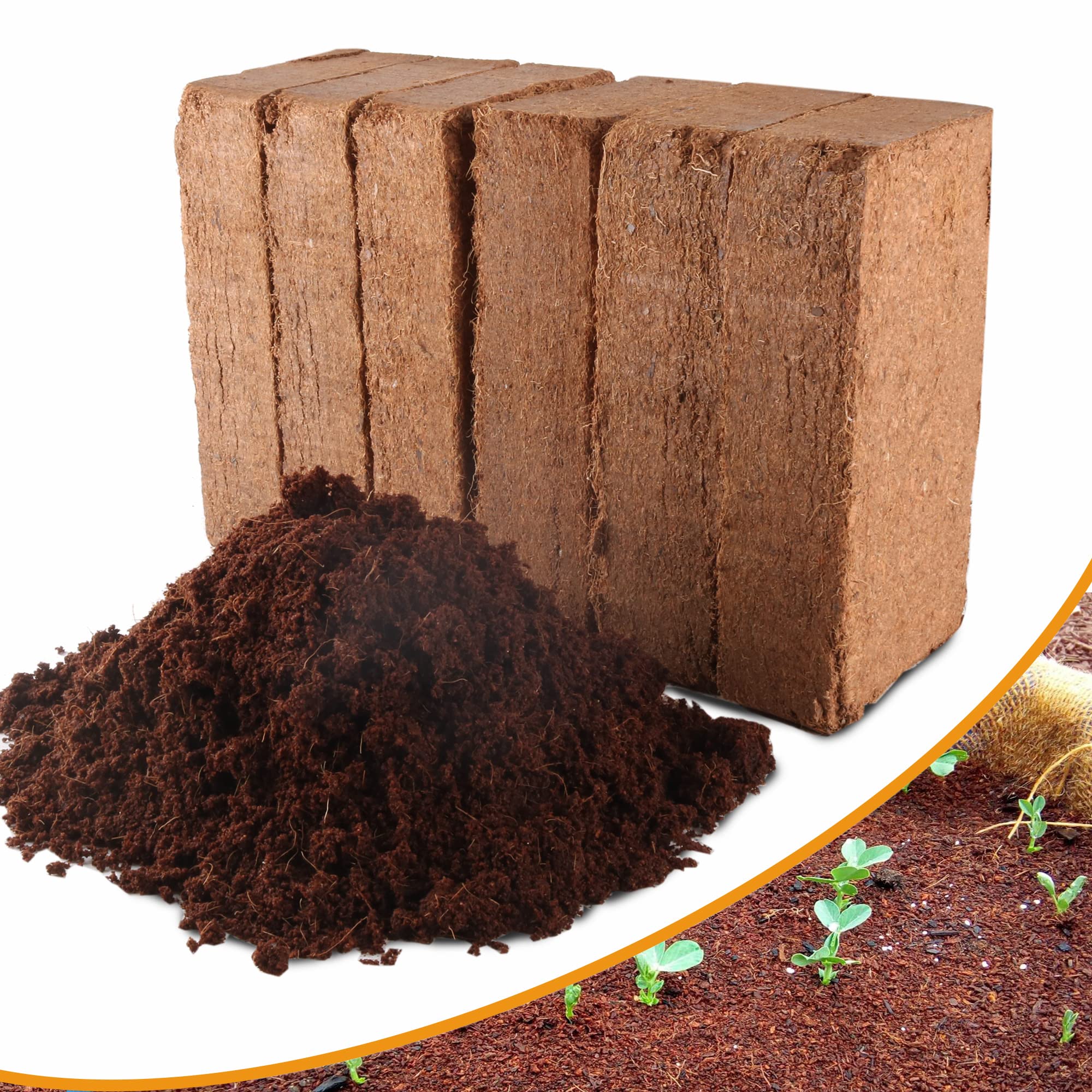
Coco coir is the renewable alternative to peat moss, and Avalution’s bricks are a standout for their exceptionally low electrical conductivity (EC). Low EC means minimal salt content, which is critical for seed starting—high salt levels can dehydrate germinating seeds and stunt root growth. Each brick expands to about 6 quarts when hydrated, giving you 36 total quarts from the six-pack.
The bricks are compressed from pure coconut husk fiber with no synthetic additives or binders. Users praised how easily the coir breaks apart after a few hours of soaking, and the consistency is fluffy and uniform. This makes it an ideal base for custom soil blends: mix one part coir with one part perlite or pumice for a high-aeration succulent mix, or add worm castings and compost for a nutrient-dense vegetable blend.
Storage is a major advantage over pre-moistened bagged soil. The compressed bricks stack flat and last indefinitely if kept dry. The only operational friction is the hydration time—you must plan ahead because the bricks need 4–6 hours to fully expand. A few impatient buyers tried to break them dry and ended up with clumpy dust. For anyone who makes their own soil, this is the most cost-effective and space-efficient coir option available.
What works
- Low EC prevents salt burn in sensitive seedlings.
- Excellent water absorption without waterlogging.
- Compact bricks save storage space vs. bagged soil.
What doesn’t
- Requires advance soaking and manual breaking apart.
- No added nutrients—must be mixed with compost or fertilizer.
5. Soil Sunrise Citrus Tree Potting Soil Mix (12 Quarts)

Citrus trees are notoriously sensitive to soggy roots and alkaline soil, and Soil Sunrise’s mix addresses both issues directly. The formulation prioritizes aeration and drainage while maintaining a slightly acidic pH that mimics the native soil of Mediterranean groves. Owners of indoor lime, orange, and lemon trees reported that their trees pushed new growth and held onto leaves noticeably better after repotting.
The texture is noticeably lighter than standard potting soil, which helps container-bound citrus avoid the compaction that causes yellowing leaves. The mix holds enough moisture to keep roots hydrated between weekly waterings but drains fast enough to prevent standing water at the bottom of the pot. A box packaging with an inner plastic bag keeps the soil fresh, though several reviewers wished for a resealable bag for easier storage after opening.
The 12-quart volume is sized for a single medium citrus tree in a 12–14 inch pot, or two smaller plants. The price per quart is higher than general-purpose mixes, but for a specialized application like potted citrus, the tailored pH and texture eliminate the guesswork of amending generic soil. Buyers who combine this mix with a consistent watering schedule see healthier foliage and, eventually, fruit set.
What works
- Designed specifically for citrus pH and drainage needs.
- Light, airy texture resists compaction in containers.
- Supports vigorous leaf and root development.
What doesn’t
- Packaging (box + bag) is less convenient than a resealable pouch.
- Premium price compared to multi-purpose alternatives.
6. Coast of Maine Bar Harbor Blend Potting Soil (16 Qt)
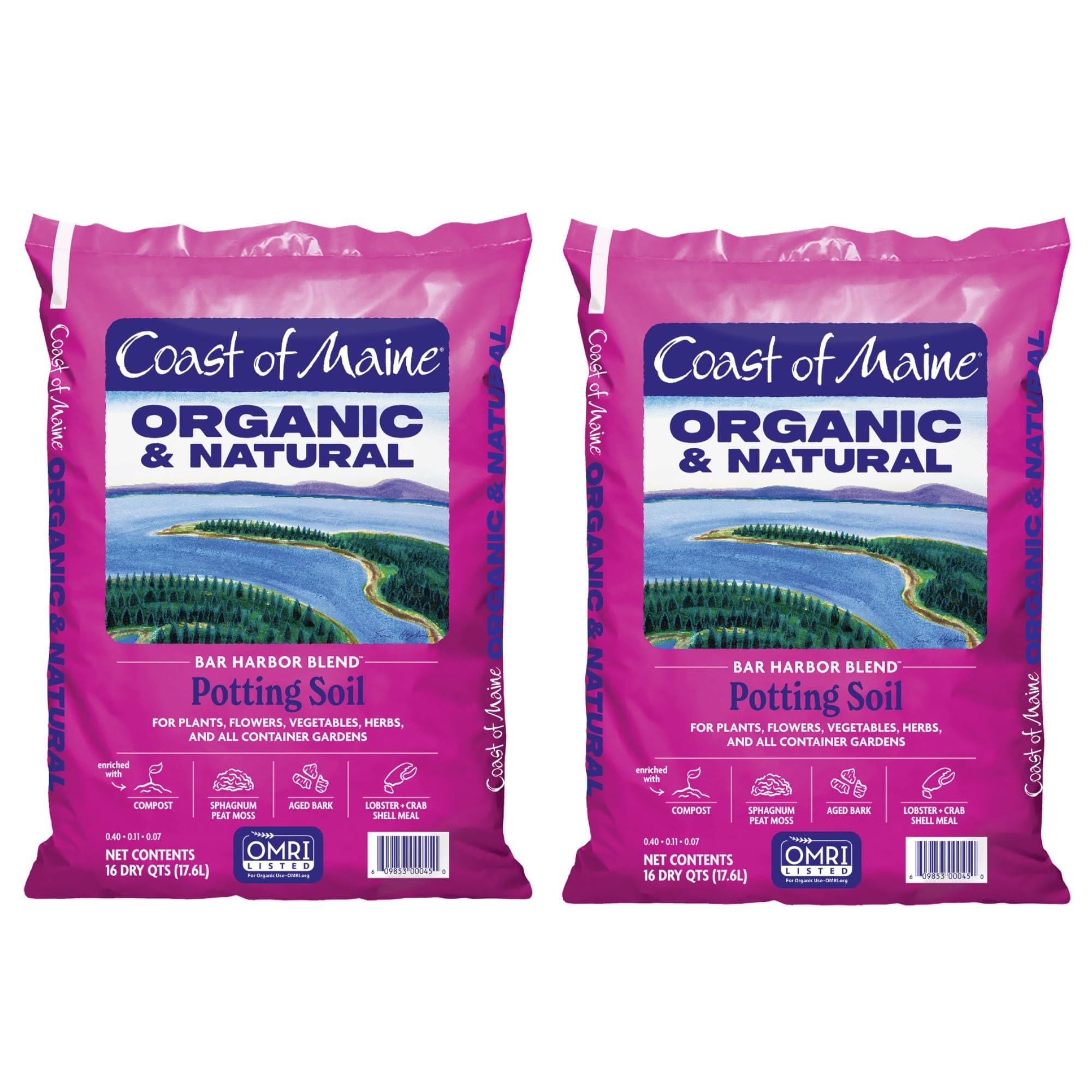
Bar Harbor Blend is Coast of Maine’s multipurpose workhorse. The formula incorporates sphagnum peat, compost, perlite, lobster and crab shell meal, and kelp meal—a combination that provides both immediate organic matter and slow-release nitrogen for sustained feeding. The lobster and crab meal add chitin, which naturally deters soil pests while contributing calcium for strong cell walls.
The texture is darker and richer than standard peat-based mixes because compost makes up a substantial portion of the volume. Perlite is evenly distributed throughout, preventing the compaction that plagues cheaper soils. Gardeners using this for hanging baskets and container vegetables reported more vibrant blooms and stronger stems compared to generic box-store potting soil. The 16-quart size handles two large hanging baskets or a 20-inch planter box with ease.
Multiple long-term users specifically noted that this soil outperformed Miracle-Gro in side-by-side container trials, calling it “noticeably better” for tomatoes and peppers. The only friction point is the regional sourcing—Coast of Maine uses Maine-based compost, which means the formulation can vary slightly by batch depending on seasonal feedstock. Consistency has been excellent in recent years, but it is worth checking the bag date for freshness. This is the premium all-rounder that earns its price through dependability.
What works
- Rich organic blend with kelp, crab, and compost for sustained feeding.
- Excellent moisture retention without waterlogging.
- Proven results in container vegetables and ornamentals.
What doesn’t
- Batch variations possible due to regional compost sourcing.
- Heavier weight per quart than peat-only mixes.
7. Miracle-Gro Potting Mix (3-Pack, 8 Qt each)

Miracle-Gro Potting Mix is the entry-level standard for a reason: it works predictably for a wide range of container plants without requiring any additional amendments. The 3-pack of 8-quart bags offers flexibility—you can open one bag at a time and store the rest sealed. The mix includes a fertilizer charge that feeds plants for up to six months, eliminating the need for immediate supplemental feeding.
The texture is finer than specialty blends, with a consistent peat-and-perlite base that performs adequately for annuals, perennials, and most houseplants. It holds moisture well, which can be a double-edged sword: plants that prefer dry soil (succulents, snake plants) may suffer if you don’t adjust watering habits. The product is not OMRI-listed, so organic gardeners will need to look elsewhere, but for conventional container gardening, it delivers reliable results at a reasonable price.
Owner feedback is overwhelmingly positive for general use. Multiple reviewers praised the smaller bags as easier to handle than the giant 50-quart sacks. The primary complaint is that the “feeds up to 6 months” claim depends on pot size and watering frequency—in practice, heavy feeders like tomatoes may exhaust the nutrients sooner. Still, for a bulk general-purpose soil that you can trust for the majority of your potted plants, this bundle is the most budget-friendly option that doesn’t cut corners on quality.
What works
- Pre-mixed with slow-release fertilizer for convenience.
- Consistent quality across batches for reliable results.
- Smaller 8-qt bags are easy to carry and store.
What doesn’t
- Not OMRI-listed; unsuitable for organic gardeners.
- Finer texture may compact over time in long-term pots.
Hardware & Specs Guide
Particle Size & Aeration
The single most important physical property of any soil mix is the size and distribution of its solid particles. Fine-textured soils (high silt/clay content) pack tightly, reducing oxygen exchange at the root zone. Chunky mixes containing bark fines, pumice, or perlite create macro-pores that allow water to drain freely while retaining enough moisture in micro-pores for root uptake. For aroids and orchids, look for particles that range from ¼ inch to ½ inch. For general container plants, a mix with visible perlite or coco coir fibers indicates adequate aeration. If you squeeze a handful of moist soil and it holds a tight ball that doesn’t crumble when poked, the particle size is too small—this will suffocate roots within weeks.
Cation Exchange Capacity (CEC)
CEC measures a soil’s ability to hold positively charged nutrient ions (calcium, magnesium, potassium) and release them to plant roots. Organic matter—compost, peat, coir, worm castings—has a high CEC, meaning the mix can store nutrients and feed plants gradually. Pure sand or perlite has near-zero CEC, so any added fertilizer leaches out with the first watering. A good potting soil balances high-CEC components (compost, peat, coir) with structural components (perlite, pumice) to hold nutrients without becoming waterlogged. The microbial life in organic compost further enhances CEC by breaking down organic matter into humus, which has the highest CEC of any soil component.
FAQ
Can I use garden soil from my yard for container plants?
What does “pH balanced” mean on a soil bag?
How do I know if my soil has too much salt?
Should I add perlite or sand to a pre-mixed bag?
Final Thoughts: The Verdict
For most gardeners, the best type of soil winner is the Grow Queen Craft Aroid Mix because its chunky, peat-free formulation provides the perfect balance of drainage and aeration for the widest range of tropical houseplants. If you want a pure organic amendment to boost any mix, grab the Back to the Roots Worm Castings. And for vegetable gardeners who need a ready-to-use OMRI-listed blend, nothing beats the Coast of Maine Veg & Tomato Soil.