
Selecting the right nourishment for your succulents is less about general feeding and more about preventing the stretched, weak growth that happens when the nitrogen-to-phosphorus ratio is wrong. These plants store water in their leaves and thrive on a precise balance of low nitrogen and higher phosphorus and potassium to encourage compact rosettes, vivid colors, and resilient root systems.
I’m Rikta — the co-founder and writer behind Lawn Gear Lab. I’ve spent hundreds of hours cross-referencing NPK ratios, analyzing owner experiences across dozens of forums, and comparing ingredient lists to determine which liquid, powder, and slow-release formulas actually deliver the tight growth and vibrant foliage succulent collectors look for without burning delicate roots.
This guide breaks down seven contenders across synthetic concentrates, organic blends, and long-lasting packets so you can confidently choose the right plant food for succulents that matches your watering schedule and plant collection.
How To Choose The Best Plant Food For Succulents
Succulents have evolved in lean, gritty soils where rich organic matter is scarce. Overfeeding them with a standard houseplant fertilizer — which often carries nitrogen levels above 10 — pushes rapid, soft growth that ruins their natural form. Look for formulas designed specifically for cacti and succulents, typically carrying an NPK ratio where the middle and last numbers (phosphorus and potassium) are double or triple the first number (nitrogen).
Liquid Concentrates vs Slow-Release Powders
Liquid fertilizers like the Schultz Cactus Plus 2-7-7 or the Miracle-Gro Succulent Plant Food provide immediate, gentle nutrition every time you water, giving you fine control over the feeding schedule. Slow-release powders such as the Grow Queen packets embed beneficial microbes and release nutrients gradually over two to eight months, which is ideal for plant parents who prefer a set-it-and-forget-it approach. Each format has its place: liquids suit active growers during spring and summer, while time-release options reduce the risk of overfeeding during the winter dormant period.
Organic vs Synthetic Nutrient Sources
Organic formulas — certified OMRI listed or built from sustainably sourced materials — feed the soil microbiome alongside the plant, improving long-term root resilience and reducing the odds of salt buildup in containers. Synthetic concentrates offer precise, predictable NPK values and immediate uptake, but they require careful measuring to avoid fertilizer burn. Espoma’s Cactus! concentrate and the TPS Nutrients liquid both demonstrate how organic and synthetic approaches can yield compact, colorful growth when diluted correctly for potted environments.
Concentration and Dilution Accuracy
The margin for error is narrow with succulents. A formula that calls for ½ capful per quart of water (as the HiThrive does) or 1/4 teaspoon per gallon gives you a safe baseline. Precision matters more than potency: a too-strong mix shocks the roots, causing leaf drop or tip burn, while a too-weak mix provides negligible benefits. Stick with brands that clearly state their mixing ratio and adjust based on the size of your pot and the frequency of your watering cycle.
Quick Comparison
On smaller screens, swipe sideways to see the full table.
| Model | Category | Best For | Key Spec | Amazon |
|---|---|---|---|---|
| HiThrive 16oz | Liquid Concentrate | Daily watering schedules | Makes 32 gallons per bottle | Amazon |
| Grow Queen Cactus & Succulent | Organic Slow-Release | Long-term low-maintenance feeding | 7 packets feed up to 28 plants | Amazon |
| Schultz Cactus Plus 2-7-7 | Synthetic Concentrate | Targeted low-nitrogen feeding | NPK 2-7-7 ratio | Amazon |
| Espoma Cactus! 2-Pack | Organic Liquid | Vibrant blooms and compact growth | NPK 1-2-2 organic formula | Amazon |
| Grow Queen All-in-One 11 Pack | Organic Slow-Release | Multi-plant households | 11 packets treat 22 gallons | Amazon |
| Miracle-Gro Succulent 2-Pack | Liquid Pump | Quick pump-and-feed convenience | Pump applicator for direct soil feeding | Amazon |
| TPS Nutrients 32oz | Liquid Concentrate | Large collections needing bulk supply | 32 fl oz at 1:200 dilution | Amazon |
In‑Depth Reviews
1. HiThrive 16oz Succulent Fertilizer
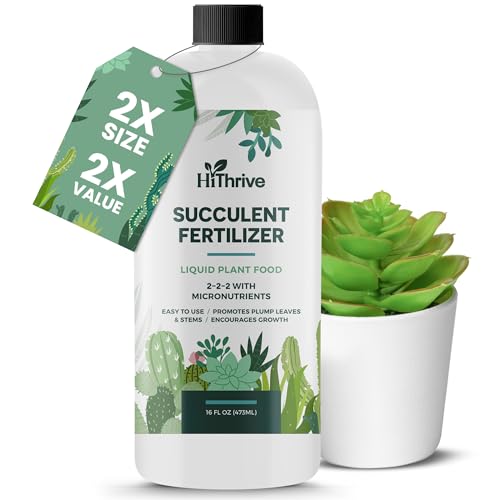
The HiThrive concentrate packs the highest value per ounce in this lineup — a single 16-ounce bottle, diluted at just ¼ teaspoon per quart of water, produces 32 gallons of ready-to-use succulent food. The NPK profile includes nitrogen for leaf color, phosphorus for root depth, and potassium for stress tolerance, but the real differentiator is the inclusion of calcium, magnesium, and zinc, trace elements that many succulent formulas omit.
Owners consistently report that their Aloe Vera, Jade Plants, and String of Pearls bounce back from shriveled leaves within two to three waterings. The mixing ratio is forgiving enough for beginners yet precise enough for experienced collectors who want to avoid the stretched growth that high-nitrogen feeds cause. The liquid format integrates seamlessly into a regular watering routine — just mix, pour, and watch the plumpness return.
A 32-ounce variant is available for those caring for larger collections, effectively doubling the coverage to 64 gallons. For anyone maintaining a mixed indoor succulent shelf or a patio arrangement, HiThrive hits the sweet spot between cost efficiency and nutrient completeness.
What works
- High dilution ratio delivers exceptional value per gallon
- Micronutrient blend (calcium, magnesium, zinc) supports leaf plumpness
- Simple ¼ teaspoon per quart mixing prevents overfeeding mistakes
What doesn’t
- Bottle size may feel small for first-time buyers accustomed to larger volumes
- Requires mixing every watering — not a slow-release option
2. TPS Nutrients Succulent Fertilizer 32oz
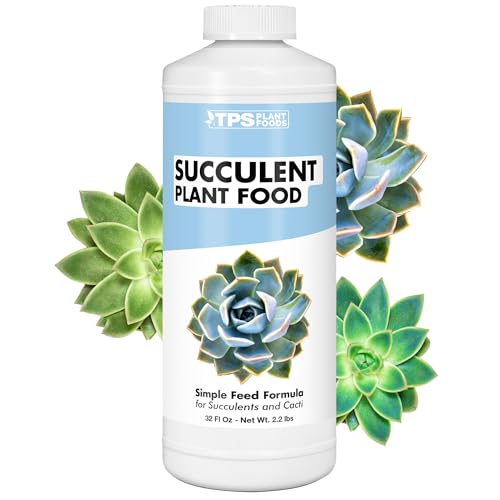
The TPS Nutrients concentrate is engineered specifically to prevent the most common succulent complaint: weak, leggy growth caused by excess moisture retention. Its formula is built around a balanced nutrient profile that discourages stretching and instead encourages thick, firm leaves and compact spacing between rosettes. The 1:200 dilution ratio (roughly 2.5 ml per liter of water) makes this one of the most concentrated options available — a single 32-ounce bottle lasts through many growing seasons for a modest collection.
Users have noted visible greening and improved leaf turgor after just three feedings during the early growing season. The liquid is gentle enough for container-grown plants and does not create the salt buildup that can stress potted succulents over time. TPS manufactures this formula in the USA, which adds an extra layer of quality assurance for buyers who prioritize domestic production.
While the lack of an immediate bloom trigger might disappoint those hoping for flowers on Christmas Cactus or Echeveria, the long-term root development and structural integrity are where this product truly shines. It is the best option for collectors who value leaf form and compact silhouettes over explosive flowering.
What works
- Ultra-concentrated 1:200 ratio provides exceptional longevity
- Promotes compact, firm leaves and prevents stretching
- Made in the USA with consistent quality control
What doesn’t
- No specific bloom-booster qualities for flowering succulents
- Dropper measurement required — the bottle lacks a built-in pump
3. Schultz Cactus Plus 2-7-7 Liquid Plant Food 2-Pack

Schultz Cactus Plus is a synthetic concentrate with an NPK ratio of 2-7-7 — one of the lowest nitrogen levels in this roundup, making it ideal for succulent growers who want to keep their plants tight and well-proportioned. The two-pack bundles two 4-ounce bottles, but because the concentrate is highly concentrated, each bottle lasts for dozens of feedings when mixed at the recommended ½ teaspoon per gallon of water.
Customer feedback consistently highlights how this formula turns around struggling Christmas Cactus, producing healthy green segments and encouraging blooms. The low nitrogen content ensures that new growth remains dense rather than sprawling, which is especially important for collectors who display their succulents in small pots or terrariums where space is limited.
One practical limitation: the bottles are small at 4 ounces each, so you will need to refill more frequently if you maintain a large collection. The value per ounce, however, is excellent compared to many diluted liquid formulas on the market, and the precise NPK ratio gives you full control over the nutrient profile your plants receive.
What works
- Very low nitrogen (2-7-7) prevents leggy growth
- Highly concentrated — small bottles last through many feedings
- Reliable synthetic formula for predictable results
What doesn’t
- Bottle size is small for large collections
- Synthetic formulation lacks soil microbiome benefits of organic options
4. Espoma Organic Cactus! Plant Food 8 oz 2-Pack

Espoma’s Cactus! formula brings an organic, OMRI-listed nutrient source to the table with an NPK of 1-2-2 — a gentle ratio that suits fast-growing succulents like Adeniums and Fockeas. The organic base feeds the soil biology rather than just the plant, building a healthier root zone environment over time. The 2-pack includes two 8-ounce bottles, and the recommended dilution of ½ cap per quart of water is straightforward enough for beginners.
The most common feedback from long-term users is that Espoma produces noticeably more vibrant leaf colors and encourages Christmas Cactus to bloom year after year. The concentrate does carry a manure-like smell when undiluted, but that odor disappears entirely once mixed with water and applied to the soil, leaving no lingering scent in indoor spaces.
Because the nitrogen level is slightly higher than the Schultz formula, Espoma is better suited for faster-growing succulents. For slow-growing cacti or lithops, the extra nitrogen could encourage softer growth, so it pays to match this product to the specific growth rate of your plants.
What works
- OMRI-listed organic formula safe around kids and pets
- Encourages vivid foliage colors and reliable blooming
- Easy ½ cap per quart mixing ratio
What doesn’t
- Undiluted concentrate has a noticeable manure odor
- Higher nitrogen may cause abnormal growth in very slow-growing cacti
5. Grow Queen Complete Organic Cactus & Succulent Fertilizer 7-Pack
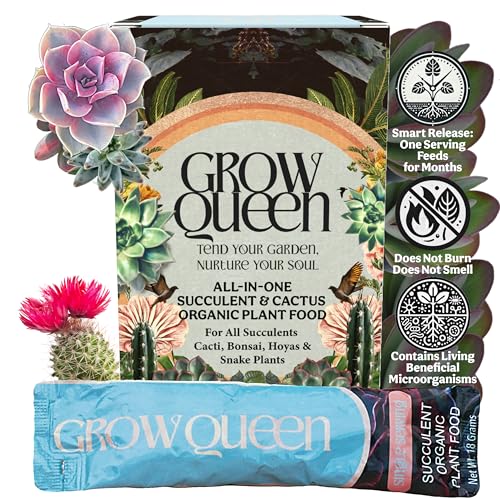
Grow Queen’s 7-pack takes a fundamentally different approach to succulent nutrition by combining fast-release nutrients with living beneficial soil microbes and a time-release component that keeps feeding for up to eight months. Each single-serving packet treats up to one gallon of soil (about six small succulents), making this an exceptionally convenient solution for anyone who dislikes mixing liquid doses every watering.
Customers report that the powder is odorless and mess-free, and they have observed visible new growth on cacti and succulents within two to four weeks of application. The inclusion of diverse beneficial microbes enhances the plant’s natural immune response and improves long-term soil structure — something no liquid synthetic can replicate. The organic, vegan, and non-toxic formulation also makes it safe for households with pets.
The only real consideration is that the bioactive powder may develop what looks like surface mold after application; this is actually the microbes proliferating and is a sign that the soil ecosystem is thriving. If the appearance bothers you, a quick mix into the topsoil layer solves it. For plant parents who want to set and forget, Grow Queen delivers exceptional long-term value.
What works
- Single application feeds for up to 8 months
- Contains living beneficial microbes for soil health
- Odorless, organic, and safe around children and pets
What doesn’t
- Bioactive powder may develop visible surface microbes that look like mold
- Not suitable for growers who prefer to control feeding frequency manually
6. Miracle-Gro Succulent Plant Food 8 fl. oz. 2-Pack

Miracle-Gro’s Succulent Plant Food is the most convenient option in this list thanks to its pump applicator. You can apply it directly to the soil — one pump for small pots, two pumps for large pots — or mix eight pumps per quart of water for a combined feeding-and-watering step. The formula is designed for bi-weekly feeding, making it simple to integrate into a regular care schedule.
Owners consistently report seeing rapid new growth after just one application, especially on Aloe Vera, Jade, and Thanksgiving Cactus. The two-pack includes two 8-ounce bottles, and users find that a single pair lasts about a year and a half for a moderate collection. The pump system eliminates syringes or measuring spoons, which is a genuine time-saver during busy mornings.
The synthetic formula works fast, but it does not contribute to long-term soil health the way an organic option would. Additionally, the strength is calibrated for frequent feeding — if you miss a few weeks, the plants may show a slight decline before bouncing back after the next dose. For those who thrive on routine, this is a hassle-free solution.
What works
- Pump applicator makes measuring and dosing effortless
- Fast visible results — new growth within days of application
- Two-pack provides excellent long-term value for a moderate collection
What doesn’t
- Synthetic formula does not improve soil biology over time
- Requires consistent bi-weekly application for best results
7. Grow Queen All-in-One Complete Organic Plant Food 11-Pack

The Grow Queen All-in-One 11-pack expands on the same slow-release organic concept as the cactus-specific version but broadens the target species to include Snake Plants, Peace Lilies, and even vegetable garden plants. Each single-serving packet treats up to 2 gallons of soil, and the box covers 22 gallons in total, making it a versatile option for households with a mix of succulents and other houseplants.
Growers appreciate that the powder is gentle enough for regular use without the risk of overfeeding — the slow-release mechanism meters out nutrition gradually over one to three months per packet. The organic base, enriched with beneficial soil microbes, creates a thriving root environment that supports healthy leaf color and strong growth. Users have noted bonus mushrooms sprouting in the soil, which is a good sign of microbial activity.
The main trade-off is that the formula is not specifically optimized for the low-nitrogen needs of slow-growing cacti and lithops. It works best for the faster-growing succulents like Echeveria, Aloe, and Sedum, where the slightly higher nitrogen supports lush foliage without causing distortion. For a general-purpose organic feed that covers succulents and non-succulents alike, this 11-pack delivers impressive flexibility.
What works
- Generous 11-packet supply covers up to 22 gallons of soil
- Organic slow-release formula reduces maintenance frequency
- Safe for mixed collections of succulents and other houseplants
What doesn’t
- Not specifically formulated for very slow-growing cacti
- Bioactive powder may produce visible surface fungi in moist soils
Hardware & Specs Guide
NPK Ratio and What It Means
The three numbers on any fertilizer label — nitrogen (N), phosphorus (P), and potassium (K) — tell you the nutrient balance by weight. For succulents, the ideal ratio keeps nitrogen low (between 1 and 3) while phosphorus and potassium are equal or higher, promoting root development, flower formation, and stress resistance without pushing soft, watery foliage. Formulas like Schultz 2-7-7 and Espoma 1-2-2 align with this principle, while general-purpose fertilizers with a 10-10-10 ratio will cause succulents to stretch and lose their natural form.
Dilution Ratio and Application Method
Liquid concentrates typically require mixing with water at ratios ranging from 1/4 teaspoon per quart (HiThrive) to 1:200 (TPS Nutrients). Using the exact dilution prevents fertilizer burn. Slow-release powders (Grow Queen) bypass mixing entirely — you sprinkle a single-serving packet onto the soil and water it in. The choice between liquid feeding every two weeks and time-release packets every four to eight months depends on how hands-on you want your plant care routine to be.
Organic Certification and Soil Microbes
OMRI-listed organic fertilizers (Espoma, Grow Queen) use non-synthetic ingredients that feed the soil food web — bacteria, fungi, and other microorganisms that break down organic matter into plant-available nutrients. These products improve soil structure and water retention over time. Synthetic concentrates (Schultz, Miracle-Gro) deliver precise nutrient ratios quickly but do not contribute to soil biology. For container-grown succulents that remain in the same pot for years, organic feeding reduces the risk of salt accumulation.
Liquid Volume and Coverage
The total amount of ready-to-use feed a product yields is more important than the bottle size. HiThrive’s 16-ounce bottle makes 32 gallons of fertilizer, while the TPS 32-ounce bottle at 1:200 dilution makes over 160 gallons. Powders are measured by the number of single-serving packets. The Grow Queen cactus 7-pack covers 28 small succulents, while the All-in-One 11-pack covers 22 gallons of soil. Match the coverage to the size of your collection to avoid running out mid-season or buying more than you need.
FAQ
Can I use regular houseplant fertilizer on succulents?
How often should I feed my succulents during the growing season?
What causes white crust on top of my succulent soil after fertilizing?
Is organic or synthetic fertilizer better for succulents in containers?
My succulent leaves are turning yellow after fertilizing — what went wrong?
Final Thoughts: The Verdict
For most gardeners, the plant food for succulents winner is the HiThrive 16oz Succulent Fertilizer because it balances a broad micronutrient profile with exceptional dilution value and a forgiving mixing ratio that suits both beginners and experienced collectors. If you want a low-nitrogen, precision formula to keep growth tight, grab the Schultz Cactus Plus 2-7-7. And for a set-it-and-forget-it organic solution that feeds for months, nothing beats the Grow Queen Complete Organic Cactus & Succulent Fertilizer.