
The difference between a bag of cheap dirt and genuine planting soil is the difference between a wilting transplant and a harvest you actually brag about. Too many gardeners grab the first bag they see, only to battle compaction, poor drainage, and nutrient burn a few weeks later. The right mix—balanced with peat, perlite, and organic matter—solves those problems before your trowel even hits the ground.
I’m Rikta — the co-founder and writer behind Lawn Gear Lab. I’ve spent countless hours cross-referencing bag labels, analyzing NPK ratios and pH profiles, and sifting through real-world owner feedback to spotlight the mixes that deliver on their promises.
Whether you’re filling raised beds, potting tomatoes, or starting seeds indoors, this guide breaks down the measurable differences that separate premium blends from filler. Here is your researched shortcut to the best planting soil for the job.
How To Choose The Best Planting Soil
A smart soil selection starts by reading the ingredient panel—not the marketing copy. You want a mix that provides structural support, consistent moisture, and a nutritional baseline for at least the first month of growth.
Texture & Drainage (Perlite, Peat & Sand Ratios)
Look for visible perlite or coarse sand as a sign of aeration. A soil that feels heavy and clumps in your hand will compact in the pot, suffocating roots and trapping water. Premium blends balance sphagnum peat moss (for moisture) with perlite or pumice (for air pockets), creating the loose structure that roots spread through easily.
pH Level & Nutrient Charge
Most vegetables and flowers prefer a slightly acidic pH between 6.0 and 6.8. The bag should either list a pH range or include buffering agents (like dolomitic limestone) to stabilize acidity. Starter fertilizers—usually a mild nitrogen boost—are welcome, but avoid soils that rely on chemical salts alone, as they can burn delicate seedlings.
Organic Content vs. Synthetic Additives
Organic compost, earthworm castings, and kelp meal provide slow-release nutrition and improve microbial activity in the root zone. Synthetic fertilizers deliver faster green-up but can leach away after a few waterings. For container gardening, an OMRI-listed organic blend often produces more consistent long-term results without salt buildup.
Bag Volume & Realistic Coverage
Dry quarts and cubic feet measure two different things. An 8-quart bag fills roughly two 8-inch pots. A 1.5-cubic-foot bag handles several large containers or a small raised bed. Always calculate the number of pots you need to fill before choosing a package size—buying too-small bags wastes money on multiple deliveries.
Quick Comparison
On smaller screens, swipe sideways to see the full table.
| Model | Category | Best For | Key Spec | Amazon |
|---|---|---|---|---|
| FoxFarm Ocean Forest | Premium | Heavy feeders & seedlings | 1.5 cu ft / 34 lbs | Amazon |
| FoxFarm Happy Frog | Premium | Beneficial microbes | 2 cu ft / 42 lbs | Amazon |
| Coast of Maine Bar Harbor | Organic | Container vegetables | 16 qt / 14 lbs | Amazon |
| Michigan Peat Baccto | All-Purpose | Large raised beds | 50 lbs | Amazon |
| Coast of Maine Tomatoes | Specialty | Tomatoes & veggies | 20 qt | Amazon |
| Midwest Hearth Premium | Precision | Seed starting & small pots | 8 dry qt | Amazon |
| Miracle-Gro Potting Mix | Budget | General container feeding | 3×8 qt packs | Amazon |
In‑Depth Reviews
1. FoxFarm Ocean Forest Potting Soil
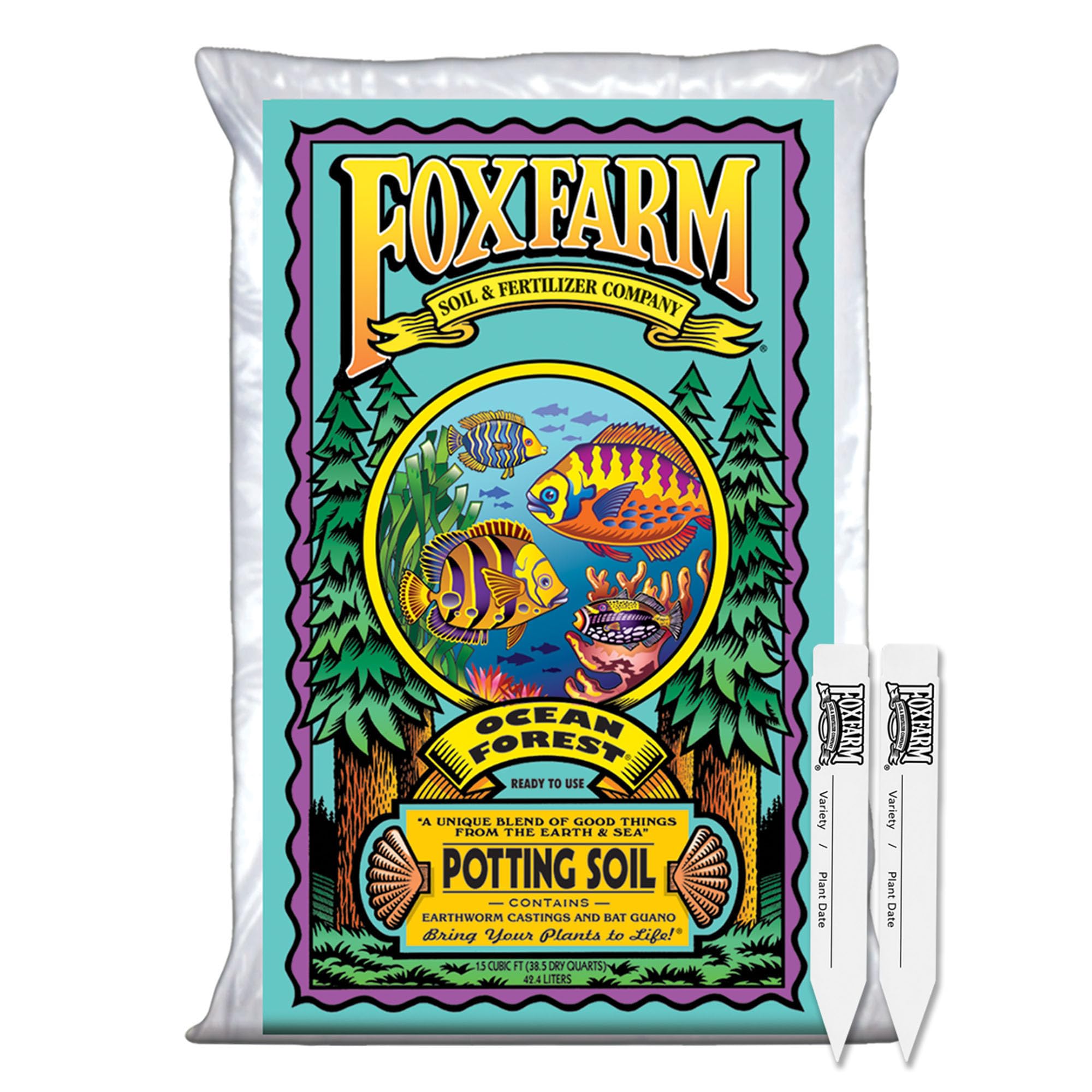
FoxFarm Ocean Forest sits at the top of the performance pyramid for a reason: its blend of aged forest products, sandy loam, and sphagnum peat moss creates a light, aerated texture that drains quickly while holding enough moisture to keep roots happy between waterings. The inclusion of earthworm castings, crab meal, and oyster shell provides a gentle, slow-release nutrient profile that fuels vigorous growth without the risk of chemical burn. At 1.5 cubic feet and 34 pounds, this bag covers multiple large containers or a substantial raised bed section.
Gardeners consistently report that seedlings started in Ocean Forest outpace those in standard mixes within the first two weeks, and the sandy loam component helps prevent the dreaded root rot that plagues dense, peat-only soils. The soil absorbs water immediately upon pour—no dry pockets—which saves you the annoyance of pre-wetting. It also comes with two plant tags for labeling, a small but welcome detail for organized growers.
Experienced users recommend mixing Ocean Forest with a lighter, cheaper soil to extend the bag without compromising structure—especially for large-scale container gardening where the price per cubic foot adds up. The nutrient charge is strong enough to feed plants for about a month, after which you’ll need to start a supplemental fertilizer schedule for heavy feeders like tomatoes or peppers.
What works
- Superb drainage without sacrificing moisture retention
- Rich, slow-release organic nutrients from fish and shellfish meal
- Immediate water absorption—no dry pockets
What doesn’t
- Premium price per cubic foot compared to commodity brands
- Nutrient charge fades after 3-4 weeks—requires supplementing
- Heavy bag may be awkward for some users to carry
2. FoxFarm Happy Frog Potting Soil
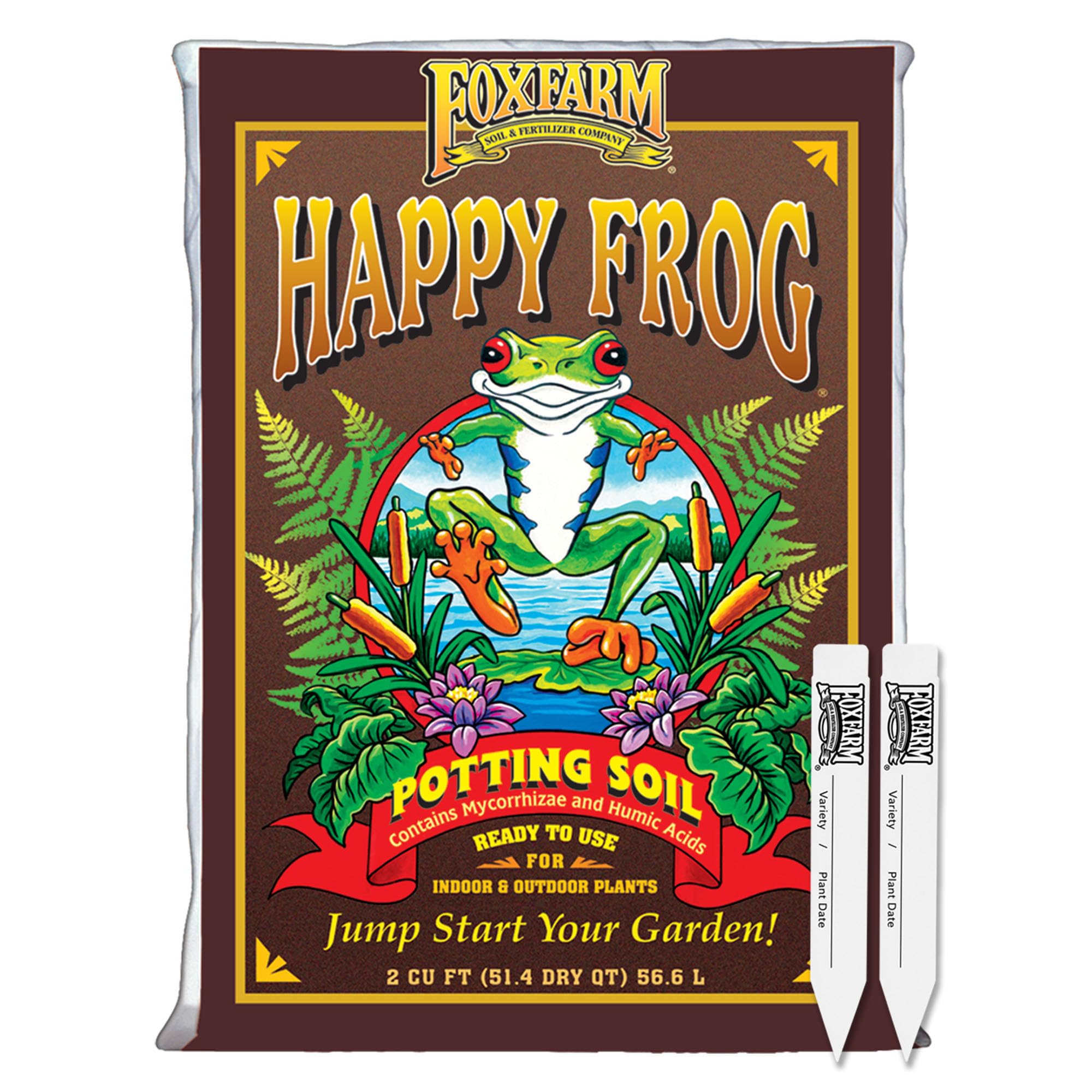
Happy Frog distinguishes itself from the Ocean Forest line by loading the mix with beneficial soil microbes and mycorrhizal fungi—organisms that form symbiotic relationships with plant roots and dramatically increase nutrient uptake efficiency. The 2-cubic-foot bag (42 pounds) gives you more raw volume per purchase, making it a smarter choice for larger container gardens or mixed-bed projects where root health is the priority over immediate vegetative explosion.
The texture is slightly fluffier than Ocean Forest, with visible perlite and a dark crumbly consistency that suggests high organic content. The presence of bat guano and earthworm castings provides a balanced nitrogen-phosphorus profile that encourages both foliage and flower production. Users growing fruiting plants—cannabis, peppers, tomatoes—report notably larger yields compared to generic potting mixes, with healthier root systems that fill the container faster.
Some growers note that the mycorrhizae inoculant can be less effective if the soil dries out completely or if you over-water in the first week. The bag ships in a protective box to prevent tearing, which is appreciated given the weight. For indoor houseplant enthusiasts running a small nursery, Happy Frog’s microbial activity consistently results in lower transplant shock and fewer yellowing leaves.
What works
- Beneficial microbes and mycorrhizae boost root development significantly
- Large 2-cu-ft bag offers better value for big projects
- Excellent for high-yield fruiting plants and flowers
What doesn’t
- Premium pricing—costs more per bag than many alternatives
- Requires careful watering to maintain microbe activity
- Heavy bag (42 lbs) can be difficult to move around the yard
3. Coast of Maine Bar Harbor Blend Potting Soil
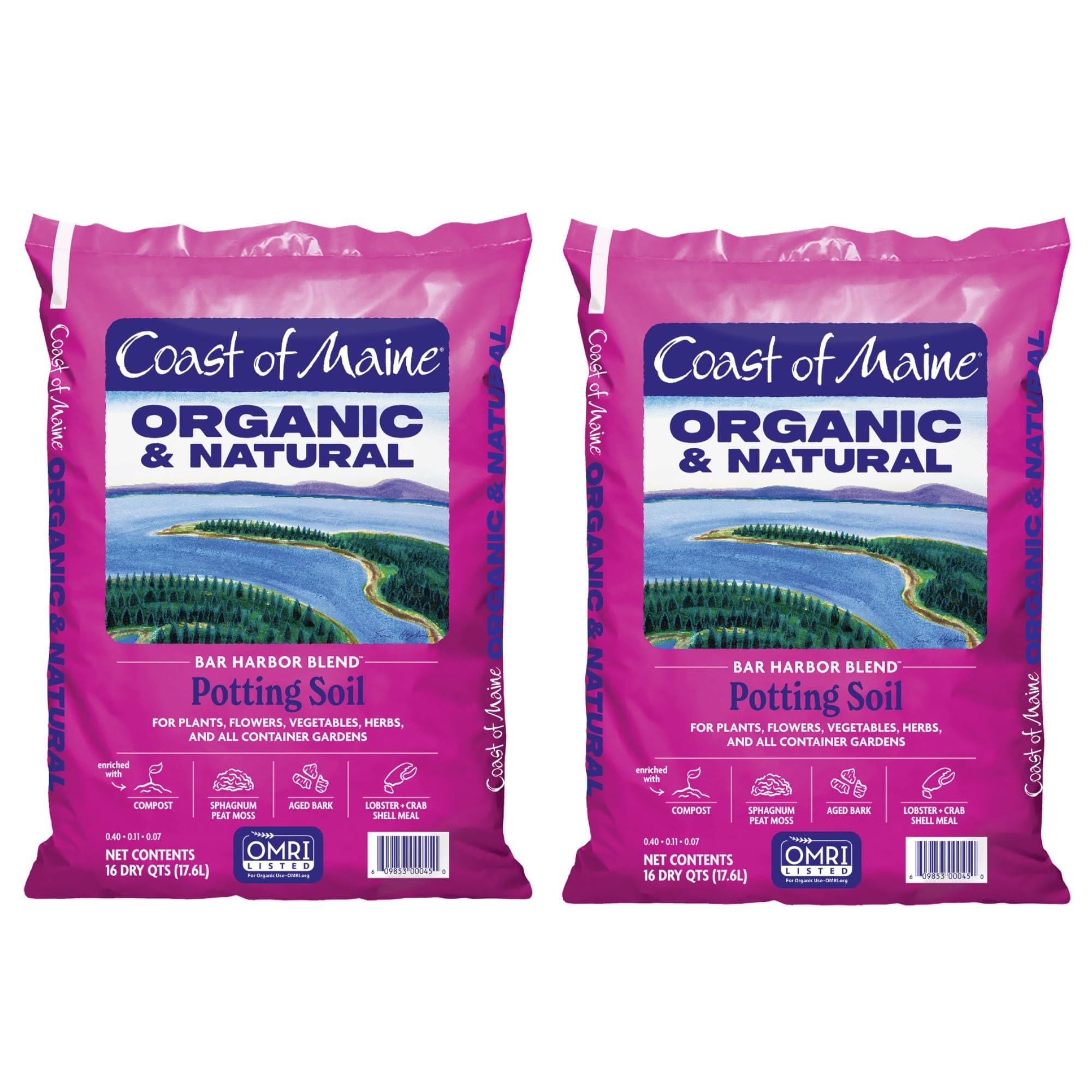
The Bar Harbor Blend from Coast of Maine is formulated with a distinctly dark, nutrient-rich composition thanks to its lobster and crab shell meal, kelp meal, and composted ingredients sourced from the Maine coast. This 16-quart bag is purpose-built for container planting—vegetables, herbs, flowers, and even hanging baskets benefit from the high organic content that holds moisture without becoming waterlogged. The perlite content is generous enough to keep air flowing through the root zone, while the slow-release nitrogen from shell meal feeds plants steadily over several weeks.
Users consistently praise this soil for its lack of weed seeds, sticks, or other debris that plague lower-quality blends. The texture feels almost spongy when moist, yet it doesn’t compact into a solid mass after repeated watering cycles. Tomato and pepper growers report especially vigorous growth and deeper green foliage compared to standard bagged soils, and the earthy smell is neutral—no manure funk.
The main consideration is bag size: 16 quarts is suitable for a few large pots or one modest raised bed segment, but extensive container setups will require multiple bags. A few owners experienced fungus gnats upon opening, which suggests storing the bag in a sealed bin or baking the soil before use if you’re starting finicky seedlings indoors.
What works
- Rich, dark organic base with crab and kelp meal for steady nutrition
- Excellent balance of drainage and moisture retention
- Clean—no weeds, sticks, or synthetic fillers
What doesn’t
- 16-quart bag runs small for large raised beds
- Some batches attract fungus gnats—recommend pre-sterilization
- Premium price point for the volume provided
4. Michigan Peat Baccto All Purpose Potting Soil

Michigan Peat’s Baccto line is the workhorse option for gardeners who need bulk volume without sacrificing fundamental soil quality. This 50-pound bag of all-purpose soil blends rich reed sedge peat with perlite and sand, creating a mix that works for pots, planters, containers, and raised beds straight out of the bag. It includes both starter and slow-release fertilizers—a practical touch for growers who don’t want to add amendments immediately.
The texture is consistent and ready to use: no clumping, no large bark chunks, and the moisture level upon opening is typically damp but not sloppy. For large-scale projects like multiple raised beds or a full container garden, the per-pound value is hard to beat among premium-spec blends. Users report good results with vegetables, bulbs, and perennials, with strong root establishment in the first few weeks.
The trade-off is that the soil can harbor fungus gnats, with several reviews noting an emergence of gnats a few days after potting. This is common with peat-heavy mixes that arrive moist. Disinfecting the soil by solarizing or using a mild neem oil drench is advisable for indoor use. Also, the bag does not specify a pH range, so growers of acid-sensitive plants should test and adjust accordingly.
What works
- Excellent bulk value at 50 lbs for large projects
- Pre-mixed with slow-release fertilizer—convenient for immediate planting
- Light, crumbly texture that won’t harden around roots
What doesn’t
- Moisture in the bag sometimes triggers fungus gnat outbreaks
- No explicit pH information on the packaging
- Heavy bag—needs two hands or a wheeled cart to move
5. Coast of Maine Tomatoes & Vegetables Planting Soil

Coast of Maine’s targeted vegetable blend leans heavily on composted manure and sphagnum peat moss to create a mix that addresses the specific drainage needs of heirloom tomatoes and fruiting vegetables. The 20-quart bag is smaller than bulk options but perfectly scaled for a half-dozen large pots or a single 4×4 raised bed application. The soil is lightweight and fluffy straight from the bag, with an aroma from the composted manure that is earthy but not overpowering.
Growers consistently note that this soil holds moisture well without turning into a wet sponge, and the drainage is sharp enough to prevent root rot in rain-prone climates. The nutrient content is rich enough to support tomatoes from transplant through early fruiting without additional feeding. Many users switching to this soil report that their heirloom varieties—which are notoriously sensitive to overwatering—finally produce the vigorous growth they expected.
The downside for larger operations is the price per quart. Dedicated tomato enthusiasts willing to invest in a few bags will see results, but for a full vegetable patch the cost adds up quickly. Some users also mention that the soil can contain small wood particles that are likely insect deterrents, which is a positive feature unless you prefer a completely uniform texture.
What works
- Specifically formulated for high-drainage vegetable and tomato growing
- Composted manure provides natural, steady nutrient release
- Lightweight texture promotes deep root penetration
What doesn’t
- Premium per-quart cost limits its use for large-scale planting
- Small wood particles can be present—aesthetics vary
- Some batches have required neem oil treatment for fungus gnats
6. Midwest Hearth Premium Potting Soil Mix

Midwest Hearth positions this mix as a professional-grade formulation, and the ingredient list backs it up: sphagnum peat moss, perlite, and vermiculite in a pH-balanced blend designed for the delicate early stages of plant life. The 8-dry-quart bag is intentionally compact, making it a perfect choice for starting seeds, repotting small indoor plants, or filling window boxes. The resealable bag design is a practical bonus for those who don’t use the entire volume at once.
The texture is noticeably light and fluffy, with enough perlite to prevent compaction even with repeated watering. Users germinating petunias, jade plants, and herbs report excellent root development and no damping-off issues, which can be a problem with denser soils. The balanced pH (targeting the 6.0–6.5 range) removes one variable from the seed-starting equation, letting new growers focus on light and watering schedules.
The main limitation is straightforward: at 8 quarts, this is not a bulk soil. For regular potting of large perennials, shrubs, or raised beds, you’ll need multiple bags, which reduces the cost advantage. Some users also mention that while the mix is excellent for starts, it may require supplemental fertilizer after the first 2-3 weeks for heavy-feeding plants.
What works
- Consistent, fluffy texture perfect for seed germination
- pH balanced for broad plant compatibility (6.0–6.5)
- Resealable bag keeps unused soil fresh
What doesn’t
- Small 8-quart size limits it to starters and small containers
- No long-term fertilizer charge—needs feeding after a few weeks
- Not cost-effective for large-scale repotting projects
7. Miracle-Gro Potting Mix (3-Pack)

Miracle-Gro Potting Mix remains the most recognizable name in the space, and this 3-pack of 8-quart bags is the entry-level workhorse for casual container gardeners and beginners. The soil is pre-charged with a synthetic fertilizer that feeds plants for up to six months, meaning you can fill pots and walk away without thinking about additional nutrients. The texture is light enough for annual flowers, herbs, and small vegetables, though the perlite content is noticeably lower than premium blends.
For its price point, this mix delivers exactly what the label promises: strong initial growth and a no-fuss feeding schedule for a full season. Users appreciate the convenience of the smaller bag format—each 8-quart bag is easy to carry and pour, and the 3-pack provides enough volume to fill several 8-inch containers or a trio of larger pots. The brand’s ubiquity also means availability isn’t an issue; you can restock quickly.
The compromises become apparent under closer inspection. The water absorption rate is slower than premium soils, requiring thorough pre-wetting to avoid dry pockets. A few experienced gardeners note that the synthetic fertilizer can cause leaf burn in very young seedlings if not mixed thoroughly. Also, the soil tends to compact after a few months of watering, potentially restricting root growth in long-season crops.
What works
- Built-in 6-month feeding schedule ideal for low-maintenance use
- 3-pack provides good value for small to medium container projects
- Easy to find, easy to carry, ready to pour
What doesn’t
- Synthetic fertilizer can burn delicate seedlings if not mixed well
- Compresses over time, leading to reduced aeration for roots
- Slower initial water absorption compared to organic premium blends
Hardware & Specs Guide
Volume vs. Weight Confusion
Potting soils are sold by either dry quarts or cubic feet, and the two scales don’t convert directly because weight depends on moisture and density. An 8-dry-quart bag might weigh anywhere from 4 to 8 pounds. A 1.5-cubic-foot bag (like FoxFarm Ocean Forest) weighs about 34 pounds. Always estimate the number of containers you need to fill—a standard 10-inch pot holds about 5 dry quarts, so an 8-quart bag fills roughly 1.5 pots.
pH Range & Buffering
Most reputable potting soils list a pH range between 5.8 and 6.8. The presence of dolomitic limestone or oyster shell in the ingredient list indicates that the manufacturer has added a buffering agent to stabilize pH over time—important for preventing nutrient lockout. Test your soil after 3-4 weeks of watering, as the buffer can degrade, especially with rain or softened tap water.
Fertilizer: Slow-Release vs. Starter
Starter fertilizers are mild nitrogen bumps designed to support the first 2–3 weeks of growth. Slow-release fertilizers are encapsulated granules that feed over 3–6 months. Premium organic blends (Coast of Maine, FoxFarm) rely on natural materials like kelp meal or crab shell, which release nutrients via microbial breakdown—gentler on roots but slower to green up than synthetic options like Miracle-Gro.
Perlite & Vermiculite Roles
Perlite is the white, popcorn-like mineral that creates air pockets in the soil for drainage and oxygen exchange. Vermiculite is the honey-brown, flaky mineral that absorbs and holds water. A good general-purpose mix includes both: perlite for aeration, vermiculite for moisture. Blends that rely heavily on peat alone tend to compact quickly, while high-perlite mixes dry out fast—ideal for succulents but problematic for moisture-loving annuals.
FAQ
Can I use planting soil directly in the ground?
How do I fix soil that stays wet for days?
Should I bake my soil to kill gnats?
What does OMRI-listed mean on a soil bag?
Why does my soil shrink and pull away from the pot sides?
Final Thoughts: The Verdict
For most gardeners, the best planting soil winner is the FoxFarm Ocean Forest because it delivers a precisely balanced, nutrient-rich mix that supports strong seedlings, heavy feeders, and everything in between with minimal guesswork. If you want beneficial microbes that turbocharge root development, grab the FoxFarm Happy Frog. And for an organic container option that smells like the Maine coast and grows prize-winning tomatoes, nothing beats the Coast of Maine Bar Harbor Blend.