
Japanese pruning shears represent a specific engineering philosophy: ultra-hard alloy steel, sub-20-degree blade bevels, and precision-fit pivot joints that create a shear-line so clean it reduces plant healing time by weeks. Unlike generic stamped-steel pruners that crush stems before cutting, true Japanese bypass shears sever fibers cleanly, a critical advantage for bonsai, roses, and flowering shrubs where snap-cut damage invites disease. The weight difference alone—typically 5–7 ounces compared to 10+ ounces for Western-style secateurs—makes them noticeably less fatiguing for extended trimming sessions.
I’m Rikta — the co-founder and writer behind Lawn Gear Lab. This guide is the result of analyzing blade steel types (SK5, Yasugi, AUS-8), pivot geometries, cutting capacities, and ergonomic designs across Japanese pruning shears, cross-referencing hundreds of verified owner experiences to identify which models deliver genuine Japanese craftsmanship at their respective tiers.
Whether you are shaping bonsai, deadheading roses, or maintaining a vegetable garden, the best japanese pruning shears combine razor-sharp edge retention with lightweight balance for precise, effortless cuts every time.
How To Choose The Best Japanese Pruning Shears
Selecting the right pair of Japanese pruning shears means understanding the material science behind the blade, the physical geometry of the cut, and the tool’s weight distribution in your hand. A pruner that is perfect for the delicate inner branching of a juniper bonsai will feel undersized for cutting ¾-inch plum wood, and vice versa. Here are the four factors that separate a smart buy from a frustrating one.
Blade Steel: The Heart of Edge Retention
Japanese shears are defined by their steel. SK5 high-carbon steel, used in TONMA and Kimura models, holds a razor edge through heavy use but requires oiling to prevent rust. AUS-8 stainless steel, found in the TONMA Ashinaga bonsai shears, sacrifices a small degree of maximum hardness (HRC 59±1) for near-total corrosion resistance, making it ideal for humid climates or frequent use on wet foliage. The premium tier uses Yasugi Specialty Steel (YCS3), an alloy produced only in Japan’s Shimane prefecture, where repeated forging and impurity removal yield a blade that stays sharp significantly longer than standard carbon steel.
Bypass vs. Straight-Blade Cutting Geometry
Bypass shears use two curved blades that slide past each other, creating a scissor-like action that slices cleanly through live wood without crushing the cambium layer. This is the correct choice for green growth, flowers, and any branch you want to heal over quickly. Straight-blade shears, often called “twig scissors” or “hasami,” use a direct chopping action optimized for dead wood, bonsai root work, and precise tip trimming where you want maximum control over cut placement. The Okatsune 201B and the Wazakura Yasugi twig scissors exemplify this second category—excellent for detail work but not a replacement for bypass pruners on thick, green limbs.
Handle Ergonomics and Leverage
A Japanese pruning shear’s lever arm is shorter than Western designs, which reduces weight but increases the force required at the grip. Models with aluminum or alloy steel handles help counter this by keeping total tool weight under 8 ounces. The handle shape—whether rounded, wood-grain contoured, or straight metal—affects how the pressure point distributes across your palm during repetitive cuts. For users with arthritis or smaller hands, a rubberized or shaped grip reduces pinch points and makes sustained pruning sessions feasible.
Pivot Joint and Locking Mechanism
The pivot bolt determines cut precision and longevity. Loose pivots allow blade wobble that crushes fibers rather than slicing them. High-end Japanese shears use a threaded bolt and nut system that can be tightened with a tool as the joint wears, maintaining a zero-play fit over years of use. The locking tab is a secondary but real concern: some models use a slider that can accidentally engage mid-cut, while others use a positive-lock clip that stays put during gloved use. If you switch hands frequently or wear thick gloves, a secure lock mechanism matters more than you might expect.
Quick Comparison
On smaller screens, swipe sideways to see the full table.
| Model | Category | Best For | Key Spec | Amazon |
|---|---|---|---|---|
| Okatsune No. 201B | Premium | Conifer & pine pruning | 55mm blade length | Amazon |
| Wazakura Yasugi Steel | Premium | Bonsai detail work | YCS3 alloy tool steel | Amazon |
| Kimura Pro Hedge Shears | Mid-Range | Hedge & shrub shaping | 3x gearing technology | Amazon |
| Samurai KS-4T | Mid-Range | General bypass pruning | 25mm cutting cap. | Amazon |
| TONMA Bypass Shears | Mid-Range | Heavy cutting | 1 inch cutting width | Amazon |
| TONMA Ashinaga Bonsai | Budget | Bonsai & fine trimming | AUS-8 stainless steel | Amazon |
| SUIZAN Bypass Shears | Budget | Entry-level precision | 5/8″ cut diameter | Amazon |
In‑Depth Reviews
1. Okatsune No. 201B Plant Shears

The Okatsune 201B is the reference standard in Japanese gardening. Manufactured in Hiroshima, these straight-blade shears feature a 55mm cutting edge made from specially formulated high-carbon steel that arrives shaving-sharp out of the box. The blade geometry is optimized for the A-shaped cut favored by Japanese pine and conifer specialists—the precision of the tip allows you to reach deep into branch crotches without damaging surrounding needles or bark. At only 8.8 ounces, the weight disappears in your hand during long pruning sessions.
Owner reports consistently highlight the edge retention, with multiple users noting the shears stay sharp through heavy use for months before needing a touch-up. The pivot is tight with zero lateral play, and the blades can be separated for cleaning and sharpening, a feature rare at this tier. A palm pinch stopper between the handles prevents the sides from pinching your palm shut, which is a legitimate ergonomic concern on long-handled straight shears.
The main durability caveat is rust: like all high-carbon Japanese steel tools, the 201B demands immediate drying and occasional oiling after use. A few users with larger hands found the 8.3-inch overall length slightly short for their grip—it is more comfortable for medium to small hands, though users with larger hands who gifted them reported the recipients loved them. If you work primarily with conifers, pines, or dense shrubs and want the tool that professional Japanese gardeners reach for, this is the one.
What works
- Edge retention is excellent—holds sharpness for months of regular use
- Blades separate for cleaning and sharpening, extending tool lifespan
- Lightweight 8.8 oz design with palm pinch stopper for comfort
What doesn’t
- High-carbon steel rusts quickly if not dried and oiled after use
- Hand grip is short for users with larger hands
- Can pinch skin between handle nodes unexpectedly during use
2. Wazakura Yasugi Steel Twig Bonsai Scissors

The Wazakura twig scissors are forged from Yasugi Specialty Steel (YCS3), an alloy produced exclusively in Japan’s Shimane prefecture through a process that removes phosphorus and sulfur impurities that degrade edge sharpness in standard steels. Hand-forged by third-generation artisans in Sanjo, Niigata, these shears have a 52mm blade optimized for trimming thin branches, twigs, and buds in tight bonsai canopies where a wide bypass blade would cause collateral damage. The slim profile and 5.22-ounce weight make them the most precise tool in this review for close-quarters detail work.
The YCS3 steel arrives pre-oiled and holds its edge noticeably longer than SK5 or AUS-8 equivalents in controlled cutting tests. Owners describe the cuts as “crisp” and “accurate,” with the straight blade design severing wood fibers cleanly without crushing—exactly the behavior needed for bonsai branch healing. The handle is all-alloy steel with a smooth round profile that avoids the sharp edges found on some metal-handled alternatives.
The trade-off is that YCS3 is a high-carbon tool steel, meaning it requires diligent rust prevention: wipe it down after every use and apply light oil periodically. A few owners reported the pivot had slight play out of the box, though this is adjustable by tightening the central bolt. The 8.27-inch length works best for close-in work where you can grip near the pivot—if you primarily cut branches over ½ inch thick, you would benefit more from a bypass pruner with greater mechanical leverage.
What works
- Yasugi specialty steel stays sharp significantly longer than standard carbon steel
- Slim, lightweight design for intricate bonsai and detail pruning
- Hand-forged in Sanjo by third-generation artisans with traditional methods
What doesn’t
- Requires regular oiling to prevent rust on the high-carbon steel
- Pivot may have initial play that needs adjustment before first use
- Limited cutting capacity—not suitable for branches over 15mm
3. Kimura Pro Heavy Duty Hedge Shears

Kimura’s Pro hedge shears occupy a different category from the other straight-blade and bypass pruners in this guide—these are 22-inch hedge trimmers with a patented gearing mechanism that multiplies hand input force by up to three times. The blades are Japanese SK5 steel with a PTFE low-friction coating, designed to glide through sap-heavy foliage without gumming up. The wavy blade edge helps grip and sever larger stems up to 25mm, which is thicker than many standard hedge shears can manage.
The ergonomic differentiator is the weight distribution: lightweight aluminum handles keep the total weight manageable, and the TPR grips reduce vibration transferred to your palms during sustained trimming. Users with lower hand strength reported the gearing makes shaping hedges and large shrubs attainable without forearm fatigue. The blades arrived exceptionally sharp and held their edge through the first several months of regular seasonal use, though sharpening will inevitably be needed sooner than on smaller pruning shears because the cutting surface is larger and takes more impact.
A few owners noted that the 22-inch length can feel slightly large for users with smaller hands, and the blade sharpness does degrade after extended heavy use—typically a couple of months of weekly trimming before a noticeable drop-off. The PTFE coating helps with rust resistance, but the SK5 steel still benefits from occasional oiling, especially if you store the shears in a damp shed. For the user who needs one tool to shape an entire hedge line and cut back overgrown shrubs, the gearing makes this a standout option.
What works
- Patented gearing provides up to 3x cutting force with less hand strain
- Lightweight aluminum handles with soft TPR grips reduce fatigue
- Wavy blade edge cuts stems up to 25mm, wider than standard hedge shears
What doesn’t
- Blade sharpness drops after several months of heavy, frequent use
- 22-inch length may feel unwieldy for gardeners with smaller hands
- SK5 steel still needs occasional oiling to prevent edge corrosion
4. Samurai 8 1/2″ Bypass Pruner Shear KS-4T
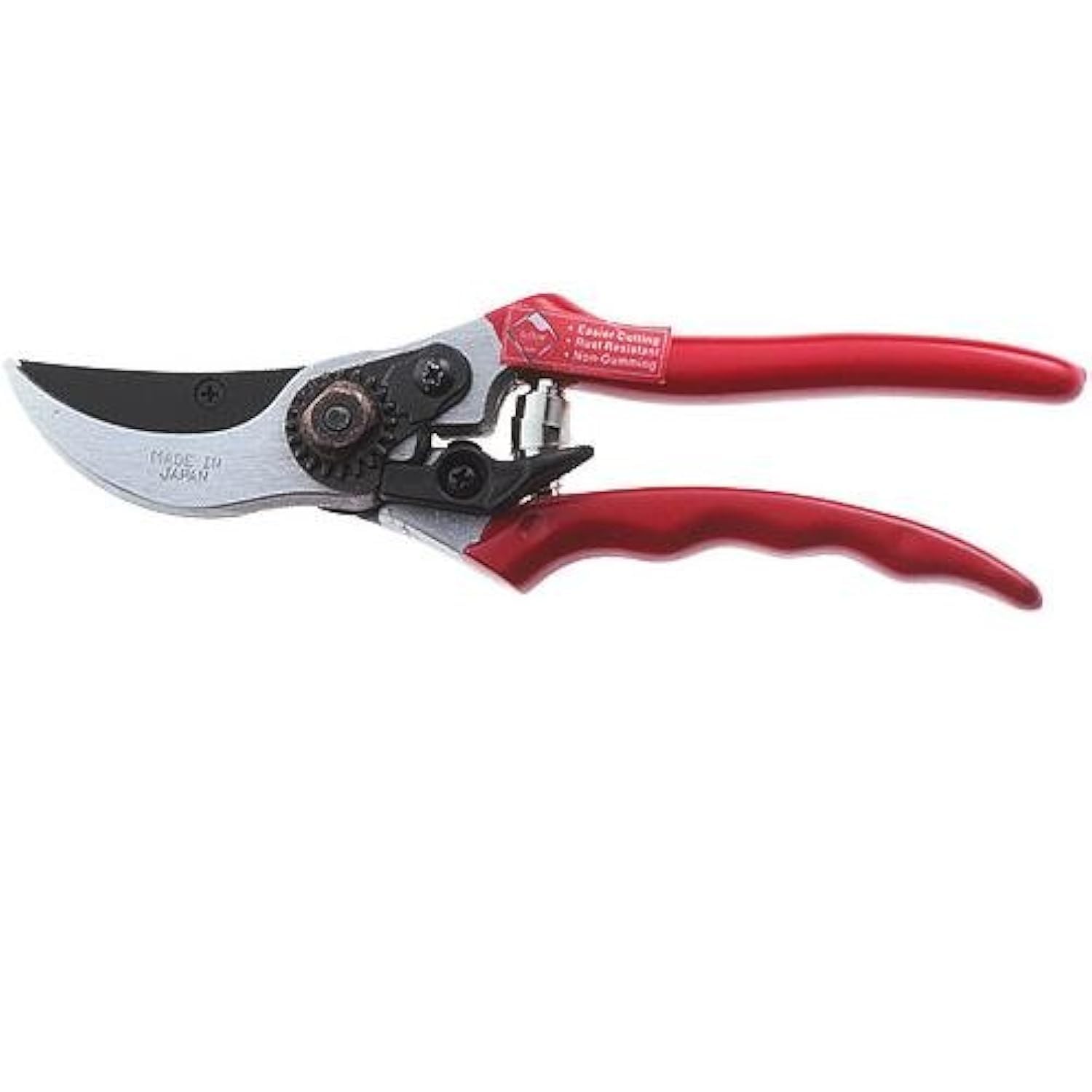
The Samurai KS-4T is a Japanese-made bypass pruner with Teflon-coated stainless steel blades, offering a 25mm cutting capacity in a compact 8.5-inch package. The rubberized handle provides a secure grip even when wet, and the spring-loaded action returns the blades to open position automatically after each cut. At only 0.57 pounds, it is light enough to carry in a pocket or apron all day without weighing you down—real buyers specifically mention using it for 10+ hours per week of pruning without issue.
Owners consistently describe the Samurai as a precise, dependable tool that cuts through ½-inch branches “like butter,” with several noting it compares favorably to Felco and German pruners costing more. The serrated blade edge gives it an advantage on slightly thicker green wood where a smooth blade might slip. The locking mechanism is a simple slider tab—functional but a few users reported it can slide into the locked position accidentally when wearing thick gloves, which interrupts work flow.
The biggest long-term concern is parts availability: the Samurai is not as widely supported in the US as Felco or ARS, so if you lose a spring or damage the blade, sourcing a replacement may be challenging. The Teflon coating helps with sap release and initial rust resistance, but it can wear off over time on the blade edge. For a mid-range Japanese bypass pruner that handles the bulk of routine garden pruning with Felco-comparable performance, the KS-4T delivers excellent value.
What works
- Teflon-coated stainless steel blades resist sap buildup and initial corrosion
- Cuts through 1/2-inch green wood cleanly with good leverage
- Lightweight build (0.57 lbs) suits extended daily pruning sessions
What doesn’t
- Spare parts availability is limited compared to Western brands
- Lock slider can accidentally engage during gloved use
- Teflon coating may eventually wear off the cutting edge
5. TONMA Bypass Pruning Shears
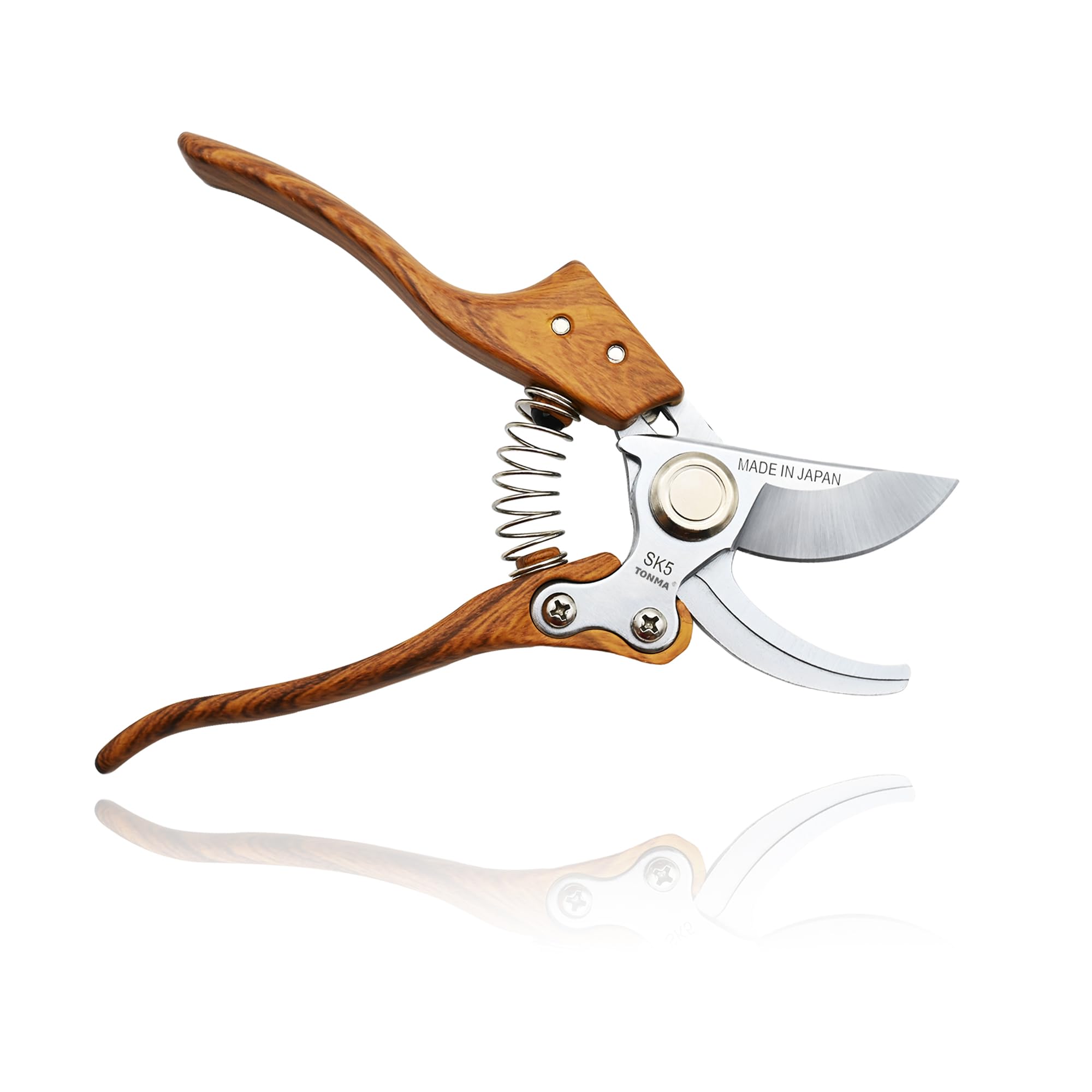
The TONMA Bypass Pruning Shears stand out for their 1-inch cutting capacity, which is significantly larger than typical Japanese bypass pruners that max out at 5/8 to 25mm. The SK5 Japanese steel blades are paired with ergonomic, imitation-wood-grain aluminum alloy handles that reduce hand pain during sustained use. The safety lock is an improved positive-lock clip that stays tight and does not slide accidentally during gloved use—a direct improvement over the slider mechanisms found on cheaper imports.
Real buyers report the shears cut through 3/4-inch branches easily and remain sharp for extended periods. The wood-grain aluminum handles are a genuine ergonomic upgrade over straight metal or basic rubber, providing a wider palm contact area that distributes force and reduces hot spots. The anvil/bypass dual-use claim is slightly misleading—these are bypass shears optimized for live, green growth rather than dead wood—but they handle general pruning well.
The main issue reported by owners is that the pivot bolt can be too tight out of the box, causing the blades to initially not open fully. This is fixable with lubricant and manual loosening, but it requires an extra step before first use. A few users also noted that the jaws do not open as wide as larger Western pruners, which can limit access to thick interior branches. For the mid-range buyer who prioritizes maximum cutting capacity in a lightweight Japanese tool with a secure lock, the TONMA is a strong choice.
What works
- 1-inch cutting capacity exceeds most Japanese bypass pruners in this tier
- Aluminum handles with wood-grain texture reduce hand fatigue
- Safety lock stays engaged during gloved use without accidental sliding
What doesn’t
- Pivot often arrives too tight and requires adjustment out of the box
- Jaw opening is narrower than Western pruners, limiting thick-branch access
- Blades can unhitch in pocket if the holding clip releases easily
6. TONMA Ashinaga Bonsai Scissors
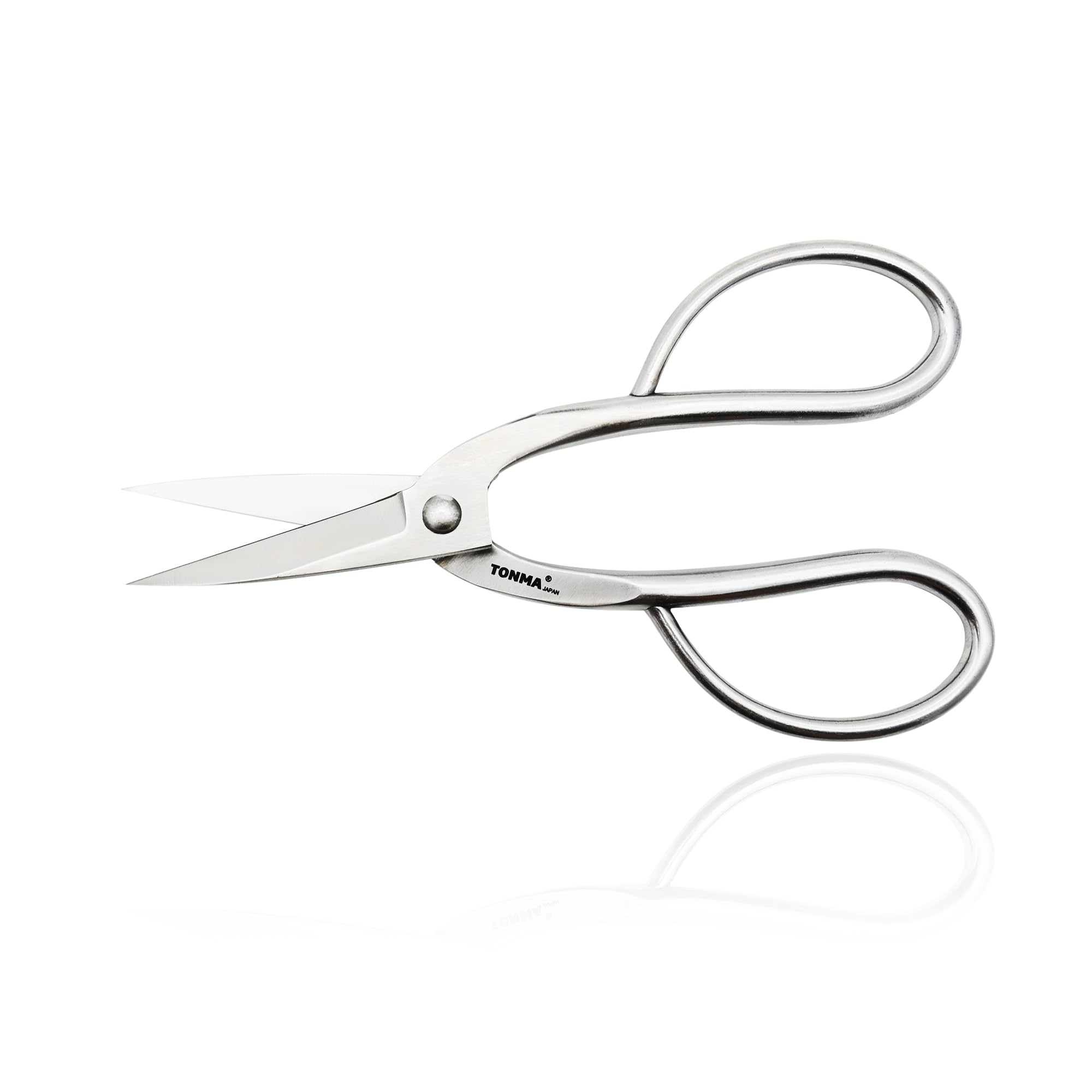
The TONMA Ashinaga bonsai scissors are constructed from solid Japanese AUS-8 stainless steel in a one-piece design with 4.5mm blade thickness and a hardness rating of HRC 59±1. AUS-8 is a premium stainless steel favored for its combination of edge retention and near-total corrosion resistance—it does not rust like carbon steel, making these scissors a low-maintenance option for gardeners who want Japanese precision without the constant drying and oiling ritual. The 8-inch length and 6.8-ounce weight provide a substantial feel without being heavy.
Owner reports are overwhelmingly positive, with users praising the scissors for cutting dahlia tubers, orchids, and bonsai branches with clean, precise action. The all-stainless construction means these can be washed with water, dried, and stored without special care. The handles are ergonomically shaped from the same stainless steel bar, providing excellent leverage for straight-blade cutting without the hand strain that comes from thinner metal handles.
The one-piece solid-steel build means there is no pivot to adjust—the blades are forged and ground as a single piece, which eliminates the possibility of loosening over time but also means the tension is fixed at the factory. A few users with very small hands found the 8-inch length slightly long for one-handed bonsai work, though this is a common trade-off for the increased leverage. If you want Japanese stainless steel shears that require minimal maintenance and deliver a clean, rust-free cut for fine trimming work, these are the best value pick.
What works
- Solid AUS-8 stainless steel is nearly rust-proof and low-maintenance
- One-piece forged construction means no pivot loosening over time
- Excellent for cutting tough plant material like dahlia tubers and orchid stems
What doesn’t
- Fixed blade tension cannot be adjusted to user preference
- 8-inch length may be long for very small hands during precise work
- Straight-blade design not ideal for thick, woody branches
7. SUIZAN Bypass Pruning Shears 8”

The SUIZAN Bypass Pruning Shears are crafted in Sanjo, Niigata—a town with over 250 years of blade-making history since the Edo period. The high-grade blade steel is hardened and finely honed to cut branches up to 5/8 inch (15mm) in diameter with a bypass action that provides clean, crush-free cuts. At 7.36 ounces and 8 inches long, these are lightweight enough for comfortable one-handed use during extended gardening sessions, and the polyvinyl chloride (PVC) handles provide a secure grip even in damp conditions.
Owners highlight the excellent comfort and build quality for the entry-level price point, noting that the shears arrive sharp and operate smoothly. The steel spring provides consistent return force, and the blades close with a satisfying precision that indicates tight tolerances. Multiple users with smaller hands reported the SUIZAN fits well and makes pruning bushes easier compared to larger pruners that cause hand fatigue. The 5/8-inch capacity is adequate for most routine garden trimming of flowers, small shrubs, and softwood branches.
The main limitation is cutting capacity: at 15mm, these shears are not intended for thick branches or heavy pruning. Some owners noted that the layered carbonized steel requires rust prevention and careful handling, similar to other high-carbon Japanese blades. The PVC handles, while comfortable, lack the premium feel of aluminum or wood-grain alternatives found in the mid-range tier. For the budget-conscious gardener who wants an authentic Japanese-made bypass pruner for light to moderate trimming, the SUIZAN delivers surprising quality.
What works
- Authentic Japanese craftsmanship from Sanjo, Niigata with long blade history
- Lightweight (7.36 oz) with comfortable PVC handles for smaller hands
- Sharp, well-fitted bypass blades that cut cleanly without crushing
What doesn’t
- Cutting capacity is limited to 5/8 inch—not for thick branches
- Carbon steel requires regular oiling and drying to prevent rust
- PVC handles lack the durability and feel of aluminum or alloy options
Hardware & Specs Guide
Blade Steel Types
Japanese pruning shears use three primary steel chemistries. SK5 high-carbon steel (Samurai KS-4T, Kimura Pro) offers a hardness around HRC 60-62 with excellent edge retention but needs oiling to prevent rust. AUS-8 stainless steel (TONMA Ashinaga) trades a few points of hardness (HRC 59±1) for near-total corrosion resistance, ideal for wet climates. Yasugi Specialty Steel YCS3 (Wazakura) is a premium tool steel made in Japan’s Shimane prefecture that undergoes multiple refining and forging steps to remove phosphorus and sulfur, resulting in superior wear resistance and long-lasting sharpness. The best choice depends on whether you prioritize maintenance-free rust protection or maximum edge retention.
Cutting Capacity and Leverage
The cutting capacity measurement—usually given in millimeters or inches—tells you the maximum branch diameter the shear can sever cleanly. Bypass pruners like the Samurai (25mm) and TONMA (1 inch) use scissor action that slices from one side, making them best for green wood up to the rated spec. Straight-blade shears like the Okatsune 201B and Wazakura are optimized for smaller diameters (typically under 15mm) where precision matters more than raw force. Handle length also affects leverage: 8-inch shears are generally the sweet spot for one-handed pruning, while longer hedge shears (22-inch Kimura) use gearing to multiply force across larger cutting surfaces.
FAQ
Do Japanese pruning shears require special maintenance compared to Western pruners?
Can I use Japanese bypass shears on dead, dry branches?
Final Thoughts: The Verdict
For most gardeners, the best japanese pruning shears winner is the Okatsune No. 201B because it combines the precision of a 55mm straight blade, the edge retention of premium Japanese high-carbon steel, and the lightweight feel that makes detailed pruning comfortable for hours. If you want the easiest maintenance with zero rust worry, grab the TONMA Ashinaga Bonsai Scissors in stainless AUS-8 steel. And for heavy hedge and shrub shaping where hand fatigue is the enemy, nothing beats the Kimura Pro Hedge Shears with patented 3x gearing technology.