
Choosing the wrong fertilizer is the fastest way to ruin the delicate balance of a bonsai tree. Unlike standard houseplants, a bonsai lives in a tiny volume of soil where salt burn, nutrient lockout, and excessive vegetative growth can distort its miniature form within weeks. The right formulation must deliver controlled, balanced nutrition without overwhelming the root system.
I’m Rikta — the co-founder and writer behind Lawn Gear Lab. I’ve spent hundreds of hours comparing formulation labels, analyzing NPK ratios, studying soil-microbe interactions, and sifting through verified owner feedback to separate the fertilizers that genuinely support bonsai health from those that cause more harm than good.
Whether you are training a juniper, a Japanese maple, or a ficus, this guide will help you confidently choose the best bonsai fertilizer for your tree’s specific growth stage and container environment.
How To Choose The Best Bonsai Fertilizer
Bonsai trees require a precisely balanced diet. A general-purpose garden fertilizer often contains too much nitrogen, which forces large, soft leaves and long internodes — exactly the opposite of what bonsai artists want. The ideal product delivers steady, low-dose nutrition that supports compact growth, fine branching, and healthy root function.
NPK Ratio and What It Means for a Bonsai
Nitrogen (N) drives leaf and stem growth. Phosphorus (P) supports root development and flowering. Potassium (K) strengthens cell walls and disease resistance. For most established bonsai, a balanced ratio such as 6-6-6 or 3.5-3.7-3.3 works well. A higher nitrogen ratio may be useful during early spring growth, but should be reduced once the canopy fills in.
Slow-Release vs. Liquid Concentrates
Granular slow-release fertilizers feed the tree over several weeks with a single application, reducing the risk of root burn. Liquid concentrates offer immediate availability and precise control but require more frequent mixing and application. The best choice depends on your watering routine and the tree’s current growth phase.
Organic Ingredients and Soil Microbes
Organic fertilizers such as fish bone meal, seabird guano, and soybean meal release nutrients through microbial activity. Over time, these ingredients improve soil structure and support beneficial fungi. Products containing mycorrhizal fungi and humic acids can enhance nutrient uptake in the restricted root zone typical of bonsai containers.
Quick Comparison
On smaller screens, swipe sideways to see the full table.
| Model | Category | Best For | Key Spec | Amazon |
|---|---|---|---|---|
| Japanese Biogold Original | Premium | Conifers & specimen bonsai | NPK 3.5-3.7-3.3 | Amazon |
| FoxFarm Happy Frog Japanese Maple | Premium | Acid-loving dwarf trees | NPK 4-3-4 | Amazon |
| Organic Plant Magic | Mid-Range | General-purpose slow feeding | Slow-release granules | Amazon |
| FoxFarm Happy Frog Acid Loving | Mid-Range | Blueberries & acid soil bonsai | Omri listed | Amazon |
| Espoma Organic Tree-Tone | Mid-Range | Ornamental & fruit tree bonsai | NPK 6-3-2 | Amazon |
| True Organic All Purpose | Budget | General container bonsai feeding | Liquid concentrate | Amazon |
| Cz Garden Triple Super Phosphate | Budget | Bloom boosting supplement | 0-46-0 high P ratio | Amazon |
In‑Depth Reviews
1. Japanese Biogold Original Bonsai Fertilizer

Biogold is the gold standard in dedicated bonsai nutrition. The balanced NPK of 3.5-3.7-3.3 is specifically formulated to avoid excess nitrogen, so your tree maintains tight internodes and small foliage. Long-time owners report it works exceptionally well for conifers like junipers and pines because the release rate aligns with the natural growing rhythm of woody bonsai.
The pellets have a mild organic aroma that does not attract rodents — a real advantage when fertilizer sits exposed on the soil surface for weeks. Each application lasts about four weeks, making the 5kg bag a multi-season supply for a substantial collection. The slow breakdown means there is almost zero risk of root burn, even for sensitive species.
One caveat: the manufacturer suggests that deciduous trees may react with enlarged leaves and elongated internodes if given too many pellets at once. It is best to start with a conservative dose for maples and elms. For the price per gram of active nutrients, Biogold delivers unmatched precision for serious bonsai growers.
What works
- Balanced NPK tailored for bonsai
- Single application lasts 4 weeks
- Does not attract pests or rodents
What doesn’t
- High price per bag
- Can cause oversized leaves on deciduous trees if overapplied
2. FoxFarm Happy Frog Japanese Maple Fertilizer

This powdered formula from FoxFarm is specifically engineered for low pH feeders, which makes it a strong candidate for Japanese maple bonsai. The 4-3-4 ratio supplies enough nitrogen to support spring leaf expansion without pushing overly large blades. The inclusion of mycorrhizal fungi and beneficial soil microbes helps the restricted root system access nutrients more efficiently in the small container volume.
Users consistently report that container maples produce more vibrant foliage and denser branch structure after a few weeks of monthly feeding. The mixing ratio of 2 tablespoons per gallon of water is easy to follow, and the powder dissolves readily without clumping. The organic aroma is noticeable but dissipates quickly after watering.
The bag is not specifically branded for bonsai, but the formulation aligns perfectly with the needs of dwarf trees that thrive in acidic soil (pH below 6.5). Owners of hornbeam, beech, and azalea bonsai have also reported positive results. The 4lb bag covers multiple applications over a full growing season.
What works
- Supports compact growth in acid-loving species
- Contains mycorrhizae for root efficiency
- Simple monthly mixing schedule
What doesn’t
- Not a complete stand-alone for high-pH soil
- Powder form requires careful measuring
3. Organic Plant Magic Slow Release Granular Fertilizer

Organic Plant Magic delivers a broad spectrum of 55+ trace minerals, amino acids, humic acids, and mycorrhizae in a granular form that is very forgiving on application volume — a useful property for bonsai where precise dosing is critical. The slow-release mechanism feeds the tree steadily over a month, reducing the risk of nutrient spikes that cause leaf burn.
The granules can be top-dressed or mixed into the top layer of bonsai soil. A 4lb bag covers a very large area (up to 1000 square feet), so a single purchase will last many seasons for a small bonsai collection. Gardeners note that the product revives struggling plants quickly, with visible results in leaf color and new growth within two weeks.
One practical drawback is the odor when used indoors: the organic compounds release a strong smell that lingers for several hours after watering. Several users advise reserving this product for outdoor bonsai or well-ventilated spaces. The granules also require thorough watering to start the breakdown process.
What works
- Extremely large coverage per bag
- Forgiving dosage tolerance
- Rich in trace minerals and microbes
What doesn’t
- Strong odor unsuitable for indoor use
- Granules need thorough watering to activate
4. FoxFarm Happy Frog Acid Loving Plants Fertilizer

This OMRI-listed powder is formulated for plants that require a low pH growing environment. For bonsai species like azalea, gardenia, and blueberry, standard fertilizers can lock out micronutrients, causing yellowing leaves and stunted growth. FoxFarm’s blend includes beneficial soil microbes that improve nutrient availability in acidic soil conditions.
The application rate of 1/16 cup per gallon is very low, which means the 4lb bag stretches far across multiple trees. Gardeners report that gardenias produce buds within 10 days and container strawberries yield more fruit after a single feeding. The gentle release profile makes it safe for newly potted bonsai that have not yet established a full root system.
This product is not a balanced fertilizer — it is specifically designed for acid lovers. Using it on trees that prefer neutral or alkaline soil may cause deficiencies. It works best as a seasonal supplement for species that go through an active acidic-soil growth phase in spring and early summer.
What works
- Tailored for low-pH loving bonsai species
- Very low dosage per application
- OMRI listed for organic gardening
What doesn’t
- Not suitable for neutral/alkaline soil trees
- Narrow use case compared to balanced formulas
5. Espoma Organic Tree-Tone 6-3-2
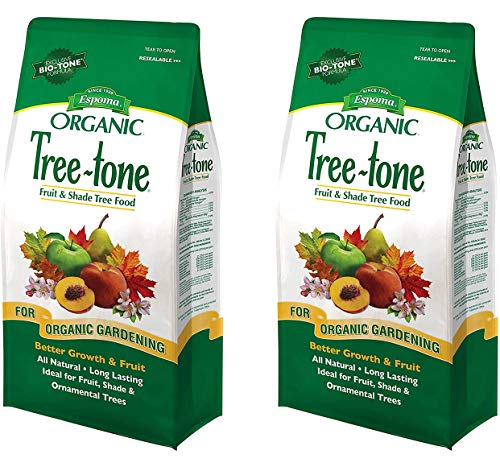
Tree-Tone from Espoma delivers a higher nitrogen ratio (6-3-2) that is ideal for early spring and late fall feeding of woody bonsai. The nitrogen is formulated from organic sources, so it releases slowly and reduces the risk of forced lanky growth. The bag includes two 4lb pouches, offering excellent value for growers with a medium-sized collection.
The dry powder formula requires no mixing — just sprinkle around the root zone and water in. This convenience is a major advantage for bonsai enthusiasts who maintain dozens of trees. Users consistently report that apple and plum bonsai produce thicker trunks and more flowers after switching to Tree-Tone, and the added calcium (5%) supports strong cell wall development.
Owners should note that the organic ingredients are palatable to dogs. Several reviewers share stories of pets eating the fertilizer and vomiting. If your bonsai are on a low table or the ground, you will want to work the granules into the top layer of soil or bury them slightly to prevent access.
What works
- No mixing required
- Includes calcium for strong wood development
- Good value with two bags per purchase
What doesn’t
- Attracts pets if left exposed on soil surface
- Higher nitrogen requires careful dosing for refined trees
6. True Organic All Purpose Plant Food

True Organic’s liquid concentrate is an all-purpose formula that works well as an entry-level bonsai fertilizer. The 5-4-5 nutrient profile includes 3.75% slow-release nitrogen, which reduces the chance of a sudden growth flush. The recommended dilution is 1 oz per half gallon, making the 4lb bottle last several weeks for a small collection.
The liquid form allows you to adjust the strength easily — half-strength applications every two weeks give you precise control over growth rate. The organic ingredients (seabird guano, crab meal, fish bone meal) support microbial activity in the soil. Users report that propagated cuttings and newly potted bonsai perk up noticeably after the first feeding.
The smell is the biggest limitation. The concentrate has a strong organic odor that some find unpleasant, and the diluted solution maintains the aroma for a few hours after watering. It is manageable in a well-ventilated area or outdoors, but not ideal for indoor bonsai displayed on a desk or shelf.
What works
- Flexible liquid dilution for precise feeding
- Contains slow-release nitrogen component
- Affordable entry point for beginners
What doesn’t
- Strong odor during and after mixing
- Requires frequent bi-weekly application
7. Cz Garden Triple Super Phosphate 0-46-0

Triple Super Phosphate is a specialized supplement, not a complete bonsai fertilizer. With an NPK of 0-46-0, it delivers an extremely high concentration of phosphorus designed to promote root development and flower production. Bonsai growers use this sparingly — typically a small pinch per pot — to encourage budding and root ramification during the flowering phase.
The heavy-duty resealable pouch keeps the granules dry between uses. The bag is large (5 pounds) and will last many seasons even for a sizable collection. Users report that orchids, tomatoes, and fruiting bonsai produce noticeably more blooms after a single application. The phosphorus also supports stronger root systems in newly repotted trees.
Because this product contains zero nitrogen or potassium, it cannot be used as a standalone fertilizer. Over-application can lock out other nutrients and cause leaf tip burn. It is best reserved for targeted use during the pre-flowering window — typically late winter to early spring for most temperate bonsai species.
What works
- Powerful phosphorus boost for blooming bonsai
- Resealable pouch for long-term storage
- Excellent value per application
What doesn’t
- Not a complete fertilizer
- Risk of nutrient lockout if overused
Hardware & Specs Guide
NPK Ratio
The three-number label (Nitrogen-Phosphorus-Potassium) tells you exactly what the fertilizer delivers. For established bonsai, ratios near 3-3-3 or 4-4-4 work best. Higher nitrogen (6-3-2) is fine for early spring, but switch to a balanced or lower-nitrogen formula once the canopy sets to avoid oversized leaves and stretched internodes.
Release Mechanism
Granular slow-release formulas require one application per month and resist leaching. Liquid concentrates act within hours but need weekly or bi-weekly reapplication. For bonsai, slow-release is generally safer because the small soil volume cannot buffer sudden nutrient spikes that cause root burn.
FAQ
How much fertilizer should I give a small bonsai in a 6-inch pot?
Can I use a general-purpose garden fertilizer on my bonsai?
Should I fertilize my bonsai during winter dormancy?
Final Thoughts: The Verdict
For most gardeners, the best bonsai fertilizer winner is the Japanese Biogold Original because its balanced 3.5-3.7-3.3 NPK and slow-release pellets are specifically designed for the unique demands of container-grown bonsai. If you want a targeted solution for acid-loving species like Japanese maples, grab the FoxFarm Happy Frog Japanese Maple Fertilizer. And for an affordable entry-level option that offers flexible dosing, nothing beats the True Organic All Purpose Plant Food.