
Bearded irises rot from the crown up when their roots sit in dense, waterlogged soil.
I’m Rikta — the co-founder and writer behind Lawn Gear Lab. I’ve spent dozens of hours comparing potting mix pH levels, perlite ratios, drainage claims, and organic certifications across dozens of formulations to separate the mixes that actually support iris rhizomes from those that trap moisture and invite fungal decay.
This guide ranks the seven best bagged options for irises based on aeration, acidity control, and nutrient profile. Read on to find the right best soil for irises and give your irises the loose, slightly acidic home they require to thrive.
How To Choose The Best Soil For Irises
Irises — especially bearded varieties — depend on a loose, sharply draining mix that prevents the rhizome from staying wet after rain or irrigation. The wrong soil leads to crown rot, yellowing foliage, and failed blooms within a single season. Focus on three non-negotiable factors.
pH Range and Acidity Control
Irises prefer a near-neutral pH between 6.0 and 7.0. Soils formulated for acid-loving plants (berries, azaleas) run below 5.5 and can stunt iris root development. Look for a mix with lime added or one labeled for general flowering plants to keep the pH in the safe zone.
Drainage and Aeration
Dense, clay-heavy soils hold water against the rhizome, triggering soft rot. Bagged mixes that include perlite, coarse sand, or horticultural grit improve pore space and let excess water escape within hours. A soil that feels light and crumbly in the bag is better than one that feels heavy or cloddy.
Organic Matter and Nutrient Load
Compost, worm castings, and kelp meal provide steady, low-nitrogen nutrition without forcing lush foliage at the expense of blooms. Avoid mixes high in uncomposted manure, which can burn iris roots and introduce weed seeds. A balanced organic mix with mycorrhizae supports root establishment without overwhelming the plant.
Quick Comparison
On smaller screens, swipe sideways to see the full table.
| Model | Category | Best For | Key Spec | Amazon |
|---|---|---|---|---|
| Coast of Maine Bar Harbor Blend | Premium Organic | Container irises | 16 qt, perlite + lobster meal | Amazon |
| Miracle-Gro African Violet Mix | Specialty Mix | Rhizome aeration | 8 qt, lightweight perlite blend | Amazon |
| Espoma Organic Vegetable & Flower | In-Ground Organic | Amending garden beds | 1 cu ft, Myco-Tone added | Amazon |
| Coast of Maine Acid-Loving Blend | Low pH Mix | Irises in raised beds (with pH adjustment) | 20 qt, compost + peat moss | Amazon |
| Soil Sunrise Bird of Paradise Mix | Soilless Blend | Potted iris specimens | 8 qt, peat + perlite + lime | Amazon |
| Midwest Hearth African Violet Soil | Professional Mix | Budget-friendly containers | 8 qt, peat + perlite + vermiculite | Amazon |
| R&M Organics Premium Compost | Soil Amendment | Improving existing soil texture | 10 lb, dairy manure compost | Amazon |
In‑Depth Reviews
1. Coast of Maine Bar Harbor Blend Potting Soil
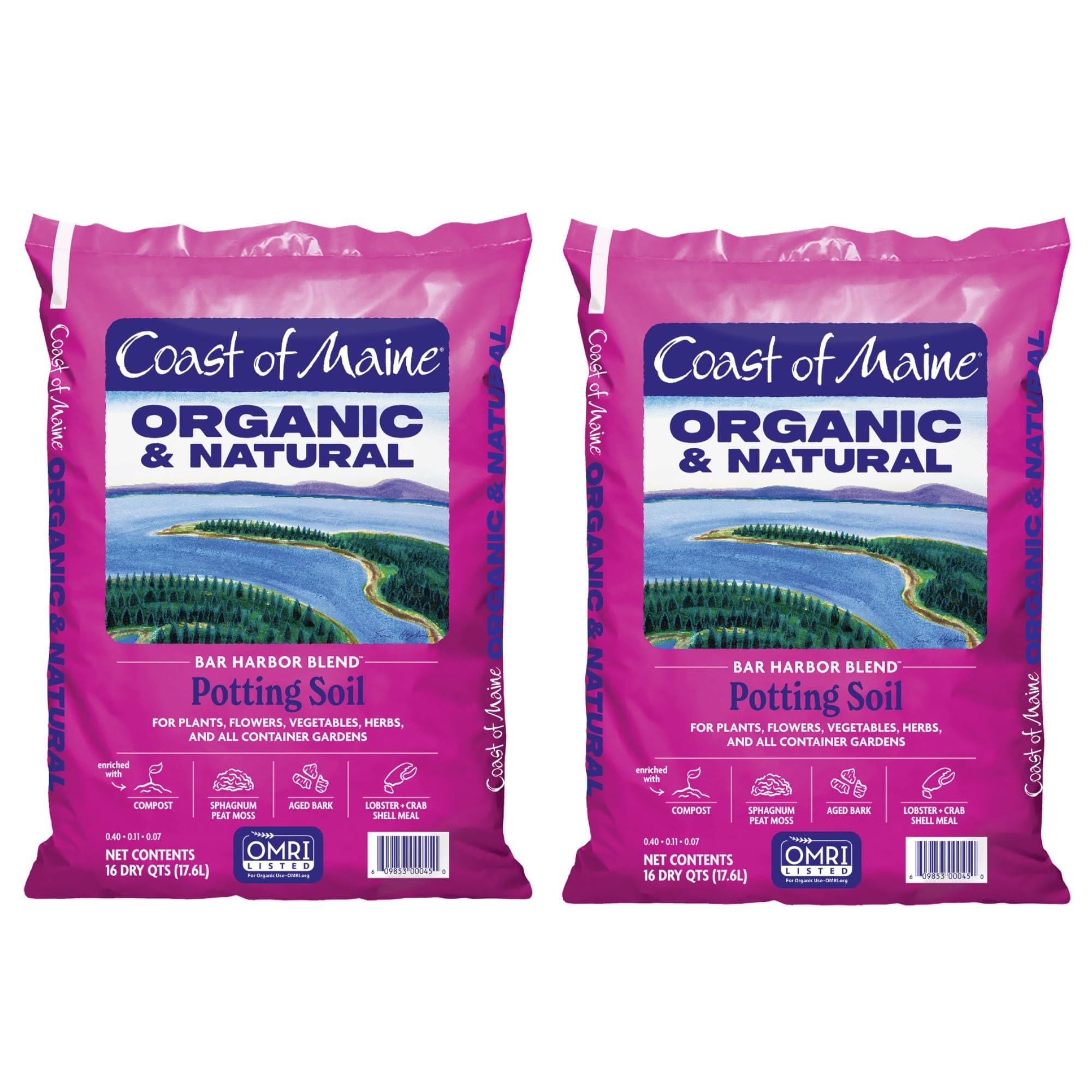
The Bar Harbor Blend combines sphagnum peat moss, perlite, lobster and crab shell meal, and kelp meal into a fluffy, nutrient-dense mix that drains quickly enough for iris rhizomes. At 16 quarts, this bag provides enough volume to fill several 12-inch containers without needing supplemental perlite. The presence of natural slow-release nitrogen from the shell meal feeds irises steadily through the growing season without forcing excessive leaf growth.
Users consistently report that this soil supports vigorous root development, with multiple reviewers noting their tomato and potato plants outperformed expectations. For irises, the high perlite content creates the air pockets the rhizome needs to dry out between waterings, reducing the risk of crown rot that plagues heavier mixes. The dark, compost-rich texture also indicates a lower ratio of raw peat, which helps maintain a stable pH closer to neutral.
The main trade-off is the price point, which sits above standard all-purpose potting soils. Additionally, the lobster and crab shell meal can produce a faint marine odor when first opened, though it dissipates quickly after planting. Gardeners who prize a ready-to-use organic blend with impeccable drainage will find this the most reliable soil for irises in containers and raised beds.
What works
- Exceptional perlite content for rhizome aeration
- Organic slow-release nutrition from marine byproducts
- No sticks, bark chunks, or weed seeds reported
What doesn’t
- Premium price compared to standard potting soil
- Marine odor may be noticeable on first opening
2. Miracle-Gro African Violet Potting Mix (2-Pack)
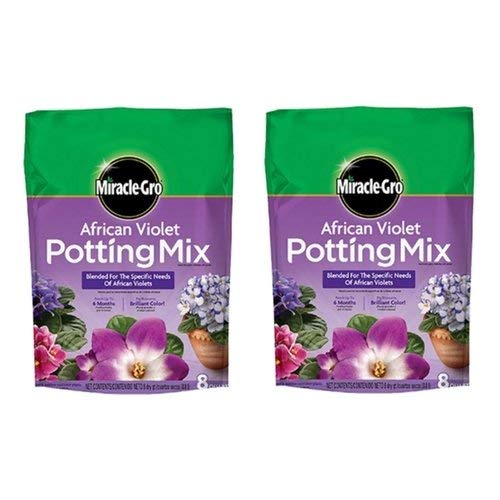
African violet potting soil is widely overlooked by iris growers, but its formulation — lightweight, high in perlite, and designed to prevent waterlogged roots — makes it an excellent match for bearded irises. This two-pack from Miracle-Gro delivers 16 total quarts of a loose, airy mix that drains faster than most all-purpose blends. The structure is soft and crumbly, allowing iris rhizomes to spread laterally without resistance.
Long-time users of this mix report that their African violets bloom continuously; for irises, that same aeration translates to healthier rhizomes and fewer cases of soft rot. The mix does not contain heavy compost or clay, so it stays porous even after multiple waterings. Gardeners who grow irises in pots on patios or balconies will appreciate how quickly this soil dries out after a rain shower, preventing the soggy conditions that kill iris crowns.
The downsides are related to nutritional longevity. This mix is not heavily fortified with organic matter, so irises will need a light feeding of a balanced fertilizer after four to six weeks. The two-pack also ships regionally, with availability sometimes limited to select Northeastern and Midwestern states. For growers seeking an ultra-draining, budget-conscious base soil that they can amend themselves, this is a strong choice.
What works
- Very lightweight with high perlite content
- Two bags included for the price of one
- Dries quickly, reducing crown rot risk
What doesn’t
- Low organic matter requires supplemental feeding
- Shipping restrictions to some regions
3. Espoma Organic Vegetable & Flower Garden Soil

Espoma’s Vegetable & Flower Garden Soil is formulated to be mixed with native in-ground soil rather than used as a standalone potting medium. The bag is large — one cubic foot — and contains a rich blend of composted organic matter, earthworm castings, and the proprietary Myco-Tone blend of endo and ecto mycorrhizae. For iris growers planting directly into garden beds, this product improves soil structure, introduces beneficial fungi to the root zone, and buffers pH toward the neutral range irises prefer.
Customer feedback across multiple seasons shows that plants potted with Espoma consistently outperform those grown in cheaper organic alternatives. Reviewers highlight that the mix arrived bug-free and well-structured, with no clumps or large woody debris. The addition of mycorrhizae helps iris roots access nutrients more efficiently, which can translate to stronger bloom stalks and deeper root systems.
This product is not intended for use in containers without additional amendments — it is denser than a pure potting mix and benefits from being blended with perlite or coarse sand for potted irises. The 16-ounce bag weight listed on some specs is misleading; the actual volume is one cubic foot, which is heavy. Gardeners with large in-ground iris beds will find this the most cost-effective way to revitalize soil on a broad scale.
What works
- Mycorrhizae improve nutrient uptake
- Large bag covers extensive in-ground beds
- Bug-free and well-structured organic compost
What doesn’t
- Too dense for pots without added perlite
- Weight and volume can be surprising on delivery
4. Coast of Maine Organic Acid-Loving Planting Soil

This Coast of Maine blend is engineered for plants that thrive in acidic soil — rhododendrons, blueberries, azaleas — which means its natural pH registers below 6.0. For most irises, that is too acidic for optimal bloom production. However, for gardeners growing Siberian or Japanese irises, which tolerate or even prefer slightly more acidic conditions, this compost-heavy mix provides excellent moisture retention and rich organic matter without the dense clay common in bagged topsoils.
The formula relies on sphagnum peat moss and composted manure to create a dark, crumbly texture that holds moisture while still draining adequately. Reviewers consistently praise its ability to revitalize tired berry patches and revive struggling shrubs. If used for bearded irises, the soil should be blended with garden lime to raise the pH into the 6.0–7.0 range. The 20-quart bag offers good value for medium-sized raised beds or border plantings.
Gardeners should be aware that this mix is not intended as a standalone potting soil for containers — it performs best when tilled into existing garden soil. The low pH also means it should not be used for bearded irises without pH adjustment. For the right iris variety and with proper amendment, this soil delivers robust organic nutrition and sustainable growing conditions.
What works
- High-quality compost with excellent texture
- OMRI listed for organic gardening
- Large bag provides good coverage
What doesn’t
- Too acidic for bearded irises without lime
- Not suitable as standalone container mix
5. Soil Sunrise Bird of Paradise Potting Soil Mix

Soil Sunrise’s Bird of Paradise mix is built around a soilless formula of peat moss, perlite, and lime, creating an exceptionally light medium that drains rapidly. While marketed for tropical plants, the precise combination of ingredients — particularly the inclusion of lime to buffer pH — makes it a near-perfect off-label soil for irises in containers. The 8-quart bag is compact enough for apartment dwellers and fits neatly into a single large nursery pot.
Customer reviews consistently praise the mix for rescuing plants suffering from root rot, a key indicator that the drainage characteristics are strong. One reviewer noted that their Bird of Paradise bounced back quickly after transplanting into this mix, while others highlighted the resealable bag design as a practical bonus for those with limited storage space. For irises, the soilless structure mimics the sandy, fast-drying conditions of their native habitat.
The small bag size means that planting multiple iris clumps will require several bags, which raises the effective cost per container. Additionally, the nutrient load is relatively light — the mix relies on the grower to apply fertilizer after the first month. For growers who want a predictable, sterile base with excellent drainage and pH balance already dialed in, this is a dependable entry-level mix.
What works
- Lime added for pH balance out of the bag
- Soilless blend prevents compaction
- Resealable bag for easy storage
What doesn’t
- Small bag size requires multiple purchases for large beds
- Low nutritional content needs supplementation
6. Midwest Hearth African Violet Natural Potting Soil

Midwest Hearth’s African Violet mix uses the same core formula as many premium specialty soils — peat moss, perlite, and vermiculite — but at a lower price point that makes it accessible for gardeners on a budget. The texture is soft and light without large bark pieces, and the pH is controlled specifically for flowering plants, which aligns well with the needs of irises. The 8-quart bag is enough to repot several small iris divisions or fill a standard 10-inch container.
Customer feedback places this soil at a strong 4.7-star average with nearly 1,000 ratings. Reviewers consistently note that their African violets recovered quickly after repotting and began blooming within weeks. For irises, the blend of perlite and vermiculite provides dual benefits — perlite ensures rapid drainage, while vermiculite retains a small amount of moisture to keep the rhizome from drying out completely during hot spells. The mix also contains no synthetic chemicals, which suits organic gardeners.
The primary limitation is the bag size; at 8 quarts, gardeners with large iris beds will need to buy multiple bags. Some users also mention that the price per quart is slightly higher than generic all-purpose mixes, though the quality difference is noticeable. For those growing a handful of iris specimens in containers and wanting a reliable, inexpensive base, this mix hits the sweet spot.
What works
- Lightweight, soft texture with balanced drainage
- pH controlled for flowering plants
- Strong customer ratings and repeat buyers
What doesn’t
- 8-quart bag is small for large planting projects
- Slightly higher cost per quart than generic soil
7. R&M Organics Premium Organic Compost
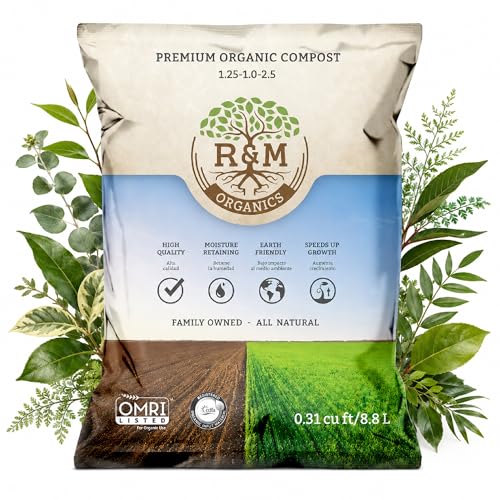
R&M Organics Premium Compost is not a standalone potting soil but a concentrated soil amendment made from fully composted dairy cow manure. For iris growers working with poor native soil — heavy clay, compacted sand, or depleted loam — this 10-pound bag provides an immediate boost of organic matter that improves both drainage and moisture retention. The composting process uses continuous aeration to reduce odor, leaving a clean, earthy scent that is suitable for indoor use.
Multiple customer reviews describe this compost as the key factor in reviving struggling plants. One reviewer noted that azaleas damaged by chemical runoff recovered within weeks after top-dressing with this compost. Another grower reported that a failing tomato plant turned green and produced new flower buds just seven days after mixing the compost into the soil. For irises, applying a thin quarter-inch layer around the base of established clumps in spring adds slow-release nutrients without burning the shallow roots.
The compost is not a complete planting medium — it should be blended with existing soil or a base like peat moss and perlite for container use. The 10-pound bag covers roughly 2 to 3 square feet at the recommended quarter-inch depth, so it is best suited for targeted bed improvement rather than whole-garden overhaul. For growers who need to fix drainage and fertility in a specific iris bed without switching to an entirely new bagged soil, this amendment delivers fast, visible results.
What works
- Low-odor, fully composted formula
- Quickly improves native soil structure
- Concentrated — a little covers multiple plants
What doesn’t
- Must be mixed with a base medium for container growing
- Small bag size limits coverage area
Hardware & Specs Guide
pH Bounce
The pH of bagged mixes ranges from 5.0 (acid-loving formulas) to 7.5 (lime-buffered blends). Irises prefer a pH between 6.0 and 7.0. When using a low-pH mix like the Coast of Maine Acid-Loving blend, add one tablespoon of garden lime per gallon of soil to raise the pH by roughly one full point before planting.
Drainage Ratio
Bagged soil that contains at least 20 to 30 percent perlite by volume is ideal for irises. You can test this by squeezing a handful of moistened soil: it should crumble apart immediately when released, not hold a solid shape. If the soil clumps like clay, mix in extra perlite or coarse sand at a 3:1 ratio.
FAQ
Can I use regular potting soil for irises?
What pH should soil be for irises?
Should I add sand to iris soil?
Final Thoughts: The Verdict
For most gardeners, the best soil for irises winner is the Coast of Maine Bar Harbor Blend because its exceptional perlite content, marine-based slow-release nutrients, and neutral pH make it a perfect out-of-the-bag match for container-grown irises. If you want a budget-friendly option that drains just as well, grab the Miracle-Gro African Violet Mix. And for improving large in-ground iris beds with beneficial mycorrhizae, nothing beats the Espoma Organic Vegetable & Flower Garden Soil.