
Getting the perfect blue or vibrant pink hydrangea blooms starts below the soil line, and the right organic covering locks in moisture, cools the roots, and steadily feeds the acid-loving plant’s specific pH needs. A poor choice of covering can suffocate the root zone, lock out nutrients, and wash away in the first heavy rain.
I’m Rikta — the co-founder and writer behind Lawn Gear Lab. Over countless hours researching soil chemistry, organic breakdown rates, and water-retention data across dozens of products, I’ve focused this guide on the specific characteristics that matter most for hydrangea root health and bloom color stability.
Whether you are refreshing the planting bed for a bigleaf variety or applying a winter protective layer, selecting the right mulch for hydrangeas means understanding how particle size, pH impact, and decomposition speed directly affect your shrubs’ long-term performance.
How To Choose The Best Mulch For Hydrangeas
Hydrangeas are shallow-rooted shrubs that crave consistent moisture and cool soil temperatures. Not every bag of organic cover delivers the same benefit. You need to match the material to your specific soil conditions and plant goals—whether that is deepening blue tones or protecting against summer heat.
Particle Size and Airflow
Fine, dusty coverings can mat down and block oxygen from reaching the fibrous root zone. Coarse chips or shredded bark pieces create air pockets that allow water to penetrate while preventing soil compaction. A mix of 1- to 3-inch pieces is the sweet spot for hydrangeas.
Acidity and pH Impact
Blue hydrangeas require acidic soil with a pH around 5.0–5.5. Many organic options, such as pine bark or sulfur-treated products, naturally lower the pH as they break down. Materials like uncomposted hardwood or high-lime straw can raise the pH, shifting flowers toward pink. Know your target color before you spread.
Decomposition Speed
Fast-decaying options like straw or fresh compost add organic matter quickly but need frequent replenishment. Slower materials like large bark nuggets or coconut chips last through a full season or more, making them a better fit for those who want a low-maintenance bed that still feeds the soil gradually.
Quick Comparison
On smaller screens, swipe sideways to see the full table.
| Model | Category | Best For | Key Spec | Amazon |
|---|---|---|---|---|
| Espoma Organic Holly-Tone 4-3-4 | Acid Fertilizer | Feeding acid-loving shrubs | 4-3-4 NPK with 5% sulfur | Amazon |
| Plantonix Organic Coco Chips | Coconut Husk | Long-lasting moisture retention | 10 lbs compressed brick | Amazon |
| Earth Science Fast Acting Sulfur | pH Adjuster | Lowering soil pH for blue blooms | 5 lbs granular sulfur | Amazon |
| Rio Hamza Trading Houseplant Mulch | Small Bark Chips | Potted hydrangeas and small beds | 8 quarts bark chips | Amazon |
| HealthiStraw GardenStraw | Wheat Straw | Large beds & moisture conservation | 3 cu ft compressed bale | Amazon |
In‑Depth Reviews
1. Espoma Organic Holly-Tone 4-3-4 (2-Pack)
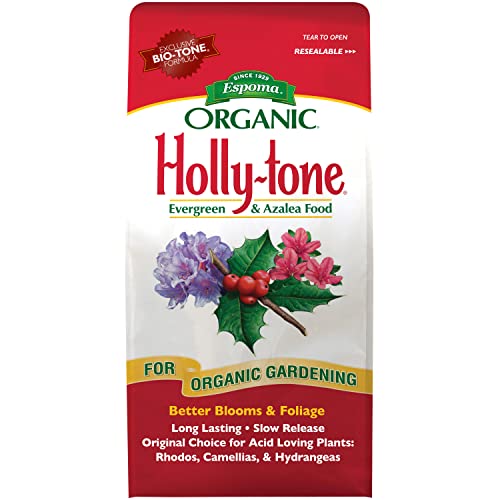
Espoma’s Holly-Tone is the original acid-loving plant food, formulated specifically for hydrangeas, azaleas, blueberries, and evergreens that thrive in low-pH soil. The 4-3-4 analysis combined with 5 percent sulfur helps maintain the acidic environment hydrangeas need to produce blue flowers and absorb iron efficiently. This two-pack delivers 8 total pounds of dry granular feed, which can cover several mature shrubs through a spring and fall application cycle.
The natural organics break down slowly, creating a long-lasting nutrient reservoir without the risk of burning roots. Because it requires no mixing, you simply scatter it around the drip line and water it in. The Bio-tone formula enhances microbial activity in the root zone, improving overall soil structure over time. Gardeners who have used this for years report consistent bloom color and stronger stem growth in their hydrangeas.
A single application works for about two to three months, making the schedule simple for busy gardeners. For anyone wanting a reliable, well-known product that supports both soil health and flower color, Holly-Tone remains the market standard. It is also approved for organic gardening, which adds peace of mind for those growing edibles or ornamentals near vegetable beds.
What works
- Proven acidifying formula for blue hydrangea blooms
- Slow-release organics feed for months without burning
- Approved for organic gardening
What doesn’t
- Granules can take a few waterings to break down fully
- Pack size limited to 4 lb bags per unit
2. Plantonix Organic Coco Chips (10 lbs)

Plantonix Coco Chips offer a renewable, sustainable alternative to traditional bark or peat-based mulches. These compressed bricks expand to roughly 15 gallons of coarse coconut husk pieces that absorb up to 10 times their weight in water, making them exceptional for hydrangeas that demand consistent root-zone moisture. The neutral pH of coco coir prevents nutrient lock-up, ensuring that any supplemental acid-loving fertilizer remains available to the plant.
The chunky texture creates excellent air pockets that prevent soil compaction and allow oxygen to reach shallow hydrangea roots. Unlike fine barks that can form a crust, these chips last through a full growing season without breaking down into mush. They also suppress weeds effectively while allowing water to pass through rather than running off. Gardeners report that the chips retain a natural, attractive appearance in beds and containers long after application.
The compressed brick format saves storage space and is lighter than wet wood-based mulches. One 10-pound brick is enough to cover a small bed or several large containers. For those who want a durable, low-maintenance top dressing that works well with watering schedules, coco chips deliver performance without introducing mold or fungal issues commonly associated with wood mulches.
What works
- Absorbs 10x its weight for consistent moisture
- Neutral pH prevents nutrient lock-up
- Compressed brick is space-efficient
What doesn’t
- Must be buffered to avoid bacteria issues
- Expands less than expected if not fully hydrated
3. Earth Science Fast Acting Sulfur Granules (5 lb)

Earth Science Fast Acting Sulfur is not a traditional decorative covering but a powerful soil amendment that directly addresses the pH needs of hydrangeas. If your blooms are shifting pink when you want deep blue, or if leaves show signs of chlorosis, this granular sulfur works to lower the soil pH quickly. The patented Nutri-Bond Technology keeps the sulfur granules in place, reducing runoff and making the product more environmentally responsible than standard sulfur powders.
Users report visible color changes in their hydrangeas within weeks of application, with the added benefit of improved fertilizer efficiency. The 5-pound bag covers a substantial area of garden beds, and the granules are safe for people and pets, allowing immediate use of the lawn after spreading. Because it is fast-acting, you do not need to wait for microbial breakdown as with elemental sulfur pellets.
This product works best when applied in early spring before new growth emerges, and it can be reapplied mid-season if pH levels drift back up. While not a standalone covering, it acts as a vital companion to a moisture-retaining top dressing. Gardeners serious about controlling flower color will find this sulfur product to be the most direct tool available for the job.
What works
- Lowers soil pH quickly for blue blooms
- Nutri-Bond Technology reduces runoff
- Safe for people and pets after application
What doesn’t
- Requires many waterings to fully dissolve
- Not a stand-alone mulch — must be used with a top dressing
4. Rio Hamza Trading Houseplant Mulch (8 Quarts)

Rio Hamza Trading Houseplant Mulch is a small-bark wood chip product designed specifically for indoor and patio container use. The 8-quart bag provides enough material to cover several medium-sized pots, offering a clean, uniform aesthetic that matches well with indoor decor. Unlike coarse outdoor mulches, these chips are sifted to create a consistent texture that does not look out of place in a living room or on a balcony.
Gardeners report that this mulch helps retain moisture in potted hydrangeas without attracting pests or introducing unwanted weed seeds. The bark chips are longer lasting than coconut coir or shavings, so they maintain their appearance for several months before needing replacement. The neutral color works well as a top dressing that keeps soil splash off leaves during watering, reducing the risk of fungal issues.
For those growing hydrangeas exclusively in containers, this product offers a convenient, ready-to-use solution that does not require expansion or pre-soaking. The main trade-off is volume: 8 quarts only covers about 2 to 3 medium pots, so gardeners with multiple large containers may need several bags. Still, for targeted use on prized specimen hydrangeas, the quality justifies the quantity.
What works
- Clean, consistent chips ideal for containers
- Longer lasting than coconut coir or shavings
- No visible pests or weed seeds reported
What doesn’t
- Low volume-to-price ratio for large beds
- Small chips may break down faster in wet soil
5. HealthiStraw GardenStraw (3 cu ft)
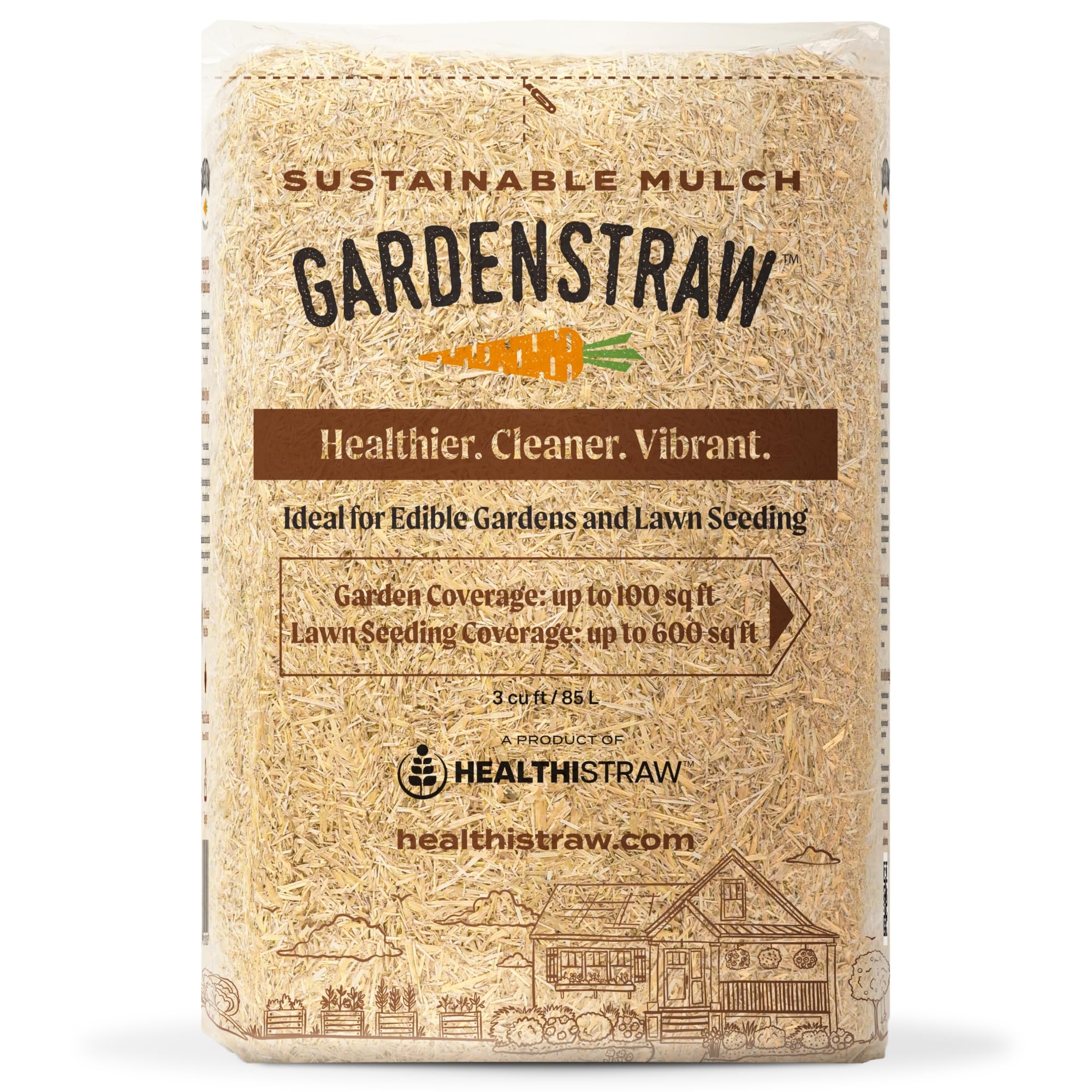
HealthiStraw GardenStraw is a 100-percent natural, non-GMO wheat straw that provides expansive coverage for larger hydrangea beds. The 3-cubic-foot compressed bale covers up to 100 square feet at a 2- to 3-inch depth, making it the most cost-effective option for mulching multiple shrubs at once. The straw is naturally filtered to remove dust, dirt, and the majority of weed seeds, a common problem with lower-grade hay mulches.
The straw fibers interlock when watered, creating a durable mat that resists wind and rain without chemical binders. Hydrangea roots stay cool and moist under the straw layer, and users report a noticeable reduction in watering frequency—up to 50 percent less than bare soil. The material breaks down over a single season, adding valuable organic matter and carbon to the soil that supports beneficial microbes and improves aeration.
Because wheat straw decomposes faster than wood chips, it is ideal for gardeners who want to build soil fertility while keeping the bed covered. It also works well for winter protection, insulating roots against hard freezes. The light color reflects sunlight rather than absorbing heat, which can help keep the root zone cooler in hot climates. For broad coverage and quick soil improvement, GardenStraw is a smart pick.
What works
- Expansive coverage for large beds
- Reduces watering needs by up to 50 percent
- Breaks down to enrich soil organic matter
What doesn’t
- May contain some grass seeds despite filtering
- Decomposes in one season, requiring reapplication
Hardware & Specs Guide
Particle Size and Texture
Hydrangea roots prefer a chunky, open structure that allows water to penetrate without pooling. Small bark chips (1/4 inch to 1/2 inch) work well in containers, while coarser pieces or straw fibers suit open garden beds. Fine dust or powder compacts easily and blocks air exchange. Coco chips offer a unique medium-grit texture that balances aeration and water holding.
Nutrient Analysis and pH Effect
A standard covering material like pine bark has a naturally acidic pH that supports blue blooms. Straw and hardwood have a more neutral to alkaline effect, which can shift flowers toward pink. Products with added sulfur or those formulated with 5 percent sulfur (like Holly-Tone) actively lower pH as they break down. Knowing your current soil pH—measured with an inexpensive tester—guides which material to choose.
FAQ
Will wood mulch turn my blue hydrangeas pink?
How often should I replace the covering around hydrangeas?
Should I use a fertilizer blend or a pure covering for best results?
Final Thoughts: The Verdict
For most gardeners, the mulch for hydrangeas winner is the Espoma Organic Holly-Tone 4-3-4 (2-Pack) because it delivers a proven acidifying formula that supports blue blooms and slow-release feeding. If you want maximum moisture retention with a neutral pH, grab the Plantonix Organic Coco Chips. And for broad coverage on a budget, nothing beats the HealthiStraw GardenStraw.