
If the thought of a rotting kitchen counter keeps you from composting, bokashi fermentation changes the math entirely. This anaerobic process pickles your food scraps—including meat, dairy, and citrus—without the smell, the flies, or the months-long wait of a traditional pile. The right bin keeps everything airtight, drains the liquid fertilizer (bokashi tea), and fits into your kitchen workflow without looking like a science experiment.
I’m Rikta — the co-founder and writer behind Lawn Gear Lab. I’ve spent weeks parsing the spec sheets, owner feedback, and fermentation mechanics of the top bokashi bins on the market to separate the airtight champions from the leaky disappointments.
After analyzing dozens of models against strict criteria for seal integrity, spigot durability, included starter bran quality, and ease of daily use, I’ve narrowed the field down to the seven bins worth your attention. This guide to the best bokashi compost bin breaks down what separates a reliable fermentation bucket from one that will leak stinky tea onto your floorboards.
How To Choose The Best Bokashi Compost Bin
A bokashi bin is a simple device—a bucket with a seal and a spigot—but small design differences determine whether you get a smooth fermentation cycle or a mess. Focus on these factors before you click buy.
Seal Integrity and the Rubber Gasket
The entire bokashi process depends on an anaerobic environment. If the lid lets in oxygen, mold develops instead of the sour-smelling pickle you want. Look for a thick, removable rubber gasket that seats firmly into the lid. Bins that rely on a snap-fit lid without a gasket will fail you within weeks.
Spigot Build and Screen Protection
The spigot is the bin’s most vulnerable component—thin plastic threads strip easily, and small food particles clog the opening. A heavy-duty spigot with an internal mesh screen prevents clogs and leaks. Avoid models where the spigot feels flimsy or has a plastic washer that spins instead of sealing tight.
Included Bran and Starter Value
Bokashi bran—wheat bran inoculated with effective microorganisms—is the engine of the fermentation. Some kits include a skimpy 500g bag that barely covers two bucket loads. A premium kit ships with at least 2.2 pounds of bran, enough to ferment 6 full bins over roughly 9 months. If you have to buy expensive replacement bran quickly, the upfront savings vanish.
Capacity and Rotation Logic
A single 5-gallon bucket works for households that generate modest food waste. But the fermentation cycle requires a 2-week undisturbed rest period. If you cook daily, a two-bin system—or a single bin large enough to handle a week’s worth while a second bin ferments—is the smarter workflow. Measure your weekly food-scrap volume before choosing capacity.
Quick Comparison
On smaller screens, swipe sideways to see the full table.
| Model | Category | Best For | Key Spec | Amazon |
|---|---|---|---|---|
| Bokashi Living Premium Starter Kit | Bokashi Bin | Long-term reliability with superior spigot | 2.2 lbs bran included | Amazon |
| Sunwood Life 5-Gallon Bokashi Kit | Bokashi Bin | Complete kit with large bran supply | 20L capacity / 2.2 lb bran | Amazon |
| ecocultivatify 20L Bokashi Bin | Bokashi Bin | Value kit with mini counter pail | HDPE/LDPE construction | Amazon |
| Chef’n EcoCrock 3.3L | Countertop Pail | Daily scrap collection on counter | 0.75 gal / charcoal filter | Amazon |
| VermiHut 5-Tray Compost Bin | Worm Bin | Vermicomposting with worm saver tray | 5 trays / 16″x16″ | Amazon |
| Blütezeit 5-Tray Worm Bin | Worm Bin | All-in-one vermicomposting starter | 13.2 gal / PP material | Amazon |
| Drhomeam Inground Composter | In-Ground | Sub-surface decomposition in beds | 2 gal / PVC cylinder | Amazon |
In‑Depth Reviews
1. Bokashi Living Premium Bokashi Composting Starter Kit

Bokashi Living built this bin specifically for repeated fermentation cycles, and the difference shows in the lid and spigot engineering. The gasket creates a true airtight seal—owners report zero odor even when the bin sits under the kitchen sink for six to eight weeks. The spigot uses a robust threaded design with a mesh filter that resists clogs and leakage, the two most frequent failure points on cheaper bins. At approximately 13 gallons, the single-bin kit is sized for smaller households, though the brand also offers a two-bin kit for continuous rotation.
The included 2.2-pound bag of premium bokashi bran is enough to ferment at least six full buckets, translating to roughly nine months of use for a modest kitchen. Owners highlight that the bin drains leachate cleanly and the resulting bokashi tea, when diluted, works as an effective houseplant fertilizer. The company includes its Complete Guide to Bokashi Composting, which covers the fermentation timeline, layering technique, and how to bury the fermented waste in soil.
Some buyers note that the masher spatula shown in product images is not included, which is a minor disappointment for a kit at this price point. Additionally, owners who generate a high volume of food waste will quickly outgrow a single bin and need to invest in a second unit for continuous fermentation. The build quality justifies the premium positioning, but the lack of a two-bin solution out of the box limits its immediate utility for larger families.
What works
- Superior airtight seal eliminates odors entirely during fermentation
- Spigot with internal screen drains cleanly without clogs or leaks
- Included 2.2 pounds of bran covers up to 9 months of use
What doesn’t
- Masher/presser tool shown in marketing photos is not included
- Single-bin capacity requires a second bin for continuous rotation
2. Sunwood Life Bokashi Composting Kit, 5-Gallon
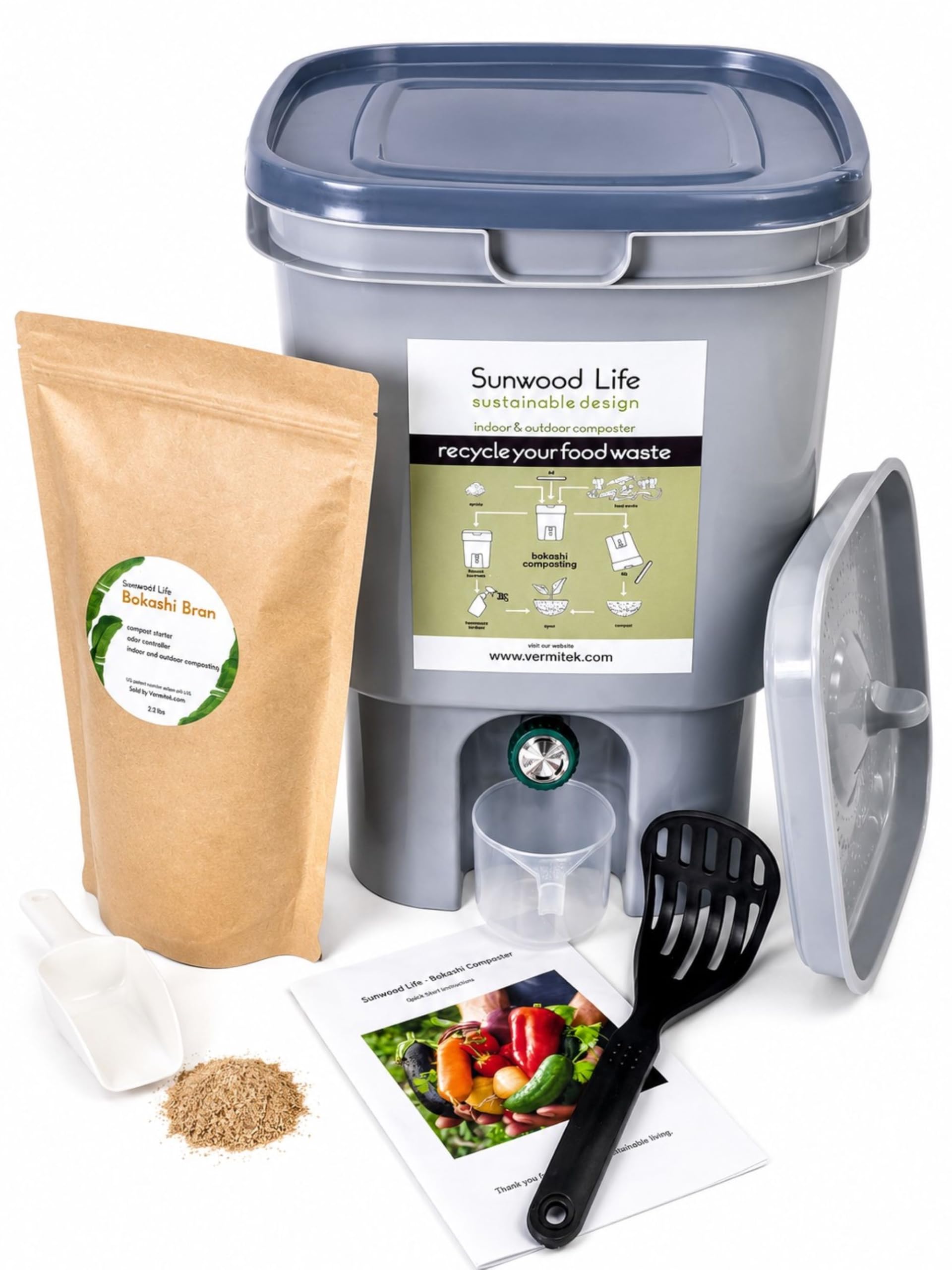
The Sunwood Life kit delivers a complete bokashi starter experience at a mid-range price point without skimping on the essentials. The 5-gallon (20-liter) rectangular bin is made from BPA-free plastic and includes a large 2.2-pound bag of premium bokashi bran—enough to fill the bucket twice and keep fermentation going for months. Owners praise the airtight lid, which prevents odor leaks, and the integrated spigot that drains bokashi tea without clogging, thanks to an internal screen.
A standout feature is the inclusion of a smaller kitchen compost pail (the beige metal bucket) that lives on your counter, so you don’t have to open the main fermentation bin every time you peel a carrot. This workflow reduces oxygen exposure and keeps the main bucket sealed between fills. The leachate, when collected and diluted roughly 1:100 with water, serves as an excellent liquid fertilizer for houseplants and garden beds.
A few owners report that the spigot washer can shift during tightening, leading to minor leaks in isolated cases. Additionally, the replacement bran sold separately has been noted to have a stronger odor and contain animal products, which may matter to vegan composters. The internal square presser and black masher are genuinely useful tools, but the need to buy a tray to catch rare drips is an extra step some users wish wasn’t necessary.
What works
- Generous 2.2-pound bran supply included in the kit
- Mini countertop pail reduces how often you open the main bin
- Airtight lid and internal screen prevent odor and clogs
What doesn’t
- Spigot washer can shift, occasionally causing small leaks
- Replacement bran has a different formula with animal products
3. ecocultivatify 20L Bokashi Compost Bin
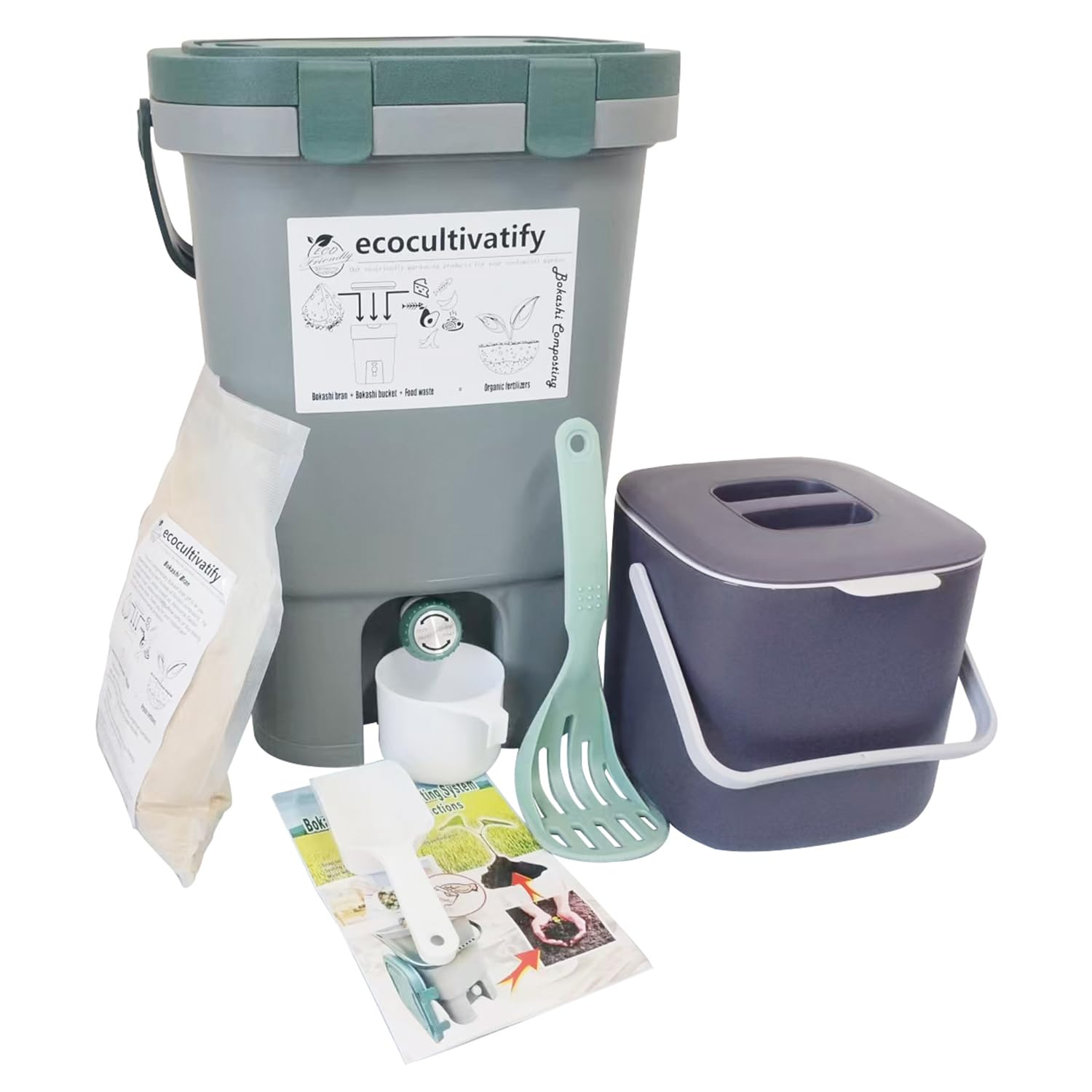
The ecocultivatify bin positions itself as a lean, no-fuss entry point into bokashi composting with a capable 20-liter bucket, a 500g bag of bran, and a small kitchen pail for daily scrap collection. The bin uses HDPE and LDPE plastics that hold up well over months of use without cracking or absorbing odors. The rubber ring integrated into the inner barrel creates a tighter lid seal than many bins in this range, and owners report that after months of continuous use, the container does not leak.
The included tap works cleanly to drain bokashi tea, and the measuring cup and bran shovel make the daily layering process simple. The bin’s rectangular footprint—11.4 inches square by 16.5 inches tall—fits neatly under standard kitchen sinks alongside trash and recycling containers. For apartment dwellers or small households producing one to two gallons of food waste per week, this kit provides a complete closed-loop system without overspending.
A consistent complaint involves the lid’s fit: multiple owners describe it as very difficult to remove and reattach, which becomes a daily frustration. For anyone with arthritis or reduced hand strength, this friction is a real barrier. There are also isolated reports of the lid cracking during first use, which undermines the airtight seal needed for proper fermentation. The bran supply is also smaller than premium kits—500g versus 2.2 pounds—meaning you will need refills sooner.
What works
- Sturdy HDPE/LDPE construction that resists cracking and odors
- Rubber ring gasket creates a reliable seal for anaerobic fermentation
- Small kitchen pail reduces how often you open the main bin
What doesn’t
- Lid is very hard to remove and reattach, especially for weak hands
- Occasional lid cracking right out of the box reported by users
- Only 500g of bran included—requires earlier replenishment
4. Chef’n EcoCrock Countertop Compost Bin
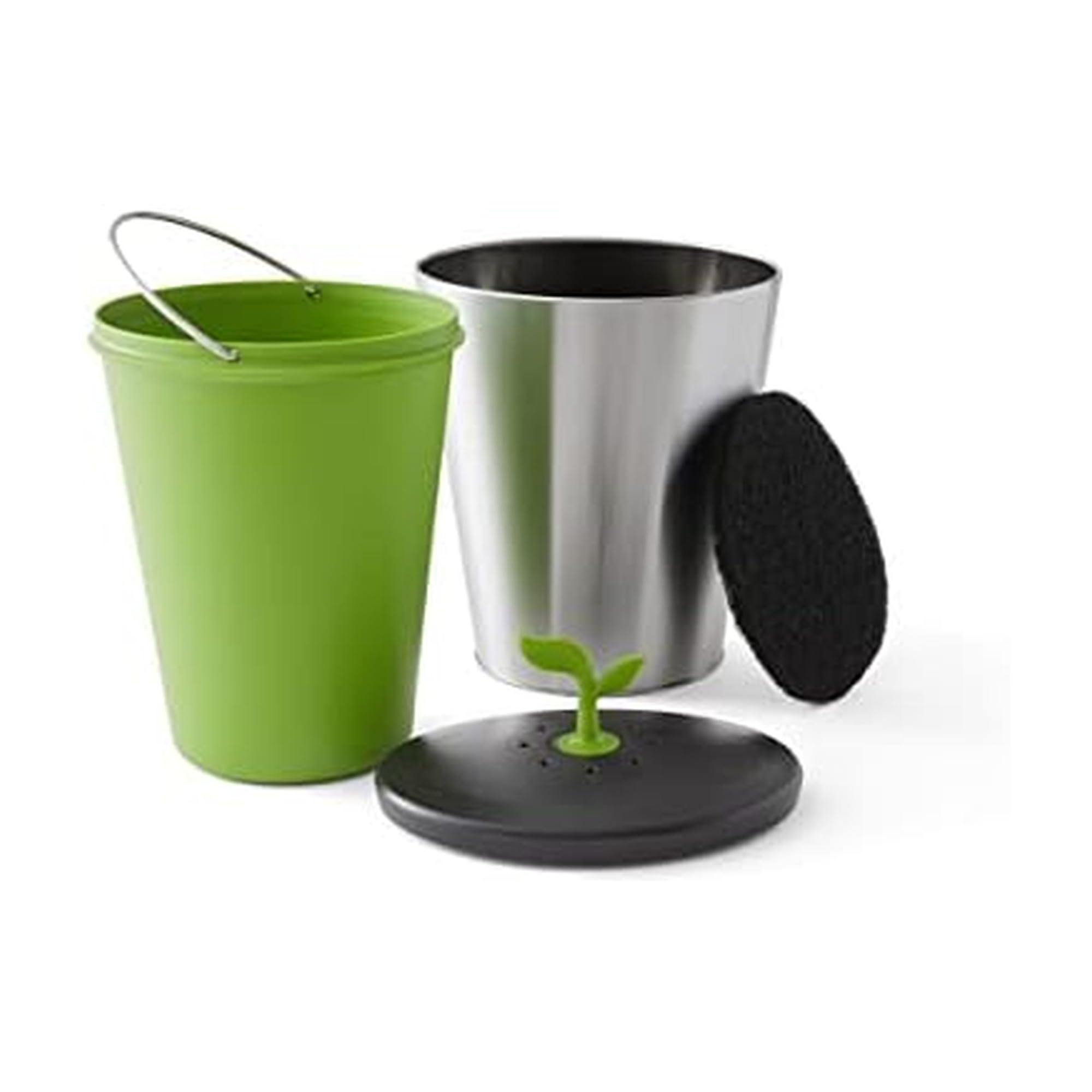
The Chef’n EcoCrock is not a fermentation bucket—it is a countertop collection pail designed to hold scraps until you transfer them to your main bokashi bin. What sets it apart is the dual-bucket design: a stainless steel outer shell houses a removable inner bucket that is top-rack dishwasher safe. The vented lid contains a replaceable natural charcoal filter that traps fruit flies and absorbs odors, making it possible to keep food scraps on the counter for two to three days without smell.
At 0.75 gallons (3.3 liters), the capacity is modest, but that is intentional—you empty it every couple of days into your main fermentation bucket. The tapered shape and built-in handle on the inner liner make transferring scraps mess-free. Owners overwhelmingly praise the clean look: the brushed stainless steel matches standard kitchen appliances instead of sticking out as an eyesore. Chef’n includes two replacement charcoal filters in the box, and replacement packs are widely available.
The single biggest limitation is scale—this bin does not replace a 5-gallon fermentation bucket. If you only use this as your sole compost collection, it will overflow quickly for a family of three or more. A small number of owners received units that shipped with only one filter instead of the advertised two, and the charcoal filters require replacement roughly every three months, adding a recurring consumable cost.
What works
- Removable inner bucket is dishwasher safe for easy cleaning
- Charcoal filter neutralizes odors effectively between transfers
- Stainless steel exterior blends with appliance aesthetics
What doesn’t
- 0.75-gallon capacity fills quickly for larger households
- Charcoal filters must be replaced every 3 months
5. VermiHut 5-Tray Compost Bin, Classic Model
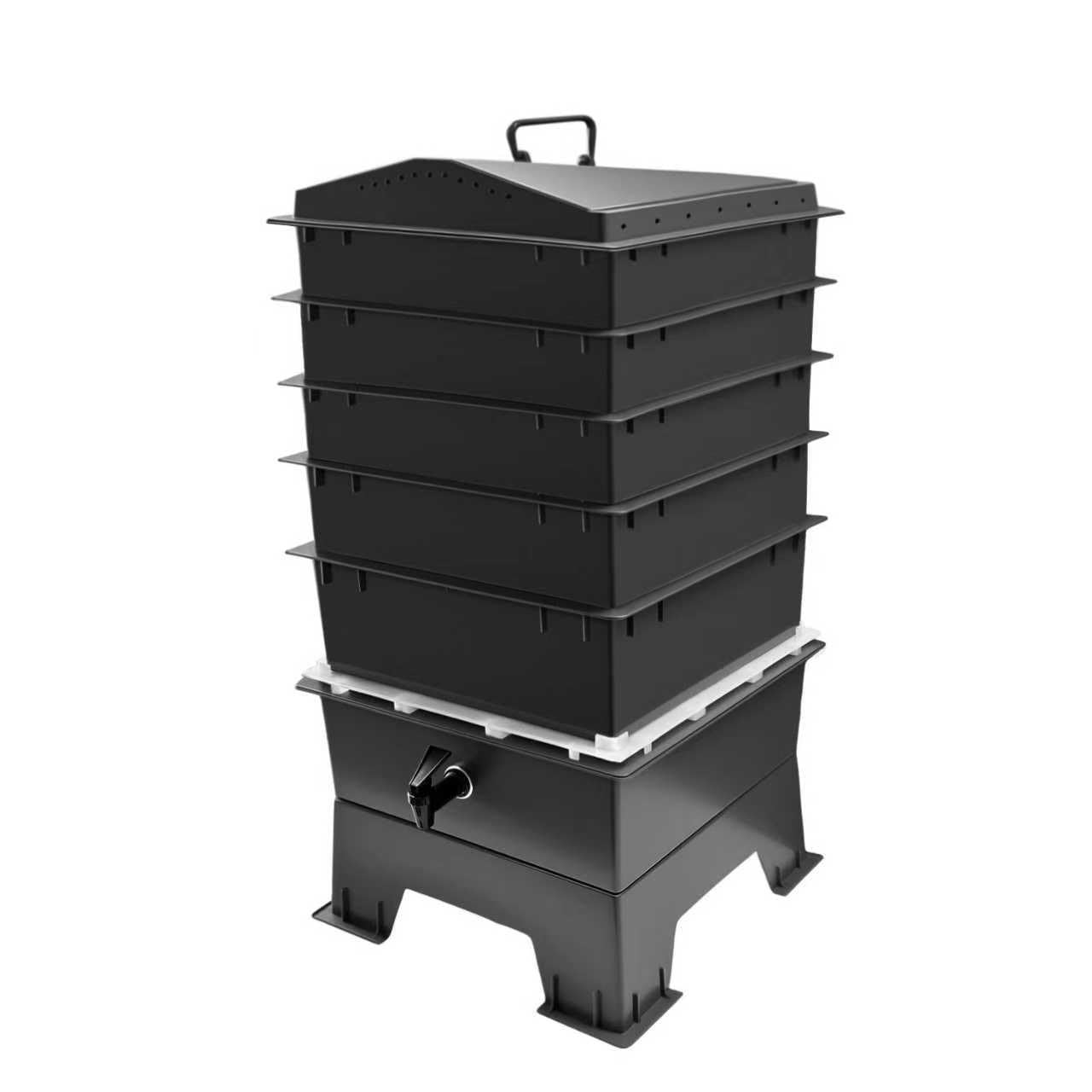
The VermiHut operates on a completely different principle from bokashi—it is a vermicomposting (worm) system, not a fermentation bucket. If you want to transition from bokashi pre-composting to full castings production, the 5-tray stackable design provides the most surface area for worms to process scraps. Each tray has a grid bottom that allows worms to migrate upward as they finish the food in the lower tray, which simplifies harvesting finished compost.
The Classic Model includes a dedicated worm-saver tray that prevents worms from falling into the liquid collection reservoir, a thoughtful design detail that reduces losses during harvest. The spigot drains worm tea—a concentrated liquid fertilizer—and the HDPE construction holds up to repeated stacking and unstacking. Owners with experience in vermiculture note that using newspaper on the grate helps keep worms out of the reservoir and maintains proper moisture levels.
Several users point out that the stack becomes top-heavy as trays fill, and the legs can spread under load, requiring careful placement. The manual’s recommendation to use a coconut mat in the bottom tray is not always followed because the mat is not included. New users can struggle with overfeeding or over-moistening the bedding, leading to fruit flies and anaerobic pockets in the lower trays before the system stabilizes.
What works
- Tray migration system makes harvesting finished castings easy
- Worm-saver tray catches strays and prevents losses
- Sturdy HDPE construction suitable for indoor and outdoor use
What doesn’t
- Stack becomes top-heavy and legs can spread under full load
- Coconut mat not included, requiring an extra purchase
- New users may struggle with moisture and feeding balance
6. Blütezeit 5-Tray Worm Compost Bin

The Blütezeit worm composter packs a complete vermicomposting starter into one box, including a turning fork, shovel, soil meter, coco-coir brick, non-woven fabric, and a spigot for worm tea collection. The 5-tray system is made from polypropylene (PP) and offers a 13.2-gallon total capacity—enough for a household of two to three to process kitchen scraps continuously. Air holes in each tray provide passive ventilation that keeps the bin aerobic and odor-free when managed correctly.
The soil meter is a genuinely useful addition for vermicomposting beginners—it measures moisture, pH, and light levels, helping you avoid the two most common mistakes: overwatering and acidic conditions. The inclusion of a coco-coir brick (which expands when hydrated) means you have bedding ready immediately without sourcing it separately. Owners report that the worms migrate upward naturally through the trays, and the spigot drains worm tea without clogging, producing a nutrient-rich liquid that can be diluted for plants.
Several experienced vermicomposters note that the trays do not seal tightly, allowing worms to escape through the sides and lid during the initial settling period. The clearances between trays are also insufficient for collecting liquid effectively, leading to moisture buildup in the lower trays. The lid knob is slippery, making the top tray awkward to lift when full. And like all worm bins, worms are not included, which can be a surprise for first-time buyers expecting a truly all-in-one kit.
What works
- All-in-one kit with turning fork, soil meter, and coco-coir brick
- Air holes provide passive ventilation that keeps the bin odor-free
- Soil meter helps beginners avoid moisture and pH mistakes
What doesn’t
- Trays do not seal tightly—worms can escape during settling
- Insufficient clearance between trays for liquid collection
- Worms not included, which surprises first-time buyers
7. Drhomeam Inground Farm Composter
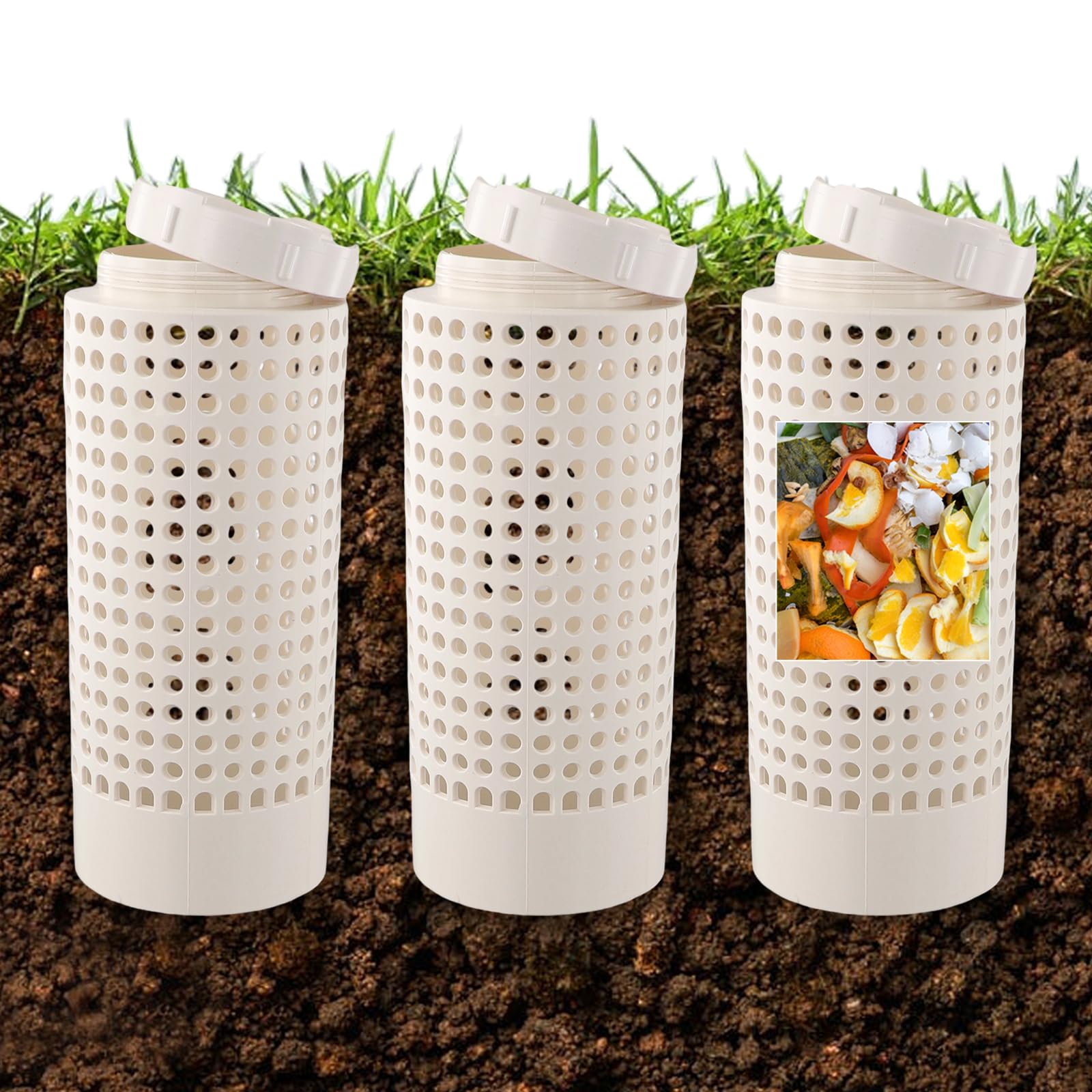
The Drhomeam Inground Composter takes a completely different approach from the sealed bokashi bucket: it is a bottomless PVC cylinder that you bury partly in the ground, allowing soil organisms direct access to the waste. At just 2 gallons and 11 inches tall, it is designed for raised garden beds and flower pots rather than kitchen countertops. The bottomless design means worms, bacteria, and fungi from the surrounding soil migrate into the waste, breaking it down aerobically without the fermentation process.
The PVC construction holds up well against water and heat, and the screwed lid stays secure in windy conditions. If your goal is to feed a raised bed directly by burying scraps in the soil, this device creates a tidy column that keeps rodents out while allowing underground decomposition. It is particularly useful for gardeners who want to compost in situ—right in the bed where the nutrients will be used—without managing a separate pile or bucket.
The sharp top edge caused a minor injury during assembly for at least one owner, and the cap is hard to screw on and off because it lacks a rubber seal. This is not a primary composting solution for most households; it is a niche tool for sub-surface feeding of specific plants in raised beds. The narrow 4.3-inch diameter also makes it difficult to remove partially composted material from the bottom.
What works
- Bottomless design allows direct soil organism access for decomposition
- Compact size fits into raised beds and large flower pots
- PVC construction resists outdoor conditions and wind
What doesn’t
- Sharp top edge requires gloves during handling and assembly
- 2-gallon capacity is very small for regular kitchen scraps
- Cap is hard to screw on/off and lacks a rubber seal
Hardware & Specs Guide
Bokashi Bran & Effective Microorganisms
The bran—wheat or rice bran inoculated with lactic acid bacteria, yeasts, and phototrophic bacteria—is the active ingredient that drives fermentation. A 2.2-pound bag is enough for roughly six full 5-gallon buckets, or about nine months of daily use for a two-person household. Cheap kits with 500g bags force you to buy expensive refills sooner, erasing the upfront savings. The microorganisms thrive in an anaerobic, slightly acidic environment; exposing the bran to air or moisture before use degrades its potency.
Spigot Design & Leachate Management
The spigot drains bokashi tea—a liquid rich in nutrients and microbes that serves as a plant fertilizer when diluted (typically 1:100 with water). A thin plastic spigot with a spinning washer will leak over time; a heavy-duty spigot with an internal mesh screen prevents clogs from small food particles. Some bins include a mesh filter inside the bucket, while others rely on a screen fitted inside the spigot itself. For continuous use, draining every 2-3 days prevents the liquid from becoming too concentrated or developing a foul smell.
Gasket & Airtight Seal
The rubber gasket is the single most important physical component of a bokashi bin. Without a complete seal, oxygen enters and allows aerobic mold to grow, defeating the entire fermentation process. A thick, removable gasket that seats into a groove in the lid is superior to a thin strip glued onto the rim. After months of daily opening and closing, glued gaskets can peel off; removable ones can be washed and replaced independently. Test the seal by pressing the lid—air should not whoosh out when you push down.
Capacity & Bin Rotation
A single 5-gallon (20-liter) bin works for households producing roughly one gallon of scraps per week, but the 2-week undisturbed fermentation period means you either pause collection or buy a second bin. Two-bin systems let you fill one while the other ferments, then swap. For larger families or kitchens that cook daily, a 5-gallon bin fills in about a week, making a two-bin setup nearly mandatory. Compact 2-3 gallon bins exist for countertop scrap collection only—they feed into a larger fermentation bucket rather than functioning as the primary fermenter.
FAQ
Can I put meat, dairy, and citrus in a bokashi bin?
How long does it take for bokashi to turn into usable compost?
Why does my bokashi bin smell bad instead of like pickles?
Can I use bokashi tea on indoor houseplants?
Can I leave a bokashi bin unattended for a month?
Final Thoughts: The Verdict
For most gardeners, the bokashi compost bin winner is the Bokashi Living Premium Starter Kit because it combines a true airtight seal, a durable spigot that withstands repeated use, and a generous 2.2-pound bran supply that delays the need for refills. If you want a complete starter kit with a mini counter pail and a lower upfront investment, grab the Sunwood Life Bokashi Composting Kit. And for worm-based processing that turns fermented waste into castings, nothing beats the VermiHut 5-Tray Compost Bin.