
Feeding a bonsai is a delicate art. Overdo it with a standard houseplant fertilizer, and you risk burning the fine, shallow roots of a tree that relies on a tiny soil volume to survive. The wrong NPK ratio can push excessive foliage growth that ruins your tree’s miniature proportions, leaving you with a leggy, unbalanced plant instead of a living sculpture.
I’m Rikta — the co-founder and writer behind Lawn Gear Lab. I’ve spent countless hours deeply comparing the NPK ratios, research-backed formulations, and organic certifications of the most specialized liquid feeds on the market, cross-referencing them with real owner feedback to find the products that actually nourish bonsai without causing chemical shock.
Whether you are caring for a delicate Ficus, a robust Juniper, or a finicky Japanese Maple, selecting the right nutrition is critical. This guide breaks down the seven strongest contenders to help you confidently choose the best option for your tree, making it the definitive resource for finding the best bonsai tree liquid fertilizer for your specific species and growing conditions.
How To Choose The Best Bonsai Tree Liquid Fertilizer
Selecting a liquid fertilizer for a bonsai is different from feeding a standard houseplant. The confined root system and the goal of maintaining a tiny, aesthetically shaped tree demand a specific approach to plant nutrition.
Understanding the NPK Ratio
The three numbers on a fertilizer label (Nitrogen-Phosphorus-Potassium) dictate growth patterns. A high nitrogen (N) content pushes lush, green foliage growth. While this is great for a lawn, it can ruin a bonsai’s silhouette with oversized leaves and long, leggy internodes. For most bonsai, a balanced ratio like 3-3-3 or a blend with slightly higher phosphorus and potassium is ideal to support root development and overall vigor without excessive leaf growth.
Concentrate vs. Ready-to-Use
Most liquid fertilizers are highly concentrated and must be diluted with water. A product with a simple, clear mixing ratio (like 1 teaspoon per quart) is easier to apply consistently. Getting the dilution wrong is the number one cause of root burn in bonsai. A gentle, forgiving formula that allows for weekly application during the growing season is a hallmark of a high-quality product.
Organic vs. Synthetic Formulations
Organic liquid fertilizers, often derived from ingredients like sea kelp, worm castings, or fish emulsion, release nutrients more slowly and improve soil microbiology. They are less likely to cause salt buildup, which is a common issue in small bonsai pots. Synthetic formulas provide quicker results, but their salt concentration requires more precise watering to avoid damaging the fine feeder roots.
Quick Comparison
On smaller screens, swipe sideways to see the full table.
| Model | Category | Best For | Key Spec | Amazon |
|---|---|---|---|---|
| Bonsai Fertilizer (3-3-3) | Premium | Gentle All-Purpose Feeding | 3-3-3 NPK | Amazon |
| Yamamoto’s Organic | Organic | Organic Root & Growth | 2.7-3-2.2 NPK | Amazon |
| Growth Technology Bonsai Focus | Premium | Reviving Sick Trees | 1:500 Mix Ratio | Amazon |
| TPS Nutrients Bonsai | Value Size | Volume Feeding | 32 oz Bottle | Amazon |
| EZ-gro 3:1:2 | Mid-Range | Versatile Foliage Feeding | 3-1-2 NPK | Amazon |
| Uncle Bill’s Bonsai | Community Favorite | New Enthusiasts | Low NPK Formula | Amazon |
| Gardenera Superfood | Organic Concentrate | Multi-Plant Use | 18 Essential Nutrients | Amazon |
In‑Depth Reviews
1. Bonsai Tree Food (3-3-3 NPK) by Houseplant Resource Center

This formula from the Houseplant Resource Center earns the top spot because it was engineered specifically for the nutritional constraints of bonsai growing in small pots. The perfectly balanced 3-3-3 NPK ratio delivers steady nourishment without pushing the kind of wild, oversized leaf growth that can ruin a tree’s miniature aesthetic. It’s fortified with humic and fulvic acids along with sea kelp extract to improve nutrient absorption at the root level.
What makes this a standout for beginners and purists alike is the application simplicity. The “no measuring” dilution of one teaspoon per cup of water makes it incredibly forgiving, and the urea-free composition ensures there is no harsh chemical salt to burn delicate feeder roots. Owners frequently report that their trees show more vibrant trunk color and tighter, more compact foliage growth within several weeks of switching to this feed.
The 8-ounce bottle is highly concentrated, so even with regular weekly feeding, it lasts for many applications. The shelf-stable formula is good for two years, providing long-term reliability. While a few owners with very demanding species may want a higher-nitrogen option during peak summer growth, the vast majority of Ficus, Juniper, and Chinese Elm owners find this to be the perfect “set it and forget it” solution for year-round health.
What works
- The balanced 3-3-3 NPK is ideal for maintaining compact bonsai structure.
- Biostimulants like humic acid boost nutrient uptake in shallow soil.
- Easy-to-follow mixing ratio reduces the risk of over-fertilization.
What doesn’t
- Some users desired a higher nitrogen ratio for specific growth targets.
- One isolated report of tree decline after application suggests caution with pre-stressed plants.
2. Yamamoto’s Organic Concentrated Bonsai Fertilizer

Pulling from Japanese bonsai tradition, Yamamoto’s formula is a 100% organic concentrate with a nutrient profile (2.7-3-2.2 NPK) that is slightly heavier on phosphorus to encourage strong root development and flowering in species like azalea bonsai. It contains no harsh chemical salts, relying instead on natural ingredients to feed the soil biology, which is crucial for the long-term health of a tree in a constrained pot.
The mixing instruction of one tablespoon per quart of water is straightforward, and owners of Japanese pines and maples report seeing fresh, supple growth within just a couple of weeks of the first feeding. The gentle organic nature allows for application every second watering during the growing season without the fear of chemical buildup, making it a safer option for those who travel or water inconsistently.
While the 8.45-ounce bottle is smaller than some competitors, the potency of the concentrate means it covers a reasonable number of applications. A few reviewers using very small mame bonsai noted the bottle lasted them an entire season. Given it is an organic, non-synthetic product, the aroma when mixing is noticeable but dissipates quickly. For owners dedicated to an organic regimen, this is an authentic and effective choice rooted in centuries of bonsai practice.
What works
- Fully organic formula is safe for frequent, worry-free application.
- Phosphorus-rich profile supports strong root systems and flowers.
- Proven results with traditional Japanese species like pine and maple.
What doesn’t
- Organic mix can have a natural earthy smell during preparation.
- Bottle size is modest relative to other concentrated options.
3. Growth Technology Bonsai Focus Fertilizer

Growth Technology’s “Bonsai Focus” is a highly specialized formulation enriched with humic and fulvic acids, along with seaweed extract, to revitalize soil that is often depleted in bonsai pots. With a mixing ratio of just 5 ml per liter of water (1:500), this is one of the most concentrated feeds on the market, designed for precision feeding in very small volumes of growing media.
This product shines for the owner of a sick or struggling tree. Multiple owners report that a sick bonsai showed visible improvement—greener leaves and new growth—within a couple of days of the first application. The ultra-dilute nature makes it nearly impossible to overfeed if you follow the simple directions, and the clear instructions recommend usage from March until August, with occasional winter feeding for conifers.
The trade-off is the bottle size. At just 3.38 fluid ounces, it is the smallest bottle in this review and is priced at a premium tier. For an owner with a single or a few small trees, this bottle will last through a full growing season due to the strong concentration. However, if you have a large collection or heavy feeders, you may find yourself repurchasing frequently. For targeted rehabilitation of a tree in crisis, this is the most effective formulation available.
What works
- Ultra-concentrated 1:500 ratio offers precise control for small pots.
- Enriched with humic acids to counteract depleted bonsai soil.
- Rapid recovery response for sick or stressed trees.
What doesn’t
- Very small bottle size feels overpriced to some users.
- A local garden shop may carry larger bottles for a lower cost.
4. TPS Nutrients Bonsai Liquid Fertilizer (32 oz)
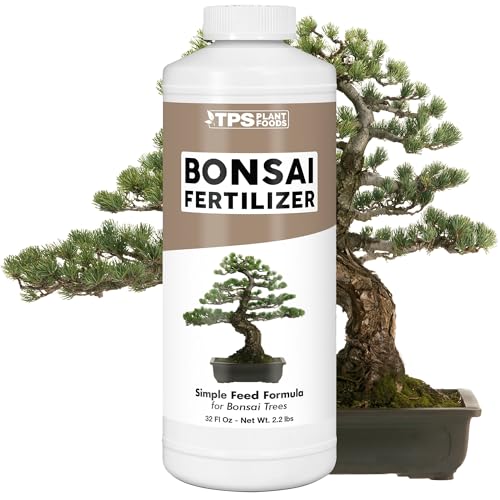
TPS Nutrients offers a straightforward liquid bonsai fertilizer aimed at supporting balanced growth and root health. Its main differentiating factor is the packaging: a 32-ounce bottle, which is four times larger than most competitors in this category. This makes it the premier choice for the serious bonsai enthusiast who maintains a sizable collection of multiple trees.
The formula is designed for fast absorption, delivering nutrients directly to the roots with a simple 1:100 mixing ratio. Owners of Ficus Ginseng have noted that it helped stimulate new leaf growth in stressed plants. For the price, you get a huge volume of feed that can support a diverse garden of bonsai and other miniature plants across a full growing season and beyond.
While the value is undeniable, the marketing information is less specific about the NPK ratio compared to the more bespoke formulas from the Houseplant Resource Center or Yamamoto’s. It is a reliable general-purpose feed. For someone who is tired of buying small 8-ounce bottles and wants a large, no-fuss supply of balanced bonsai food, the TPS Nutrients bottle is the most economical path forward.
What works
- Massive 32 oz bottle provides exceptional volume for the price.
- Fast-absorbing liquid formula works well for regular feeding.
- Simply mixing ratio makes for easy weekly application.
What doesn’t
- Exact NPK ratio is not as clearly emphasized as competitors.
- General formulation not specialized for species-specific needs.
5. EZ-gro Professional Liquid Bonsai Fertilizer (3-1-2)
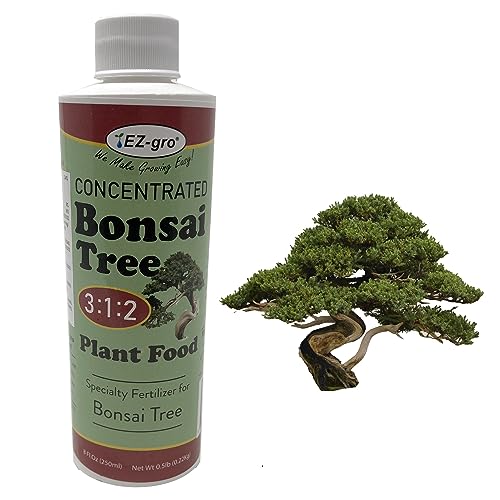
EZ-gro positions this as a professional blend with a 3-1-2 nutrient ratio, which is a classic formulation for tropical foliage. While it is not exclusively a bonsai food, its high acidity potential helps manage pH in alkaline water conditions—a common issue for growers using tap water. This makes it a smart choice for indoor tropical bonsai species like Ficus or Schefflera.
The mixing ratio is simple (2 tablespoons per gallon), and users report that even plants in low-light conditions, such as snake plants, thrive on it, suggesting it is a robust and versatile formula. It is manufactured in the USA by Hydrohort, ensuring a high standard of quality control and consistency in nutrient concentration.
However, the higher nitrogen content (3) compared to the balanced 3-3-3 options means it is better suited for foliage growth. For established junipers or flowering bonsai where you want to maintain fine ramification, this may push slightly more leaf growth than desired. For a tropical enthusiast who also grows foliage houseplants, this is a dual-purpose feed that offers great utility.
What works
- High acidity helps combat alkaline water pH issues.
- Effective for tropical bonsai and general foliage growth.
- Trusted professional brand with solid customer feedback.
What doesn’t
- 3-1-2 ratio may promote too much leaf growth for some bonsai styles.
- Not marketed specifically for traditional bonsai species like conifers.
6. Uncle Bill’s Liquid Bonsai Fertilizer
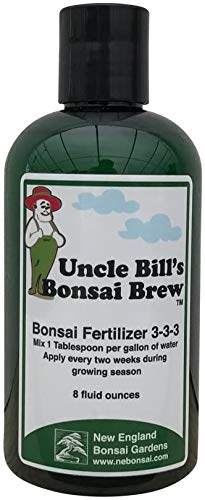
Uncle Bill’s is a formula from New England Bonsai Gardens that is designed to be a gentle, “gourmet feast” for your tree. It is a very entry-level-friendly product that comes with a simple mixing ratio (1:128). The brand focuses on community, inviting users to share their experiences, making it a solid option for those just starting their bonsai journey who want a reliable, low-stakes feeding solution.
Owner reviews highlight how it revived “dying” bonsai trees, with several users noting the high nitrogen content spurred aggressive leaf growth. This is a double-edged sword: while it brings a struggling tree back to life, one experienced reviewer correctly pointed out that heavy nitrogen will prioritize leaf growth over root development, which is not ideal for long-term structural health.
For the price of a single bottle, you get a simple, effective formula that works. For a beginner who just wants to see their tree grow, it is an excellent starting point. For the more advanced grower looking to refine branch structure and root mass, a more balanced or organic option may be a better long-term investment for the tree’s lifespan.
What works
- Very easy to mix and apply for beginners.
- Strong nitrogen is effective at reviving sick trees quickly.
- Strong community support and brand reputation.
What doesn’t
- High nitrogen can cause excessive leaf growth and leggy structure.
- Less suited for advanced owners aiming for fine ramification.
7. Gardenera Plant Growth Superfood for BONSAI
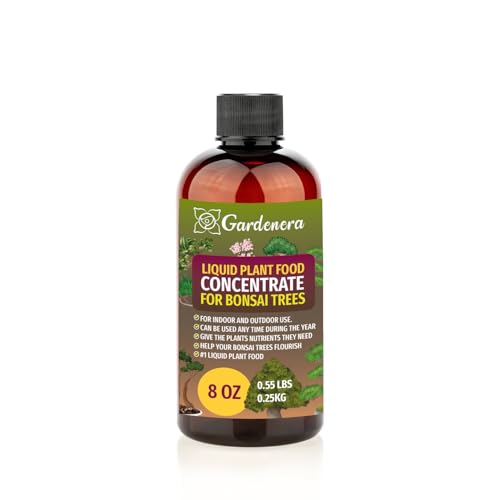
Gardenera offers a “liquid vitamin superfood” approach rather than a standard NPK fertilizer. It contains 18 essential nutrients from sources like bat guano, worm castings, kelp meal, and humic shale, making it one of the most complex organic supplements available. It is designed to promote robust roots, stems, leaves, and blooms through a biological feeding approach.
The ZYMOLOGY process breaks down ingredients over five years before bottling, theoretically making the nutrients instantly bioavailable. Owners of money trees and banana plants have reported rapid new leaf growth and significant plant health improvements. It is also 100% pet-safe and odorless, making it an excellent choice for indoor bonsai displays near living spaces.
The main downside reported by users is the high consumption rate. The recommended dilution of 2 tablespoons per gallon of water runs through the 8-ounce bottle quickly for someone with a large collection. It is not a precise bonsai-specific formulation like the 3-3-3 from the Houseplant Resource Center. For the user who wants a powerful, broad-spectrum organic boost and is willing to mix regularly, this is a potent option.
What works
- Loaded with 18 nutrient sources and organic matter for deep soil health.
- Pet-safe and odorless—perfect for indoor use.
- Rapidly triggers new growth in a wide range of plant types.
What doesn’t
- Higher dilution rate means the 8oz bottle is used up quickly.
- General “superfood” label is less specialized than targeted bonsai feeds.
Hardware & Specs Guide
NPK Ratio Importance
The NPK ratio is the most critical spec for bonsai fertilizer. “N” (Nitrogen) drives leaf and stem growth; “P” (Phosphorus) supports root and flower development; “K” (Potassium) promotes overall health and disease resistance. A balanced ratio like 3-3-3 is generally safest for shallow-rooted bonsai, preventing the explosive leaf growth that a high-N ratio (like 10-10-10) would cause. Products with a lower first number are often preferred for conifers and mature trees where fine ramification is the goal.
Mixing Ratio & Concentration
Liquid fertilizers are concentrated and must be diluted. A common ratio is 1:100 (e.g., TPS Nutrients) or 1:500 (e.g., Growth Technology). A simpler mixing instruction, like “1 teaspoon per quart,” is easier for beginners. Using too much concentrate will chemically burn the roots—a risk magnified in the small soil volume of a bonsai pot. Always follow the specific mixing instructions for the product you choose. Ultra-concentrated feeds like Growth Technology offer more applications per bottle despite being smaller.
FAQ
How often should I feed my bonsai with liquid fertilizer during the growing season?
Can I use a general houseplant liquid fertilizer on my bonsai tree?
What is the difference between organic and synthetic liquid bonsai fertilizer?
Final Thoughts: The Verdict
For most bonsai growers, the best bonsai tree liquid fertilizer winner is the Houseplant Resource Center 3-3-3 Bonsai Food because its balanced NPK ratio and biostimulant blend provide safe, effective nutrition for the widest range of species. If you strictly prefer an organic regimen with authentic Japanese roots, grab the Yamamoto’s Organic Concentrate. And for reviving a struggling tree with a precision formula, nothing beats the Growth Technology Bonsai Focus.