
Lotus roots demand a heavy, nutrient-rich anchor that stays put the moment the tuber is placed. Standard potting mixes float, rot, and cloud the water within hours, sabotaging the bloom cycle before the first leaf unfurls. The right aquatic soil clings to the tuber, supplies consistent iron and potassium, and keeps the water column crystal clear for the fish sharing the pond.
I’m Rikta — the co-founder and writer behind Lawn Gear Lab. I’ve spent hundreds of hours poring over lab-grade NPK ratios, particle-density specs, and owner-reported clouding incidents to isolate the soils that actually support lotus growth from the ones that just muddy your water.
Whether you are starting from seed or repotting a mature rhizome, choosing the right substrate is the single most important decision you will make. This guide ranks the best aquatic soil for lotus based on nutrient density, particle weight, and long-term water clarity results.
How To Choose The Best Aquatic Soil For Lotus
Lotus tubers sink deep and spread horizontally. The soil you choose must be heavy enough to hold the tuber in place, rich enough to fuel rapid early-season growth, and inert enough to avoid feeding pond algae. Here is how to evaluate the three most critical factors.
Texture & Density: Clay Loam Is Non-Negotiable
Lotus tubers float in lightweight mixes. A clay-loam texture with a particle size around 1–3 mm provides the weight to keep the tuber submerged and the root grip to prevent dislodging by koi or wind. Soils labeled “sandy” or “fine grit” often wash out of the pot within days. The product should feel dense and slightly sticky when wet — that is the clay content that binds nutrients and anchors roots.
NPK Ratio & Fertilizer Compatibility
Lotus is a heavy feeder, especially for potassium and phosphorus during bloom season. Look for an NPK ratio with moderate nitrogen (to avoid algae blooms) and high potassium (for flower initiation). A 11-3-14 or similar emphasis on K supports larger pads and more flowers. Many premium soils arrive without fertilizer, meaning you must pair them with slow-release aquatic fertilizer capsules placed near the root zone.
Water Clarity & Fish Safety
The soil must remain intact when submerged. Products that “dust” or release fine silt into the water column cloud the pond and stress fish. A pH-neutral formulation (typically 6.8–7.2) prevents shifts in alkalinity that kill beneficial bacteria. Any soil claiming to be “all-natural” but lacking a pH specification should be tested before full pond installation.
Quick Comparison
On smaller screens, swipe sideways to see the full table.
| Model | Category | Best For | Key Spec | Amazon |
|---|---|---|---|---|
| Chalily Aquatic Gold Soil | Premium Clay Loam | Professional lotus & lily growers | 4-quart heavy clay-based blend | Amazon |
| The Pond Guy Large Tub Kit | All-in-One Kit | Large lotus plantings with full kit | Includes tub, soil, media, & fertilizer | Amazon |
| Aquascape Once-A-Year Fertilizer | Fertilizer Capsules | 180-day slow-release feeding | NPK 11-3-14, 6 capsules | Amazon |
| The Pond Guy Planting Kit Bag | Starter Kit | Beginners with mesh bag setup | 6-quart kit with soil, media, & bag | Amazon |
| MICROBE-LIFT Aquatic Media | Ceramic Media | Neutral pH, non-clouding base layer | 10 lbs, ceramic pebbles, pH neutral | Amazon |
| Pond Guy Planting Media | Media Only | Repotting pond lilies & lotus | 4 quarts, pH-neutral granules | Amazon |
| WBHWW Aquatic Soil | Budget Fine Grit | Cost-conscious plantings | 5.5 lbs, fine-textured blend | Amazon |
In‑Depth Reviews
1. Chalily Aquatic Gold Soil

Chalily Aquatic Gold Soil uses a heavy clay base that lotus roots grip instantly. The 4-quart bag holds enough for two standard lotus pots, and the naturally dense composition prevents the soil from drifting out when the pot is lowered into the pond. Owner reports consistently mention that the water stays clear within hours of planting — an important test for anyone stocking koi alongside lotus.
The soil arrives pre-loaded with all-natural nutrients, so you can plant directly without mixing in fertilizer at first. Professional greenhouses and botanical gardens rely on this exact blend for their production lotus, which speaks to the consistency of the particle size and the absence of floating debris. The rich clay loam texture also encourages root spread across the pot, mimicking the natural riverbed conditions lotus prefer.
Some users note that the water can turn slightly cloudy for the first 24–48 hours if the bag is rinsed aggressively before use. A gentle rinse or simply placing the pot and letting the sediment settle overnight resolves the issue. The price per quart sits at a premium tier, but the performance during the first bloom season — larger pads, more flowers, and zero algae feeds — justifies the investment for serious hobbyists.
What works
- Heavy clay base anchors lotus tubers firmly in place
- Pre-loaded nutrients eliminate the need for immediate fertilizer
- Minimal water clouding after initial settling period
What doesn’t
- Premium cost per quart compared to generic blends
- Fine clay dust may cloud water briefly if not rinsed gently
2. The Pond Guy Large Tub Kit
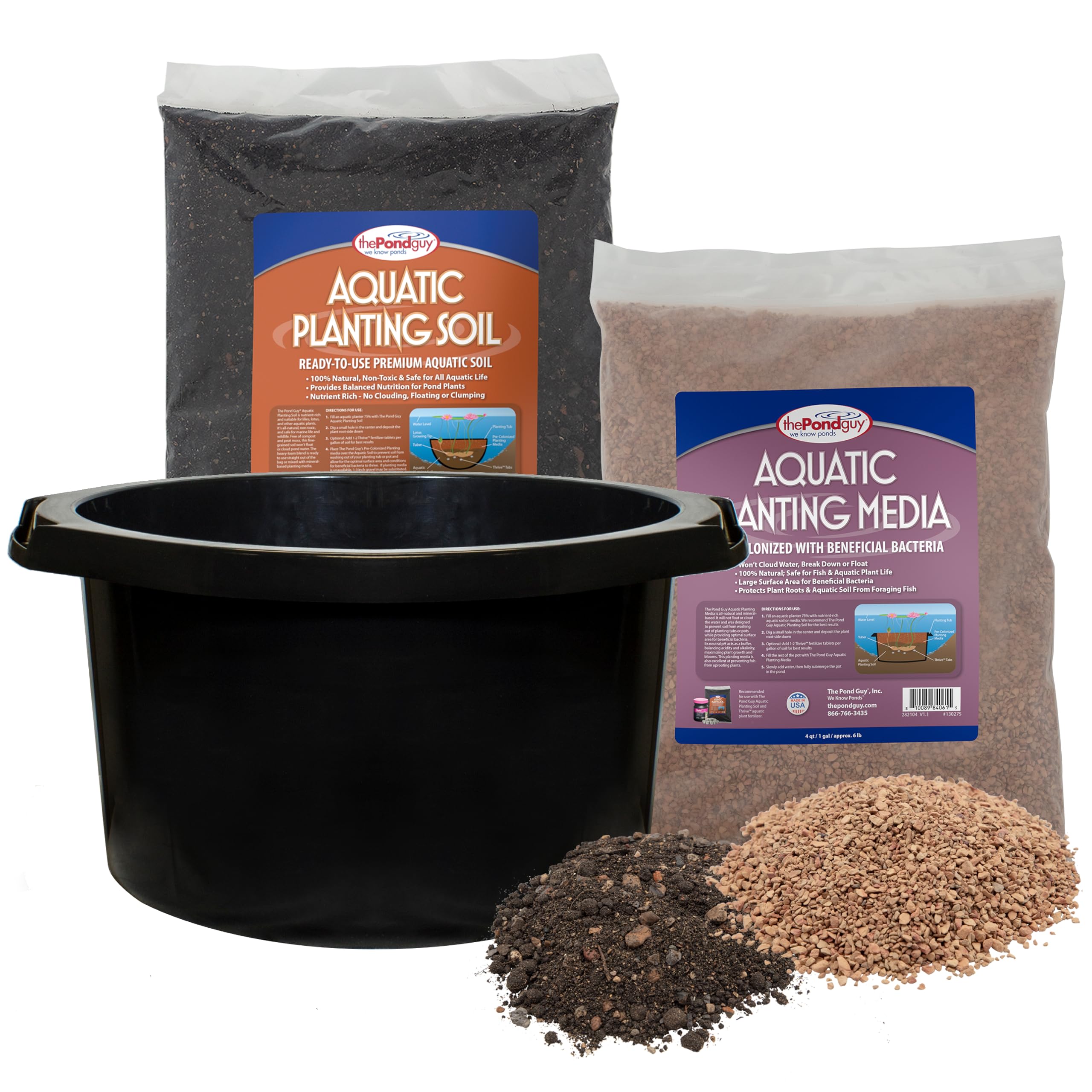
The Pond Guy Large Tub Kit delivers everything needed for a single large lotus or three water lilies in one box: a heavy-duty black planting tub, premium aquatic soil, pH-neutral aquatic media, and sample-size fertilizer tabs. The tub itself is thick enough to prevent lotus rhizomes from piercing through and damaging pond liners — a real concern with aggressive-growing lotus varieties.
The soil included has a loamy composition that holds shape when wet and does not float. The separate bag of pH-neutral media provides a top-dressing layer that traps any migratory soil particles, keeping the water column clean. The included fertilizer tabs contain a balanced NPK profile designed for long-season bloomers, so you get a full season of nutrition without purchasing additional capsules.
Several owners noted that the setup is extremely heavy when filled — moving the tub after adding soil and water is a two-person job, so it is best to position the tub in the pond before filling. A small number of reports mention that the tub lip arrived cracked when packaging lacked protective foam. Inspect the tub immediately upon delivery and request a replacement if damaged.
What works
- Heavy-duty tub prevents root puncture of pond liners
- Complete kit eliminates guesswork for beginners
- Fertilizer tabs support a full bloom season
What doesn’t
- Extremely heavy when filled; position in pond first
- Tub lip occasionally arrives cracked from shipping
3. Aquascape Once-A-Year Pond Plant Fertilizer Capsules
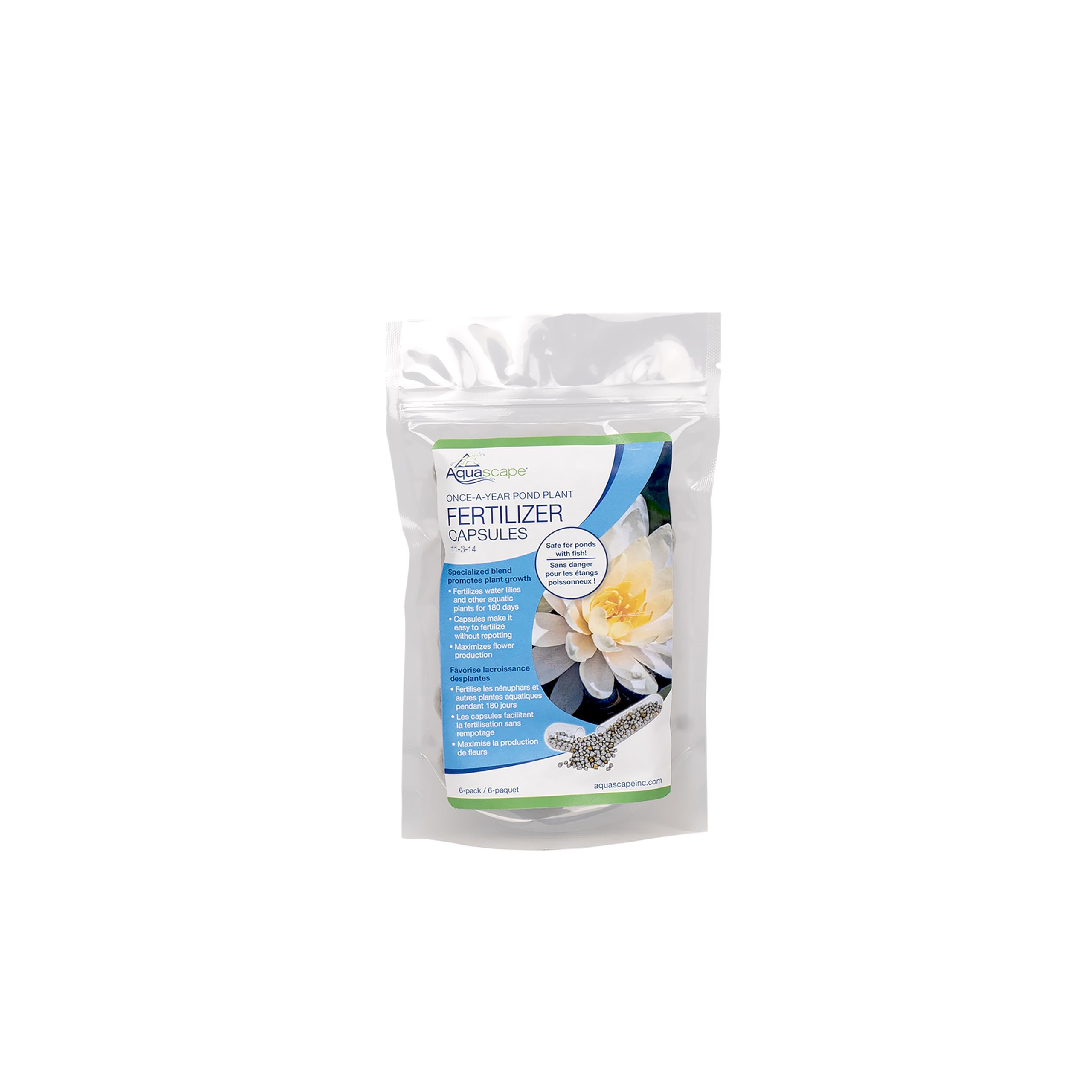
Aquascape’s Once-A-Year capsules deliver an NPK ratio of 11-3-14 specifically engineered for water lilies and lotus. The 11-3-14 mix provides a moderate nitrogen level that fuels leaf growth without triggering algae blooms, while the high potassium content directly drives flower initiation. Each capsule releases nutrients slowly over 180 days, making a single spring application sufficient for the entire growing season.
The capsule format is easy to push into the soil near the tuber without disturbing the root system. Users report dramatic improvements in flower count and pad size within two to three weeks of application. The low phosphorus content (3) also reduces the risk of phosphate-driven algae clouds, keeping the pond water clearer than standard all-purpose aquatic fertilizers.
Each pack covers six 1-gallon pots, which aligns well with a standard lotus collection. The only downside is that these capsules are a fertilizer supplement, not a soil alone — you still need a heavy clay loam base like Chalily or The Pond Guy soil to anchor the tuber. A few owners wished for more capsules per pack to cover larger plantings without buying multiple sets.
What works
- 180-day slow release matches the lotus growing season
- High potassium increases flower production noticeably
- Low phosphorus keeps algae growth in check
What doesn’t
- Only a fertilizer supplement; soil must be purchased separately
- Six capsules may not cover large multi-plant pond setups
4. The Pond Guy Small Black Outdoor Planting Kit

The Pond Guy Small Planting Kit bundles two mesh planting bags with bags of aquatic soil, pH-neutral aquatic media, and fertilizer tabs. The mesh bag design allows water to circulate freely around the roots while keeping the soil contained — lotus roots appreciate the aeration, and the flexible bag conforms to uneven pond bottoms. The included soil has a loamy composition that resists floating when submerged.
This kit is well-suited for beginners who want a complete solution without buying separate components. The included media provides a protective top layer that prevents fish from disturbing the soil, and the fertilizer tabs ensure the lotus receives a nutrient boost during the critical first month. The total volume of soil and media fills both bags adequately for two medium-sized lotus or lily starts.
Some users found that the fine media sifted through the mesh bag during the first submersion, leaving a thin layer of dust on the pond floor. Placing a single layer of river pebbles on top of the media before lowering the bag solves the issue entirely. The kit does not include a rigid container, so those with aggressive fish or heavy current may prefer the tub kit for extra stability.
What works
- Complete starter kit with soil, media, and fertilizer tabs
- Mesh bag allows excellent water circulation
- Flexible design conforms to uneven pond floors
What doesn’t
- Fine media can sift through mesh without a pebble top layer
- Lacks rigid structure for high-current or heavy-fish ponds
5. MICROBE-LIFT Concentrated Aquatic Planting Media

MICROBE-LIFT Aquatic Media is a ceramic-based substrate that serves as a neutral, non-nutritive planting medium. The 10-pound bag of stable, fired-clay pebbles will not break down, float, or cloud water — making it an ideal base layer for lotus pots when you want to avoid the nutrient leaching associated with organic soils. The pH-neutral composition keeps pond water chemistry stable, which is critical when keeping sensitive koi or goldfish.
Because this media contains no added nutrients, it functions best as a bottom layer topped with a nutrient-rich aquatic soil. The pebbles retain oxygen and absorb excess alkalinity, which reduces the frequency of water changes in smaller ponds. Several pond owners report using MICROBE-LIFT as a cap layer over heavy clay soil to prevent fish from digging up the lotus tuber.
The ceramic pebbles are extremely light when dry, which makes shipping economical, but they must be pre-soaked to sink properly. Some first-time buyers expected a muddy planting mix and were surprised by the granular texture. The media works well for bog planting areas and submerged marginal plants, but for lotus, it requires pairing with a clay loam soil to anchor the tuber properly.
What works
- Will not break down or cloud water over multiple seasons
- pH-neutral structure protects pond fish from alkalinity swings
- Lightweight and easy to ship compared to heavy clay soils
What doesn’t
- Contains zero nutrients; must be used with a fertile top soil
- Requires pre-soaking to sink; floats initially if added dry
6. The Pond Guy Planting Media
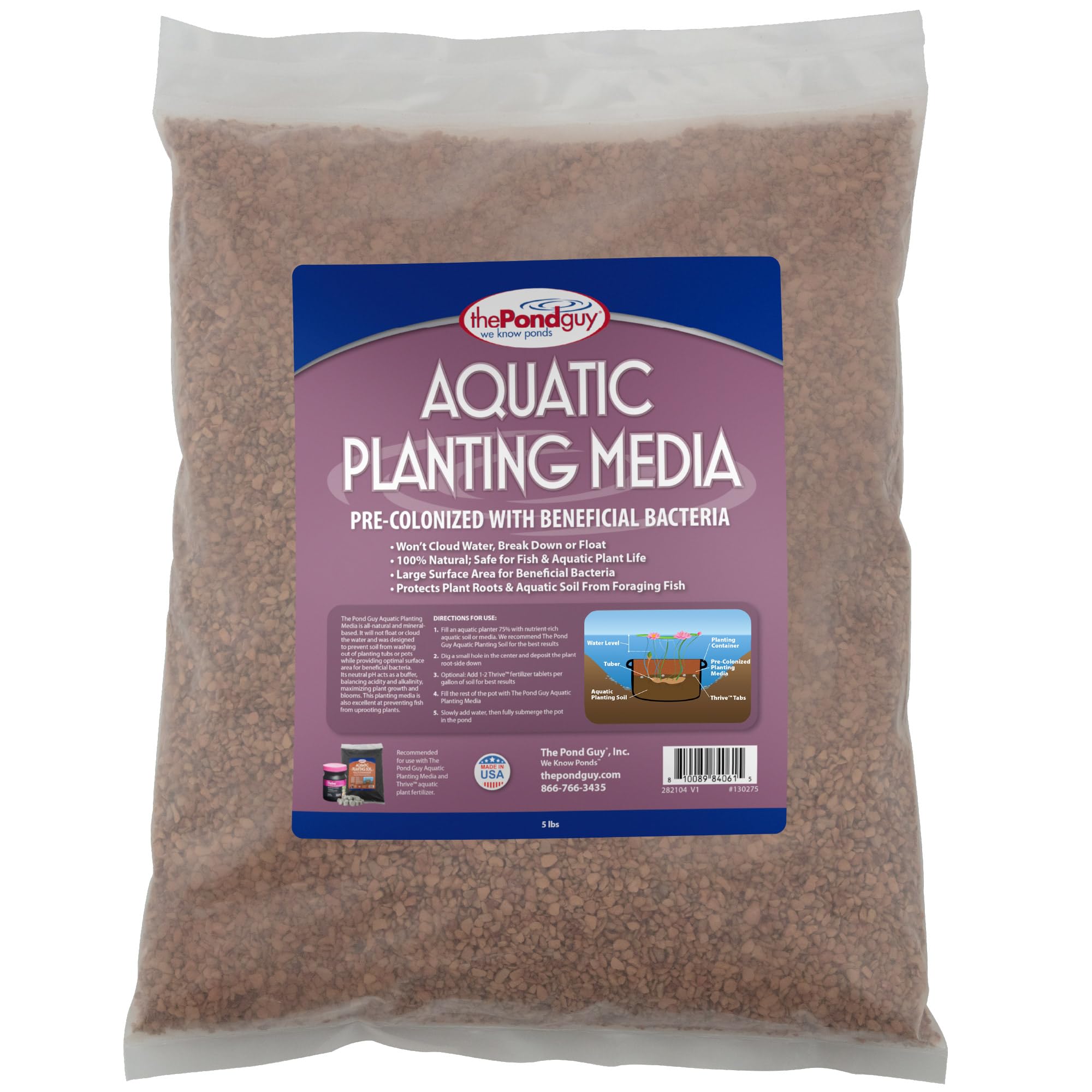
The Pond Guy Planting Media is a dense, pH-neutral granule substrate engineered for water gardens and fish ponds. The 4-quart bag provides a large surface area for colonizing beneficial microbes that consume dead organic debris and excess nutrients — a process that directly reduces the algae-fueling compounds in the water. The granules are heavy enough to stay in the pot without floating, even when fish brush against the container.
This media is pre-colonized with beneficial microbes that kick-start biological filtration. When used as a top-dressing over clay loam soil, it creates a barrier that prevents the soil from escaping while trapping fish waste near the plant roots. Some owners report that the water remained slightly cloudy for the first few days after installation, despite the product’s claim of non-clouding, but the cloudiness typically cleared within 72 hours.
The planting media does not contain compost, fertilizer, peat, or other growth-promoting ingredients. For lotus, this means you must add a separate fertilizer source, such as the Aquascape capsules, to supply the potassium and phosphorus the plant needs to bloom. The lack of nutrients makes this a safer option for ponds with heavy fish loads, where extra fertilizer could cause dangerous ammonia spikes.
What works
- Pre-colonized with beneficial microbes for balanced pond water
- Dense granules stay in the pot and resist fish disturbance
- Completely inert — no risk of fish-friendly ammonia spikes
What doesn’t
- Requires separate fertilizer to feed lotus for blooming
- Some temporary cloudiness reported during the first 72 hours
7. WBHWW Aquatic Soil for Pond Plants
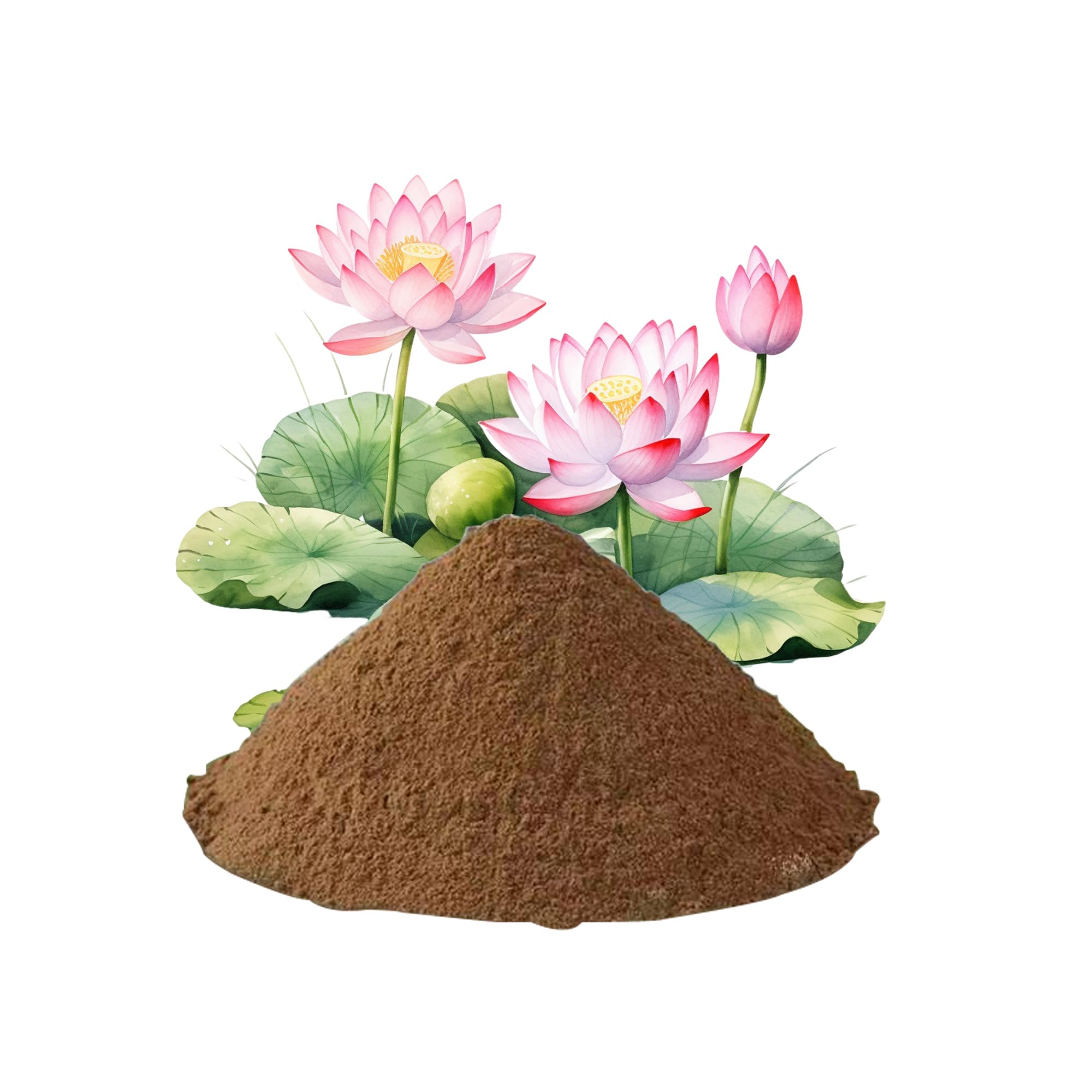
WBHWW Aquatic Soil offers a budget-friendly entry point for home pond hobbyists. The 5.5-pound bag contains a fine-textured blend marketed as suitable for water lilies, lotus, and other aquatic plants. The soil contains a balanced nutrient mix intended to support early growth, and its fine consistency allows it to fill small cracks in root systems quickly.
Several owners reported success using this soil for sprouted lotus seeds, combining it with perlite and sand to create a stable growing medium. The soil’s fine texture helps lotus seedlings establish a strong root network, but the same fineness causes problems in larger pots. Reviewers noted that the soil tends to escape through drainage holes and settle on the pond floor when used without a heavy top-dressing layer.
The biggest complaint revolves around the dusty, sandy consistency that clouds water for days after planting. A 24-hour soak and repeated water changes are necessary to settle the sediment. For a first-time lotus grower on a tight budget, this soil can work with careful handling and a thick pebble cap, but the extra effort and potential for murky water make it less reliable than denser clay-based alternatives.
What works
- Very low cost per pound for budget-conscious setups
- Fine texture helps lotus seedlings root quickly
- Can be mixed with sand and perlite for custom blends
What doesn’t
- Fine grit escapes pots and clouds water extensively
- Requires multiple rinses and a thick pebble cap to contain
Hardware & Specs Guide
NPK Ratio
The nitrogen-phosphorus-potassium ratio determines how the soil feeds your lotus. A ratio with high potassium (K), around 14, promotes flower formation, while moderate nitrogen (N) at 10–12 fuels leaf growth without feeding algae. Low phosphorus (P) below 5 reduces the risk of phosphate-driven green water. Read the NPK label before buying — a 11-3-14 formulation like the Aquascape capsules is ideal for lotus bloom cycles.
Particle Size & Density
Lotus tubers require a heavy medium that will not float. Clay loam particles in the 1–3 mm range provide sufficient weight to anchor the tuber while allowing root penetration. Products described as “fine grit” or “sandy” (particles under 0.5 mm) tend to wash out of pots and cloud the pond. The densest options, like Chalily Aquatic Gold Soil, contain real clay that binds the media together when wet.
FAQ
Can I use regular garden soil for my lotus?
How deep should the aquatic soil be in a lotus pot?
Does pH-neutral soil really matter for lotus?
Final Thoughts: The Verdict
For most gardeners, the aquatic soil for lotus winner is the Chalily Aquatic Gold Soil because its heavy clay loam anchors the tuber immediately, keeps the water clear, and comes pre-loaded with the nutrients lotus need for vigorous blooms. If you want a complete all-in-one solution with a durable tub, grab the The Pond Guy Large Tub Kit. And for long-term, set-and-forget feeding, nothing beats the Aquascape Once-A-Year Fertilizer Capsules to pair with any clay-based soil for maximum flower production.