
Rose bushes demand consistent soil moisture, a cool root zone, and protection from soil-borne diseases splashing up during rain. The wrong mulch—too dense, too acidic, or full of weed seeds—can suffocate roots, invite fungus, or waste your entire growing season fighting problems instead of enjoying blooms. Choosing the right organic layer for your roses is a strategic decision that affects every bud set and leaf color from spring through fall.
I’m Rikta — the co-founder and writer behind Lawn Gear Lab. I compare specifications, study horticultural data from university extension programs, and analyze aggregated owner feedback to find the best organic soil covers that deliver measurable results for rose growers.
After reviewing dozens of options and cross-referencing hundreds of verified reviews, I’ve narrowed the list to the seven most effective products that define what a true mulch for rose bushes should deliver in terms of root health, moisture control, and long-term soil building.
How To Choose The Best Mulch For Rose Bushes
The right organic mulch does far more than dress up a flower bed—it creates a microclimate that suppresses weeds, stabilizes soil temperature, and feeds the soil food web as it breaks down. For roses specifically, the mulch layer needs to balance moisture without keeping the crown too wet, and it must allow air exchange so roots never suffocate. Here are the specific factors that separate effective rose mulches from the rest.
Particle Size and Texture
Roses need a mulch that is coarse enough to let water percolate and air circulate. Fine, dusty mulches can mat down and form a crust that repels water instead of absorbing it. Medium to large chips—roughly 0.5 to 1.5 inches—allow water to reach the soil while blocking sunlight from weed seeds. Pine bark nuggets and cedar chips fall into this ideal range, while shredded hardwood can mat if applied too thick.
Moisture Retention vs. Drainage
A three-inch layer of organic mulch can reduce evaporation by up to 70 percent, which is critical for roses that suffer from drought stress during bloom cycles. However, if the mulch holds too much moisture directly against the cane base, you increase the risk of fungal infections like black spot and canker. Materials like cocoa chips and composted manure absorb moisture but drain freely, while straw creates air pockets that promote drying at the crown.
Nutrient Contribution and pH Effect
Roses thrive in slightly acidic soil with a pH between 6.0 and 6.5. Some mulches, like pine bark and pine straw, naturally acidify the soil as they decompose, which is beneficial for roses. Others, like fresh wood chips, can temporarily tie up nitrogen during the first few months of decomposition. Composted manure and fully decomposed bark release nutrients immediately without the nitrogen penalty, making them safer choices for established rose beds.
Quick Comparison
On smaller screens, swipe sideways to see the full table.
| Model | Category | Best For | Key Spec | Amazon |
|---|---|---|---|---|
| Soil Sunrise Pine Bark Nuggets | Pine Bark | Consistent texture and slow decomposition | 12-Quart bag, small chip size | Amazon |
| Brut Cow Compost | Composted Manure | Nutrient-rich top dressing | 10-Quart, OMRI-listed, odor-free | Amazon |
| Back to the Roots Premium Mulch | Organic Mix | Peat-free raised bed cover | 25.7-Quart, yucca extract for moisture | Amazon |
| Plantonix Coco Chips | Coco Coir | Water retention and aeration | 10-lb compressed block, neutral pH | Amazon |
| AVALUTION Orchid Potting Bark | Pine Bark | Small, sterilized chips for fine roots | 18-Quart, 0.8–1.3-inch particle size | Amazon |
| GranuCide Cedar Granules | Cedar | Natural pest repellent and decoration | 8-lb bag, untreated cedar wood | Amazon |
| HealthiStraw GardenStraw | Wheat Straw | Covering large beds and seeding | 3-cu-ft bale, covers up to 100 sq ft | Amazon |
In‑Depth Reviews
1. Soil Sunrise Pine Bark Mulch Nuggets
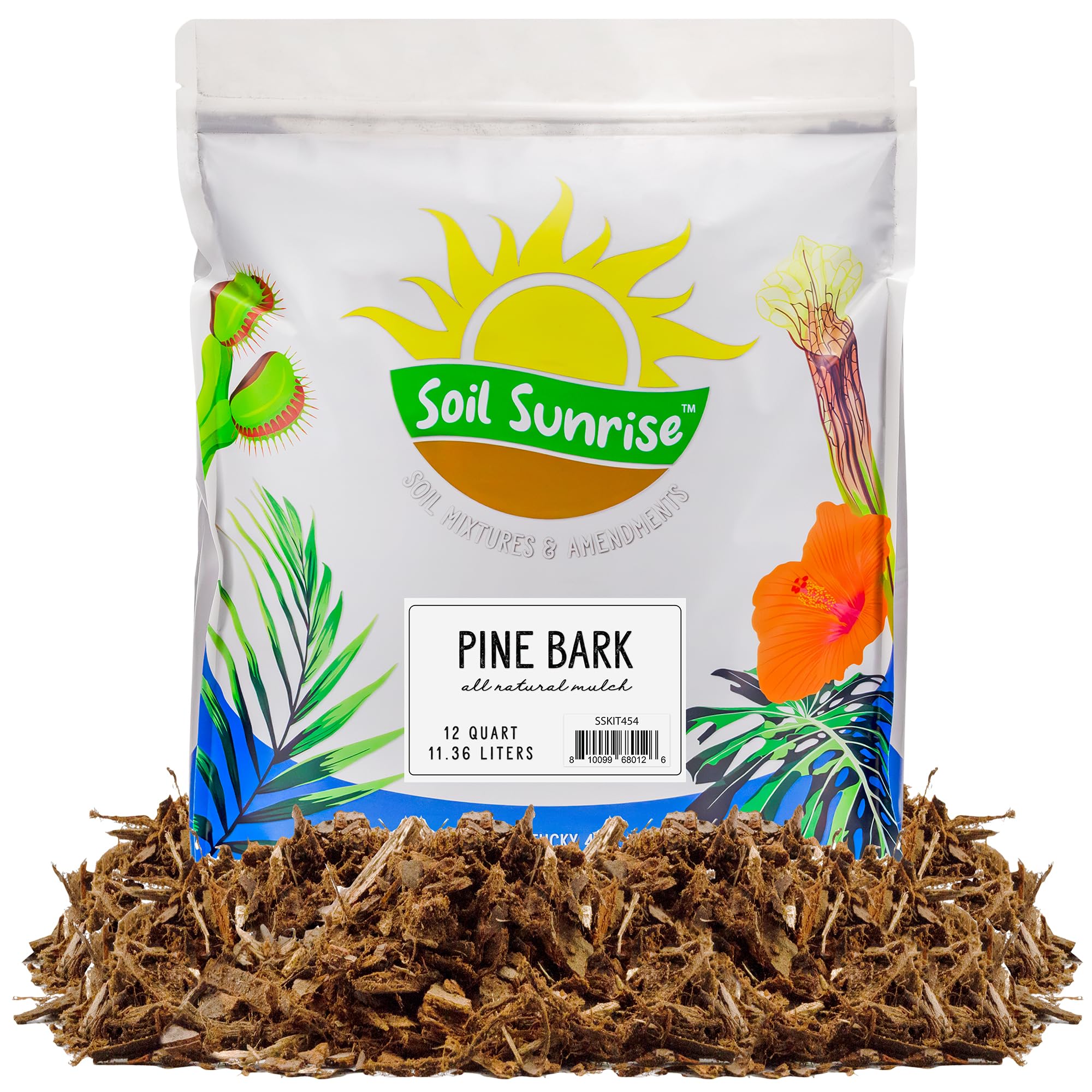
The Soil Sunrise Pine Bark Nuggets are the gold standard for rose growers who want a consistent, aesthetically pleasing mulch layer that breaks down slowly and won’t trap moisture at the crown. The small chip size—almost shredded in consistency—allows you to spread a uniform layer that stays in place during heavy rain. Multiple reviewers noted the wood pieces are clean, free of mold and insects, and have a pleasant natural scent without being overpowering.
The pine bark naturally acidifies the soil as it decomposes, which helps maintain the slightly acidic pH that roses prefer. These nuggets also excel at slowing moisture evaporation, which reduces watering frequency during hot summer weeks. Because the chips are small, they integrate well with the topsoil over time, feeding beneficial soil microbes without forming a dense mat that blocks air exchange.
One minor trade-off is that the bag is on the smaller side at 12 quarts, so covering a large rose bed with multiple bushes will require several bags. A couple of reviewers mentioned the price per bag feels a little premium compared to bulk options from big-box stores, but they consistently praised the uniform texture and cleanliness as worth the extra cost.
What works
- Consistent small chip size for even spreading
- Slow decomposition rate minimizes annual reapplication
- Naturally acidic profile supports rose pH preference
What doesn’t
- Bag size is small for extensive garden beds
- Premium price per quart compared to bulk sources
2. Brut Cow Compost

Brut Cow Compost is a pure, composted cow manure that acts as both a nutrient-rich top dressing and a soil-enhancing mulch for rose bushes. It is OMRI-listed organic, odor-free, and finely sifted so you can spread it directly around the base of your roses without worrying about burning tender roots. Multiple verified buyers reported using this compost mix with standard potting soil and seeing noticeably faster growth in their vegetable plugs and flower starts.
The key advantage here is the nutrient profile—nitrogen, calcium, and iron are all present in bioavailable forms, which feeds the rose bush every time you water. Unlike raw manure, this material is fully composted, aerated, and tested for safety, so it poses no risk of ammonia burn or introducing pathogens. Reviews also mention that it works well as a top dressing for potted roses and indoor plants, though it is primarily intended for garden beds and borders.
A few users wished the bag were larger, as 10 quarts disappears quickly when applied at the recommended 2-inch depth. One reviewer explicitly called it “excellent for roses,” confirming that the fine texture and organic certification align perfectly with the needs of rose growers who want to avoid synthetic additives.
What works
- Immediate nutrient release without nitrogen drawdown
- OMRI-listed organic certification ensures purity
- Fine texture spreads evenly and contacts soil directly
What doesn’t
- Bag size is modest for large rose gardens
- Less effective as a weed barrier compared to bark mulches
3. Back to the Roots Premium Mulch

Back to the Roots offers a 25.7-quart organic mulch that is completely peat-free, relying instead on upcycled plant matter and wood fines from the United States. This is a standout choice for environmentally conscious rose growers who want to avoid the carbon footprint of imported peat. The blend incorporates yucca extract for natural moisture control and dolomitic lime for pH balancing, which helps keep the soil environment stable around rose root zones.
Users consistently mention the dark, rich appearance as a bonus for garden aesthetics, and the mulch spreads easily without excessive dust. The 19.56-pound bag covers a useful area, and the moisture retention properties are strong enough that several buyers noted reduced watering frequency after application. It also functions well in raised beds where roses are planted, which adds versatility for growers who layer perennials and annuals together.
The most significant downside is the perception of value. A reviewer compared it unfavorably to cheaper bulk mulch from local home centers, calling it expensive for the quantity. While the organic composition and sustainable sourcing justify the premium, budget-minded gardeners covering large rose borders may find better value in other options.
What works
- Peat-free sustainable sourcing reduces environmental impact
- Yucca extract improves water penetration and retention
- pH-balanced formula supports healthy rose roots
What doesn’t
- Perceived as expensive compared to bulk store brands
- Some users reported variable results in weed suppression
4. Plantonix Coco Chips

Plantonix Coco Chips offer a renewable, 100 percent organic alternative to traditional bark mulches, made from coconut husks that would otherwise go to waste. The compressed brick expands significantly when water is added, creating chunky, airy chips that absorb up to ten times their weight in water. For rose growers, this translates to consistent soil moisture with less frequent irrigation, a major benefit during the heat of summer when roses are actively blooming.
The chips have a neutral pH and a high cation exchange capacity, meaning they hold onto essential nutrients and make them available to rose roots over time. Because the particles are chunky rather than fibrous, they create air pockets that prevent soil compaction—a critical factor for roses planted in heavy clay or dense garden soil. Verified reviewers praised the consistency of the chips and noted that they mix well with coir fines for a custom blend.
The main caveat is that coco chips decompose faster than pine bark, so you may need to replenish the layer more frequently. One experienced reviewer cautioned that unbuffered coco coir can absorb nutrients from the soil, so buyers should confirm whether the product is pre-buffered. This particular version is well-regarded, but growers should still monitor nutrient levels if using it as a primary mulch layer.
What works
- Exceptional water retention reduces watering frequency
- Renewable, eco-friendly material from coconut husks
- Neutral pH and high CEC support nutrient availability
What doesn’t
- Decomposes faster than bark-based mulches
- Unbuffered versions may temporarily tie up soil nutrients
5. AVALUTION Orchid Potting Bark

AVALUTION Orchid Potting Bark is a premium pine bark product with a particle size of 0.8 to 1.3 inches, making it ideal for rose growers who want a chunky, well-aerated mulch that drains freely. The bark is pre-sterilized, so you get a clean, dust-free product with no musty smell, a common complaint with lower-quality bagged bark. Several orchid and houseplant enthusiasts confirmed that the bark’s size and cleanliness make it a superior top dressing for preventing fungus gnats.
For roses specifically, the smaller-than-typical orchid bark size is actually a benefit—it creates a more consistent mulch layer that doesn’t wash away easily and allows water to reach the soil quickly. The pine bark is pH-neutral, so it won’t drastically shift soil acidity, and it retains just enough moisture without causing waterlogging. The 18-quart bag offers decent coverage for the price, and multiple reviews emphasize that the bark pieces are uniform and free of long, stringy shards.
Some users seeking a “chunky” bark for larger pots or heavy top-dressing applications felt the pieces were slightly smaller than anticipated. If you prefer very large bark nuggets for a dramatic landscape look, this might come across as too fine. However, for functional mulch around rose bushes where you want even coverage and excellent root zone aeration, this is a strong mid-sized option.
What works
- Pre-sterilized and dust-free with no musty odor
- Uniform chip size creates even coverage and airflow
- Balanced moisture retention without waterlogging
What doesn’t
- Chips are not very large—not ideal for dramatic landscape bark
- Some buyers found the bag smaller than expected for the price
6. GranuCide Cedar Granules
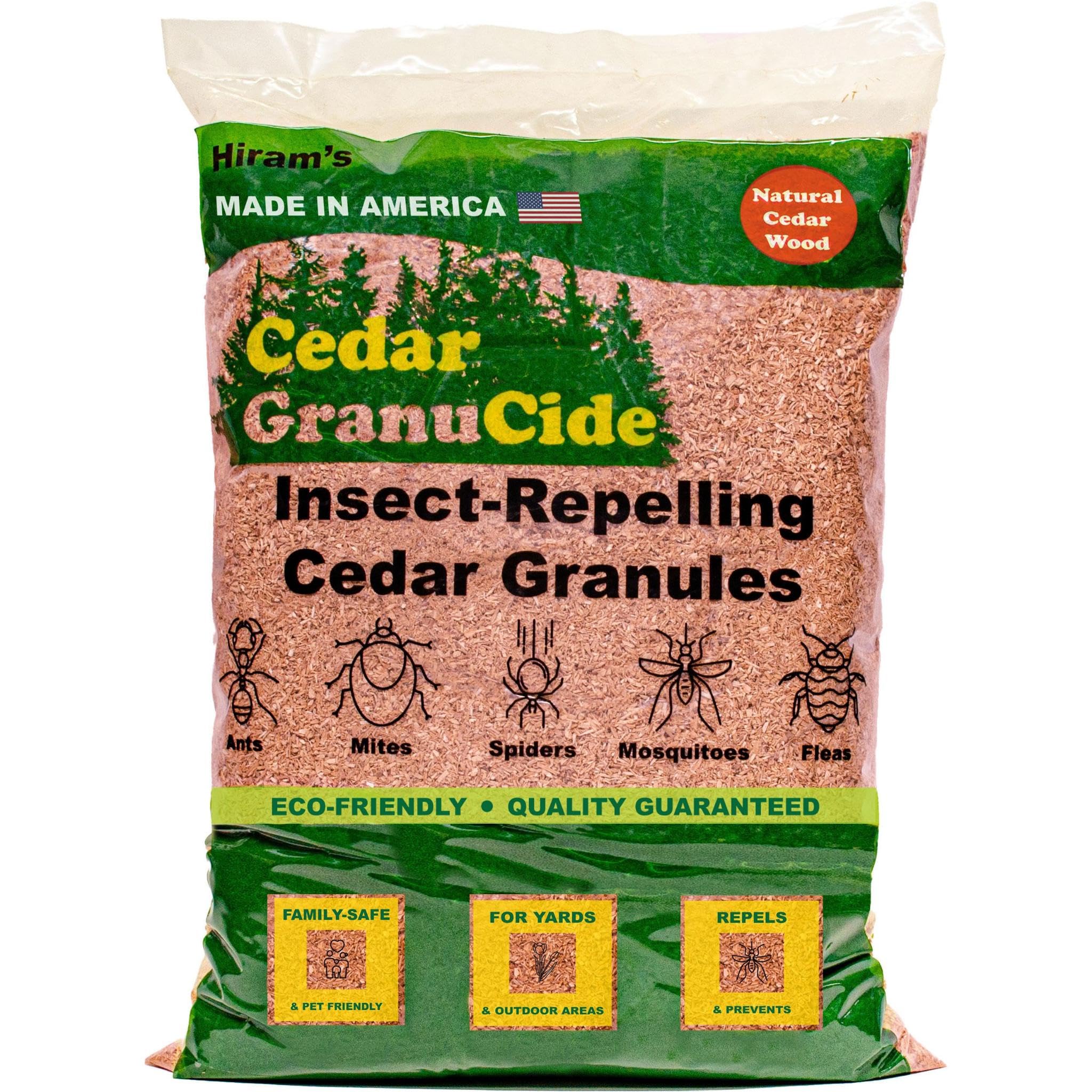
GranuCide Cedar Granules are 100 percent untreated cedar wood chips that serve a dual purpose: they act as a decorative, water-saving mulch while naturally repelling ants, aphids, spiders, and mosquitoes. For rose bushes, this is a massive advantage because aphids are among the most common pests that attack new growth and flower buds. The cedar aroma is pleasant to humans but acts as a powerful deterrent to insects, reducing the need for chemical sprays.
The granules are easy to spread by hand or with a broadcast spreader, and they stay in place even in moderately windy conditions. Reviewers consistently mention that the smell is fresh and not overpowering, and they appreciate that the product is safe for pets and children. As a mulch, cedar is exceptionally slow to decompose, meaning you can lay it down once and enjoy pest protection and moisture retention for up to two seasons.
The coverage area per bag is limited—one 8-pound bag covers only a modest garden bed area, so large rose borders will require multiple bags. Some users noted that the granules can clump together in humid conditions, so it helps to spread them when the weather is dry. Despite these minor handling quirks, the dual pest-control and mulch functionality makes this a smart choice for rose growers battling insect pressure.
What works
- Natural cedar oil repels common rose pests without chemicals
- Extremely slow decomposition reduces reapplication frequency
- Safe around pets, children, and beneficial pollinators
What doesn’t
- Small bag size requires multiple purchases for large beds
- Can clump if applied during high humidity conditions
7. HealthiStraw GardenStraw

HealthiStraw GardenStraw is an all-natural, non-GMO wheat straw that is thoroughly cleaned to remove dust, dirt, and as many weed seeds as possible. With one compressed bale covering up to 100 square feet at a 2 to 3 inch depth, this is the most efficient, budget-friendly option for rose growers with extensive garden beds. The straw fibers interlock when watered, creating a natural mat that resists wind and rain better than loose bark.
The straw’s ability to reduce soil evaporation by up to 50 percent is a game-changer for roses during dry spells. It keeps the soil cool in summer, which helps prevent heat stress on rose roots, and breaks down relatively quickly, adding organic carbon to the soil that feeds beneficial microbes. Several experienced gardeners reported that the straw stays in place well and provides excellent weed suppression with very few errant grass seedlings.
One consistent complaint is that a small percentage of grass seeds still make it through the cleaning process, though the number is far lower than generic hay bales. Another reviewer noted that the straw is bulky and lightweight, so it takes some practice to spread evenly without it blowing away before the first watering. For the sheer coverage and soil-building potential, however, this remains an excellent choice for large rose borders.
What works
- Massive coverage per bale—ideal for large rose gardens
- Reduces watering needs by up to half during hot weather
- Adds organic matter and improves soil structure over time
What doesn’t
- Some grass seeds can still germinate in the bed
- Lightweight straw can blow away before first watering
Hardware & Specs Guide
Particle Size and Coverage Rate
The ideal rose mulch particle size ranges from 0.5 to 1.5 inches. Chips smaller than half an inch can compact and limit air exchange, while pieces larger than two inches leave gaps that let sunlight reach weed seeds. A three-inch layer of proper bark chips covers roughly 10 square feet per cubic foot of material. Pine bark and cedar chips offer the most consistent particle distribution, while straw provides a fibrous blanket that interlocks for tighter coverage.
Decomposition Rate and Nutrient Cycle
Roses benefit from a mulch that breaks down slowly enough to avoid constant reapplication but fast enough to contribute organic matter to the soil. Pine bark takes 12 to 18 months to decompose significantly, making it a long-term option. Composted manure breaks down within two to three months, releasing nitrogen and micronutrients directly to roots. Coco chips fall in the middle, lasting roughly six to nine months before needing replenishment.
FAQ
How deep should I apply mulch around rose bushes?
Will fresh wood chips steal nitrogen from my roses?
Is cedar mulch safe for rose bushes?
Final Thoughts: The Verdict
For most gardeners, the mulch for rose bushes winner is the Soil Sunrise Pine Bark Mulch Nuggets because it offers the ideal balance of consistent chip size, slow decomposition, natural soil acidification, and ease of spreading. If you want natural pest protection on top of moisture retention, grab the GranuCide Cedar Granules. And for covering large rose beds on a budget while building soil health, nothing beats the HealthiStraw GardenStraw.