
The moment you spot ragged holes in your tomato leaves or a trail of aphids on your rose buds, the war for your garden begins. Reaching for a chemical insecticide might nuke the problem, but it also risks harming pollinators, pets, and the soil microbiome you’ve worked to build. That’s exactly why a targeted bug deterrent for garden use is the smarter play—it drives pests away without destroying the ecosystem you depend on.
I’m Rikta — the co-founder and writer behind Lawn Gear Lab. I’ve spent hundreds of hours analyzing proprietary formulations, decoding active ingredient concentrations, and cross-referencing thousands of verified buyer reports to separate the true deterrents from the overhyped sprays.
After comparing coverage rates, active ingredient types, and real-world user outcomes across the most popular formulations on the market, I’ve narrowed the field to the seven most reliable options. Use this guide to find the best bug deterrent for garden that actually fits your plants, your pest pressure, and your philosophy on how to grow.
How To Choose The Best Bug Deterrent For Garden
Not all deterrents work the same way. Some mask the scent of your plants with strong essential oils, while others create a bitter coating that makes leaves unappetizing to chewing insects. Understanding the three deciding factors below will help you pick the right formulation for your specific pest problem and plant type.
Active Ingredient Type: Oil vs. Bio-Compound vs. Synthetic
The ingredient list tells you everything. Peppermint oil works by overwhelming the olfactory system of spiders, ants, and rodents, making an area feel unsafe to them. Neem oil contains azadirachtin, which disrupts insect feeding and hormone cycles, preventing larvae from maturing. Spinosad is a naturally occurring soil bacterium metabolite that attacks the nervous system of caterpillars and thrips on contact. Garlic extract creates a sulfur-based barrier that repels a broad spectrum of leaf-feeders and even larger mammals. Avoid products with synthetic pyrethroids if you keep bees or have a vegetable patch you eat from daily.
Concentrate vs. Ready-to-Use
A ready-to-use (RTU) spray is convenient for a small raised bed or a few potted plants—you buy it, spray it, and you’re done. A concentrate, however, gives you 10 to 20 times the coverage per dollar. If you have a garden larger than 100 square feet or multiple beds, a concentrate that you mix with water in a pump sprayer will save significant money over the season. The trade-off is measuring time and the need to store a larger bottle.
OMRI Listing and Plant Safety
An OMRI Listed label means the product meets organic standards for production and handling. This matters if you grow vegetables, herbs, or fruit you plan to eat. Even natural oils like neem or peppermint can burn tender seedlings if applied in full sun or at the wrong concentration. Always test a small leaf zone first, and apply deterrents in the early morning or late evening to avoid leaf scorch. A product that is safe for ornamentals may still need caution around edible crops—check the label’s food-plant list before spraying.
Quick Comparison
On smaller screens, swipe sideways to see the full table.
| Model | Category | Best For | Key Spec | Amazon |
|---|---|---|---|---|
| Botanical Tradesman Neem Oil | Concentrate | Fungus gnats & spider mites | 100% cold-pressed neem oil | Amazon |
| Garden Safe Fungicide3 | RTU Spray | Powdery mildew & aphids | 1 Gal, neem oil extract | Amazon |
| Evergreen Way Insecticide | Concentrate | Fungus gnats & thrips | Bio-based, 16 oz conc. | Amazon |
| Ferti-lome Spinosad | Concentrate | Bagworms & caterpillars | OMRI, 32 oz conc. | Amazon |
| Smart Grower Peppermint Spray | RTU Spray | Spiders & ants indoors | 16 oz, peppermint oil | Amazon |
| Mighty Mint Peppermint Spray | RTU Spray | Roaches & wasps | 16 oz, extra-strong | Amazon |
| Garlic Barrier Concentrate | Concentrate | Large area & deer deterrence | 1 Gal, OMRI garlic | Amazon |
In‑Depth Reviews
1. Botanical Tradesman Neem Oil Spray

This kit bundles a 3.4 fl oz bottle of pure, cold-pressed neem oil concentrate with a 16 oz trigger sprayer, yielding roughly 338 fl oz of finished spray across up to 20 refills. The neem oil contains no added water, vegetable oils, or diluents, so you control exactly how much azadirachtin hits your leaves. Users reported a steep decline in fungus gnat counts after a four-week cycle—from 3–8 gnats per plant down to 1–2.
The concentrate has a noticeably thick consistency, making it harder to mix with water at room temperature. Several buyers recommended warming the bottle in hot water before measuring to achieve a smoother emulsion. A few drops of mild liquid soap help the oil disperse evenly, and the included sprayer allows you to adjust from a fine mist to a targeted stream depending on the pest you’re fighting.
For the price per ounce of finished spray, this is the most economical option among the neem-based products. It’s OMRI-quality in ingredient sourcing, though it does not carry an official OMRI listing on the bottle. If you have a moderate-size ornamental or vegetable garden and are willing to dilute each batch, this concentrate delivers the lowest cost-per-application of any product reviewed here.
What works
- Undiluted neem oil gives you full control over mixing strength
- Massive coverage per bottle (20 refills) for the price
- Effective at reducing fungus gnat, whitefly, and spider mite populations
What doesn’t
- Oil is very thick and requires hot water to mix smoothly
- Strong earthy odor that some find unpleasant indoors
- No official OMRI seal on the label
2. Garden Safe Fungicide3
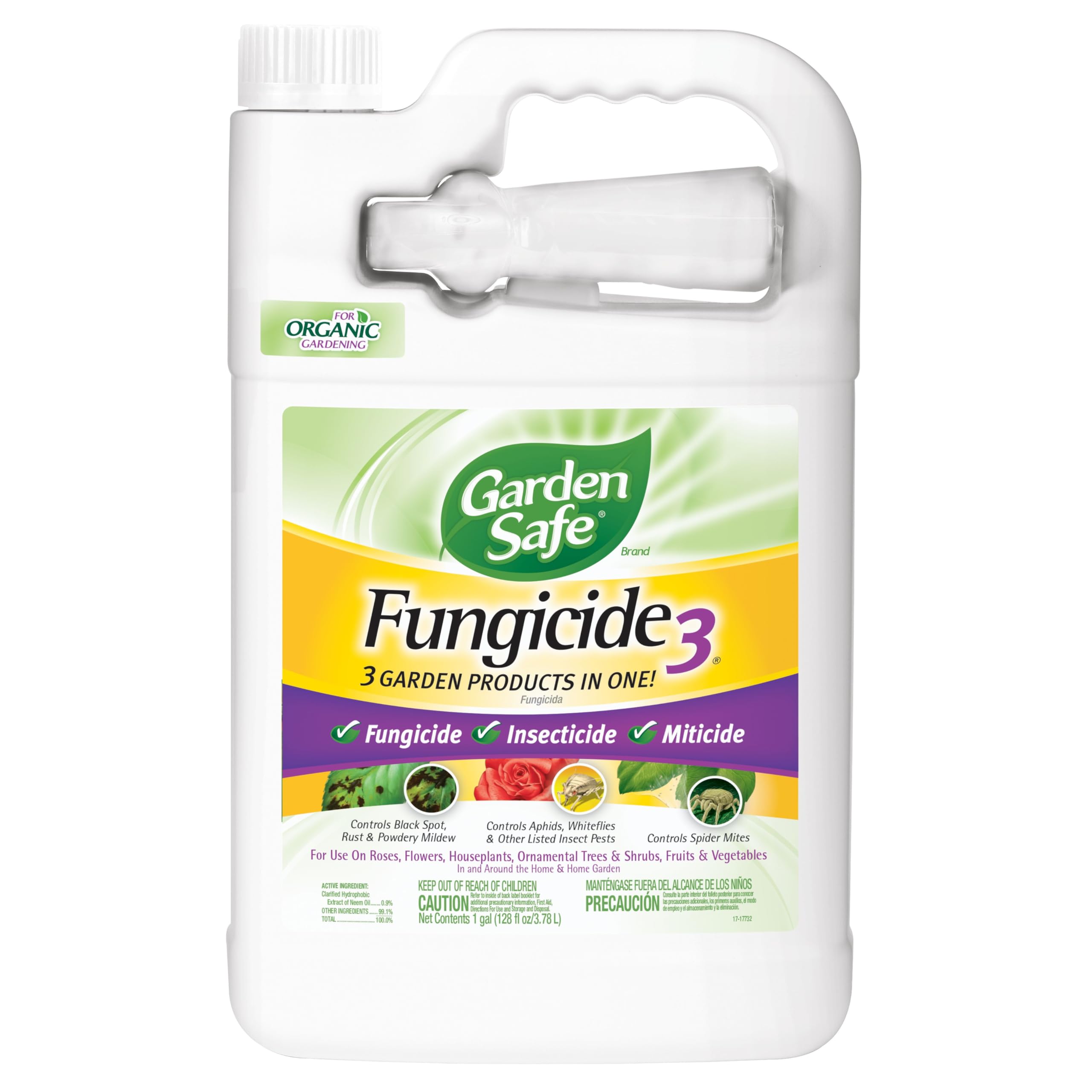
This is a 1-gallon ready-to-use spray that combines fungicide, insecticide, and miticide in one bottle—something no other product on this list does in a single pass. The active ingredient is clarified hydrophobic extract of neem oil, and the formula is EPA-registered for organic gardening. It targets powdery mildew, black spot, rust, aphids, whiteflies, and spider mites on roses, ornamentals, vegetables, and fruit trees.
The integrated trigger sprayer on the container is the weak point here. Multiple users noted that the attached spray wand is only about four inches long and awkwardly coiled, making it difficult to reach the underside of leaves or the center of a dense shrub. A few buyers reported that the sprayer failed after a few uses. Relying on your own pump sprayer for application solves that issue completely and turns this into a very capable product.
Applied weekly during the growing season, users saw powdery mildew stop spreading on hibiscus, roses, and tomatoes. Several reviewers noted greener foliage and heavier blooms after regular use. The 1-gallon size covers a substantial garden area without any mixing, so if convenience and broad-spectrum disease-plus-pest control are your priority, this is the simplest bottle to grab.
What works
- Effective against both fungal disease and sap-sucking insects in one spray
- No mixing required; spray directly from the 1-gallon container
- Organic formulation safe for vegetables and fruit when used as directed
What doesn’t
- Built-in sprayer has poor reach and durability
- Can burn tender plants if applied at full strength in direct sun
- Strong neem odor lingers for several hours after application
3. Evergreen Way Organic Insecticide & Fungicide

This 16-ounce concentrate uses a bio-based formula rather than a single essential oil, coating leaf surfaces and soil zones to disrupt pest life cycles while suppressing fungal growth. Users reported seeing aphids, caterpillars, and fungus gnats diminish after one or two applications, with no leaf burn even on tender seedlings. The concentrate yields multiple refills—one reviewer used just 10 drops per 32 ounces of water with immediate results on gnats.
The strongest advantage of this formula is its near-zero scent. Unlike neem or garlic options, it leaves no lingering aroma, making it the best choice for indoor houseplant collections or patio containers where you don’t want the smell of pest control. It mixes easily in a pump or hose-end sprayer, and the instructions are straightforward even for a first-time concentrate user.
While it performs well against soft-bodied pests, it is not a knockdown killer for heavy caterpillar or beetle infestations. Users with serious outbreaks needed a second targeted product alongside this one. For routine preventive care or for growers who want one low-odor concentrate for both insect and disease suppression, this is a clean, effective middle-ground option.
What works
- Virtually odorless—ideal for indoor or patio use
- Gentle on leaves with no burn reported when used at recommended dilution
- Effective against fungus gnats, aphids, and powdery mildew in a single product
What doesn’t
- Less effective against hard-bodied chewing insects like beetles and caterpillars
- Concentrate bottle size is small for very large gardens
- Requires weekly reapplication for consistent suppression
4. Ferti-lome Spinosad Insecticide

Spinosad is a unique active ingredient derived from a soil bacterium, and this 32-ounce concentrate from Ferti-lome delivers it in a potent, OMRI Listed formulation. It controls a wide range of chewing and boring insects including bagworms, tent caterpillars, leafminers, thrips, Colorado potato beetles, and sod webworms. Users apply it at a rate of 4 tablespoons per gallon of water, making this bottle stretch over many sprayer loads.
Orchard and fruit-tree growers are the core audience here. Several buyers reported that regular application kept worms from ruining their apple crop, with one noting they could finally make apple butter and cobbler without finding larvae. Another user sprayed it on evergreen trees to stop bagworm damage and saw results within days. It also works on lawn pests like sod webworms and can be applied through a battery-powered sprayer for wide-area coverage.
The trade-off is that spinosad kills beneficial insects—including bees—if sprayed directly on blooming flowers. Apply it only in the evening when pollinators are not active, and avoid spraying open blossoms. It also has limited effectiveness on sap-sucking pests like aphids and spider mites, so pair it with neem oil if those are your primary problem.
What works
- Highly effective against caterpillars, bagworms, and leaf-eating larvae
- OMRI Listed for use in organic vegetable and fruit production
- Concentrate provides many applications for large orchards or lawns
What doesn’t
- Hazardous to bees if applied to open blooms
- Not effective against aphids, whiteflies, or spider mites
- Requires careful timing to avoid killing beneficial insects
5. Smart Grower Peppermint Oil Spray
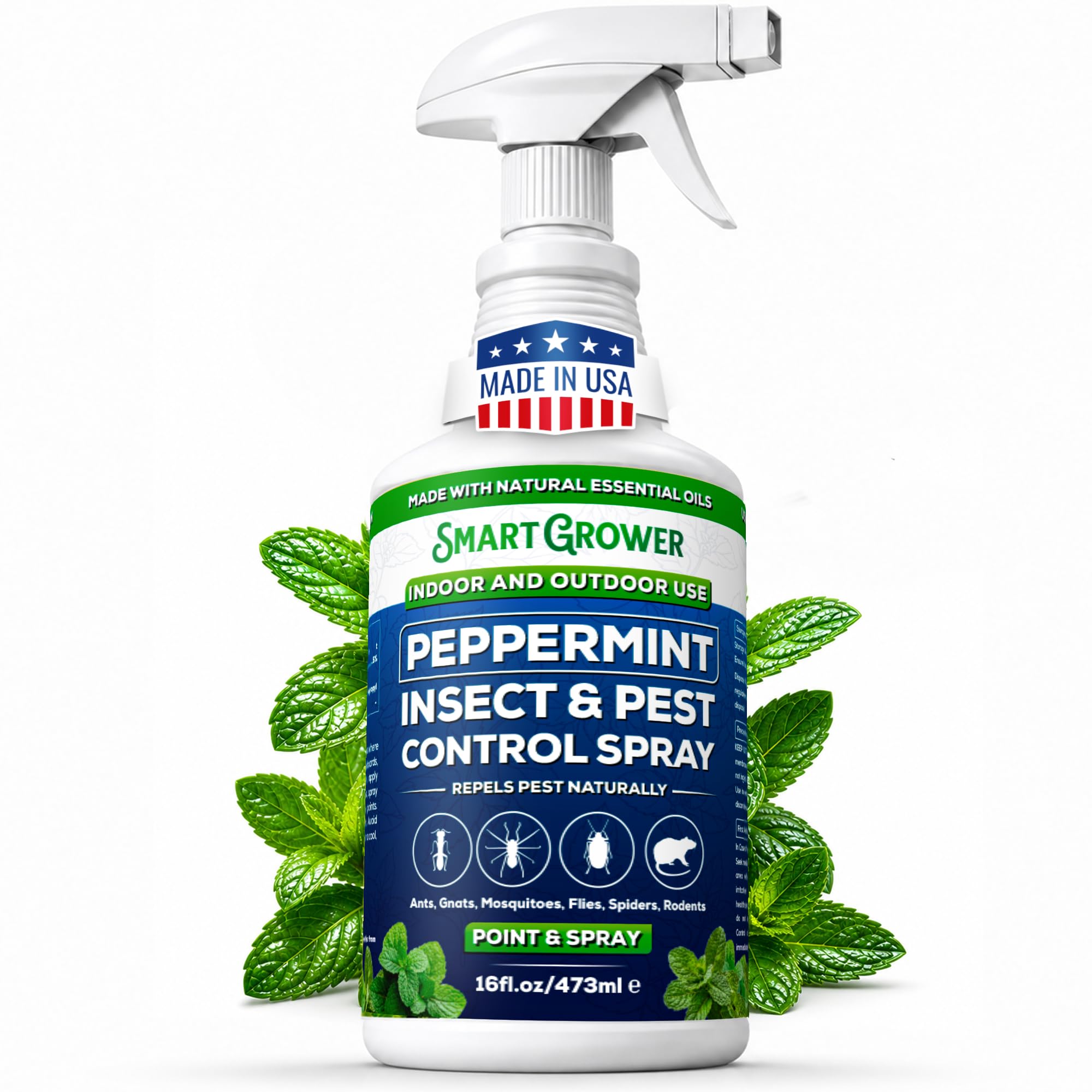
This ready-to-use peppermint oil spray is formulated as an extra-strength deterrent for spiders, ants, wasps, crickets, and even rodents. The thick peppermint aroma creates a sensory barrier that many insects and small mammals find overwhelming. Users have reported success using it in chicken coops to keep pests away from birds, as well as around dog areas where the scent causes pets to avoid treated zones.
The formula relies entirely on peppermint essential oil with no synthetic pesticides, so it’s safe to spray around kitchens, bedrooms, and gardens where children and dogs spend time. Several buyers noted that it significantly reduced the number of camel spiders and crickets entering their home after treating baseboards and door thresholds. For best results, users recommend letting the bottle rest before first use and securing the nozzle after cooling to avoid leaks.
Its weakness is persistence outdoors. Heavy rain or overhead irrigation washes the oil barrier away within a day or two, requiring reapplication more frequently than neem-based products. It also proved ineffective against river mosquitoes in one user’s test. For indoor perimeter defense and targeted outdoor spot treatments, this is a solid natural option, but it’s not a long-term solution for a wet vegetable garden.
What works
- Safe around pets and children when used as directed
- Strong peppermint scent deters spiders, ants, and rodents quickly
- Ready-to-use with no mixing or measuring required
What doesn’t
- Washes off easily in rain, needing frequent reapplication outdoors
- Not effective against mosquitoes or serious infestations
- Nozzle can leak if not secured properly after use
6. Mighty Mint Peppermint Oil Insect Repellent

Mighty Mint is one of the most popular natural pest sprays on the market, and its extra-concentrated peppermint oil formula has earned a loyal following among pet owners. The spray repels spiders, ants, roaches, wasps, stink bugs, and even lizards when applied around entry points and baseboards. Multiple users with dogs confirmed the spray is safe to use in high-traffic areas without causing distress to their pets.
The scent is noticeably stronger than many competitors—several reviewers described it as overwhelming for the first 20 to 30 minutes after application. However, that intensity contributes to its effectiveness. One buyer reported that roaches fled electronics after treatment, while another found it stopped wasps from nesting near door frames. For best results, users apply it weekly around perimeter zones and high-risk areas, treating it as a maintenance repellent rather than a cure for an active infestation.
Where this spray falls short is against established insect populations. Buyers tackling a serious ant or spider problem noted that the repellent effect was temporary and insufficient to eliminate large colonies. It works best as a preemptive barrier treatment. The spray also leaves a faint oil residue on surfaces, so it’s not ideal for polished countertops unless wiped after a few minutes.
What works
- Highly effective as a preemptive barrier against wasps, roaches, and stink bugs
- Pet-friendly formula with no harsh fumes
- Strong, long-lasting peppermint scent deters a wide variety of pests
What doesn’t
- Overpowering odor for the first half hour after spraying
- Ineffective as a standalone treatment for established infestations
- Can leave a light oily film on smooth surfaces
7. Garlic Barrier Liquid Garlic Concentrate

Garlic Barrier is a commercial-strength garlic extract concentrate designed for farms, orchards, and large garden operations. The 1-gallon bottle dilutes significantly—users spray it on fruit trees, row crops, ornamentals, and turf to deter aphids, beetles, mites, thrips, and even mammals like deer, rabbits, and squirrels. The OMRI listing makes it suitable for certified organic production.
The garlic odor is unmistakable and smells distinctly like garlic chicken according to one reviewer, but it dissipates after the spray dries and does not leave a taste on edible crops. The active compound in garlic, allicin, creates a sulfur barrier that most insects and mammals find repulsive. For mosquito control around outdoor living areas, several buyers reported a noticeable reduction in biting insects after spraying the perimeter of their yard.
The major considerations are the gallon size and the price per bottle, which is significantly higher than any other product here. That cost is justified if you have a large property—a single bottle can treat a substantial acreage across multiple applications. However, the spray needs reapplication after rain, and the capsaicin content can cause skin irritation if you handle the concentrate without gloves. For serious gardeners managing large plantings who want a single, broad-spectrum deterrent solution, Garlic Barrier is the most scalable choice.
What works
- Covers large areas economically per application when diluted
- Deters both insects and mammals including deer and rabbits
- OMRI Listed for use in organic agriculture
What doesn’t
- Very high upfront cost per bottle
- Strong garlic smell that some find unpleasant during application
- Must reapply after heavy rain; can cause skin irritation undiluted
Hardware & Specs Guide
Active Ingredient Concentration
The concentration of the active ingredient determines how much product you need per square foot and how often you must reapply. Peppermint oil formulations typically range from 2% to 10% and provide a strong sensory deterrent that lasts 3–7 days indoors but only 1–2 days in exposed outdoor conditions. Neem oil concentrate is usually 100% cold-pressed oil that you dilute to around 0.5%-2% azadirachtin for finished spray, giving longer residual activity—up to 7–10 days on foliage—because it disrupts insect feeding and molting rather than just smell. Spinosad degrades rapidly in sunlight (1–3 days of UV exposure) but holds up well in shaded or evening applications. Garlic extract (allicin) volatilizes quickly but the sulfur residue remains active for 3–5 days in dry conditions. Always check the label for the exact percentage of active ingredient; higher percentages mean fewer applications per season.
Coverage Volume Per Bottle
Coverage depends on whether you buy a ready-to-use spray or a concentrate. A 16 oz RTU bottle covers roughly 80–120 square feet of foliage in a light mist. To treat a 500-square-foot vegetable garden weekly, you would need six to eight RTU bottles per month, making concentrates dramatically more practical. The Botanical Tradesman 3.4 oz concentrate, for instance, yields 338 oz of finished spray—equivalent to about 21 RTU bottles. Garlic Barrier’s 1-gallon concentrate treats up to 2,000 square feet per gallon of diluted mix depending on crop type. For small raised beds or container gardens, an RTU spray is fine. For anything larger than 100 square feet, the cost-per-application math strongly favors a concentrate.
FAQ
Will peppermint oil spray burn my tomato or rose leaves?
How often should I reapply a bug deterrent spray in my vegetable garden?
Can I use neem oil and spinosad together to cover more pests?
Final Thoughts: The Verdict
For most gardeners, the bug deterrent for garden winner is the Botanical Tradesman Neem Oil because it combines pure, cold-pressed neem oil with a refillable sprayer system that delivers the lowest cost-per-application in this lineup. If you want a zero-mix, ready-to-use spray that handles both fungal disease and insects in one bottle, grab the Garden Safe Fungicide3. And for large-scale protection against both insects and deer, nothing beats the coverage of the Garlic Barrier Concentrate.