
Sandburs are the worst kind of lawn invader. Unlike dandelions or clover, these low-growing annual grasses deploy sharp, spiny seed heads that latch onto anything that moves, turning barefoot walks and pet playtime into a painful experience. Because sandburs thrive in thin, sandy soil and resist many common weed killers, standard pre-emergents fall short, forcing you to look for a specific chemistry that targets this pest without torching your turf.
I’m Rikta — the co-founder and writer behind Lawn Gear Lab. I’ve spent countless hours cross-referencing herbicide labels, studying application timing for summer annual weeds, and reading through hundreds of owner experiences to pinpoint the formulations that actually stop sandburs and spare your lawn.
Whether you need a pre-emergent barrier to stop germination or a post-emergent burner that kills mature burrs on contact, this guide to the best herbicide for sandburs cuts through the chemistry to give you the exact tools for a sandbur-free season.
How To Choose The Best Herbicide For Sandburs
Sandburs are a C4 summer annual grass that germinates when soil temperatures reach the 60–65 °F range, making early spring the critical window for pre-emergent applications. Choosing the wrong product — or the right product at the wrong time — means you’ll be pulling burrs out of your socks all summer. Here are the decisive factors.
Pre-Emergent vs. Post-Emergent: Timing Is Everything
A pre-emergent (like Prodiamine or Dithiopyr) creates a chemical barrier in the top layer of soil that stops sandbur seeds from sprouting. Apply it before soil temps hit 60 °F. Once the sandbur plant has emerged and developed burrs, you need a post-emergent (like MSMA or Quinclorac) that the plant absorbs through its leaves. Many professionals layer both — a pre-emergent in early spring followed by spot treatments as needed.
Turfgrass Tolerance: Match the Chemistry to Your Lawn
Not all herbicides play nice with every grass type. MSMA formulations are labeled for bermudagrass and zoysia but can severely damage cool-season grasses like fescue or bluegrass. Quinclorac is generally safe for most established warm-season and cool-season lawns but can temporarily discolor certain blends. Always cross-check the label’s turfgrass tolerance table before mixing.
Concentration and Adjuvant Use
Concentrated formulations (e.g., 41% glyphosate or 18.9% Quinclorac) require precise mixing ratios, and many perform best when paired with a non-ionic surfactant (NIS) or a methylated seed oil (MSO) adjuvant. The adjuvant helps the herbicide penetrate the waxy leaf cuticle of grasses, improving uptake speed and efficacy. Skipping the adjuvant often explains why a product “didn’t work.”
Quick Comparison
On smaller screens, swipe sideways to see the full table.
| Model | Category | Best For | Key Spec | Amazon |
|---|---|---|---|---|
| Target 6 Plus (MSMA 48.2%) | Post-Emergent | Warm‑season turf spot treatment | 48.3% MSMA | Amazon |
| Prodiamine 65 WDG | Pre-Emergent | Season-long prevention | 65% Prodiamine | Amazon |
| Quinclorac 1.5L Select | Post-Emergent | Crabgrass & sandbur control | 18.9% Quinclorac | Amazon |
| SpeedZone EW | Post-Emergent | Rapid knockdown in cool weather | 4‑active blend | Amazon |
| Select Source Triad TZ | Post-Emergent | Tough broadleaf & grass weeds | 4‑way formula | Amazon |
| Liquid Harvest Mesotrione | Pre & Post | Prevention on centipede/st. augustine | 8 oz Mesotrione | Amazon |
| Eraser 41% Glyphosate | Non‑Selective | Spot‑spray bare‑ground areas | 41% Glyphosate | Amazon |
In‑Depth Reviews
1. Target 6 Plus (MSMA 48.2%) Turf Herbicide

The standout feature of Target 6 Plus is its 48.3% MSMA concentration, one of the most effective post-emergent chemistries for controlling mature annual grasses like sandburs. Users report visible wilting within hours and complete death in under a week at the recommended rate of 2 oz per gallon. This is the product the pros turn to when sandburs have already gone to seed and need to be nuked fast.
Because MSMA is a restricted-use pesticide in some states, you should verify local regulations before ordering. On tolerant warm-season turf like bermudagrass and zoysia, it delivers exceptional selectivity, but overmixing or applying during drought stress can cause temporary browning. Many owners note that a single 2.5-gallon jug lasts multiple seasons with careful spot treatment.
For the homeowner with a bermuda or zoysia lawn infested by mature sandburs, this is the closest thing to a guarantee. Pair it with a surfactant for maximum leaf penetration, and stick to spot-spraying to conserve product and avoid overloading the turf.
What works
- Extremely fast knockdown of sandburs and dallisgrass
- Very high concentration means each batch goes a long way
- Proven performer on warm-season grasses when mixed correctly
What doesn’t
- Restricted in some states; check local laws before purchase
- Unforgiving if misapplied — can stress or discolor turf
- Not labeled for cool-season lawns like tall fescue
2. Prodiamine 65 WDG (Generic Barricade)
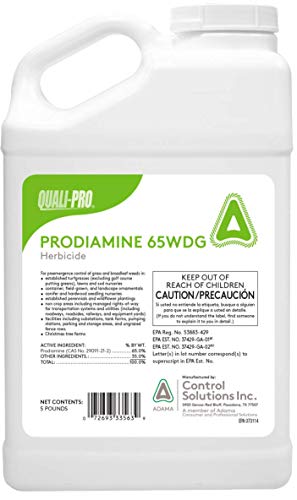
If sandburs haven’t emerged yet, Prodiamine 65 WDG is your first line of defense. This wettable dispersible granule delivers 65% Prodiamine — the same active ingredient as the name-brand Barricade — and creates a long-lasting soil barrier that stops sandbur seeds from germinating. A single spring application can provide 6 to 8 weeks of residual control when properly watered in with 0.5 inches of rain or irrigation.
Because it’s a pre-emergent, timing is critical: apply when soil temperatures reach 55–60 °F, before the sandbur seeds break dormancy. The granular form mixes easily in a sprayer, and users report weed-free lawns for months when combined with a split application in late spring. It’s also safe on most established turf types when applied at the labeled rate.
For large lawns, the 5-pound bag offers a lower cost per application compared to pre-mixed liquid products. Rotate with a different mode of action (e.g., Dithiopyr) every other year to prevent resistance build-up. This is the foundation of any serious sandbur prevention program.
What works
- Excellent residual control with proper watering-in
- Very economical for large properties
- Safe on a wide range of turfgrasses
What doesn’t
- Useless once sandburs have already emerged
- Requires accurate scale or measuring spoon for granule dosing
- Must be watered in within 7 days for activation
3. Primesource Quinclorac 1.5L Select
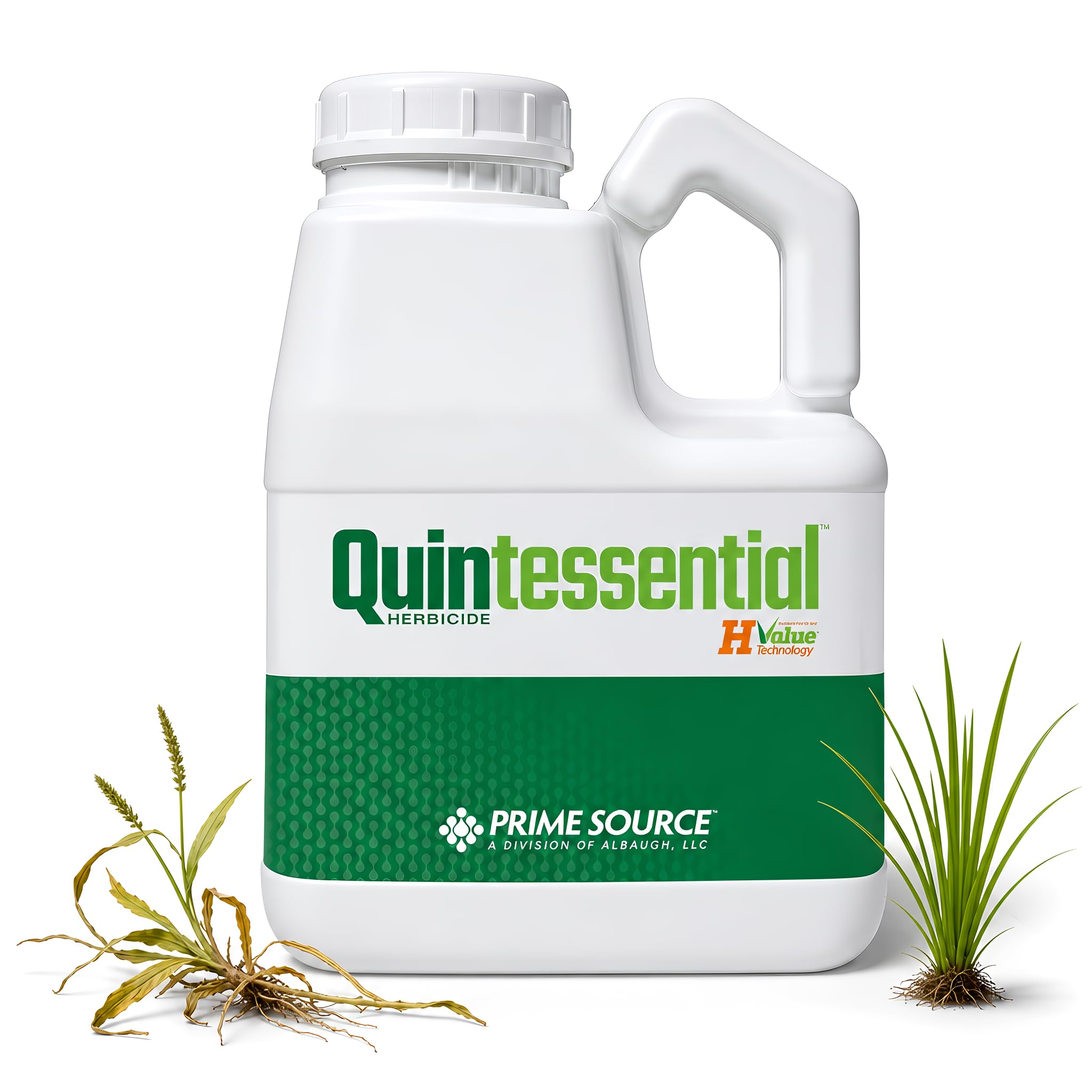
Quinclorac is a selective auxin-mimicking herbicide that targets certain grassy weeds like crabgrass and sandburs without harming most lawn grasses. The 1.5L Select formulation from Primesource contains 18.9% Quinclorac and is effective post-emergence when applied before sandburs produce mature seed heads. Users pair it with a methylated seed oil adjuvant for the best results, often seeing visible yellowing in 3–4 days.
This product shines as a middle-ground option for homeowners who want a selective grass herbicide that won’t incinerate their fescue or bluegrass lawn. It’s labeled for use on tall fescue, perennial ryegrass, Kentucky bluegrass, and warm-season types, making it one of the more flexible sandbur solutions available without a restricted-use license.
One caveat: Quinclorac requires thorough coverage and typically works best in temperatures above 65 °F. Skip applications when the lawn is drought-stressed or mowed too short. For the do-it-yourselfer with a mixed lawn, this is a reliable and relatively safe post-emergent option.
What works
- Selective control of sandburs and crabgrass in cool-season turf
- Fast absorption, especially with MSO surfactant
- Large 64-oz bottle covers extensive acreage
What doesn’t
- Less effective on mature sandburs with full burrs
- May require a second application for thick infestations
- Not as fast as MSMA on warm-season turf
4. SpeedZone EW Lawn Weed Killer

SpeedZone EW uses a four-way active blend — 2,4-D, Dicamba, Carfentrazone, and Mecoprop-p — engineered for rapid, cool-weather performance. Users report seeing weed curl and wilt within hours of application, even when temperatures hover in the 45–55 °F range. This makes it a valuable weapon for early-season sandbur spot treatments when other chemistries are too slow.
While SpeedZone is primarily formulated for broadleaf weeds, its aggressive mix also stresses emerging grass weeds like sandburs, especially if applied before the plant has fully tillered. It’s rainfast in as little as 3 hours, so you don’t have to stress about afternoon showers washing it off. The 20-ounce bottle treats roughly 10,000 square feet, making it cost-effective for average-sized yards.
Because of its strength, overspray onto desirable grass can cause temporary discoloration, particularly at high mixing rates. Use a hand-held pump sprayer with a fan tip for precision, and avoid application on heat-stressed turf. For homeowners who need speed and cool-weather flexibility, this is a strong mid-range pick.
What works
- Effect on weeds visible within hours, not days
- Performs well in cooler spring temperatures
- Fast rainfast time of 3 hours
What doesn’t
- May not fully kill established sandburs without reapplication
- Easily damages surrounding grass if over-applied
- Primarily a broadleaf formula; sandbur is a secondary target
5. Select Source Triad TZ 4-Way Herbicide

Triad TZ combines 2,4-D, Dicamba, Triclopyr, and Sulfentrazone in a single quart — a four-way formulation that handles both broadleaf and grass-type weeds with authority. Users specifically praise its ability to suppress yellow nutsedge and wild violet, two tough competitors that often coexist with sandburs in out-of-control lawns. The inclusion of Triclopyr adds a woody-plant-killing punch that many other herbicides lack.
Application at 2 oz per gallon yields rapid foliar uptake, with growth cessation beginning within hours and full death over 1–4 weeks. It’s labeled for use on residential lawns, golf courses, and sod farms, giving it a professional pedigree. While its primary label targets are broadleaf weeds, the combo chemistry disrupts nutrient translocation in young sandbur seedlings as well.
The strongest advantage of Triad TZ is its range — if your sandbur problem is mixed with ground ivy, clover, or thistle, this single bottle replaces three separate products. However, it’s not a sandbur-specific cure, and mature grass weeds may require a follow-up with Quinclorac or MSMA.
What works
- Highly effective on a broad spectrum of tough broadleaf weeds
- Excellent for mixed-infestation lawns
- Professional-grade formulation at a mid-range price
What doesn’t
- Not specifically formulated for grass weeds like sandburs
- Strong odor; full PPE recommended
- Slower activity on mature, established sandburs
6. Control Solutions Eraser 41% Glyphosate
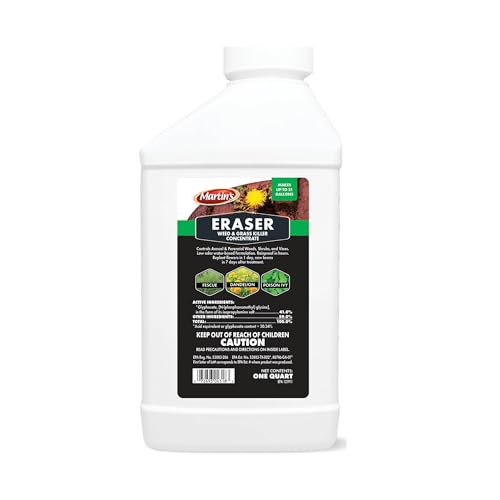
When sandburs have overtaken a patch of bare, sandy soil or a gravel driveway, a non-selective option like Eraser 41% Glyphosate is the most direct solution. This concentrate contains 41% glyphosate — the same active ingredient as Roundup — and water-based formula that dries clear with no residual soil activity. Users consistently report 100% kill of all vegetation within 7–14 days after a single application at 8 oz per gallon.
Because glyphosate kills everything it touches, you cannot use this product in the middle of a lawn without killing the turf. Instead, use it for spot-treating isolated sandbur patches in landscape beds, fence lines, or pathways. It’s rainproof in hours and works faster in warm, sunny conditions. The 32-ounce bottle makes roughly 4 gallons of spray solution, which goes a long way for spot work.
This is a budget-friendly option for homeowners dealing with sandburs in non-turf areas. If your sandbur problem is limited to the edges of the lawn or a neglected garden bed, this is the cheapest and most effective way to reset the area before reseeding.
What works
- Inexpensive and reliably kills sandburs and all vegetation
- No residual soil activity — safe to replant after 7 days
- Rainproof in hours, very weather-tolerant
What doesn’t
- Completely non-selective; kills any grass it touches
- Slower to show results than contact herbicides
- Not labeled for in-lawn use on established turf
7. Liquid Harvest Mesotrione 8 oz

Mesotrione is a unique chemistry that works both as a pre-emergent and a post-emergent for certain grassy weeds, and this concentrated 8-ounce bottle from Liquid Harvest is a direct generic alternative to the well-known Tenacity. It works by inhibiting carotenoid biosynthesis — essentially bleaching susceptible weeds white before they die. This mode of action is effective on crabgrass and barnyardgrass, two close relatives of sandburs in the warm-season annual grass family.
One of the biggest advantages of Mesotrione over Prodiamine is turf safety: it can be applied directly to St. Augustine grass (sod only) and centipede grass, two species that are notoriously sensitive to other pre-emergents. Users report excellent results on crabgrass with no damage to centipede turf at the recommended rate of 1 tsp per 2 gallons. The 8-ounce bottle treats approximately 8,000–10,000 square feet depending on concentration.
Because sandburs are not explicitly listed on the Mesotrione label, this is a secondary option for lawns where other herbicides are too risky. Apply it early, at the first sign of germination, and use a spray dye to track coverage. It requires activation with water within 10 days — without it, the barrier won’t form.
What works
- Safe on sensitive turf types like centipede and St. Augustine
- Works both pre and post-emergent for grassy weeds
- Highly concentrated; small bottle goes far
What doesn’t
- Sandburs not on the primary label; efficacy is anecdotal
- Requires rain or irrigation within 10 days to activate
- Bleached appearance of weeds can be slow (2–3 weeks)
Hardware & Specs Guide
Active Ingredient Matters Most
Sandburs are a grass, not a broadleaf weed. This means common broadleaf-specific formulas (2,4-D, Dicamba, Triclopyr) often won’t kill them. You need a chemistry that targets grass weeds: MSMA, Quinclorac, or Prodiamine for prevention. Glyphosate works too but kills everything. Always match the active ingredient to the weed’s classification — applying a broadleaf killer to sandburs wastes time and money.
Adjuvants Make the Difference
A non-ionic surfactant (NIS) or methylated seed oil (MSO) helps the herbicide stick to the sandbur’s waxy leaf surface and penetrate the cuticle. Many professional formulations are designed to be tank-mixed with an adjuvant at 0.25–1% of spray volume. Skipping this step is the #1 reason post-emergent applications fail on grass weeds. Look for products that explicitly recommend an adjuvant in the label instructions.
FAQ
What is the single best active ingredient for killing sandburs?
Can I use a broadleaf weed killer like 2,4-D on sandburs?
When is the best time to apply a pre-emergent for sandburs?
Will MSMA damage my St. Augustine or centipede grass?
Final Thoughts: The Verdict
For most gardeners battling an active sandbur infestation in a warm-season lawn, the best herbicide for sandburs winner is the Target 6 Plus (MSMA 48.2%) because it delivers fast, reliable knockdown of mature sandburs without harming bermuda or zoysia turf. If you need a flexible post-emergent safe for cool-season grasses, grab the Primesource Quinclorac 1.5L Select. And for pure prevention on a budget, nothing beats the Prodiamine 65 WDG applied before the season starts.