
Climbing roses send roots down deep and spread them wide — and a standard 12-inch patio pot simply won’t hold the anchorage they need. A container that’s too shallow forces the plant to struggle for moisture and stability, leaving the cane structure vulnerable to wind and the bloom count disappointingly low.
I’m Rikta — the co-founder and writer behind Lawn Gear Lab. I’ve spent dozens of hours comparing container volumes, material density ratings, drainage configurations, and UV-stabilization data to assemble this guide, drawing on aggregated owner feedback from hundreds of verified planters to separate the pots that genuinely support climbers from those that look the part but fail in the second season.
Every planter reviewed here meets the minimum root depth and structural integrity required for healthy vertical growth. After analyzing material specs, stability under load, and real-world durability reports, I’ve narrowed the field to the six planters that earn a spot as pots for climbing roses.
How To Choose The Best Pots For Climbing Roses
Climbing roses are not like compact shrub roses. They produce long canes that need a heavy, deeply anchored root system to support vertical growth. The wrong container starves the roots, destabilizes the plant, and shortens the lifespan of the rose. Here are the specific specs to lock in before you buy.
Depth and Volume — The Floor Plan Matters
A climbing rose needs a minimum 15 inches of vertical soil depth to allow the taproot and main lateral roots to spread without circling. The ideal volume for a single mature climber is 15 to 20 gallons. Anything smaller than 10 gallons will restrict root development and force you to water every day in peak summer. Look for a planter with a deep, straight-sided profile rather than a wide, shallow bowl — wide bowls look generous but rob the roots of the downward space they crave.
Material Stability and Insulation
Thin plastic pots flex under the weight of wet soil and can crack in freeze-thaw cycles. Resin composites and polyethylene offer a better balance of lightweight portability and insulation. Wood planters breathe well but require annual sealing to prevent rot. Metal planters provide the heaviest, most stable base, but they can heat up rapidly in direct sun, raising soil temperature above the rose’s comfort zone — look for galvanized steel with a powder-coated finish to reflect some heat. In cold climates, thicker walls (at least 3/16 inch) protect roots from temperature swings.
The Drainage Equation
Climbing roses dislike wet feet, but they also need consistent moisture to push those long canes. A pot with only a single central drain hole can become waterlogged at the edges. The best designs feature multiple small drainage holes distributed across the base or an integrated drainage tray with a raised floor. Avoid pots that rely solely on a bottom plug — plugs can clog or be forgotten, leading to fatal root rot during a rainy week. You want drainage that removes excess water on its own while still allowing the grower to control flow via removable plugs for drier periods.
Weight and Wind Resistance
A climbing rose with a 6-foot trellis acts like a sail in a moderate breeze. The pot must be heavy enough, or designed with enough width at the base, to resist tipping. An empty lightweight plastic pot will blow over when the rose is fully grown. The safest approach is a planter that weighs at least 25 pounds empty in a material like thick resin or steel, or a design with a broad, low center of gravity. Adding a layer of pea gravel at the bottom before soil further increases stability without sacrificing drainage.
Quick Comparison
On smaller screens, swipe sideways to see the full table.
| Model | Category | Best For | Key Spec | Amazon |
|---|---|---|---|---|
| Growscape Whiskey Barrel Planter | Mid-Range Resin | Single climber in a classic barrel shape | 20.5″D x 12.5″H — 15+ gallon capacity | Amazon |
| Flowyypo 4-Pack Whiskey Barrel Planter | Value Plastic | Multiple climbers or budget-friendly setup | 16″ outer diameter x 10.43″H — 5.73 gal each | Amazon |
| Tusco Products RR20BK Planter | Premium Polyethylene | Long-term durability in harsh weather | 20″D x 16″H — 100% high-grade polyethylene | Amazon |
| Heyzier Tall Resin Planter 2-Pack | Premium Resin Composite | Deep root space for tall climbers | 27.5″H x 13″W — resin-stone composite | Amazon |
| AMERLIFE Raised Bed with Trellis | Wood Planter Box | Integrated trellis support for climbing roses | 15.7″ deep fir wood with privacy slats | Amazon |
| GJWCVL Steel Planter Box | Heavy-Duty Metal | Maximum wind resistance and modern aesthetics | 26″ cube — galvanized steel with powder coat | Amazon |
In‑Depth Reviews
1. Classic Home & Garden by Growscape Whiskey Barrel Planter

The Growscape Whiskey Barrel hits the sweet spot for a single climbing rose. At 20.5 inches in diameter and 12.5 inches deep, it offers roughly 15 gallons of root volume — enough to support a mature climber without being too wide for a patio corner. The resin construction mimics aged oak convincingly, so it blends into traditional garden settings while remaining waterproof and crack-resistant. Multiple owners report fitting four canna rhizomes comfortably, which translates well to the root mass of a young climbing rose.
Weather resistance is the headline here. The resin formulation includes UV stabilizers that prevent fading and brittleness, and the material doesn’t become brittle in winter freezes the way thin plastic does. The drainage holes are generously sized and well-placed across the base, reducing the risk of water pooling at the edges.
Owner feedback consistently praises the visual charm and sturdy feel, though a few noted that the barrel arrived smaller than expected based on product photos. The resin is lightweight when empty, but once filled with moist soil, the planter becomes heavy enough to stay put in moderate winds. For a mid-range price point, this is the most balanced choice for a single climbing rose that needs depth, durability, and classic aesthetics.
What works
- Excellent UV and weather resistance for long outdoor life
- Realistic wood finish that matures well in garden settings
- Large drainage holes prevent waterlogging effectively
- Good depth for climber root systems
What doesn’t
- Tapered shape reduces usable soil volume near the bottom
- Heavy when filled; a wheeled base is recommended
2. Flowyypo 4-Pack Large Whiskey Barrel Planters
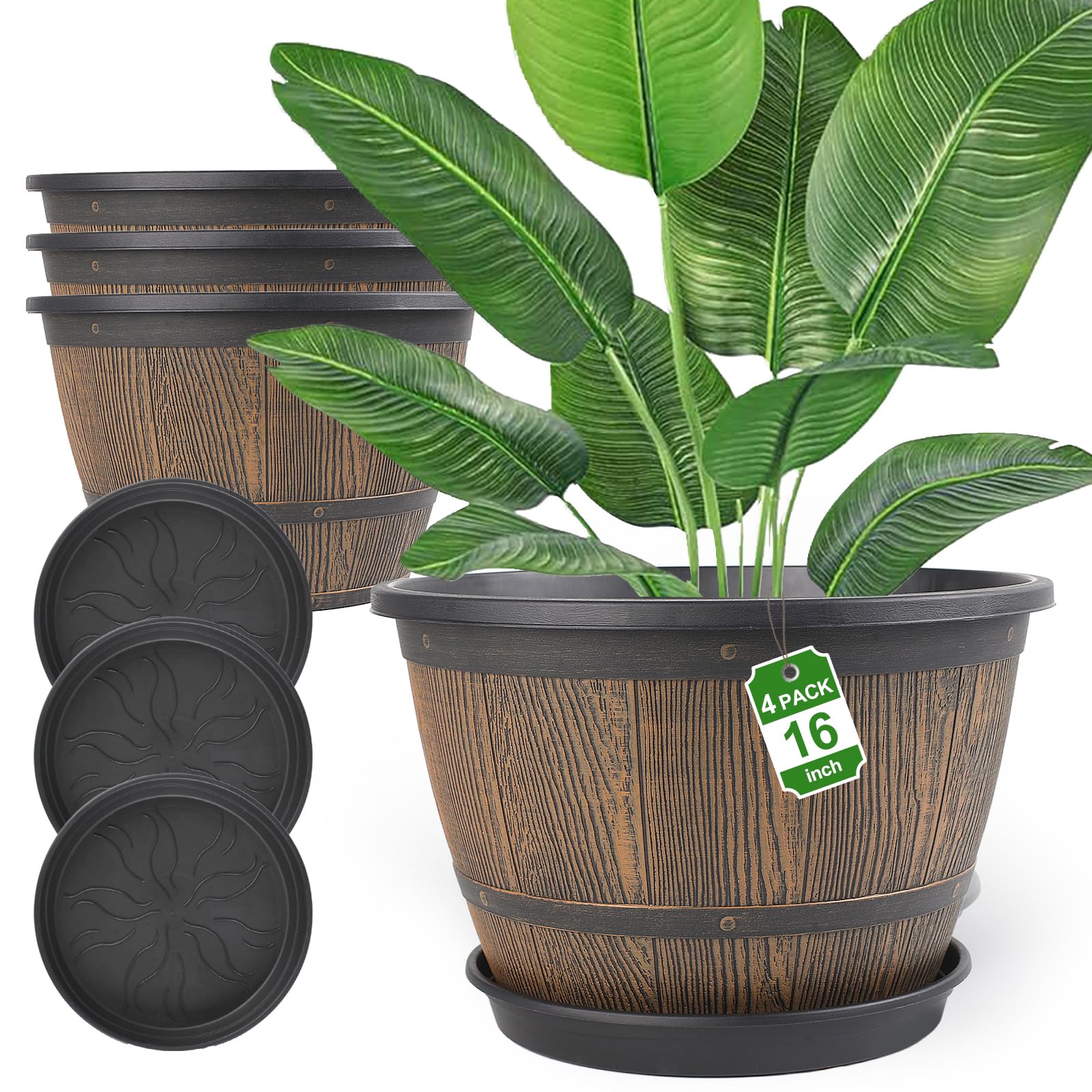
This four-pack from Flowyypo is a compelling option if you’re staging multiple climbing roses or want to pair climbers with companion plants. Each pot measures 16 inches at the outer rim with a 14.92-inch inner diameter and 10.43 inches of depth, providing roughly 5.73 gallons of capacity. That’s sufficient for a young climber in its first two years, though a fully mature rose will eventually need to be root-pruned or transplanted to a larger single pot. The imitation whiskey barrel design uses horizontal bands and a rustic finish that looks more convincing than most plastic barrels at this price tier.
The plastic construction is lightweight but noticeably thicker than the cheapest nursery pots. UV resistance is built into the material, and the rolled rim adds rigidity that prevents cracking when you lift or move the pot. Each planter includes a removable drip tray, which is a practical addition for patio use where runoff could stain concrete. The multiple drainage holes across the bottom are well-distributed, though the holes are on the smaller side — adequate for plastic but might benefit from one or two extra drainage points for heavy-feeding climbers.
Buyer sentiment is overwhelmingly positive, with many noting the sturdy feel and attractive price for a set of four. The 5.73-gallon volume per pot is the main limitation for climbing roses — this works best for compact climbers or as a temporary home while the rose establishes. If you need four pots for a climber-focused layout, this set delivers consistency and good looks, but plan on upgrading individual roses to deeper containers once they hit the 3-foot cane length.
What works
- Great value for a matching four-pot set
- UV-resistant plastic resists fading and cracking
- Includes drip trays for clean patio use
- Lightweight enough to rearrange easily
What doesn’t
- 5.73-gallon capacity is tight for a mature climber
- Shallow depth limits long-term root development
3. Tusco Products RR20BK Classic Rolled Rim Garden Planter

Tusco’s RR20BK is exactly what you reach for when you want a planter that outlasts the rose itself. Molded from 100% high-grade polyethylene in the United States, this pot is built to withstand years of freeze-thaw cycles, direct sun exposure, and the physical stress of a fully loaded climbing rose. At 20 inches in diameter and 16 inches deep, it offers substantially more vertical root space than comparably sized resin barrels — the extra 3.5 inches of depth makes a real difference for climbers that push roots downward aggressively.
The rolled rim is not just decorative — it adds structural rigidity that prevents the pot from flexing or cracking when you lift it or when expanding wet soil pushes against the walls. The material is heavy enough to feel substantial empty, and once filled with 15 to 20 gallons of soil, the planter becomes a stable platform that resists wind tipping. One design detail worth noting: the pot comes without pre-drilled drainage holes, but the manufacturer includes drill guides molded into the base so you can place holes exactly where your rose needs them. This gives you full control over drainage placement — a rare and useful feature for serious growers.
Owner feedback emphasizes the pot’s surprising light weight relative to its size and the fact that it does not look like plastic from a few feet away. The 10-year manufacturer warranty provides peace of mind that is unmatched in this category. A handful of users noted that the interior rim has a sharp edge that can trap debris, and some wished for larger drainage holes than the drill guides accommodate. For a climbing rose that you plan to keep in the same container for five or more years, this is the most durable option available at this price point.
What works
- 10-year warranty reflects exceptional build confidence
- 16-inch depth is ideal for climber root systems
- Rolled rim prevents cracking and adds strength
- Customizable drainage with molded drill guides
What doesn’t
- No pre-drilled holes; requires drilling before planting
- Interior rim can trap organic debris
4. Heyzier Tall Planters for Outdoor Plants, 2-Pack

The Heyzier tall planters address the single most common complaint about standard pots for climbing roses — insufficient vertical root space. Standing 27.5 inches tall with a 13-inch square footprint, these resin-stone composite pots provide a deep column of soil that allows climbing rose roots to grow straight down without circling. The removable insert tray is a thoughtful feature: you can fill the entire column with soil for maximum root depth, or use the tray to reduce soil volume while still maintaining a tall visual profile for the plant.
The resin-stone composite material is noticeably denser than pure plastic or resin. Each pot weighs 35.5 pounds empty, giving it a low center of gravity that resists tipping even when the climbing rose is in full leaf and catching wind. The all-weather formulation is resistant to scratches, cracks, and UV fading — the polished surface can be wiped clean, and the black color holds well against sun bleaching. Drainage holes come with removable rubber plugs, allowing you to seal the pot during winter dormancy or open it for free drainage during active growth.
Buyer feedback highlights the sturdy construction and the fact that the pots are ready to use straight out of the box — no assembly required. The tall, narrow profile is ideal for climbers, but the 13-inch width means the root ball is somewhat restricted laterally. This is a tradeoff that works well if you train the rose to grow vertically rather than sending out wide basal branches. Some users mentioned that the tall height makes the pot visually prominent, so be prepared for the planter to become a focal point in your garden. For growers who prioritize root depth over spread, this is an excellent choice.
What works
- 27.5-inch depth provides exceptional root column space
- Resin-stone composite is dense and wind-resistant
- Removable insert tray offers flexible soil control
- Rubber drain plugs allow seasonal water management
What doesn’t
- Narrow 13-inch width limits lateral root spread
- Heavy when filled; repositioning requires planning
5. AMERLIFE Raised Garden Bed with Trellis
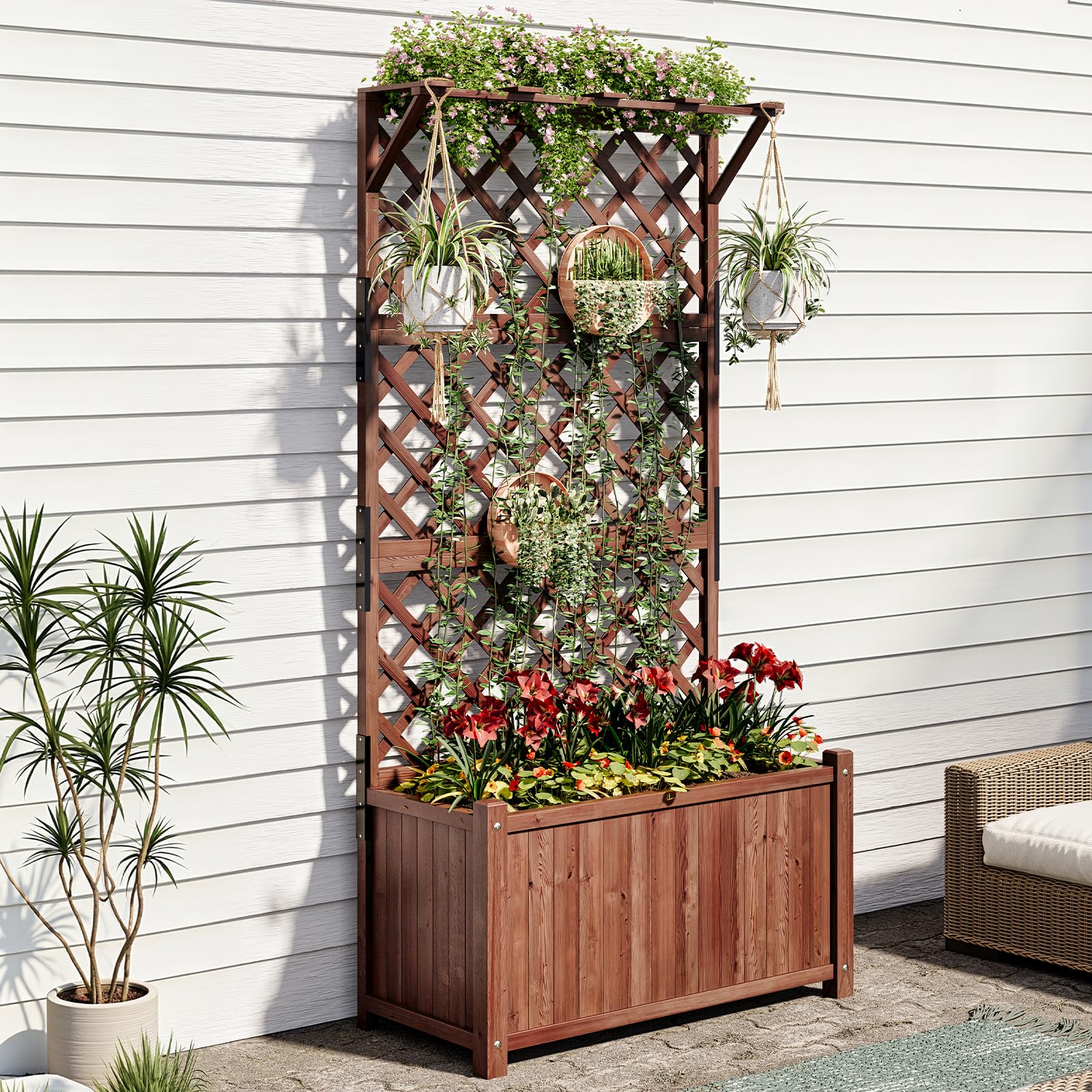
The AMERLIFE raised bed combines a planter box with a privacy-screen trellis in one integrated unit — a design that eliminates the hassle of installing a separate trellis into a pot. The planter box measures 15.7 inches deep, which meets the minimum depth requirement for climbing roses, and the trellis slats provide a sturdy framework for training canes upward. The fir wood construction gives it a natural look that blends into garden settings, and the drainage holes in the floor prevent water from pooling around the roots.
Assembly is straightforward, with most owners reporting completion in 20 to 30 minutes using a drill. The planter is designed to sit directly on the ground or a hard surface, and the wood is reasonably weather-resistant — though applying a waterproof sealer before planting will extend the life of the wood significantly, especially in humid climates. The 15.7-inch depth is adequate for a climbing rose, but the box is relatively wide, so the soil volume is generous even if the vertical depth is not extreme. The trellis itself is rated for moderate weight; heavy climbers like ‘Don Juan’ may need additional reinforcement at the top of the slats.
Owners consistently praise the ease of assembly and the aesthetics, with several mentioning that the trellis effectively screens unsightly views while supporting the plants. A recurring note is that the planter can tip in high winds when the trellis is fully loaded with foliage — adding a few heavy stones or a bag of gravel at the base solves this issue. For anyone who wants a turnkey solution — planter and support structure in one — without drilling into walls or buying separate trellis hardware, this is a practical and attractive option.
What works
- Integrated trellis eliminates separate support hardware
- 15.7-inch depth is sufficient for climber root systems
- Quick assembly with no nails or ground fixing needed
- Natural wood aesthetics suit traditional gardens
What doesn’t
- Trellis can tip in wind unless base is weighed down
- Wood requires annual sealing for longevity
6. GJWCVL Metal Planter Box, 26-Inch Square

The GJWCVL steel planter is the heavyweight champion of this list — a 26-inch cube made from galvanized steel with a matte black powder-coated finish. When filled with soil, this planter easily exceeds 100 pounds, making it virtually impossible to tip over even in strong gusts that would knock over lighter pots.
The galvanized steel construction resists corrosion, and the powder coat adds a second layer of protection against rust and UV degradation. The square shape provides even root distribution without the root-circling issues that can occur in round pots, and the 26-inch depth gives climbing roses unrestricted downward growth. Drainage holes at the bottom are adequately sized for excess water to escape, though the metal bottom can get hot in direct afternoon sun — lining the interior with landscape fabric or a thin layer of insulation helps moderate soil temperature. Assembly requires an Allen wrench (included) and takes about 20 minutes with two people for easiest alignment.
Owner feedback is polarized but instructive: most buyers rave about the stunning finish and heavy-duty feel, while a small number report frustration with the Allen-screw assembly and occasional bent panels during shipping. The 26-inch height is excellent for climbing roses, but the planter’s visual scale dominates a patio or balcony — it is a statement piece, not a subtle accent. For gardeners who prioritize stability above all else and want a modern industrial look that will hold a mature climber for a decade, this steel box is unmatched.
What works
- Extreme weight and wide base make it windproof
- Galvanized steel with powder coat resists rust
- 26-inch depth provides unlimited root space
- Modern industrial finish suits contemporary landscapes
What doesn’t
- Assembly requires tools and two people for best fit
- Metal can heat up; soil temperature management is needed
Hardware & Specs Guide
Material Thickness and Insulation
The wall thickness of a planter directly affects how well it insulates roots from temperature swings. Thin plastic pots (under 1/8 inch) allow soil to heat up and cool down rapidly, stressing the root system. The polyethylene Tusco RR20BK and the resin-stone Heyzier both offer wall thickness that moderates soil temperature. Wood planters like the AMERLIFE provide natural insulation but can rot if not sealed. Metal planters conduct heat fastest — plan to insulate the interior or place the pot in partial shade if using the GJWCVL steel box in a hot climate.
Drainage Hole Configuration
Not all drainage systems are equal. The Growscape barrel uses large holes distributed across the base, which is ideal for heavy rain. The Flowyypo set uses smaller holes with drip trays — good for controlled watering but prone to clogging with fine soil. The Tusco planter gives you the freedom to drill holes exactly where you want them using molded guides. The Heyzier’s removable rubber plugs are the most versatile, letting you switch between free drainage and water retention depending on the season. For climbing roses, a minimum of four 1/2-inch drainage holes is recommended.
FAQ
How deep does a pot need to be for a climbing rose?
Can I grow a climbing rose in a 10-gallon plastic pot?
What is the best material for outdoor pots for climbing roses?
How many drainage holes does a climber rose pot need?
Final Thoughts: The Verdict
For most gardeners, the pots for climbing roses winner is the Classic Home & Garden Whiskey Barrel Planter because it combines the 20.5-inch diameter needed for root spread with weather-resistant resin construction and a classic look that suits any garden. If you want maximum root depth for a single climber, grab the Heyzier Tall Planter 2-Pack. And for the heaviest, most wind-resistant container that will never tip, nothing beats the GJWCVL Steel Planter Box.