
A mulch rake isn’t just a wider version of a leaf rake. The core demand of spreading, leveling, and breaking up bark or soil aggregates requires rigid, dense tines and a head width that balances coverage with control. A standard leaf rake’s flexible tines will bounce over heavy wet mulch instead of distributing it, leaving you frustrated and your beds uneven.
I’m Rikta — the co-founder and writer behind Lawn Gear Lab. I have spent hundreds of hours combing through technical spec sheets, cross-referencing steel gauges, handle lengths, and tine configurations, and analyzing verified owner reports to determine which tools deliver genuine daily workhorse performance under real yard conditions.
This guide breaks down the core metrics that separate an effective mulch rake from a garden tool that will spend most of its life leaning against a wall. Whether you are maintaining a single flower bed or managing a larger landscape, you need a tool with the right balance of rigidity, head size, and handle leverage. Here is our breakdown of the best mulch rake options on the market today.
How To Choose The Best Mulch Rake
Selecting a mulch rake is not about grabbing the widest or cheapest option. You need to match the tool’s structural rigidity and geometry to the specific tasks you perform. A bow rake with thick steel tines is ideal for breaking up and spreading heavy bark mulch, while a leveling rake excels at smoothing topsoil or sand mixes. Focus on three core attributes: head construction, handle dynamics, and material integrity.
Rigid Tines vs. Flexible Tines
A common mistake is using a leaf rake (flexible, fan-shaped tines) for mulch. Leaf rakes are designed to float over grass without damaging it. Mulch is heavier and denser. You need a rake with rigid steel tines, typically a bow rake or a specialized leveling rake, that can bite into a pile of mulch and spread it evenly without the tines folding backward. Look for tines made from 10 to 14-gauge steel; thicker gauge means less flex and longer life.
Head Width and Coverage
Head width determines how much material you move per pass. A 16-inch to 20-inch head is a versatile sweet spot for general mulching and soil work, offering a good balance between coverage and maneuverability in beds. A 24-inch or wider head, like the Truper TruPro, is excellent for open areas but can be clumsy in tight garden beds. A narrow 8-inch head, such as the A.M. Leonard Shrub Rake, is purpose-built for clearing debris between plants without damaging them.
Handle Material and Length
The handle is your lever. For heavy spreading and breaking up soil, a fiberglass handle is superior to wood because it won’t splinter, warp, or rot over time, and it absorbs vibration better. Wood handles, while traditional, require more care. Handle length directly affects your posture. A 54-inch to 58-inch handle is standard for average-height users. Taller individuals or those covering large areas should prioritize a 66-inch to 72-inch handle to avoid stooping and reduce lower back fatigue.
Quick Comparison
On smaller screens, swipe sideways to see the full table.
| Model | Category | Best For | Key Spec | Amazon |
|---|---|---|---|---|
| Bully Tools 24-Tine Thatching Rake | Premium Leaf/Mulch | Heavy dethatching & mulch spreading | 24 tines, 23.5″ wide head | Amazon |
| Bully Tools 16-Inch Bow Rake | Bow Rake | Breaking soil & spreading heavy mulch | 10-gauge steel, 16″ head | Amazon |
| Truper TruPro 24-Inch Leaf Rake | Steel Leaf Rake | Large area leaf & thatch cleanup | 24″ head, 54″ wood handle | Amazon |
| A.M. Leonard Narrow Shrub Rake | Specialty Shrub | Tight spaces around shrubs | 8″ wide head, 54″ handle | Amazon |
| Dremmt Lawn Leveling Rake | Leveling Rake | Smoothing soil & sand for seeding | 30×10″ plate, 72″ handle | Amazon |
| Walensee Thatch Rake | Adjustable Thatch | Dethatching moderate lawns | Adjustable 40-70″ handle | Amazon |
| True Temper Steel Tine Leaf Rake | Standard Leaf Rake | Light mulch & leaf gathering | 22 steel tines, 21.6″ head | Amazon |
In‑Depth Reviews
1. Bully Tools 24-Tine Thatching Garden Rake

This Bully Tools rake is a powerhouse built from 100% USA-made tempered steel. The 24-tine head measures 23.5 inches wide and is designed to sweep through grass to lift thatch without tearing out healthy turf, but its rigidity and head size also make it an exceptional tool for spreading and breaking up heavy mulch piles. The professionally overwelded head-to-handle connection eliminates the weak point that causes most rakes to fail after a season of hard use.
The 68-inch fiberglass handle is a standout feature for anyone with a larger frame or covering significant ground. It allows a mostly upright posture, which dramatically reduces lower back strain during extended sessions. The triple-wall fiberglass construction resists splintering, and the rubber grip keeps hand fatigue in check even when pulling through dense material. It is a bit heavy at nearly four pounds, but that weight contributes to its digging power.
Owner feedback consistently highlights its commercial-grade durability. Wildland firefighters have used it for heavy debris removal, and homeowners report clearing dozens of trash can loads without any bending or loosening of tines. If you need one rake that can handle heavy dethatching, deep mulch spreading, and robust year-round yard cleanup, this is the most reliable choice on the list.
What works
- Overwelded head connection prevents failure under heavy loads.
- Long 68-inch handle reduces back strain for taller users.
- Tempered steel tines resist bending even on compacted ground.
What doesn’t
- Heavier weight (3.85 lbs) may be tiring for smaller users.
- Some users wish the handle were 6 to 12 inches longer.
2. Bully Tools Bow Rake 16-Inch Tines
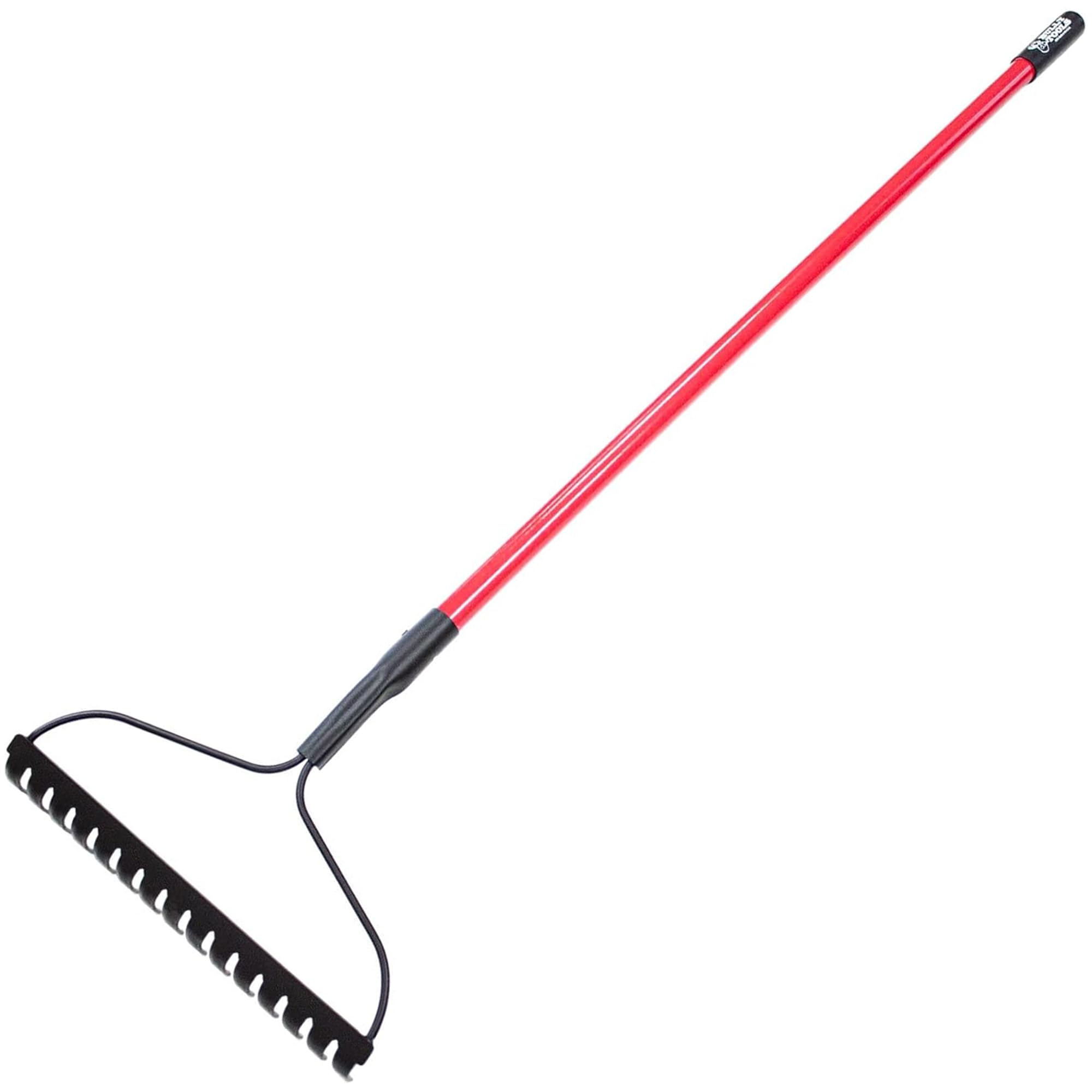
This is the definitive bow rake for gardeners who need to move heavy material. The head is constructed from true 10-gauge American steel, which is significantly thicker and more durable than the 14-gauge or thinner steel found on most budget bow rakes. The robotically overwelded connections at the tine base ensure they won’t snap off when you lever a large rock or break up a clump of compacted clay soil.
The 16-inch head width is the Goldilocks size for mulching tasks. It is wide enough to move substantial amounts of bark or gravel in a single pull, yet narrow enough to maneuver inside raised beds and around perennials without damaging plants. The fiberglass handle is coated in a polyester veil to prevent splintering, a critical advantage over wood handles that degrade over seasons of wet and dry storage.
The reinforced ridges and ribbed teeth on the head add structural rigidity that makes breaking up hard-packed soil feel effortless. Owner reviews consistently describe it as “robust” and “worth the cost,” with many replacing cheaper rakes that bent within months. The primary trade-off is weight — this is not a featherlight tool, but that mass is what gives it its digging and spreading power.
What works
- 10-gauge steel head is significantly thicker than most competitors.
- Fiberglass handle resists splintering and weather damage.
- Ribbed tines provide superior digging force for soil.
What doesn’t
- Heavy construction can be fatiguing during long sessions.
- Not ideal for delicate leaf raking on lawn grass.
3. Truper TruPro Steel Leaf Rake, 24-Inch Head

The Truper TruPro is a traditional-style leaf rake that punches well above its price point, largely due to its oversized 24-inch head. This width allows you to cover a massive footprint with each pass, making it a fast tool for clearing large piles of fall leaves or spreading a thin layer of light mulch over a wide area. The steel tines are bent in a specific arc that grabs debris effectively, even on uneven ground.
The handle is a 54-inch wood shaft that is 20% thicker than standard, according to Truper. This adds leverage and durability, but the wood does require you to store it indoors and keep it dry to prevent warping. The bolt-thru construction with a nylon anti-vibration nut ensures the head stays securely attached during vigorous use.
Multiple owner reviews call this the best rake they have ever owned, specifically praising its ability to pull sticks and dense material in a single pass where other rakes bounce over. It is strong enough to dethatch a lawn when used aggressively. The main caveat is that the wood handle can arrive with a slightly rough finish, and it is not suited for rock-heavy soil moving like a bow rake.
What works
- Very wide 24-inch head covers ground quickly.
- Durable steel tines pull dense debris in one pass.
- Thick wood handle provides solid leverage.
What doesn’t
- Wood handle needs dry storage to prevent degradation.
- Not designed for breaking up compacted soil.
4. A.M. Leonard Narrow Shrub Rake, 8 Inches Wide

When you need to extract winter debris, dead leaves, and old mulch from underneath dense shrubs and ornamental grasses, a standard wide rake is useless. The A.M. Leonard Narrow Shrub Rake solves this with its 8-inch wide head, which slides into tight spots that are otherwise only accessible by hand. The tines are reinforced with an additional spring wire, making them stiff enough to pull out matted debris without bending.
The handle is a 54-inch durable hardwood that provides a solid, fatigue-reducing grip. The through-bolt connection maximizes the head-to-handle bond, preventing the head from twisting off when you apply leverage against a stubborn root or compacted pile of spruce needles. The bright orange head is easy to spot if you set it down in the garden.
Owner feedback is overwhelmingly positive, with many users noting they have replaced cheap plastic rakes that broke every season. The only recurring issue is that the wood handle can occasionally split near the head after hard use. However, A.M. Leonard’s customer service is highly rated for quickly sending replacement handles when this occurs. For specialized bed work, this rake is unmatched in its niche.
What works
- Narrow head fits precisely between shrubs and plants.
- Reinforced tines do not bend under heavy debris.
- Bright color makes it easy to find in the garden.
What doesn’t
- Wood handle can split under extreme stress.
- Too narrow for open lawn area mulching.
5. Dremmt Lawn Leveling Rake 30×10 Inch

This tool is a specialized implement for an entirely different task than a standard rake: precision leveling of soil, sand, and fine compost mixes. The 30-inch by 10-inch head is a flat, 2mm thick stainless steel plate that glides over the ground, cutting down high spots and filling in low hollows simultaneously. The extended 72-inch handle allows you to stand fully upright, eliminating the back strain that comes with standard leveling methods.
The ergonomic curve of the handle translates your push-pull force into smooth ground contact. The weight distribution is engineered to prevent the head from flipping over when you hit a clod, a common frustration with cheaper leveling rakes. The included gloves are a practical bonus, but the real value is in the stability of the stainless steel construction, which resists rust and bending.
Owners report it transforms bumpy lawns into smooth, carpet-like surfaces when used with topdressing mixes. It is not a tool for general mulching or leaf collection, but for soil preparation, seeding, and sod repair, it is exceptionally efficient. The main downside is its weight — at over 10 pounds, it is the heaviest tool here, but that mass is what gives it its leveling authority.
What works
- Long handle allows upright posture, reducing back pain.
- Stainless steel plate resists rust and bending.
- Works in both directions for efficient material spreading.
What doesn’t
- Heavy weight (over 10 lbs) can be tiring.
- Not suitable for leaf collection or general raking.
6. Walensee Thatch Rake for Lawn, 15-Inch

The Walensee Thatch Rake is a strong mid-tier option for homeowners who want a dual-function tool that can dethatch and cultivate. The 15-inch dual-sided head features 19 curved steel tines that are hardened manganese steel, providing excellent resistance to bending. One side is optimized for pulling thatch, while the reverse side is designed for loosening topsoil.
The key differentiator is the sectional stainless steel handle with three adjustable lengths: 40, 55, and 70 inches. This allows multiple users of different heights to share the tool comfortably, and the longer setting is ideal for reducing back fatigue during extended thatching sessions. The twist-lock assembly is quick and the cushioned non-slip grip is comfortable.
Owners note it works effectively on tough St. Augustine and Bermuda grasses, though some wish the head were 20-24 inches wide for faster coverage. The handle sections can occasionally loosen during aggressive work, but tightening the nylock nuts resolves this. For the price, it offers exceptional versatility for thatch removal and soil prep.
What works
- Adjustable handle accommodates different user heights.
- Dual-sided head for dethatching and cultivation.
- Manganese steel tines are durable and resist bending.
What doesn’t
- 15-inch head is narrow for large lawn areas.
- Handle sections can loosen during heavy use.
7. True Temper Steel Tine Leaf Rake

True Temper’s 22-tine steel rake is a classic design that delivers reliable performance for light to moderate mulching and leaf collection. The 21.6-inch head is a solid width for general yard work, and the steel tines are integrated into a flexible coil spring mechanism that smooths out the raking action, reducing the jarring impact when you hit a buried root or rock. The multi-material handle combines a hardwood core with a steel reinforcement and a 6-inch comfort grip.
Assembly is straightforward, requiring just a few minutes with the included hardware. The 15-year manufacturer warranty on missing or defective parts is a strong indicator of confidence in the build quality. The rake is noticeably lightweight at just 2 pounds, making it a low-fatigue option for older gardeners or those with limited upper body strength.
Owner reviews highlight its surprising efficiency, with one user reporting they raked their entire lawn in 1-2 hours, filling 7 bags, a task that previously took two people. It is not built for heavy-duty dethatching or breaking up compacted soil, but for gathering loose leaves and spreading a thin layer of fresh mulch, it is a fantastic entry-level tool.
What works
- Lightweight design reduces fatigue during long sessions.
- Flexible coil spring smooths raking action.
- Backed by a 15-year manufacturer warranty.
What doesn’t
- Not built for heavy dethatching or soil breaking.
- Handle assembly can be slightly fiddly.
Hardware & Specs Guide
Steel Gauge – The Backbone of a Bow Rake
The thickness of the steel in a bow rake head is measured in gauge. The lower the gauge number, the thicker and stronger the steel. A 10-gauge head (like the Bully Tools Bow Rake) is approximately 0.135 inches thick, while a standard 14-gauge is about 0.075 inches. Thicker gauge means the rake can handle heavy gravel, rocky soil, and roots without the tines bending or snapping. For anything beyond light topdressing, seek a 12-gauge or lower head.
Head Width and Tine Count
Head width directly impacts both speed and precision. A 16-inch to 20-inch head is a versatile all-rounder for mulch and soil. A 24-inch head maximizes coverage for large open beds. A narrow 8-inch head is strictly for tight spaces. Tine count matters less than tine rigidity. More tines (22 or 24) on a fan rake can grab more leaves, but fewer, thicker tines (16 on a bow rake) are required for moving heavy aggregate materials like bark or gravel.
Handle Material – Fiberglass vs. Wood
Fiberglass handles (Bully Tools) offer the best durability and vibration dampening. They will not rot, splinter, or warp when left in a damp shed. Wood handles (Truper, True Temper) are lighter and more traditional but require indoor storage and occasional oiling to prevent cracking. For a dedicated mulch rake that sees heavy use, fiberglass is the superior choice. For general-purpose use where weight is a primary concern, a well-maintained wood handle is satisfactory.
Handle Length and Leverage
Longer handles provide more leverage and allow you to stand more upright, transferring force from your core and legs instead of your lower back. A 54-inch handle is standard for an average-height user. A 68 to 72-inch handle (Bully Tools 24-Tine, Dremmt Leveling Rake) is a significant ergonomic advantage for tall users and large properties. The trade-off is reduced maneuverability in tight garden beds.
FAQ
Can I use a standard leaf rake to spread mulch?
What is the difference between a bow rake and a leveling rake?
How wide should a mulch rake head be for a typical home garden?
Why do some mulch rakes have a fiberglass handle instead of wood?
Final Thoughts: The Verdict
For most gardeners, the best mulch rake winner is the Bully Tools 24-Tine Thatching Rake because it combines a wide 23.5-inch head with rigid tempered steel tines and a fatigue-reducing 68-inch fiberglass handle. If you need a dedicated tool for breaking up heavy soil or spreading gravel, grab the Bully Tools 16-Inch Bow Rake. And for precise soil leveling and topdressing projects, nothing beats the Dremmt Lawn Leveling Rake.