
Specs are compiled from manufacturer listings and verified buyer reviews and can change over time — please confirm the key details on the product page before buying.
Plum trees are hungry, but their roots are delicate — dump the wrong feed and you can burn them in a weekend. The real fix is a slow-release organic fertilizer that feeds the soil and drives a heavy, sweet harvest. This guide sorts through the options to find the ones that deliver backyard-grade fruit without chemical risk.
I’m Rikta — the founder and writer behind Lawn Gear Lab. This guide is built by comparing the manufacturers’ published specifications and the patterns across verified customer reviews, so you get each pick’s real strengths and trade-offs instead of marketing spin.
Feeding a single young plum or a whole mini-orchard starts with choosing an organic fertilizer that releases nutrients slowly, has the right NPK balance (the ratio of nitrogen, phosphorus, and potassium), and won’t harm your soil. You want a product that feeds steadily without burning roots, so you can enjoy healthy growth.
Our Picks at a Glance


How To Choose The Best Organic Fertilizer For Plum Trees
Plum trees are not like tomatoes or lawn grass. They are woody perennials that need a steady, low-dose supply of nutrients rather than a heavy blast. The most common mistake beginners make is over-feeding — which forces leafy growth at the expense of fruit, or worse, burns the fine feeder roots. Match the fertilizer’s release speed and NPK ratio to the tree’s seasonal growth cycle.
Why the NPK ratio matters for plums
NPK stands for Nitrogen (N), Phosphorus (P), and Potassium (K) — the three numbers every fertilizer bag shows. For a plum tree, you want a lower first number (nitrogen) so the tree builds sturdy wood and fruit instead of just pushing leaves. A middle-range phosphorus number supports root growth and blossom development, and potassium helps with overall vigor and fruit quality. Look for a balanced blend where nitrogen is not dramatically higher than the other two, because too much nitrogen on a plum tree produces soft, leafy growth that invites pests.
Spikes vs. granules vs. liquid
Fertilizer spikes are pressed sticks you hammer into the soil near the roots; they release over months and are nearly impossible to over-use, making them great for beginners. Granular fertilizers you sprinkle around the drip line (the outer edge of the branches) and let the rain work in — they offer more control over how much you apply. Liquids give the fastest response and are perfect for a mid-season boost, but they demand more frequent mixing and watering. Your choice depends on how much hands-on time you want.
Reading the label for organic integrity
Organic certification is not just a marketing word. When a fertilizer is OMRI-listed, it means the Organic Materials Review Institute has verified the ingredients are acceptable for certified organic production. This guarantees you are not getting synthetic chemical salts that can build up in your soil over time. Also check the ingredient list — feather meal, bone meal, kelp, and fish bone meal are common natural sources, and they feed the soil microbes as well as the tree itself.
Quick Comparison
| Model | Best For | Form | NPK Ratio | Weight | Amazon |
|---|---|---|---|---|---|
| Jobe’s Organics Spikes (8 Pack)★ Best Overall | easy twice-a-year feeding | Spikes | 4-6-6 | 1.8 lbs | Amazon |
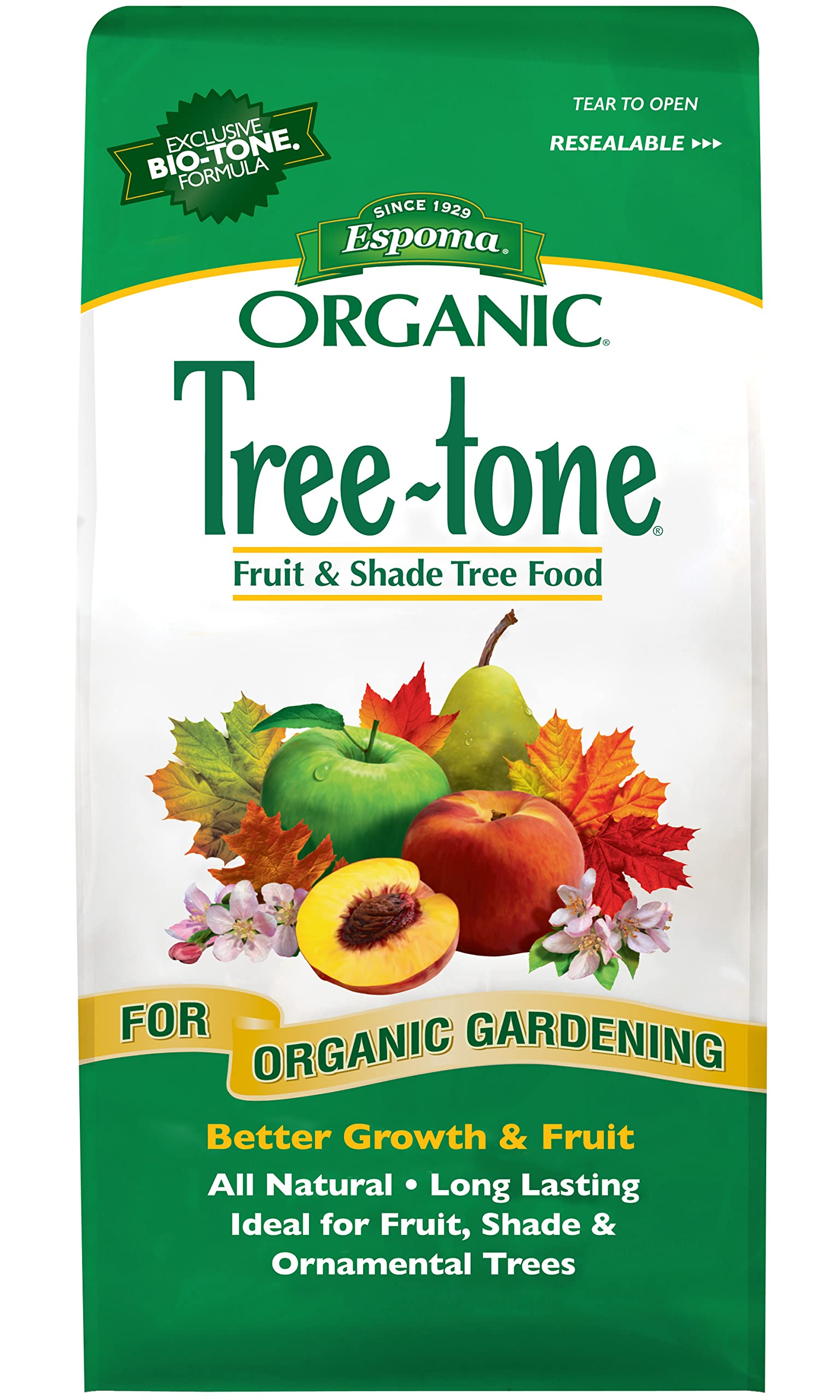
| Espoma Tree-ToneBest Value | Established backyard trees | Granules | 6-3-2 | 4 lbs | Amazon |
| HB-101 VitalizerRescue Pick | Reviving stressed or weak trees | Liquid | 1:100 dilution | 2.4 oz | Amazon |
| Down To Earth Fruit Tree | Backyard orchards | Powder | 6-2-4 | 5 lbs | Amazon |
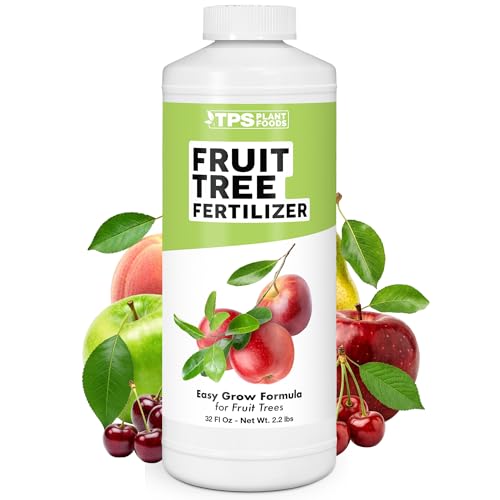
| TPS Nutrients Fruit Tree | Quick liquid boost | Liquid | 2 Tbs/gal | 2 lbs | Amazon |
| Dr. Earth Bat Guano | High-phosphorus bloom push | Powder | 7-3-1 | 1.5 lbs | Amazon |
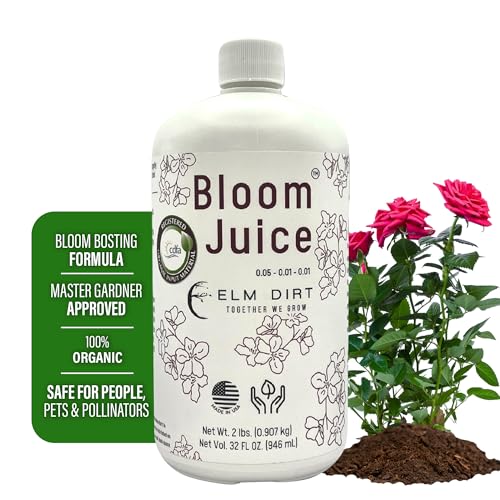
| Elm Dirt Bloom Juice | Container trees & heavy bloomers | Liquid | — | 2 lbs | Amazon |
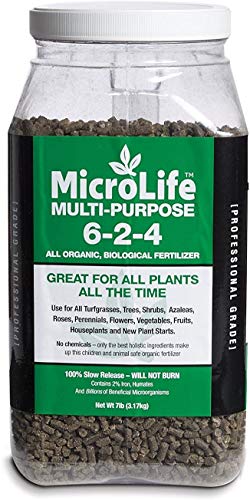
| MicroLife Multi-Purpose | Max root & soil biology | Granules | 6-2-4 | 7 lbs | Amazon |
In-Depth Reviews
1. Jobe’s Organics Garden Fertilizer Spikes
Our pick — over 4.5★ from 550+ verified ratings; the strongest balance of quality and price.
The no-guesswork spike that feeds your plum tree for a full season, twice a year.
This is the easiest organic fertilizer to use on this list, hands down. You get a box of 8 pre-measured spikes with a 4-6-6 NPK ratio — meaning a lower nitrogen number that keeps your plum tree’s energy focused on fruit and root strength rather than just a rush of leaves. The spikes are formulated to avoid wasteful runoff, mess, hazards and smells, so you don’t have to worry about a stinky bag or a dusty cloud when applying.
The “what wins people over” factor here is effectiveness — the thing owners mention most by far. The proof in the reviews is that trees “are thriving” and that the spikes are easy to insert near fruit trees, boosting strength and leaf production pre-fruiting. One long-time user switched to these after previous spikes shattered and smelled like ammonia; these have a pleasant molasses scent and drove into the ground without crumbling.
The honest trade-off is durability. While most find them solid, some report the spikes can crumble if you don’t drive them in firmly — the trick is a rubber mallet and using the red cap as a buffer to avoid shattering. This is a small price for a product that delivers the right nutrients without over-fertilizing risk.
Why It’s a Winner
- Pre-measured spikes make over-feeding nearly impossible
- OMRI listed and free of synthetic chemicals
- Twice-a-year application fits a lazy gardener’s routine perfectly
The Small Catch
- Some spikes crumble on impact if not hammered dead-center
- Only 8 spikes per box — big multi-tree orchards will need a few boxes
Reach for this if: you want a set-and-forget feed that takes five minutes in spring and fall, with little risk of burning your tree.
Look elsewhere if: you are feeding more than a couple of large trees and want a cheaper per-feeding cost from a bulk granular bag.
2. Espoma Organic Tree-Tone 6-3-2
A heritage granular blend that packs 4 pounds of feed into a one-stop spring-and-fall routine.
Espoma has been in the natural organics game since 1929, and this Tree-Tone bag is proof of that legacy. The standout feature here is the exclusive Bio-tone formula, a blend of beneficial microbes that improve soil structure and nutrient uptake. It weighs 4 pounds, which is a 2.2x gap over the Jobe’s spikes box, giving you more product to spread around a larger root zone.
Reviewers highlight effectiveness most often, with 37 owners mentioning it, and plant health close behind at 23. One dramatic story: a 4-year-old potted silver maple, stunted and puny, grew 18+ inches in 6 weeks after applying this in 6 holes (6″ deep) around the trunk in April, with full healthy leaves and a thicker trunk. The same reviewer notes their weeping cherry now produces better blooms and stronger roots.
The catch is the odor. Several buyers report an unpleasant smell, typical of organic meals breaking down. It’s worth the trade-off since this is approved for organic gardening as a registered Organic Input Material. At just over a quarter of the weight of the MicroLife bag while still covering a full tree, it suits most homeowners well.
Root revival: The slow-release granules feed microbes first, which is why the reviews show such strong root development and foliage color — this is the pick for a tree that has been languishing in poor soil.
Who it beats: The Espoma delivers more product per box than the Jobe’s spikes (4 lbs vs 1.8 lbs) and is better for reviving a struggling tree you want visible comeback from.
Who it doesn’t suit: Anyone sensitive to a strong organic-meal odor who would rather use a no-smell liquid or spike.
3. HB-101 All-Purpose Plant Vitalizer
Japan’s concentrated plant vitalizer that brings sick trees back from the brink.
This is not your typical fertilizer — it is a vitalizer, made 100% from plant extracts of long-lived cedar, cypress, and pine trees plus plantain grass. The 1.69-ounce bottle is highly concentrated and ready to dilute at a 1:100 ratio with water. It’s OMRI-listed for certified organic production, and it works on everything from bulbs to bonsai, lawns to fruit trees. For a plum tree that has been heat-crisped or stressed, this is the tonic to reach for.
The effectiveness is the most-discussed aspect, with 29 owners noting it, and the vibrant plant benefits are second at 21. The reviewers paint a picture of recovery: plants revived after 100°F heat waves, new leaves unfolding daily, and orchids and houseplants blooming within a month of use. One grower with over 200 houseplants (mostly anthuriums) adds it to their water mix and saw 3 plants flower within a month. For plums, the dilution method makes it easy to water deeply around the drip line.
The catch is the cost per use. The reviews openly call it “pricey” and “a little bit expensive to use everyday” — the 1.69-ounce bottle does not go as far as a bulk granular bag. But since plums only need a few feedings a season, one small bottle could last you years. It is also gentle enough to use alongside your regular fertilizer as a supplemental booster.
Revival specialist: This is the product for the “almost dead” plum tree — deep root nourishment from natural extracts, not a synthetic chemical shock.
Reach for this if: your plum tree is struggling after a harsh winter, drought, or transplant shock and needs a gentle, profound nudge back to health.
skip it if: you want a bulk feeding for a large orchard — the small concentrated bottle is a supplement, not a soil builder.
4. Down To Earth Organic Fruit Tree 6-2-4

The five-pound powder blend that literally names plums on the label.
Down To Earth built this box specifically for the backyard orchard, and the label says it clear as day — fruit tree fertilizer for apples, pears, plums, cherries, peaches, tropical fruit, and pomegranates. The 6-2-4 formula comes in a 5-pound box of powder that mixes easily into the soil, and it’s OMRI listed for use in organic production. What makes it special for plums is the added calcium, which is critical for proper fruit development and preventing blossom-end rot in stone fruits.
The ingredient list is a who’s who of natural nutrition: Feather Meal, Fish Bone Meal, Calcium Carbonate, Langbeinite, Potassium Sulfate, Alfalfa Meal, and Kelp Meal. This blend does not expire if stored in a cool, dry place, so you can buy it once and feed for years. Owners mention trees tripling in size, mango trees producing more fruit than ever, and crabapple trees bouncing back from the brink — the mix is easy to spread and blends into soil quickly with no harsh smell. One reviewer even mentioned that it left their frost-damaged trees revitalized and coming back to life.
What wins owners over is the honest, all-natural approach — no synthetic chemical salts piling up in your soil. The powder form does require a bit more effort than spikes, since you need to scratch it into the topsoil around the drip line. But for a dedicated plum grower who wants to build long-term soil health, that is part of the appeal.
Backyard staple: The high-calcium formula targets exactly what stone fruits like plums crave for firm, healthy flesh — a true orchard-builder in a box.
Who this suits: The gardener with several fruit trees who wants one versatile, organic box that covers plums, apples, peaches, and figs all at once.
Who should pass: Anyone wanting a zero-fuss application — this requires a bit of soil scratching to work its magic.
5. TPS Nutrients Fruit Tree Fertilizer
A newbie-proof liquid that doubles your tree’s foliage and kickstarts cherry growth.
If you are new to fertilizing fruit trees, this is the formula that removes the confusion. TPS Nutrients packs a 32-ounce bottle of liquid plant food with a simple mixing instruction: 2 tablespoons per gallon of water. You can pour it around the roots or use it as a foliar spray on the leaves — both methods mix well and deliver fast results. This is the pick for the gardener who wants immediate, visible feedback.
The reviews are full of “before and after” moments. One owner admits “I feel bad I didn’t do it earlier” after the fertilizer “kicked my Barbados cherry tree right into serious growth” with every-two-week feedings. Another says their branches and leaves doubled in size, and a third reports their apple tree’s flowers looking nice and green. The most-mentioned positive aspect is plant health with 13 callouts, and it’s made in the USA. Owners also note the 32-ounce bottle lasts through spring and summer when mixed at the recommended rate, making it solid value for a liquid feed.
The trade-off is that liquid feeding demands more of your time. You will need to mix and apply every couple of weeks during the growing season rather than twice a year like a spike or granular. The upside is that you have total control over how much you give each tree, which is ideal when you have a mix of young and mature plums.
Fast-acting energy: The liquid form delivers nutrients straight to the roots and leaves — this is the quickest-visible response you will get on this list.
Reach for this if: you enjoy a weekly watering ritual and want to see new growth within days, not months.
Look elsewhere if: you travel often or want a feed-and-forget option — this needs your presence every couple of weeks.
6. Dr. Earth Pure & Natural Bat Guano

Nature’s own high-phosphorus kick for the heaviest plum blossom you’ve ever seen.
Bat guano is the ancient, time-tested fertilizer that built the world’s great gardens, and Dr. Earth packages it in a sustainable, people-and-pet-safe formula. The 7-3-1 NPK ratio is the highest nitrogen on this list, designed for a fast vegetative push. The 1.5-pound bag feeds 12 five-gallon plants for up to 2 months, making it incredibly concentrated — a little goes a long way. It’s made in the USA from sustainable ingredients.
Effectiveness is the most-discussed aspect, with 23 owners noting it, and quality follows at 16. Reviews include a hops plant that “grows big hops” and plants that tripled in size. One organic gardener calls it their “organic gardening staple” and notes that despite the small bag, it “goes a long way for such a small portion.” The universal advice in the review data: don’t overuse it.
The honest split in the reviews is the odor. Some find it has “a horrible smell,” while others report “no smell and not a lot of dust.” This variability is expected with natural bat guano depending on the batch. For plum trees, the high phosphorus ratio is excellent for triggering a heavy bloom set in spring, which is the precursor to a full harvest.
High-octane bloom fuel: If your plum tree sets few flowers, the phosphorus punch here is the missing piece — just apply sparingly.
Who this suits: The experienced organic grower who knows exactly what they want and wants a concentrated, sustainable bloom trigger.
Who should skip it: Anyone sensitive to variable organic odors or looking for a complete, balanced all-rounder feed.
7. Elm Dirt’s Bloom Juice
A living-soil liquid that finally woke up a plant that hadn’t bloomed in years.
Elm Dirt’s Bloom Juice is a certified organic formula that reads like a soil recipe rather than a chemical solution. The ingredients list dechlorinated water, worm castings, kelp meal, bone meal, seabird guano, fish meal, lactobacillus extract, calcium extract, humic acid, and yucca — a blend designed to cultivate a thriving living soil. The 32-ounce bottle is made in the US and formulated for indoor and outdoor gardens, making it a strong pick if your plum tree lives in a large container.
The proof in the reviews is the blooming. Effectiveness is the top-mentioned aspect with 28 callouts, and blooming is second at 16. The standout story is the plant that “had not bloomed for years” — after the first application of Bloom Juice, it finally flowered. Owners describe it as a standout for vibrant blooms and healthy plants, with one noting the first time they used it, they got flowers immediately. The natural ingredients like phosphorus, calcium, and iron support fruit development, which is exactly what a potted plum needs.
The trade-off is that this is a bloom-focused formula rather than a balanced tree feed. For a container plum tree, it is excellent for encouraging the flowers that become fruit, but you may need to pair it with a broader nutrient source for overall wood and leaf health. The weekly feeding recommendation means you’ll go through the bottle faster than a granular option, but the results justify the routine for dedicated growers.
Living soil builder: The worm castings and humic acid feed your soil’s ecosystem, which in turn feeds your plum tree — a holistic approach that yields results.
Reach for this if: your plum tree is the “never blooms” type and you want a liquid that visibly triggers flowering.
pass on it if: you want one simple all-purpose feed — this is specialized for the flowering phase.
8. MicroLife Multi-Purpose 6-2-4
The 7-pound biological powerhouse that packs a billion beneficial microbes per scoop.
This is the biggest bag on the list at 7 pounds, and it is built like a soil science project. MicroLife’s Multi-Purpose formula at 6-2-4 contains over 100+ minerals, vitamins, natural plant hormones, and billions of beneficial microorganisms including Endo and Ecto Mycorrhizal fungi. These fungi form a symbiotic relationship with your plum tree’s roots, extending their reach deep into the soil to access water and nutrients the tree could not reach alone. It is 100% slow-release with 2% iron, so it will not burn even if you are generous.
The quality is the standout in the reviews — 36 owners mention it as the top aspect, with effectiveness close behind at 33. One reviewer calls it the “best fertilizer in 30 years,” and another notes it revived hail-damaged flowers and vegetables within 1-3 days of application. The mycorrhizal fungi are a huge selling point; one owner describes the fertilizer as providing “exceptional value vs. other mycorrhizal products” and improving soil and root health while reducing transplant stress. It is recommended for all new and established trees and bushes, and repeat applications are only needed every 3-4 months.
The honest note in the reviews is the price. Some find it “overpriced from this company” on Amazon compared to local nurseries, and value-for-money gets mixed feedback. The 7-pound tub covers a lot of ground, though, and for a serious plum grower who wants to build the soil food web — not just feed the tree — this is the most complete biological option here.
Root system rocket: The Endo and Ecto Mycorrhizal fungi literally extend your plum tree’s root network — this is the pick for maximizing water and nutrient uptake.
Who this suits: The dedicated organic grower who understands soil biology and wants to build a self-sustaining root system for decades of harvests.
Who should pass: The budget-conscious gardener who can find the same product cheaper at a local nursery and wants just basic nutrition.
Understanding the Specs
NPK Ratio (Nitrogen-Phosphorus-Potassium)
This three-number label is the single most important spec for a plum tree. The first number (N) drives leafy growth; the second (P) drives roots and blossoms; the third (K) drives overall vigor and fruit quality. For plums, you want a moderate nitrogen number — like the 4-6-6 of the Jobe’s spikes or the 6-2-4 of Down To Earth — so the tree spends energy on fruit, not just leaves. A high-nitrogen formula like the Dr. Earth 7-3-1 is best used as a targeted bloom booster rather than a regular diet.
Form: Spikes vs. Granular vs. Liquid
The form determines how often you work and how fast the tree responds. Spikes (like Jobe’s) are the most simple to use — you hammer them in twice a year and forget them. Granular formulas (Espoma, MicroLife, Down To Earth) give you more control over spread and feed soil microbes as they break down over months. Liquids (TPS, Elm Dirt, HB-101) deliver the fastest visible response but need reapplication every 1-2 weeks during the growing season. Match the form to how often you are physically in the garden.
FAQ
How often should I fertilize a plum tree organically?
Which NPK ratio is best for plum trees?
Can I use fertilizer spikes on a young plum tree?
What is OMRI listing and why does it matter?
Will organic fertilizer burn my plum tree if I use too much?
What is the difference between granular and liquid fertilizer for plums?
How much fertilizer does a full-grown plum tree need?
Should I fertilize my plum tree in the fall?
Final Thoughts: The Verdict
For most buyers, the organic fertilizer for plum trees winner is the Jobe’s Organics Spikes because it removes all guesswork — hammer in a spike twice a year and your tree gets a steady, safe supply of 4-6-6 nutrition without any risk of burning. If you want maximum root and soil biology to build a self-sustaining orchard, grab the MicroLife Multi-Purpose and let its mycorrhizal fungi do the heavy lifting. And for a plum tree that is stressed, struggling, or refusing to bloom, the HB-101 Vitalizer is the concentrated rescue tonic that revives even the “almost dead” plant.
How We Picked
We do not accept paid placement. Every pick is matched to a real buyer and a real use-case; we do not hands-on test units.
Sources & Methodology
Specifications: manufacturer listings and product documentation. Review insights: verified customer reviews, as of August 2026. Pricing: not shown on this page (it changes often); check the current price via the retailer link.
As an Amazon Associate, Lawn Gear Lab earns from qualifying purchases. This does not affect which products we feature.