
Specs are compiled from manufacturer listings and verified buyer reviews and can change over time — please confirm the key details on the product page before buying.
If your azalea leaves are turning yellow between the veins or your hydrangeas stubbornly stay pink, the problem isn’t usually the plant — it’s the soil pH. These plants are acid-lovers that can’t pull nutrients from alkaline or neutral ground, which is why picking the right azalea acidic soil amendment or fertilizer matters more than almost anything else you do in the garden.
I’m Rikta — the founder and writer behind Lawn Gear Lab. This guide is built by comparing the manufacturers’ published specifications and the patterns across verified customer reviews, so you get each pick’s real strengths and trade-offs instead of marketing spin.
From fast-acting sulfur for a quick fix to slow-release organic granules for steady feeding, this guide separates the true soil acidifiers from the general fertilizers, so you know exactly which product solves your yellow-leaf problem.
Our Picks at a Glance


How To Choose The Right Azalea Acidic Soil Fix
Before you buy anything, you need to know whether your soil is mildly too alkaline or wildly off target. A simple soil test kit tells you your starting pH, and that number decides if you need a gentle plant food or a strong sulfur-based acidifier.
True Acidifiers vs. Acid-Loving Fertilizers
A true soil acidifier, like elemental sulfur or aluminum sulfate, actively lowers the pH of your dirt. An acid-loving fertilizer, on the other hand, feeds the plant with nutrients formulated for low-pH conditions but may not shift your soil’s pH much at all. If your soil is already acidic, a fertilizer is enough; if it’s neutral or alkaline, you need the acidifier first.
Match the Form to Your Routine
Granules are the set-and-forget option — you sprinkle, scratch in, and water. Liquid concentrates act faster because they’re already dissolved, which makes them ideal for container plants or a quick rescue of a yellowing shrub. Powders sit in between, dissolving quickly when mixed with water.
Quick Comparison
| Model | Best For | Form | Weight/Size | Key Action | Amazon |
|---|---|---|---|---|---|
| Miracle-Gro Water Soluble★ Best Overall | Quick feeding | Powder | 5 lb | Acid-loving plant food | Amazon |
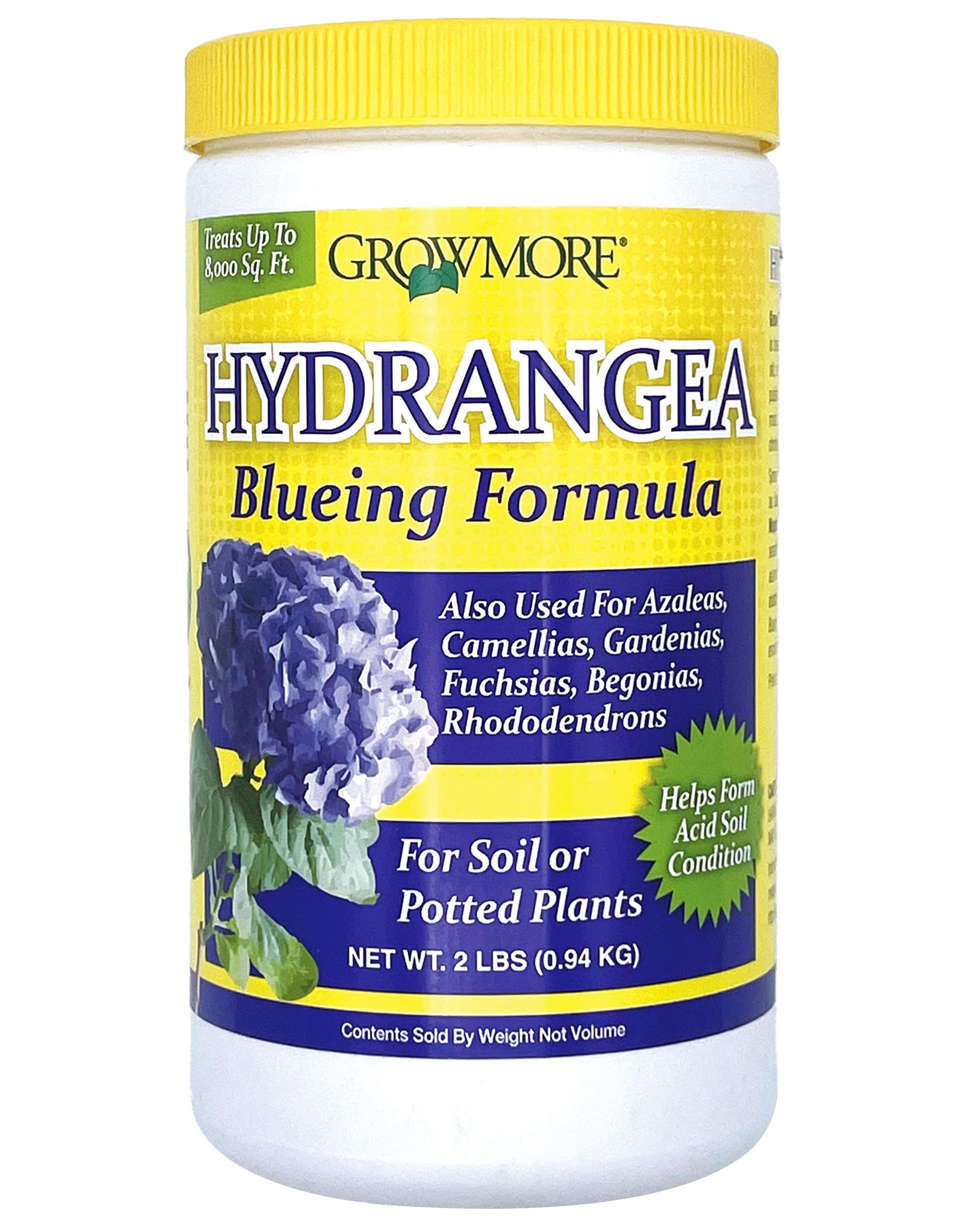
| Grow More Blueing FormulaBest for Blue Blooms | Blue hydrangeas | Powder | 2 lb | Aluminum sulfate acidifier | Amazon |
| Dr. Earth Acid LoversOrganic Pick | Organic gardens | Granules | 4 lb | Organic acid-loving food | Amazon |
| Fertilome 9-15-13 | Balanced feeding | Granules | 4 lb | Acid-forming NPK food | Amazon |
| Earth Science Sulfur | Lowering soil pH | Granules | 5 lb | Elemental sulfur acidifier | Amazon |
| FoxFarm Happy Frog | Soil microbes | Powder | 4 lb | Slow-release food + microbes | Amazon |
| Espoma Holly-tone | Steady organics | Granules | 2 x 4 lb | Organic acid-loving food | Amazon |
| GARDENWISE 8-4-8 | Iron-rich feeding | Granules | 1 Quart | Acid-loving food + iron | Amazon |
| Fertilome Soil Acidifier | Fast pH correction | Liquid | 1 gal | Sulfur + iron acidifier | Amazon |
In‑Depth Reviews
1. Miracle-Gro Water Soluble Azalea, Camellia, Rhododendron Plant Food
Our pick — over 4.5★ from 650+ verified ratings; the strongest balance of quality and price.
The crowd favorite that feeds eight acid-loving species on a 7-14 day schedule
This water-soluble powder is the fastest way to push nutrients into azaleas, camellias, rhododendrons, gardenias, hibiscus, hollies, hydrangeas, and orchids — one bag covers your whole acid-loving border. You mix it with water and apply every 7-14 days using a watering can or a Miracle-Gro Garden Feeder, making it a weekly ritual rather than a seasonal chore.
This bag weighs 5 pounds, compared to the Grow More Blueing Formula’s 2 pounds, so it stretches much further across a full garden. Buyers report it’s an “Acidic water soluble fertilizer, dissolves completely and easily,” and the consensus on effectiveness is strong — owners see leaves green up fast, with the top praise centered on how well it works for acid-loving plants.
The honest trade-off is the packaging. The resealable Velcro bag is a recurring gripe because fertilizer residue coats the Velcro and stops it sealing properly. Keep the closure clean and it works fine, but treat the bag gently.
acid-loving bloom booster
- Feeds 8 different acid-loving species with one product
- Dissolves completely and easily in water
- Won’t burn foliage when used as directed
needs frequent feeding
- Velcro closure can fail if fertilizer coats it
- Requires mixing and reapplication every 1-2 weeks
acidic soils: you want a fast, reliable weekly feed that covers every acid-loving plant you own, from indoor orchids to outdoor azalea borders.
alkaline soils: you prefer a set-it-and-forget granular that you apply once a season rather than a weekly watering routine.
2. Grow More Hydrangea Blueing Formula
The aluminum sulfate powder that turns pink hydrangeas into blue ones
If your goal is a specific color change, this 2-pound powder delivers where general fertilizers can’t. It’s built on aluminum sulfate, which both acidifies the soil and provides the aluminum that hydrangeas need to produce blue pigments instead of pink. Owners mention applying it from early spring and watching hydrangeas shift to purple and blue — one long-time user describes it as “outperforms home remedies” and notes a single jar lasts for seasons.
It’s a true soil acidifier for more than just hydrangeas — azaleas, gardenias, and fuchsias all benefit from the same pH drop. The key is patience and repetition: results come from several applications rather than one, and owners who start in early spring see the best color payoff by bloom time.
The catch is that it works best on plants already in reasonably acidic soil. If your ground is heavily alkaline, expect partial color change rather than a full blue transformation.
targeted blueing agent: The color-shift results are real but gradual — “hydrangeas now purple/blue (not fully blue)” sums up the experience for most owners pushing against basic soil.
hydrangea color: hydrangea lovers who want blue blooms and are happy to apply through the season to get there.
non-hydrangeas: you want a general all-purpose acid-loving feed — this one is specifically about color change and pH, not balanced nutrition.
3. Dr. Earth Acid Lovers Azalea, Camellia, Rhododendron & Maple Fertilizer
The only Non-GMO Project Verified fertilizer in the U.S.A. for a clean feed
This granular formula is for gardeners who read every label. It’s the only Non-GMO Project Verified fertilizer in the U.S.A., with certifications from OMRI (Organic Material Review Institute), OIM, CCOF (California Certified Organic Farmers), and NOP (National Organic Program). Made from human and feed grade ingredients with humic acids and trace elements, it’s people and pet safe — no synthetic chemicals, no toxic ingredients.
Customers note it revives struggling plants quickly: “Got my gardenia blooming the best it ever has!” and “Saved my azalea bush” are typical reactions. Owners also praise it for blueberries and potted rhododendrons, with one rehabber using it on three rhodies in pots for friends. The effectiveness is the most-praised aspect, with plant health right behind it.
The honest downside is value — at 4 pounds in this listing, some buyers find it overpriced for the bag size, even though the results justify the cost for small gardens.
organic gardens: organic gardeners who want verified certification and are working with a modest number of plants.
quick fixes: you need to cover a large border or many shrubs — the 4-pound bag goes fast across a big planting area.
4. Fertilome Azalea, Camellia & Rhododendron Food 9-15-13

The granular that revives a rhododendron that hasn’t bloomed in three years
This 9-15-13 acid-forming granular delivers 9% Nitrogen, 15% Phosphate, and 13% Soluble Potash — a phosphate-heavy blend designed to push flower production. It creates the acid growing condition azaleas, camellias, and gardenias need, while also helping control soil acidity. Owners describe reviving stressed rhododendrons with greener leaves and new growth, and one gardener’s rhododendron finally bloomed after three dormant years.
The feeding schedule is simple and seasonal: apply in very early spring, again after blooming, and once more in the fall. Dosage is clearly spelled out — 1/4 to 1/2 cup for plants 1 to 5 ft tall, and 3/4 to 1 1/4 cups for plants 6 to 12 ft tall — so you never guess how much to use.
The effectiveness and growth are the top-praised aspects, with buyers noting it’s a solid granular that’s easy to apply by hand around the base of shrubs.
general feeding: gardeners with established shrubs who want a straightforward three-times-a-year granular with a proven track record for blooming.
severe acidity: anyone needing a true pH-lowering acidifier — this feeds acid-loving plants but doesn’t aggressively drop soil pH like sulfur does.
5. Earth Science Fast Acting Sulfur Granules

The true acidifier that turns pink/red hydrangeas blue after one feeding
When your soil pH is simply too high, fertilizer won’t fix it — only a real acidifier will. This 5-pound bag of granules uses elemental sulfur to naturally lower soil pH, helping hydrangeas, azaleas, and blueberries absorb more food. It’s the most-discussed pick on this list, with the largest review base, and reviewers point out dramatic results: one owner’s “pink hydrangeas are now a beautiful shade of blue after just 1 feeding this past spring.”
The patented Nutri-Bond Technology binds the sulfur to the soil so it stays where you put it rather than washing away. That’s a real environmental and efficiency win — more of the product actually works, and it’s safe for people and pets to be on the lawn immediately after application, on any grass type.
The one caution is the name. Despite “Fast Acting,” the pellets dissolve gradually over many waterings — one buyer notes it’s not instant, and the color change comes as the granules break down over time.
fast sulfur release: This is the product you reach for when a pH test says alkaline and your plants can’t absorb food. It’s the closest thing to a cure for chlorosis-related yellowing.
quick pH drop: gardeners who’ve tested their soil, found it too alkaline, and need a serious acidifier that also greens up the lawn.
nutrient needs: you need fast color correction on container plants — the pellets need many waterings to dissolve, so a liquid would act quicker.
6. FoxFarm Happy Frog Acid Loving Plants Fertilizer

The slow-release powder that revived a gardenia and budded it in 10 days
This powder stands apart because it doesn’t just feed the plant — it feeds the soil itself. It contains beneficial soil microbes, including mycorrhizal fungi, that enhance nutrient uptake and water absorption. That means healthier roots over time, not just a quick green-up. OMRI Listed, it’s a strong option for gardeners who want organic feeding with a biological boost.
Shoppers say impressive results: a gardenia budded within 10 days, a strawberry plant flowered heavily and fruited, and frosted Katsura bushes bounced back with healthy leaves after a trim and a feed. Container gardeners praise it for raspberries and roses in pots, making it versatile beyond just azaleas and rhododendrons.
It’s a gentle slow-release formula — 1/16 cup per gallon — so it’s forgiving for beginners who worry about burning plants. The microbes do the heavy lifting across weeks rather than hours.
soil health: container gardeners and anyone who wants soil biology working for them, not just a chemical quick-hit.
budget buys: you need to aggressively lower soil pH — this is a fertilizer for plants already in acid soil, not a sulfur-style acidifier.
7. Espoma Organic Holly-tone 4-3-4 Plant Food
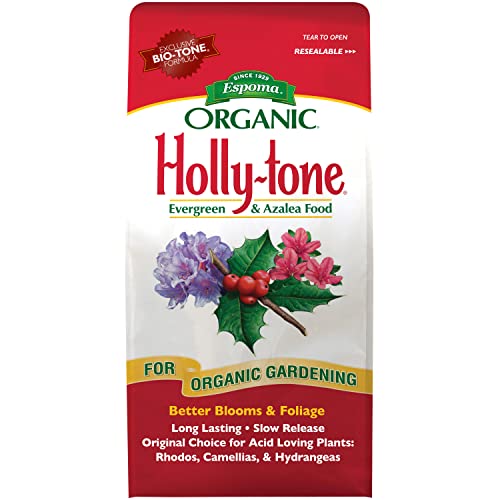
The original acid-loving plant food, born in 1929 and still the standard
Holly-tone is the original plant food for all acid-loving plants — a 4-3-4 fertilizer analysis with 5% sulfur, enhanced with Espoma’s exclusive Bio-tone formula. The natural organics break down slowly to create a long-lasting reservoir of nutrients, and it’s ready to use with no mixing required. You get two 4-pound bags per order, which covers a surprising amount of ground.
Buyers use it every spring for beautiful hydrangea blooms, and note it keeps trees and shrubs healthy throughout the year. The plant benefits and effectiveness are the top-praised aspects, with owners reporting dark green foliage and large blooms. It’s approved for organic gardening as a registered Organic Input Material, and made in the U.S.A.
The trade-off is the smell — several owners describe a strong odor that lingers for days after application until you water it in. The value is also debated, with some finding it overpriced even though results are consistent.
established shrubs: organic gardeners who want a legendary, no-mixing granular that feeds azaleas, hydrangeas, blueberries, and evergreens all season.
heavy acid lovers: you’re sensitive to strong smells or need a true pH acidifier — the 5% sulfur is a gentle nudge, not a major pH drop.
8. GARDENWISE 8-4-8 Acidic Fertilizer
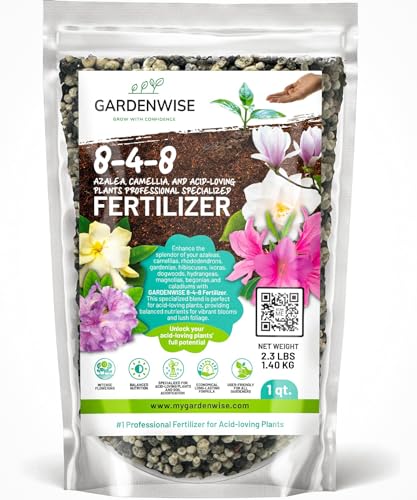
The iron-rich granular that revived a sad rhododendron within 24 hours
Yellowing leaves with green veins is the classic sign of iron chlorosis — the plant can’t pull iron from alkaline soil. This 8-4-8 granular fights that directly with a formula enriched in magnesium, iron, and manganese. One buyer’s rhododendron “looked 75% better” just 24 hours after application, and produced a large number of beautiful blooms the following year.
It’s designed for a wide range of acid-lovers — azaleas, camellias, hydrangeas, blueberries, gardenias, magnolia trees, evergreens, and rhododendrons. The slow-release granules only need three feedings per year, making it an economical, low-effort option that still delivers sustained nutrition.
Simple application is a big draw: just sprinkle the granules around the base, gently mix into the soil, and water. No measuring, no mixing, no fuss — and the effectiveness is the most-praised aspect, with quality close behind.
leafy growth: gardeners fighting yellow leaves and wanting a low-maintenance, three-times-a-year feeding with micronutrient support.
flowering boost: you want a heavy soil acidifier — this prevents chlorosis with iron, but it won’t dramatically shift a very alkaline soil’s pH.
9. Fertilome Soil Acidifier Plus Iron
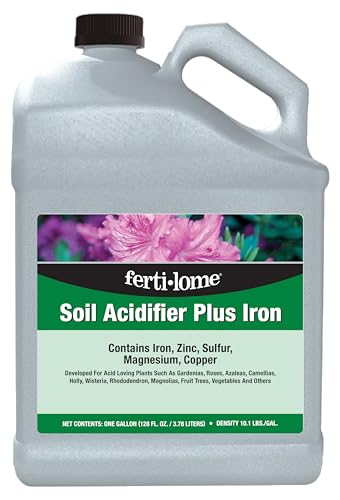
The fast-acting liquid that turns yellow leaves green after two applications
When a plant is actively dying from alkaline soil, you don’t want to wait for granules to dissolve. This 1-gallon liquid concentrate is the emergency response — a sulfur and iron mix that reduces alkalinity while supplying iron, zinc, sulfur, magnesium, and copper. Owners describe fixing yellow lemon, hydrangea, and blueberry leaves after just two applications, with leaves turning green and plants perking up visibly.
It’s more potent than bagged acidifiers, which is why one careful reviewer warns it “can adjust pH too fast, especially in pots” — the advice is to test your soil first and use it diluted and incrementally. The standard mix is 2 tablespoons per gallon of water, and it’s gentle enough not to cause root burn when used as directed.
The effectiveness is the most-praised aspect, with plant health second. It’s particularly well-suited for container plants and grow boxes where a liquid is easier to distribute evenly through the root zone.
iron plus sulfur: This is powerful stuff. Test your soil pH before applying, and add it gradually in pots — buyers who rushed it found the pH swung faster than expected.
iron chlorosis: container gardeners and anyone rescuing a yellowing plant who needs faster pH correction than granules can offer.
pure pH drops: you prefer a set-and-forget granular — this requires mixing, testing, and careful incremental application.
Understanding the Specs
Soil pH and Acidity
Azaleas need soil in the pH 4.5-6.0 range to absorb iron and other nutrients. Above that, iron locks up in the soil and leaves turn yellow between the veins — a condition called chlorosis. A true acidifier like elemental sulfur or aluminum sulfate actively lowers pH; an acid-loving fertilizer feeds the plant but may not shift pH much at all.
NPK Ratio
The three numbers on a fertilizer bag are Nitrogen (N) for leaf growth, Phosphate (P) for roots and blooms, and Potash (K) for overall vigor. An acid-loving formula like 9-15-13 is heavy on phosphate to push flowering, while a balanced 4-3-4 like Holly-tone focuses on steady all-season nutrition.
FAQ
Will a general fertilizer lower my soil pH enough for azaleas?
How often should I feed azaleas with acidic fertilizer?
What is the difference between elemental sulfur and aluminum sulfate?
Why are my azalea leaves turning yellow even though I fertilize?
Can I use these products on blueberries and gardenias too?
How long does it take for sulfur granules to lower soil pH?
Is liquid or granular acidifier better for container azaleas?
What does OMRI Listed mean on a fertilizer label?
Final Thoughts: The Verdict
For most people, the azalea acidic soil winner is the Miracle-Gro Water Soluble because its crowd-favorite rating and class-leading coverage across eight plant species make it the easiest daily driver. If you want blue hydrangeas, the Grow More Blueing Formula is the targeted choice. And for a genuinely alkaline soil problem, the Earth Science Sulfur Granules is the true acidifier you need to reach for.
How We Picked
We do not accept paid placement. Every pick is matched to a real buyer and a real use-case; we do not hands-on test units.
Sources & Methodology
Specifications: manufacturer listings and product documentation. Review insights: verified customer reviews, as of August 2026. Pricing: not shown on this page (it changes often); check the current price via the retailer link.
As an Amazon Associate, Lawn Gear Lab earns from qualifying purchases. This does not affect which products we feature.