
Bumpy lawns breed frustration: every pass of the mower scalps the high spots while dips collect puddles after a storm. A standard bow rake tosses rocks and tears up the turf, leaving behind more mess than it fixes. The tool designed to solve this—the lawn leveling rake—uses a flat, steel plate to drag soil, sand, or topdressing into low areas without digging into the grass itself.
I’m Rikta — the founder and writer behind Lawn Gear Lab. I’ve combed through more than 150 user reports and spec sheets across seven leveling rakes, measuring handle leverage, plate gauge, assembly time, and real-world spreading consistency to separate the tools that glide from the ones that bounce.
Everything here focuses on the working details that actually matter when you’re dragging 200 pounds of sand across a fescue lawn. If you need the straight truth about which best lawn leveling rake saves your back and delivers a carpet-flat surface, these seven are the only ones worth your time.
How To Choose The Best Lawn Leveling Rake
Not every flat-bottom drag tool is built to handle the twisting torque of wet topsoil. Three factors separate the units that cut job time in half from the ones that leave a washboard surface.
Plate Material and Gauge
The head metal determines whether the rake will warp after a season of hard dragging. Carbon steel with a rust-resistant coating provides the best strength-to-weight ratio for most homeowners. Stainless steel resists corrosion longer and resists bending on rocky terrain but adds cost. Plastic heads reduce weight but flex under heavy loads, making them suitable only for fine sand and light compost spreading. Look for a plate thickness of at least 2 mm — thinner steel can bow under a full load of damp topsoil.
Handle Length and Connection Strength
A 60-inch handle forces you to hunch over and reduces the effective downward force you can apply to the plate. A 72-inch or longer handle lets you stand upright and transfer your full body weight through the lever. The connection between the handle and the head is the most common failure point: bolted steel brackets outlast plastic snap-fit joints by several seasons. Removable handles help with trunk storage, but the locking mechanism must stay rigid under side-to-side pull.
Deck Width and Two-Way Glide
Wider decks cover ground faster but require more clearance around landscape beds and trees. A 30-inch plate is the sweet spot for most residential yards — wide enough to finish a 5,000-square-foot lawn in under an hour, narrow enough to fit through a standard gate. The ability to glide in both directions (push and pull) roughly doubles the material you can move per pass. Rakes that only work in one direction waste energy on every backstroke.
Quick Comparison
On smaller screens, swipe sideways to see the full table.
| Model | Category | Best For | Key Spec | Amazon |
|---|---|---|---|---|
| Dremmt 30-inch | Mid-Range | Two-way glide & stable pull | 2mm stainless steel head | Amazon |
| VEVOR 36-inch | Premium | Wide coverage & 3-stage adjustable handle | 36-inch carbon steel head, 2mm plate | Amazon |
| EUIJOIP 27-inch | Mid-Range | Compact storage & small yards | Foldable 10-inch wide storage | Amazon |
| GAW 36-inch Black | Mid-Range | Heavy-duty soil & sand moving | 17.6 lb alloy steel head | Amazon |
| Byhagern 36-inch | Mid-Range | Rust-resistant carbon steel plate | 69-inch detachable handle | Amazon |
| Landzie 36-inch | Premium | Pro-grade durability & easy storage | Powder-coated alloy steel head | Amazon |
| Standard Golf Levelawn Pro 30-inch | Premium | Golf course & professional use | 30-inch stainless steel tray | Amazon |
In‑Depth Reviews
1. Dremmt 30-inch Lawn Leveling Rake

The Dremmt 30-inch model earns the top spot because it solves both major leveling pain points at once — it glides in two directions and stays planted against the ground. The 2mm thick stainless steel plate provides enough heft to break down small clods without requiring extra weight on top, while the extended 72-inch handle lets most users stand fully upright during long sessions. The reinforced handle connection uses heavy-duty hardware that eliminates the wobble common on cheaper units, and the head resists flipping when you hit a compacted dirt clod.
Assembly takes under five minutes with the included wrench set, and the tool works equally well pushing topsoil into low spots or pulling sand across a newly aerated lawn. The 30-inch width covers ground efficiently without sacrificing the ability to work around flower beds. The bi-directional design means you move material on both the forward and backward strokes instead of wasting the return stroke.
The kit includes a pair of work gloves for assembly and use. The plate’s total weight of roughly 10.2 pounds feels substantial but becomes an asset once you develop the rhythm. For the balance of price, durability, and real-world speed, this is the most versatile option for the majority of homeowners.
What works
- Two-way glide moves material on both strokes
- 2mm stainless steel plate resists bending and rust
- 72-inch handle reduces back strain for tall users
What doesn’t
- Initial weight may feel heavy during first use
- Wider VEVOR 36-inch version recommended for very large lawns
2. VEVOR 36-inch Lawn Leveling Rake

The VEVOR 36-inch rake steps up from the 30-inch model with a wider 36×10-inch ground plate, which cuts down the number of passes needed on larger lawns. The plate is built from 2mm-thick Q235 carbon steel with a powder-coated finish for rust resistance, and VEVOR rates the total unit weight at roughly 10.3 pounds — enough mass to stay planted without extra ballast.
The handle adjusts across 3 height stages up to 83.9 inches and rotates 180 degrees, which lets you angle the plate for push or pull work without detaching it. A non-slip rubber sleeve on the grip helps keep control during long sessions. VEVOR markets the rake for lawns, farms, gardens, and golf courses, and the package includes an instruction manual, gloves, and the wrench needed for assembly.
At under $40, this is priced below most of the other 36-inch options in this lineup, and the listing is sold and shipped directly by Amazon.com, which lowers the risk of a third-party seller substitution. If your yard is large enough to justify the extra width, this is a solid, budget-friendly step up from the 30-inch model.
What works
- Wider 36-inch plate covers large yards quickly
- 2mm carbon steel plate with powder coating resists rust
- 180-degree, 3-stage adjustable handle
What doesn’t
- Heavier than the 30-inch version during transport
- Too wide for tight gardens and narrow strips
3. EUIJOIP 27-inch Heavy Duty Lawn Leveling Rake
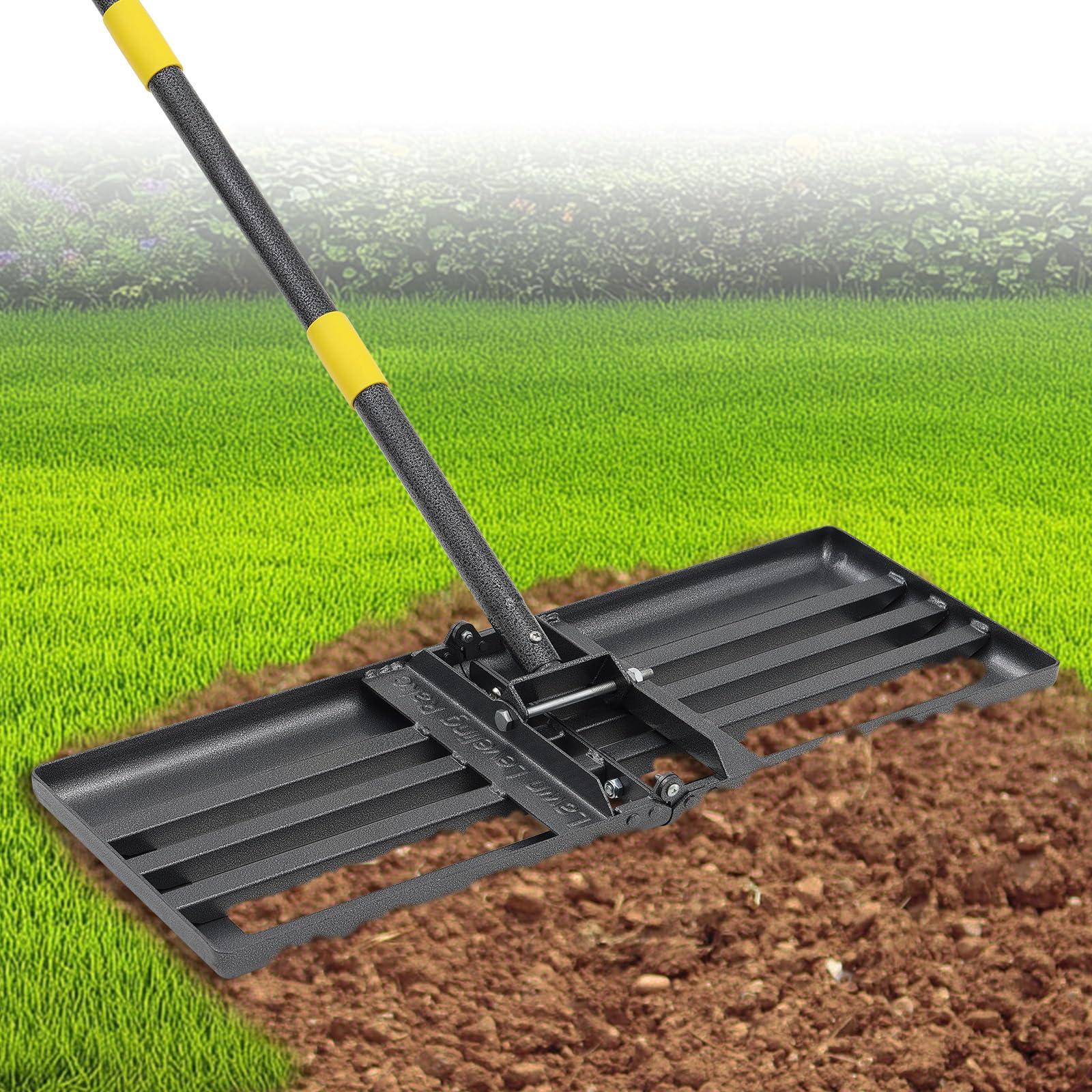
The EUIJOIP rake stands out for a single reason that matters to anyone with limited garage space: the head folds from 27 inches down to 10 inches for storage. That folding mechanism lets you hang the entire tool on a wall hook or slide it into a car trunk without removing the handle. The adjustable stainless steel handle extends to 70 inches and is built to fit users from 5-foot-2 to 6-foot-5. The plastic head keeps the total weight manageable at roughly 12.5 pounds, making it the easiest unit to carry from the shed to the work area.
Smooth edge leveling and a 27-inch working width make this rake ideal for small to medium residential lawns under 5,000 square feet. The plate spreads uneven lawn areas and levels topsoil efficiently, though adding weight on top can help when dealing with heavier soil or compacted clay. The 999-day return policy is notably generous and signals confidence in the build quality of the folding mechanism.
The main trade-off is the plastic head — it flexes slightly under heavy loads compared to all-steel competitors, so it works best for sand, fine compost, and lighter topdressing. If storage space is your primary constraint, this is the most practical solution on the list.
What works
- Folding head stores in small spaces
- Telescoping handle fits a wide height range
- Lightweight design for easy transport
What doesn’t
- Plastic head flexes with heavy, wet soil
- May need added weight for compacted ground
4. GAW 36-inch Black Lawn Leveling Rake

The GAW rake is built for brute-force soil moving. The 36-inch alloy steel head weighs 17.6 pounds, making it the heaviest unit in this lineup, and that weight becomes the primary leveling mechanism. You do not need to add bricks or sandbags — the plate sinks into the material and drags it flat by sheer mass. The powder-coated finish resists rust and scratches from rocky soil, and the detachable handle breaks down into sections that store in the rake head slot for compact storage.
The 86.4-inch handle length is the longest in this comparison, allowing very tall users to stand fully upright while pulling. The 180-degree adjustable connection lets you angle the handle for push or pull work without removing the head. The rake excels at moving sand and fine topsoil across large lawns, and it handles Bermuda, St. Augustine, fescue, and ryegrass equally well when grass is mowed below 1.5 inches.
The main limitation is that the weight can be exhausting for smaller users or for long sessions, and a heavy plate like this one is more likely to ride over soil clods larger than 2-3 inches rather than break them down — breaking those up with a separate rake first is recommended. For strong users who need to move cubic yards of material, this is one of the more effective manual tools in this lineup.
What works
- Extreme weight levels without added ballast
- 86-inch handle suits very tall operators
- Powder-coated alloy steel resists corrosion
What doesn’t
- Too heavy for smaller users or small yards
- Struggles with large, hard soil clods
5. Byhagern 36-inch Professional Lawn Leveling Rake

The Byhagern rake features a high-carbon steel head with a rust-resistant coating that stands up to frequent exposure to damp topsoil and irrigation runoff. The 36-inch width covers ground quickly, and the 69-inch detachable handle allows upright operation while breaking down for trunk storage. The bolted tube construction feels solid — the handle-to-head connection uses metal brackets rather than plastic clips, eliminating the wobble that develops on cheaper models after a season of use.
This rake works best for spreading topsoil, sand, and compost, and it handles gravel driveways without damaging the plate. The carbon steel head is slightly lighter than the GAW alloy steel unit, which makes it easier to push for extended periods, yet it still carries enough weight to break down small clumps. The rubber grip on the handle provides a secure hold even when your hands are sweaty or gloved.
The main drawback is the fixed head angle — unlike some competitors, this unit does not offer adjustable handle positioning, so you are limited to the factory-set pull angle. For the price point, the combination of rust resistance and solid construction makes this a reliable workhorse for regular lawn maintenance.
What works
- Rust-resistant coating handles wet conditions
- Bolted metal brackets prevent handle wobble
- Detachable handle stores easily in a trunk
What doesn’t
- No adjustable handle angle
- Head slightly lighter than pure alloy steel units
6. Landzie 36-inch Lawn Leveling Rake
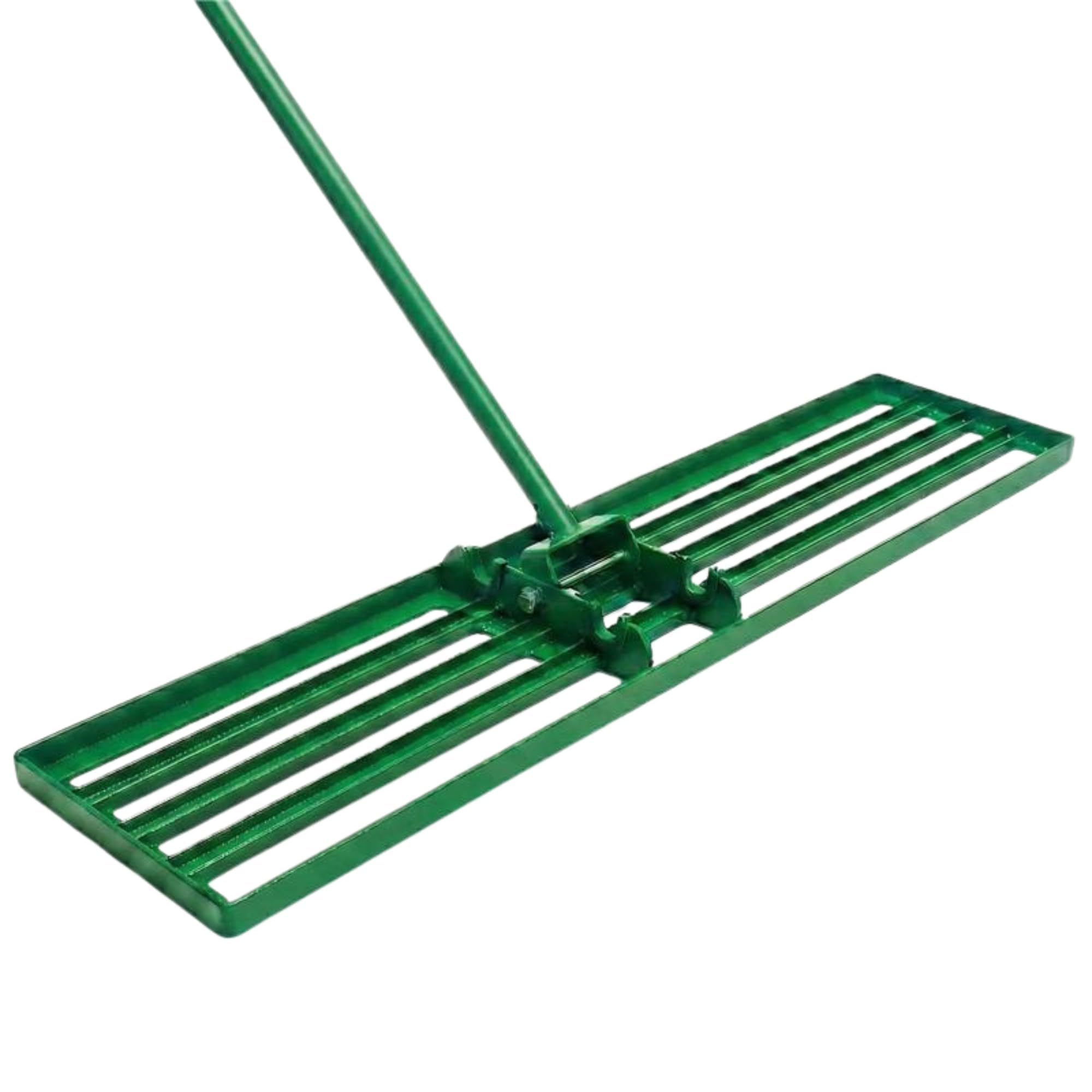
Landzie markets this rake primarily to lawn care professionals, and the build quality reflects that audience. The powder-coated alloy steel head resists chipping and rusting far longer than painted alternatives, and the fortified head-to-pole connection uses an oversized bolt and bracket that stays rigid under heavy side loads. The 72-inch handle provides the leverage needed for upright operation, and the entire unit disassembles in seconds for storage — the poles store in slots on the back of the head, keeping the set compact.
The 36-inch width hits the efficiency sweet spot for both residential and commercial lawns. The rake stays flat against the surface and levels soil more quickly than standard rakes because the plate does not bounce over dips. The rubber grip on the handle is comfortable even during extended use, and the metal handle resists bending under heavy loads.
The Landzie is slightly more expensive than the mid-range options, but the durability justifies the cost for anyone who levels multiple lawns per season. For a pro-grade tool that will outlast several cheap alternatives, the Landzie is a solid investment.
What works
- Fortified connection handles professional use
- Powder coating prevents rust
- Pole-on-head storage saves space
What doesn’t
- Higher price than mid-range alternatives
- Plastic handle sections instead of metal poles
7. Standard Golf Levelawn Pro 30-inch

The Standard Golf Levelawn Pro is the tool trusted by golf course superintendents — and that reputation comes from a design that has barely changed in decades because it works. The 30-inch stainless steel tray provides a smooth, non-stick surface for spreading topdressing and sand evenly across greens and fairways. The two-piece wood handle offers a traditional feel that some users prefer over metal poles, and the wood provides natural vibration dampening that reduces hand fatigue during long hours of use.
The stainless steel tray prevents clumping and ensures consistent distribution of materials. The head is engineered to glide without digging into the turf, making it ideal for fine topdressing applications after core aeration. The 72-inch handle provides enough leverage for upright operation, and the tool is manufactured in Cedar Falls, Iowa, with a focus on precision and attention to detail. Assembly requires two wrenches and takes about five minutes.
The Levelawn Pro is the most expensive unit in this comparison, and the wood handle lacks the folding or telescoping features of modern alternatives. The handle does include a synthetic rubber grip, but the non-collapsible two-piece design takes up more storage space than detachable metal-pole alternatives. The consistent performance and durability under heavy professional use make it the gold standard for those who need reliable results day after day.
What works
- Trusted by golf course superintendents worldwide
- Stainless steel tray prevents clumping
- Wood handle dampens vibration
What doesn’t
- Highest upfront cost in this comparison
- Non-collapsible wood handle takes more storage space
Hardware & Specs Guide
Plate Gauge and Material
The thickness of the steel plate is the single most important durability spec. Look for a minimum of 2mm — anything thinner will warp if you drag wet topsoil or rocky fill. Carbon steel offers the best balance of strength and cost, while stainless steel adds corrosion resistance for frequent use around irrigation. Alloy steel heads (like the GAW) provide the highest weight per square inch, which helps the plate sink into material without added ballast.
Handle Length and Connection
A 72-inch handle is the baseline for standing upright during leveling. Shorter handles force you to bend, which leads to back pain and reduces the downward force you can apply. The connection between handle and head should use bolted metal brackets — plastic snap-fit joints will loosen after a season of pulling heavy material. Detachable handles are convenient for storage but must lock securely without play to prevent the handle from twisting during use.
Two-Way vs. One-Way Glide
Rakes that only work in one direction waste half of every pass. A bi-directional plate design lets you move material on both the push and pull strokes, effectively doubling the amount of soil you can spread per minute. The Dremmt 30-inch is engineered specifically for two-way glide, while some budget options only work effectively when pulled. Check user reviews specifically for mentions of push-pull performance before buying.
Weight and Deck Width Trade-offs
Heavier rakes (over 15 pounds) require less added ballast but cause more fatigue during transport and storage. Lighter rakes (under 10 pounds) are easier to handle but may need sandbags or bricks on top to stay planted. Deck width affects both speed and maneuverability: 30-inch heads are the universal sweet spot, while 36-inch and larger heads are best for open lawns with few obstacles. Measure your gates and shed clearance before choosing a wider model.
FAQ
Can I use a lawn leveling rake on wet soil?
How much material can I level with one pass of a 30-inch rake?
Do I need to add weight on top of the rake for it to work?
Can a lawn leveling rake damage my grass?
How do I clean and store a steel leveling rake?
Final Thoughts: The Verdict
For most gardeners, the best lawn leveling rake winner is the Dremmt 30-inch because its 2mm stainless steel plate, two-way glide design, and 72-inch handle provide the perfect balance of speed, durability, and ease of use for residential lawns. If you want extra width for large open yards, grab the VEVOR 36-inch for faster coverage. And for compact storage and lightweight maneuverability, nothing beats the folding EUIJOIP 27-inch.