
Specs are compiled from manufacturer listings and verified buyer reviews and can change over time — please confirm the key details on the product page before buying.
You want a hog fence that keeps your animals in without turning installation into a battle. The panels below are ranked by how well they stop rooting, climbing, and testing animals, and by how easy they are for one person to install. You will find the best pick for your setup and the honest trade-offs before you buy.
I’m Rikta — the founder and writer behind Lawn Gear Lab. This guide is built by comparing the manufacturers’ published specifications and the patterns across verified customer reviews, so you get each pick’s real strengths and trade-offs instead of marketing spin.
You need wire that contains hogs without constant mending, so here are the best hog fence panels chosen for strength, mesh design, and real-world owner feedback.
Our Picks at a Glance
How To Choose The Best Hog Fence Panels
Hog fencing needs to stop an animal that pushes, roots, and leans its full weight into whatever you put between it and freedom. A fence meant for a garden trellis is not the same as one built to hold livestock, so you have to match the wire’s strength to the animal you are containing.
Read the gauge before you unroll anything
Gauge is the thickness of the wire, and a lower number means a thicker, stronger strand. A 14-gauge body is the common starting point for livestock panels, and stronger 12-gauge wire is thicker still. Thicker wire resists bending better when a hog pushes, but it also weighs more and is harder to work by hand.
Understand the mesh pattern
Try to find panels with a graduated mesh design — openings that are wider at the top and tighter near the ground. This design keeps small animals like piglets from wiggling through the bottom while the wider openings above lighten the panel and keep visibility clear. Look for a taper from roughly 8 inches down to 3.5 inches.
Woven wire vs welded wire
Woven wire is built from interlocking strands that flex under pressure instead of snapping at a weld point. Welded wire is cheaper but tends to pop apart at the joints after repeated stress from heavy animals. For hogs, choose a woven grid so the fence gives slightly under pressure and springs back rather than tearing.
Quick Comparison
| Model | Best For | Length | Gauge | Mesh | Amazon |
|---|---|---|---|---|---|
| Falanava Farm Fence★ Best Overall | Value pick, flexible fencing | 164 ft | — | Tapered mesh | Amazon |
| ZESHANGUS Cattle Panel | Heavy-duty mid-range, dog-proof | 165 ft | 14 gauge body / 12 gauge border | 8 in to 3.5 in | Amazon |
| ZESHANGUS Cattle Fence | Large coverage, premium value | 328 ft | 14 gauge body / 12 gauge border | 8 in to 3.5 in | Amazon |
In-Depth Reviews
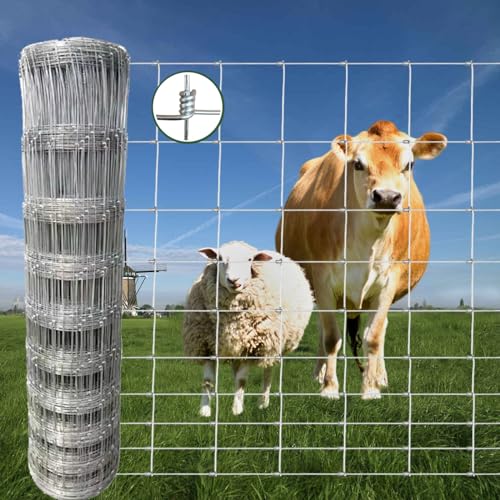
1. Falanava Farm Fence 4ft x 164ft Galvanized Wire Fencing
The budget-friendly roll that trades raw rigidity for ease of handling.
This Falanava panel runs 164 feet long at 4 feet tall, giving you a solid amount of coverage for a pasture, orchard, or garden boundary without spending on a premium-tier roll. It is made from hot-dipped galvanized alloy steel, which means the zinc coating protects the wire from rust so the fence keeps doing its job for years outdoors.
The mesh openings get smaller toward the bottom, so rabbits, dogs, chickens, and foxes cannot slip through into your field, while larger animals like hogs and cattle stay contained above. Buyers report the quality feels genuine and the fence is relatively easy to work with. One real-world tip they pass along: bring a good wire cutter, because the high-tensile wire is hard to cut and the tight wrapping means the knots can snag at your fingers as it unrolls.
Honest trade-off: sturdiness gets mixed reactions. Some owners say it is strong and stands up over time, while one called it too weak for anything beyond a garden trellis. Think of this as a mid-range, everyday fence, not a heavy-duty show pen. The crowd favorite holds a 4.1-star score across 200+ ratings, so you get a balanced view before you commit.
What wins owners over
- Quality comes up as the top praise — 24 owners single it out for being well made.
- Tapered mesh keeps small animals out of your field.
- Simple to install, disassemble, and move as needed.
Who should look elsewhere
- High-tensile wire demands a good cutter and careful unrolling.
- Sturdiness is not guaranteed — a few owners found it flimsy for heavy pressure.
Reach for this when: you need a flexible, budget-friendly spool for gardens, orchards, or light livestock and you are comfortable working the wire by hand.
But know this: if you expect prison-grade rigidity against a determined herd, this 164-foot roll may feel lighter than you want.
2. ZESHANGUS Cattle Panel 4ft x 165ft 14 Gauge Heavy Duty Galvanized Woven Wire Fence
The springy, dog-proof roll that spooks climbers right off the wire.
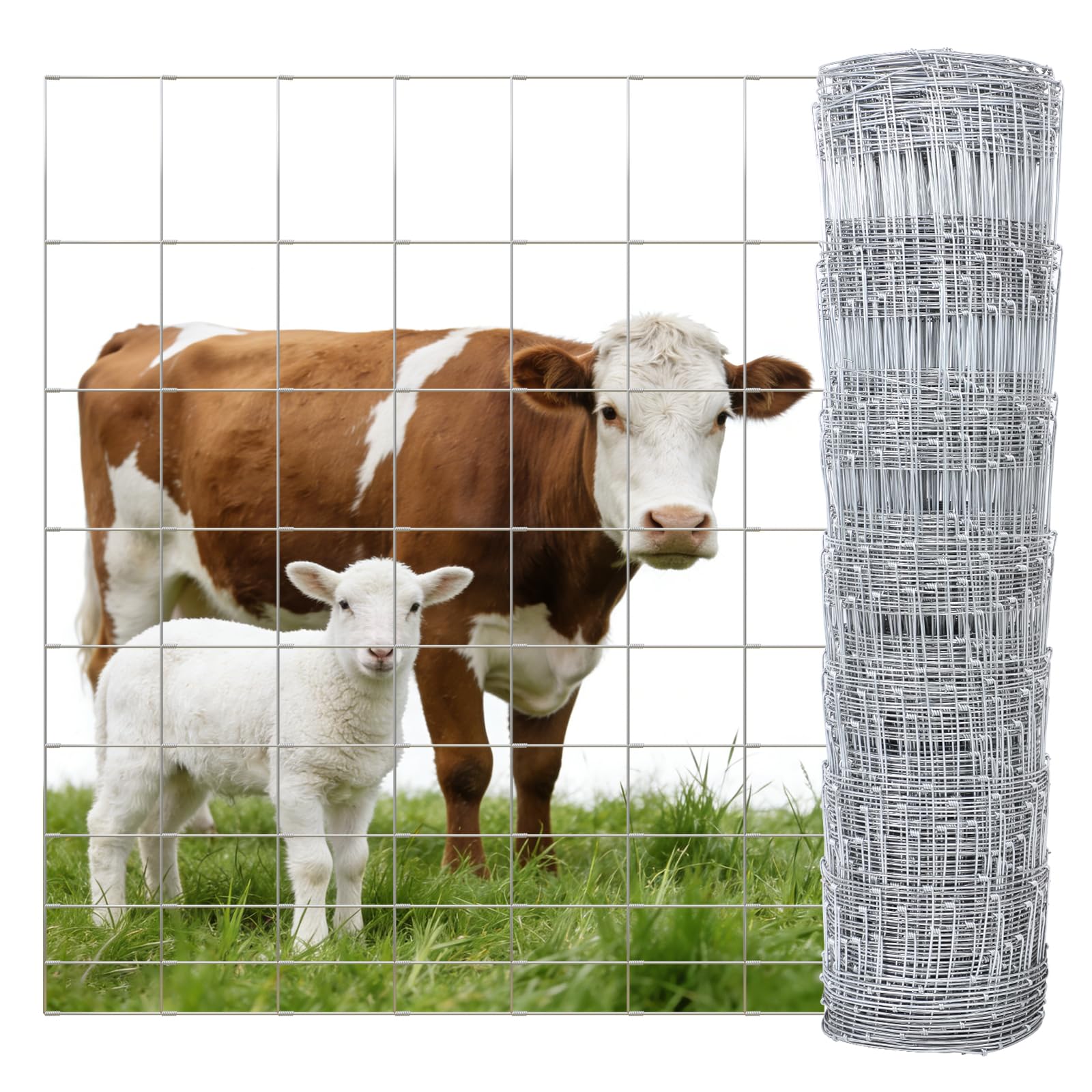
This ZESHANGUS panel is built with a 14-gauge galvanized steel body reinforced by a thicker 12-gauge border wire, which gives it real impact resistance where hogs and cattle lean hardest. It runs 165 feet long and 4 feet tall, and owners mention it mounts cleanly to standard 5 and 6 foot metal posts with no special tools.
The defining trait owners rave about is the woven construction’s springiness. Because the grid is woven rather than welded, the fence flexes under pressure and returns to shape — customers note that large dogs cannot climb it because the wire gives way slightly and spooks them off. The tight 8-inch-to-3.5-inch tapered mesh means the wider top keeps visibility while the tighter bottom stops piglets and other small animals from escaping.
Where this panel shines compared to the budget Falanava option is the 12-gauge border: it is the reinforced edge that keeps the whole span from sagging and deforming under heavy animal pressure. Measure for measure, this 165-foot roll pairs that heavier border with the same tapered mesh, so it is the better pick for anyone with truly determined livestock. Buyers found the price excellent for what it delivers.
Spring-back strength: the woven grid flexes and spooks climbers, which is rare at this length and gauge.
The single caveat: an occasional roll arrives not quite as long as advertised, so measure your run before ordering a tight fit.
3. ZESHANGUS Cattle Panel 14 Gauge Galvanized Woven Wire Fence 4FT x 328 FT
A double-length premium roll that one person can unroll and install solo.
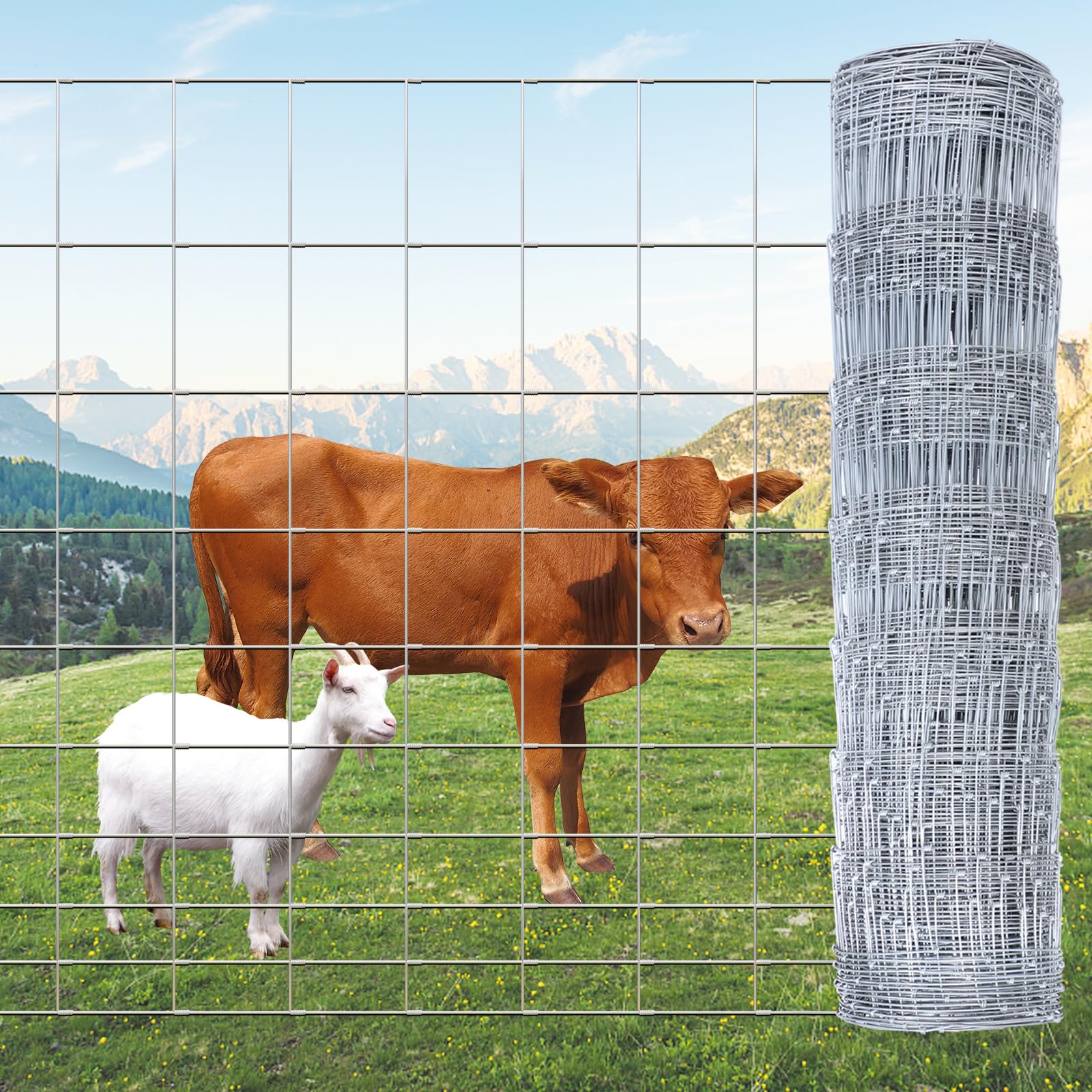
Here is the same ZESHANGUS 14-gauge body with a 12-gauge reinforced border, but stretched to 328 feet — at 328 feet versus the 165-foot roll above, so you cover a large pasture or perimeter without splicing multiple panels. Reviewers point out putting up all 324 feet by themselves without issue, which tells you the woven flexibility is matched by genuinely manageable handling.
The graduated mesh runs from 8-inch openings at the top down to 3.5 inches at the bottom, which blocks piglets, goats, and poultry from squeezing out while predators stay out and visibility stays clear. Buyers describe it as well built, worth the price, and exactly as advertised at a true 4 feet by 328 feet, with extra wire left over even after a big run. The zinc coating is heavy, and owners call it a good value compared to other wire for a smaller roll.
If you are covering a landscape project, this doubles your span in one shot — the 328-foot roll beats the 165-foot panel outright on coverage per setup. The recurring gripe is packaging: some wire arrives bent up in places from shipping, so inspect the coil before you stretch it. It is not as rigid as a true 12-gauge body, so treat it as strong-but-flexible rather than a wall of steel.
The smart buy for: anyone fencing a large property who wants one continuous roll of quality woven wire and the freedom to install it single-handedly.
The honest limit: the 14-gauge body is flexible by design and is not as sturdy as a 12-gauge version, plus some coils ship with bends that need straightening.
Understanding the Specs
Gauge Thickness
Gauge is the wire’s thickness — a lower number means a thicker, stronger strand. A 14-gauge body is the common livestock starting point, while a 12-gauge border adds extra rigidity along the top and bottom edges where animals push hardest. Thicker wire resists bending but is heavier to handle by hand.
Graduated Mesh Pattern
A tapered mesh design has wider openings at the top (about 8 inches) and tighter openings at the bottom (about 3.5 inches). The wider top lightens the panel and keeps visibility, while the tight bottom stops piglets, rabbits, and poultry from escaping and blocks predators from reaching in. Match the bottom mesh to the smallest animal you need to contain.
FAQ
Will these panels hold in adult hogs or just piglets?
What is the difference between woven wire and welded wire for hogs?
Can one person install these panels alone?
How long will a galvanized hog fence panel last outdoors?
What height should I choose for hog fencing?
Will these panels work with metal T-posts?
Can I use hog panels for a garden or trellis too?
How much ground will a 328-foot panel cover?
Final Thoughts: The Verdict
If you want one dependable pick, the hog fence panels winner is the ZESHANGUS Cattle Panel because it pairs a 14-gauge body with a 12-gauge reinforced border at a practical 165-foot length that owners confirm mounts easily to metal posts. If you need one continuous roll for a large property, grab the ZESHANGUS 328-Foot Cattle Fence, which provides 328 feet versus 165 feet and is still installable solo. And if you just want a flexible, budget-friendly option for a garden or light livestock setup, the Falanava Farm Fence is the one to reach for.
How We Picked
We do not accept paid placement. Every pick is matched to a real buyer and a real use-case; we do not hands-on test units.
Sources & Methodology
Specifications: manufacturer listings and product documentation. Review insights: verified customer reviews, as of July 2026. Pricing: not shown on this page (it changes often); check the current price via the retailer link.
As an Amazon Associate, Lawn Gear Lab earns from qualifying purchases. This does not affect which products we feature.