
Specs are compiled from manufacturer listings and verified buyer reviews and can change over time — please confirm the key details on the product page before buying.
You walk out to your garden and find broccoli laced with caterpillars or blueberries picked clean by birds. Fine mesh netting is the simplest wall you can put between your harvest and everything that wants to eat it first. The difference between a net that lasts one season and one that tangles or tears is in the weave. The right pick stops cabbage moths, mosquitoes, and squirrels while letting rain and sun through. The wrong one shreds in the first wind or traps heat that cooks your plants.
I’m Rikta — the founder and writer behind Lawn Gear Lab. This guide is built by comparing the manufacturers’ published specifications and the patterns across verified customer reviews, so you get each pick’s real strengths and trade-offs instead of marketing spin.
Below, I break down eight popular and proven fine mesh netting for garden options. They range from ultra-tough nano-mesh that holds up against hail to budget rolls that cover a whole season, with honest buyer feedback woven into every call.
Our Picks at a Glance


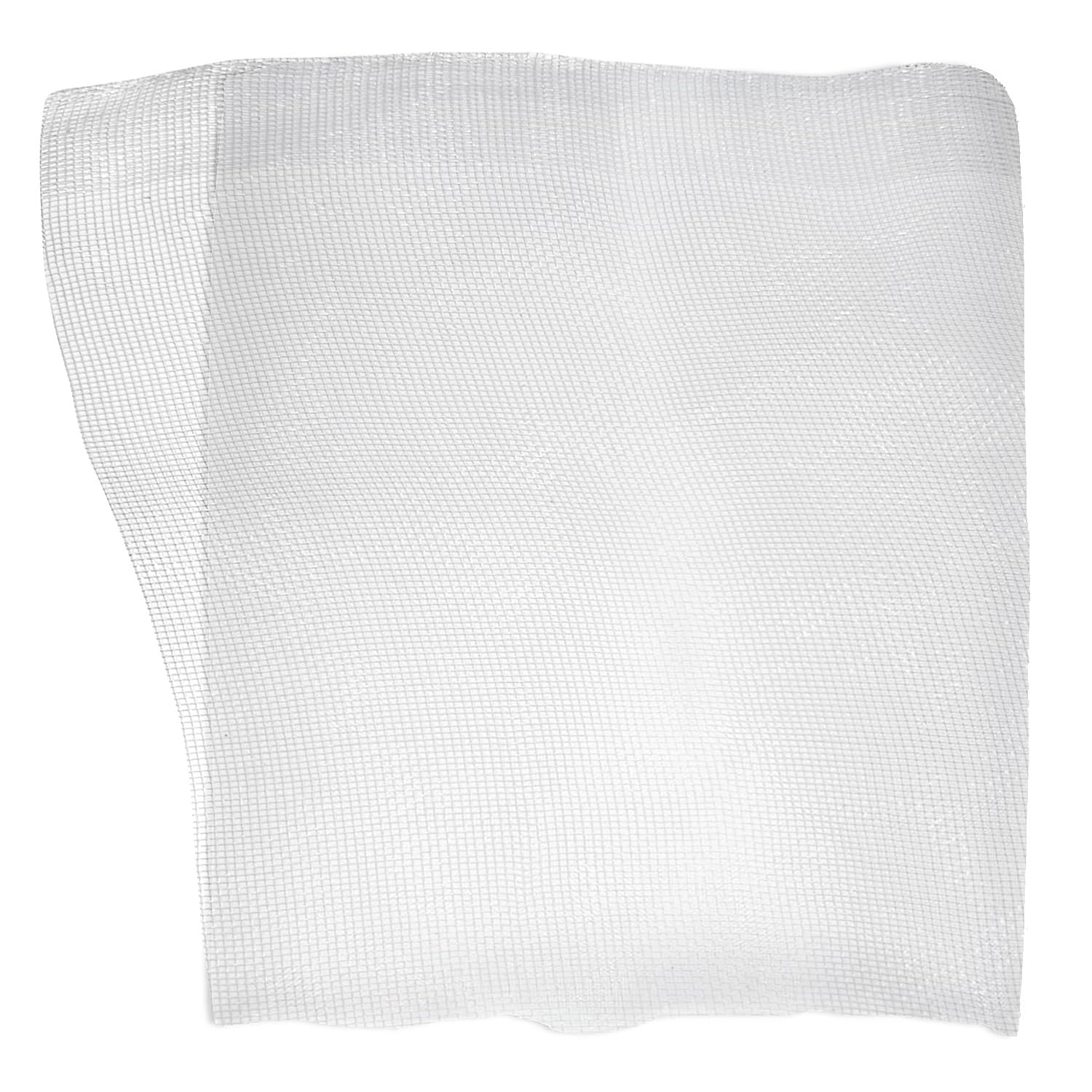
How To Choose The Best Fine Mesh Netting For Garden
Not all garden netting is the same. A net that works for bird protection may have holes too large for flea beetles. A heavy shade cloth can block the light your tomatoes need. Here is what to look for in a fine mesh netting for garden use.
Mesh Density and Hole Size
The most critical spec is the opening size. Ultra-fine mesh (around 0.8mm to 1mm, as seen on the Gardeningwill netting) stops tiny pests like aphids, thrips, and cabbage moths. Coarser mesh lets in the good bugs (bees for pollination) but can still block birds and large insects. If you protect broccoli or kale from caterpillars, go ultra-fine. For blueberries from birds, you can step to a slightly wider weave.
Material: PE vs. Nano-PP vs. HDPE
Standard PE (polyethylene) nets are lightweight and affordable, but they can snag and stretch over time. If you live in a windy or hail-prone area, look for Nanometer PPT (a nanocomposite material) or HDPE (high-density polyethylene, a stiffer plastic). Buyers report that the knit stability of nano-mesh means “each wire is fixed” so the weave does not shift or fray when cut, and it holds up against large hail.
Shade Rating and Light Transmission
Some fine mesh nets also provide shade. Black netting, like the Abimars option, offers a 30% shade rating that can help keep your greens from bolting (going to seed early) in heatwaves. White netting typically lets in the most light and is best for full-sun crops. A 33% shade rating, like the ANPHSIN product, is a middle ground — good for plants that appreciate a little cooling on scorching days.
Ease of Installation and Anchor Points
The most common buyer complaint across all these nets is tangling during setup. Large rolls (10×33 feet) are hard to unfold in a breeze without a helper. Look for nets that secure easily with stones, soil, landscape pins, or a staple gun. A zipper and drawstring design, like the Homoda fruit tree covers, makes it much easier to access your harvest without fully removing the net.
Quick Comparison
| Model | Best For | Material | Size | Shade Rating | Amazon |
|---|---|---|---|---|---|
| ANPHSIN 10x12ft★ Best Overall | Windy patios and porches | Nano-PP | 10×12 ft | 33% | Amazon |
| SnugNiture 10x33ftBest Coverage | Large, sprawling garden beds | PE | 10×33 ft | — | Amazon |
| Gardeningwill 10x15ftTop Performer | Long-term seasonal coverage | PE | 10×15 ft | — | Amazon |
| Ruolan 10x33ft | Deer and rabbit defense | PE | 10×33 ft | — | Amazon |
| Garnnet 10x33ft | Mountain weather and wind protection | PE | 10×33 ft | — | Amazon |
| Homoda 8x8ft 2-Pack | Individual fruit trees | HDPE | 8×8 ft (2 packs) | — | Amazon |
| RIFNY 10x33ft 2-Pack | Max coverage for low cost | PE | 10×33 ft (2 packs) | — | Amazon |
| Abimars 10x33ft Black | Tornado/hail-prone climates | Nano-PP | 10×33 ft | 30% | Amazon |
In‑Depth Reviews
1. ANPHSIN 10x12ft Strong PP Nanocomposite Mosquito Net
Our pick — over 4.5★ from 600+ verified ratings; the strongest balance of quality and price.
The net that survives wind, hail, and the cat without a single rip — that is why it is the best overall.
Unlike standard PE nets that stretch and deform over time, this 10x12ft net is built from a Nanometer PPT material (nano-PP, a composite where fibers are bonded in place). Buyers describe it as “thicker and sturdier than others” while it still weighs only 1.2 pounds. The upgrade matters: the weave is a dense, ultra-fine mesh that blocks even Florida mosquitoes. Because the threads are bonded rather than loosely woven, the net resists tearing in ways traditional mesh does not. That 33% shade rating means black netting that offers real cooling relief — owners mention it “provides very light shade” on a hot balcony, which is why it works as a patio screen during summer without feeling like a dungeon. It offers better wind and tear resistance than the standard PE SnugNiture roll below.
Installation stories from buyers are instructive. One person screened in an entire apartment porch with a staple gun and reported it “held up well for a year.” Another uses it to keep a cat contained on a patio, saying the net is so invisible from the street that “it is almost like there is not anything there.” The biggest complaint is that it tangles during setup — the material is light enough to catch the breeze and twist before you get it anchored. Plan for two people or a calm day. Still, the trade-off for that kind of durability is worth it for most gardeners.
What Wins People Over
- Tear-resistant nano-PP weave holds up in high winds — one buyer says it survived a year on a porch with no damage
- 33% shade blocks harsh sun without darkening the space, perfect for patios and raised beds
- Ultra-fine mesh keeps out tiny pests including mosquitoes and gnats while letting air and rain through
The Setup Hurdle
- Unfolding the 10x12ft sheet is a breeze-chasing challenge — buyers advise getting a helper or anchoring one edge first
- The black color can look “tacky” against some home exteriors, as one buyer put it, though the see-through quality mitigates this
Reach for it if: you need a single, strong, all-purpose net that blocks bugs, provides shade, and will not rip when the wind picks up.
Think twice if: you are covering more than 120 square feet — you may need to buy two or move to a bigger roll.
2. SnugNiture Garden Netting 10x33FT Ultra Fine Mesh
A 33-foot roll covers a small farm while staying affordable — the coverage champion by length.
With a massive 10x33ft footprint (396 inches long by 120 inches wide), this is the true space-to-price champion for anyone with sprawling beds. The roll is lightweight at just 1.23 pounds, made from PE material (polyethylene) that is waterproof and sun-proof. Buyers who used it for a whole fall season reported that its fine weave kept caterpillars, worms, and aphids out of their brassicas for seven months straight. The white color is see-through, so you can easily spot your plants underneath without lifting the edge. Compared to the nano-PP ANPHSIN net above, the SnugNiture is much lighter and more prone to snagging on sharp objects.
The main durability caveat is that the PE material is more prone to snagging than the nano-PP options above. One owner ran it over blueberry bushes and found that sharp twigs rubbed small holes into the weave after several months. Another noted it snagged on a bunny enclosure frame but remained functional. For the price of this huge roll, the bargain argument is strong — just accept that you may need to patch a spot or replace it every two seasons if you have thorny plants.
The real-world verdict: if you need to cover a 12×2 ft bed, a 7×3 ft bed, and a few fig trees all from one roll, the SnugNiture is a literal 10x33ft solution. You can water and see right through the white mesh, which makes monitoring a breeze. Handle it gently near anything sharp.
Get this if: you have a large vegetable patch or multiple raised beds and want maximum coverage for a budget-friendly price.
skip it if: your garden has thorny berry bushes or rough-edged structures that would snag this lightweight PE weave.
3. Gardeningwill 10x15Ft Fine Mesh Insect Netting
The garden workhorse that weathers storm after storm — with holes just 0.8mm wide to stop the smallest bugs.
At 10x15ft, this net hits the balance between a manageable size and substantial coverage. what separates it is its ultra fine mesh — a 0.8mm to 1mm opening (so small it stops flea beetles and thrips) that blocks the smallest insects while still allowing water, air, and sunlight through. Customers note that it is “strong, durable netting lasting multiple seasons through heat and storms.” Those who used it with PVC pipe hoops for tomatoes and cucumbers found it held up against heavy rain and wind without tearing. Its 0.8mm mesh is tighter than the wider weave of the SnugNiture roll, making it better for tiny pests.
The honest trade-off, which shows up across multiple owner accounts: the mesh can tear if you are not careful during installation. One person used it on a balcony with a staple gun and waterproof Velcro and noticed some “runs and tears” in the fabric, but it still worked for its intended mosquito and bug protection. The PE material is soft and plant-safe, but that softness means it is less resistant to a snag on a sharp stake. Consider this a garden tool that rewards a gentle hand.
Who it works for: the buyer who wants a dense, ultra-fine barrier for a greenhouse or a large raised bed and is willing to handle it with care during installation for a season or more of reliable pest control.
Choose it if: you are setting up a hoop house or need a net that stops tiny bugs while letting rain soak through without being removed.
Pass if: you tend to install garden materials roughly or have young children who might tug on the net — this one is durable but not indestructible.
4. Ruolan Garden Mesh Netting for Plants 10X33 FT

The rugged PE net that deer refuse to cross — for a price that is tough to top per square foot.
Buyers consistently use the word “durable” for this Ruolan net — not always the case for budget-friendly PE rolls. It kept a garden full of sweet potatoes and beans completely rabbit and deer free, and owners note it “does not rip easy when used as intended to loosely cover rows.” The ultra-fine mesh design is safe for birds (they do not get tangled), effective against cucumber beetles, and breathable enough that plants get full light and water penetration. At 10x33ft, it covers a lot of ground for the money, similar in size to the SnugNiture but praised more for animal deterrence.
The catch, mentioned by several owners, is that the netting is large and surprisingly messy to unfold. Without a clear plan and a helper, it can blow around and pick up dirt, making the first setup frustrating. One buyer gave 4 stars specifically because “cutting outside in wind/dirt is messy.” Once it is on the ground and anchored with stones or soil, the headache is over, but the initial wrestling match is real. The budget gardener who can tolerate this setup will get a lot of net for the cost.
What People Love
- Generous length and width — buyers describe it as “nice generous length and width, so good value for money”
- Sturdy enough to stop deer and rabbits, flexible enough for easy cutting and shaping
The One Frustration
- Unfolding the 33-foot roll outside is a two-person job in calm weather; in the wind, it becomes a fabric tornado that picks up bits of soil and debris as you wrestle it open
Best for: the gardener who needs a huge roll of tough white net to protect a large vegetable plot from every four-legged visitor and is ready for a few minutes of wrestling during setup.
Skip if: you want a quick, tool-free install — this one demands patience and ideally a second pair of hands.
5. Garnnet Garden Pest Barrier Netting 10x33ft

A mountain-weather warrior that blocks wind, provides shade, and retains heat at night — all from one roll.
Gardeners in unpredictable climates swear by this roll. One buyer living in a region where temperatures swing from 40°F to 80°F in a single day reports that this netting blocks wind, provides shade, and retains heat at night — all from the same piece of fabric. The extra fine mesh (10x33ft, PE material, UV resistant) is designed specifically to stop the tiniest flying insects, including carrot fly, cabbage moth, and wasps, without trapping heat the way floating row covers do. It shares the 10x33ft size with the Ruolan and SnugNiture but is praised more for handling extreme temperature swings.
Where it falls short is edge integrity. Multiple reviewers point out that when you cut the netting to size, the cut edges fray and shed threads. One enterprising owner solved it by sewing the edges with similar material to prevent snagging. If you plan to keep the netting uncut (just draping it over a large area), the fraying is not an issue. Custom cutters need to factor in a little extra work or accept some fraying. This makes it less ideal for precise rectangular beds compared to the fray-resistant Abimars nano-PP pick.
The honest trade: incredible environmental versatility — wind protection, sun shading, and frost retention all in one net. But if you need a precise rectangular shape for a raised bed, the frayed edges will bother you compared to a knit that stays locked.
Reach for this if: you are gardening in a region with wild temperature swings, high winds, or strong sun and need a large, breathable net that handles all three.
Think twice if: you plan to cut the netting into many smaller pieces — the fraying will become tedious over time.
6. Homoda Fruit Tree Netting Cover with Zipper & Drawstring, 2 Packs 8ft x 8ft
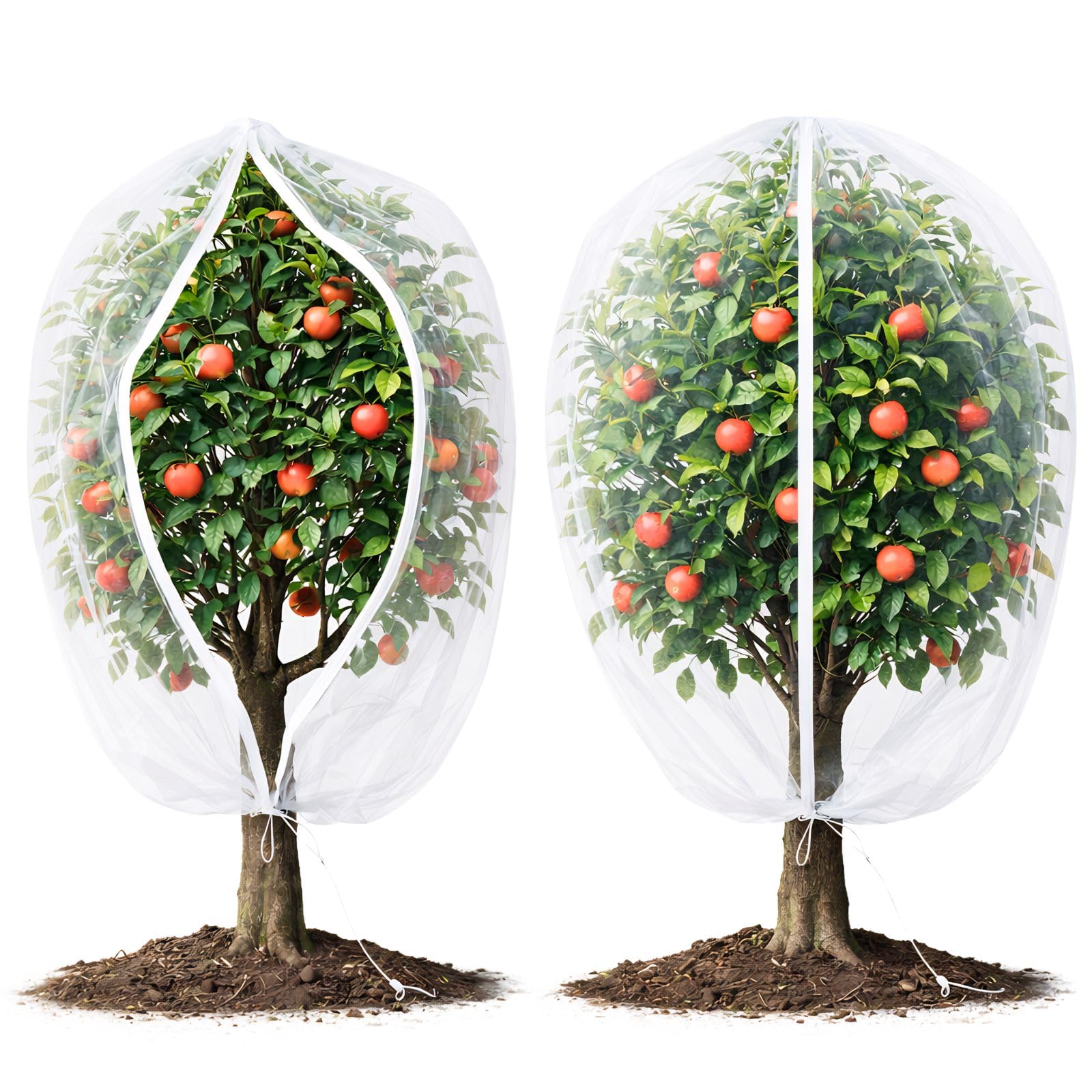
The only net here with a zipper door — so you can pick fruit without wrestling the whole cover off.
Most fine mesh nets are flat sheets that you drape and secure. These Homoda covers are pre-shaped bags made from HDPE (high-density polyethylene, a stiff plastic), designed to slip over a single fruit tree, bush, or shrub. The standout feature is the zipper on the side and a drawstring closure around the bottom — you unzip to pick your fruit without ever removing the entire net. For dwarf cherry trees, blueberry bushes, and peach trees, this is a huge time saver compared to draping a flat sheet like the SnugNiture across a tree.
The feedback is mostly glowing on function: buyers love that the zipper allows inspection and harvest “without removing net,” and that the 8x8ft size is true to spec. However, the durability gets mixed marks. Several shoppers say that the drawstrings break relatively easily, and the mesh itself can snag on rough tree branches. For the 2-pack price, quality is decent, but expect to handle it gently, especially around the closure mechanisms. The HDPE material is stiffer than the PE of the RIFNY 2-pack, holding its shape as a bag rather than a drape.
Why It Stands Out
- Zipper and drawstring make on/off easy — “Love the Zippers!” is a common buyer refrain
- HDPE material is stiffer than PE, holding its shape better as a tree bag
The Catch
- The drawstrings can snap under tension, and the mesh is not tear-proof against sharp twigs
Best for: anyone with dwarf fruit trees, blueberry bushes, or shrubs who wants to protect produce from birds and squirrels without battling a flat sheet every time they harvest.
pass on it if: you are trying to cover a large garden bed or row — these bags work best on individual plants, not broad areas.
7. RIFNY Garden Netting for Raised Beds, 2 Pcs 10x33Ft

Two 33-foot rolls of ultra-fine mesh make covering a large garden almost easy — the budget king for coverage.
If you have a massive vegetable plot or multiple separate beds, the RIFNY 2-pack delivers serious value. You get two 10x33ft rolls of ultra-fine PE mesh (0.04in openings) that let rain, light, and air through while blocking cabbage moths, birds, and squirrels. The oblong hole construction is unique — buyers report it allows high permeability while also offering some dust blocking. One Florida gardener specifically praised its versatility in their humid, pest-heavy environment. It is a broader coverage option than the single-roll SnugNiture, and at a similar price point for twice the fabric.
The durability is where opinions split. Some owners mention that the mesh stretches and develops small tears over time as the PE fibers fatigue. One buyer’s honest assessment: the netting “stretches and tears over time, but worth annual replacement for bug-free vegetables.” On the other hand, another owner was shocked by its strength, saying it survived hail and high winds without ripping and that the fibers “kind of move apart at the snag but you can kind of tug them back into place. Almost like it is self healing.” Your mileage may vary based on local weather and how tightly you stretch the mesh.
The verdict from hundreds of buyers: the RIFNY 2-pack is a fantastic budget play for massive coverage. Treat it as a strong season-long tool rather than a decade investment, and the value is undeniable.
Best for: the cost-conscious gardener with a large or multi-zone garden — two rolls cover up to 66 feet of row length for a price that often buys just one premium roll.
Pass if: you want a permanent, tear-proof installation — some customers note stretching and fibers separating after a few months of heavy use.
8. Abimars Thicker Garden Mesh Netting, 10 x 33 Black, Nano PPT
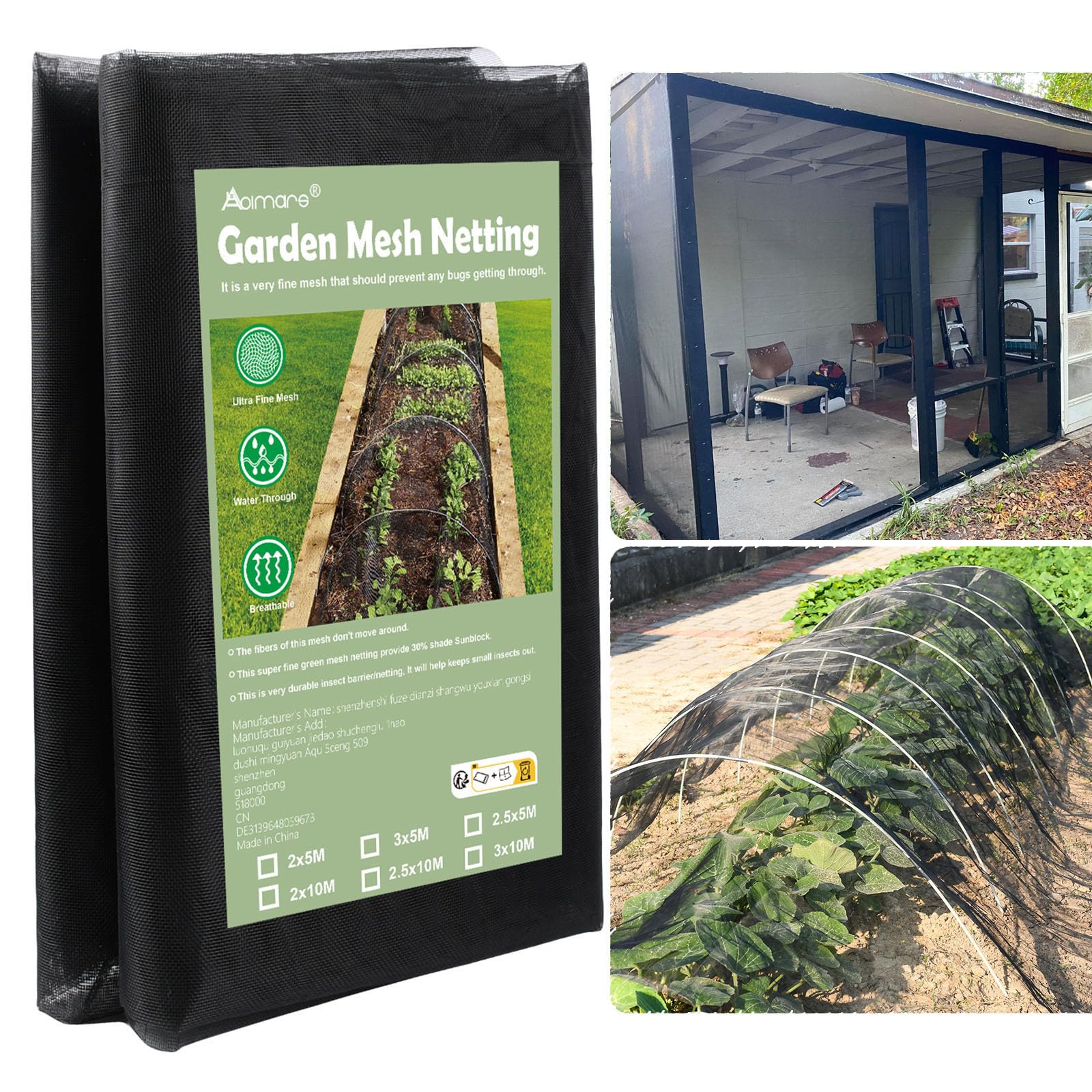
The hail-proof, fray-proof, shade-giving premium net — tougher than anything else here.
This is the most rugged net in the lineup, and the reviews back it up. Made from Nanometer PPT (the same advanced composite as the ANPHSIN #1 pick, but in a 33-foot black roll with 30% shade), its woven fibers are fixed in place so the mesh does not shift, distort, or fray when cut. One buyer put it to the ultimate test: a hailstorm with 60+ mph winds. The net held with no rips or tears, and it “seemed to help prevent scorching” on the vegetables underneath. It is stronger than the Garnnet PE material, which frays at cut edges under similar conditions.
Because the black fabric provides 30% sunblock (meaning it blocks three out of every ten light rays), it serves a dual purpose — pest barrier and sun protection. In summer, that shading helps keep greens from bolting (going to seed early) and reduces watering frequency. The material is super lightweight (1.33 oz per square yard), so you need a support trellis or hoops; if laid directly on plants, the net’s own light weight can still bend stems. An occasional minor gripe: the poles that come with some garden systems do not always connect securely to this netting without extra clips.
Why It Is The Premium Winner
- Held up in 60+ mph winds with hail — “no rips or tears,” per a verified buyer
- Cut edges do not fray because each nano-PP wire is locked in place
- 30% shade rating keeps heat-sensitive crops cool while blocking Japanese beetles, caterpillars, and the tiniest bugs
The Small Stuff
- Lightweight fabric needs a support system (hoops or trellis) so it does not rest directly on and smother plants
- The black color absorbs more heat than white nets, so it is best used as a shade barrier rather than a full-sun cover
Reach for this if: you face extreme weather — hail, high winds, scorching sun — and need a net that performs as a shade cloth AND insect barrier without fraying or tearing.
Look elsewhere if: you only need a standard bug screen for a small, sheltered bed; the premium price and shade feature are wasted on gentle conditions.
Understanding the Specs
Mesh Density (Hole Size)
This is the single most important spec for stopping pests. The smaller the opening, the more insects you block. Ultra-fine mesh (around 0.8mm to 1mm) stops aphids, thrips, and cabbage moths. Standard insect netting stops wasps and birds but lets small flies through. Hole size is measured in millimeters; you want the tightest weave that still allows visible light and water through.
Material: PE vs. Nano-PP vs. HDPE
Basic PE (polyethylene) nets are cheap and effective but stretch and snag over time. Nanometer PPT (nano-PP) is a sturdier composite where fibers are bonded in place — it will not deform when cut and survives hail. HDPE (high-density polyethylene, a stiff plastic) sits between them, stiffer than PE but lighter than nano-PP. For windy or heavy-use gardens, nano-PP is the upgrade worth the cost.
Shade Rating
A percentage (e.g., 30% or 33%) indicates how much sunlight the mesh blocks. Black nets with a shade rating are perfect for leafy greens that bolt (go to seed early) in direct heat. White nets transmit nearly all light and are better for full-sun crops like tomatoes. If the spec does not list a shade rating, assume the net is transparent and does not reduce light.
Fray Resistance and Cut Edges
Standard PE mesh frays when cut, which leads to unraveling edges and snags. Nano-PP and some HDPE weaves lock each fiber in place — the cut line stays clean and does not fray. If you plan to cut your net into custom shapes for raised beds or hoops, fray resistance is a critical durability factor that saves you from sewing edges or dealing with loose threads.
FAQ
What size mesh do I need to stop cabbage moths and caterpillars?
Can I cut fine mesh netting to fit my raised bed without it unraveling?
Will fine mesh netting stop deer and rabbits?
How do I water my plants with the netting on?
Is black or white garden netting better for plant growth?
How long does fine mesh garden netting last outdoors?
Will the netting trap heat and harm my plants in summer?
Can I use garden netting as a mosquito screen for my porch or greenhouse?
Final Thoughts: The Verdict
Across the board, the fine mesh netting for garden winner is the ANPHSIN 10x12ft Strong PP Nanocomposite Mosquito Net because it offers the best balance of durability (nano-PP, tear-resistant, 33% shade) and ease of use, with the highest customer rating in the lineup. If you want the biggest roll for the money, grab the SnugNiture 10x33FT. And for extreme weather or hail-prone climates, the Abimars Thicker Garden Mesh Netting is the one to reach for — it is the toughest, fray-proof option that doubles as a shade cloth. Over 600 buyers each rate the ANPHSIN and Abimars nets among the highest, making either a confident purchase for your garden’s protection.
How We Picked
We do not accept paid placement. Every pick is matched to a real buyer and a real use-case; we do not hands-on test units.
Sources & Methodology
Specifications: manufacturer listings and product documentation. Review insights: verified customer reviews, as of July 2026. Pricing: not shown on this page (it changes often); check the current price via the retailer link.
As an Amazon Associate, Lawn Gear Lab earns from qualifying purchases. This does not affect which products we feature.