
Specs are compiled from manufacturer listings and verified buyer reviews and can change over time — please confirm the key details on the product page before buying.
You want to stop caterpillars from shredding your tomatoes, get rid of aphids on your roses, or clear powdery mildew from your squash — without drenching your yard in synthetic chemicals. It is a real search: finding something that actually works but does not harm your kids, your pets, the bees, or the soil. The good news is that there are proven, plant-based options that handle all the common garden pests, and you do not need a chemistry degree to use them.
I’m Rikta — the founder and writer behind Lawn Gear Lab. This guide is built by comparing the manufacturers’ published specifications and the patterns across verified customer reviews, so you get each pick’s real strengths and trade-offs instead of marketing spin.
You want to stop bugs from eating your vegetables, roses, or deck plants without harming the soil or pollinators. This roundup of the best environmentally friendly pesticides matches each formula to the specific pest you are fighting.
Our Picks at a Glance

How To Choose The Best Environmentally Friendly Pesticides
Not every pest problem needs the same solution. The wrong pick can either leave the bug unharmed or — the more common mistake — kill off the beneficial insects your garden relies on. Here is what to match up before you buy.
Identify the Target Pest
The single most important step. Caterpillars and leaf-eating worms will shrug off a contact oil that only smothers soft-bodied insects, but Bacillus thuringiensis (Bt) will stop them in days. Fungal issues — powdery mildew, black spot — need citric acid or sulfur. Crawling ants or roaches are better met with a dessicating powder like diatomaceous earth. Read the label’s target-species section; it tells you exactly whether your pest is on the menu.
Match the Application Type
Some products arrive ready-to-spray from a hose-end bottle; others are concentrates you mix in a pump sprayer. A ready-to-spray oil is brilliant for covering a large rose bed fast, while a concentrate stretch of the 32-ounce bottle into ten gallons of mix is better value for a whole vegetable patch. Powders require a duster or a shaker bottle and work best in dry, protected areas.
Check for Organic Certification
Most of these products carry an OMRI (Organic Materials Review Institute) listing, meaning they meet the USDA’s National Organic Program standards. This is not just a label — it means the formula has been reviewed for synthetic chemical content. If you are growing food crops you plan to harvest the same day, look for a line saying “safe to use up until day of harvest” or “no toxic residues.”
Quick Comparison
| Model | Best For | Active Ingredient | Format | Yield | Amazon |
|---|---|---|---|---|---|
| Monterey B.t.★ Best Overall | Caterpillars & Worms | Bacillus thuringiensis | Concentrate (32 oz) | Mixes with water | Amazon |
| Bonide All Seasons Spray OilTop Performer | All-Season Protection | Mineral Oil | Ready-to-Spray (32 oz) | Hose-end | Amazon |
| Green Alcove Neem OilBest Value | Indoor & Outdoor Plants | Neem Oil | Concentrate Kit | 30 bottles (480 fl oz) | Amazon |
| Earth’s Ally Disease Control | Fungal Diseases | Citric Acid | Concentrate (32 oz) | 10 gallons RTU | Amazon |
| RobiGuard DE + Peppermint | Crawling Insects | DE & Peppermint Oil | Powder (1 lb) | Dry application | Amazon |
| Dr. Earth Insect Killer | General Garden Pests | Organic Oil Blend | Concentrate (24 oz) | Mixes with water | Amazon |
| Botanical Tradesman Neem Oil | Concentrate Value | Cold-Pressed Neem Oil | Concentrate (3.4 oz) | 320 fl oz RTU | Amazon |
| Arber Insecticide & Fungicide | 2-in-1 Control | Bio-Based Concentrate | Concentrate Kit (2x 8oz) | ~16 gallons | Amazon |
| EcoGuard Plus Mosquito Fogger | Yard Mosquitoes & Ticks | Geraniol | Concentrate (16 oz) | Hose-end / Fogger | Amazon |
In‑Depth Reviews
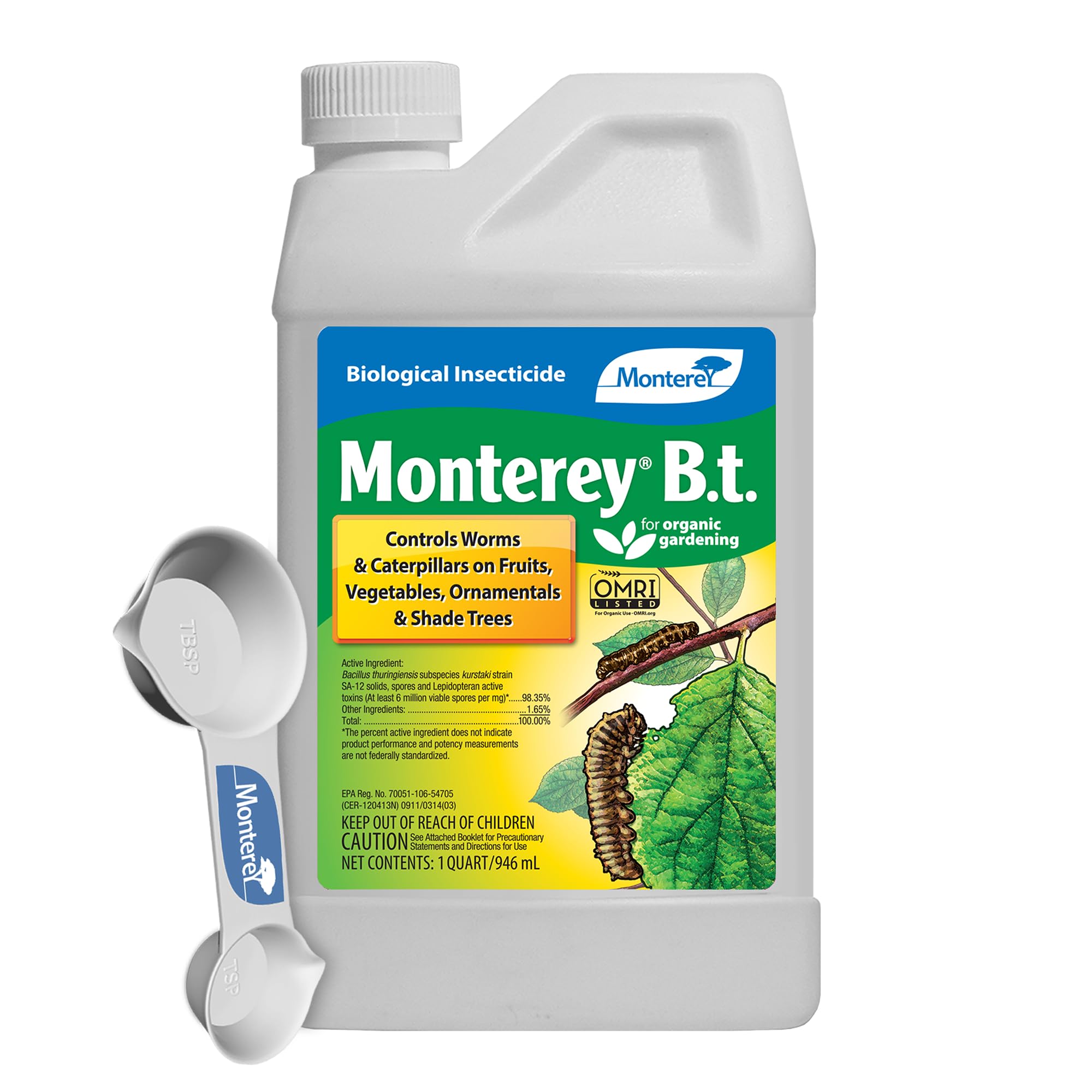
1. Monterey B.t. Bundled with Measuring Spoon – Caterpillar & Worm Killer
Our pick — over 4.5★ from 300+ verified ratings; the strongest balance of quality and price.
The targeted caterpillar killer that leaves your bees and earthworms completely alone.
This is the winner because it solves the hardest problem in organic pest control: accuracy. The active ingredient is Bacillus thuringiensis (a naturally occurring bacterium that only affects leaf-eating worms and caterpillars). You spray it on your broccoli, tomatoes, or shade trees, and it stops cabbage loopers, bagworms, and gypsy moths — but it has zero effect on honeybees, ladybugs, or earthworms when used as directed. The 32-ounce concentrate mixes instantly with water, and the bottle comes with a measuring spoon so you do not have to guess the dose.
Buyers report seeing results within days on pickleworm and squash vine borer infestations. The catch is that Bt (a naturally occurring bacterium that kills only certain caterpillars) breaks down in sunlight, so you need to mix only what you will use that night and apply in the late evening. It is also pricier per ounce than a generic oil spray, but owners mention the small dose goes a long way: “yes it’s expensive but it doesn’t take much.” The bottle itself has drawn a few complaints about a stiff cap that required cutting the bottle open — a minor frustration for an otherwise near-perfect organic selective pesticide. Skip this one if you need a spray that works in full sun all day; choose the neem oil below instead for that job.
Why It Wins
- OMRI Listed for organic gardening
- Targets only caterpillars/worms; safe for bees and earthworms
- Comes with a measuring spoon for easy mixing
One Trade-Off
- Bt is short-lived in sunlight — apply in evening and use fresh mix
Grab it if: caterpillars or cabbage worms are your main enemy and you want a bee-safe, OMRI-listed solution.
Think twice if: you are dealing with aphids, mites, or fungal diseases — Bt does not touch those.
2. Bonide All Seasons Horticultural & Dormant Spray Oil, 32 oz Ready-to-Spray
The one-bottle solution that smothers pests and fungal spores season after season.
Bonide’s 3-in-1 mineral oil covers more ground than most single-target sprays. It envelops and smothers adelgids, aphids, scale insects, mites, and mealybugs while also helping to control powdery mildew, rust, and greasy spot. Use it in the dormant stage (bare branches) or right through the growing season on pears, cherries, roses, corn, peppers, and more. The active ingredient is mineral oil — a natural product that leaves no toxic residues and is approved for organic gardening.
What It Does
- Controls insects, mites, and fungal diseases in one product
- Safe for use around people and pets — no toxic residues
- Can be used from dormant stage through growing season
The Catch
- Hose-end sprayer is poorly calibrated; a pump sprayer works better
Reach for this if: you want a single versatile spray for aphids, scale, and powdery mildew across your whole garden.
Look elsewhere if: you need a caterpillar-specific killer — this oil does not differentiate between pests and beneficials on contact.
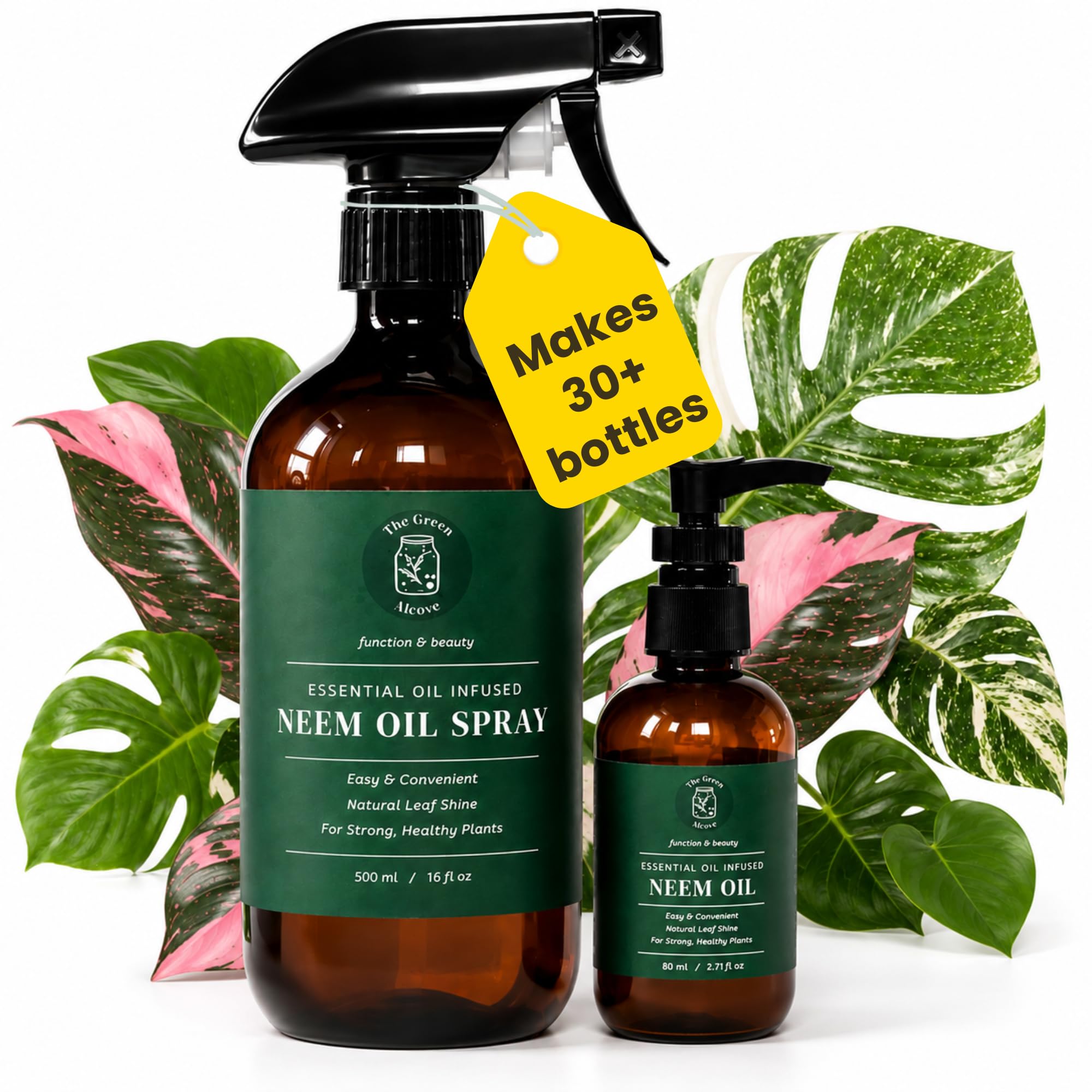
3. Green Alcove Neem Oil for Plants (Makes 30 Bottles) with Spray Bottle
The neem kit that makes thirty bottles worth of spray and actually smells pleasant.
Neem oil has long been a staple of organic pest control, but this kit solves the two things that usually annoy gardeners: bad smell and measuring hassle. The Green Alcove concentrate is infused with essential oils, so it has a much milder, peppermint-like scent rather than the pungent garlic note of plain neem. One bottle of concentrate makes up to 480 fluid ounces of ready-to-use spray, and it comes with a refillable spray bottle so everything you need is in one box. Customers note it wiped out spider mites on an orchid and eliminated fungus gnats in days.
The honest trade-off is speed. This is not a knockdown contact killer — “I had to use a few applications before I saw results” is a common note. It works by disrupting the pest’s life cycle and feeding, so you need patience and consistent weekly spraying. A few users also mention that the oil can leave a residue on surfaces if you overspray. On the upside, the scent is a genuine pleasure compared to other neem oils, and the bottle lasts long enough to treat an entire collection of houseplants and garden beds. For anyone who wants a gentle, good-smelling starter kit, this is the best value on the list.
Why It Stands Out
- Makes 30 full bottles (480 fl oz) — huge value
- Pleasant peppermint scent, not the usual neem stink
- Includes a spray bottle and easy measuring
Know Before You Buy
- Needs multiple applications before you see results
- Oil can leave a light residue on leaf surfaces
Best for: indoor plant owners and organic gardeners who want a large supply of pleasant-smelling neem spray.
skip it if: you need instant results — this is a slow, persistent approach, not a rapid knockdown.
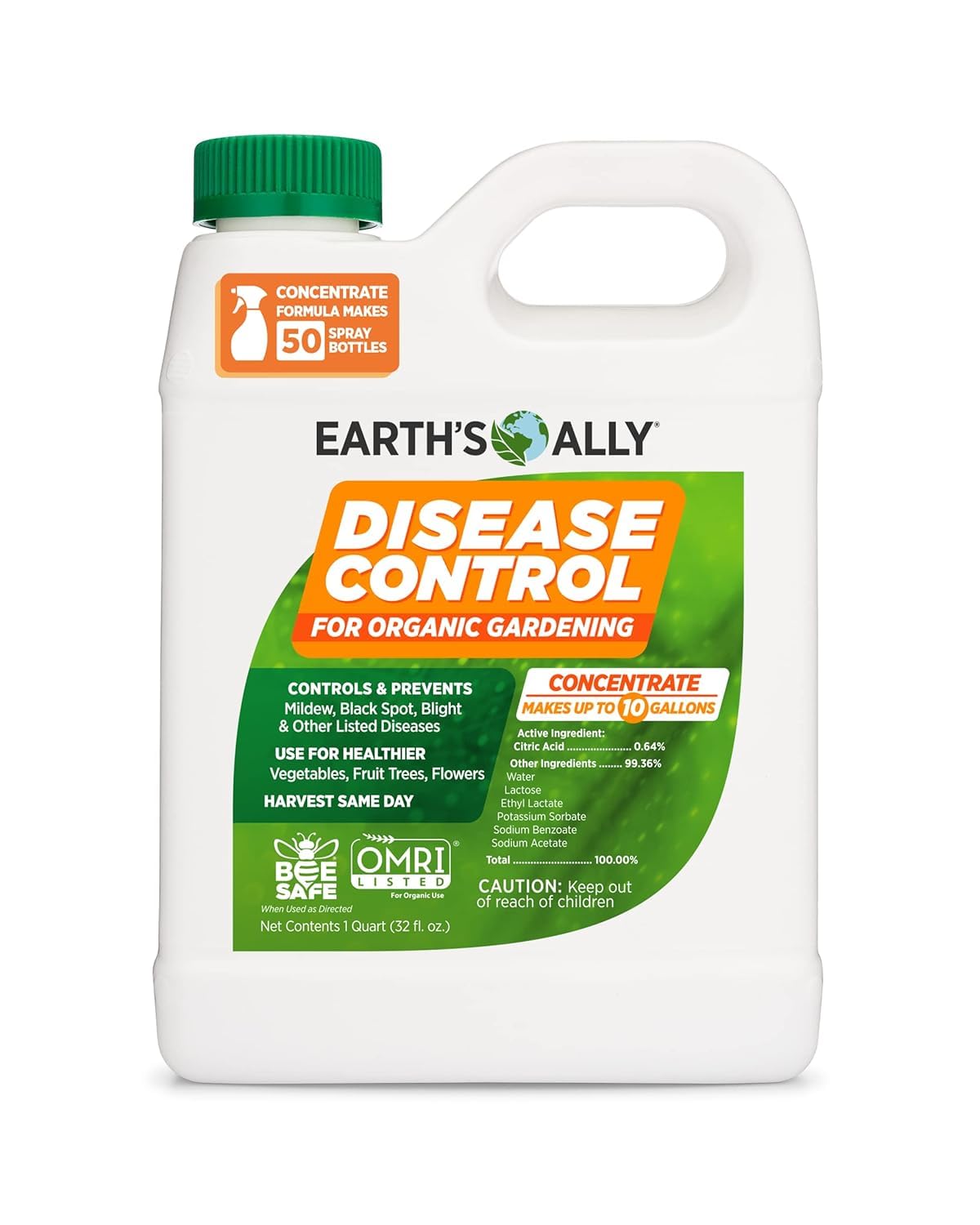
4. Earth’s Ally Disease Control Fungicide Concentrate, 32 Oz
The citric acid spray that stops powdery mildew and black rot without harsh chemicals.
Fungal diseases need a different approach than insect sprays, and this is the best pick when powdery mildew, black spot, or blight is your problem. The active ingredient is citric acid — a simple food-grade compound that kills fungal spores on contact. Earth’s Ally is OMRI Listed and safe to use on fruits and vegetables right up to the day of harvest. A single 32-ounce concentrate bottle makes 10 gallons of ready-to-use product: just mix 6 tablespoons per gallon of water. Reviewers point out a “noticeable improvement” on black rot that had destroyed grape vines for years, and one called it “a big help” for battling powdery mildew.
What It Does Well
- Controls powdery mildew, downy mildew, blight, black spot, and leaf spot
- OMRI Listed — suitable for organic gardening
- Safe to use on food crops up to day of harvest
One Drawback
- Instructions could be clearer on coverage rates for different plants
Reach for it if: powdery mildew, black spot, or blight is your primary garden problem.
Consider another option if: you are dealing with insect pests — this is a fungicide only, not an insecticide.
5. RobiGuard Diatomaceous Earth Food Grade & Peppermint Powder, 1 lb

The all-natural powder that dehydrates crawling insects while smelling like peppermint.
Diatomaceous earth (DE) is the fossilized remains of tiny aquatic organisms — a fine powder that feels like flour but is microscopically sharp to insects. When ants, roaches, fleas, or bedbugs crawl through it, the powder cuts through their exoskeletons and dehydrates them. This RobiGuard version is food-grade quality and infused with peppermint oil, giving it a fresh scent that lasts a few days. Owners have used it to eliminate kitchen ants, repel squirrels from rose gardens, and even control fleas on dogs. It works fast: “I spread this at the entrance of my garage and around the trash cans — no more creepy crawlies.”
The big advantage here is the peppermint aroma, which is a welcome change from the damp-earth smell of plain DE. The powder also comes in a resealable zipper pouch with a measuring cup. The main downsides are practical: DE stops working when it gets wet, so it is useless in rain or high humidity unless you reapply. You also need to wear a mask when applying because the fine dust can irritate your lungs. For targeted indoor use or dry outdoor areas, this is a potent, non-toxic tool.
Why It Works
- Food-grade DE is safe around kids and pets when used as directed
- Peppermint scent masks the typical earthy smell — most owners love it
- Effective against ants, roaches, fleas, silverfish, and bedbugs
The Limits
- Turns into a paste when wet — loses effectiveness after rain
- Fine dust requires you to wear a mask during application
Best for: indoor crawling insects and dry-area perimeter treatments where you want a pet-safe, chemical-free barrier.
Think twice if: you need to treat wet garden soil or humid conditions — this powder only works dry.
6. DR EARTH INC Dr. Earth 1022 Garden Insect Killer, 24-Ounce Concentrate

The organic concentrate with such a pleasant scent you barely believe it is a pesticide.
Dr. Earth’s 24-ounce concentrate is a 100% organic crafted blend of plant oils, and the first thing owners notice is the smell — they describe it as the most pleasant scent of any insecticide they have tried. It provides weeks of protection per application and works on thrips, leafminers, aphids, mealybugs, scale, and fungus gnats. One owner used it as a soil drench and eliminated an aphid infestation overnight. Another reported that spraying it on windowsills repelled field mice and flies. The 24-ounce bottle makes a generous volume of ready-to-use spray.
The honest limitation is rain resistance. The product is only effective until the next rain, then you need to reapply quickly to keep the pest barrier intact. It also struggled against beetles and slugs in some tests, so it is not a universal silver bullet. For a general-purpose organic insecticide on soft-bodied pests, the scent alone makes it a joy to use — but plan for more frequent applications if you have summer storms.
What Shines
- 100% organic and natural oil blend
- Owners consistently praise the pleasant, mild scent
- Effective on thrips, aphids, fungus gnats, and scale
The Catch
- Washes off in rain — requires reapplication after wet weather
Grab it if: you want an organic spray that smells good and you are okay reapplying after rain.
Look elsewhere if: you need a one-and-done treatment for beetles or slugs — this is best for soft-bodied insects.
7. Botanical Tradesman Neem Oil Spray (Makes 320 Fl Oz) — Cold Pressed

The pure cold-pressed neem concentrate that stretches a small bottle into a huge spray volume.
This is the pick for anyone who wants the purest neem oil concentrate without any added water, vegetable oils, or diluents. The 3.4-ounce bottle is made from 100% cold-pressed Indian neem nuts, and when diluted it makes up to 320 fluid ounces of ready-to-use spray. Owners use it on citrus trees to stop leaf miners (one called it a “last ditch effort” that worked), on crepe myrtles for insect control, and on herb gardens to reduce whitefly populations. The formula is organic and non-toxic to kids when used as directed.
The catch is that pure neem oil is very thick and does not easily mix with water. You need to shake it thoroughly with a mild soap (emulsifier) to get a smooth solution before spraying. It also requires frequent reapplication — owners say spraying every 2 days is necessary for heavy infestations. A few noted they needed more than one bottle for large gardens. If you value absolute purity over convenience, this is the best concentrated neem on the list; if you prefer a pre-mixed all-in-one, the Green Alcove kit above might be easier.
Why It Stands Out
- 100% cold-pressed neem oil — no fillers, no added water
- Makes 320 fl oz of ready-to-use spray from a tiny 3.4 oz bottle
- Non-toxic to children when used as directed
The Trade-Off
- Thick oil requires vigorous shaking and an emulsifier to mix with water
Best for: experienced gardeners who want a pure, potent concentrate and are comfortable with the mixing routine.
pass on it if: you want a ready-to-spray bottle with no prep work — look at the Green Alcove kit instead.
8. Arber Organic Insecticide & Fungicide for Plants — 16 oz Concentrate

The bio-based concentrate that tackles both insects and fungal diseases in one pass.
Arber combines an 8-ounce insecticide concentrate and an 8-ounce fungicide concentrate in one pack, designed to be mixed together safely in the same sprayer. The bio-based formula disrupts pest life cycles while suppressing powdery growths — it works on spider mites, aphids, whiteflies, thrips, and fungus gnats. Shoppers say that bugs “shriveled in 5-10 seconds” on contact. The product is odorless, which is a huge plus for indoor use, and it is safe for kids, pets, and pollinators when used as directed.
The main limitation is that it does not kill Japanese beetles — owners who tried found they needed a neem or pyrethrin product for that. The fungicide part is slightly thicker and has a stronger smell than the insecticide, but users say mixing both together has eliminated aphids and fungus gnats without burning plants. For home gardeners who want a single system to handle the most common pest and disease issues, Arber delivers an efficient, odorless solution that is gentle on the garden ecosystem.
What Works
- Two concentrates — insecticide and fungicide — mix safely in one sprayer
- Odorless formula — great for indoor houseplants
- Safe for pollinators, kids, and pets when used as directed
Not for
- Does not control Japanese beetles — needs a separate product for that
Reach for it if: you want an odorless, two-in-one system for common indoor and outdoor pests plus fungal prevention.
Consider a different option if: Japanese beetles are your main problem — this will not touch them.
9. EcoGuard Plus Mosquito Fogger Yard Spray, Natural Tick Control, 16oz

The botanical yard spray that knocks down mosquitoes and ticks on contact for weeks.
EcoGuard Plus uses geraniol (a botanical oil derived from plants) to kill and repel mosquitoes and ticks. It is a natural, biodegradable, non-staining concentrate that can be sprayed on all plant material. The claim is extended protection for up to 30 days per application. Buyers report that it is effective against mosquitoes in heavy-infestation areas like Alaska, and they appreciate that it is safe for dogs, kids, and honeybees when dry. It works well with a fogger for covering large yards before a family gathering.
The honest feedback is that the cedar-like scent dissipates in about 40 minutes to 2 hours, and the product washes away in rain, requiring reapplication. Some users found the mosquito repellency lasted only about one hour per spray, making it less cost-effective for constant back-yard use. It also does not seem to control ticks or other crawling insects as well as it handles mosquitoes. For a natural mosquito spray that lets you feel safe around the grill, this is a solid choice — just be realistic about needing to reapply after rain.
What It Offers
- Natural botanical formula — safe for kids, pets, and bees when dry
- Non-staining on plants and patio surfaces
- Can be applied with a fogger for large-area coverage
The Reality
- Cedar scent fades quickly — 40 minutes to 2 hours depending on conditions
- Rain washes it away, requiring thorough reapplication
Best for: mosquito-heavy backyards where you want a natural, fogger-friendly option for outdoor events.
Think twice if: you need long-lasting tick protection or live in a rainy climate — expect to reapply often.
Understanding the Specs
Bacillus thuringiensis (Bt)
This is a naturally occurring bacterium that produces a protein toxic only to specific leaf-eating caterpillars and worms. When a caterpillar eats a treated leaf, the protein disrupts its gut, and it stops feeding within hours. It has zero effect on birds, earthworms, honeybees, or ladybugs because those creatures lack the gut receptors Bt targets. The trade-off is that Bt degrades in sunlight within a day or two — apply in the evening and use a fresh mix each time for best results.
Mineral Oil / Horticultural Oil
These are refined petroleum oils that kill pests by smothering them — coating the insect’s body and blocking the spiracles (breathing pores). They also dissolve the protective coating of fungal spores, making them effective against powdery mildew. Mineral oil leaves no toxic residues and is approved for organic gardening. Use it during the dormant season on bare branches or during the growing season on leaves, but avoid applying in direct hot sun to prevent leaf burn.
Neem Oil
Extracted from the seeds of the neem tree, this oil contains azadirachtin, a compound that disrupts insect feeding, molting, and egg-laying. It works slowly compared to synthetic sprays — you will see results over days and weeks rather than hours. Neem is effective against aphids, spider mites, whiteflies, fungus gnats, and powdery mildew. It can leave a visible residue on leaves and has a strong smell, though some brands mask it with essential oils.
Diatomaceous Earth (DE)
DE is a fine powder made from the fossilized silica shells of microscopic algae called diatoms. To insects, the powder is sharp — it scratches their waxy outer cuticle, causing them to dehydrate and die. It is effective on crawling insects like ants, roaches, fleas, and bedbugs. Food-grade DE is safe for humans and pets to ingest in small quantities, but the dust can irritate lungs if inhaled directly, so wear a mask while sprinkling it. DE stops working when wet, so outdoor use is best in dry, covered areas.
FAQ
Is Bt safe for bees and butterflies?
Can I use neem oil and horticultural oil together?
How often should I reapply after rain?
What is the difference between concentrate and ready-to-spray?
Will these products harm my dog or cat?
Can I use these on vegetables right before harvest?
Why is my neem oil not mixing with water?
Will diatomaceous earth kill slugs and snails?
What does OMRI Listed mean?
How long should I wait before eating vegetables I sprayed?
Final Thoughts: The Verdict
For most gardeners, the environmentally friendly pesticides winner is the Monterey B.t. because it hits the hardest target — caterpillars and worms — with zero collateral damage to bees, earthworms, or beneficial insects. If you need a versatile all-seasons spray for aphids, scale, and powdery mildew, grab the Bonide All Seasons Horticultural Oil. And for indoor plant owners who want a pleasant-smelling, gentle neem kit that makes a ton of spray, the Green Alcove Neem Oil is the one to reach for.
How We Picked
We do not accept paid placement. Every pick is matched to a real buyer and a real use-case; we do not hands-on test units.
Sources & Methodology
Specifications: manufacturer listings and product documentation. Review insights: verified customer reviews, as of July 2026. Pricing: not shown on this page (it changes often); check the current price via the retailer link.
As an Amazon Associate, Lawn Gear Lab earns from qualifying purchases. This does not affect which products we feature.