
Specs are compiled from manufacturer listings and verified buyer reviews and can change over time — please confirm the key details on the product page before buying.
A pop-up drain that sits nearly flush with your lawn is the cleanest way to end a buried downspout or French drain line — no ugly splash block, no mud puddle, just water that vanishes underground until enough pressure builds to push the cap open. But the real frustration isn’t the concept; it’s the cheap spring-loaded lids that bind up after a season or the adapter hunt that turns a weekend job into a parts-store run. The best drain skips the metal spring altogether and fits the pipe you already have without a trip back to the hardware store.
This guide is built by comparing the manufacturers’ published specifications and the patterns across verified customer reviews, so you get each pick’s real strengths and trade-offs instead of marketing spin.
If you are burying a drain outlet and want it to disappear into the turf without a maintenance headache, the right best gutter pop-up drain uses a dual-rod mechanism (two plastic guide rods that move the lid up and down) instead of a coil spring and fits your pipe diameter right from the start.
Our Picks at a Glance
How To Choose The Best Gutter Pop-Up Drain
The pop-up drain seems simple — it is just a lid that opens when water pushes up through it. But the mechanism inside that lid and the exact shape of the inlet are what separate a set-and-forget installation from one you dig up next fall to fix. Focus on three things before you buy.
Rod vs. Spring: The Mechanism That Keeps It Working
The oldest designs use a metal coil spring wrapped around a central shaft. When the spring corrodes — and it will, buried in damp soil — the lid sticks shut and the pipe backs up. Avoid the problem from day one by choosing a dual-rod guided mechanism (two vertical plastic rods that guide the lid straight up without a metal spring). The crowd-favorite picks here are all spring-free for that reason.
Inlet Shape: It Must Match Your Pipe, Not the Other Way Around
Pop-up drains connect to one of several common pipe types: Schedule 40 (thick-wall PVC, common for pressurized lines), S&D (Sewer & Drain, also called D2729, thin-wall pipe often orange or white), SDR35 (ribbed, light-duty sewer pipe), and single-wall or triple-wall corrugated (flexible black or white tubing). No single inlet fits every pipe without an adapter, so the smart move is to pick the emitter that directly matches what is already in your trench. If you own a 4-inch S&D line, the best pick slides right over it. If you have 3-inch corrugated, a different emitter works without the extra coupling.
The Flush Profile: Mower Clearance Matters More Than You Think
A pop-up that sits half an inch above grade catches your lawnmower blade every single pass — eventually the lid cracks or gets torn off. Look for a flange (the flat base ring) that rests flush or near-flush with the turf surface so the cap is the only thing that rises during a storm. When the water stops, the lid drops back to ground level and the mower rides right over it.
Quick Comparison
| Model | Best For | Pipe Fit | Mechanism | Flow Rate | Amazon |
|---|---|---|---|---|---|
| 4″ Pop Up Drainage Emitter★ Best Overall | Best Overall | 4″ S&D, Sch 40, SDR35, 3-4″ Corrugated | Dual-Rod, Spring-Free | — | Amazon |
| Pop Up Drainage Emitter (2-Pack) | Best Value 2-Pack | 4″ S&D/SDR-35, 3″ DWV | Dual-Rod, Spring-Free | — | Amazon |
| NDS 430 Pop-Up Drainage Emitter | Most Adaptable | 3-4″ Sch.40, Corrugated, S&D, Triple-wall | Spring-Loaded | 56 GPM | Amazon |
| National Diversified 422 | Niche / Simple Outlet | 4″ Pipe | Spring-Loaded | — | Amazon |
In‑Depth Reviews
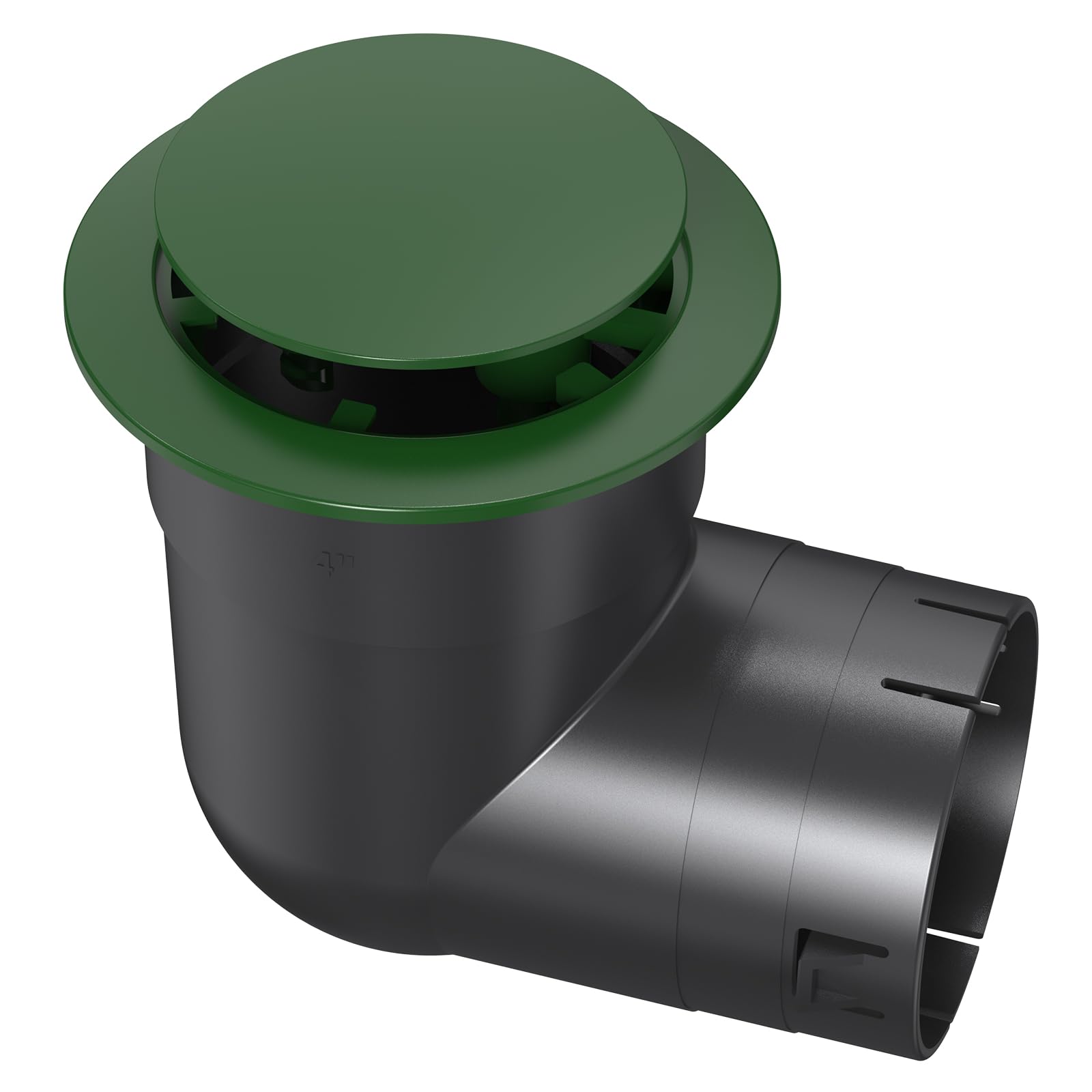
1. 4″ Pop Up Drainage Emitter with Elbow, No Adapter Required
Our pick — over 4.5★ from 80+ verified ratings; the strongest balance of quality and price.
The spring-free lid that directly hugs 4-inch pipe without a single extra adapter.
This emitter uses a dual-rod mechanism (two plastic rods that guide the lid up and down with no metal coil), so it avoids the rust and binding that plague spring-loaded designs. The stepped shoulders (ridged sections on the inlet) lock onto 4-inch S&D, Schedule 40, SDR35, and 3-4 inch corrugated pipe — no extra adapter needed. Buyers report an install that takes about twenty minutes. The integrated elbow (a built-in curved fitting) directs discharged water away from your foundation, so you avoid soil erosion near the house. The low-profile top sits flush with the turf, meaning the lawnmower blade skips over it rather than catching the edge. With a rating above 4.7 stars based on over 80 owner experiences backing it, this is the crowd favorite for a reason. Several owners mention it builds better than the industry-standard NDS model because of the corrosion-free dual-rod system.
The textured surface on top resists scuffs from foot traffic and mower blades. When water arrives, the cap opens; when it stops, the lid drops flat. No sticking.
The Stuff Owners Love
- Spring-free dual-rod system — no corrosion, no sticking
- Direct fit for 4″ S&D, Schedule 40, SDR35, and 3-4″ corrugated — no adapter needed
- Flush, low-profile top keeps the mower blade safe
- Integrated elbow directs water away from the foundation
The One Trade-Off
- Not recommended for 3″ triple-wall pipe — a separate variation is needed
- No published flow rate (GPM) for those who need the number
Reach for it when: you have a 4-inch underground drain line and want a pop-up that fits without adapters, opens without a spring, and is reliably backed by over 80 owner experiences.
Think twice if: your system uses 3-inch triple-wall pipe or you need a published flow-rate figure for code compliance.
2. Pop Up Drainage Emitter, Fits 3-Inch and 4-Inch Sewer and Drain Fittings
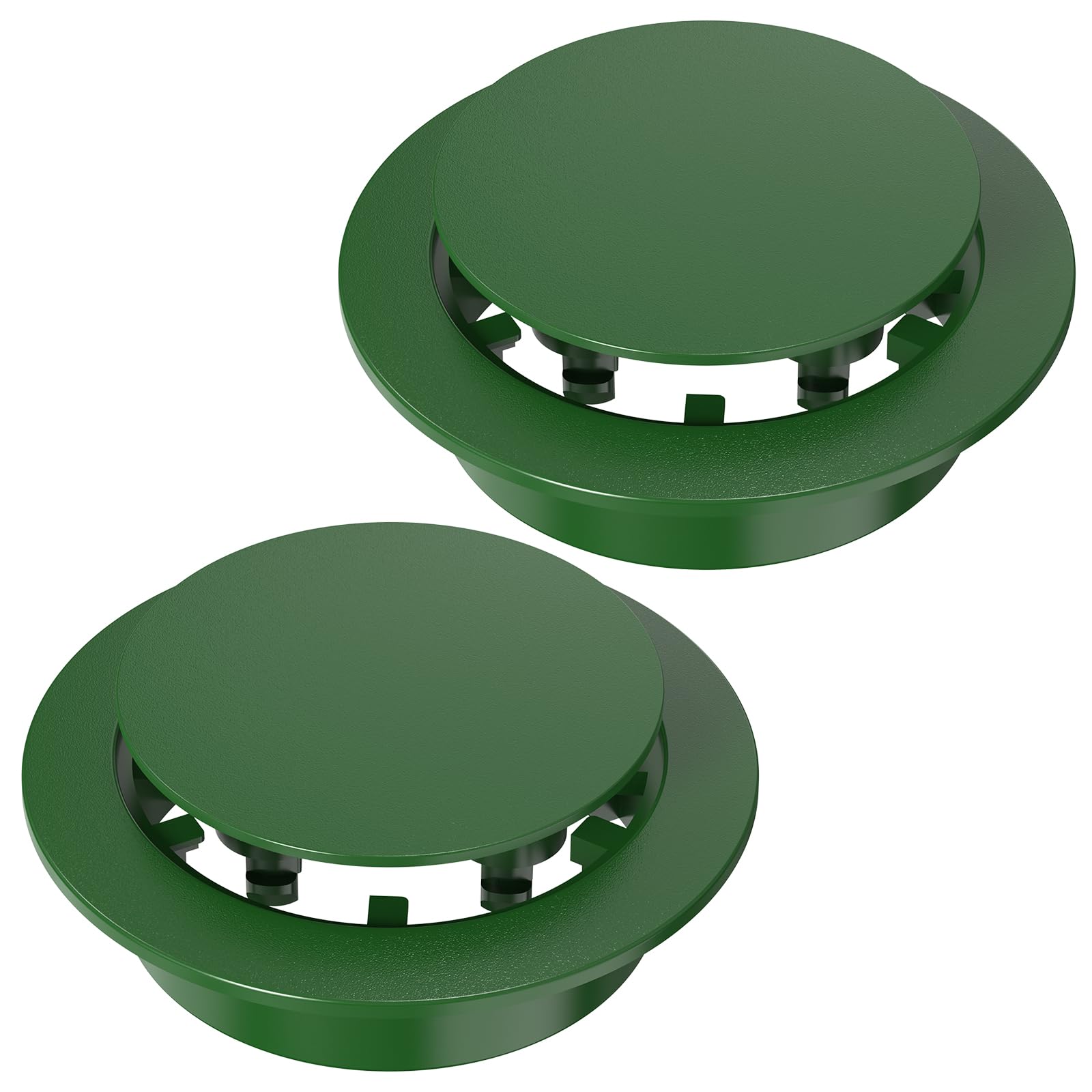
Two spring-free emitters for the price of one premium pick — ideal for dual downspout outlets.
If you have two downspout terminations or a French drain plus a yard basin outlet, buying this 2-pack saves a second trip to the store. Like the Best Overall pick, it uses a dual-rod mechanism (two plastic guide rods, no coil spring), so it opens with less water force and closes cleanly without binding. The fit targets 4-inch S&D and SDR-35 hub-style fittings as well as 3-inch DWV (Drain, Waste, Vent) pipe — a good fit for mixed systems. Over 100 owners have rated it above 4.4 stars. The standout praise is that it fits exactly where it is supposed to. Customers note the dual-rod mechanism is identical in quality to more expensive competition.
The flip side: this model does not directly accept Schedule 40 thick-wall or corrugated pipe without an adapter, unlike the Best Overall pick. One owner reported that a husband damaged one when mowing over it, so handle mowing around it with care. There is no integrated elbow, so you will need a separate directional fitting if you want water aimed away from the foundation.
Why Grab the 2-Pack
- Two spring-free emitters in one box — a genuine value for dual outlets
- Dual-rod pop-up opens with less water force than spring designs
- Fits both 4-inch hub-style and 3-inch DWV pipe
- Low-profile top reduces mower contact
Keep in Mind
- Not a direct fit for Schedule 40 or corrugated pipe without an adapter
- Mixed reports on long-term durability — handle mowing around it with care
- No integrated elbow; you will need a separate fitting to direct water flow
Pick this if: you are capping two outlets — for example, a downspout and a yard drain — and want a spring-free mechanism without paying twice.
Pass if: you need a direct Schedule 40 connection or want an integrated directional elbow on each emitter.
3. NDS 430 Pop-Up Drainage Emitter with Elbow and Adapter for 3 in. & 4 in. Drain Pipes

The established name that includes extra adapters and a published 56 GPM flow rate (gallons per minute, meaning the unit can discharge 56 gallons of water per minute before the pipe backs up).
The NDS 430 is the most-reviewed pop-up emitter on this list, with well over 800 ratings. It earns those numbers by being the most flexible connection solution in the category. It comes with a removable adapter that lets you switch between 3-inch and 4-inch single-wall corrugated, DWV Schedule 40, and even triple-wall pipe. One owner reports connecting a 3-inch PVC elbow to a 4-inch corrugated French drain line without buying anything else. The published flow rate of 56 GPM matters if your local code requires a minimum discharge capacity or if you are handling a large roof area.
The trade-off is the mechanism: this NDS uses a traditional spring-loaded pop-up cap (a metal coil spring that pushes the lid shut). While the engineers at NDS have made it reliable for years, a subset of reviewers point out that the top does not snap back down tightly after heavy rain. A few note that the cap can come loose and get clipped by a mower, though others have solved this by gluing it — at the cost of making future cleaning harder. The wide flange (the flat base ring) helps prevent turf from growing over it. The cap rises up to 1 inch when water pressure builds, then closes flush.
Durability gets mixed marks. Many praise the thick HDPE (High-Density Polyethylene) construction, but a recurring complaint is that some units arrive missing the threaded cap or separate parts. Over 800 owner experiences make it the most proven design here for mixed-pipe systems.
Why It Is the Versatile Pick
- Published 56 GPM flow rate — useful for code and large roof areas
- Included adapter fits 3-in and 4-in corrugated, Sch. 40, S&D, and triple-wall pipe
- Wide flange prevents grass overgrowth around the base
- Over 800 owner experiences make it the most proven design here
Where It Falls Short
- Spring-loaded cap can loosen over time; some owners glue it in place
- Mixed durability reports — some units arrive with a loose or missing cap
- Higher price than the direct-fit alternatives, and value draws mixed reviews
Go with this if: you have a mix of pipe types — corrugated, Schedule 40, and triple-wall — and want one emitter that adapts to all of them without extra couplers.
skip it if: you want a spring-free mechanism that avoids the corrosion and binding risk altogether, or if your system is a simple 4-inch S&D line that needs no adapter.
4. National Diversified 422 4-Inch Pop-Up Drainage Emitter
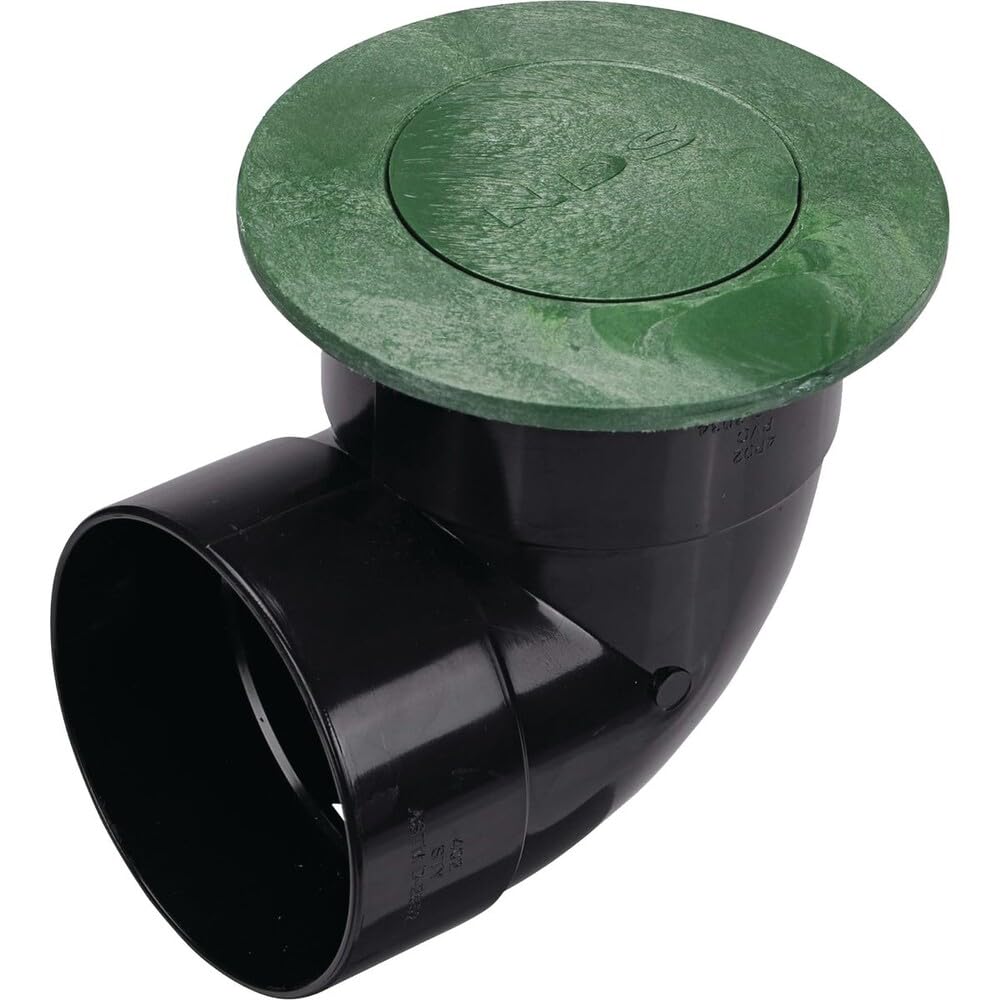
The basic spring-loaded lid that stays out of the mower’s way but has a reliability question mark.
The National Diversified 422 is a straightforward plastic pop-up cap for a 4-inch pipe outlet. It does not come with an adapter, an elbow, or a dual-rod mechanism — it is a simple spring-loaded lid (a metal coil spring pushes it shut) that rises when water flows and drops flat when it is done. The all-plastic construction blends into the lawn, and the lid does not rise high enough to interfere with a mower deck, which is its single strongest daily-use feature. Owners of beach houses and snake-prone yards like it for keeping critters out of the pipe run. It draws consistent praise for diverting water away from foundations without needing a splash block.
The problem is reliability over time. While most shoppers say it works as intended, a clear minority describe the spring sticking permanently shut after just weeks in the ground. One owner tried sandpaper, steel wool, silicone lubricant, WD-40, and dry graphite on the shaft — and none of it fixed the stuck lid. That failure rate is low but real. The top also has a tendency to detach from the elbow during heavy flow, which led some owners to glue the assembly together, trading future cleanability for current stability. At over 70 ratings with a solid 4.2 average, most buyers are satisfied.
The Upside
- Simple, clean design that sits low enough to avoid mower blades
- Works well for beach houses and keeping snakes/frogs out of the pipe
- Low price point for a single outlet
The Risk
- Spring mechanism can stick permanently after a short time in the ground — a noted failure pattern
- Top may detach from the elbow during heavy flow without gluing
- No integrated elbow or adapter; bare-bones design
Consider it if: you need the simplest possible cap for a low-use outlet and are prepared to inspect it seasonally.
pass on it if: you want a set-and-forget pop-up that avoids spring failure — the spring-free picks cost about the same and eliminate the core failure point.
Understanding the Specs
Dual-Rod vs. Spring-Loaded Mechanism
Most pop-up drains use a metal coil spring around a central shaft. Buried in damp soil, that spring eventually corrodes, and corrosion means the lid stays shut — the pipe backs up and water finds its way to the surface anyway. A dual-rod design uses two vertical plastic rods that guide the lid straight up with no metal, so there is nothing to rust, bind, or need lubricant. If you want a mechanism that outlasts the pipe, pick the rods over the spring.
Inlet Compatibility (Pipe Type Match)
Your buried pipe is either Schedule 40 (thick-wall PVC, common for pressurized lines), S&D / D2729 (thin-wall sewer-and-drain pipe, often orange or white), SDR35 (ribbed, light-duty sewer pipe), or corrugated (flexible black or white tubing). A pop-up emitter that says “direct-fit for S&D” will not necessarily grab onto Schedule 40 without an adapter. Read the product’s pipe-type list before buying — the best picks tell you exactly which standard they slide onto, right in the title.
Flow Rate (GPM)
Gallons-per-minute is the speed at which the emitter can discharge water while the lid is open. A higher GPM number (like 56) means the cap can keep up with a heavy downpour without the pipe filling faster than it empties. For a single downspout on an average home, any modern pop-up handles the volume. For a system collecting runoff from two or more gutters plus a French drain, a published flow rate is a helpful confidence check.
Flush-to-Grade Profile
This describes how far the top of the emitter sticks above the soil surface when the lid is closed. A flush or near-flush flange (flat base ring) means the plastic base sits level with the turf, so the only moving part is the cap that rises during rain. The lower the profile, the less often your lawnmower blade meets plastic. All four picks here are low-profile, but the actual height of the base flange varies — check the photos to see if the ring stands slightly proud of the grass or sinks level with it.
FAQ
Will a pop-up drain work with a French drain system?
Can I install a pop-up drain on 3-inch Schedule 40 pipe?
How high does a pop-up drain cap rise during heavy rain?
Will a pop-up drain get ripped off by a lawnmower?
What is the difference between a dual-rod and a spring-loaded pop-up mechanism?
Do pop-up drains clog with leaves and debris?
Will a pop-up drain fit 4-inch corrugated pipe?
How do I clean a pop-up drain emitter?
Can I use a pop-up drain for a gutter downspout that is not buried?
Is an adapter needed to connect a pop-up drain to Schedule 40 PVC?
Final Thoughts: The Verdict
Across the board, the best gutter pop-up drain winner is the 4″ Pop Up Drainage Emitter with Elbow because it eliminates the spring entirely with a dual-rod mechanism (two plastic guide rods), fits the widest range of 4-inch pipes without adapters, and carries a near-flush profile that keeps the mower blade off the plastic. If you need to cap two outlets at once, grab the Pop Up Drainage Emitter 2-Pack. And for the most pipe-type flexibility including a published 56 GPM flow rate (gallons per minute), the NDS 430 is the proven fallback with over 800 owner experiences behind it — just keep an eye on the spring.
How We Picked
We do not accept paid placement. Every pick is matched to a real buyer and a real use-case; we do not hands-on test units.
Sources & Methodology
Specifications: manufacturer listings and product documentation. Review insights: verified customer reviews, as of July 2026. Pricing: not shown on this page (it changes often); check the current price via the retailer link.
As an Amazon Associate, Lawn Gear Lab earns from qualifying purchases. This does not affect which products we feature.