
Specs are compiled from manufacturer listings and verified buyer reviews and can change over time — please confirm the key details on the product page before buying.
If you have been gardening under plastic sheeting or a cheap tunnel, you already know the frustration: torn covers, collapsed frames after a single storm, and overheated plants. Polycarbonate changes the whole game. These panels are tough enough to shrug off hail, heavy snow, and blasting wind, yet they let in the soft, diffused light plants love — no more scorched leaves or brittle brittle covers.
I’m Rikta — the founder and writer behind Lawn Gear Lab. This guide is built by comparing the manufacturers’ published specifications and the patterns across verified customer reviews, so you get each pick’s real strengths and trade-offs instead of marketing spin.
Whether you are starting seedlings in early spring, overwintering tender perennials, or building a dedicated year-round growing space, choosing the right greenhouse with polycarbonate depends on the frame’s bone structure, panel thickness, and real-world weather testing from owners who have already put it through the wringer. We have found the picks that genuinely deliver.
Our Picks at a Glance
How To Choose The Best Greenhouse With Polycarbonate
Not all polycarbonate greenhouses are built the same. A few key differences separate a structure that lasts a decade from one that buckles in year two. Here is what to look for.
Frame Material: Aluminum vs. Wood vs. Steel
Aluminum frames are the most common for good reasons — they are rust-resistant, lightweight, and strong enough for most backyard conditions. Wood frames (like cedar) offer a classic look and natural insulation but need periodic sealing and weigh much more. Painted steel is durable but rusts once the finish chips. For minimal maintenance, a powder-coated aluminum frame is your safest bet.
Polycarbonate Panel Thickness
Twin-wall polycarbonate panels trap air between layers for insulation. Thicker panels (6mm vs. 4mm) provide better heat retention and are more rigid against wind and hail. Look for a weight of 720g/m² or more — lighter panels can feel flimsy and are more prone to rattling or flexing in a storm. UV coating on at least one side prevents the plastic from yellowing and protects your plants from sunburn.
Snow Load and Wind Rating
If you live anywhere with real winter, check the rated snow load and wind speed a greenhouse can handle. A rated snow load of 30 psf or a wind rating of 100 mph gives serious confidence. Models without these ratings rely on you to add extra bracing or to clear snow manually.
Ventilation and Access
Even with polycarbonate, hot air can build up fast — especially when the spring sun lands on a sealed box. Two or more roof vents let that heat escape. A lockable door also matters if you have kids, pets, or live in a breezy area where the door could swing open unexpectedly.
Quick Comparison
| Model | Best For | Frame | Dimensions | Panel Thickness | Amazon |
|---|---|---|---|---|---|
| Backyard Discovery Willow 9′ x 6′★ Best Overall | Premium All-Weather Durability | Cedar Wood | 114.25″L x 72.75″W x 94″H | 4-wall polycarbonate | Amazon |
| WUKHG 8×10 FTBest Value | Budget-Friendly Mid-Size | Aluminum | 119.2″L x 97.2″W x 80.6″H | 5mm | Amazon |
| AirWire 8×12 FTFast Assembly | Fast Assembly, Sturdy Frame | Aluminum | 142.5″L x 97.2″W x 81″H | 4mm | Amazon |
| YITAHOME 6x16FT | Extra Long Narrow Space | Aluminum | 192″L x 72″W x 77″H | 4mm double-wall | Amazon |
| YITAHOME 12x6FT | Long, Slender Layout | Aluminum | 144″L x 72″W x 77″H | 4mm double-wall | Amazon |
| VEIKOU 8′ x 16′ | Extra Length & Large Gardens | Aluminum | 97.3″L x 189.56″W x 90.5″H | 4mm | Amazon |
| FLY BY YAN 8×14 FT | Triple Ventilation, Charcoal Look | Aluminum | 166.1″L x 97″W x 77″H | 720g/m² | Amazon |
| Palram Canopia Lean-To 4′ x 8′ | Lean-To for Limited Space | Aluminum | — | Twin-wall & crisp | Amazon |
| Sylviera 12×12 FT | Square Max Space | Aluminum | 143″L x 143″W x 84″H | 6mm double-wall | Amazon |
| HOWE 14×9.5×9 FT | Pavilion-Style Headroom | Aluminum | 114″L x 168″W x 108″H | 6mm twin-wall | Amazon |
In‑Depth Reviews
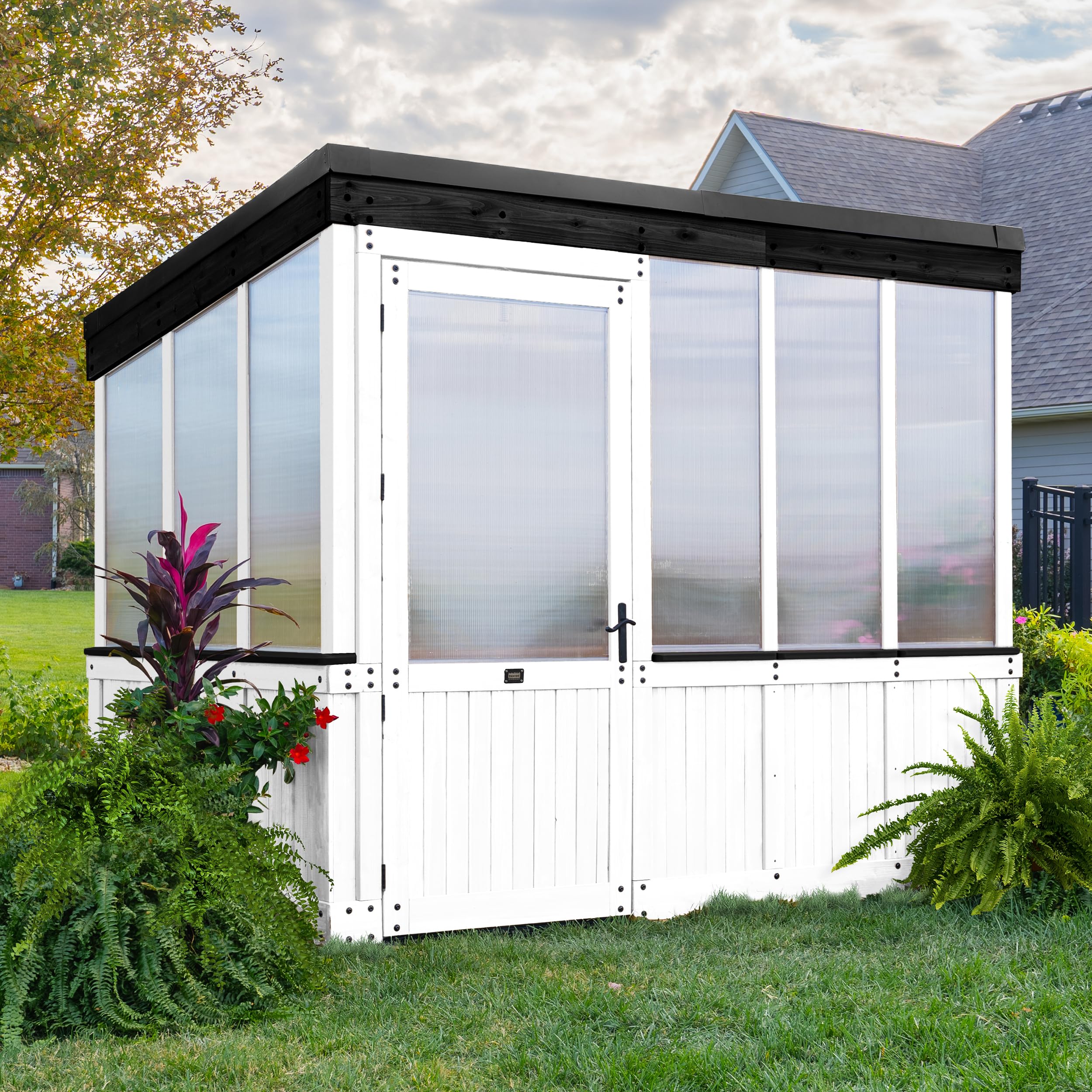
1. Backyard Discovery Willow 9′ x 6′
Our pick — over 4.5★ from 100+ verified ratings; the strongest balance of quality and price.
The cedar fortress that shrugs off 30 inches of snow.
If you want a greenhouse that genuinely doubles as an outdoor structure, this is it. The 100% cedar wood frame brings natural rot resistance and a clean white-stained look. But the real muscle is in its Pro-Tect rating: it can hold up to 2,800 pounds of snow load and withstand winds up to 100 mph, as long as you anchor it per the manual. That is a level of weather resilience most aluminum kits simply do not claim. The commercial-grade 4-wall polycarbonate (used on the roof and windows) improves heat retention by 30% compared to standard double-wall panels, so you get noticeably warmer nights in early spring.
The interior spans 54 square feet with 13 linear feet of fixed staging shelves built in. A Patented PowerPort gives you three electrical outlets and three USB ports, so running a fan, heater, or grow lights does not require a messy extension cord. Buyers consistently praise the overall quality — one owner who built it solo in 21 hours used the BILT app and said the instructions were perfect, though the sturdy build means you should carve out a full weekend. A few owners noted that a door panel arrived damaged, but Backyard Discovery or Amazon resolved it quickly. The fit of the panels gets mixed reactions, but the overwhelming sentiment is that it is well designed, stable, and waterproof.
Spacious wood design
- Rated for 2,800 pounds snow load and 100 mph wind — top-tier weather toughness.
- Built-in PowerPort with 3 outlets and 3 USB ports for easy power access.
- Cedar wood frame with natural decay resistance and a 5-year warranty.
- 4-wall polycarbonate roof panels boost heat retention by 30%.
Requires assembly skill
- Assembly is time-consuming — buyers report it is a multiple-weekend project.
- At 571 pounds, it is extremely heavy; you will need help moving boxes and a solid foundation.
- Some panels may need gentle adjustment for a perfect fit; roof caulking is awkward.
Your best bet if: you need a permanent, weather-defying greenhouse that blends into your landscape and provides power at your fingertips. This is the structure you anchor once and stop worrying about.
Think twice if: you are on a tight budget or want something you can assemble in a single afternoon. This one demands time, a few helping hands, and a solid concrete or gravel base.
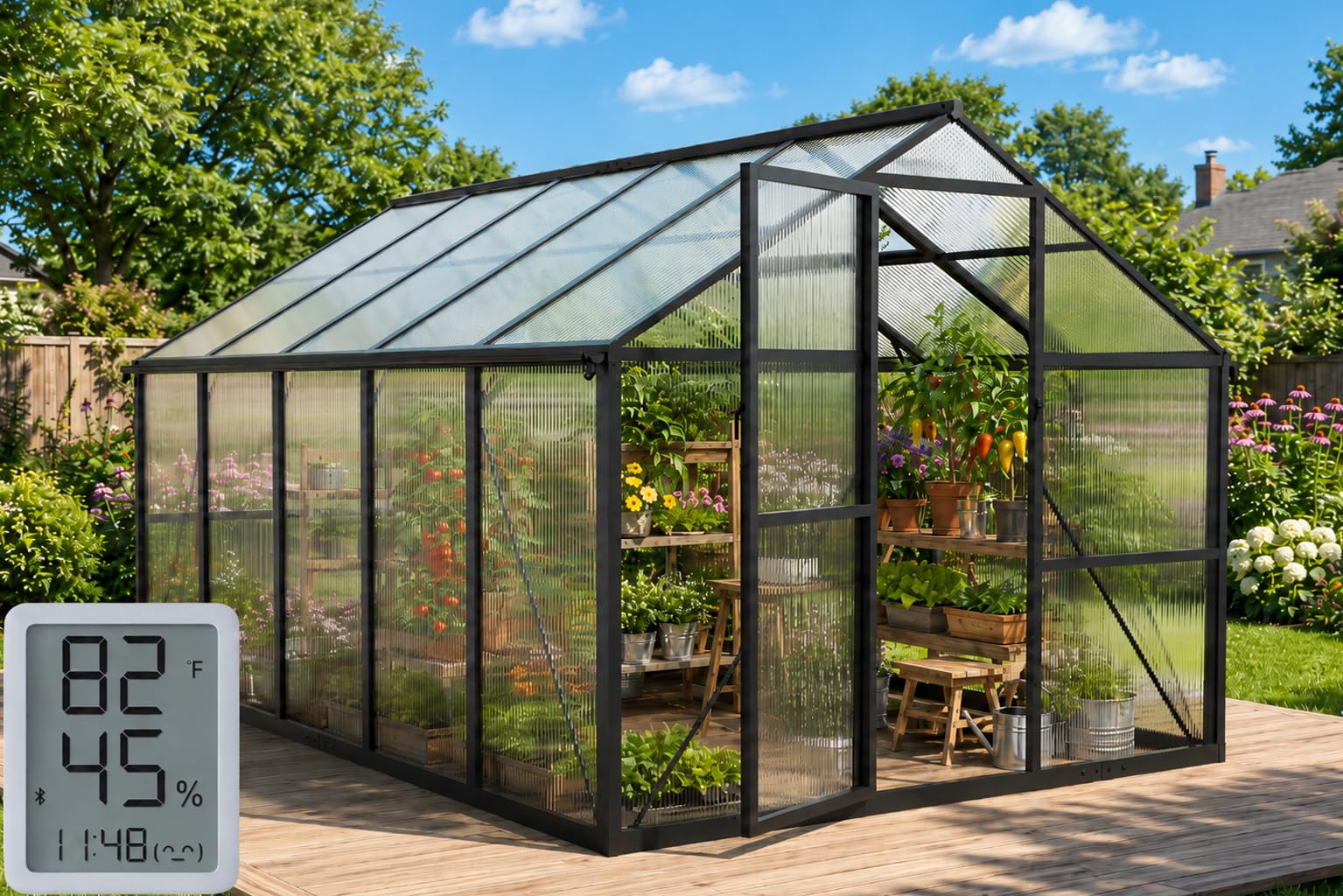
2. WUKHG 8×10 FT Walk-in Greenhouse
Smart temperature tracking meets serious value in an 8×10.
This greenhouse punches above its price point with a genuinely useful add-on: a thermometer-hygrometer that connects to an app. It gives you real-time temperature and humidity readings with ±0.54°F accuracy, plus 14-day data graphs and half-year data export. That alone makes it easier to manage heat spikes and cold snaps without stepping outside. The frame is built from high-quality aluminum alloy, and the twin-wall polycarbonate panels are 4mm thick and 720g — heavy enough to block harmful UV rays while letting in the light your plants need.
It comes with two adjustable ventilation windows and a lockable sliding door, plus a built-in rain gutter system that channels water efficiently. Some owners had a difficult assembly experience, and a few called the panels thin, but the general consensus is that it is well-made, spacious, and survives wind and rain storms. The main trade-off: on hot sunny days, the interior gets very hot very fast, so the vents are essential even in spring.
Grab it for: the app-connected thermometer and the generous 8×10 footprint at a competitive price. Perfect if you want to monitor conditions without a separate gadget.
skip it if: you prefer zero-gap instructions or need a greenhouse that holds heat overnight in freezing weather — this one loses warmth quickly after sunset.
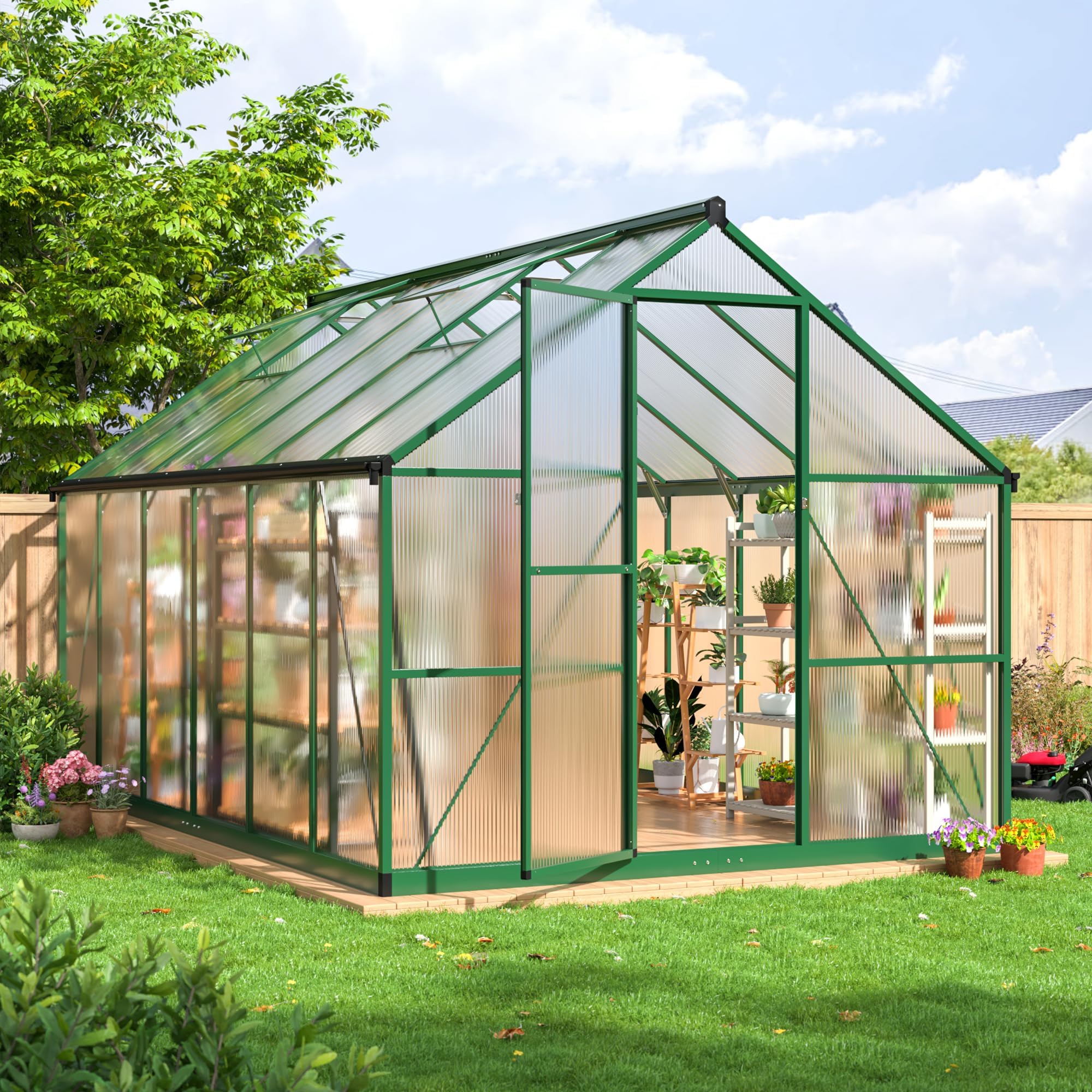
3. AirWire 8×12 FT Walk-in Greenhouse
Setup wizardry that does not cut corners on strength.
The AirWire team spent over 500 rounds testing their quick-install system, and it shows. The slide-in panels and intuitive frame reduce assembly time by 50% compared to many kits — several owners had it up in two days with basic tools. The 720g polycarbonate panels are UV-coated to block harmful rays while letting beneficial light pass through, and the upgraded aluminum frame gives it real backbone. It handles storms well, especially if you add extra anchors (some owners recommend zip-ties or separate ground stakes).
At 8×12 feet, you get noticeably more floor space than the mid-range 6×8 or 8×10 models. The lockable door and roof vent let you control airflow, though a few buyers noted the instructions could be clearer. The main complaint is that once assembled, it is not designed to be broken down easily for seasonal storage — so plan to keep it in place year-round. The price also positions it slightly above entry-level kits, but the bigger footprint and faster setup justify it for many.
Best for: gardeners who want the space of a 12-foot length without spending a week assembling it. The 50% faster install is a real time-saver.
Worth noting: it needs solid anchoring — on a windy site, plan for extra ground stakes or a tie-down kit.
4. YITAHOME 6x16FT Polycarbonate Greenhouse
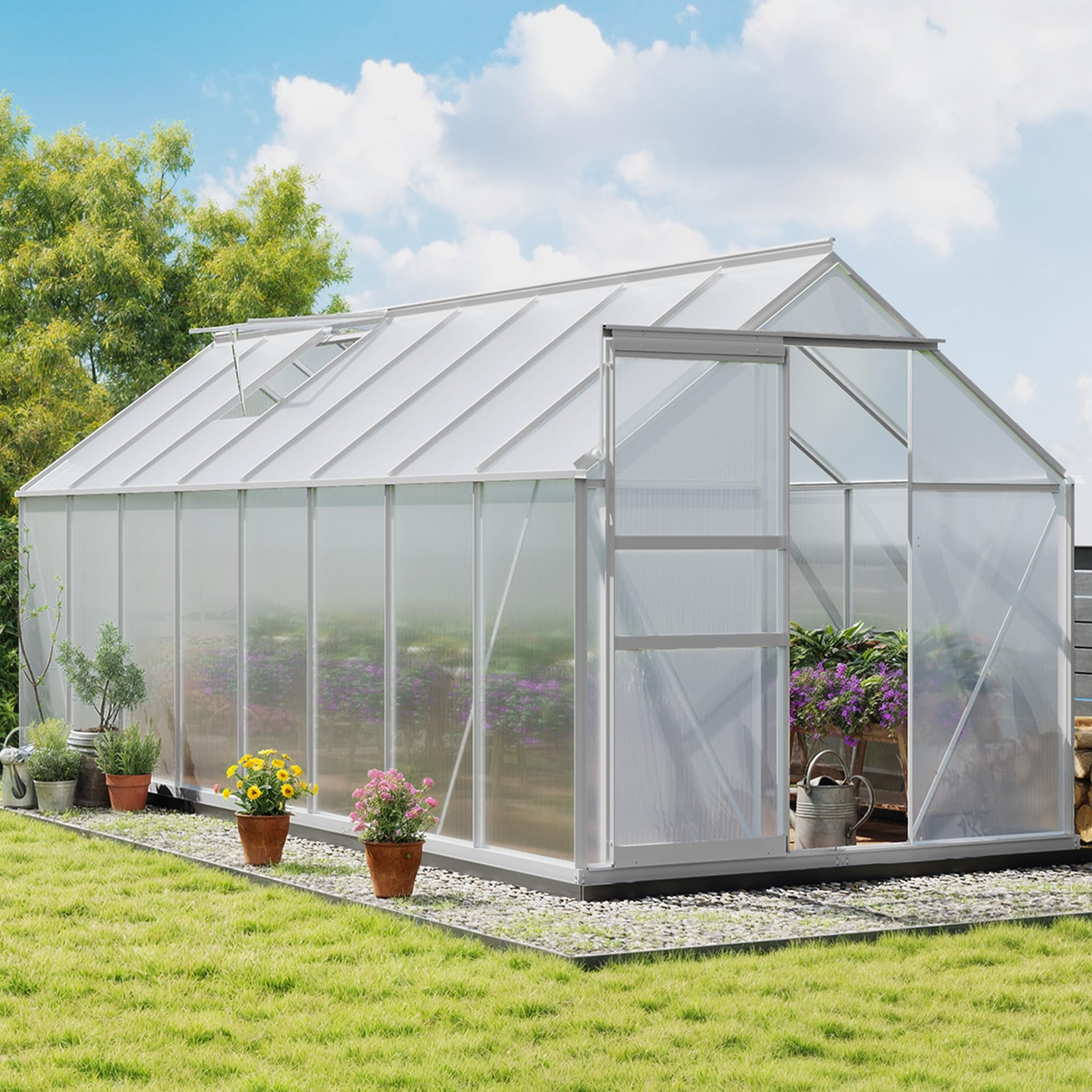
A 16-foot runway for serious plant rows.
If your garden space is long and narrow, this 6×16 layout fits perfectly along a side yard or fence line. The aluminum alloy frame uses reinforced side rods and diagonal bracing for extra rigidity, and the 4mm double-wall polycarbonate panels block 99% of UV radiation. Two adjustable skylights give you good airflow control, and the sliding door saves space compared to a hinged door that needs clearance to swing open.
The catch is assembly. Owners consistently mention that the directions are picture-heavy and unclear — two skilled carpenters reported a 10-hour build time, and others said it took days. The panels also have a reputation for needing silicone sealant during assembly to prevent wind from tearing them free later. Once it is up, people love the roomy interior and the solid feel, but the assembly frustration is a real barrier.
Choose it for: the longer footprint and the adjustable skylights, especially if you have a narrow strip of land and need lots of linear growing space.
Heads-up: order extra silicone and plan for a two-person, full-weekend build. The instructions will test your patience.
5. YITAHOME 12x6FT Polycarbonate Greenhouse
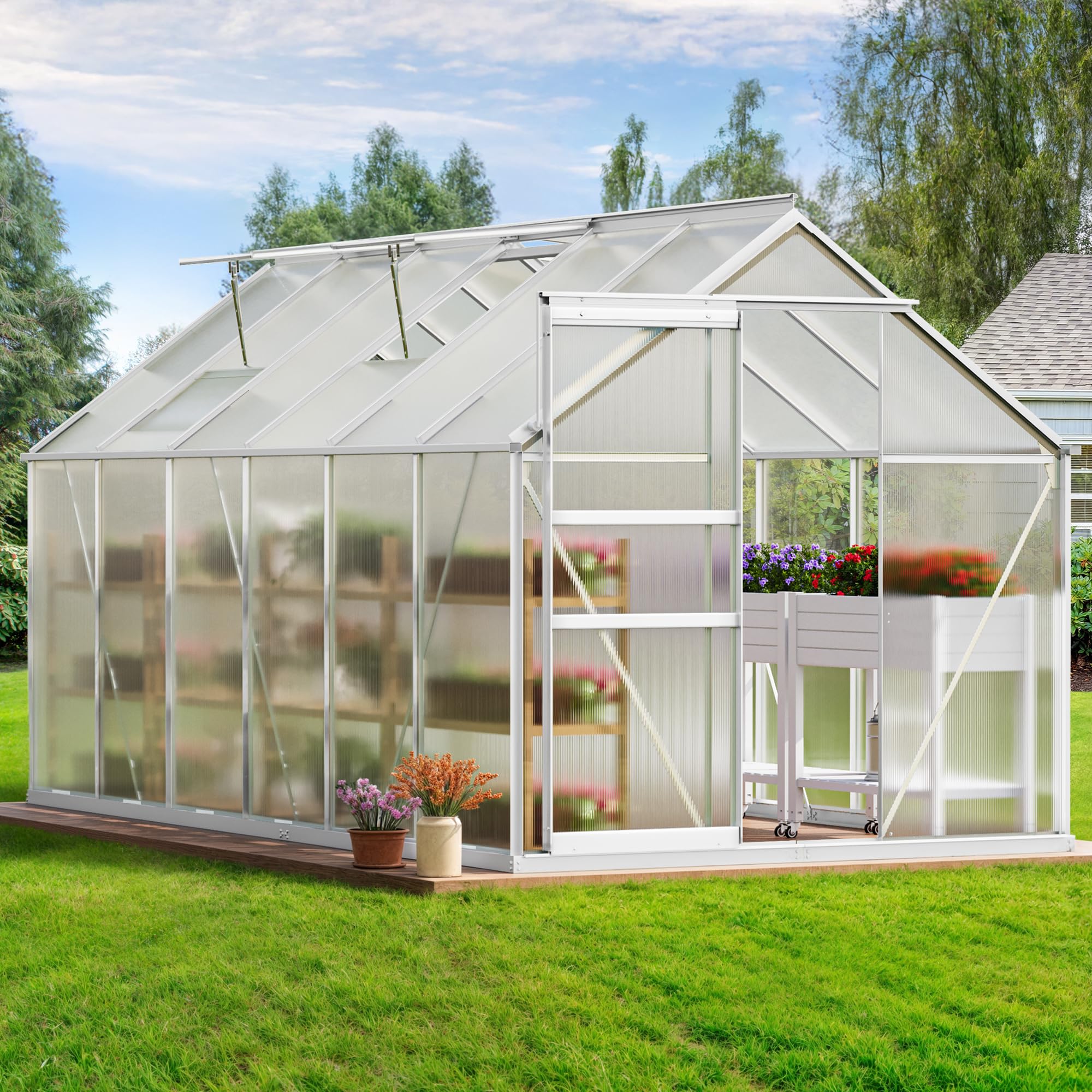
The 12-foot build that feels good and survives storms.
This is the same basic design as the 6×16 but in a shorter, wider arrangement. The 12×6 footprint is versatile — owners have placed it over raised beds or used the frame as a trellis for climbing plants. The aluminum alloy frame with reinforced rods and diagonal bracing gives it good wind resistance; one owner in Virginia reported it survived 60+ mph storms with an added floor and brace.
Assembly reviews are mixed. Some say it is easy and straightforward, while others note off-center holes in several pieces that need a little force or duct tape. The panels lock in warmth fast — on a sunny day, you can expect a quick temperature rise, so the two adjustable skylights are essential. After a year, some owners saw zipper sticking or minor tears, but the overall feeling is that it is solid and functional for the price.
Great for: a multi-purpose space that can hold both plants and a small potting bench. The barrel roof design makes it feel roomier inside.
One thing to know: check the hole alignments during assembly; you may need to drill a few yourself to get everything square.
6. VEIKOU 8′ x 16′ Polycarbonate Greenhouse
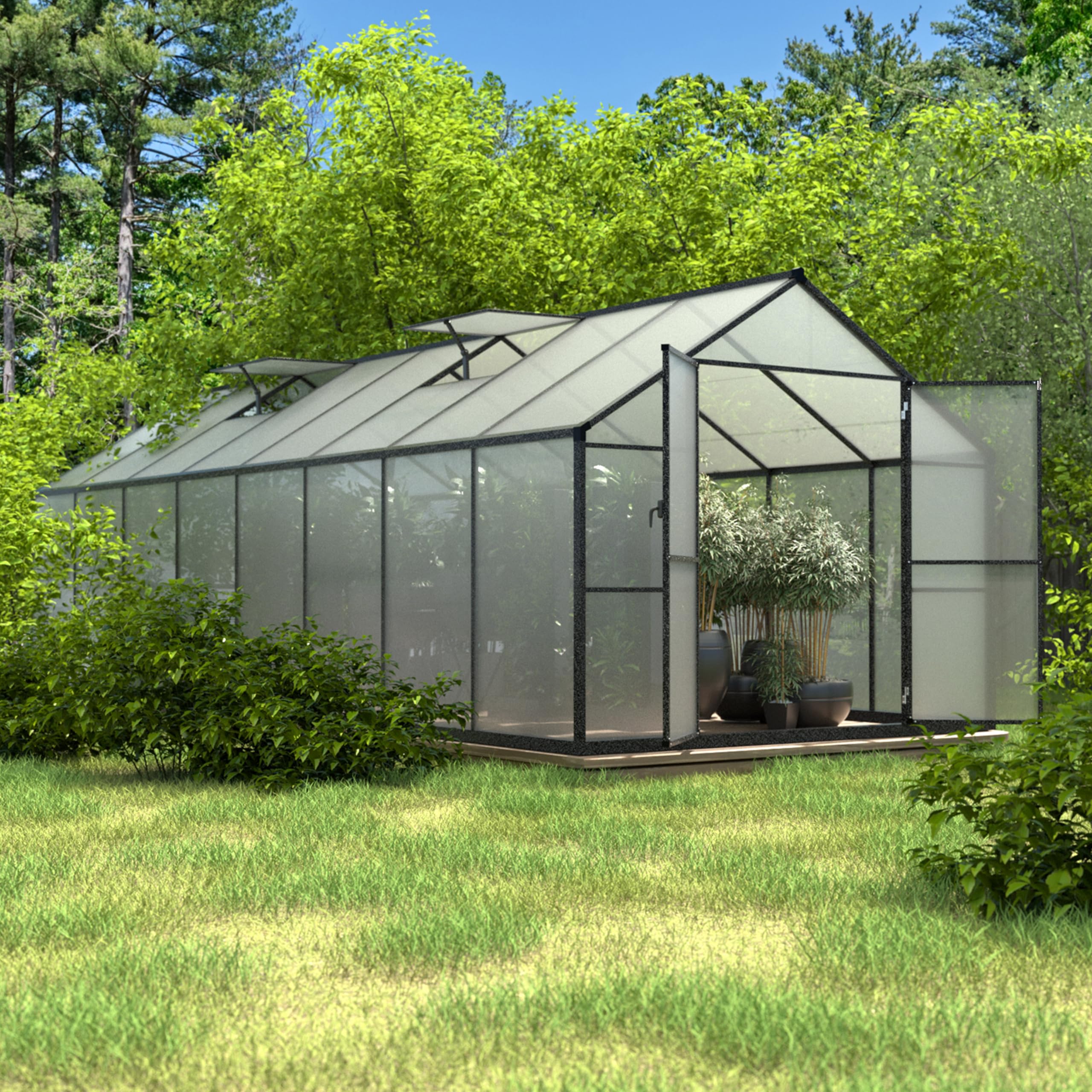
16 feet of rust-resistant gray aluminum for serious growers.
The VEIKOU 8×16 gives you a large footprint with a powder-coated gray aluminum frame that resists rust and corrosion. Its standout feature is the pole-less roof vents — they use pulleys instead of a central pole, so you can adjust the angle without a bulky mechanism sticking up. The vents can also be mounted in any panel you choose during assembly, giving you flexibility on airflow placement. The double sliding doors provide a wide 49.7-inch opening, big enough to wheel in a garden cart or large containers.
Owners say it looks nice and is the perfect size, but assembly gets mixed reactions. Some found it straightforward; others called it tedious, with one owner reporting bent pieces that the manufacturer replaced. The general advice is to budget extra anchors — the greenhouse is sturdy in 30 mph gusts, but in higher winds it needs tie-downs or ground stakes to keep it from sliding. The size is a big draw: 8 feet wide and 16 feet long gives you room for multiple growing beds and still leaves space for storage.
Pick this if: you want a long greenhouse with smart venting and a corrosion-resistant gray finish that blends into a modern garden. The wide door is a bonus for anyone using carts or wheelchairs.
Be ready for: a time-consuming assembly process and the need for extra anchoring if your area sees wind over 15 mph.
7. FLY BY YAN 8×14 FT Polycarbonate Greenhouse
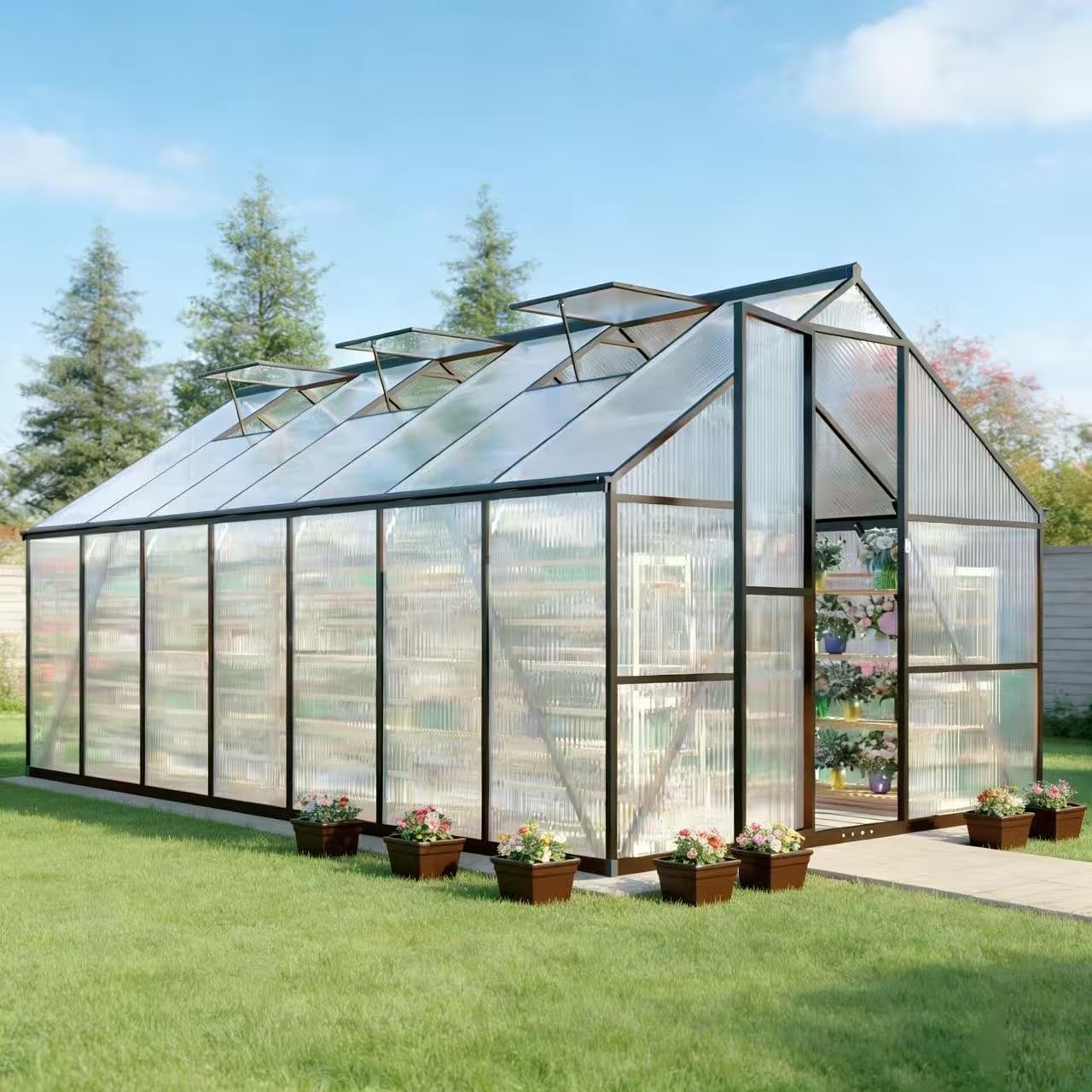
A charcoal black beauty with triple venting for hot climates.
This 8×14 greenhouse stands out visually with a scratch-resistant, rust-free charcoal black finish that looks more premium than standard silver. It also features three roof vents — more than most kits in its class — giving you aggressive ventilation for warmer regions. The quick-install system (perfected through 500+ tests) uses slide-in panels and requires no cutting or drilling.
Buyers praise its sturdiness and value — one owner reported it surviving a violent storm with wind, rain, and snow. Another said the true interior is 7’8″ by 13′ and 8 feet tall, which gives plenty of headroom. Assembly receives mixed reviews: some found it very easy, while others called it difficult and noted that instructions are not always clear. A common tip is to build on a pallet base to prevent cold air from leaking in through the floor. The 720g/m² polycarbonate panels feel solid and block UV well.
Perfect for: gardeners in warmer climates who need aggressive ventilation. The three roof vents and charcoal look make it a standout on both function and style.
Consider this: assembly can be a 2-day job with 4-6 people, and the instructions have caused some errors — take your time and double-check the roof alignment.
8. Palram Canopia Hybrid Lean-To 4′ x 8′

The lean-to that tucks against a house wall and gets picked by editors.
Chosen by Better Homes and Gardens as the Best Overall Greenhouse Kit of 2024, this 4×8 lean-to design is ideal if you have limited yard space but a sturdy house wall to attach it to. It uses two panel types: twin-wall polycarbonate on the roof for insulation and crisp polycarbonate on the walls for over 90% light transmission. The powder-coated aluminum frame and galvanized steel base add structural stability, and the built-in gutter system handles water drainage neatly.
It includes a magnetic door catch and a lockable handle, plus a roof vent for airflow. Owners say it withstands wind storms well when bolted down, though some found the panels feel a bit thin and worry about long-term discoloration. The big number here is 171 mentions of assembly — it is mixed to negative, so plan for a patient weekend build. A solo owner completed it in one day and three hours, but another called it a nightmare. The overall star rating is solid, and the appearance is widely praised.
Ideal for: leaning against a wall, garage, or shed to save space. The editor endorsement and dual-panel system make it a smart choice for small gardens.
Plan ahead: assembly is not quick — set aside a full day and have a helper ready. The instructions are picture-based and can be tricky.
9. Sylviera 12×12 FT Polycarbonate Greenhouse
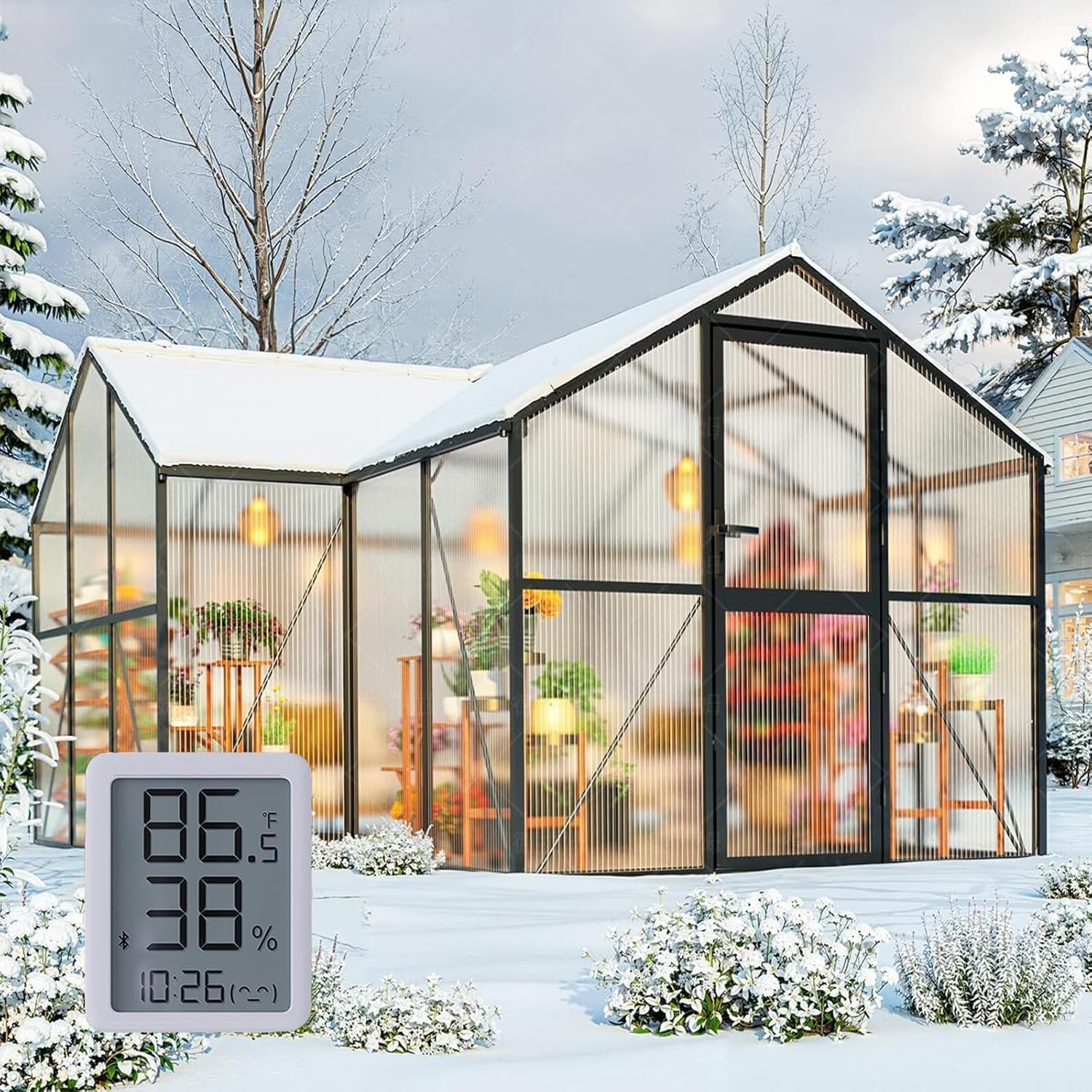
A full 12×12 square with thick 6mm panels for serious insulation.
If you want maximum growing area in a square shape, this Sylviera hits 144 square feet. The panels are 6mm thick and 1100g each — noticeably heavier than the 720g or 4mm panels common in lower-price kits. Thicker panels mean better insulation and more rigidity against wind and hail. The reinforced aluminum alloy frame with strengthened corners adds stability, and the two adjustable roof vents promote airflow.
Owner feedback is largely positive on sturdiness and weather protection. One reviewer noted it survived two weeks of nonstop rain with no leaks. The assembly is manageable but takes a full day with two people. Some owners added their own silicone sealant and drilled into a 2×4 base for extra confidence. The roof vents have a quirk: they may need rubber bands or a prop to stay open in certain angles. The included thermometer-hygrometer (app-connected) is a nice bonus, though a few found the instructions lacking detail on removing the protective film from both sides of the panels.
Go for this if: you want the thickest polycarbonate panels in this list for maximum insulation and impact resistance. The square layout gives you flexible shelving and bed arrangements.
Keep in mind: the instructions need careful reading, and you will want to seal every panel connection with silicone for a truly watertight build.
10. HOWE 14×9.5×9 FT Polycarbonate Greenhouse

A pavilion-style sunroom with 9 feet of headroom.
This greenhouse is built more like a permanent garden structure than a seasonal kit. The 6-foot wall height means you can walk right in without ducking, and the overall 9-foot peak gives a spacious, airy feel — it is designed to double as a sunroom or hobby space. The frame uses 1.5mm thick aluminum with four thickened corner posts and two middle posts, all rated for 70 mph wind and 30 psf snow load. The 6mm twin-wall PC panels block 99.99% of UV rays.
Owners love the sturdiness and the appearance, but the assembly is a big commitment. The advertised 12-hour build for three people is optimistic — most report 25 hours for two people over several days. The instructions are picture-based and imprecise, and the window locking system is described as inefficient. That said, once it is up, it handles Michigan snow and Texas winds with equal confidence. The patented Victorian roof crest is a nice touch that also prevents birds from perching.
Best for: someone who wants a greenhouse that feels like a proper room — tall walls, wide double doors, and a design that could double as a garden lounge. The wind and snow ratings are excellent.
The real cost: assembly time and patience. Plan for a multi-day project with at least two people, and budget for a solid foundation — a wooden deck is recommended.
Understanding the Specs
Polycarbonate Panel Weight & Thickness
Panel weight (usually measured in g/m² like 720g or 1100g) tells you how dense and impact-resistant the plastic is. Heavier panels feel more rigid and handle hail and wind better. Thickness (4mm vs 6mm) affects insulation — thicker panels trap more air between the twin walls, which keeps the interior warmer on cool nights and cooler against intense midday sun. Twin-wall polycarbonate is standard; it is essentially two thin panels separated by a web of plastic ribs, creating an air gap.
Aluminum Frame Construction
A powder-coated aluminum frame resists rust and corrosion far better than painted steel, which can chip and rust in a few seasons. The alloy thickness matters — frames described as “heavy duty” usually use thicker extrusions and more cross-bracing. Look for reinforced corners, diagonal rods, and a galvanized steel base (some kits include this) for extra stability. Anchoring the frame to a concrete base or sinking the legs into the ground is critical for wind safety.
Ventilation: Roof Vents vs. Side Vents
Hot air rises, so roof vents are the most effective way to release heat. More vents (two or three) mean better airflow, especially in full-sun locations. Side vents help create cross-breeze. Some kits let you adjust the vent angle, which is useful for fine-tuning temperature on variable-weather days. In a sealed polycarbonate greenhouse, temperatures can spike to 100°F+ within an hour of morning sun, so ventilation is not optional — it is essential.
Snow Load and Wind Rating
These numbers tell you how much weight the greenhouse frame and panels can safely hold. A snow load rating of 30 psf means the roof can support about 30 pounds of snow per square foot — adequate for most moderate climates. Wind ratings above 70 mph give you real confidence in storm-prone areas. Many budget kits do not publish these numbers; if yours does not, plan to add your own bracing, clear snow regularly, or anchor the frame to a permanent foundation.
FAQ
How long does a polycarbonate greenhouse last?
Can I build a polycarbonate greenhouse on grass or soil?
Do I need to seal the polycarbonate panels?
Will a polycarbonate greenhouse overheat in summer?
How hard is it to assemble a polycarbonate greenhouse?
Can I attach a polycarbonate greenhouse to my house?
What is the difference between twin-wall and 4-wall polycarbonate?
Should I anchor a polycarbonate greenhouse to the ground?
Final Thoughts: The Verdict
For most people, the best greenhouse with polycarbonate is the Backyard Discovery Willow 9′ x 6′ because it combines a gorgeous cedar wood frame with commercial-grade 4-wall polycarbonate and real weather ratings — 2,800 pounds snow load and 100 mph wind resistance — that no aluminum kit here matches. If you want a larger square layout with thicker panels and great insulation, grab the Sylviera 12×12 FT. And for a budget-friendly mid-size with an app-connected thermometer, the WUKHG 8×10 FT is the one to reach for.
How We Picked
We do not accept paid placement. Every pick is matched to a real buyer and a real use-case; we do not hands-on test units.
Sources & Methodology
Specifications: manufacturer listings and product documentation. Review insights: verified customer reviews, as of July 2026. Pricing: not shown on this page (it changes often); check the current price via the retailer link.
As an Amazon Associate, Lawn Gear Lab earns from qualifying purchases. This does not affect which products we feature.